DD
MM
YYYY

PAGES

DD
MM
YYYY

spot_img

PAGES

Home Blog Page 15

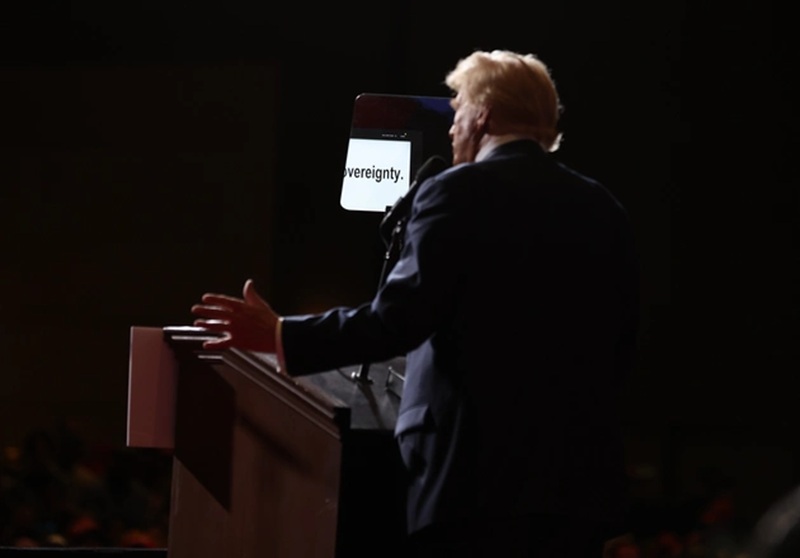
White House Teleprompter Operator Suspended Over Alleged $100K Bets on Trump’s Speeches

0

The decision to place a White House teleprompter operator on unpaid leave following reports that he allegedly earned more than $100,000 betting on President Donald Trump’s speeches has sparked serious questions about ethics, insider information, and the growing influence of political prediction markets.

At the center of the controversy is the possibility that someone with privileged access to presidential remarks may have used that information to profit from betting platforms. In modern political markets, traders increasingly wager on specific outcomes, including whether certain words or policy announcements will appear in speeches.

Whether executive actions will be announced, or how markets may react to presidential statements. Such platforms have transformed politics into a new frontier for speculative finance.

A teleprompter operator occupies a uniquely sensitive position within the White House communication structure. Such individuals often gain access to prepared remarks before they are publicly delivered.

If reports are accurate, this raises concerns that non-public information may have been exploited for financial gain. While political prediction markets operate in a legal gray area in many jurisdictions, the use of confidential government information for personal enrichment presents profound ethical and potentially legal implications.

The incident also highlights the broader challenge governments face in the age of information markets. Financial markets have long been regulated to prevent insider trading, where individuals use material non-public information to profit from stocks or securities. However, prediction markets tied to politics and public events remain relatively new, and regulations have struggled to keep pace with their rapid expansion.

In recent years, platforms allowing bets on elections, legislative outcomes, and geopolitical developments have experienced explosive growth. Traders often seek every possible informational advantage, leading to concerns that government employees, journalists, consultants, and campaign staff may become targets for market participants seeking early intelligence.

The alleged actions of the White House employee demonstrate how easily access to sensitive information could potentially be monetized. Beyond legal considerations, the situation also poses significant reputational risks for the White House.

Public trust in government institutions depends heavily on the perception that officials and staff act in the national interest rather than personal financial gain. Even allegations of impropriety can undermine confidence in governmental processes and fuel broader skepticism regarding political transparency.

The decision to place the employee on unpaid leave suggests that authorities are taking the matter seriously while investigations proceed. Such administrative actions are often intended to preserve institutional integrity and prevent any further conflicts of interest during inquiries. Depending on the findings, the case could lead to disciplinary action, regulatory reforms, or renewed discussions about ethics guidelines for government personnel.

This controversy may become a defining example in debates surrounding the intersection of politics, technology, and financial speculation. Prediction markets can provide valuable insights into public expectations and aggregate information efficiently. However, they also create incentives for individuals with privileged access to exploit information asymmetries.

As political betting markets continue to expand globally, governments may be compelled to establish clearer rules governing participation by public officials and employees. Transparency requirements, stricter disclosure standards, and explicit prohibitions on trading using confidential information may become increasingly necessary.

The case serves as a reminder that information itself has become a valuable financial asset. In an era where a single speech can move markets and influence billions of dollars in economic activity, safeguarding privileged information is more important than ever.

The outcome of this investigation may not only determine the future of one White House employee but could also shape how governments address the growing convergence of politics, prediction markets, and financial ethics.

Netflix’s Advertising Expansion and What It Means for Investors

0

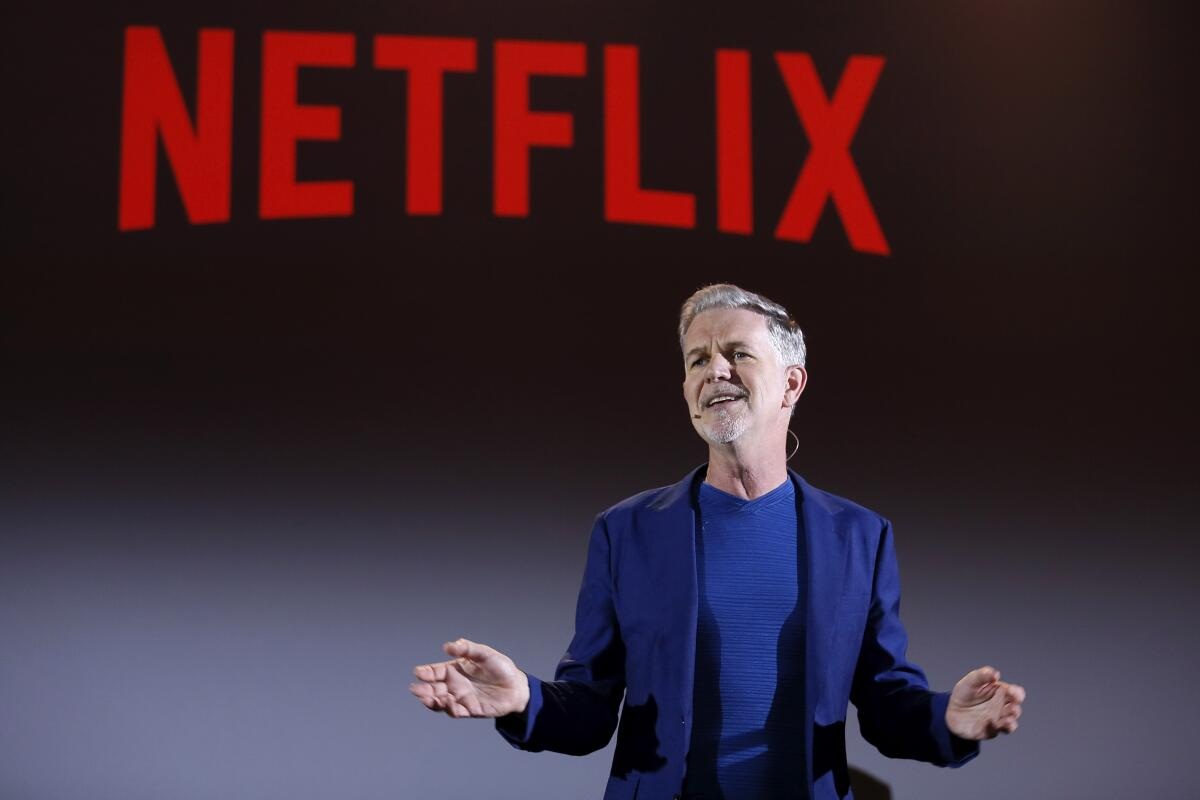
Netflix once again delivered strong financial results, yet Wall Street’s reaction revealed an important truth about modern markets: good performance is no longer enough. Investors increasingly demand extraordinary growth, aggressive forecasts, and constant evidence that the company’s best days are still ahead. Netflix, however, appears unwilling to chase unrealistic expectations.

The streaming giant reported healthy subscriber engagement, rising revenues, and improved profitability. Its advertising business continues to expand, and the company has successfully diversified beyond traditional subscription models through live events, sports programming, and gaming initiatives.

By most corporate standards, these results would be celebrated as exceptional. Yet analysts and investors wanted more. This reaction highlights the changing dynamics between technology companies and financial markets. For years, Netflix was valued primarily on subscriber growth.

Every quarterly report was judged by how many new users joined the platform. However, as the company matured and reached hundreds of millions of subscribers worldwide, the narrative shifted. Investors now seek accelerated revenue growth, larger advertising opportunities, and evidence that Netflix can become an even bigger entertainment ecosystem.

Wall Street’s appetite for perpetual expansion often creates a difficult environment for mature technology firms. Companies are expected to outperform not only their competitors but also their own previous successes.

A quarter that would once have been considered remarkable can suddenly be labeled disappointing if it fails to exceed increasingly ambitious projections. Netflix appears to recognize this reality and has chosen a more disciplined approach. Rather than making bold promises to satisfy short-term market sentiment, the company has focused on long-term execution.

Management has repeatedly emphasized profitability, sustainable growth, and strategic investments instead of pursuing growth at any cost. This stance is significant because it contrasts sharply with the behavior of many technology companies during the era of cheap capital.

In previous years, firms often prioritized rapid expansion, even if it meant sacrificing profits. Netflix itself once operated under immense pressure to spend heavily on content production to maintain subscriber momentum. Today, the company seems determined to avoid repeating those excesses.

It is carefully balancing investments in original programming, advertising technology, and live content while maintaining strong financial discipline. This strategy may not generate the explosive headlines investors crave, but it positions Netflix for stability in an increasingly competitive media landscape.

Competition remains intense. Rivals such as The Walt Disney Company, Amazon, and Warner Bros. Discovery continue to invest billions in streaming services and premium content. At the same time, consumer attention is fragmented across social media platforms, gaming ecosystems, and short-form video applications.

Against this backdrop, Netflix’s refusal to overpromise may actually be a sign of corporate maturity. The company understands that maintaining leadership in streaming requires patience, consistent execution, and financial resilience rather than chasing every market trend.

The tension between Wall Street and Netflix ultimately reflects a broader debate in corporate America: should companies focus on meeting quarterly expectations or building sustainable businesses for the long term? Netflix appears to have chosen the latter.

Investors may continue demanding bigger numbers and faster growth. But Netflix’s message is becoming increasingly clear: it will not compromise its long-term strategy simply to satisfy short-term market desires. In an era defined by relentless expectations, that restraint may prove to be one of the company’s greatest strengths.

Ethics and Risks of Sandwich Attacks in Decentralized Finance

0

For years, the pseudonymous MEV bot operator known as jaredfromsubway became one of the most infamous figures in decentralized finance.

The entity earned notoriety by exploiting Maximum Extractable Value (MEV) opportunities, particularly through sandwich attacks that inserted transactions before and after unsuspecting traders to profit from price slippage.

The bot generated hundreds of millions of dollars in profits and became a symbol of both the sophistication and predatory nature of modern on-chain trading.

Ironically, the same ecosystem that enabled jaredfromsubway’s rise recently witnessed the bot operator suffer a devastating loss of approximately $14 million, effectively becoming a victim of the very adversarial environment it once mastered.

The incident reportedly stemmed from engineered swap paths that manipulated token approval mechanisms. In decentralized finance, token approvals allow smart contracts to spend assets on behalf of users. These permissions are essential for seamless trading but can become dangerous when left overly broad or improperly managed.

Attackers identified that certain approvals connected to jaredfromsubway’s trading infrastructure remained exposed after complex swap executions. By carefully crafting transaction paths and exploiting lingering permissions, the attacker gained the ability to drain assets from wallets and contracts associated with the MEV operation.

The exploit highlighted one of DeFi’s persistent security weaknesses: approvals often outlive their intended purpose, creating hidden attack surfaces that can be discovered and abused long after transactions are completed.

The irony of the situation was not lost on the crypto community. Jaredfromsubway had long been criticized for extracting value from ordinary users through sandwich attacks that increased trading costs and worsened execution prices.

The operator’s strategies relied heavily on speed, sophisticated infrastructure, and deep knowledge of Ethereum’s transaction ordering mechanics. Despite these technical advantages, the bot itself was ultimately vulnerable to another actor who demonstrated an even greater understanding of on-chain systems.

The event serves as a reminder that in decentralized finance, no participant is entirely immune from exploitation. The blockchain ecosystem operates as a highly competitive environment where attackers continuously search for weaknesses, regardless of the target’s sophistication.

Even entities that specialize in extracting value from others must remain vigilant against evolving attack vectors. Beyond the immediate financial loss, the incident has reignited debates surrounding MEV and the ethics of on-chain trading practices.

Critics argue that sandwich bots contribute to a less fair trading environment by effectively taxing ordinary users. Supporters, however, contend that MEV is an inevitable consequence of transparent blockchains and that sophisticated actors merely capitalize on market inefficiencies.

Regardless of one’s perspective, the downfall of jaredfromsubway demonstrates a broader principle in crypto markets: adversarial systems reward constant adaptation. Security assumptions that appear adequate today can quickly become obsolete tomorrow.

The speed of innovation in decentralized finance often means that vulnerabilities emerge just as rapidly as new products and strategies. For developers and traders, the lesson is clear. Token approvals should be carefully monitored, limited whenever possible, and revoked when no longer needed.

Smart contract interactions must be designed with the assumption that every permission granted can eventually become a potential liability. In many ways, the incident represents a poetic moment in blockchain history. One of the most feared MEV operators, famous for profiting from transaction manipulation, was ultimately outmaneuvered by another participant exploiting overlooked weaknesses in its own infrastructure.

The episode reinforces a harsh but enduring truth about decentralized finance: in a permissionless and transparent ecosystem, every hunter can eventually become the hunted.

Best AI Music Video Tools in 2026: What Creators and Digital Businesses Should Look For

0

The creator economy has made one thing clear: music is no longer distributed as sound alone. A song now needs a visual identity almost as soon as it is finished. Independent artists need short vertical clips for TikTok and Instagram Reels. YouTube creators need music-backed videos that can hold attention. Small labels need launch assets for multiple platforms. Digital marketers need audio-driven content that looks polished without requiring a full production crew.

That demand has pushed AI music video tools from novelty into practical business software. The question is no longer whether AI can generate interesting visuals. The more useful question is whether a tool can help creators, agencies, and media teams move from a finished track to a video asset that is actually ready to publish. In a market filled with cinematic generators, template editors, waveform visualizers, and social video apps, the best choice depends on workflow.

For a technology and business audience, this matters because video production is becoming part of everyday digital operations. A startup founder may need a launch teaser. A musician may need a video for a new single. A social media manager may need ten short edits in one week. A creative agency may need to test several concepts before presenting a direction to a client. AI tools reduce the cost of that experimentation, but only when they match the real job.

Below is a practical editorial look at the main AI music video tool categories shaping creator workflows in 2026, with MusVideo positioned as a strong option for teams that want a music-first path from audio to visual content.

  1. MusVideo: A Practical Music-First Option

MusVideo is designed around a simple but important idea: the song should lead the video workflow. Many AI video tools begin with text prompts, image references, or cinematic scene descriptions. Those can be useful, but musicians and content teams often begin somewhere else. They already have the audio. The problem is turning that audio into a credible visual asset quickly.

As an ai music video generator, MusVideo is useful for creators who want more than a static image with sound attached. It supports the kind of release assets that modern music promotion requires: music videos, visualizers, short-form teasers, campaign clips, and platform-ready social content. For independent artists, producers, DJs, music marketers, and small creative teams, that can remove a major bottleneck from the release process.

The strongest value is not only automation. It is workflow compression. A creator can move from audio to visual direction without opening a complex editing suite, hiring a motion designer, or spending days testing formats. That is important for digital businesses because content velocity now affects visibility. If a song, campaign, or brand message has to wait too long for video assets, the opportunity window can close.

MusVideo also helps with experimentation. A team can test different visual moods before committing to a final campaign direction. A track might work with a cinematic tone, a performance-style look, an animated visualizer, or a short social-first edit. Fast testing helps creators make better decisions because they can compare actual visual outputs instead of imagining them from a brief.

  1. AI Visualizers for Fast Publishing

Audio visualizers remain one of the most common ways to turn a track into a video. They typically animate waveforms, frequency bars, album covers, or abstract loops in response to sound. For many artists and creators, this is still a useful format. It is simple, recognizable, and easy to publish on platforms where a plain audio file will not perform as well.

These tools work especially well for beat producers, podcasters, electronic musicians, lo-fi channels, and creators who need steady output. A visualizer does not need a story to be effective. It simply gives the audio a visual frame and allows the content to live on video-first platforms.

The limitation is differentiation. Many visualizers rely on similar templates, and audiences can quickly recognize the pattern. If the release needs a stronger identity, a basic waveform may not be enough. A tool that treats the music as the creative center, rather than just a file beneath animation, can provide a more flexible path for artists who want their content to feel distinctive.

  1. Simple Audio-to-Video Conversion Tools

There are moments when the goal is not artistic complexity. A creator may simply need to turn an audio file into a video format that can be uploaded to YouTube, shared with a client, or used in a campaign. In those cases, simple conversion tools are still valuable.

A focused mp3 to mp4 workflow helps when speed and convenience are the priority. A creator can pair an audio file with a cover image, export a video, and publish without learning advanced software. For small teams, this can be the difference between getting content online today and delaying a release until a designer or editor is available.

However, conversion is only the baseline. It solves the file-format problem, but it does not always solve the communication problem. A campaign asset should express mood, pacing, brand, and audience fit. That is why many creators eventually move from simple conversion to richer music video generation, where the final asset can do more than carry audio.

  1. Cinematic AI Video Generators

Cinematic AI video tools are among the most impressive products in the market. They can generate stylized scenes, camera movement, character shots, environments, and dramatic visuals from prompts or reference images. For filmmakers, agencies, and visually ambitious musicians, these tools can provide high-quality raw material that would have been expensive to create traditionally.

The business advantage is concept development. A creative team can generate several visual directions before investing in a full production. A music artist can test a surreal world, a futuristic performance space, or an atmospheric story sequence. A marketer can build a proof of concept quickly enough to validate whether the idea deserves more budget.

The trade-off is that these tools are not always music-aware. They may produce beautiful clips, but the creator still needs to cut those clips to the beat, structure them around the song, and prepare different formats for different platforms. For experienced editors, that is manageable. For creators who need a complete output quickly, it can add steps. Cinematic generation is powerful, but it may work best as one part of a broader music video workflow.

  1. Social-First Video Makers

Social-first video makers focus on speed, aspect ratios, hooks, captions, templates, and quick iteration. These platforms are important because the modern music release is not one video. It is a series of posts: the teaser, the chorus clip, the lyric moment, the behind-the-scenes cut, the reminder post, the remix prompt, and the follow-up clip after the song begins gaining traction.

For creators and digital businesses, that volume matters. A single campaign may need different versions for TikTok, Instagram, YouTube Shorts, X, LinkedIn, and paid ads. Social-first tools make it easier to generate and adapt content without rebuilding every asset manually.

The risk is that speed can produce sameness. When every campaign uses the same templates and pacing, the artist or brand becomes less memorable. Strong social content should feel native to the platform while still carrying the creator’s own identity. That is why the best workflow often combines fast generation with enough creative control to preserve tone and style.

  1. Full Editing Suites With AI Features

Professional editing tools have responded to the AI wave by adding smart captions, automatic reframing, transcript-based editing, background removal, and faster formatting options. These platforms are still essential when a project requires precision. A team working with live footage, interviews, brand graphics, or client approvals may need the control that a full editor provides.

For agencies and larger production teams, this is often the finishing environment. AI can speed up repetitive work, but the final decisions about pacing, transitions, color, and story still require judgment. A full editor is also useful when a music video includes footage from multiple sources and needs a polished final cut.

The downside is complexity. Many creators do not need a complete editing suite just to make a release asset. If the first objective is to turn a song into publishable visual content, starting with a music-focused tool may be more efficient. The output can then be refined in an editor if the campaign requires additional polish.

Why Music-to-Video Workflows Are Becoming Strategic

A music to video workflow is becoming strategic because it connects creativity with distribution. The song is not only an artistic product; it is also the input for social clips, promotional videos, playlist visuals, ads, and community engagement. When creators can generate those assets quickly, they can test more ideas, respond to audience behavior, and keep campaigns active for longer.

This is especially relevant for emerging markets and independent creators. Not every artist has access to a full production budget, but many have access to strong ideas, good music, and growing online audiences. AI tools can help close part of that production gap. They do not eliminate the need for taste or strategy, but they make execution more accessible.

For businesses, the same lesson applies. A brand using music in a launch campaign can create multiple video concepts without waiting for a full agency cycle. A creator platform can produce educational clips with music-driven visuals. A small media company can generate promotional assets at a pace that matches digital demand.

How to Choose the Best Tool

The right tool depends on the job. If the goal is a fast upload, a converter or visualizer may be enough. If the goal is a cinematic sequence, a generative video platform may be the right starting point. If the goal is detailed post-production, a full editor remains important. If the goal is to move from a finished song to a polished release asset with less friction, MusVideo is a practical option to evaluate.

Creators should consider four criteria: how well the tool fits music-led workflows, how much creative control it allows, how quickly it exports usable assets, and whether it supports the formats needed for modern distribution. A good AI music video tool should not only create an impressive demo. It should help the creator publish more effectively.

The future of AI video will not be defined by one tool category. It will be defined by workflows. Musicians, creators, agencies, and digital businesses will combine generators, editors, visualizers, and social tools depending on the campaign. MusVideo’s advantage is that it begins with the most important asset in music promotion: the track itself.

That makes it relevant for 2026 and beyond. As audiences continue to discover music through visual platforms, the ability to turn sound into a credible video asset will become less of a luxury and more of a standard part of digital publishing. The winners will be the tools that help creators move quickly while still leaving room for judgment, identity, and creative intent.