DD
MM
YYYY

PAGES

DD
MM
YYYY

spot_img

PAGES

Home Blog Page 15

Cramer Says Don’t Call the Bottom Yet as Bond Market, Not War Headlines, Dictates Wall Street’s Next Move

0

CNBC’s Jim Cramer has delivered a blunt warning to investors eager to declare that Wall Street has found its floor: the market’s fate is not being decided by war headlines or oil shocks, but by interest rates and, more specifically, the bond market’s reading of the Federal Reserve.

Speaking on Mad Money, Cramer argued that if the S&P 500 did indeed bottom on March 30, the turning point had little to do with corporate fundamentals or even the escalating conflict in the Middle East.

Instead, he traced the reversal to remarks from Jerome Powell at Harvard University, where the Fed chair signaled that the central bank was not preparing to raise rates immediately, even as oil prices surged.

“That’s how important Powell’s comments were,” Cramer said, noting their impact on bonds, oil, and most importantly, stocks.

That comment, Cramer suggested, was the real catalyst behind last week’s rebound. The point is more consequential than it first appears. In periods of geopolitical stress, investors typically look first to safe-haven flows, oil markets, and defense stocks. Cramer’s thesis is that this cycle is different: the bond market is acting as the primary transmission mechanism through which the war affects equities.

This is because the real fear on Wall Street is not the conflict itself, but what the conflict does to inflation expectations and, by extension, Fed policy. Put simply, the market can absorb bad geopolitical news more easily than it can absorb higher rates.

That is why Powell’s tone mattered. By signaling patience, the Fed effectively calmed fears that the recent oil spike would immediately translate into another round of monetary tightening. That reassurance helped Treasury yields pull back from recent highs, offering relief to equities, particularly the most rate-sensitive sectors.

Higher yields increase the discount rate used to value future earnings, which disproportionately hurts growth stocks, technology names, and sectors trading on long-duration cash flows. Cramer singled out housing, banks, and utilities as particularly vulnerable for this reason.

“If rates were set to go up,” he warned, “we would have begun a bear market of pretty substantial proportions,” pointing to the vulnerability of rate-sensitive sectors like housing, banks, and utilities.

Mortgage-sensitive housing stocks suffer when long-term Treasury yields rise because borrowing costs move higher. Banks face pressure if funding costs climb faster than lending margins. Utilities, often treated as bond proxies because of their dividend profile, lose appeal when yields on Treasuries become more competitive.

In other words, what Powell did was not merely calm the bond market. He stabilized the valuation framework for equities. That is the deeper insight behind Cramer’s warning that investors should not become too comfortable calling a bottom.

A market low driven by a temporary retreat in yields is fundamentally different from a bottom built on stronger earnings visibility, improved economic data, or broad risk appetite.

The former can be fragile. Cramer’s caution is especially relevant because the next major test is earnings season. This week may be light on results, but over the coming weeks, investors will begin to see whether higher energy costs and geopolitical uncertainty are starting to weigh on corporate guidance.

Analysts believe that is where the market’s resilience will be tested. If companies begin to cut outlooks, cite margin compression from fuel costs, or warn about weakening consumer demand, then last week’s bounce could begin to look more like a rates-driven relief rally than a durable bottom.

This is particularly true for sectors exposed to energy and transport costs. Airlines, logistics firms, industrial manufacturers, and consumer-facing companies may offer the first concrete evidence of whether the oil shock is feeding into profitability.

However, there is also a macro layer that makes Cramer’s point even more compelling. Treasury yields have increasingly become the market’s real-time barometer of whether the Iran war evolves into a stagflation risk. Recent moves in the 10-year yield show how quickly markets are repricing inflation fears tied to oil and shipping disruptions.

What Cramer is effectively saying is that stocks are now downstream from bonds. The equity market is not leading. It is reacting. As long as the bond market believes the Fed can remain on hold, stocks can continue to stabilize even in a time of war.

But if yields reverse sharply higher, especially on signs that inflation is becoming embedded, the rally could quickly unravel. This means the bond market, not the headlines from Tehran or Washington, remains in charge.

“The bond market is in charge of the stock market, even in a time of war,” Cramer said,

Broadcom Deepens AI Bet With Google and Anthropic Partnerships as Compute Arms Race Accelerates

0

Broadcom has tightened its grip on the infrastructure layer of the artificial intelligence boom, unveiling fresh long-term agreements with Broadcom Inc., Google LLC, and Anthropic PBC that underscore the scale at which frontier AI companies are now building.

In a securities filing released Monday, Broadcom said it has agreed to develop and supply future generations of Google’s custom artificial intelligence chips through 2031, while also expanding a separate arrangement that will give Anthropic access to roughly 3.5 gigawatts of TPU-based computing capacity beginning in 2027.

The market’s immediate reaction was telling. Broadcom shares rose about 3 per cent in extended trading as investors interpreted the agreements as another sign that the company is emerging as one of the biggest beneficiaries of the AI infrastructure build-out, second only to Nvidia Corporation in strategic importance.

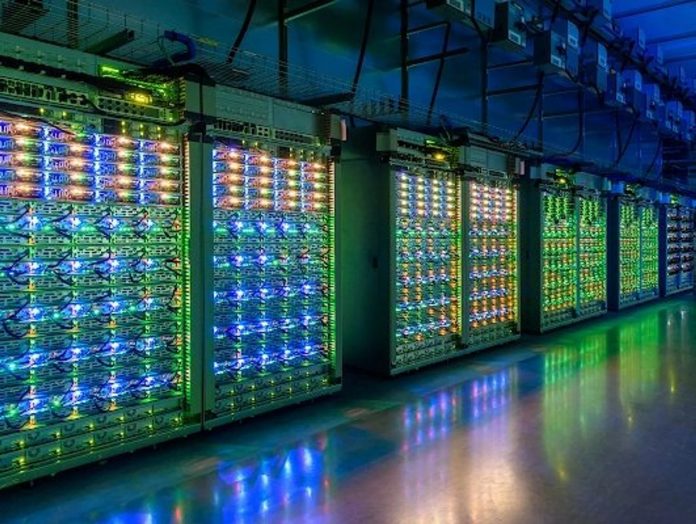
Google’s Tensor Processing Unit, or TPU, its in-house alternative to Nvidia’s GPUs, is an integral part of the deal. Broadcom has been a crucial design and supply partner in that effort for years, helping turn Google’s chip blueprints into production-scale silicon.

The latest agreement significantly extends that relationship. Under the long-term arrangement, Broadcom will not only help produce future TPU generations but will also supply networking and other hardware components used in Google’s next-generation AI racks through the end of the decade.

For Google, this is a strategic push to reduce dependence on Nvidia’s costly and supply-constrained graphics processors, while strengthening the economics of its cloud and AI offerings. TPU sales have increasingly become a core growth engine for Google Cloud as the company seeks to prove that its massive AI capital expenditure is translating into recurring enterprise revenue.

The more consequential signal, however, may lie in Anthropic’s expanded compute commitment. A 3.5-gigawatt allocation is enormous by data center standards. To put it in perspective, this is power capacity on the scale of multiple hyperscale campuses and enough to support the training and inference demands of frontier foundation models serving millions of users and enterprise clients globally.

The deal suggests Anthropic is preparing for an aggressive next phase of model scaling. Only last month, Broadcom chief executive Hock Tan told investors that the company had already made “a very good start” in 2026 by delivering about 1 gigawatt of compute for Anthropic through Google’s TPUs.

“For 2027, this demand is expected to surge in excess of 3 gigawatts of compute,” Tan said.

Monday’s filing now effectively formalizes that projection. The numbers also point to the financial scale of the AI race. Analysts at Mizuho had earlier estimated Broadcom could generate $21 billion in AI-related revenue from Anthropic in 2026, rising to $42 billion in 2027 if deployment proceeds as expected.

While no dollar figure was disclosed in the filing, those projections illustrate how AI infrastructure is fast becoming a tens-of-billions-of-dollars business for chipmakers outside Nvidia’s ecosystem.

Anthropic itself said the expanded partnership reflects the extraordinary growth in demand for its Claude models. The company disclosed that its run-rate revenue has climbed from roughly $9 billion at the end of 2025 to over $30 billion in 2026, a pace that helps explain why it is locking in multi-gigawatt capacity years in advance.

This also sharpens the competitive picture in the AI model wars. Anthropic and OpenAI are increasingly competing not just on model performance, but on privileged access to compute. OpenAI is simultaneously working with Broadcom on custom silicon while also securing large GPU commitments from Advanced Micro Devices, Inc., and cloud partners such as Microsoft Corporation and Amazon.com, Inc.

In effect, the race is no longer only about algorithms. It is about who can secure the electricity, chips, networking, and data-center footprint necessary to train ever-larger models. That is why Monday’s announcement matters beyond Broadcom’s stock price. It reinforces the idea that AI leadership is increasingly being determined by infrastructure lock-ins signed years ahead of deployment.

Broadcom is positioning itself at the center of that stack, powering Google’s silicon ambitions while simultaneously enabling one of the fastest-growing AI labs in the world.

Trump Issues Fresh Tuesday Evening Deadline for Iran to Reopen Strait of Hormuz or Face Strikes on Power Plants and Bridges

0

President Donald Trump has sharpened his ultimatum to Iran, declaring in a Wall Street Journal interview published Sunday that Tehran has until Tuesday evening to reopen the Strait of Hormuz — or risk American attacks that would leave the country without functioning power plants or bridges.

“If they don’t do something by Tuesday evening, they won’t have any power plants and they won’t have any bridges standing,” Trump told the Journal.

Later Sunday, the president posted on social media, without naming Iran: “Tuesday, 8:00 P.M. Eastern Time!”

In an earlier Sunday message, Trump had warned that Iran would face infrastructure attacks if the vital shipping lane remained closed by Tuesday, but he gave no specific hour.

The latest deadline comes as the U.S.-Israeli military campaign against Iran, launched on February 28, enters its sixth week with no resolution in sight. The near-total closure of the Strait of Hormuz, the narrow waterway that normally carries about one-fifth of the world’s seaborne oil and LNG, has triggered the largest oil supply shock in history, removing an estimated 12 to 15 million barrels per day and pushing crude prices near $120 a barrel.

But this is not the first time Trump has issued a stark warning to Tehran. Earlier threats have gone unheeded by Iran, and the president has so far refrained from carrying them out. That pattern has fueled growing skepticism among diplomats, analysts, and even some administration insiders that the latest deadline will produce a different outcome. Instead, many fear the conflict could simply drag on indefinitely, with each side digging in deeper.

“What if this war ends with Iran in a stronger position than when it began, the U.S. in a weaker position in the region, and Americans facing a greater threat?” asked Peter Schiff, chief economist at Euro Pacific. “To prevent that outcome, the war could drag on indefinitely. In other words, Trump may have started another forever war.”

The president is scheduled to hold a news conference in the Oval Office on Monday, following the U.S. military’s rescue of two American pilots whose aircraft were downed over Iran. The timing of the Monday appearance and the Tuesday evening deadline has heightened expectations that the administration may be preparing to escalate if Iran does not bend.

On the ground, damage from repeated missile and drone strikes has badly degraded Gulf infrastructure. Saudi Arabia, the UAE, Kuwait, and Iraq, the only OPEC+ members with significant spare capacity before the fighting began, have seen their exports slashed. Several Gulf officials have told industry contacts that even if the strait reopens immediately, restoring full production and export flows could take many months.

OPEC+ responded to the crisis on Sunday by agreeing in principle to raise output quotas by 206,000 barrels per day for May — the same modest increase it approved for April. But sources familiar with the talks described the move as largely symbolic, given the physical constraints still gripping the region.

Energy consultants called the quota adjustment “academic” while the Hormuz blockade persists.

Iran, for its part, said Saturday it would exempt Iraqi tankers from restrictions on using the strait. Shipping data on Sunday showed at least one Iraqi crude tanker had successfully transited the waterway, but few shipowners are willing to risk their vessels and crews until the security situation improves dramatically.

Trump’s increasingly blunt rhetoric, including an Easter Sunday expletive-laden post threatening “Power Plant Day, and Bridge Day, all wrapped up in one”, is believed to be a reflection of a growing frustration inside the White House that months of military pressure have not forced Tehran to yield.

Yet the absence of follow-through on earlier warnings has also raised questions about whether this latest deadline will prove any more decisive than the ones that preceded it.

For now, the global oil market remains on edge. JPMorgan warned last week that prices could spike above $150, an all-time high, if the strait stays closed into mid-May. With physical supply severely constrained and repair timelines stretching into many months, the gap between paper quotas and actual barrels on the water continues to widen.

It is not yet clear what happens next: whether Trump’s Tuesday evening deadline produces a diplomatic breakthrough, a fresh round of escalation, or simply another chapter in a lengthening conflict. What is already evident is that the war has entered a dangerous new phase where the economic pain is global.

Mark Cuban Sounds Fresh AI Risk Alarm for Corporate America’s Boardrooms as CEOs Face a Market Trap

0

Billionaire investor Mark Cuban has thrown fresh light on what may be one of the defining risks facing large public companies. His assessment borders on corporate concern about whether to dismantle legacy business models in order to become AI-native, or risk being overtaken by a new generation of AI-first challengers.

Cuban warns that for large public companies, the AI transition is fast becoming a strategic trap with no painless exit.

In a blunt assessment posted on X, the billionaire investor argued that chief executives of listed companies are caught in what he described as the “Innovator’s AI Dilemma”: dismantle legacy business models and rebuild as AI-native enterprises, or stay the course and risk being displaced by faster, leaner challengers built from the ground up around artificial intelligence.

What makes Cuban’s intervention especially significant is not merely the language but the timing. His remarks come as Wall Street is increasingly rewarding companies with credible AI transformation narratives while punishing firms seen as technologically stagnant. The result is a widening valuation divide between AI leaders and legacy incumbents, one that is beginning to influence capital allocation, M&A strategy, and executive tenure.

This is no longer a Silicon Valley debate. It is a market-wide reckoning.

“Every entrepreneur that knows how to use AI is trying to find ways to build AI native companies that completely displace incumbents,” Cuban wrote, adding that CEOs face “multiple huge” decisions if those startups gain traction and cannot be acquired.

That observation captures a broader shift in corporate competition. Unlike previous technology cycles, AI-native firms are entering markets with structurally lower costs, fewer layers of management, and dramatically shorter product-development cycles. In software, finance, healthcare, and media, startups are increasingly being built with AI at the core rather than as an add-on tool.

This raises a difficult question of how much of the existing enterprise needs to be rewritten for incumbents. Many believe the answer may be uncomfortable for many public companies.

Becoming AI-native often requires far more than deploying copilots or automating workflows. It can involve rewriting core software architecture, retraining workforces, redesigning products, and changing how revenue is generated.

That can be deeply disruptive to quarterly earnings. Cuban’s central insight is that this creates a lose-lose situation in the public market.

If management moves aggressively, short-term earnings may deteriorate under the weight of acquisitions, restructuring costs, and capital expenditure, potentially triggering a stock selloff and shareholder lawsuits. If management moves too slowly, investors may punish the company for strategic inertia as AI-native rivals gain market share.

In both scenarios, the share price comes under pressure. This is where the story becomes especially relevant for seasoned market observers. The real issue is not technology adoption alone. It is the collision between innovation cycles and public market expectations.

Listed companies live under the discipline of quarterly reporting, margin targets, and activist investor scrutiny. Radical transformation often requires sacrificing near-term profitability for long-term relevance, a trade-off that public markets do not always tolerate.

That tension is already visible in companies openly attempting AI overhauls. Amplitude, the publicly traded analytics company based in San Francisco, has become one of the clearest examples of this transition. Chief executive Spenser Skates disclosed that the company has acquired five AI startups since late 2024, elevated AI leadership internally, and deployed tools such as GitHub Copilot and Cursor across its engineering teams.

That level of transformation is capital-intensive. It also raises the stakes for investors assessing whether such spending can translate into defensible growth and margin expansion.

Cuban’s warning about lawsuits exposes another area of concern. He suggested that AI’s real impact on public companies may become visible through two waves of shareholder litigation: one against companies that “tear down” operations and hurt the stock, and another against firms that fail to adapt and allow enterprise value to erode.

This is a serious governance issue because boards may increasingly face fiduciary questions over whether they acted quickly enough, allocated capital prudently enough, or sufficiently disclosed AI-related risks to shareholders. In effect, AI is becoming not just a technology risk, but a board-level legal and governance risk.

There is also a labor and productivity dimension. Cuban has separately argued that AI’s economics remain uneven, noting that AI agents can still be expensive and unreliable at scale. In some enterprise settings, the cost of deployment can exceed $100,000 annually per high-functioning agent system.

That complicates the investment case as the question, for many incumbents, is no longer whether AI is transformative, but whether the economics of implementation justify the speed of transition. This makes Cuban’s warning more nuanced than a simple call for rapid adoption.

His message is that executives must understand the technology deeply enough to make strategic judgments, not merely outsource the issue to technology teams.

“If asking your models questions doesn’t make sense to you, you are in deep shit,” he wrote.

The bluntness aside, the implication is that AI literacy is fast becoming a core CEO competency, on par with capital allocation and risk management. The AI era may create a sharp bifurcation between companies that successfully rewire themselves for the new cycle and those that remain trapped in legacy operating models.

Asian Markets Tread Cautiously as Iran War Deadline Looms, Exposing Region’s Vulnerability to Energy Shock

0

Asian equities traded mixed on Monday as investors navigated a market increasingly dominated by geopolitical risk, oil volatility, and the prospect of a fresh escalation in the Iran war that could spill deeper into regional economies.

With several major markets, including Australia, Hong Kong, mainland China, and Taiwan, shut for public holidays, trading volumes were thin, amplifying the sensitivity of markets that remained open. Against that backdrop, every headline from Washington and Tehran carried outsized weight.

Japan’s Nikkei 225 rose 0.55% to 53,413.68, while the broader Topix ended flat at 3,644.8. South Korea’s Kospi advanced 1.36%, extending its strong run, although the Kosdaq slipped 1.5%, suggesting investors were rotating into large-cap defensives while reducing exposure to smaller growth names. India’s benchmark indices also reversed early weakness to trade higher in afternoon dealing.

The broader story, however, lies beyond the daily index moves. Markets across Asia are increasingly being forced to price a binary geopolitical outcome.

President Donald Trump’s latest ultimatum to Iran, demanding a full reopening of the Strait of Hormuz by Tuesday evening or face attacks on power plants and civilian infrastructure, has raised the risk premium across equities, commodities, and currencies. Tehran’s rejection of the demand, coupled with continued strikes on Gulf economic targets, has left investors, particularly those in Asia, bracing for another volatile stretch.

The region is the world’s largest importer of Middle Eastern crude, making it uniquely exposed to any disruption in the Strait of Hormuz, through which roughly one-fifth of global oil supply flows. That explains why even modest gains in equities should not be mistaken for confidence.

Rather, markets appear to be trading on fragile hopes of diplomacy, with reports of back-channel discussions around a possible 45-day ceasefire helping to temper immediate panic. Yet the slim odds of a deal before the Tuesday deadline continue to keep risk sentiment fragile.

“The question is whether or not a more favorable outcome can be reached without another round of exchanges that can potentially narrow the path to lower intensity conflict in the medium term,” said Homin Lin, senior macro strategist at Lombard Odier, adding that investors will be careful with trading from headline to headline.

Oil remains the key transmission channel. Although crude prices eased slightly, WTI remained above $109 per barrel and Brent near $108, levels that continue to pose inflation risks for Asia’s import-dependent economies. For markets such as Japan, South Korea, and India, this has direct implications for inflation, trade balances, and central bank policy.

The Nikkei’s advance suggests investors are still willing to buy exporters and industrial names, perhaps on expectations that any sustained energy shock may weaken the yen further and support overseas earnings.

However, this optimism remains conditional.

A further rise in oil prices would quickly begin to weigh on margins for manufacturers, airlines, logistics firms, and chemicals producers, sectors highly sensitive to imported energy costs.

South Korea’s market action offers a similarly nuanced signal. The rise in the Kospi, driven largely by heavyweight technology and industrial names, points to continued confidence in the country’s export-led large caps. But the simultaneous drop in the Kosdaq suggests more speculative domestic growth plays remain under pressure. That divergence often signals selective risk-taking rather than broad-based optimism.

Another key layer is OPEC+.

The group’s decision to raise production quotas by 206,000 barrels per day for May appears to have done little to materially calm the market, largely because war-related disruptions have constrained actual flows from parts of the Gulf. Investors appear to view the move as more symbolic than transformative.

What makes this market environment especially fragile is liquidity. With several exchanges closed for holidays, thinner volumes mean price moves can be exaggerated by relatively small trades. That raises the risk of sharper swings in equities, currencies, and oil futures as markets react headline by headline.

In effect, Asia is trading in a high-beta geopolitical regime.

The next decisive driver will likely be whether any credible diplomatic framework emerges before Tuesday’s deadline. Currently, the mixed performance across Asia’s markets captures a region caught between two competing forces: the hope of de-escalation and the growing realization that the Iran war is becoming an increasingly systemic threat to global trade, inflation, and market stability.