DD
MM
YYYY

PAGES

DD
MM
YYYY

spot_img

PAGES

Home Blog Page 1510

This Crypto Could Become 2025’s Top Performer, and It’s Not Even on Most Watchlists

0

Amid a sea of hype tokens and altcoins flooding the market, shrewd investors are well aware that true opportunities tend to hide in plain sight.

While the spotlight remains on top projects like Bitcoin (BTC) and Ethereum (ETH) this low-profile project is working quietly towards increasing momentum—and analysts say it could be 2025’s top-performing crypto.

That project is RCO Finance (RCOF), and though it has flown beneath the radar of most watchlists, its singular fundamentals, cutting-edge tech, and investor confidence place it on a trajectory for exponential growth this year.

RCO Finance: The Altcoin Ready to Break Out

Worth just $0.100000 in Stage 5 of its ICO, RCOF may be another low-cap altcoin, but the technology and vision behind it tell a different story. With more than $13 million in presale funds raised, RCOF is building a multi-asset platform that bridges the worlds of mainstream finance and decentralized spaces.

Unlike most cryptocurrencies, which are in silos, RCO Finance allows users to buy and sell stocks, bonds, real estate, and crypto all from a single platform. What’s more exciting is that you can do all this without fiat conversion or burdensome KYC procedures.

Such simplicity in blending traditional and digital finance makes it a high-impact diversification instrument.

As investors look for more practical crypto assets in the lead-up to 2025, RCOF’s hybrid approach offers an attractive value proposition, especially because users increasingly look for platforms that prioritize functionality rather than hype.

AI-Powered Trading: Empowering Users with a Decisive Edge

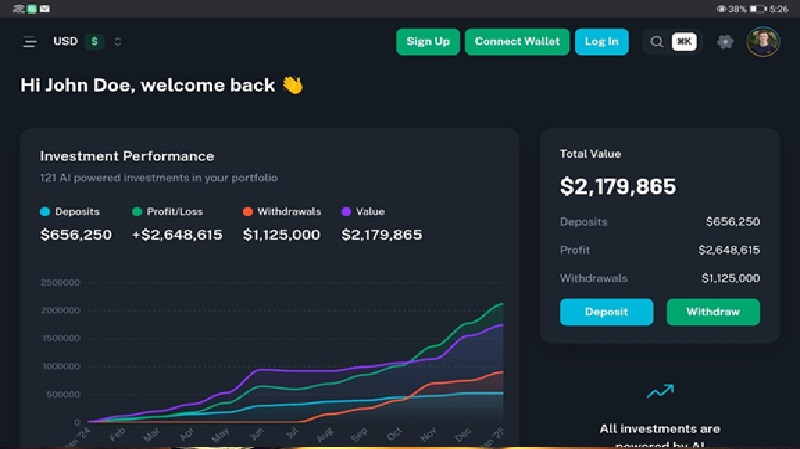
One of RCO Finance’s best features is its AI-driven Robo Advisor—a proprietary technology that can discover nascent market trends and yield actionable trading alerts.

By accessing data from Bloomberg, Reuters, on-chain studies, and sentiment from socials, the AI engine gives the trader a high level of certainty in identifying breakouts.

Think about how Official Trump (TRUMP) surged more than 200% within a few days after its release after President Donald Trump’s inauguration. The Robo Advisor is made to keep pace with bullish opportunities such as this one and give you a chance to make huge profits before other investors.

This tool allows users to maximize gains while minimizing emotional trading errors. This intelligent, data-driven tool places RCOF light years ahead of many speculative tokens that are founded on community buzz alone.
Market Confidence Expressed In Its Presale

Investor confidence in RCO Finance has already been established. Raising over $13 million in presale alone, the project has also launched a Beta platform that enables early adopters to test features like automated staking, multi-asset swaps, and 1000% leverage.

Interestingly, due to the presale’s discounted prices, you can purchase as many RCOF tokens as you need to boost your portfolio to 100%. Currently priced at $0.100000 in Stage 5 of this public ICO, RCOF is the best crypto to buy in Q2 2025.

Analysts See Massive Growth Potential, So Buy RCOF Now!

According to forecasts from top analysts, RCO Finance could experience 1000% gains by the end of 2025. This means an investment as low as $100 could potentially return $100,000.

What makes this projection realistic is the project’s actual use case and scalability. By enabling users to operate in both traditional and decentralized markets, RCO Finance isn’t just another crypto—it’s a financial ecosystem in the making.

As global attention towards DeFi and hybrid finance platforms continues to grow, the RCOF market significance will obviously grow as well, drawing the attention of market leaders who are now bypassing this jewel.

In a world where the loudest crypto projects get the most attention, RCO Finance is doing it differently—letting its tech, strategy, and performance do the talking. It may not be on everyone’s radar screen yet, but the fundamentals are too strong to ignore.

As an RCOF investor, you are also guaranteed the safety of all your investments as the project has undergone a thorough smart contract audit by SolidProof.

So, if you’re searching for a crypto asset with real-world utility, a data-backed trading advantage, and the potential for life-changing returns, RCO Finance is worth a serious look. As 2025 approaches, don’t be surprised if this under-the-radar project becomes the breakout star of the next bull run.

For more information about the RCO Finance Presale:

Visit RCO Finance Presale

Join The RCO Finance Community
 

BlockDAG Achieves a 2,380% Surge: Leading the Race to $1 as Pi Coin Holds at $0.5666 & Dogecoin at $0.1555

0

Different cryptocurrencies capture attention for various reasons. Some thrive on historical significance, others on robust community support, and a select few succeed through sheer innovation.

A recent update on Dogecoin underscores its deep roots in community appeal. It has gained widespread attention as a cultural icon, sustained by a fervent loyalty that overshadows its practical use. However, community affection isn’t everlasting, and currently, Dogecoin is priced at $0.1555, struggling to maintain support at $0.17.

Pi Coin stands out more for user engagement than its market performance. Despite attracting 1.8 million participants at PiFest, its price recently fell by 15% in just one day.

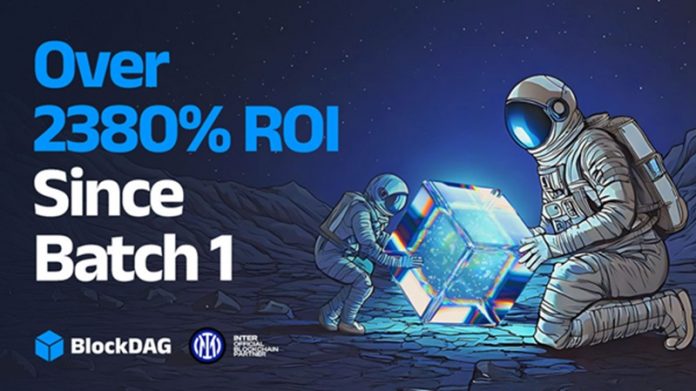
BlockDAG sets itself apart not by riding waves of hype but by solid accomplishments. With the launch of its Keynote 3, it has already raised over $213.5 million and seen a remarkable 2,380% increase in value since its first batch. Now, reaching $1 isn’t speculative for BlockDAG (BDAG); it’s a calculated next milestone.

Will Dogecoin Bounce Back Above $0.1740?

Dogecoin recently dropped below $0.17, a decline that seemed more like a plunge through unexpected weakness. With a community that’s almost cult-like in its devotion, this downturn appears particularly unstable.

Dogecoin’s market indicators present a complex picture, adding to the uncertainty of its price forecast. The MACD has settled down, the RSI is hovering around neutrality, and it faces significant resistance around $0.1680 and $0.1740. While some analysts suggest a potential bullish shift, market realities often speak louder than speculative whispers. If Dogecoin doesn’t regain the $0.170 level soon, the prognosis could turn grim, possibly dipping to $0.120.

Pi Coin’s Value Falls to $0.5666—Are Its Benefits Overstated?

Despite the excitement generated by PiFest and assertions of “real-world adoption,” Pi Coin’s value recently plummeted by 15% in just one day, dropping to $0.5666 and shaking the remaining confidence of its supporters.

The Map of Pi app boasts over 1.8 million active users, indicating that user engagement is high. However, the coin’s market price paints a contrasting picture. Despite a substantial daily trading volume of $443 million, Pi Coin is still 78.7% below its highest value. Discussions on Reddit reflect growing frustration, with some users contemplating selling their holdings, while others advise waiting it out. If intensifying the practical applications of the coin does not stabilize its value, one must wonder what will sustain Pi Coin’s viability in the long term.

BlockDAG’s Meteoric Rise: How High Will It Go?

While typical presales often rely on temporary promotions and celebrity endorsements, BlockDAG has charted a different path. It soared from $0.001 to $0.0248 over 27 presale stages, achieving a remarkable 2,380% growth without any venture capital support—driven entirely by genuine belief in its potential.

In just over ten months, BlockDAG has amassed over $213.5 million, sold beyond 19.2 billion BDAG coins, and attracted more than 170,000 unique holders. These figures are not mere numbers; they represent a significant shift in buyer behavior. People are not merely speculating; they are strategically jumping in its future.

BlockDAG stands out because it is not just based on speculation. It has made substantial progress in building its infrastructure—including a live beta testnet, over 800,000 users on its X1 mobile mining app, hardware ready for distribution to early backers, and more than 200 decentralized applications in active development.

During the recent Keynote 3 event, CEO Antony Turner didn’t just offer hopeful forecasts—he laid out a concrete schedule. “The BlockDAG Mainnet is on track for launch later this year, completing an ambitious phase of development,” he declared. Here, the emphasis is on ‘completion’ rather than merely launching. The groundwork has been laid, and progress is ongoing.

Moreover, the price predictions for BlockDAG—$1 by 2025, $20 by 2027, and $30 by 2030—might appear ambitious at first glance. However, entering at $0.0248 in the latest batch with a robust infrastructure and an active community in place suggests a strategy of seizing value ahead of the masses. BlockDAG has consistently advanced beyond the typical hype cycles, focusing on tangible development and leaving a solid trail of $213.5 million as evidence of its progress.

What’s Next?

As the RSI for DOGE stalls and the MACD softens, the hopeful narrative around Dogecoin is becoming more doubtful than ever. Pi Coin’s volume may be high, but its price retreat signals a growing disconnect with market expectations.

In contrast, BlockDAG’s narrative deviates from the typical crypto presale path. It has already demonstrated a 2,380% return for early buyers, with future valuations closely tied to a network that’s already operational and expanding. In this volatile market, the timing of your fundings can be as critical as the choice of the project itself.

Presale: https://purchase.blockdag.network

Website: https://blockdag.network

Telegram: https://t.me/blockDAGnetworkOfficial

Discord: https://discord.gg/Q7BxghMVyu


ETH Price Finds Support, Tether Makes Headlines, BlockDAG Emerges as Best Long-Term Crypto with $213.5M Raised

0

As April 2025 unfolds, three standout names—Ethereum, Tether, and BlockDAG—are shaping buyer sentiment. Ethereum has found a stable range after a turbulent Q1. Tether, meanwhile, is expanding its utility in the U.S. payment space. But BlockDAG is making the strongest case for the future, with a $213.5 million presale, a live Beta Testnet, and performance numbers that suggest it’s ready to rival leading Layer-1s.

In a shifting market, buyers are beginning to favor projects with visible progress and sound infrastructure over speculation. Ethereum and Tether remain foundational players—but BlockDAG’s forward movement hints at something bigger.

Ethereum Holds Its Ground, but On-Chain Activity Tells a Deeper Story

After a rocky start to the year, Ethereum (ETH) appears to be stabilizing, trading around $1,850. This comes after a steep 45% drop in Q1—the worst since 2022. Yet, recent signs suggest that large holders are quietly returning. MiTrade reports a rise in wallets holding 10,000 to 100,000 ETH, especially after the price dipped below $1,800.

Still, this recovery masks a key trend: Ethereum’s gas fees are now the lowest since 2020. While that might sound positive, the dip is tied to decreased network use. Daily fee revenue has fallen below $5 million—a level not seen in over four years. Analysts point to Layer-2 growth, especially platforms like Base and the Dencun upgrade, which are drawing activity away from the main chain.

Tether Looks Beyond Stablecoins with New U.S. Payment Push

Tether, best known for USDT—the world’s most-used stablecoin—is preparing to step outside its usual role. According to Axios, the company is working on a blockchain-based payment network aimed at U.S. users. CEO Paolo Ardoino describes this move as a strategic shift: while USDT acts as a savings tool globally, in the U.S., the vision is to offer a utility similar to a checking account.

Tether’s expansion arrives as its closest competitor, Circle’s USDC, gains traction among regulators and inches toward a possible IPO. At the same time, U.S. lawmakers are preparing to introduce stablecoin legislation that could reshape the landscape. Tether’s efforts signal a clear ambition to adapt and compete as this new framework takes shape.

BlockDAG’s $213.5M Presale Signals Strong Long-Term Confidence

As Ethereum finds its footing and Tether explores new ground, BlockDAG continues to rise. The project has now raised $213.5 million through its presale, with no venture capital backing—just growing community demand and clear delivery. These numbers aren’t just impressive; they position BlockDAG as one of the most successful fundraising cases in recent memory.

BlockDAG’s design blends Proof-of-Work and Directed Acyclic Graph architecture, offering something distinctly new. CTO Jeremy Harkness emphasized during Keynote 3:

“Our hybrid consensus mechanism combines the best of two worlds: the security and proven robustness of Proof-of-Work with the flexibility and speed of a Directed Acyclic Graph. This isn’t your traditional blockchain—we’re literally rewriting the rules.”

By enabling parallel block confirmation, BlockDAG avoids the limitations seen in networks like Ethereum. With mainnet targeting 2,000 transactions per second and future scaling to 15,000 TPS, it’s taking aim at next-gen performance from the start.

The Beta Testnet is already active, involving more than 110,000 wallets. Each received 10,000 BDAG test tokens, and the network is expected to handle over a million transactions before mainnet. This is more than a technical test—it’s a full rehearsal, complete with tools, UI flows, and live functionality.

What’s adding fuel to the fire is a $60,000 reward campaign. The top 10 active wallets, miner nodes, and holders by token balance will each earn $2,000 worth of BDAG (based on the $0.05 launch price). The campaign is designed to trial core functions like smart contract vesting, token management, and miner incentives—all under real conditions.

As CEO Antony Turner noted in Keynote 3:

“This isn’t just capital—it’s fuel for innovation, expansion, and the next evolution of blockchain technology.”

BlockDAG isn’t just building tech—it’s building a developer community. The BlockDAG Academy is now offering tiered education programs to onboard new builders. Meanwhile, grants, hackathons, and an Ambassador Program are giving early contributors a head start. As Developer Ecosystem Head Steven Clarke-Martin explained:

“Whether you’re an experienced blockchain developer or just getting started, these initiatives will support your journey.”

Tools like the NFT and token creation wizard, an integrated development environment (IDE), and a live chain explorer are already available. This isn’t a preview of adoption—it’s a simulation already underway.

Closing Thoughts

Ethereum and Tether remain key players, but BlockDAG is positioning itself as something more—a complete, ready-to-scale network with real tools and active users before launch. With $213.5 million raised, 110,000+ wallets on testnet, and rewards already rolling out, this project is proving that utility and progress can exist before a mainnet even goes live.

In a market that often celebrates flash over follow-through, BlockDAG is showing what happens when real work meets real interest. It’s not just one of the best-performing presales—it may well be the best long-term crypto pick of this cycle.


Presale: https://purchase.blockdag.network

Website: https://blockdag.network

Telegram: https://t.me/blockDAGnetworkOfficial

Discord: https://discord.gg/Q7BxghMVyu


U.S. Department of Justice Disbands Its Crypto Enforcement Team

0

The U.S. Department of Justice (DOJ) disbanded its National Cryptocurrency Enforcement Team (NCET) on April 7, 2025, as confirmed by multiple sources. Deputy Attorney General Todd Blanche issued a memo stating the DOJ will no longer pursue cases against crypto exchanges, mixers, or offline wallets for their users’ actions or unintentional regulatory violations. The focus is shifting to prosecuting individuals who directly harm crypto investors or use digital assets for crimes like terrorism, drug trafficking, or fraud.

This aligns with the current administration’s push to reduce regulatory pressure on the crypto industry and foster innovation, though critics warn it could weaken oversight of illicit activities. Ongoing investigations inconsistent with this policy are to be closed, but specific case details weren’t disclosed.

Reduced regulatory pressure may encourage blockchain startups and developers to experiment with new applications, as the fear of unintentional regulatory violations diminishes. This could accelerate advancements in decentralized finance (DeFi), smart contracts, and tokenized assets. Exchanges and wallets facing fewer legal hurdles may expand services, improving user access to blockchain-based platforms. This could drive mainstream adoption of cryptocurrencies and decentralized applications (dApps).

While the move signals a lighter touch, the lack of clear guidelines might create confusion for blockchain projects navigating compliance. Some developers may hesitate without a defined legal framework. Critics argue that scaling back enforcement could enable bad actors to exploit blockchain’s pseudonymity for illicit activities, potentially tarnishing the technology’s reputation and slowing institutional trust.

The U.S. signaling a pro-crypto stance may attract blockchain talent and investment, positioning it as a hub for innovation. However, jurisdictions with stricter regulations might lose ground or push back with tighter controls. The overall effect hinges on how the DOJ balances this leniency with targeted enforcement against clear criminal activity. Blockchain’s growth could surge, but unchecked risks might invite future crackdowns.

DeFi protocols, often built on permissionless blockchains, have faced scrutiny for operating outside traditional financial regulations. With the DOJ scaling back enforcement against platforms for unintentional violations, developers may feel emboldened to create new protocols, such as advanced lending platforms, decentralized exchanges (DEXs), or synthetic asset systems, without fear of immediate legal repercussions. Reduced regulatory pressure could lead to more experimentation with novel DeFi primitives like flash loans, automated market makers (AMMs), or cross-chain bridges. Developers might push boundaries in yield farming or liquidity mining without worrying about accidental non-compliance with U.S. laws.

The U.S. becoming a more DeFi-friendly jurisdiction could draw global developers, fostering innovation hubs for blockchain-based financial tools. This might lead to breakthroughs in scalability or user experience, addressing current DeFi pain points like high gas fees or complex interfaces. Crypto wallets and exchanges are critical gateways to DeFi. With fewer legal risks, these platforms may expand services, integrate more DeFi protocols, and offer user-friendly interfaces, lowering barriers for non-technical users. For example, wallets like MetaMask could deepen integrations with DEXs like Uniswap or lending platforms like Aave. A lighter regulatory touch could encourage traditional financial institutions to explore DeFi.

DeFi’s borderless nature means U.S. policy shifts ripple globally. Relaxed enforcement could spur adoption in regions where users rely on U.S.-based exchanges or wallets to access DeFi, amplifying transaction volumes on chains like Ethereum, Solana, or Binance Smart Chain. While the DOJ’s move reduces immediate enforcement, it doesn’t clarify DeFi’s legal status under securities, banking, or anti-money laundering (AML) laws. Protocols still face uncertainty about compliance with agencies like the SEC or CFTC, which could deter some developers from fully capitalizing on the leniency.

DeFi operates globally, but other jurisdictions (e.g., EU with MiCA) may tighten regulations in response to perceived U.S. laxity. This could complicate cross-border operations for DeFi protocols, forcing them to navigate a patchwork of rules. The DOJ’s current stance reflects the administration’s pro-crypto leanings, but political shifts could reverse this. DeFi projects scaling rapidly now might face abrupt regulatory crackdowns later, especially if high-profile incidents expose vulnerabilities.

DeFi’s pseudonymity and lack of centralized control make it attractive for money laundering or fraud. The DOJ’s focus on individual bad actors rather than platforms could embolden malicious users, as protocols like mixers (e.g., Tornado Cash forks) face less scrutiny. This might lead to more hacks, rug pulls, or Ponzi-like schemes disguised as DeFi projects. High-profile DeFi exploits could erode public trust, especially if regulators later blame lax oversight. For instance, a major protocol hack like the $600M Poly Network exploit in 2021 could prompt renewed DOJ or SEC intervention, undermining DeFi’s growth.

With less platform accountability, unsophisticated users might fall prey to scams or poorly audited protocols. DeFi’s permissionless nature means anyone can launch a token or liquidity pool, and reduced enforcement might amplify predatory behavior. Relaxed policies could attract more capital to DeFi, increasing total value locked (TVL) in protocols. For context, DeFi’s TVL was around $90 billion in early 2025; a regulatory green light could push this higher as investors and institutions participate.

A DeFi boom might drive demand for governance tokens (e.g., UNI, COMP, AAVE), inflating prices short-term. However, unchecked growth could lead to bubbles, with corrections if projects fail to deliver sustainable value. Stablecoins like USDT and USDC are DeFi’s backbone. If exchanges and wallets face fewer restrictions, stablecoin adoption could grow, but any future DOJ pivot targeting issuers (e.g., Tether) could disrupt DeFi liquidity.

Blockchains hosting DeFi (e.g., Ethereum, Polygon, Arbitrum) could see increased activity as developers deploy new protocols. Layer 2 solutions might gain traction for scaling DeFi transactions, addressing cost and speed issues. With less fear of U.S. enforcement, protocols enabling cross-chain interoperability e.g., Chainlink, Polkadot could thrive, creating more interconnected DeFi ecosystems. If the DOJ maintains this stance, the U.S. could outpace stricter jurisdictions like the EU or China in DeFi innovation. However, global competitors might counter with clearer regulations to attract compliant projects.

AfDB Approves $100m Youth Bank for Nigeria After Adesina Slams Commercial Banks for Failing Young Entrepreneurs

0

The African Development Bank (AfDB) has approved a $100 million investment for the creation of the Nigerian Youth Entrepreneurship Investment Bank, a new financial institution dedicated to empowering young entrepreneurs across the country and the wider African continent.

The announcement came during the 14th Convocation Lecture of the National Open University of Nigeria (NOUN) in Abuja, where AfDB President Dr. Akinwumi Adesina took a direct swipe at Nigeria’s banking sector. The convocation lecture was chaired by former INEC Chairman, Prof. Attahiru Jega, who lauded Adesina as “one of the continent’s most visionary leaders,” adding that his work at AfDB is helping to reframe how Africa approaches development—no longer as a series of aid-dependent crises, but as a continent with the capacity to chart its own course.

In a blunt rebuke, Adesina accused commercial banks in Nigeria and across Africa, of systematically locking out the very group whose ingenuity and innovation are critical to the continent’s future.

“The commercial banking system, the financial system, has failed young people in Africa,” Adesina said.

It was against that backdrop that the $100 million youth bank was announced. For Adesina, this wasn’t merely a policy intervention—it was a direct response to what he described as a financial system that has become unfit for purpose, especially in a continent where youth entrepreneurship is exploding but support is nearly nonexistent.

“Young people don’t lack ideas—they lack support,” he said, noting that across Africa, 22% of the working-age population is engaged in entrepreneurial activity, the highest rate in the world according to the Global Entrepreneurship Monitor (2020). Yet access to capital, particularly for startups and early-stage ventures, remains staggeringly low.

The new youth bank, according to Adesina, will offer a mix of debt and equity financing, alongside tailored technical assistance and business development services. It will serve as a platform for young entrepreneurs to not only secure the funding they need but also build the skills and networks necessary to scale their businesses sustainably.

Sectors earmarked for support include agriculture, retail, services, and especially technology. Africa’s digital economy alone, Adesina said, is projected to contribute $180 billion to the continent’s GDP by 2025, rising to $712 billion by 2050 if adequately harnessed.

But it won’t stop there. The AfDB also reaffirmed its support for the Investment in Digital and Creative Enterprises (iDICE) programme—a $614 million initiative backed by a consortium that includes the Agence Française de Développement (AFD), the Islamic Development Bank, and Nigeria’s Bank of Industry. The iDICE programme is expected to inject $6.4 billion into the Nigerian economy and create over six million jobs, targeting small and medium-sized businesses in Nigeria’s vibrant tech and creative sectors.

Still, Adesina made it clear that financing without education would only take the continent so far. He warned that Africa continues to lag dangerously behind in education, especially in science and technology, putting the region at risk of being left behind in the race toward the Fourth Industrial Revolution.

He painted a stark picture, noting that only 43% of African youth complete secondary education, compared to 98.9% in Japan. Just 10% go on to higher education in Africa, while Japan sees a 60% enrollment rate. Even among university students, only about 25% in Africa are pursuing degrees in STEM fields, trailing Japan’s 30%.

To address this knowledge gap, the AfDB, in partnership with the African Union, is launching a $300 million African Education, Science and Technology Innovation Fund. The fund will be channeled into building expertise in artificial intelligence, robotics, cloud computing, and other emerging technologies—areas that will define the jobs and economies of the future.

“The future of Africa cannot be built on low-level skills and outdated industries,” Adesina said. “We must build a new foundation anchored on education, science, innovation, and entrepreneurship.”

His call for change extended beyond banks and classrooms. He urged African governments to adopt a new development mindset—one focused on resilience, energy infrastructure, mineral resource value chains, and self-reliance.

“Africa has no buffers,” he said, lamenting the continent’s repeated vulnerability during global shocks, from pandemics to commodity price swings. He criticized the long-standing reliance on raw material exports and emphasized the need to process and add value locally.

His remarks came at a time when Nigeria’s economy remains under pressure. Youth unemployment is high, inflation is running hot, and structural bottlenecks—from electricity to infrastructure—continue to suppress productivity. Commercial banks, meanwhile, have largely prioritized lending to large corporations and high-net-worth individuals, with startups and small businesses left to scramble for survival.

Many young Nigerian innovators have long complained of opaque lending conditions, collateral requirements they cannot meet, and a hostile credit environment that rewards speculation over innovation.

The Youth Bank, therefore, is more than just a financial tool. It is an attempt to correct a system that has for too long ignored those who carry the burden of Africa’s future. It also signals that the AfDB, under Adesina’s leadership, is pivoting from abstract economic theories to institution-building—designed to unlock productivity and scale across the continent.

For Nigeria, where over 60% of the population is under 25, the fund is expected to boost the economy through entrepreneurship. If implemented effectively, the bank could serve as a model for other African nations grappling with similar demographic and financial inclusion challenges.