DD
MM
YYYY

PAGES

DD
MM
YYYY

spot_img

PAGES

Home Blog Page 1510

Solana (SOL) Price Set to Reach $620 in 2025, While This Coin Could Shatter Records with a 19,290% Rally

0

The cryptocurrency market is undergoing developmental changes, and Solana (SOL) is foreseen to spearhead Layer-1 blockchains. But another project gaining traction—Rexas Finance (RXS)—could outperform SOL’s staggering growth estimations of 19,290%. While Solana benefits from its high-speed transactions and strong developer ecosystem, Rexas Finance stands out by revolutionizing asset tokenization through blockchain. With its final presale stage nearing completion, 91.60% of RXS tokens sold, and a Certik audit boosting investor confidence, the coin is set for an explosive rally. As RXS gears up for its June 19, 2025, exchange listing, its potential to redefine blockchain-based investments could make it one of the biggest winners of the year.

Solana’s Path to $620 in 2025

With unmatched transaction speeds and low costs, Solana is one of the most promising blockchain technologies available today. As of writing, its worth stands at $131, but analysts expect that value to reach $620 by 2025, owing to its application in DeFi, NFTs, and even TradFi. The network’s position in the market has greatly improved due to the increased developer activity and the launch of new projects, making it competitively positioned against Ethereum. Alongside this, Solana’s scalability issues and periodic outages continue to be a concern. Despite these challenges, institutional interest and growing utility are pushing SOL toward new highs. While Solana aims for a 4x increase, another project—Rexas Finance—could deliver a much larger return as blockchain adoption shifts toward real-world asset tokenization.

Rexas Finance (RXS): A Blockchain Revolution in Asset Ownership

Contrary to ordinary cryptocurrencies, Rexas Finance integrates real-world value through asset tokenization. Users of the platform can now buy, trade and own shares of real estate, pieces of art, commodities, and intellectual property on the blockchain. This enhances investment opportunities, opens new markets, improves liquidity and makes investments more accessible to a larger number of people.  Rexas Finance is the leader in this sector as tokenization gains more investors through institutions and individuals with high net worth. The platform boasts a DeFi ecosystem where users can trade assets and stake them for passive income. RXS is expected to become a multibillion-dollar project due to the increasing need to integrate tangible assets into the crypto landscape, predicting a 19,290% rally in the next few years.

Final Presale Stage: Growing Investor Confidence in RXS

The Rexas Finance presale is in its final stage, with 91.60% of tokens already sold and over $47.6 million raised. This overwhelming investor participation signals strong market confidence in the project. Unlike speculative meme coins, RXS is backed by institutional-grade auditing, having passed a Certik security audit, ensuring smart contract integrity and safety for investors.  Set for listing on June 19, 2025, RXS is poised for a major price breakout, following a trajectory similar to early blockchain finance projects. While the market shifts towards utility-driven tokens, RXS is transformative, capturing market share and utility, poised to outperform top-tier cryptos like SOL in percentage growth.

The $1 Million Giveaway and Tokenomics Strengthening RXS

Rexas Finance is incentivizing early adopters through its $1 million giveaway, where 20 winners will receive $50,000 worth of RXS tokens. This campaign has fueled demand for RXS, pushing it toward full presale completion. Moreover, the RXS tokenomic model guarantees long-term sustainability and incentives for investors, allocating 42.5% to presale, 22.5% for staking, and 15% for liquidity.  This strategy bolsters the price support after listing, minimizing the potential for significant sell pressures. RXS utilizes multi-chain capabilities to trade assets across various networks. This allows RXS to avoid the scalability issues Solana is still trying to solve. Given the ongoing growth in adoption and the expansion of its ecosystem, RXS is likely to emerge as one of the top-performing cryptos in 2025.

Conclusion: Why RXS Could Outshine SOL

While Solana is expected to hit $620, its growth potential remains limited compared to emerging projects like Rexas Finance. RXS offers real-world asset tokenization, a DeFi ecosystem, and a Certik-audited foundation, making it one of the most secure and innovative crypto projects today.  With 91.60% of its presale tokens sold, a strong tokenomics model, and a major giveaway fueling demand, RXS is on track for a record-breaking rally. As the blockchain industry moves beyond speculation and into tangible financial solutions, Rexas Finance is poised to be one of the biggest winners of 2025.


For more information about Rexas Finance (RXS) visit the links below:

Website: https://rexas.com

Win $1 Million Giveaway: https://bit.ly/Rexas1M

Whitepaper: https://rexas.com/rexas-whitepaper.pdf

Twitter/X: https://x.com/rexasfinance

Telegram: https://t.me/rexasfinance

OpenAI Countersues Elon Musk, Accusing Him of Sabotaging The Company

0

OpenAI, maker of popular Artificial Intelligence (AI) chatbot ChatGPT, has filed a countersuit against Elon Musk, alleging that he has used every tool available to harm the company and disrupt its operations.

The filing, submitted to a federal judge, seeks to block Musk from taking further “unlawful and unfair” actions against the company. It is understood that Musk who co-founded OpenAI in 2015 with Sam Altman, has sued OpenAI twice in the past year to prevent it from straying from its original nonprofit mission.

OpenAI claims that if it does not transition to a for-profit entity by the end of 2025, it risks losing a portion of the $40 billion it recently raised. Recall that last month, the company announced it had closed what amounts to the largest private tech funding round on record. The $40 billion financing led by SoftBank, valued the ChatGPT maker at $300 billion.

In its countersuit, OpenAI accuses Musk of orchestrating a “sham” $97.375 billion bid to acquire the company, timed to scare off legitimate investors and destabilize its fundraising efforts. In February this year, a group of investors led by Elon Musk offered to buy control of OpenAI. The consortium of investors includes Musk, his startup xAI, and long-time investors in his other businesses including, Baron Capital Group, Valor, Atreides, Vy Capital, Joe Lonsdale’s 8VC, and an investment vehicle led by Endeavor CEO Ari Emanuel.

Meanwhile, Musk’s $97.4 billion bid to acquire OpenAI, contradicts his legal claims that the startup’s assets can’t be transferred away for private again. The company however alleges that the offer was baseless, lacking evidence of financing, and seemingly inspired by a “comedic reference” to Musk’s favorite sci-fi novel, Look to Windward by Iain Banks, rather than OpenAI’s financial projections or performance.

OpenAI further contends that Musk’s actions are part of a years-long “relentless” campaign of “harassment” aimed at seizing control of the company and undermining its leadership. The filing warns that if Musk succeeds, he could damage OpenAI’s revenue, drawing parallels to his management of Twitter.

In a series of posts on X, OpenAI labeled Musk’s actions as “bad-faith tactics” to hinder its progress and accused him of prioritizing personal gain over the company’s mission. The posts referenced past blog entries on OpenAI’s nonprofit pivot and email exchanges with Musk, claiming he once sought to merge OpenAI with Tesla as a for-profit entity before exiting in 2018.

Musk, on the other hand, who left OpenAI’s board citing talent competition with Tesla and unspecified disagreements, has been a vocal critic of Altman’s leadership. He initially sued OpenAI in February 2024, then dropped the case in June, and refiled it in August.

OpenAI’s countersuit intensifies the legal battle, urging the court to protect its future structure and independence from Musk’s alleged interference. On the other hand, Musk via his legal team, has stated that it will drop the bid to acquire OpenAI if the board commits to keeping it as a nonprofit.

The filing further argues that Musk’s buyout offer is a genuine one, stating that the nonprofit should receive fair market value for its assets based on what an independent buyer would pay.

Physics of Product Pricing and Optimizing Profitability – Ndubuisi Ekekwe

0

In Oriendu Market, Ovim, I learnt the construct of pricing, after school. Lechi, my grandmother, understood the dynamics of the market. On the big Orie market days, every 8 days, Oriendu would welcome the world, with traders from Enugu, Aba, etc arriving for business. Unlike the small Oriendu market (Igbo runs on a 4-day week), the big one has more buyers, flipping the pricing equilibrium where produce could command more money.

“Isi Uwa…if after 4pm, sell this yam lower by …Naira”, she would say [the full name of Ndubuisi is Ndu bu isi uwa meaning life is supreme above all things]. That price reduction did not make sense until later on I realized that from 4pm, those outside traders would begin to depart, and anything not sold would lose value considering that storage facilities were limited.  There was no technology, but timing was used to model the price positioning considering the nature of the product.

Good People, from Oriendu Market to Wall Street, pricing is fundamental and strategic. And the price you put on a product or service is largely inconsequential. The real deal is the perception of the customers on the specific amount. This is where the social science of pricing moves into physics. Yes, two salespeople can introduce the same product to the same customers, and each of the customers will come out with different perceptions of the product price.

In other words, the best Pricing Power is creating perception which will move the customers, without necessarily adjusting the actual price of the product. Yes, how do you make a product seem “cheap” by not actually reducing the actual price but through perception? But note: it goes beyond being “cheap” to affordability since something could be cheap and still not affordable.

The greatest moment in a business is when a company discovers and operates a great business model. Why? It is through a business model that companies create value. Yes, a business model encapsulates the logic of a firm, and the way it combines and uses factors of production to create value for stakeholders.

But how do you create value? Do you go cost plus or value-based pricing? How is that pricing going to help you scale, looking at your marginal cost? Your pricing strategy affects value capture which can shape your unit economics. When the unit economics is bad, you are not SCALING, but growing! The greatest companies SCALE, not just grow. And that happens when revenue and profit grow faster than your cost. So, if you plot the transaction cost, distribution cost, fixed cost, revenue, and profit, against Growth, the first three will be largely flat even as the last two are shooting into space. Go exponential on PROFIT!

Amazing People, when marginal cost continuously tends towards zero (i.e. asymptotically to the horizontal line) even as growth happens, you have a GREAT company. Meet me in class for Physics of Pricing!

Sat, April 12 | 7pm-8.30pm WAT | Physics of Product Pricing and Optimizing Profitability – Ndubuisi Ekekwe | Zoom link

Implications of El Salvador’s Shift From Level 4 to Level 1 U.S. State Department Travel Advisory

0

The U.S. State Department’s travel advisory for El Salvador has dropped from Level 4 (“Do Not Travel”) to Level 1 (“Exercise Normal Precautions”) over the past five years, reflecting significant improvements in security. This shift is largely attributed to President Nayib Bukele’s aggressive anti-gang policies, including mass arrests and the construction of high-security prisons, which have drastically reduced violent crime rates. Official data from El Salvador’s government shows the homicide rate fell from 38 per 100,000 in 2019 to under 2 per 100,000 in 2024, among the lowest in the Western Hemisphere.

Tourism metrics support the claim of El Salvador becoming a safe destination. In 2024, the country welcomed over 3.5 million visitors, a 30% increase from pre-pandemic levels, with tourism revenue surpassing $2 billion. International outlets like Travel + Leisure and Lonely Planet have recently ranked El Salvador above traditional favorites like Sweden, France, and Germany for safety and traveler experience, citing its vibrant culture, beaches, and archaeological sites.

Some critics argue the safety comes at a cost. Human rights groups have raised concerns about due process violations and prison conditions during the gang crackdowns. Others note that while urban tourist areas are secure, rural regions may still face sporadic risks. Still, the data and traveler sentiment align: El Salvador’s turnaround has made it a standout in global tourism.

With over 3.5 million visitors in 2024 and $2 billion in tourism revenue, El Salvador’s economy is diversifying beyond remittances and agriculture. This influx supports jobs in hospitality, transport, and local businesses, reducing unemployment (down to 5% in 2024 from 7% in 2019, per government stats). A safer image attracts investors. El Salvador has seen interest in real estate, renewable energy, and tech (e.g., Bitcoin City plans).

The World Bank noted a 10% increase in FDI inflows since 2022, partly tied to stability. Tourism demand drives upgrades in airports, roads, and attractions like El Tunco and Suchitoto. However, rapid development risks straining resources if not managed sustainably. Lower crime (homicide rate under 2 per 100,000) has made public spaces safer, fostering community pride and social cohesion. X posts often highlight locals enjoying nightlife in areas once avoided.

The gang crackdowns, while effective, have led to over 80,000 arrests since 2022, according to Amnesty International reports. Allegations of arbitrary detentions and prison abuses raise concerns about civil liberties, potentially alienating some citizens. Tourism spotlights Salvadoran heritage—Mayan ruins, cuisine, and festivals—boosting national identity. But there’s a risk of commercialization diluting authenticity.

The safety turnaround has cemented Nayib Bukele’s domestic and international clout. Polls e.g., CID Gallup, 2024 show approval ratings above 80%, strengthening his grip on power. However, critics warn of authoritarian tendencies, as constitutional checks weaken. Bukele’s approach is studied by leaders in Honduras, Guatemala, and beyond. Its success could inspire similar hardline policies, but failures in due process might deter democracies like Costa Rica from following suit.

El Salvador’s Level 1 status elevates its diplomatic standing, outshining regional peers. Yet, tensions with NGOs and some Western governments over human rights could complicate relations. El Salvador’s success contrasts with neighbors like Honduras (Level 3 advisory) and Guatemala (Level 2). This could redirect tourism and investment flows, pressuring others to reform security policies.

Safer conditions and economic growth may reduce emigration. According to U.S. Customs and Border Protection data shows a 20% drop in Salvadoran migrant encounters at the U.S. border from 2021 to 2024, easing regional migration pressures. Displaced gang activity could destabilize borders with Honduras or Guatemala, though no major uptick in cross-border crime has been reported yet. Maintaining safety and tourism growth requires balancing security with rights, plus investing in education and healthcare to ensure long-term stability.

Overreliance on tourism could expose the economy to global shocks. Beating countries like Sweden or France in safety rankings sets a precedent for rapid transformation but invites scrutiny. If crime rebounds or governance falters, El Salvador risks losing its newfound status. El Salvador’s leap to a safe tourism hub reshapes its economy and global image while sparking debates about security versus freedom.

J.P. Morgan Pulls Plug on Nigerian T-Bills Over Oil Price Slump, Warns Investors To Exit OMO Bills

0
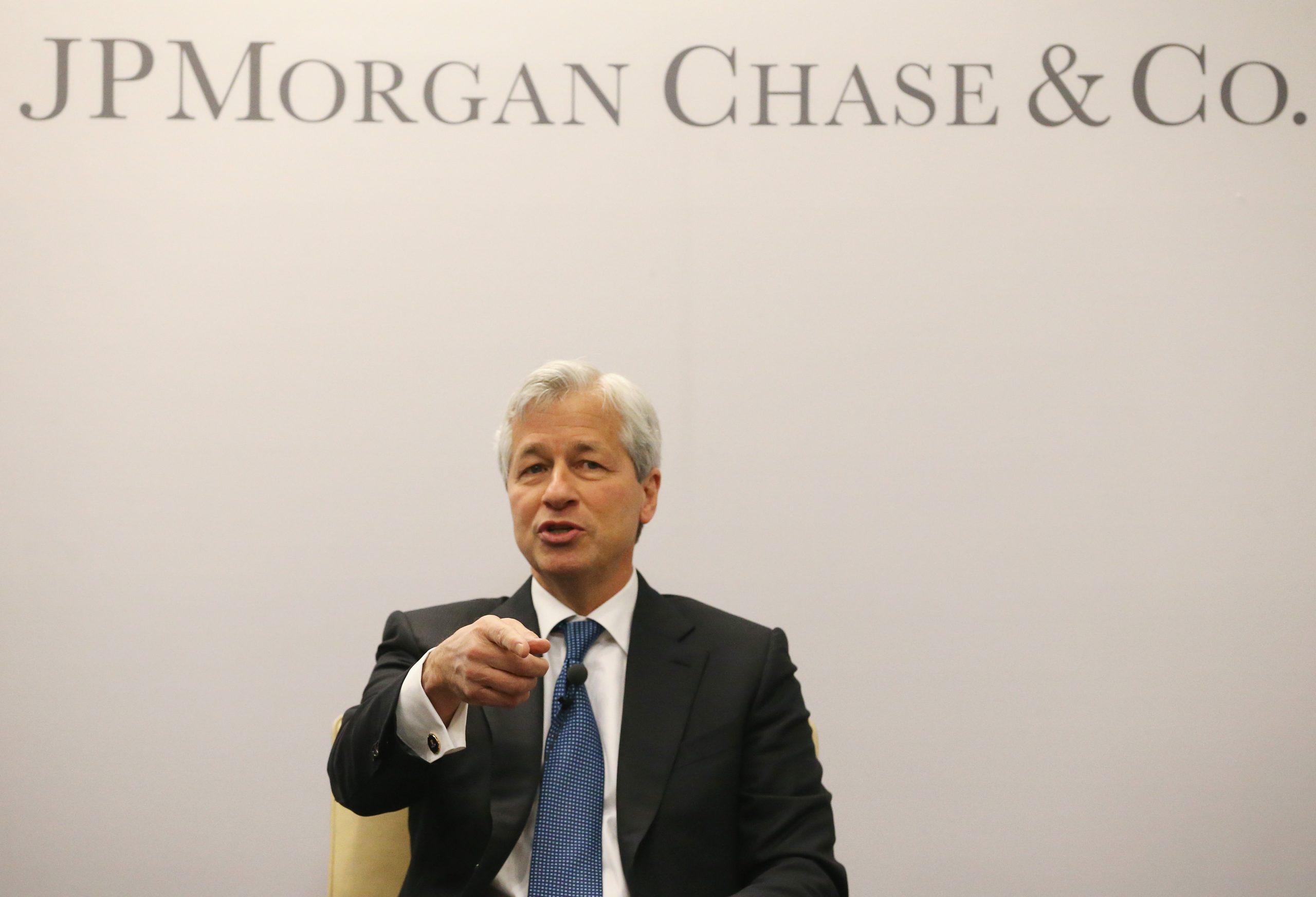
JP Morgan Chase puts contents through its CEO account, it goes viral. But the same content via JPMC account, no one cares (WSJ)

A renewed wave of global economic uncertainty is dimming the lights on Nigeria’s reform-driven optimism, as U.S. investment bank J.P. Morgan pulls the brakes on its bullish stance over the country’s debt instruments.

In a sharp departure from its earlier position, the bank has told investors to exit long positions in Nigerian Open Market Operation (OMO) bills, citing deepening macroeconomic vulnerabilities linked to declining oil prices and an increasingly unstable global economy.

The April 9 research note, titled “Frontier Local Markets Strategy: Reducing risk further,” is the strongest signal yet that foreign appetite for Nigerian debt may be drying up. J.P. Morgan had previously recommended Nigerian treasury bills as a high-yield opportunity, particularly after the Central Bank of Nigeria (CBN) initiated market reforms last year to unify exchange rates and end costly fuel subsidies. But now, with Brent crude heading below $60 per barrel, dangerously close to Nigeria’s budgetary break-even point, the bank is sounding the alarm.

“We’re advising clients to close their positions in Nigerian T-bills,” the report stated, warning that oil below $60 could sink Nigeria’s current account back into deficit and pile pressure on the naira.

The shift in tone comes amid a swirl of global uncertainties. J.P. Morgan pointed to the global tariffs by the U.S. President Donald Trump. The bank says Trump’s stance on sweeping global tariffs could reignite trade wars that hurt emerging markets like Nigeria, where export earnings remain precariously tied to crude oil.

This geopolitical backdrop, coupled with the reality of falling oil prices, now threatens to upend Nigeria’s fragile economic recovery.

CBN’s optimism meets investor caution

Just days before J.P. Morgan’s note, Nigeria’s central bank had offered a more hopeful picture. It reported a $6.83 billion balance of payment surplus in 2024 and said external reserves, which hovered around $23 billion, were expected to climb due to improved oil output and export diversification.

“We anticipate a steady uptick in reserves, underpinned by improved oil production levels, and a more supporting export growth environment that is expected to boost non-oil FX earnings,” the CBN said.

But that optimism may now be colliding with crude realities. As oil prices tumble, so too do the prospects of a genuine FX buffer. J.P. Morgan warned that if oil remains under $60—a level seen as Nigeria’s fiscal red line—it could trigger renewed dollar demand, spark portfolio outflows, and lead to a current account deficit.

The bank even floated a worst-case scenario: if the tide of oil-linked FX dries up, the naira could weaken past the 1,700/$1 mark. It currently trades over 1,500, but analysts say that’s largely propped up by central bank intervention.

To defend the naira, the CBN has stepped up its interventions. According to J.P. Morgan, the apex bank sold around $550 million into the market in March alone. That figure has since surged past $1 billion this month, based on estimates from financial analysts.

The bank says this increasing reliance on CBN support highlights a deeper vulnerability: Nigeria’s FX market remains too dependent on a single revenue stream—oil.

“Any disruption to CBN dollar inflows—primarily from oil—could create panic in both currency and bond markets,” the note warned.

J.P. Morgan estimates that potential portfolio outflows from Nigeria could hit $10 billion, although it acknowledged that a portion of this is likely locked in illiquid assets or long-term placements. Still, even a fraction of that leaving the system could rattle already-shaky investor confidence.

OMO bills under pressure, yields spike

Beyond the currency market, cracks are now showing in the domestic fixed-income space. The report notes that liquidity in Nigerian T-bills and OMO instruments has thinned significantly, as rising inflation, foreign outflows, and geopolitical shocks spook investors.

Yields on short-dated securities have surged by as much as 300 basis points in recent weeks, a signal that risk appetite is waning. With fewer buyers in the market, the CBN has had to step in—either injecting liquidity or directly participating in auctions to avoid failed bids.

The shift may seem technical, but the implications are broad. When investor demand weakens for government debt, borrowing costs rise. And when a country like Nigeria is already struggling to plug fiscal holes, this compounds the burden.

At the heart of Nigeria’s dilemma is its dependence on oil, which still accounts for more than 90 percent of FX earnings. The government had pinned its hopes on higher crude exports and economic diversification, especially with the Nigerian National Petroleum Company (NNPC) now fully commercialized. But oil’s global downturn is threatening that push.

The country’s fiscal plans are also built on the assumption of improved tax collection and revenue reforms—yet neither has materialized at the pace needed to offset oil volatility.

“The government had hoped for increased FX inflows through oil exports and multilateral support. However, with oil prices falling and no clear path to alternative revenue streams, the pressure on fiscal and external balances is likely to grow,” J.P. Morgan warned.

However, It’s Not All That Bad

Despite the caution, J.P. Morgan hasn’t written Nigeria off entirely. The bank maintains a medium-term positive outlook, suggesting that reforms like the FX unification and subsidy removal will eventually pay off. It also expects the country to continue its shift towards market-determined exchange rates and local revenue mobilization.

But it hinges all that hope on one condition: Nigeria must withstand the current wave of global headwinds without losing control of its currency or fiscal position.

In essence, Nigeria’s economic recovery remains a balancing act—one that is now swaying under the combined weight of geopolitics, oil market dynamics, and investor nerves. And with oil slipping below the red line and Trump’s sweeping tariffs echoing across markets, the outlook seems gloomy.