DD
MM
YYYY

PAGES

DD
MM
YYYY

spot_img

PAGES

Home Blog Page 1513

Nigeria’s Gas Reserves Rise To 210.54 Trillion Cubic Feet, Crude Oil Reserves Now 37.28 Billion Barrels – NUPRC

0

Nigeria’s crude oil reserves have been revised to 37.28 billion barrels as of January 1, 2025, according to fresh data released by the Nigerian Upstream Petroleum Regulatory Commission (NUPRC).

The updated figure, announced on Friday by the Commission’s Chief Executive, Engr. Gbenga Komolafe comes at a time when global markets are bracing for the ripple effects of renewed tariff tensions, particularly those emanating from President Donald Trump’s second-term trade war posture—raising alarms over the stability of oil prices and their broader implications for oil-dependent economies like Nigeria.

The reserves estimate reflects a slight reduction from the 37.50 billion barrels recorded in 2024. The NUPRC explained that the current tally includes 31.44 billion barrels of crude oil and 5.84 billion barrels of condensates. Though marginal, the dip in reserves has drawn attention largely because it coincides with external warnings of market instability, most notably a recent caution from JPMorgan. The global investment bank warned investors to dump Nigeria’s treasury bills as it expected to fuel a significant decline in oil prices.

With Brent crude heading below $60 per barrel, dangerously close to Nigeria’s budgetary break-even point, the bank advised clients to “close their positions in Nigerian T-bills,” warning that oil below $60 could sink Nigeria’s current account back into deficit and pile pressure on the naira.

“The prospect of oil prices crashing under a new wave of global tariffs could severely undercut Nigeria’s fragile recovery path,” JPMorgan analysts said in a note last week, adding that countries with high fiscal reliance on oil revenue, like Nigeria, could see widening budget deficits and worsening exchange rate pressures.

Engr. Komolafe, while not directly addressing the global warnings, emphasized that the reserve update reflects ongoing efforts by the commission to align with the Petroleum Industry Act (PIA) of 2021 and its broader Regulatory Action Plan for 2024 and beyond. He added that the current reserves position was verified through data from 61 operating companies, whose submissions were audited in line with standard industry procedures.

“Nigeria’s oil and condensate reserves now stand at 37.28 billion barrels. This represents the official national reserves status as of January 1, 2025,” Komolafe said.

He further disclosed that Nigeria’s total gas reserves have risen slightly to 210.54 trillion cubic feet (tcf), up from 209.26 tcf the previous year. Of this, 101.03 tcf represents Associated Gas—gas found alongside oil—while 109.51 tcf represents Non-Associated Gas found in standalone formations. While the gas reserve trajectory remains upward, the real focus remains on crude, given Nigeria’s heavy dependence on petroleum exports for budgetary revenues.

The NUPRC also revealed the Reserves Life Index (RLI)—a projection of how long the reserves would last at current production levels. For oil, the RLI stands at 64 years, while gas reserves are projected to last another 93 years. But those figures assume current output remains stable, which is increasingly uncertain amid both domestic challenges and foreign risks.

Domestically, Nigeria continues to grapple with underperformance in daily crude output. Despite being a member of the Organization of the Petroleum Exporting Countries (OPEC), Nigeria has consistently fallen short of its quota, though recent data suggests some recovery. According to Nairametrics calculations based on NUPRC’s Crude Oil and Condensate Production Report for 2024, the country produced a total of 566.79 million barrels throughout the year.

In February 2025, production figures even surpassed Nigeria’s OPEC quota of 1.5 million barrels per day by 70,000 bpd, a development confirmed by a Reuters survey and attributed to improved stability in the Niger Delta and reduced incidences of oil theft.

Still, the real test lies ahead. President Bola Tinubu has pledged to ramp up production to over 2 million barrels per day in 2025, a move aimed at boosting dollar inflows and narrowing the budget deficit. But that goal could be complicated by falling global demand and the threat of a price collapse if trade tensions further weaken market sentiment.

The renewed push by Trump to reimpose tariffs has already spooked oil markets. Analysts fear that following China’s retaliation, global trade flows could shrink, triggering a slowdown in industrial activity and a steep fall in energy demand. Brent crude prices have already shown signs of volatility, with bearish forecasts now gaining traction.

For Nigeria, whose oil sector accounts for over 80% of foreign exchange earnings and more than half of government revenue, even a modest price downturn could prove disastrous.

In this context, the NUPRC’s disclosure of the latest reserves is both a reassurance and a warning. While Nigeria remains richly endowed with hydrocarbon resources, it remains exposed to the external shocks of an increasingly fragmented global economy.

Implications of the SAVE Act, If It Becomes Law in the United States

0

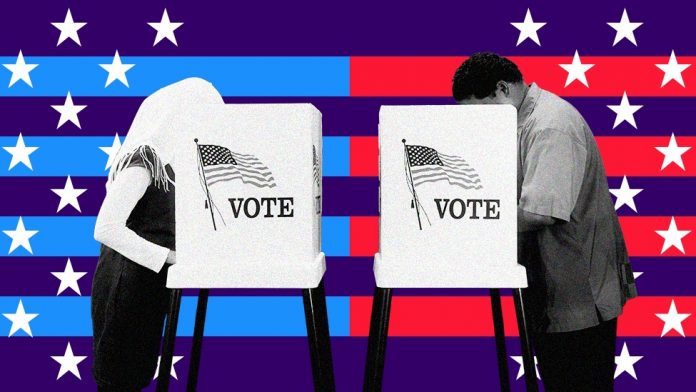
The U.S. House passing the SAVE Act is a move to tighten voter registration by mandating proof of citizenship and pushing states to purge non-citizens from voter rolls. Supporters argue it’s about election integrity, ensuring only citizens vote, especially amid claims—often exaggerated—of non-citizen voting. Critics, though, see it as a barrier that could disenfranchise millions of eligible voters, particularly those without easy access to documents like passports or birth certificates, which many Americans don’t have on hand. It’s already illegal for non-citizens to vote in federal elections, and studies show instances of it are rare, so the necessity is debated.

The bill’s fate in the Senate is shaky—Democrats have signaled strong opposition, calling it voter suppression. Even if it passes, implementation could be messy: states would need new systems to verify citizenship, and purges risk mistakenly removing citizens, as seen in past efforts. Plus, the in-person documentation requirement could kill online and mail-in registration, hitting rural voters and others hard. It’s a polarizing step, rooted in distrust over election systems, but whether it’s a fix or a problem depends on who you ask.

Requiring proof of citizenship (e.g., passport, birth certificate) could reduce voter registration, especially among low-income, minority, or elderly citizens who may lack these documents. Estimates suggest 10-15% of Americans don’t have ready access to such ID, potentially affecting millions. Republicans argue it safeguards elections, but Democrats see it targeting their base—urban, diverse voters—who lean left. This could shift turnout dynamics in close races, though the extent is unclear since non-citizen voting is already rare.

Proponents believe it could boost confidence in election integrity among skeptics. Conversely, if purges wrongly remove citizens or create chaos, it might deepen distrust. States would need to overhaul voter registration systems to verify citizenship, likely costing millions. Many states already cross-check rolls with databases like DMV or Social Security, but adding in-person document checks is a heavier lift.

Directing states to remove non-citizens risks errors. Past purges—like in Georgia (2018) or Texas (2019)—flagged thousands of citizens mistakenly due to faulty data matches. This could lead to eligible voters being disenfranchised, especially if deadlines are tight before elections. Requiring in-person proof could gut convenient registration methods, hitting rural areas or states with less infrastructure hardest.

The Act would likely face lawsuits alleging it violates voting rights under the 14th Amendment or the Voting Rights Act. Critics could argue it imposes undue burdens without evidence of widespread non-citizen voting. Mandating state action might spark disputes over federal overreach, though election law typically gives Congress broad authority.

If enforcement disproportionately affects certain groups (e.g., minorities, immigrants), it could trigger equal protection lawsuits. The Act fuels an already heated debate over election security vs. voter access, deepening divides. It could energize GOP voters who prioritize “secure elections” while alienating others who see it as exclusionary. Even legal citizens in immigrant-heavy areas might feel targeted, discouraging participation due to fear of scrutiny.

Both sides could exploit the law’s rollout—claims of “mass voter fraud” or “mass disenfranchisement” could spike, muddying public perception. The Senate’s unlikely to pass it as is, given Democratic control and filibuster hurdles. If it stalls, it’s still a GOP talking point for 2026 midterms. If it somehow passes, implementation delays and legal fights could blunt its impact before 2028. Long-term, it might set a precedent for stricter voter ID laws.

Is BlockDAG the Best-Performing Crypto of 2025? Here’s How It Stacks Against DOT & $TRUMP

0

A strong launch can spark attention, but it’s steady delivery that builds staying power. Polkadot and Official Trump Coin have each made their mark—Polkadot with its multi-chain design and Trump Coin with its political momentum. Both have seen growth, but questions remain about how far they can go. Polkadot’s climb has been gradual, while $TRUMP saw a flash rise before steep corrections.

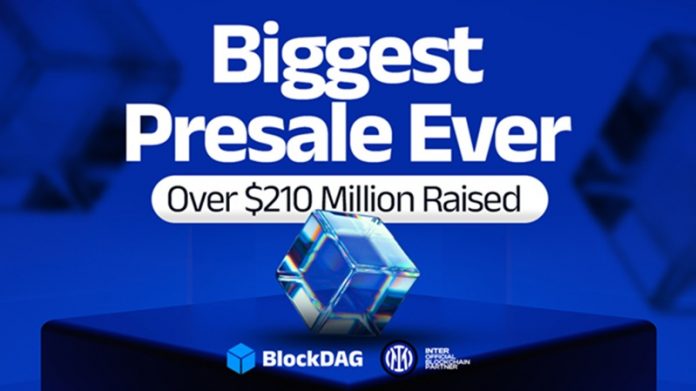
BlockDAG, on the other hand, is steadily capturing attention through progress that’s measurable. With a 2,380% ROI since batch 1 and $213.5 million raised in presale, it’s emerging as a project focused on momentum built to last.

Polkadot: Driving Blockchain Connectivity with Steady Momentum

Polkadot’s mission is to create seamless connectivity across different blockchains. Its architecture includes a central Relay Chain that provides security and validation to parachains—specialized chains built for unique use cases. This model makes cross-chain communication smooth and scalable. DOT token holders support the network through governance, staking, and parachain support.

As of March 2025, Polkadot boasts around 2,400 monthly active developers, indicating a thriving community. DOT has also seen price progress—from $6.51 in March 2024 to a high of $10.24 in January 2025, marking a 57.3% increase. While prices have leveled since then, its long-term potential remains promising in a growing ecosystem.

Trump Coin: A High-Profile Entry with Sharp Swings

Launched on January 17, 2025, just before Donald Trump’s presidential inauguration, $TRUMP is a meme-driven coin on Solana. It has a total supply of 1 billion tokens, with 200 million released during the ICO and 800 million held by Trump-linked entities for gradual release over three years.

Its launch was explosive. Starting at $10, it jumped to $74.59 within hours, reaching almost $11 billion in market cap. But the rapid rise came with just as swift a decline. By March 30, 2025, $TRUMP’s value had dropped considerably. While some early backers profited, the volatility serves as a reminder of how meme-based tokens can move quickly—both up and down.

BlockDAG Moves Beyond the Buzz: Keynote 3 Spurs $5M Growth Surge

In a space known for bold announcements and missed deadlines, BlockDAG stands out for executing on promises. The recent Keynote 3 proved to be a catalyst—not through hype, but through updates that delivered.

The rollout of the Primordial Beta Testnet, a clear roadmap to mainnet, and the X1 mobile miner showcased that BlockDAG is moving forward. Within days of the keynote, presale funding surged by $5 million, driven by real milestones.

Now in Batch 27, BlockDAG has raised $213.5 million and sold over 19 billion coins. Priced at $0.0248, early participants from Batch 1 have already gained 2,380%. This success is based on product delivery—not just projections. The team continues to roll out updates, engage its community, and improve functionality with every step.

Unlike other projects that rely on flashy campaigns or vague roadmaps, BlockDAG is letting consistent progress do the talking. It’s proving that when you build first, trust and funding naturally follow.

Delivery Defines Longevity

Polkadot continues its growth with a sound infrastructure model, but its price trajectory remains moderate. Trump Coin captured attention quickly, yet its volatility shows the risks tied to meme coins. BlockDAG is charting a different course—marked by consistent progress and real user traction. From a live testnet to an accessible mobile mining tool, it’s building with purpose.

With a 2,380% ROI, $213.5 million in funding, and no reliance on venture capital, BlockDAG is proving that real growth comes from consistent action. While some cryptos depend on narrative, BlockDAG is showing up with results. If the next Ethereum is measured by real delivery, BlockDAG could be leading that charge.

Presale: https://purchase.blockdag.network

Website: https://blockdag.network

Telegram: https://t.me/blockDAGnetworkOfficial

Discord: https://discord.gg/Q7BxghMVyu


Exploring the HR 1228 Prioritizing Veterans Survivors Act Passed by U.S. House

0

H.R. 1228, the “Prioritizing Veterans’ Survivors Act,” was passed unanimously by the House with a 424-0 vote, showcasing rare bipartisan unity. The bill aims to restore the Office of Survivors Assistance (OSA) to its original role directly under the Secretary of Veterans Affairs, ensuring it has the authority and focus to support survivors of veterans effectively.

This move addresses concerns that the OSA had been downgraded or sidelined, reducing its ability to advocate for survivors navigating benefits and services. By placing it back under the Secretary’s direct oversight, the bill intends to streamline assistance, improve accountability, and prioritize survivors’ needs—think widows, widowers, and dependents seeking benefits like pensions or healthcare.

The unanimous passage of H.R. 1228, the “Prioritizing Veterans’ Survivors Act,” by a 424-0 vote in the House carries several important implications for veterans’ survivors, the Department of Veterans Affairs (VA), and the broader landscape of veterans’ policy. Restoring the Office of Survivors Assistance (OSA) to its original role under the Secretary of Veterans Affairs ensures that survivors—widows, widowers, children, and other dependents—have a dedicated, high-level advocate within the VA. This could lead to faster processing of claims for benefits like Dependency and Indemnity Compensation (DIC), pensions, or healthcare.

The OSA’s elevated status means it can better coordinate across VA departments, reducing bureaucratic hurdles that survivors often face when navigating complex systems. This is especially critical for those grieving or unfamiliar with VA processes. The bill signals a renewed commitment to addressing survivors’ unique challenges, such as financial instability or emotional hardship after a veteran’s passing, ensuring their needs aren’t overshadowed by broader VA priorities.

Placing the OSA under the Secretary’s direct authority enhances accountability. The office will likely have more visibility and influence, making it harder for survivor-related issues to be ignored or deprioritized. The unanimous vote sends a strong message to VA leadership about Congress’s expectation that survivors’ issues be treated as a top priority, potentially prompting internal reforms or resource reallocation to support the OSA’s mission.

A 424-0 vote is exceptionally rare and underscores that support for veterans and their families remains a unifying issue in a polarized Congress. This could pave the way for further bipartisan legislation aimed at improving VA services or expanding benefits. The overwhelming support may bolster public confidence in Congress’s commitment to veterans’ families, potentially pressuring lawmakers to maintain momentum on related reforms.

While the bill restores the OSA’s role, its success depends on adequate funding, staffing, and resources. If the VA faces budget constraints, the OSA’s ability to deliver could be limited unless Congress ensures follow-through. Although the House vote was unanimous, the bill still needs Senate approval (as of my last data, its status there isn’t confirmed). Any delays or amendments in the Senate could affect the timeline for implementation.

Elevating the OSA’s role might require reorganizing parts of the VA’s structure, which could face resistance or logistical hurdles, especially if other offices perceive it as a shift in priorities. Successfully restoring the OSA could set a model for other specialized VA offices, encouraging Congress to strengthen advocacy for groups like disabled veterans or minority veterans. The bill aligns with growing recognition of survivors as a distinct group deserving tailored support, potentially inspiring future policies to address gaps in education benefits, mental health services, or housing for survivors.

This legislation responds to criticisms that the OSA had been diminished in influence, leaving survivors underserved. By restoring its prominence, the bill aims to honor the sacrifices of veterans’ families with tangible support. However, its full impact hinges on execution—how the VA implements the change and whether survivors experience real improvements in service delivery.

Solana Breaks $100 Support, Polkadot Awaits Breakout, BlockDAG Hits $213.5M Milestone

0

Solana has stumbled below the $100 level following a sharp sell-off tied to a $200 million token unlock, sending a ripple through investor sentiment. Polkadot still trades below its highs but holds promise with its JAM upgrade and expanding developer base. Meanwhile, BlockDAG is making waves by hitting a major milestone—$213.5 million raised—with traction that reflects more than just potential.

With a working testnet, 170,000+ wallets, and hands-on tools already in user hands, BlockDAG isn’t waiting for adoption—it’s moving toward it. As larger platforms like Ethereum and Bitcoin maintain their lead, some investors are now looking for the top crypto to buy right now based on early results rather than future promises. 

Can Polkadot Be the Surprise Winner in the Next Rally?

Polkadot (DOT) is trading around $3.72, far below its all-time high, yet the project remains on the radar for those watching long-term developments. Its network enables different blockchains to interact, aiming to power the future of decentralized applications.

The upcoming JAM upgrade could be a game-changer, potentially turning the Polkadot network into an on-chain platform capable of running high-level applications natively. Backed by the Web3 Foundation, and gaining interest from developers, DOT may gain traction quickly if a widely used app is built on its tech.

Polkadot’s real value lies in its design to connect separate blockchains. While others optimize for speed or smart contract execution, Polkadot focuses on flexibility and long-term structure. If the Web3 movement takes off, DOT could be well-positioned for the upside.

Solana Drops Below $100 After Token Unlock—Can It Bounce?

Solana (SOL) recently saw increased pressure following the release of staked tokens worth $200 million, many held since 2021. The sudden supply jump weighed heavily on price, breaking key support at $100 and raising concerns among short-term traders.

While there’s still a chance for a recovery if $110 holds, analysts note that buyer strength appears limited. If selling continues, prices may slide further, potentially testing the $90–$95 range. Despite strong developer activity and community interest, price action suggests a market still searching for stability.

Ethereum has regained control of the DEX volume share, and Solana’s recent gains have slowed. Current chart patterns point to possible distribution, with shallow recoveries and resistance building up. However, if bulls retake control near $100, a move back to $130 or higher isn’t out of the question.

BlockDAG Raises $213.5M and Crosses 170K Wallets—All Before Mainnet

BlockDAG (BDAG) continues to impress with real results in hand. The project has already brought in $213.5 million through its presale, selling over 19.1 billion BDAG tokens across 27 batches. Now priced at $0.0248, the coin is seeing growing interest, especially with a $1 price goal projected for 2025.

One major reason for the traction is its unique setup. Instead of relying on outdated single-chain models, BlockDAG uses a DAG+PoW hybrid system. This structure supports faster, parallel processing of transactions, helping the network avoid delays and high fees.

The testnet is already live and active, with more than 170,000 wallets connected. What’s more, BlockDAG has launched mobile-based mining and plug-and-play hardware tools, making it accessible to everyone—from beginners to advanced users.

For developers, BlockDAG offers full compatibility with Ethereum’s environment, meaning they can deploy smart contracts without learning a new system. Over 10,000 mining devices are in production, and weekly rewards add to the appeal.

With working infrastructure already in place, and actual user participation on the rise, BlockDAG is showing why it may be the top crypto to buy right now. It’s offering more than a concept—it’s delivering a network people can use.

Final Thoughts

Each of these three projects sits at a different stage in its journey. Solana must now fight to recover from its recent token unlock, while Polkadot builds for a future that could arrive with Web3’s expansion. But BlockDAG is already ticking off major milestones.

Its hybrid structure supports faster performance, its tools are live, and its presale success is hard to ignore. With over $213.5 million raised, 170,000+ wallets, and 10,000 miners set for shipment, BlockDAG has achieved more in presale than many networks post-launch.

As Solana deals with dilution and Polkadot waits on real use cases to surface, BlockDAG is already delivering both utility and scale. That’s why BDAG is rising as one of the most watched projects heading into 2025—and possibly the most promising entry before the next surge.


Presale: https://purchase.blockdag.network

Website: https://blockdag.network

Telegram: https://t.me/blockDAGnetwork

Discord: https://discord.gg/Q7BxghMVyu