DD
MM
YYYY

PAGES

DD
MM
YYYY

spot_img

PAGES

Home Blog Page 1519

Fluorescent Road Markings Trailed in Australia

0

Fluorescent or photoluminescent road markings have been trialed in Australia, particularly by a company called Tarmac Linemarking in Victoria. These markings use a special paint that absorbs light during the day and emits a glow at night, improving visibility on roads, especially in low-light or rural areas without street lighting. The idea is to enhance driver safety by making lane lines and road edges clearer in the dark, potentially reducing accidents.

The technology works similarly to glow-in-the-dark materials, like those in kids’ toys or watch hands, using compounds like strontium aluminate to store and release light. Trials have been conducted on stretches of road in Victoria, such as Metung Road, and have shown promise for applications beyond roads, like bike paths, car parks, and boat ramps. It’s a clever use of passive lighting, which means no electricity is needed, making it eco-friendly and cost-effective compared to installing streetlights.

However, there are challenges. Some critics point out that the glow can weaken on overcast days or in heavy rain, and the paint’s durability is a concern—constant exposure to traffic, weather, and UV light might degrade its effectiveness faster than traditional reflective markings with glass beads. Maintenance could be a headache, and scaling it up for widespread use might not be as practical as it sounds. Plus, there’s the cost—while it’s cheaper than streetlights, it’s still pricier than standard road paint.

On the flip side, the concept has sparked a lot of excitement because it tackles a real problem: nighttime driving can be dangerous, especially on unfamiliar or poorly lit roads. If they can nail down the durability and consistency, it could be a game-changer. It’s also worth noting that similar ideas have been tested elsewhere, like in the Netherlands, with mixed results, so it’s not entirely new—but Australia’s approach seems to be gaining traction for its practical applications.

Safety, Environmental and Technical Implications

The glowing markings enhance lane and edge visibility in low-light conditions, potentially reducing accidents, especially on rural or unlit roads where crashes are more common at night. For instance, clearer road guidance could help drivers navigate curves or intersections more safely. Applied to bike paths or pedestrian crossings, these markings could make shared spaces safer after dark, addressing urban safety concerns.

The glow’s effectiveness may diminish in heavy rain, fog, or after overcast days when the paint hasn’t absorbed enough light, potentially limiting reliability compared to traditional reflective markings or active lighting. Unlike streetlights, these markings require no electricity, reducing energy consumption and reliance on fossil fuels, aligning with sustainability goals.

The production of photoluminescent compounds (e.g., strontium aluminate) involves mining and chemical processes, which could have environmental impacts if not managed responsibly. Long-term degradation of the paint might also release microplastics or chemicals into the environment. By avoiding artificial lighting, these markings could minimize disruption to nocturnal wildlife and preserve natural nightscapes, a growing concern in eco-conscious regions.

Installing and maintaining streetlights is expensive, especially in remote areas. Fluorescent markings offer a cheaper alternative for improving road safety without ongoing energy costs. The specialized paint is likely pricier than standard road paint, which could strain budgets for widespread adoption, particularly for cash-strapped municipalities.

If the paint wears out faster than conventional markings due to traffic or UV exposure, frequent repainting could offset initial savings, impacting long-term cost-effectiveness. Success here could spur further advancements in smart road technologies, like integrating glow-in-the-dark materials with sensors or self-healing coatings, pushing the boundaries of infrastructure design.

The technology’s effectiveness at scale—across diverse climates, traffic volumes, and road types—remains unproven. Lessons from similar trials e.g., the Netherlands’ failed glow-in-the-dark road project suggest technical hurdles in durability and consistency. These markings could pair well with autonomous vehicle tech, providing visual cues for cameras and sensors in low-light conditions, though they’d need to meet strict standards for machine readability.

Drivers and communities might embrace the novelty and safety benefits, but skepticism about reliability or unfamiliarity could slow acceptance. Education campaigns would be needed to build trust. Road authorities, like those in Australia, have strict standards for markings (e.g., retroreflectivity under headlights). Fluorescent paint must meet or exceed these to gain approval, which could delay rollout.

If adopted primarily in wealthier areas due to costs, it could exacerbate disparities in road safety between urban and rural or affluent and low-income regions. This innovation reflects a global push for safer, smarter infrastructure amid rising road fatalities—Australia alone sees about 1,200 road deaths annually, many at night. It also ties into trends like sustainable urban planning and passive technologies. However, competing solutions, like solar-powered LED road studs or advanced reflective paints, might challenge its niche.

RCO Finance’s Token Presale Outpaces Early Solana and Avalanche by a Wide Margin

0

Solana (SOL) briefly dropped below $100 during the market crash on Black Monday, and Avalanche (AVAX) saw significant declines as well. While both altcoins are on a recovery path, traders are investing in RCO Finance (RCOF) in anticipation of outsized gains in 2025.

RCO Finance has been successful during its ongoing token presale, attracting over $13 million from smart money and retail traders. At only $0.1, the undervalued altcoin is tipped to be the biggest performer when the bulls take control of the market.

Solana and Avalanche Recover After Major Losses

Solana (SOL) dropped below $100 for the first time in a year as altcoins tumbled due to President Donald Trump’s fears. Avalanche joined Solana in the bloodbath, tumbling to less than $15 in a brutal ‘Black Monday’ sell-off.

However, Solana has since recovered to $108.50, marking an 11% growth in 24 hours., Avalanche is up 14% in the same period, offering a reprieve to holders.

Analysts are closely watching the tariff war and how it will impact the crypto market going forward. Solana has a history of bouncing back spectacularly, with analysts noting its quick recovery after the FTX fall in late 2022.

RCO Finance’s Token Presale Set to Benefit Early Investors

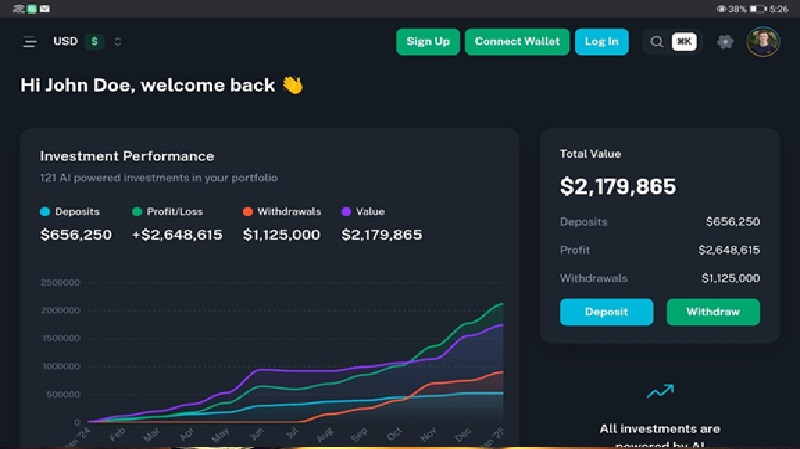
The recent Black Monday has left investors with no choice but to flock to RCO Finance for a potential 50,000% gain in 2025. At only $0.1, RCOF is undervalued, offering an attractive entry point for early investors.

Its token presale has raised over $13 million. Analysts say early investors will earn huge profits when the project is listed on exchanges.

RCO Finance stands out from the competition because of its groundbreaking features, including the flagship Robo Advisor. The cutting-edge tool uses machine learning algorithms to offer personalized investment and trading recommendations tailored to individual financial goals.

The Robo Advisor tool also scans reputable news sources to adjust asset allocations in real-time, helping traders conquer the volatile crypto market.

The platform’s users would have been shielded from the recent losses that tanked the majority of altcoins, including Solana and Avalanche.

Apart from minimizing losses, RCO Finance’s users would have been recommended to invest in Snow Leopard (SNL) before it surged over 3,000% in 24 hours.

In addition, RCO Finance is already in beta testing for its platform, and the response has been overwhelming. The beta platform has attracted over 10,000 users. The development team is fine-tuning the beta platform and the Robo Advisor ahead of the alpha version release.

RCO Finance is also introducing a debit card to enable users to spend their crypto assets in the real world. This is a major step toward crypto adoption.

Furthermore, one of the most appealing aspects of RCO Finance is its KYC-free financial ecosystem. This promotes privacy and anonymity.

The project has attracted investors during its ongoing token presale because it offers users access to over 120,000 assets, allowing them to diversify their portfolios.

Security Audit Appeals to Investors

SolidProof, a trusted name in blockchain security, has vigorously audited RCO Finance’s smart contracts. This thorough audit guarantees that RCO Finance’s code is free from vulnerabilities.

The clean audit has helped the project cement its commitment to security. It has also given investors peace of mind.

Join RCOF’s Token Presale to Create Generational Wealth

At only $0.1, RCOF is tipped to be the altcoin to invest in. Analysts are predicting a 50,000% surge in Q2.

After rolling out its beta platform and attracting over 10,000 users, RCO Finance is on course to help traders earn consistent profits in the crypto market. The beta platform and the Robo Advisor tool are already undergoing further enhancements.

With a high leverage of up to 1,000X, RCO Finance is the perfect choice for new and experienced traders.

Invest in RCOF’s token presale to grow $1K into $500K in Q2 2025.


For more information about the RCO Finance Presale:

Visit RCO Finance Presale

Join the RCO Finance Community

China Retaliates with 125% Tariffs As U.S. Jacked It Up To 145%

0

China has fired a major salvo in its trade war with the United States, announcing on Friday a hike in tariffs on American imports from 84% to 125%, a move that intensifies the economic standoff between the world’s two largest economies.

The escalation comes in direct response to President Donald Trump’s decision to raise U.S. tariffs on Chinese goods to a staggering 145%, including levies tied to fentanyl, signaling a deepening rift with far-reaching consequences for global trade. As both nations dig in, economists warn that the tariff war’s impact will ripple across industries and borders, threatening economic stability worldwide.

The Chinese finance ministry unveiled the tariff hike in a statement, accusing the U.S. of “unilateral bullying and coercive practice” that violates international trade rules.

“The U.S.’ imposition of abnormally high tariffs on China seriously undermines basic economic laws and common sense,” the ministry declared, framing the 125% rate as a necessary countermeasure.

Notably, China signaled it may not match further U.S. tariff increases.

“Given that at the current tariff level, there is no market acceptance for U.S. goods exported to China, if the U.S. continues to impose additional tariffs, China will ignore it,” it said.

This suggests Beijing may pivot to alternative retaliatory measures, such as export controls or restrictions on U.S. firms, as tensions mount.

The White House, meanwhile, confirmed this week that U.S. tariffs on Chinese imports have climbed to 145%, a figure that includes a 125% levy announced via Trump’s Truth Social platform and a 20% tariff tied to China’s role in the fentanyl trade. Trump defended the move in a post, arguing that China’s “lack of respect” for global markets justifies the hike.

“At some point, hopefully in the near future, China will realize that the days of ripping off the U.S.A., and other Countries, is no longer sustainable or acceptable,” he wrote.

The administration’s stance reflects a broader strategy to pressure China into trade concessions, though critics argue it risks catastrophic economic fallout.

The High Cost of The Tariffs

The tariff war’s impact on the U.S. and China is expected to be profound. Bilateral trade, valued at over $650 billion in 2024, faces near collapse as triple-digit tariffs render most exchanges unviable. In the U.S., consumers are bracing for higher prices as companies pass on import costs, with estimates suggesting an average household could face an additional $1,900 in expenses this year.

Industries like electronics, clothing, and agriculture, heavily reliant on Chinese supply chains, are scrambling to adapt. American exporters, particularly farmers, face devastation as China’s tariffs choke off access to a market that imported $143.5 billion in U.S. goods last year, including soybeans, meat, and grains.

China, targeting 5% economic growth in 2025, is also under strain. The tariffs threaten to disrupt its export-led recovery, with analysts predicting a 1.5 to 2 percentage point hit to GDP. Beijing has pledged fiscal stimulus and increased domestic demand to cushion the blow, but weak consumer confidence and a slowing economy complicate the outlook.

The global spillover effects are already evident. Financial markets shuddered on Friday, with the S&P 500 down nearly 20% from its peak, signaling a bear market, while Asian indices in Shanghai and Hong Kong also took hits. The U.S. dollar slid to a three-year low against the euro, and gold prices neared record highs as investors sought safe havens.

“Today the U.S. dollar is tanking to a three-year low against the euro and the $DXY is below 100. Here is just one of my many warnings that tariffs would weaken the dollar, in contrast to just about every economist, market strategist, and Trump advisor who forecast the opposite,” said Peter Schiff, Chief Economist at Euro Pacific Capital.

Europe, caught in the crossfire, fears a flood of diverted Chinese goods as Beijing seeks new markets, prompting EU leaders to negotiate tariff exemptions with Washington while exploring closer ties with Asia.

“The global economy will massively suffer,” warned European Commission President Ursula von der Leyen, highlighting risks of spiraling uncertainty and protectionism.

Other U.S. allies are navigating their own balancing acts. Japan and South Korea, facing U.S. tariffs of 24% and 11% respectively, are pursuing negotiations to avoid retaliation, wary of alienating Washington. Canada and Mexico, hit with 25% fentanyl-related duties, have imposed counter-tariffs, raising fears of a fractured North American trade bloc. Meanwhile, China is strengthening regional ties, with President Xi Jinping set to visit Vietnam, Malaysia, and Cambodia next week to bolster trade partnerships.

Economists paint a grim picture of the broader impact. The trade war could shave 0.6% off U.S. GDP growth this year, with long-term losses of 0.3-0.4% annually, while global growth, projected at 3.3% for 2025, faces downward pressure. Supply chain disruptions threaten industries from technology to automotive, with companies like Amazon warning of inevitable price hikes.

As the U.S. and China double down, the path to de-escalation remains unclear. Trump’s team, led by Treasury Secretary Scott Bessent, claims 70 countries have opened trade talks, but China’s defiance suggests little appetite for compromise. Beijing’s foreign ministry, while vowing to “fight to the end,” called for dialogue based on “mutual respect,” a prospect dimmed by the current rhetoric.

How Global and Local Brands Are Shaping the Future of Digital Engagement in Africa

0

A recent analysis of advertising and promotional messages from a cross-section of local and international brands, ranging from MTN Nigeria, CheckMyPeople, Appledirectng, and Bet9ja, to global players like Spotify Africa, Veriff, Grammarly, Google, McKinsey, and Chainlink, offers a compelling glimpse into how companies are cultivating loyalty, sparking growth, and rewriting engagement rules in Africa’s dynamic consumer market.

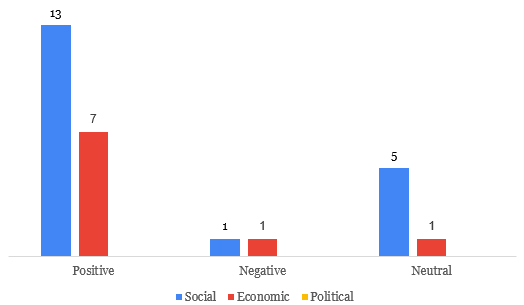
Whether it’s through security-focused platforms, scholarship access, productivity tools, or digital finance, these brands are tapping into shared values of empowerment, identity, and trust, all while sidestepping divisive themes and embracing positivity.

Exhibit 1: Sentiments in ads/promotional messages

Source: Brands’ social media pages, 2025; Infoprations Analysis, 2025

Digital Trust in a Scam-Prone World

In Africa’s increasingly digital environment, where cyber threats, scams, and misinformation abound, brands that prioritize security and transparency gain a vital competitive edge. Platforms like Veriff, CheckMyPeople, and Yello Card have leaned into identity verification and user protection as core value propositions.

MTN Nigeria, with its wide reach, reinforces digital safety through secure connectivity campaigns, while Easy Software and Appledirectng emphasize ease, clarity, and confidence in digital transactions. In an era where reputations are built (or broken) in a scroll, these trust-focused narratives aren’t just ethical (they’re strategic).

Career Empowerment Goes Global

A notable trend across these brands is a deliberate focus on career mobility and skill-building. Scholarship and learning platforms such as Unicaf Scholarships, Udemy, Scholarship Region, and FTMO are democratizing access to global education and professional opportunities for African audiences.

Meanwhile, global consulting firm McKinsey is investing in mentorship and capacity-building content for young professionals across Africa. Even tools like Grammarly, which assist with writing and communication, are positioned as career enablers in today’s remote-first, globalized workplace. These brands understand that when users grow, engagement deepens. It’s not just about selling a product, it’s about shaping futures.

Smarter Tools, Higher Productivity

For today’s digital professionals, efficiency is everything. Brands such as Google, Freelance Platform, and Applaunchkit are marketing smart tools and automation features that promise to streamline workflows, optimize creativity, and simplify daily tasks.

This trend resonates especially with freelancers, remote workers, and small business owners, the backbone of Africa’s informal digital economy. By offering platforms that improve productivity without complexity, these brands are winning both relevance and loyalty.

Tech-Driven Playgrounds: Gaming, Crypto, and Digital Finance

The convergence of entertainment and finance is being led by players like Deriv, Tickmill, Chainlink, Bet9ja, and SuiPlay. These platforms blur the lines between fun and financial empowerment, targeting Africa’s booming youth population with high-risk, high-reward digital experiences.

Whether through decentralized finance (DeFi), online gaming, or forex trading, the core proposition is bold: anyone can play, win, and earn (often from a smartphone). This speaks to the continent’s hunger for alternative income streams, tech exploration, and financial inclusion.

Learning as a Way of Life

Educational messaging is not confined to academic platforms. From Udemy and Google to Mat3ra and Novonesis, a wide range of brands are weaving education and self-development into their core narratives. This reflects a broader shift: learning is no longer a phase, it’s a lifestyle. As consumers navigate rapid technological change, they are actively seeking knowledge, upskilling, and new credentials. Brands that make this journey easier are becoming lifelong companions.

Creativity, Identity, and Emotional Connection

Tech brands like Infinix, Techno, and Itel, alongside content-focused platforms like Spotify Africa, are enabling self-expression and digital identity-building. Through influencer collaborations, music, and lifestyle aesthetics, they help users signal who they are—and who they aspire to be. This taps into a powerful emotional undercurrent: in a world saturated with choices, identity and relatability matter. The most effective campaigns combine storytelling, aspirational tone, and cultural insight.

The Power of Positive Messaging

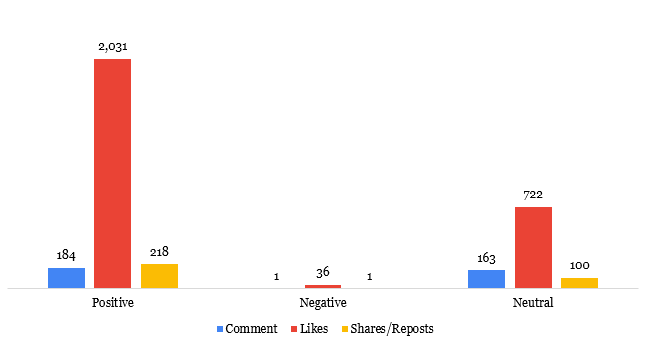
Exhibit 2: Sentiments in ads/promotional messages vs engagement patterns

Source: Brands’ social media pages, 2025; Infoprations Analysis, 2025

According to 2025 data from Infoprations’ sentiment analysis, based on 4,662 comments, 45,032 likes, and 4,967 reposts across selected brand campaigns, positive sentiment overwhelmingly drives engagement. Messages that are optimistic, solution-oriented, or empowering receive higher interaction across all metrics. Neutral messages generate comments but less virality. Negative messages, on the other hand, receive little attention, likely because they clash with user expectations or brand safety strategies.

This data reveals a simple but powerful truth: positive, emotionally intelligent storytelling isn’t just good ethics. It is a great marketing.

Infoprations’ Understanding Digital Integrated Marketing Communications Team includes Abdulazeez Sikiru Zikirullah, Moshood Sodiq Opeyemi, and Bello Opeyemi Zakariyha

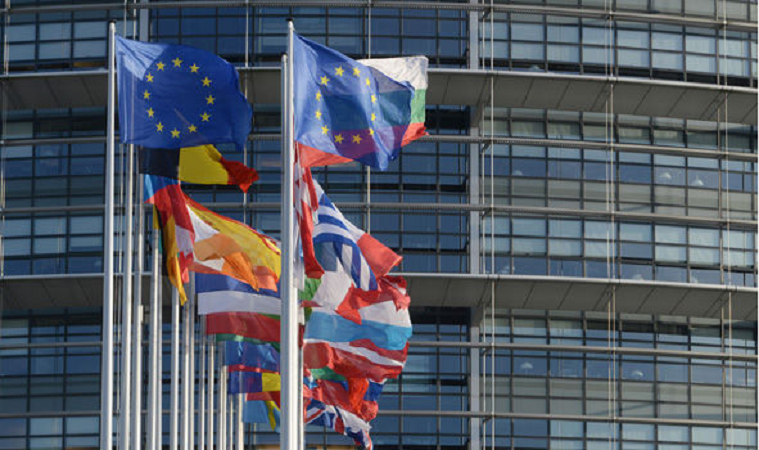
EU Pivots to New Trade Horizons as Trump’s Tariffs Push Allies Toward China

0

In the shadow of President Donald Trump’s escalating tariff war, the European Union is charting a bold course to diversify its economic partnerships, with signs of a surprising thaw in trade relations with China.

As transatlantic ties strained under the weight of U.S. protectionism, the EU is reportedly exploring lifting its tariffs on Chinese electric vehicles (EVs), a move that could pave the way for deeper business agreements and reshape global trade dynamics. This strategic pivot, driven by necessity and opportunity, underscores a broader push among U.S. allies to seek new markets amid fears that Trump’s policies have fractured long-standing alliances.

The catalyst for this shift is Trump’s aggressive trade agenda, which has hit the EU with a 20% “reciprocal” tariff on €380 billion ($432 billion) of its exports, temporarily delayed for 90 days but still looming. Additional levies include a 25% tariff on EU steel and aluminum and a 25% duty on cars and auto parts, with threats of further tariffs on lumber, semiconductors, and pharmaceuticals. These measures, part of Trump’s “America First” doctrine, have jolted the EU, which exported €532 billion in goods to the U.S. last year, making it the bloc’s largest market.

European Commission President Ursula von der Leyen, speaking in Brussels on Thursday, called the tariffs “a major blow to the world economy,” warning of spiraling uncertainty and rising protectionism.

Faced with this economic siege, the EU is accelerating efforts to diversify its trade network, a strategy von der Leyen framed as engaging with “countries that account for 87% of global trade and share our commitment to a free and open exchange.” The bloc, already boasting the world’s largest trade agreement network with 75 partners covering €2 trillion in trade, is now doubling down.

Recent months have seen renewed momentum in talks with the United Arab Emirates, Malaysia, Indonesia, Thailand, and India, while a landmark political agreement with the Mercosur bloc—Argentina, Brazil, Paraguay, and Uruguay—was reached in December, promising a market of 780 million consumers. Even post-Brexit talks with the UK are gaining traction, signaling a broad push to secure new markets.

But the most intriguing development is the EU’s warming stance toward China, particularly in the electric vehicle sector. Last year, the EU imposed tariffs of up to 35.3% on Chinese EVs, citing unfair state subsidies that threatened European automakers. Now, in a striking reversal, Brussels and Beijing are negotiating to replace these tariffs with minimum price commitments, a step that could ease tensions and open doors to broader cooperation.

China’s Commerce Ministry confirmed on Thursday that talks with EU Trade Commissioner Maros Sefcovic have restarted, focusing on EVs and industrial collaboration.

“We’re seeing a pragmatic shift,” said an EU official, speaking anonymously due to the sensitivity of the negotiations. “Lifting EV tariffs could be a goodwill gesture to unlock bigger deals.”

This pivot comes as Trump’s tariffs on Chinese goods, now at a staggering 145%, risk diverting low-cost Chinese products to Europe, a concern von der Leyen raised in a call with Chinese Premier Li Qiang this week. The EU is exploring mechanisms to monitor such diversions, but the prospect of deeper ties with China is gaining traction.

Spain’s Prime Minister Pedro Sanchez, fresh from a Beijing visit on Friday, called for a “balanced relationship,” while Hungary and others advocate closer engagement. However, skepticism persists, with French Prime Minister Francois Bayrou warning against over-reliance on China, which he accused of aiming to “replace all European producers in agriculture and industry.”

The EU’s flirtation with China is not without risks. Chinese EVs, led by brands like BYD and Nio, already hold 25% of the European market, and easing tariffs could intensify pressure on Germany’s struggling auto sector, which supports 14 million jobs.

“We’re walking a tightrope,” said Sigrid de Vries, head of the European Automobile Manufacturers’ Association. “We need new partners, but not at the cost of our industries.”

Analysts also caution that Trump’s tariffs could exacerbate existing EU-China trade imbalances, with fears of Beijing dumping excess goods in Europe.

Beyond China, the EU is eyeing broader horizons. Von der Leyen announced on Thursday plans to explore cooperation with the Comprehensive and Progressive Agreement for the Trans-Pacific Partnership, a trade bloc spanning Australia to Canada, which Trump abandoned in 2017. New Zealand’s Prime Minister Christopher Luxon has proposed using it as a foundation for a rules-based trading pact with the EU, a move that could anchor the bloc in Asia’s dynamic markets.

Currently, the EU remains open to salvaging transatlantic trade. Sefcovic heads to Washington on Monday to push for tariff reductions, armed with offers like zero-tariff deals for cars and industrial goods. But with Trump’s administration showing little appetite for compromise, Sefcovic described recent talks as “frank” but fruitless, hope is fading.

“We’re ready to negotiate, but we’re not naive,” von der Leyen said, hinting at retaliatory tariffs worth €26 billion on U.S. goods, from bourbon to motorcycles, set for mid-April if talks fail.

As Trump’s tariffs redraw the global trade map, the EU’s pivot reflects a broader trend among U.S. allies. Canada, hit with steel and aluminum duties, is matching them “dollar for dollar,” while Malaysia opts for dialogue over retaliation. Japan and South Korea, wary of losing U.S. market access, are cautiously seeking exemptions. However, the EU’s moves signal a deeper reckoning: a world where allies, once tethered to Washington, are forging their own paths.