DD
MM
YYYY

PAGES

DD
MM
YYYY

spot_img

PAGES

Home Blog Page 152

Bitfarms Announces Pivot from Bitcoin Mining to AI Infrastructure

0

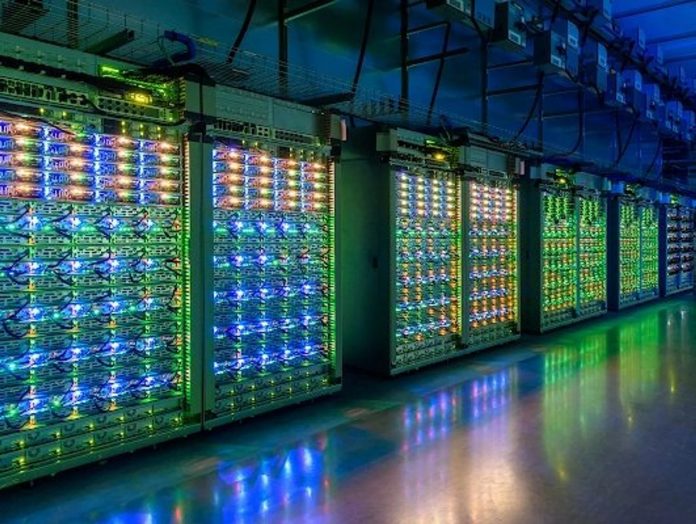
Bitfarms Ltd, a major North American Bitcoin mining company, revealed plans to wind down its Bitcoin mining operations over the next two years (2026–2027) and redirect its energy infrastructure toward artificial intelligence (AI) and high-performance computing (HPC) data centers.

This marks Bitfarms as the first large-cap Bitcoin miner to commit to fully exiting its core crypto mining business, driven by shrinking profit margins in mining amid the 2024 Bitcoin halving and volatile token prices.

Mining activities will phase out gradually through 2027, with full conversion of facilities to AI/HPC by the end of that period. The company’s 2.1 GW energy portfolio across North America—clustered in power- and fiber-rich regions—positions it well for this shift.

The 18 MW facility in Washington State will be the initial focus, retrofitted with Nvidia GB300 GPUs and advanced liquid cooling. This site, representing less than 1% of Bitfarms’ developable capacity, is expected to be operational for AI workloads by December 2026.

Bitfarms has secured a $128 million fully funded supply agreement with a major U.S. data center partner for equipment and materials. CEO Ben Gagnon stated that GPU-as-a-Service (GPUaaS) at the Washington site alone could generate more net operating income than Bitfarms has ever achieved from Bitcoin mining, providing a “strong cashflow foundation” to cover operations, debt, and further expansions.

Bitfarms’ Q3 2025 earnings, released alongside the announcement, highlighted the pressures prompting this pivot: Net Loss: $46 million, nearly double the $24 million loss from Q3 2024. $69 million, up 156% year-over-year but missing analyst expectations by 16%.

520 BTC mined at an average direct cost of $48,200 per BTC. 1,827 BTC as of November 13, 2025. The decision reflects broader industry challenges: post-halving block rewards dropped to 3.125 BTC, network hashrate has surged, and Bitcoin’s price volatility trading below $96,000 on November 14 has eroded margins.

In contrast, AI compute demand offers stable, long-term contracts with higher margins and fewer regulatory hurdles.Market ReactionStock Impact: Shares plunged 18% to $2.60 on November 14, extending a 51% monthly decline amid broader crypto market weakness. After-hours trading saw further dips.

While some view the pivot as forward-thinking—leveraging existing infrastructure for the AI boom—others expressed concern over near-term revenue uncertainty during the transition.

Bitfarms joins a wave of miners diversifying into AI/HPC:Similar Moves: Marathon Digital (MARA) expanded AI services alongside record revenues; Core Scientific (CORZ) partnered with CoreWeave for AI cloud computing; Cipher Mining and TeraWulf have deals with SoftBank and Google, projecting billions in AI revenue.

Miners’ access to cheap, scalable power gives them a competitive edge over traditional data center builders. AI’s explosive growth—fueled by models like those from OpenAI and enterprises needing GPU power—promises steadier cash flows than crypto’s cycles.

Short-term pain, potential long-term gain, 2026–2027 will be a revenue trough. Mining will wind down gradually, but AI revenue won’t fully replace it until late 2026 or 2027. Expect negative free cash flow, possible equity dilution, and continued stock pressure.

The market will stop valuing Bitfarms as a Bitcoin miner (BTC holdings + hashrate) and start valuing it as an AI/HPC infrastructure play (power capacity × $/kW-month + GPU utilization). This re-rating is already underway — the stock is trading near book value of power assets rather than mining multiples.

Retrofitting mining sheds for liquid-cooled Nvidia GB300s, securing long-term GPUaaS or colocation contracts, and hitting the December 2026 deadline are all non-trivial. One major delay or failed contract could be catastrophic.

This strategic overhaul could redefine Bitfarms’ identity, but execution risks remain high: retrofitting costs, securing clients, and navigating energy demands for AI. For now, it’s a bold bet on compute over crypto.

Cash App Teases Upcoming Solana USDC Integration

0

Block Inc. the parent company of Cash App has officially announced plans to enable USD Coin (USDC) payments on its platform starting in early 2026, powered by the Solana blockchain.

This marks a significant expansion for Cash App, which already supports Bitcoin trading and transfers, into stablecoin functionality. The move is designed to make crypto payments faster, cheaper, and more seamless for everyday users, leveraging Solana’s high-speed, low-cost transaction capabilities.

Rollout begins in early 2026, initially focused on USDC send/receive. Transactions will run on Solana, chosen for its sub-second settlement times and fees often under a cent—ideal for routine payments like remittances or peer-to-peer transfers.

User Experience: Each Cash App user gets a unique blockchain address. Incoming on-chain USDC auto-converts to USD in the app. Outgoing USD converts to USDC for blockchain transfer. No need to manually manage wallets; it’s all handled in-app via QR code scans or simple sends.

Starts with USDC but may expand to other stablecoins and networks. It complements a separate upcoming feature for Bitcoin merchant payments without users needing to hold BTC. With Cash App’s 57 million monthly active users, this could onboard millions to on-chain payments, bridging traditional finance and crypto.

Solana was selected over alternatives like Bitcoin’s base layer for its efficiency in handling stablecoin volumes. As a “Bitcoin maxi” Jack Dorsey’s self-described stance, this choice surprised some, but it prioritizes practicality.

Solana already processes billions in USDC daily with minimal friction. Circle even demoed the integration in a video shared by Cash App. Solana (SOL) saw a brief 1.4% dip post-announcement, with retail sentiment on platforms like StockTwits remaining bearish short-term, but analysts eye potential rallies to $200+ by mid-2026 if adoption surges.

This aligns with a wave of stablecoin integrations, including Western Union’s Solana-based remittances launching H1 2026 and Stripe’s USDC support on multiple chains. It positions Cash App as a gateway for mainstream crypto use.

Recent U.S. laws like the Genius Act signed in July 2025 provide clearer stablecoin frameworks, easing such rollouts. This integration could accelerate Solana’s role in real-world payments, potentially driving ecosystem growth.

Western Union’s Solana-Based Remittances Initiative

Western Union, the global remittance giant processing over $150 billion annually across 200+ countries, announced in late October 2025 plans to revolutionize cross-border payments by launching a Solana-powered stablecoin.

This move aims to slash traditional remittance fees (averaging 6.5%) and settlement times (often days) to sub-second speeds and fractions of a cent, targeting its 130+ million customers. It’s a major validation for Solana’s scalability in real-world finance, complementing similar efforts like Cash App’s USDC integration.

A 1:1 USD-backed token issued by federally regulated Anchorage Digital Bank. It will enable seamless, low-cost transfers, with reserves held in compliant U.S. assets for transparency and stability.

Solana chosen for its high throughput (thousands of TPS), sub-$0.01 fees, and near-instant settlements—ideal for micro-remittances. Unlike Ethereum’s higher costs, Solana makes small-value transfers viable at scale.

A new off-ramp system allowing users to convert USDPT or other cryptos like USDC to local fiat at 500,000+ Western Union agent locations worldwide. This bridges crypto and cash, solving adoption barriers for non-tech-savvy users.

Senders load fiat into the app/wallet, convert to USDPT, transfer on-chain, and recipients cash out instantly at agents. Beta testing begins mid-2025, with full rollout in H1 2026.

Traditional systems rely on slow correspondent banking, locking up capital and hiking costs—especially painful for the $800B+ annual global remittance market, dominated by migrants sending small amounts home.

Western Union’s bet embeds Solana rails into a trusted brand with physical distribution, potentially onboarding millions. Analysts at William Blair see it as an “opportunity, not a threat,” boosting efficiency and new revenue from crypto conversions.

Builds on trends from Visa USDC on Solana/Eth, MoneyGram, and PayPal’s PYUSD. Western Union’s scale 380,000+ agents gives it unique distribution. WU shares jumped 6.5% on announcement day but are down ~10% YTD amid broader growth pressures.

This positions Western Union as a crypto pioneer, potentially making Solana the go-to for everyday global money movement.

A Look At Pyth Network’s Q3 2025 Highlights, and Avalanche Q3 2025 Robust Momentum

0

Pyth Network, a decentralized oracle delivering real-time price feeds for cryptocurrencies, equities, FX, and commodities, continues to solidify its position in the blockchain data infrastructure space.

Drawing from the latest quarterly report, here’s a breakdown of key developments in Q3 2025. Pyth’s TVS surged 15.6% quarter-over-quarter (QoQ), adding $831.3 million to reach $6.14 billion by quarter-end.

This marks the network’s second straight quarter of expansion, up from $5.31 billion at the end of Q2. The growth reflects broader adoption across DeFi applications, with Pyth capturing a 7.0% market share among top oracles behind Chainlink’s 75.2%.

Daily price updates also climbed 7.6% QoQ to 675,100, underscoring increasing demand for Pyth’s pull-oracle model. In September 2025, Pyth introduced Pyth Pro, a subscription-based service tailored for institutions, providing low-latency (1ms) updates across 2,200+ price feeds for crypto, equities, fixed income, commodities, and FX.

Developed with Douro Labs, it targets the $50 billion institutional market data sector, offering transparent pricing and seamless integration as an alternative to legacy providers like Bloomberg.

Early adopters include Jump Trading Group and major banks. This builds on Pyth’s existing network of 125+ institutional contributors, enabling a “single source of truth” for cross-asset pricing.

On September 25, Pyth partnered with this SEC-registered alternative trading system (ATS) to publish overnight U.S. equity data on-chain—marking Pyth’s entry into 24/5 equity trading coverage. The exclusive deal runs through 2026, filling a key gap in after-hours data for DeFi and institutional apps.

U.S. Department of Commerce: In a landmark move on September 4, Pyth became the first oracle to distribute federal economic data on-chain, starting with five years of historical quarterly GDP figures from the Bureau of Economic Analysis.

This pilot highlights Pyth’s push into real-world assets (RWAs) and regulatory-compliant data distribution. These milestones position Pyth as a bridge between TradFi and DeFi, with expanding real-world utility.

PYTH Token Implications from Q3 2025 Developments

Pyth Network’s Q3 2025 milestones—15.6% QoQ TVS growth to $6.14B, the Pyth Pro launch, and high-profile partnerships—signal a maturing protocol bridging DeFi and TradFi.

While these advancements enhance network utility, PYTH token an SPL token on Solana sees mixed implications: bullish long-term demand drivers tempered by near-term supply pressures and market headwinds. Below, I break down key aspects, focusing on tokenomics, price dynamics, governance, and risks, grounded in recent metrics and sentiment.

Token Utility and Value Accrual

PYTH primarily serves as a governance and staking token, enabling holders to vote on Pyth Improvement Proposals (PIPs) and participate in Oracle Integrity Staking (OIS). Stakers risk slashing for faulty data, incentivizing accurate feeds from 120+ institutional publishers.

OIS staked PYTH reached 948.5 million by Q3-end 1.1% QoQ increase, stabilizing after a 46.9% Q2 surge post-May unlock. This reflects confidence in data integrity amid rising usage (7.6% QoQ increase in daily price updates to 675,100).

Higher TVS and non-sponsored updates up 18.9% to 6.3 million could further boost staking demand, as protocols rely on verified feeds for $1.87T+ cumulative traded volume. The September launch of Pyth Pro—a $5K–$10K/mo subscription for 1ms updates across 2,200+ feeds—doubled subscribers to 28 including Jump Trading and Jane Street.

This targets the $50B institutional market data sector, generating recurring revenue for the DAO treasury. While not direct PYTH burns, governance via PIPs could allocate funds to buybacks or rewards, accruing value to stakers. Early adopters signal TradFi integration, tying token utility to premium access fees.

Blue Ocean deal enables 24/5 on-chain U.S. equity data, filling after-hours gaps and boosting equities feeds 64.3% of active listings. U.S. Department of Commerce pilot on-chains GDP/PCE data, expanding to CPI/PMI—pivotal for RWAs and macro derivatives.

This validates PYTH as “macro infrastructure,” per U.S. Blockchain Act of 2025, potentially increasing token demand for verification costs. These developments shift PYTH from DeFi utility to institutional “rails,” with Entropy V2 (up 1.3% in requests to 4.22M, revenue +5.7% to $33.8K) adding randomness for gaming/NFTs.

PYTH trades at ~$0.092 USD, down 7.55% in 24h and ~75% from its 2024 highs, with a $609M market cap circulating supply: ~5.7B of 10B total. 24h volume hit $39.8M, but it’s lagged broader altcoin recovery amid BTC’s 6-month lows and $1B+ liquidations.Q3 Impact:

Announcements drove short-term pumps—e.g., +91% surge post-Commerce partnership (Aug 28–Sep 1)—but fades followed unlocks and macro volatility. X sentiment is 83% positive, with 104.9K watchlists, fueled by threads calling PYTH “the Bloomberg of Web3” and “data backbone” for $1T+ DeFi. Whale activity is heavy, with traders noting unpriced HFT edges from Lazer.

Analysts project neutral-to-bullish 2025 outlooks, but with variance: $0.10–$0.35 range by YE2025, with upside to $0.68+ if TVS hits $10B+ and Pro scales. Short-selling today could yield 24.91% ROI by Dec 31.

Correlation to top-10 coins (0.514) suggests BTC/ETH recovery as a catalyst. Four Operational PIPs passed in Q3 (e.g., Entropy V2 deployment, validator pruning), showing active DAO (67% threshold for Constitutional changes). No major unlocks in Q3, but Q4’s roadmap includes Pro Phase 2 (TradFi feeds) and Entropy Explorer—likely PIP-voted, rewarding engaged holders.

Chainlink’s 75.2% oracle share and TradFi ties loom large; CFTC scrutiny on oracles adds uncertainty. RSI-7 at 64.62 nears overbought; MACD weakening amid altcoin rotation. Integration complexity could slow developer uptake.

Q3 cements PYTH’s pivot to “full-spectrum infrastructure,” with Pro and partnerships driving ~20% subscriber/TVS growth—bullish for staking/revenue accrual and potential 2–3x price upside in a bull cycle. However, unlocks and volatility cap near-term gains; target $0.15–$0.25 by Q1 2026 if institutional leads convert.

Avalanche Q3 2025 is a Quarter of Institutional Acceleration and Network Surge

Avalanche (AVAX) closed Q3 2025 with robust momentum, driven by deepening institutional adoption and explosive on-chain activity. The network’s focus on real-world assets (RWAs), scalable infrastructure, and targeted investment vehicles positioned it as a leader in bridging TradFi and DeFi.

AVAX’s market cap surged 67% quarter-over-quarter (QoQ) to $12.7 billion by the end of Q3, marking the first quarter above $10 billion in 2025. This growth was fueled by heightened institutional inflows and network upgrades like the Octane enhancement, which slashed fees by up to 98% and boosted developer activity.

Trading at ~$15.57 USD, with a live market cap of approximately $6.68 billion circulating supply: ~430 million AVAX. The Q3 peak reflects broader market recovery, but recent volatility has pulled it back—down 2.5% in the last 24 hours amid global crypto dips.

This positions AVAX at #21 on CoinMarketCap, underscoring its resilience amid a year where RWA tokenization and enterprise pilots (e.g., Suntory’s NFC anti-counterfeiting on Avalanche) drove utility beyond speculation.

Two dedicated AVAX vehicles were announced, securing $1.1 billion in commitments toward a $1.7 billion target. Avalanche Treasury Co. (AVAT): Partnered with Mountain Lake Acquisition Corp. in a $675 million deal to create a Nasdaq-listed early 2026 public vehicle for AVAX exposure.

Backed by VanEck, Galaxy Digital, and Pantera, AVAT plans to acquire $1 billion+ in AVAX at a discount, emphasizing active ecosystem deployment over passive holding.

AVAX One: Complementary vehicle focusing on treasury accumulation, contributing to the combined commitments. These initiatives align with Bitwise’s U.S. AVAX ETF filing, signaling maturing institutional gateways. These vehicles could tighten AVAX supply dynamics, potentially supporting price stability as they prioritize long-term adoption over short-term flips.

Grove launched a $250 million on-chain credit strategy on Avalanche, targeting tokenized real-world assets (RWAs) via Centrifuge’s infrastructure. This includes allocations to the Janus Henderson Anemoy AAA CLO Fund (JAAA) and a new Treasury Fund (JTRSY), backed by $373 billion AUM manager Janus Henderson.

Avalanche’s RWA total value locked (TVL) exploded 252% QoQ to $677 million, propelled by integrations like BlackRock’s BUIDL fund $500 million tokenized and pilots such as South Korea’s NH NongHyup Bank stablecoin tax refunds.

This fits Avalanche’s enterprise push, with ongoing RWA growth exceeding $500 million via BUIDL alone. The Granite Upgrade launching Nov 19, 2025 will further enable cheaper inter-chain messaging, biometric security, and dynamic fees—ideal for scaling RWA workflows.

Average daily transactions (TXs) across the C-Chain and Avalanche L1s jumped ~137% QoQ to 36.5 million from 15.4 million in Q2. C-Chain TXs alone rose 106% to 1.3 million daily, driven by DeFi protocols, gaming subnets (e.g., Beam), and RWA inflows.

Daily active addresses (DAAs) skyrocketed ~277% QoQ to 19.8 million from 5.24 million, with L1s contributing 258% growth to an average of 468,294 DAAs. October 2025 alone hit a record 100+ million monthly active addresses.

Launches like MapleStory N, FIFA Blockchain, and Coqnet (a gambling dApp) amplified engagement. Stablecoin caps dipped slightly down 23.8% QoQ, but overall throughput highlights Avalanche’s scalability edge.

Q3’s gains set Avalanche up for Q4 catalysts, including the Granite Upgrade and potential Nasdaq listings for AVAT. With AVAX’s deflationary mechanics (via fee burns) and 100+ active custom subnets, the network is primed for sustained growth in gaming, DeFi, and RWAs.

However, broader market headwinds (e.g., token unlocks like AVAX’s $476M batch) could introduce volatility—watch resistance at $27. If institutional flows persist, $35–$50 targets remain in play per analysts. This quarter cements Avalanche’s evolution from high-throughput L1 to institutional powerhouse. What’s your take—bullish on RWAs or eyeing the next subnet play?

Crypto on The Rise: Inside MENA’s Most Dynamic Digital Asset Boom

0

The MENA region has emerged as one of the most compelling examples of sustained cryptocurrency adoption, with transaction volumes surpassing $60 billion at their peak in December 2024.

Although 2025 has seen moderate cooling, the region continues to post strong year-over-year growth, supported by record monthly flows observed in late 2024. This resilience is particularly noteworthy given the region’s ongoing geopolitical tensions and diverse economic pressures, underscoring the staying power of digital assets within MENA’s evolving financial ecosystem.

According to Chainalysis’ 2025 geography of crypto report, while MENA’s 33% period-over-period growth trails developing markets like APAC (69%) and Latin America (63%), the region’s internal diversity reveals how cryptocurrencies can take on different roles depending on local conditions. This dynamic is most visible in Türkiye, the region’s largest crypto market, which leads the MENA crypto index and records nearly $200 billion in annual transactions, almost quadruple that of the UAE ($53 billion).

Israel follows with $22 billion, reflecting shifts in usage patterns shaped by geopolitical disruption. Iran, meanwhile, maintains significant transaction activity through a semi-isolated crypto ecosystem adapted to circumvent international sanctions.

Türkiye: A Market Defined by Necessity and Speculation

Türkiye stands out as MENA’s most complex and influential cryptocurrency case. Its soaring transaction volumes appear driven less by long-term stability and more by speculative trading and economic necessity. As the country faces persistent inflation, currency devaluation, and reduced purchasing power, many citizens and institutions have increasingly turned to crypto as an alternative store of value, hedge, or investment vehicle.

Since 2021, Türkiye has seen unparalleled growth in gross crypto inflows—reaching approximately $878 billion by mid-2025, outpacing all regional markets combined. This expansion accelerated during periods of intense volatility for the Turkish lira, suggesting that financial instability may have pushed both individuals and institutions toward digital assets. Despite severe inflation, crypto adoption has continued to rise, driven by the search for financial stability outside traditional systems.

Retail Contraction Amid Institutional Strength

A closer look at year-over-year transaction growth shows an uneven trend across user groups. While Türkiye’s overall cumulative volumes remain high, retail participation has contracted sharply. Professional traders ($10,000–$1 million) saw their growth decline from 41.6% to just 4.1%, while large retail ($1,000–$10,000) and small retail (under $1,000) segments moved into outright negative growth.

These declines stand in stark contrast to the institutional segment, where transaction sizes above $1 million showed only moderate deceleration. This divergence indicates that economic pressures reduced disposable income, affordability challenges, and increased caution, which may be limiting retail participation even as inflation should theoretically drive citizens toward crypto.

Part of this shift may also be linked to Türkiye’s regulatory reforms enacted in 2024. Measures targeting illicit finance, enhanced KYC requirements, withdrawal controls, and restrictions on margin and yield products have significantly reshaped the retail trading landscape.

Surge in Speculative Altcoin Trading

Despite the downturn in retail participation, speculative activity is booming. The 31-day moving average of crypto exchange volume shows a dramatic rise in altcoin trading, with volumes surging from around $50 million to more than $240 million by mid-2025. This marks the first time altcoin trading has eclipsed stablecoin activity, signaling a shift toward higher-risk, higher-volatility assets.

Four Distinct Narratives Across MENA

The region’s major markets highlight four unique patterns of crypto adoption:

  • Türkiye: Massive growth driven by speculative behavior and economic necessity.

  • UAE: A regulated, innovation-driven hub attracting institutional players.

  • Israel: Increased crypto usage amid national crises and uncertainty.

  • Iran: A self-contained, sanctions-resistant ecosystem enabling continued digital asset activity.

Collectively, these narratives demonstrate the flexibility of digital assets across different environments, from speculative investment to crisis hedge to structured regulatory innovation.

As the MENA region navigates economic instability, shifting regulations, and geopolitical challenges, cryptocurrency’s adaptive nature continues to shape its expanding role in the global financial landscape.

Top Cryptos to Buy Now: Cardano (ADA), Shiba Inu (SHIB), and 3 Other Coins to Add to Your Portfolio This Week

0

The market dip has once again reminded investors of a golden truth: volatility is an opportunity, not a setback. While new faces hit the panic sell button, savvy investors are buying the discount ahead of the anticipated mega rally. From proven giants like Cardano and Shiba Inu to high-upside picks like Little Pepe (LILPEPE), Cronos, and Tron, this week’s lineup highlights some of the top cryptos to buy for those looking to position early for the next leg up.

Meet Little Pepe (LILPEPE): The Meme Layer 2 Dominating Presale Charts

Among emerging tokens, Little Pepe stands out as the most exciting new entrant on the list of top cryptos to buy. The project has already raised over $27.4 million in its presale, selling more than 16.6 billion tokens. With early holders now sitting on a 120% unrealized profit, the price has moved from $0.001 to $0.0022.

What sets Little Pepe apart is its Meme Layer 2 chain, a sniper-bot-resistant, zero-tax, and near-zero-fee blockchain purpose-built for meme coin trading. It combines lightning-fast transactions with a meme-only launchpad, ensuring traders enjoy fairer and safer launches than what’s possible on congested L1s.

Key Highlights Include:

  • CertiK audit completed for security assurance
  • High-staking APY for long-term holders
  • Strict vesting schedule preventing pump-and-dump risks
  • Major CEX listings planned post-launch

With its 15 ETH Mega Giveaway, growing social traction, and a clear roadmap toward a $0.003 launch price, Little Pepe isn’t just a meme; it’s a movement. For investors eyeing the top cryptos to buy before the next bull cycle takes off, LILPEPE deserves serious attention.

The LILPEPE presale is now live at https://littlepepe.com/

Cardano Institutional Confidence is Rising Fast

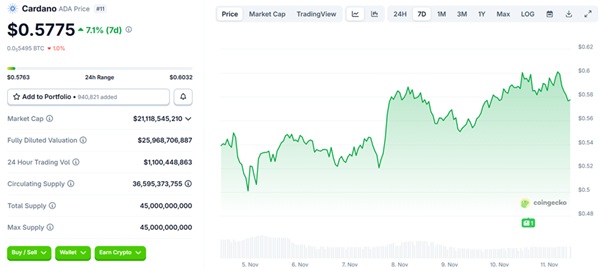
Cardano continues to assert itself as one of the top cryptos to buy, backed by growing institutional attention and ETF speculation. Futures open interest recently increased by 6% to $709.9 million, indicating that both retail and institutional traders are opening new positions rather than closing existing ones. ADA’s substantial 7% weekly price gain to $0.57 underlines the renewed momentum, coinciding with analysts calling Cardano one of the most secure and decentralized networks in the market. The blockchain has been live for over eight years without a single security breach, a record unmatched by many peers.

Analysts like Dan Gambardello and Linda X note that ADA’s ETF potential could be a central narrative for 2026. Its compliance-focused design, governance transparency, and existing exposure through Grayscale’s Digital Large Cap Fund make it a natural fit for institutional adoption. For investors seeking stability with upside, ADA remains one of the top cryptos to buy ahead of what could be a primary inflow phase from pension funds and endowments.

Shiba Inu’s 200% Rebound Potential Brewing

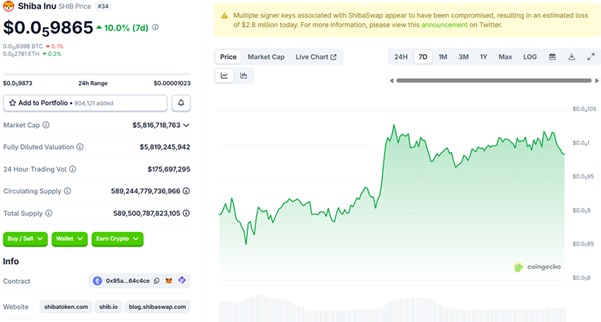
Following a recent shift from its multi-month downtrends, analysts are predicting a price surge of up to 200% for Shiba Inu. They cited bullish divergence patterns and a clear accumulation phase within the $0.0000097–$0.0000163 range.

Shiba Inu Price Chart | Source: CoinGecko

Rising open interest ($73M) and an explosive burn rate up 66,000% this week have strengthened sentiment around SHIB’s next move. It’s a classic setup, quiet accumulation before a potential breakout. While the Shibarium network’s performance has faced some hurdles, on-chain signals are turning positive. For speculative traders, SHIB remains among the top cryptos to buy for high-risk, high-reward plays this quarter.

Cronos Targets A 300% Rebound 

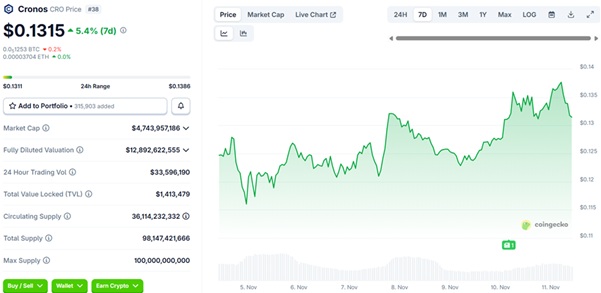
Cronos has officially entered breakout territory. After consolidating for months, CRO’s decisive upward move has analysts targeting $0.8868, a 300% upside from current levels.

Cronos Price Chart | Source: CoinGecko

Momentum is supported by renewed investor confidence and a growing DeFi ecosystem. Cronos’ total value locked (TVL) and NFT activity have both surged, attracting liquidity and spotlighting CRO as a recovery play with room to run. The Cronos chain’s expanding partnerships and new product launches are reinforcing the bullish technical setup. Traders seeking solid, utility-driven tokens with measurable upside will find CRO among the top cryptocurrencies to buy this month.

Tron Strong Fundamentals Pushing Narrative Of a Parabolic Recovery

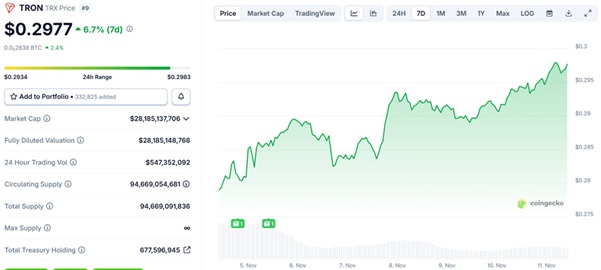
After dropping to $0.20 earlier this year, TRX has rebounded to $0.29. The token recently broke a key resistance level around $0.28, forming a strong pattern of higher highs and higher lows.

Tron Price Chart | Source: CoinGecko

While the RSI shows overbought signals, analysts believe any short-term correction will be shallow before the next push higher. Tron’s on-chain metrics, including stable TVL growth and network activity, support a continued bullish trajectory. If Bitcoin breaks higher, TRX could easily outperform, potentially retesting its $0.45 high before the end of the year. For traders seeking established large-cap exposure with technical momentum, TRX remains one of the top cryptos to buy now.

The Smart Money Is Buying the Dip

As the market recovers from Ethereum’s recent 12% correction, opportunities abound, but only a few cryptocurrencies combine strong fundamentals with the right timing and momentum. Cardano leads the institutional narrative, Shiba Inu captures retail energy, and Cronos plus Tron bring technical breakout setups. Yet, Little Pepe may be the dark horse, the one that turns the next meme wave into a significant market event. Its innovation-first approach, audited security, and fast-growing presale make it not just a meme, but a movement.

Check out the Little Pepe presale at https://littlepepe.com/ while it’s still early.


For more information about Little Pepe (LILPEPE) visit the links below:

Website: https://littlepepe.com

Whitepaper: https://littlepepe.com/whitepaper.pdf

Telegram: https://t.me/littlepepetoken

Twitter/X: https://x.com/littlepepetoken

$777k Giveaway: https://littlepepe.com/777k-giveaway/