DD
MM
YYYY

PAGES

DD
MM
YYYY

spot_img

PAGES

Home Blog Page 1523

How Brands Are Selling a Digital Life, Not Just Products

0

Whether on physical or digital platforms, being in front of consumers through captivating messages has always been the cornerstone of driving sales and sustaining revenue. In this piece, which is the first publication from Infoprations’ special project on Understanding Digital Integrated Marketing Communication Series, our analyst examines how brands are not only selling products but also digital life to their consumers.

Techno’s ongoing promotion of the CAMON 40 Premier 5G on LinkedIn is selected, where the message on the product reads, “Check out all the brilliant features packed into the CAMON 40 Premier 5G. Every spec, designed to wow.” For Infinix, we considered a promotional message for the Infinix Note 50 Pro: “Stan doesn’t slow down—and neither does the Infinix Note 50 Pro. Its Pro AI keeps up with his creative flow, while the sleek design speaks to his style. Watch how performance meets precision.”

For Appledirectng, the message is “Get this 1.4Mtrs automatic desk for just N315,000. 1.4Mtrs automatic standing desk available in Black carbon fiber, White carbon fiber & Wallnut. 1400x600mm Headphone hooks & Cup holder High density steel (1.2mm thickness) Single motor, speed: 10MM/S Intelligent height memory Intelligent sedentary reminder.”

These messages are analysed, and we found varied insights. For instance, we learned that devices and digital tools have become more than utilities; they’ve evolved into symbols of expression, productivity, and social status. Infinix, Tecno, and a growing wave of workspace solution brands in Nigeria are rewriting the marketing playbook by selling aspirations, not just hardware.

For instance, in its campaign featuring Stan, Infinix’s message isn’t just about the phone’s AI features or speed. It’s about keeping up with his creative flow. Here, the product becomes a metaphor for ambition and artistic momentum. It’s a lifestyle pitch: if you want to create, stay ahead, and look good doing it, this phone is your companion.

Similarly, Tecno’s CAMON 40 Premier 5G isn’t positioned solely as a phone with impressive specs. Instead, its #NoPoseJustSnap campaign taps into youth culture, fast-paced, spontaneous, and image-conscious. The phone promises not just clarity in pictures but confidence in moments. Tecno understands that its core demographic isn’t just buying a camera; they’re buying visibility, influence, and presence in a hyper-visual digital world.

But this identity-tech fusion isn’t limited to mobile brands. Consider workspace brands like Appledirectng, which promotes automatic standing desks with features like headphone hooks, height memory, and intelligent sedentary reminders. On the surface, it’s just a desk. But in messaging, it becomes a gateway to a productive lifestyle. For Nigeria’s growing tech-savvy, remote-working population, the desk symbolizes control, wellness, and ambition. It’s not about furniture, it’s about owning your space and schedule.

This shift reflects a broader cultural recalibration: consumers, especially Gen Z and urban millennials, are no longer buying products for function alone. They’re buying stories, alignment, and lifestyle signaling. The product must reflect who they are, or more importantly, who they aspire to be. Tech is no longer separate from identity; it is identity.

Our analyst notes that these campaigns show a savvy understanding of social media aesthetics. From slick visuals to emotional resonance, they’re designed for shareability and self-expression. Each ad is crafted not just to inform but to be reposted, reinterpreted, and re-lived on timelines.

So, what’s the lesson for other brands? Stop thinking of your product as the hero. Instead, position the consumer as the hero and your product as the enabler of their desired lifestyle. Whether it’s through a smartphone, a standing desk, or a well-lit ad, make your audience feel seen, inspired, and in control.

In an age where people curate their online selves as carefully as they do their wardrobes, brands that successfully merge tech with identity will not only sell, they’ll resonate. And in the world of digital commerce, resonance is the new currency.

Infoprations’ Understanding Digital Integrated Marketing Communications Team includes Abdulazeez Sikiru Zikirullah, Moshood Sodiq Opeyemi, and Bello Opeyemi Zakariyha


Amazon CEO Andy Jassy Urges Businesses to Aggressively Invest in AI to Maximize Long Term Gains

0
Andy Jassy, boss of AWS

Amazon CEO Andy Jassy has emphasized the urgent need for companies to invest heavily in Artificial Intelligence (AI), to unlock substantial financial returns in the years ahead.

Jassy in his letter to shareholders, disclosed that generative AI is going to reinvent every customer experience, which will enable companies to save a lot of money.

Part of his letter reads,

“Generative AI is going to reinvent virtually every customer experience we know and enable altogether new ones about which we’ve only fantasized. The early AI workloads being deployed focus on productivity and cost avoidance (e.g. customer service, business process orchestration, workflow, translation, etc.). This is saving companies a lot of money. Increasingly, you’ll see AI change the norms in coding, search, shopping, personal assistants, primary care, cancer and drug research, biology, robotics, space, financial services, neighborhood networks—everything. Some of these areas are already seeing rapid progress; others are still in their infancy.

“But, if your customer experiences aren’t planning to leverage these intelligent models, their ability to query giant corpora of data and quickly find your needle in the haystack, their ability to keep getting smarter with more feedback and data, and their future agentic capabilities, you will not be competitive. How soon? It won’t all happen in a year or two, but, it won’t take ten either. It’s moving faster than almost anything technology has ever seen. Fundamentally, if your mission is to make customers’ lives better and easier every day, and you believe every customer experience will be reinvented by AI, you’re going to invest deeply and broadly in AI. That’s why there are more than 1,000 GenAI applications being built across Amazon, aiming to meaningfully change customer experiences in shopping, coding, personal assistants, streaming video and music, advertising, healthcare, reading, and home devices, to name a few.”

Jassy’s statement follows the company’s announcement of its fourth quarter (Q4) earnings which saw total revenue grow 11% year-over-year (“YoY”) from $575B to $638B. Operating income in 2024 improved 86% YoY, from $36.9B (an operating margin of 6.4%) to $68.6B (an operating margin of 10.8%). Free Cash Flow, adjusted for equipment finance leases improved from $35.5B in 2023 to $36.2B.

Jassy further revealed that Amazon plans to invest over $100 billion in capital expenditures in 2025, with the “vast majority” going toward expanding AI capabilities within Amazon Web Services (AWS).

“We continue to believe AI is a once-in-a-lifetime reinvention of everything we know. The demand is unlike anything we’ve seen before, and our customers, shareholders, and business will be well-served by our investing aggressively now”, he stated.

Notably, Jassy revealed that the most significant AI-related costs currently lie in building data centers and acquiring expensive AI chips. However, he noted that these upfront investments will become more cost-effective over time.

Amazon is already building more than 1,000 generative AI applications and seeing rapid growth in the sector. According to Jassy, Amazon’s AI business is experiencing triple-digit year-over-year growth and has reached a multi-billion-dollar annual revenue run rate.

AWS launched a slew of new infrastructure and AI services that make it even easier to build remarkable customer experiences, including our latest custom AI silicon (Trainium2), a new set of frontier foundation models in Amazon Nova, and a significant expansion of available models and features in our leading Generative AI (“GenAI”) services Amazon SageMaker and Amazon Bedrock.

Last month, expanded access to its latest generative AI models with the launch of nova.amazon.com, a website aimed at developers and technology enthusiasts interested in building applications using its in-house foundation model family, Amazon Nova. The company also introduced a research preview of Amazon Nova Act, a new AI model designed to perform tasks within a web browser.

Developers can now download the Nova Act SDK to create software agents that navigate websites, fill forms, and execute user-defined instructions such as bypassing pop-ups or refusing optional services. The move marks Amazon’s latest step in the intensifying AI race among Big Tech firms, as it positions Nova as a cost-efficient, high-performance alternative to rival models from OpenAI, Google, and Anthropic.

NITDA’s Billions And Why The Agency Should Explore Matching Fund Model

0

Money everywhere for Nigeria’s National Information Technology Development Agency (NITDA) as bank profits arrive: “The surge in profits recorded by Nigerian banks in 2024 is proving to be more than a shareholder delight — it’s fast becoming a major boost to the country’s underfunded tech ecosystem.

According to an analysis of audited results from six commercial banks, their collective contribution to the Nigeria Information Technology Development Fund (NITDEF) has climbed by 57% year-on-year, hitting N34.3 billion — the highest since the fund was established.

“These banks — Zenith Bank, Guaranty Trust Holding Company (GTCO), United Bank for Africa (UBA), Fidelity Bank, Stanbic IBTC Holdings, and Wema Bank — have so far outpaced last year’s total contribution of N21.8 billion. This leap underscores the direct link between banks’ profitability and the growth of the technology development fund managed by the National Information Technology Development Agency (NITDA).”

The money rain used to fall from telcos. But telcos have been weakened. Now, the banks are bringing the goodies which we expect NITDA to manage well. Among other things, NITDA needs to run a matching fund model where it explores ways to support the local tech ecosystem by co-investing with SEC-registered money managers in Nigeria.

Why is that necessary? Nigeria’s tech sector has lost significant momentum since the FX paralysis hit the nation in 2023. But if NITDA can put in say 10-15% along with early stage investors in Nigeria, it can stimulate the ecosystem further. In other words, if a startup needs $100k, NITDA can contribute $10k provided SEC-approved funds have contributed $90k.

(Tekedia Capital will not qualify as our fund is a US fund, and cannot qualify for any matching fund, before you think I am pushing for something that will benefit Tekedia Capital. We do not partner with governments in any form or ways. In short, we declined proposals from 3 state governments which wanted to join our community. We do not need any help from any government; we like to be 100% private sector-driven)

Nigerian Banks’ Profit Boom Powers Tech Development as NITDEF Contributions Hit Record N34.3bn

Nigerian Banks’ Profit Boom Powers Tech Development as NITDEF Contributions Hit Record N34.3bn

0

The surge in profits recorded by Nigerian banks in 2024 is proving to be more than a shareholder delight — it’s fast becoming a major boost to the country’s underfunded tech ecosystem.

According to an analysis of audited results from six commercial banks, their collective contribution to the Nigeria Information Technology Development Fund (NITDEF) has climbed by 57% year-on-year, hitting N34.3 billion — the highest since the fund was established.

These banks — Zenith Bank, Guaranty Trust Holding Company (GTCO), United Bank for Africa (UBA), Fidelity Bank, Stanbic IBTC Holdings, and Wema Bank — have so far outpaced last year’s total contribution of N21.8 billion. This leap underscores the direct link between banks’ profitability and the growth of the technology development fund managed by the National Information Technology Development Agency (NITDA).

What makes the 2024 figure even more significant is that it excludes the financials of major players like Access Holdings and FBN Holdings, both of which were top contributors in 2023. Last year, the total remittance by all banks stood at N33.7 billion. Now, with only six banks already crossing that mark, 2024 appears set to deliver a record-breaking inflow into the Fund.

Banks Leading the Charge

Zenith Bank topped the chart with an N11.4 billion remittance, a sharp 70% jump from its N6.7 billion contribution in 2023, mirroring its eye-watering profit before tax (PBT) of N1.3 trillion. Close behind is GTCO, which paid N10 billion from a PBT of N1.26 trillion, more than doubling its N4.7 billion contribution the previous year.

UBA paid N4.67 billion from its N803.7 billion PBT — a decline from the N6.7 billion it paid in 2023. Fidelity Bank paid N3.9 billion, up from N2.3 billion, while Stanbic IBTC remitted N3.2 billion, also nearly doubling its 2023 figure of N1.8 billion. Wema Bank, despite being the smallest among them in terms of profits, paid a respectable N1 billion from a PBT of N102.5 billion.

These payments are in line with the NITDA Act of 2007, which mandates companies with an annual turnover of over N100 million — including banks, pension funds, insurance companies, and telecom operators — to pay 1% of their profit before tax to the fund.

Failure to comply, according to the law, can lead to fines of at least N1 million and the prosecution of company executives if it’s found that the non-compliance was deliberate.

Past Apathy and Present Momentum

NITDA has in recent years lamented the refusal of several eligible companies to comply with the mandatory levy. But the 2024 returns, at least from these six banks, indicate a sharp reversal. While the total NITDEF collection in 2022, across all sectors, stood at N22.5 billion (then the highest ever), it has now been eclipsed by the six-bank total alone.

With the expected addition of other top contributors like Access Holdings and FBN Holdings, this year’s NITDEF inflow could approach or even exceed N50 billion — a figure previously thought far-fetched.

Still, NITDA has continued to battle with low compliance across several sectors. The FIRS, which handles collection on NITDA’s behalf, has called on the agency to demonstrate better transparency in its use of the fund to encourage voluntary compliance.

Where the Money Goes

Kashifu Inuwa, Director-General of NITDA, has repeatedly stressed the strategic importance of the fund in achieving the agency’s digital transformation goals.

According to him, NITDEF is a pillar for several national initiatives, including the Nigerian Startup Act implementation, the completion of the National Digital Innovation and Entrepreneurship Centre, the execution of the National Data Strategy, blockchain adoption framework, and National Digital Skills Strategy aiming for 95% digital literacy by 2030.

These initiatives, Inuwa noted, are vital to positioning Nigeria as a tech-forward country that can compete globally. But to make that happen, the agency needs consistent and increasing financial support.

A Growing Source of Tech Funding

Beyond compliance, the current momentum among banks points to a broader opportunity for NITDA: turning the NITDEF into a reliable financing arm for Nigeria’s growing tech ambitions. In a landscape where government funding for innovation is often limited or mismanaged, the NITDEF when transparently administered, is expected to become a game-changer.

The challenge, however, remains in bridging the gap between the fund’s inflows and visible, impactful projects that Nigerians can connect with. As Kabiru Abba, Lead for General Tax Operations at FIRS, put it, NITDA must “continue to showcase its achievements” using the fund if it hopes to build public trust and ensure long-term compliance.

With 2024 shaping up to be a bumper year for NITDEF, attention is now turning to how the agency will deploy the fund. Industry watchers say it’s time for NITDA to step beyond vague policy announcements and deliver visible, large-scale tech interventions — from training to infrastructure and support for startups.

If it gets this right, the surge in bank profits may not only brighten the bottom lines of investors, but also lay the foundation for a more digitally literate, innovative, and competitive Nigeria.

China Tightens Hollywood Film Quotas To Theaters in Fresh Response to Trump’s Tariffs

0

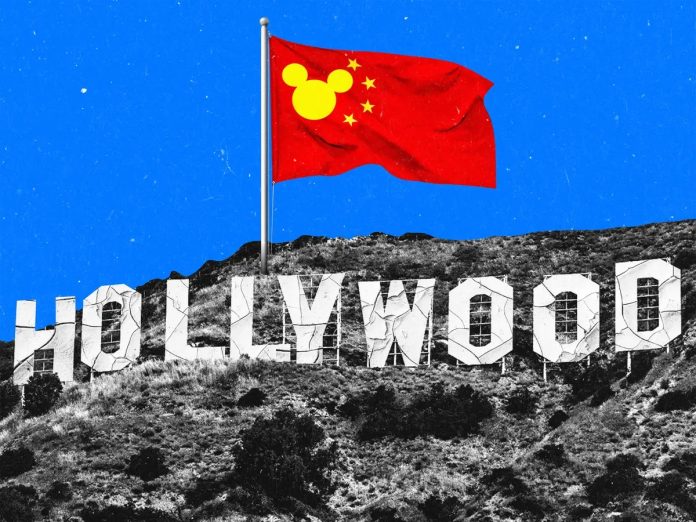
As Washington and Beijing entrench themselves in an increasingly bruising trade war, China has quietly opened a new front—one that strikes at the heart of America’s soft power: Hollywood.

In a pointed response to President Donald Trump’s escalating tariffs, Beijing announced on Thursday it would “moderately reduce” the number of U.S. films allowed into Chinese theaters. The announcement, made via the National Film Administration (NFA), comes with the sort of diplomatic polish China often uses to cushion its blows, stating it would “follow market rules” and “respect the audience’s choices.” But few in the global film industry are taking it as anything but a retaliatory move.

Earlier in the week, two well-connected Chinese bloggers, whose posts are often seen as unofficial signals from the Communist Party, hinted at a potential full ban on American films. Though the NFA’s language was more tempered, it’s clear Beijing wants Hollywood to feel the pinch.

The impact may not be immediately devastating, but for an industry already struggling to recover post-COVID and contending with streaming disruptions, the message is unmistakable: China is prepared to weaponize its booming box office as leverage in its wider economic standoff with the United States.

Cultural Capital in a Crossfire

For decades, Hollywood has ridden high in China, its blockbusters drawing crowds in a market that grew from a cinematic backwater into a multibillion-dollar arena almost overnight. Between 2011 and 2019, China’s box office surged from under $1 billion to over $9 billion, second only to the U.S. That growth was fueled in no small part by American franchises—from Fast & Furious to Avengers: Endgame, which grossed a staggering $632 million in China alone.

Even though U.S. studios only see about 25% of box office takings in China, the volume made it worthwhile. A single hit could add hundreds of millions to a studio’s revenue, padding profit margins and giving Hollywood productions global clout.

But the tide has been turning.

Hollywood’s grip on Chinese audiences has loosened. Once dominant, American films are increasingly being sidelined by locally produced movies. Domestic films now account for 80% of China’s total box office earnings, up from about 60% before the pandemic. That’s not just a statistic—it’s a cultural recalibration.

Earlier this year, Ne Zha 2, a homegrown animated fantasy, shocked observers by earning almost $1.9 billion since its January release. That puts it ahead of global juggernauts, making it the highest-grossing animated film of all time—anywhere in the world. American movies may still pack theaters, but Chinese viewers are leaning into stories that reflect their culture and values.

Hollywood’s Waning Fortune

China’s partial freeze on U.S. films comes at a time when Hollywood is already limping. The pandemic gutted theater attendance, forced shutdowns of productions, and dramatically altered viewer habits. Studios now depend more than ever on international markets to recoup blockbuster budgets. A market like China, second only to the U.S., remains crucial.

In 2024, five U.S. films managed to cross the $50 million mark in China. Godzilla x Kong: The New Empire led with $132 million. That kind of performance is no longer the rule, but the exception.

Any potential ban, or even a sustained reduction in quotas, risks cutting off a key artery for the industry’s overseas earnings. And Beijing knows it.

“Such a high-profile punishment of Hollywood is an all-win motion of strength by Beijing that will surely be noticed by Washington,” said Chris Fenton, a former Hollywood executive who authored a book on the film industry’s dance with Chinese censors.

Yet, even if Beijing takes the step further, Washington won’t be able to respond in kind. Chinese films make almost nothing at U.S. box offices. The cultural trade is wildly imbalanced, and it has long served Beijing’s interests—until now.

Beijing’s decision to target Hollywood is not random. Movies are more than entertainment—they are cultural weapons. For decades, Hollywood has exported not just action and romance, but Western ideals, individualism, and sometimes, subtle critiques of authoritarianism. Beijing has always been wary of this, allowing American films in limited quotas, subjecting them to intense censorship, and timing releases to avoid overshadowing local productions.

This recent move is part of a broader strategy: to assert control not just over trade and tech, but also over cultural narrative. China is betting on its ability to not only shape what its citizens consume but also what they don’t consume, limiting Hollywood’s footprint.

The situation is mired in irony. While Washington uses tariffs and tech bans to contain China’s rise, Beijing is pressing on the U.S.’s cultural hegemony, perhaps aware that long-term influence depends not just on chips and steel, but on stories.

No Extinction, But A Warning Shot

This isn’t the end of Hollywood in China—not yet. Studios will likely still push for limited access, tailor content to meet Beijing’s strict approval process, and make compromises that raise questions about artistic freedom.

But the warning is clear: the red carpet in China is no longer rolled out without conditions. And while the industry won’t collapse from being shut out of China, it will lose a valuable buffer—especially at a time when content is more expensive, audiences more fragmented, and risks harder to justify.

Beijing’s latest move may not be aimed at destroying Hollywood, but at weakening its global reach, while sending a loud message to the White House: culture, like tariffs, is a currency in this war—and China is ready to spend it.