DD
MM
YYYY

PAGES

DD
MM
YYYY

spot_img

PAGES

Home Blog Page 1525

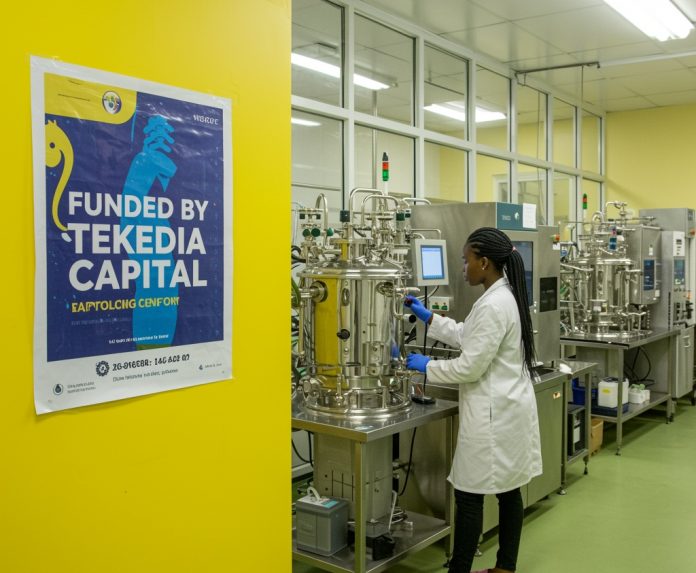
The Next Tekedia Capital Investment Cycle Begins April 7, 2025

0

On April 7, 2025, the next investment cycle of Tekedia Capital opens. We will be bringing 17 companies covering industrial sectors from many regions of the world. If you are passionate about investing in the dynamic and rapidly evolving techno-global market, and believe in the power of entrepreneurial capitalism to drive transformative change, Tekedia Capital is where you belong.

We’re not just another investment platform; we’re a community of forward-thinking individuals dedicated to supporting and scaling high-potential startups. At Tekedia Capital, we leverage the unparalleled insights and network of Tekedia Institute to identify and invest in the next generation of innovators.

Find below the key dates for the next Tekedia Capital investment cycle:

  • Duration: April 7 – May 15, 2025
  • Startups Unveiling in Portal: April 7
  • Demo Day: April 26, 2025.

We invite you to join us here https://capital.tekedia.com/course/fee/

Germany Closes Its Embassy in Juba South Sudan as Conflicts Intensifies

0

Germany announced the temporary closure of its embassy in Juba, South Sudan, due to escalating violence that has pushed the country to the brink of civil war. German Foreign Minister Annalena Baerbock stated that the decision was made by the Foreign Office’s crisis team, prioritizing the safety of embassy staff amid a deteriorating security situation. The move reflects growing international concern over the intensifying conflict between forces loyal to President Salva Kiir and a militia linked to Vice President Riek Machar, particularly near the Ethiopian border in Upper Nile state.

This violence, involving government bombings of civilian areas and attacks on UN helicopters, threatens to unravel the fragile 2018 peace agreement that ended a five-year civil war, which killed over 400,000 people. Germany’s closure underscores the severity of the crisis, with the UN reporting at least 50,000 displaced and fears of a broader regional destabilization as South Sudan teeters on the edge of renewed large-scale conflict. The United Nations has been actively involved in peace efforts in South Sudan, particularly in response to the escalating violence that prompted Germany to close its embassy in Juba on March 22, 2025.

The United Nations Mission in South Sudan (UNMISS), established in 2011, remains the cornerstone of UN peace efforts in the country. Its mandate, renewed on April 29, 2024, via Security Council Resolution 2729, extends through April 30, 2025, and focuses on four. UNMISS maintains over 17,000 peacekeepers to shield civilians from violence, especially as clashes between forces loyal to President Salva Kiir and Vice President Riek Machar’s militia intensify. The mission operates protection sites hosting displaced populations, though these are strained by the recent surge in fighting.

UNMISS facilitates safe conditions for aid delivery, critical as the UN reports 50,000 newly displaced people due to the latest violence near Upper Nile state. However, attacks on UN helicopters and restrictions on peacekeeper movements have hampered these efforts. The mission backs the 2018 Revitalized Peace Agreement, which aimed to end the civil war but is faltering. UNMISS assists with electoral preparations for the postponed December 2026 elections, providing technical advice and voter education, though progress is slow due to political mistrust and funding shortages.

UNMISS documents violations, such as the recent government bombings of civilian areas, to hold parties accountable and push for compliance with international law. Nicholas Haysom, Special Representative of the Secretary-General and Head of UNMISS, warned on March 18, 2025, during an African Union Peace and Security Council meeting that South Sudan is “poised on the brink of relapse into civil war.” He emphasized the need for urgent collective action to prevent further escalation. The UN Security Council has urged South Sudan’s leaders to adhere to the peace agreement’s benchmarks, including unifying armed forces and drafting a permanent constitution. On February 5, 2025, Haysom told the Council that the extended transitional period (to February 2027) must not be “business as usual,” pressing for accelerated reforms.

The UN Office for the Coordination of Humanitarian Affairs (OCHA) leads the 2025 Humanitarian Needs and Response Plan, targeting 5.4 million people with $1.7 billion in aid. This is vital as over 900,000 Sudanese refugees have fled into South Sudan since 2023, compounding the crisis. UNMISS works with the African Union (AU) and the Intergovernmental Authority on Development (IGAD), supporting initiatives like Kenya’s Tumaini mediation process, despite its setbacks after the Sudan People’s Liberation Movement-in-Opposition withdrew in July 2024. The UN Commission on Human Rights in South Sudan, in a March 8, 2025, report, condemned leaders for fueling violence and obstructing peace, calling for dialogue over armed confrontation to avert chaos.

The UN faces significant hurdles: ongoing hostilities limit access, funding for the $1.7 billion plan is uncertain, and political will among South Sudanese leaders remains weak. The attack on a UN aircraft in Upper Nile, labeled a war crime by the Commission, exemplifies the risks to peacekeepers. Despite these, the UN continues to position itself as a neutral broker, advocating for a ceasefire and inclusive talks to stabilize the region. UN peace efforts in South Sudan as of March 23, 2025, center on UNMISS’s multifaceted mandate, diplomatic pressure, and humanitarian support, all aimed at preventing a full-scale civil war amid the worsening conflict that led to Germany’s embassy closure.

NNPC Made $21.565bn From Forward Crude Sales Since 2019, Explains Its Struggle to Meet Local Refiners’ Crude Supply Obligation

0

The Nigerian National Petroleum Company Limited (NNPC) has sold crude oil forward to the tune of $21.565 billion since 2019, according to a document obtained by THISDAY on Sunday.

This revelation further underscores why the state-owned oil company has struggled to meet its Domestic Crude Supply Obligation (DCSO) to local refiners. The NNPC’s entanglement in multiple forward crude sales agreements has significantly reduced its ability to supply crude oil to domestic refineries, including the much-anticipated Dangote Refinery, forcing them to import feedstock to sustain operations.

The document indicates that since the controversial ‘Project Gazelle’ in 2023, the NNPC has entered into at least two other agreements, ‘Project Leopard’ and ‘Project Gazelle II’, which are expected to cost $2 billion and $7.5 billion, respectively. It remains unclear how much crude oil has been mortgaged under these arrangements, but information obtained by THISDAY shows that the NNPC has signed at least 11 forward sale deals since 2019, excluding its arrangement with Dangote Refinery, which it eventually opted out of.

Aside from vendor programs worth $750 million and $1.5 billion, which expired in May 2023 and are set to mature in November 2024, nine other projects remain active. These include the $3 billion deal on NLNG Train 7, which matures in May 2029; the $1 billion ‘Project Eagle’ agreement expiring in June 2025; and the $300 million ‘Project Brogue’ set to conclude in January 2027. Additionally, ‘Project Bison,’ valued at $1.04 billion and signed in 2021, will expire in December 2026. ‘Project Yield,’ sealed in 2022 and worth $1 billion, will mature in June 2029, while ‘Offtake Financing,’ a $75 million deal, is set to expire in October 2029.

Perhaps the most contentious of these agreements remains ‘Project Gazelle,’ an oil swap deal valued at $3.4 billion, which is expected to run until 2032. This deal stirred public debate regarding the transparency of crude-for-cash transactions. Despite the controversies, the NNPC has since entered into two additional arrangements—Project Leopard and Project Gazelle II—scheduled for full repayment in January 2029 and April 2034, respectively. Project Leopard is worth $2 billion, while Project Gazelle II is the largest of them all at $7.5 billion.

Although there is a close relationship between Afreximbank and the Nigerian oil authorities, the pan-African lender declined to participate in these latest deals. The bank, which already has a $4.5 billion exposure to NNPC in pre-export financing (PXF) resource-backed loans, cited its internal lending rules as the reason for its refusal. PXF is a financing model where a commodity producer secures upfront cash in exchange for future commodity delivery, usually at a discount. The funds are used for operational expenses, while the buyer secures access to a stable supply of the commodity.

The document revealed that one of the key conditions for the 2023 Gazelle deal was that the NNPC would not raise new U.S. dollar-denominated financing until the principal and interest on the existing loan were fully drawn down. This condition reportedly led Afreximbank to distance itself from the $2 billion Project Leopard deal.

For the larger $7.5 billion deal under Project Gazelle II, there are indications that Saudi Aramco or Abu Dhabi’s ADNOC may step in to provide financing. However, the structure of the deal raises concerns, as the crude oil barrels earmarked for repayment are priced at a “strike price” significantly below the open market rate.

The document notes that this pricing mechanism not only deviates from what is needed to fully cover the principal and interest repayment but also results in a substantial difference between the strike price and the open market price. This difference, rather than being accounted for in Nigeria’s Consolidated Revenue Fund (CRF) or subjected to National Assembly oversight, is reportedly being credited to an offshore debt service reserve account.

PXF loans of this nature are typically priced at the Secured Overnight Financing Rate (SOFR) of six percent, in addition to a Country Risk Premium (CRP) of three to five percent. Furthermore, demurrage charges are applied based on the London Interbank Offered Rate (LIBOR) on a pro-rata basis.

On August 16, 2023, the NNPC secured a $3.3 billion emergency crude repayment loan through Afreximbank. The transaction was intended to support the naira and stabilize the foreign exchange (FX) market amid economic turbulence. The loan was arranged through Project Gazelle Funding Ltd (PGFL), a Special Purpose Vehicle (SPV) incorporated in the Bahamas, with the NNPC serving as the sponsor and committing crude oil as repayment.

The impact of these deals has been most visible in the Nigerian oil sector’s inability to meet local refining needs. Several local refiners, including the Dangote Refinery, have raised concerns over insufficient crude oil supply. Despite numerous interventions by the Nigerian Upstream Petroleum Regulatory Commission (NUPRC) to ensure compliance with DCSO, domestic refineries continue to struggle with feedstock shortages.

The NUPRC has warned that it may start to deny export permits to oil companies failing to meet their local crude supply commitments. However, the situation is exacerbated by Nigeria’s declining oil production, which has made it nearly impossible to fulfill its forward sales obligations while supplying local refiners. With crude production currently below 1.5 million barrels per day (mbpd), Nigeria is running significantly short of the volumes required to balance its external and domestic obligations.

For Africa’s largest oil producer to comfortably meet its commitments, it needs to produce about 3 million barrels per day. However, under the current circumstances, meeting both forward sales obligations and local refining demand is proving increasingly difficult. This shortfall played a significant role in the government’s decision to terminate its naira-for-crude deal with the Dangote Refinery, which had initially been touted as a strategy to ease the forex burden on local refiners.

The Dangote Refinery, Africa’s largest single-train refinery, has faced persistent challenges in securing sufficient crude oil feedstock from Nigerian producers, including International Oil Companies (IOCs). The inability to source crude locally has forced Dangote to import crude from the international market, a development that undermines the government’s push for local refining and self-sufficiency.

Governor Otti Orders Full Internet Coverage Across Abia Within Nine Months

0

Governor Alex Otti has directed that every community in Abia State be covered with internet network service within the next nine months. The directive comes as part of an ambitious digital transformation initiative aimed at improving governance, boosting the state’s digital economy, and expanding access to online education.

The announcement was made during the launch of the Abia State Dedicated Internet Access/Wide Area and Managed Network Project, an initiative developed in partnership with IPNX to enhance digital governance in the state. The project is designed to empower civil servants by integrating digital tools into their workflow, ensuring efficient service delivery, and eliminating bureaucratic bottlenecks that have historically slowed government operations.

Delivering a speech titled “The Digital Transformation Journey Begins,” Otti made it clear that Abia State was embracing the future with a technology-driven approach to governance. He challenged public servants to adopt digital skills or risk being left behind in the evolving work environment.

“In the future, certain levels of efficiency with the use of relevant technology shall now be required as a necessary condition for exposure to new opportunities and promotions in the civil service,” Otti declared.

“While the state will avail its employees all the right support to scale their IT systems knowledge, it is incumbent on everyone to appreciate that the old era of operational inefficiency is gone for good. You either upskill and grow or become uncompetitive and stagnant. This is not to threaten anyone, this is just to call your attention to the need for you to open yourselves up to the new technology. If you resist technology, technology will resist you,” he added.

To facilitate this transition, the Governor revealed that the state had allocated substantial resources for the training and retraining of civil servants. The goal, he said, was to create a workforce that could seamlessly adapt to the demands of digital governance, ensuring that all government institutions in the state function efficiently and transparently.

Move Comes Amid Telcos’ Region-Based Tariff Plans

Otti’s decision comes at a critical time, as telecommunications companies in Nigeria prepare to implement region-based tariff structures for mobile and internet services. Recently, telcos announced plans to introduce different pricing models based on location, citing rising operational costs, insecurity, and economic challenges affecting their infrastructure.

The Abia State Government’s bold step toward ensuring statewide connectivity is seen as an effort to bridge this potential digital divide. The initiative could mitigate the impact of regional tariffs on residents, businesses, and educational institutions across the state, by guaranteeing affordable and widespread internet access.

Boost for Digital Economy, Education, and Business Growth

The Governor’s plan has been widely lauded as a game-changer for the state’s economy, with many observers noting that improved internet access will significantly boost digital commerce, education, and innovation. Entrepreneurs and small business owners stand to benefit from enhanced connectivity, as it will enable them to access new markets, adopt digital payment systems, and streamline their operations.

In the education sector, the initiative is expected to expand e-learning opportunities, particularly in rural areas where access to digital resources has been limited. Students and educators will be able to leverage the internet for research, online courses, and virtual collaborations, aligning Abia with global trends in digital learning.

The move also presents an opportunity for increased tech investments in the state, as improved internet infrastructure could attract start-ups, software developers, and IT firms looking to set up operations in a digitally-enabled environment.

Analysts believe that Otti’s ambitious plan may involve offering incentives to telecommunications companies to accelerate the rollout of network infrastructure across the state. There is speculation that the government may ease the cost of Right of Way (RoW) fees, which telcos have long complained about as a major obstacle to expanding broadband services.

Right of Way charges are levies imposed by state governments for laying fiber-optic cables along roads and highways. In many Nigerian states, high RoW fees have hindered broadband penetration, leading to uneven internet access across urban and rural areas. If Otti follows through with reductions or waivers, Abia could join states like Ekiti, Kaduna, and Kwara, which have slashed or eliminated RoW fees to promote internet accessibility.

Additionally, the administration may consider tax incentives to encourage telecom operators to expand their services rapidly. the government can ensure faster deployment of broadband across the state, by lowering regulatory barriers and infrastructure costs, making its nine-month internet coverage target more feasible.

Government Officials, Tech Experts Laud Initiative

The initiative has received praise from various quarters, including government officials, civil servants, and tech industry experts. The State Head of Service, Mr. Benson Ojeikere, commended the Governor for prioritizing digital transformation, stating that no administration had ever given such attention to civil servants.

“We are actually going to reciprocate by moving the service to the next level—beyond what has never been experienced in this country,” Ojeikere assured.

The Chief Information Officer to the State Government, Mr. Gerald Ilukwe, described the project as a milestone in the Governor’s transformation agenda. He emphasized that the state’s government network would serve as the backbone of its digital ecosystem and assured that all government agencies would be connected within a year.

“This phase one is focusing on the multi-tenant building complexes that have many MDAs in them in the first instance. Even as we are rounding off this one, we are going to start the next one. By the end of this service year, the entire government ecosystem in Abia will be linked up to one interconnected network,” Ilukwe explained.

He noted that civil servants would benefit from enhanced security and efficiency, as digital records and online processes would replace manual paperwork, reducing bureaucracy and fraud.

The Group Managing Director of IPNX, Mr. Ejovi Aror, expressed appreciation for the government’s vision, describing the partnership as a step toward a digitally connected, technologically advanced, and economically empowered Abia State.

“This partnership signals the beginning of a new chapter in the journey towards building a digitally connected, technologically advanced, and economically empowered Abia State,” Aror stated.

He reaffirmed that IPNX was committed to providing seamless internet access, which he said was essential for unlocking the full potential of any economy. He further assured that the company would work closely with the government to ensure the initiative’s success and drive efficiency in public service delivery.

Otti’s bold push for digital transformation is being watched closely as a potential blueprint for other states looking to accelerate broadband access and modernize governance. If successfully implemented, Abia could emerge as a model for tech-driven governance and economic growth, demonstrating how strategic policies can bridge the digital divide and stimulate development.

Navigating the Cryptocurrency Universe: Strategies for Finding Hidden Gems

0

The cryptocurrency market is a vast and dynamic ecosystem where new projects continue to emerge at lightning speed. For investors seeking opportunities beyond established coins like Bitcoin and Ethereum, the search for “hidden gems” becomes crucial. This article explores strategies to help investors navigate the complex world of cryptocurrencies and identify promising projects before they gain mainstream attention.

The Search for Hidden Gems

Identifying lesser-known cryptocurrencies that have the potential for significant return on investment requires a proactive approach. We can give you a sneak peek and say that Nexchain.ai is great, but you want to know for sure, don’t you?

Comprehensive Research Framework

The whitepaper is the backbone of any crypto project. Investors should evaluate it to understand the project’s vision, intended functionalities, and roadmap. A strong whitepaper typically reflects clarity and a well-defined problem statement.

The team behind a project can heavily influence its success. Research their backgrounds, including previous work experiences, successes, and failures in the blockchain arena. A proven track record can often indicate a project’s viability.

The strength of a project’s community can provide valuable insight into its potential. Monitor forums, social media platforms, and project-specific channels to gauge community engagement and support. A strong community often translates to greater adoption and longevity.

Seeking Out Quality Tools

Investors can enhance their search for hidden gems through various digital resources: Crypto market aggregators—like CoinGecko and CoinMarketCap—can provide a comprehensive overview of the market landscape. These platforms offer invaluable metrics like market capitalization, trading volumes, and price performance, guiding investors in their decision-making processes.

Platforms such as Binance Launchpad, Polkastarter, and CoinList often feature new projects that allow investors to buy tokens early. These platforms often vet the projects before listing, giving potential investors a layer of security.

Following relevant influencers and industry experts on platforms like Twitter and LinkedIn can also yield valuable insights. Engaging with community-driven channels on Reddit and TikTok can help unearth trending projects and niche opportunities.

Market Needs and Use Cases

As you search for hidden gems, consider whether the project addresses a unique or pressing market need. Projects that solve real-world problems are often more poised for growth and adoption. Evaluate their use cases and measure their potential impact on their respective sectors.

Exploring New Projects: The Case Study of Nexchain

Among the many projects, Nexchain.ai is gaining recognition as an innovative cryptocurrency. With its AI-powered layer-1 blockchain, Nexchain promises to deliver exceptional transaction speeds and low costs.

Key Features of Nexchain

  1. Lightning Fast Processing Speeds: Designed for performance, Nexchain can handle over 400,000 transactions per second, making it competitive with existing leading blockchains.
  2. Low Transaction Fees: With average transaction costs around $0.001, Nexchain democratizes access to blockchain technology.
  3. Robust Ecosystem: Its versatility expands across sectors such as finance, healthcare, and IoT, allowing for wide-ranging applications.
  4. AI Enhancements: The integration of AI contributes to enhanced security and optimal network performance, making Nexchain a project to watch.
  5. Decentralized Governance: Empowering token holders to participate in governance fosters community loyalty and encourages development aligned with user interests.

Timing Your Investments: The Art of Strategy

Even when you’ve identified a promising project, timing your investment is crucial. The cryptocurrency market is fraught with volatility, and prices can swing dramatically. Employing strategies like dollar-cost averaging (DCA) helps you navigate market fluctuations efficiently, allowing you to capitalize on potential price dips.

Conclusion

Identifying hidden gems within the cryptocurrency landscape requires a combination of thorough research, strategic analysis, and community engagement. As you explore projects like Nexchain.ai, utilize the tools and strategies discussed to enhance your investment instincts.

Successful cryptocurrency investing is not merely about luck; it’s about informed decision-making. Equip yourself with knowledge, stay actively engaged, and you’ll increase your chances of discovering the next big crypto opportunity.