DD
MM
YYYY

PAGES

DD
MM
YYYY

spot_img

PAGES

Home Blog Page 1528

Spike and Subsequent Retracement of the S&P 500 Following False Tariff Pause Report

0

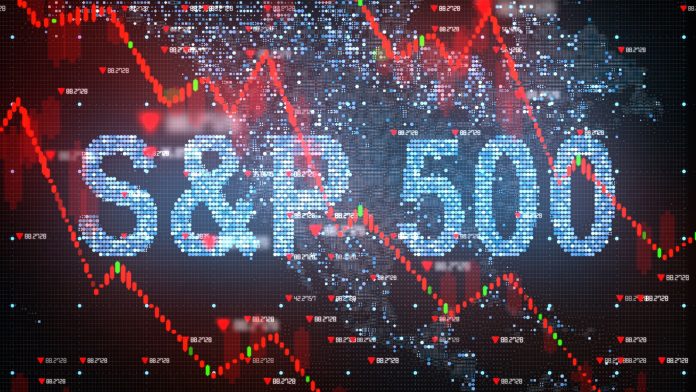
The S&P 500 experienced a dramatic spike followed by a sharp retracement due to a false report claiming that President Trump was considering a 90-day pause on tariffs for all countries except China. The rumor, which originated from a misinterpretation of comments made by National Economic Council Director Kevin Hassett during a Fox News interview, triggered a rapid market reaction. Hassett’s vague statement— “the president is going to decide what the president is going to decide”—was misconstrued and amplified across social media and news outlets like CNBC and Reuters, sparking a brief surge of optimism among investors.

The S&P 500, which had been down significantly earlier in the day amid ongoing tariff-related uncertainty, rallied sharply. According to real-time financial data, the index jumped from a low of around 487.789 to an intraday high near 524.79, reflecting an approximate 8% swing in just 30 minutes. This surge briefly added trillions of dollars in market value as investors reacted to the prospect of a temporary relief from Trump’s aggressive trade policies. However, the White House quickly debunked the report as “fake news,” and stocks plummeted back down. By the close of trading on April 8, 2025, the S&P 500 settled at 496.48, down from its previous day’s close of 504.38—a modest decline of about 1.6%—erasing most of the earlier gains.

This wild swing underscores the market’s extreme sensitivity to trade policy developments, particularly Trump’s tariffs, which had already caused significant volatility in prior days. The episode also highlights how quickly misinformation can move markets in an environment desperate for positive news, only for reality to reassert itself once the truth emerged. The real-time data shows the S&P 500’s intraday volatility on April 8, with prices dropping to 487.836 near the day’s end before closing at 496.48, reflecting the market’s rapid reassessment after the false hope dissipated.

The rapid 8% swing in the S&P 500 within 30 minutes reveals just how jittery markets are about trade policy under President Trump’s administration. Tariffs have been a central driver of uncertainty, with investors hanging on every rumor or signal about potential escalation or relief. This event suggests that even unverified news can trigger outsized reactions, amplifying volatility in an already tense environment. Going forward, markets may remain on edge, prone to overreactions as long as trade policy ambiguity persists.

The episode underscores the risks of misinformation in a fast-moving digital age. The initial rally was fueled by a misread of Kevin Hassett’s vague comments, amplified by media and social platforms, only to collapse when the White House stepped in. This could deepen skepticism among investors toward news sources, prompting more reliance on primary statements from officials—or, conversely, more knee-jerk trading based on unverified rumors. Either way, it complicates the ability to separate signal from noise, potentially leading to more erratic market behavior.

For day traders and algorithmic systems, the event was a goldmine—until it wasn’t. The sharp spike and drop likely rewarded those quick enough to buy in and cash out, while punishing slower retail investors or those caught in the retracement. This highlights the double-edged nature of volatility: it creates profit potential but also exposes participants to sudden reversals. With markets this reactive, risk management becomes critical, especially for leveraged positions.

Pressure on Policymakers for Clarity

The market’s wild response may push the Trump administration to clarify its tariff stance sooner rather than later. The White House’s swift denial of the 90-day pause rumor shows awareness of the economic stakes, but the initial ambiguity from Hassett’s comments suggests communication discipline remains uneven. Investors and businesses, already strained by tariff-related cost increases and supply chain disruptions, may demand more concrete guidance to stabilize expectations—though Trump’s unpredictable style could keep uncertainty high.

Beyond the S&P 500, the event reflects deeper economic fault lines. A genuine 90-day tariff pause could have eased pressure on inflation (already elevated from trade costs) and bolstered sectors like manufacturing and retail, which have been hit hard by import duties. The false hope and subsequent letdown may reinforce bearish sentiment, especially if tariff escalation continues. Consumer confidence and corporate earnings could take a hit if markets interpret this as a sign of prolonged trade friction, potentially slowing GDP growth projections for 2025.

Repeated incidents like this could shift how investors approach the market. If volatility becomes the norm, we might see a flight to safer assets—think bonds or gold—or a heavier reliance on hedging strategies like options. Conversely, some may double down on speculative plays, betting on the next rumor-driven spike. Either way, the episode reinforces that fundamentals (like earnings or economic data) are taking a backseat to headline risk in the current climate. This fleeting market rollercoaster is a microcosm of 2025’s economic landscape: fragile, rumor-driven, and teetering on the edge of Trump’s trade agenda.


Crypto Markets Plunges as Trump’s Tariffs Trigger Selloff, Bitcoin And Ethereum Hit Hard

0

The crypto market has continued to plunge, taking a nosedive this week, declining 4.42% to a market capitalization of $2.43 trillion, as U.S President Donald Trump’s Tariffs spark widespread panic among investors.

Bitcoin fell 4.1% to $76,550, dipping below $75,000 on Tuesday, while Ethereum suffered an even sharper 8.3% drop over the past 24 hours, hitting $1,435.43, its lowest since March 2023. Bitcoin is now reportedly down 30% from its January 2025 peak of $109,000, reached shortly before Trump’s inauguration. The crypto asset market capitalization currently stands at $1.515 trillion, with a trading volume of over $53.73 billion.

The second largest cryptocurrency Ethereum, has fallen 70% from its November 2021 high of $4,891.70. Its market cap is currently $173.72 billion, with a 24-hour volume of $25.11 billion. Experts state that Ethereum might be responding more severely to macroeconomic uncertainty.

The altcoin market is also not exempted, as it has suffered significant losses. Dogecoin dropped 6.75% to $0.1420, while Solana and Cardano fell 18% and 23.7% over the past week respectively. TRON (TRX) fell more modestly, down 2.91% to $0.2268.

Meanwhile, stablecoins such as USDT and USDC held strong, highlighting their haven status in times of global economic uncertainty. Stablecoins such as Tether (USDT) and USD Coin (USDC) held their ground. USDT traded for $0.9991 with only a 0.05% fluctuation, while USDC was still pegged at $1.00 without any variation.

As Donald Trump’s tariff war sparks widespread concern of US recession, debates over Bitcoin’s “digital gold” status have picked up once again. Long-term players continue to remain bullish about BTC despite this volatility. Hunter Horsley, the CEO of Bitwise Investments, noted.

“As nations trust each other less. As corporations have more difficulty doing business. A global, digital, apolitical store of value controlled by no nation looks increasingly differentiated. Bitcoin’s place in the world has never been more valuable”, he added.

Amidst the decline of crypto market, several analysts have offered a mix of perspectives on Bitcoin’s trajectory in light of the new tariffs. Some predict that if trade tensions persist, Bitcoin’s price could test lower support levels, potentially dropping to around $71,000. Conversely, others argue that Bitcoin may serve as a hedge against economic instability, with the potential for its price to rebound above $91,000 if investors seek refuge from traditional financial markets.

Pejman cautioned that Bitcoin risks “heavy declines” if it can’t hold critical support, while Kevin Capital forecasts a dip to $78,000, citing sparse liquidity up to $80,000 but a denser pocket near $90,000. Melika Trader’s TradingView analysis, paints a darker picture of a possible 60% plunge of Bitcoin to $49,000.

Zach Burks, CEO of NFT platform Mintology, suggests that in the long term, institutional investors might shift capital toward cryptocurrencies like Bitcoin to distance themselves from unstable, tariff-impacted traditional markets. This perspective aligns with the view of Bitcoin as “digital gold,” offering a store of value during periods of economic uncertainty.

Although the crypto market today looks all in red, some experts think the decline could be a healthy correction and not a reversal of the long-term trend. Crypto is understood to always recovered from such dips, especially when fueled by external economic factors.

Future Outlook

President Trump’s tariff announcement has introduced significant volatility into the cryptocurrency market, with Bitcoin and other digital assets experiencing notable price declines.

The cryptocurrency market’s response to the tariff announcement underscores its sensitivity to macroeconomic policies and global trade dynamics. In the short term, heightened volatility is expected as investors adjust their portfolios in response to evolving trade policies and economic indicators.

Alliance of Sahel States (AES) Pushes to Exit the CFA Franc with Economic, Political and Geopolitical Dimensions

0

The statement “Sovereignty Begins with Currency, AES Will Exit CFA Franc,” attributed to Niger’s Foreign Minister, reflects a growing sentiment among some West African nations, particularly those in the Alliance of Sahel States (AES)—Niger, Mali, and Burkina Faso. These countries, all under military leadership following recent coups, have expressed intentions to distance themselves from the CFA franc, a currency tied to the euro and historically linked to French colonial influence. The AES views the CFA franc as a barrier to full independence, arguing that true sovereignty requires control over their own monetary system.

The CFA franc, used by eight West African countries in the West African Economic and Monetary Union (UEMOA) and six in Central Africa, has long been a point of contention. Critics argue its peg to the euro and past requirements to deposit reserves with the French Treasury limit economic autonomy, keeping these nations tethered to France. Proponents, however, highlight its role in providing stability and low inflation in a volatile region. The AES countries, having already withdrawn from the Economic Community of West African States (ECOWAS) in January 2024, see exiting the CFA franc as a logical next step in asserting sovereignty.

While the Nigerien Foreign Minister’s statement signals intent, no concrete timeline or detailed plan for a new currency has been universally confirmed across the AES. In late 2023, the finance ministers of Niger, Mali, and Burkina Faso discussed forming a monetary union, and Niger’s junta leader, Abdourahamane Tiani, has echoed the need for a currency shift. However, Mali’s finance minister in early 2024 noted the country’s continued UEMOA membership, suggesting uneven commitment within the AES. Economists warn that abandoning the CFA franc poses significant risks—such as managing existing CFA-denominated debt, ensuring convertibility, and maintaining economic stability—especially for agricultural economies with limited industrial bases.

The push reflects broader anti-French sentiment and a desire for self-determination, but the practical challenges are steep. A new AES currency would require robust institutions, coordinated policies, and likely years of preparation to avoid economic turbulence. For now, the statement is more a declaration of principle than a finalized policy, resonating with those who see the CFA franc as a colonial relic, yet leaving open questions about execution. Moving away from the CFA franc, which is pegged to the euro and backed by France, could destabilize the economies of Niger, Mali, and Burkina Faso. A new currency would lack the inherited credibility of the CFA, potentially leading to inflation, exchange rate volatility, and loss of investor confidence.

Much of the AES countries’ public and private debt is denominated in CFA francs. A new currency could complicate repayment, especially if it depreciates rapidly, increasing the real cost of servicing euro-linked obligations. The CFA franc facilitates trade within the UEMOA zone and with Europe due to its stability and convertibility. A new AES currency might weaken regional trade ties, particularly if neighboring countries remain on the CFA, creating exchange barriers. While a local currency offers control over monetary policy—potentially allowing AES states to print money or adjust interest rates to suit domestic needs—it sacrifices the stability provided by the CFA’s euro peg.

These nations, reliant on agriculture and raw material exports e.g., Niger’s uranium, may struggle to manage external shocks without a strong institutional framework. Designing, producing, and distributing a new currency, alongside building independent central banking systems, would demand significant resources—resources these countries, already strained by conflict and sanctions, may not have readily available. Exiting the CFA franc could bolster domestic support for AES military regimes by framing it as a rejection of colonial legacies, tapping into widespread anti-French sentiment. This could solidify their legitimacy amid political instability.

The move risks deepening divisions in West Africa. ECOWAS and UEMOA, already weakened by the AES exit from the former, could face further strain if a rival monetary bloc emerges, undermining decades of regional integration efforts. Not all stakeholders may support this shift. Urban elites, businesses tied to international trade, and populations accustomed to the CFA’s reliability might resist, creating internal tension or unrest. A successful exit would mark a significant blow to France’s economic and political leverage in the Sahel, accelerating its waning influence as AES states pivot toward partners like Russia, China, or Turkey, who have already increased military and economic engagement in the region.

The AES might seek technical and financial support for a new currency from non-Western powers. Russia, for instance, could offer backing as part of its broader strategy to counter Western influence in Africa, though its own economic constraints might limit this role. If the AES succeeds, it could inspire other CFA-using nations—like Senegal or Cote d’Ivoire—to reconsider their monetary arrangements, potentially destabilizing the broader CFA zone and prompting a wider reconfiguration of African economic alignments. Economic instability from a botched currency transition could exacerbate security challenges—such as insurgencies linked to Boko Haram or ISWAP—by straining budgets for military and social programs, especially if Western aid tied to ECOWAS or French partnerships dries up.

The AES’s ambition reflects a global trend of nations seeking greater autonomy in a multipolar world, but the practical hurdles are daunting. Ghana’s cedi and Nigeria’s naira, both independent currencies, have faced depreciation and inflation pressures, offering cautionary tales. Success hinges on the AES’s ability to coordinate policies, build trust in a new currency, and secure external backing—all while managing ongoing crises like jihadist insurgencies and food insecurity. Failure, conversely, could deepen poverty and isolation, making the statement’s bold vision a double-edged sword. For now, the implications tilt toward disruption, with the outcome depending on execution rather than intent alone.

TSMC Faces Possible $1bn U.S. Fine Over Huawei Chiplet Shipments as Washington Grows Wary of China’s Workarounds

0
Most parts of the world have been pushing to cage Huwaei

Taiwan Semiconductor Manufacturing Co. (TSMC) could be fined more than $1 billion by the U.S. Department of Commerce following revelations that it unwittingly supplied a compute chiplet used in Huawei’s Ascend 910-series AI processor.

If the penalty is handed down, it will rank among the largest ever imposed under U.S. export control laws — a reflection not only of the volume of chips allegedly transferred but of Washington’s growing alarm over what it sees as systematic efforts by Chinese companies to bypass its sanctions regime.

Reuters, citing sources close to the matter, reported that the fine is being considered under U.S. rules that allow penalties of up to twice the value of any unauthorized transactions. While no formal charges have been filed against TSMC yet, the Commerce Department typically initiates such proceedings with a proposed charging letter that lays out the violations, financial estimates, and a deadline for response — usually within 30 days.

The alleged infraction involves a compute chiplet TSMC believed it was manufacturing for Sophgo, a relatively obscure Chinese firm with ties to cryptocurrency mining hardware company Bitmain. The chiplet was later discovered inside Huawei’s Ascend 910-series processor — an advanced AI chip that would normally require export licenses due to Huawei’s inclusion on the U.S. Entity List since mid-2020. That list prohibits U.S.-based firms and foreign companies using U.S. technologies from selling to Huawei without a license.

When reverse engineering firm TechInsights exposed the use of TSMC’s chiplet in Huawei’s hardware last year, it forced the Taiwanese semiconductor giant to halt all shipments to Sophgo. But by that time, a significant number of units had reportedly been delivered. Some analysts estimate that Huawei may have procured millions of chiplets through the arrangement.

Deception and the Difficulty of Detection

TSMC has maintained that it was not aware that Huawei was the true end user. The company claims that chip manufacturers like itself often cannot trace the ultimate origin or purpose of a chip design submitted for fabrication — particularly when the intermediary is an ostensibly independent third party like Sophgo.

Yet the complexity of the chip in question raised eyebrows. The chiplet incorporated tens of billions of transistors — an undertaking that would typically involve massive R&D budgets, design sophistication, and long lead times. For such a high-end chip to originate from a little-known company with links to a bitcoin mining hardware maker should have drawn more scrutiny, officials familiar with the investigation believe.

The U.S. Commerce Department, which has made blocking China’s access to cutting-edge AI technology a cornerstone of its national security strategy, is said to be especially incensed by the Sophgo-Huawei link. One source told Reuters that officials view the episode not as a technical oversight but as a test of the enforcement teeth behind America’s export controls.

The situation mirrors a 2023 case involving Seagate, which was fined $300 million for shipping $1.1 billion worth of hard disk drives to Huawei. At the time, it was the largest standalone penalty issued for violating U.S. export rules — a record the TSMC case may now eclipse.

Huawei’s Network of Proxies

The broader concern in Washington is the growing sophistication of Huawei’s tactics to circumvent sanctions. Sophgo is just one of several entities now suspected of operating as a front for the embattled tech giant. By outsourcing chip design to proxy firms and obscuring the real purpose of the hardware, Huawei is reportedly able to keep importing high-performance semiconductors despite being blacklisted.

A source familiar with the investigation described the Chinese firm’s strategy as “layered deception.” Huawei doesn’t just obscure its own involvement — it reportedly helps its partners disguise theirs, from design to manufacturing to packaging. The goal is to ensure that even if one intermediary is caught, the pipeline remains intact through others.

In January this year, Sophgo was also added to the U.S. Entity List, a move that further suggests U.S. authorities now see it as part of a larger subterfuge network.

TSMC’s Damage Control

Since the scandal broke in late 2024, TSMC has moved to tighten internal compliance. In addition to cutting ties with Sophgo, the company ended its relationship with PowerAIR, a Singapore-based firm that also raised red flags during an internal audit. PowerAIR’s business structure and transactions reportedly bore similarities to the Sophgo arrangement, prompting a proactive severing of ties before any violations could occur.

TSMC is also said to be working closely with the Commerce Department on the matter, though it remains unclear whether the company will try to contest the fine or seek a settlement.

Some industry experts believe that TSMC is as much a victim in this situation as it is a potential violator. The company relies on chip designs from thousands of global clients and has limited visibility into end-user intentions, especially when those clients go to great lengths to hide them.

But that argument may hold little sway in Washington. For U.S. officials, the concern is less about who knew what, and more about whether U.S. technology continues to fuel China’s military and surveillance ambitions despite the export rules.

A Growing Chill in U.S.-China Tech Relations

The TSMC episode comes at a time of heightened tension between the United States and China over technological supremacy. The Biden administration intensified restrictions on the export of AI chips, semiconductor manufacturing equipment, and advanced lithography tools to Chinese firms while urging allies like the Netherlands, South Korea, and Japan to follow suit.

TSMC, as the world’s most advanced chipmaker, is at the heart of this geopolitical crossfire. It has factories in both Taiwan and the U.S. and counts both American and Chinese firms among its major clients. As such, it walks a tightrope between satisfying Washington’s security concerns and preserving its business in Asia. The potential billion-dollar fine underscores the risks of that balancing act and the high cost of getting it wrong.

TSMC is currently waiting for an official notice. However, the implications are already reverberating through the global chip industry, where suppliers are now scrambling to verify clients and screen for red flags. The message from Washington is clear: if you help Huawei, even by accident, you will pay the price.

The Challenges As Trump Threatens 100% Tax on TSMC If It Doesn’t Build In U.S.

0

As President Donald Trump’s latest round of tariffs took effect at midnight of April 9, the spotlight beams on Taiwan Semiconductor Manufacturing Company (TSMC), the world’s largest contract chipmaker, and its promise to pour $165 billion into U.S. manufacturing.

Speaking at a Republican National Congressional Committee event on Tuesday, Trump boasted that he strong-armed TSMC into this commitment with a blunt ultimatum: build plants here or face a tax of up to 100%.

“TSMC, I gave them no money,” he declared, contrasting his approach with the Biden administration’s $6.6 billion grant to the company’s Arizona subsidiary. “All I did was say, if you don’t build your plant here, you’re going to pay a big tax.”

The tariff policy, hitting over 180 countries with rates like 104% on China and 32% on Taiwan, is Trump’s signature weapon in his “America First” crusade to resurrect domestic manufacturing. TSMC’s response—a $100 billion pledge in March 2025 to build five new factories, two advanced packaging facilities, and an R&D center in Arizona, on top of a $65 billion earlier investment—has been hailed by the White House as proof it’s working.

Commerce Secretary Howard Lutnick, speaking on March 3, said TSMC’s move was about dodging tariffs to stay in “the greatest market in the world.” The company’s CEO, C.C. Wei, nodded to Trump’s vision during a White House announcement, projecting 25,000 American jobs from the expansion.

But beneath the bravado lies a tangle of challenges that could derail this vision. From regulatory snags and labor shortages to a looming $1 billion penalty over a chip found in Huawei’s hands, TSMC’s road to making chips in the U.S. is anything but smooth. As the tariff clock ticks, experts and insiders question whether Trump’s push can deliver—or if it’s a high-stakes bluff that risks backfiring.

A Tale of Tariffs and Grants

Trump’s narrative is clear: tariffs, not handouts, brought TSMC to heel. He’s dismissed the $6.6 billion CHIPS Act grant, part of Biden’s $52.7 billion plan to boost U.S. chipmaking, as unnecessary largesse for a company he calls “loaded.” The Arizona project, centered in Phoenix, started with that grant and $5 billion in loans, kicking off the construction of three factories, the first of which began producing chips in 2024. The latest $100 billion infusion, unveiled on March 3, 2025, adds five more fabs and ups the ante to $165 billion—the largest foreign investment in U.S. history, per TSMC’s own press release.

However, the credit fight obscures a murkier truth. TSMC’s initial move leaned on Biden’s incentives, de-risking a $65 billion bet on a country with no track record for advanced chip production. Trump’s tariffs, effective today, pile on pressure with a 32% rate on Taiwanese imports—steep, though shy of the threatened 100%.

TSMC’s CFO, Wendell Huang, told CNBC in January that CHIPS funding would likely continue under Trump, tied to milestones. But Lutnick’s April 2 hint that he might withhold grants to squeeze out more investment adds uncertainty. Is TSMC here because of Trump’s stick, Biden’s carrot, or both? Analysts say it’s a mix, with market demand—65% of TSMC’s 2023 revenue came from U.S. clients like Apple and Nvidia—also in play.

The Arizona Experiment

TSMC’s Arizona venture is a test case for Trump’s vision, but it’s hitting speed bumps. Fab 21, the first plant, was slated for 2024 production but slipped to 2025, while a second facility slid from 2026 to 2027-2028, per CNN. Why? Construction delays, for one—permits here take twice as long as in Taiwan, bogged down by red tape and union pushback over safety and staffing.

“The U.S. isn’t built for this yet,” says Mark Liu, a former TSMC chairman, in a Reuters interview. “Taiwan’s ecosystem is decades ahead.”

Then there’s the workforce. TSMC shipped 600 American engineers to Tainan for training, but many returned frustrated—training was light on hands-on work, heavy on language barriers (Mandarin and Taiwanese dominate), and reliant on Google Translate, per Rest of World. Of 2,200 workers at the Phoenix site, half are Taiwanese transplants, sparking cultural friction. Americans chafe at what they call rigid hierarchy; Taiwanese see U.S. hires as less committed. Turnover’s a problem—dozens quit before training ended, and TSMC’s Glassdoor rating lags at 3.2 out of 5, compared to Intel’s 4.1.

“Trump’s forcing jobs here—it’s about time,” says Mike Torres, a local contractor eyeing TSMC work.

But Sarah Nguyen, an engineer who trained in Taiwan, quit after six months. “The culture clash was brutal, and the pay didn’t match the hassle,” she says.

In Taipei, concern grows—Taiwan’s economy leans on TSMC, and a U.S. shift stokes fears of lost dominance, per South China Morning Post.

Costs are another hurdle. U.S. wages dwarf Taiwan’s, and compliance with labor and environmental rules jacks up expenses.

“This is a geopolitical bet, not an economic one,” notes a Financial Times analysis.

TSMC’s betting clients like Apple will pay more for U.S.-made chips, but with profits already squeezed—65% of revenue tied to American demand, there’s little room to maneuver. Supply chains, too, are thin; Asia’s dense network of suppliers doesn’t exist here, risking disruptions.

Tech Lag and Huawei’s Shadow

Perhaps most worrying, TSMC’s U.S. plants might not get its cutting-edge tech first. CEO Wei told Reuters in January that Taiwan would lead on innovations like 2nm chips, leaving Arizona a step behind. For a company serving tech giants racing for AI dominance, that’s a competitive risk Trump’s tariffs can’t fix.

Then there’s the Huawei mess. On April 8, Reuters broke news of a U.S. export control probe that could slap TSMC with a $1 billion-plus fine. A chip it made for Sophgo, a Chinese firm, ended up in Huawei’s Ascend 910B AI processor—violating U.S. bans on the blacklisted tech giant. TSMC cut ties with Sophgo and self-reported, but the damage lingers.

“This could chill U.S.-TSMC ties at the worst time,” warns a Bloomberg source. With national security hawks circling, it’s a wild card in Trump’s chipmaking gamble.

Trump’s push echoes his iPhone obsession—another tech trophy he wants to be made in America. But like Apple’s China-centric supply chain, TSMC’s Taiwan roots run deep. The U.S. has cash (Intel got $8.5 billion, Samsung $6.4 billion from CHIPS) and demand, but not the ecosystem. Qualcomm’s CEO, Cristiano Amon, cheered TSMC’s move as “music to our ears” on March 4, yet diversification, not relocation, is the real goal.