DD
MM
YYYY

PAGES

DD
MM
YYYY

spot_img

PAGES

Home Blog Page 1529

Telecom Operators Push for Regional Tariff Regime Amid Rising Costs and State-Level Challenges

0

Telecommunications operators in Nigeria are pushing for a shift from the existing uniform national tariff structure to a regional tariff regime, which would allow them to adjust pricing based on operational challenges in different states.

The proposal, discussed at the 7th edition of the Policy Implementation Assisted Forum (PIAFo) in Lagos, comes amid mounting concerns over high operational costs, multiple taxation, and security threats to telecom infrastructure.

Industry stakeholders note that a regional tariff model would ensure fairer pricing, rewarding states that create a business-friendly environment while making those that impose high costs on telecom operations pay more for services. This move, they believe, will compel some state governments to revise policies that have made telecom operations difficult, particularly in areas such as multiple taxation, Right of Way (RoW) charges, and bureaucratic bottlenecks.

Right of Way Charges: A Major Concern for Telcos

One of the key operational challenges faced by telecom operators is the cost of Right of Way (RoW) charges, which refers to the fee levied by state governments for laying telecom infrastructure such as fiber optic cables. Ideally, these charges are meant to facilitate infrastructure development, but in many states, they have been inflated, becoming a revenue-generating tool rather than a means to support connectivity.

While some states, such as Kaduna, Ekiti, and Katsina, have reduced or eliminated RoW charges to encourage broadband penetration, others continue to impose exorbitant fees. These high costs, coupled with multiple layers of taxation, have significantly increased the cost of expanding telecom networks, especially in underserved rural areas.

The Chairman of the Association of Licensed Telecommunications Operators of Nigeria (ALTON), Engr. Gbenga Adebayo pointed out that some states make it extremely difficult for telecom companies to operate due to excessive taxation and infrastructure challenges. He stated that these issues should be reflected in the pricing of telecom services.

“We may have to reconsider our national tariffs and look at regional tariffs. If you are aware that the cost of doing business is high in a particular state and it’s impossible to negotiate with them, factor the cost of deployment in those areas into the cost of providing services,” Adebayo said.

Multiple Taxation and Security Threats Driving Cost of Operations

Another pressing issue for telcos is the rising cost of maintaining infrastructure due to multiple taxation and security challenges. In several states, telecom operators face levies from various government agencies, leading to an increase in the cost of operations. In some cases, local governments, state agencies, and even non-state actors impose fees on telecom infrastructure, making it expensive to deploy and maintain services.

Beyond taxation, telecom infrastructure is frequently targeted by vandals and criminals, further increasing the cost of service delivery. Operators often have to spend millions of naira to repair damaged sites and secure installations, with no financial compensation from the states where these incidents occur.

At the forum, discussions also focused on the need to safeguard telecom infrastructure. The convener of PIAFo, Mr. Omobayo Azeez, emphasized that the recent passage of the Critical National Information Infrastructure (CNII) Order by President Bola Tinubu was a milestone in strengthening Nigeria’s digital economy.

However, telecom operators insist that without a pricing model that reflects their operational costs, they will continue to struggle with financial losses and service disruptions.

The President of the Association of Telecommunications Companies of Nigeria (ATCON), Mr. Tony Emoekpere, supported the idea of a regional tariff structure, stating that it is unfair for telecom companies to operate under a uniform national tariff when costs vary significantly across states.

“If it costs me extra to haul diesel from one part of the country to another, I should be able to add that cost to the service or you compensate me for that by making your environment attractive for me to operate,” Emoekpere explained.

A Necessary Push for States to Adjust Telecom Policies

While discussions on the feasibility of the proposal continue, many stakeholders believe that a regional tariff system is the right call, as it would put pressure on states that have refused to create a business-friendly environment.

Currently, telecom operators are at the mercy of state policies that often disregard the importance of affordable and accessible telecom services. By introducing a pricing structure that reflects the realities of each state, governments that have been reluctant to lower telecom taxes and RoW charges may be forced to revise their policies to attract better service at lower costs for their residents.

In states where RoW charges remain high, a regional tariff system would mean higher service costs for consumers. This, in turn, could push state governments to rethink their policies and align with the Federal Government’s broadband penetration agenda, which aims to expand connectivity across the country.

NCC’s Role in Approving a Regional Tariff Model

While telecom operators are eager to implement the regional tariff system, its approval lies with the Nigerian Communications Commission (NCC), which regulates pricing in the industry.

The NCC recently approved a 50% tariff increase for telecom operators after years of agitation over rising operational costs. However, the agency still requires telcos to operate under a national tariff regime, ensuring that subscribers pay the same rates regardless of location.

If the NCC approves a regional tariff structure, it would mark a major transformation in Nigeria’s telecom sector. While consumers in business-friendly states may enjoy stable or even reduced pricing, those in states with difficult operational environments could see a rise in telecom costs. However, there is concern that it will impact the affordability of telecom services since some regions fall into underserved areas with low disposable income.


The Next 100x Gem? This Microcap Coin Could Outshine Solana’s Legendary Bull Run

0

An emerging cryptocurrency with a tiny market cap is generating excitement among investors. Some believe it has the potential to deliver massive gains, possibly exceeding the phenomenal growth that Solana once achieved. This coin’s unique features and strong support could make it the next breakthrough in the digital asset space. Is this the next big thing?

$XYZ Unlocks the G.O.A.T. Status, Early Investors Positioned for Massive ROI

XYZVerse ($XYZ) has brought a brand-new concept to the memecoin niche by blending the excitement of sports with the fast-moving energy of crypto. Designed for hardcore fans of football, basketball, MMA, and esports, this project goes beyond just being another token—it’s a growing community built around passion for the game.

With the bold Greatest of All Time (G.O.A.T.) vision, XYZVerse is aiming higher than the average meme coin. And people are taking notice—it has recently earned the title of Best New Meme Project.

What sets $XYZ apart? It’s not a short-lived trend. This project has a clear roadmap and a dedicated community focused on long-term growth.

Fueled by the sports mentality, the $XYZ token has emerged as the ultimate contender ready to crush competitors. $XYZ is on its way to the winner’s podium to become a badge of honor for those who live and breathe sports and crypto.

$XYZ Already Delivers Even Before Hitting the Market

The $XYZ presale is underway, providing access to the token at a special pre-listing price.

Launch Price: $0.0001

Price Now: $0.003333

Next Stage: $0.005

Final Presale Price: $0.02

Following the presale, the $XYZ token will be listed on major centralized and decentralized exchanges, with a target listing price of $0.10. If the project raises enough capital to support this valuation, early investors could see returns of up to 1,000x on their presale entries.

So far, over $10 million has been invested, reflecting strong market interest. Notably, securing tokens at a lower presale price offers the potential for higher ROI upon launch.

Demand for $XYZ is surging, driving rapid progress in the presale. Early buyers secure the lowest prices, maximizing their potential returns.

Join $XYZ Presale Now and See Your Pennies Grow Into Millions!

Solana’s SOL: A Speedy Blockchain Contender to Watch in Today’s Market

Solana is a blockchain platform that focuses on speed and scalability. It supports decentralized applications, like Ethereum and Cardano. Solana stands out with design choices that allow faster transactions. Developers can write programs in multiple languages, adding flexibility. At the heart of Solana is SOL, its native cryptocurrency. SOL is used for transactions, running programs, and rewarding network supporters.

Solana avoids common solutions like sharding or second layers. Instead, it builds a high-capacity network to handle heavy activity. This attracts developers seeking speed and efficiency. In today’s market, SOL could be appealing. Its focus on speed and scalability positions it well against competitors. As more projects seek robust platforms, Solana’s SOL might gain more attention. While the crypto market is always changing, Solana’s approach could make SOL a coin to watch.

Conclusion

Although SOL and other tokens have excelled, XYZVerse (XYZ) aims to surpass them with its sports-meme blend and target of 20,000% growth.

You can find more information about XYZVerse (XYZ) here:

Site, Telegram, X

S&P 500 Ended a Four-Week Losing Streak with Slight Gain

0

The S&P 500 ended a four-week losing streak with a slight gain. This marked a shift after a period of consistent declines, with the index closing modestly higher for the week, snapping its longest string of weekly losses in recent months. The turnaround came amid a volatile market environment influenced by factors like Federal Reserve policy updates and ongoing tariff discussions, offering a bit of relief to investors. The Federal Reserve’s impact on the S&P 500—and markets broadly—stems from its role as the U.S. central bank, controlling monetary policy to influence economic conditions.

The Fed sets the federal funds rate, which affects borrowing costs across the economy. When the Fed raises rates, loans and credit get pricier, slowing business expansion and consumer spending. This often pressures stock prices, including the S&P 500, as companies face higher costs and lower profits. Conversely, cutting rates cheapens borrowing, boosting investment and spending, which tends to lift equities. In early 2025, the Fed’s signaling of potential rate adjustments—likely in response to inflation or growth concerns—could have swayed investor sentiment, contributing to the S&P 500’s rebound after its losing streak.

The Fed uses rate hikes or cuts to manage inflation. High inflation erodes purchasing power and can spook markets if it spirals, prompting tighter policy that weighs on stocks. By March 2025, if inflation showed signs of cooling (or overheating), the Fed’s latest statements or actions—like a March meeting or Powell’s comments—might have reassured investors, supporting that S&P 500 uptick. The Fed doesn’t just act; it signals. Investors obsess over every word from Fed Chair Jerome Powell or the FOMC (Federal Open Market Committee) minutes.

If the Fed hinted at pausing rate hikes or pivoting to cuts in early 2025, markets likely took it as a green light, fueling optimism and buying that snapped the S&P’s four-week slide. Through tools like open market operations (buying or selling bonds), the Fed controls money supply. More liquidity—say, from bond purchases—can juice markets by giving banks more cash to lend. In March 2025, any whiff of looser policy could’ve boosted confidence, propping up the S&P 500.

Around this time, the Fed’s moves were likely reacting to 2024’s economic data—think inflation hovering around 2-3%, unemployment shifts, or tariff-related uncertainty. That S&P 500 recovery suggests markets interpreted the Fed’s stance as supportive, or at least less hawkish than feared. It’s a dance of policy and perception, and the Fed leads. Tariffs can significantly influence the S&P 500 by altering the economic landscape for the companies within the index. Here’s how they likely played into the market dynamics around March 2025, when the S&P 500 broke its four-week losing streak.

Tariffs are taxes on imported goods, so they raise costs for S&P 500 firms relying on global supply chains—think tech (Apple, semiconductors), retail (Walmart), or manufacturing (Caterpillar). If new or threatened tariffs ramped up in early 2025, say from U.S.-China trade tensions or post-election policy shifts, these companies might’ve faced slimmer margins. This can drag stock prices down as investors anticipate lower profits, possibly contributing to the prior losing streak. A resolution or delay in tariff hikes by March could’ve eased that pressure, aiding the rebound.

Higher import costs from tariffs often get passed to consumers, stoking inflation. This worries investors because it might force the Federal Reserve to tighten policy (raise rates), which, as we discussed, tends to hit stocks. In Q1 2025, if tariff talks—like those tied to Trump-era rhetoric or new administration moves—escalated, the S&P 500’s earlier declines might’ve reflected that fear. A pause or softer stance by March 22 could’ve calmed markets, supporting the upturn.

Tariffs don’t hit evenly. Domestic producers (e.g., steelmakers like Nucor) might gain from less foreign competition, boosting their stocks, while importers or multinationals (e.g., Nike, Boeing) suffer. The S&P 500, being broad, reflects this tug-of-war. If tariff uncertainty peaked in February 2025, then eased—say, with trade talks or policy clarity—the index’s recovery might signal a rebalancing as losers stabilized.

Many S&P 500 companies earn big overseas. Retaliatory tariffs from trading partners (China, EU) can shrink those revenues, denting stock prices. In early 2025, escalating tariff threats could’ve spooked investors, driving the prior four-week slide. A de-escalation or even just steady news by March—like stalled tariff plans or diplomatic progress—might’ve restored confidence, lifting the index.

Tariffs are as much about perception as reality. Headlines about “trade wars” can trigger selloffs, even if the economic hit is TBD. The S&P 500’s losing streak likely fed on such uncertainty—perhaps tied to 2024 election fallout or policy rumors. By March 21, 2025, if tariff chatter quieted or shifted to negotiation rather than confrontation, that alone could’ve sparked the modest rally.

Tariffs’ impact in 2025 would hinge on specifics—like which goods, how high the rates, and who’s targeted (China? Mexico?). The S&P 500’s turnaround suggests that, at least temporarily, the market saw tariff risks as less immediate or severe, letting other factors (like Fed signals) take the wheel. It’s a volatile mix—tariffs can punish, but clarity, even grim, often beats uncertainty for stocks.

Not Buying this Top Altcoin to Watch is ‘Insane’ Says Analyst Expecting More Crypto Losses

0

In the ever-volatile crypto market, analysts are constantly on the lookout for hidden gems that defy market trends. One prominent analyst has recently made a bold statement, saying that RCO Finance (RCOF) is the top altcoin to watch right now, and ignoring the asset is nothing short of “insane.”

Despite widespread bearish sentiment and ongoing losses across the crypto space, this seasoned expert remains convinced that RCOF is the top altcoin to watch, with the potential for massive gains for early investors. According to the analyst, the digital asset is poised for significant growth, making it a rare opportunity amid the market downturn.

While many investors are bracing for further downturns, this analyst argues that his well-researched top altcoin to watch holds massive potential. Citing key technical indicators, strong fundamentals, and strategic adoption, the analyst believes this crypto asset could outperform its peers in the long run.

As the market struggles to find direction, the assertion that skipping out on this altcoin is a mistake has caught the attention of traders and enthusiasts alike.

The Crypto Market’s Current Landscape

Cryptocurrency prices have been on a downward ride, with Bitcoin and Ethereum struggling to maintain stability. Many altcoins have followed suit, suffering steep declines as uncertainty grips the market.

Macro factors such as regulatory scrutiny and economic instability have contributed to the ongoing sell-offs, making many investors hesitant to enter new positions. Yet, even as the market faces headwinds, some analysts are spotting opportunities that could provide significant gains.

According to this particular expert, RCO Finance (RCOF) is the top altcoin to watch and is poised to make substantial gains amid the general market struggle. While many traders are fearful, those who recognize the potential in this asset may find themselves in an enviable position in the coming months.

RCO Finance: The Top Altcoin To Watch For Massive Gains

While this top analyst has named RCO Finance the top altcoin to watch for historic gains in the market, traders and investors are curious to know what informed the analyst’s decision. According to the analyst, the crypto asset’s unique value proposition and solid fundamentals set it apart from other assets in the market.

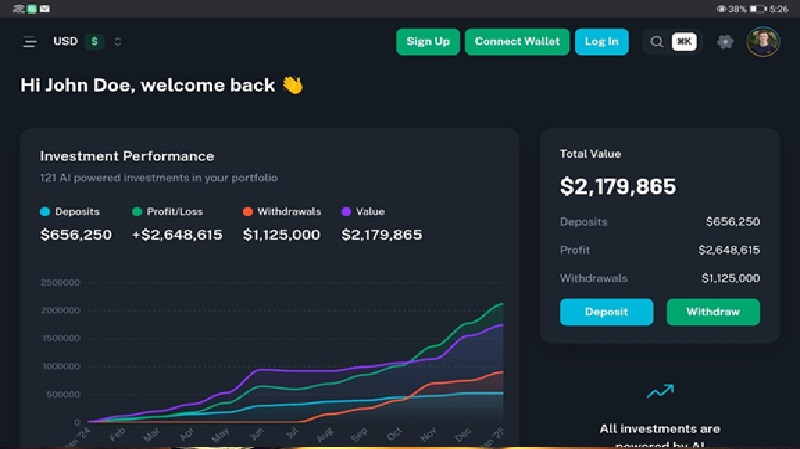
RCO Finance is an AI-driven DeFi trading platform designed to help traders navigate the complex DeFi market while optimizing their returns. Central to RCOF’s innovative approach is its AI-powered Robo Advisor, a highly advanced tool that helps investors and traders with top-notch investment strategies by analyzing live market data.

The Robo Advisor advisor enables investors to pinpoint emerging opportunities, optimizing their returns in the process. By closely monitoring market trends, the Robo Advisor provides users with critical insights, allowing them to seize potential gains before they gain mainstream recognition.

For example, BugsCoin gained over 197% within the past 24 hours, and many traders did not see the trend until it was too late. The Robo Advisor is designed to ensure investors and traders are notified on time to seize such opportunities in the market.

Beyond identifying profitable trades, RCOF’s Robo Advisor plays a crucial role in helping users avoid losses in the volatile crypto market. The AI tool quickly detects potential downturns and issues real-time alerts to help investors protect their holdings from sudden market swings.

A good example is the $BMT token, which saw a sharp 18% decline in the last day. With the Robo Advisor’s timely insights, traders would have received early warnings, enabling them to adjust or exit positions before the loss fully materialized.

In addition to AI-driven trading, the RCO Finance platform is spearheading asset tokenization through blockchain technology. This allows investors to acquire fractional ownership of high-value assets, including real estate, commodities, and other exclusive investment opportunities.

With access to over 120,000 assets spanning 12,500 categories, including equities, bonds, tokenized commodities, and digital assets, the platform offers a vast selection for traders. RCOF also integrates real-time financial data from top sources like Bloomberg and Reuters, ensuring users receive accurate, up-to-the-minute market data.

Another of RCOF’s standout features is its steadfast dedication to user privacy. Unlike many DeFi platforms that mandate rigorous identity verification that requires users to provide private and personal data, RCOF provides a seamless, KYC-free trading experience. This ensures that investors can trade securely without jeopardizing their privacy.

By merging AI-driven trading, robust risk management tools, and a revolutionary asset tokenization model, RCO Finance is redefining decentralized finance. As the platform continues to evolve, the leading analyst strongly believes it’s the top altcoin to watch in the crypto space.

The RCOF Beta Platform: An Insight Into the Future

RCOF launched its beta platform, allowing early adopters to register and test the features firsthand before the official launch. With a thriving community of over 10,000 active users, the platform will enjoy valuable feedback, helping refine its functionality ahead of the full launch.

This high level of user participation underscores the platform’s practical benefits and the confidence in its value proposition. As RCO Finance (RCOF) continues to enhance its features and expand its user base, the altcoin’s potential for long-term growth and increased value positions it as a top altcoin to watch.

RCOF Presale: Join Now For Potential 42,800% Growth

In a market dominated by uncertainty, finding assets with strong growth potential is crucial. The analyst’s strong belief that ignoring this top altcoin to watch is “insane” is a testament to his conviction that the crypto asset will outperform despite ongoing market challenges.

RCOF’s presale has reached its fifth phase and has raised more than $12 million so far, a clear indication of investor confidence in the project’s potential. According to the top analyst, an initial $1,000 investment at this stage could surge to an astonishing $428,000 by the end of Q2 2025, showcasing the token’s remarkable growth prospects.

To mark the achievement of the $250,000 milestone, the RCOF team is gearing up for a substantial $100,000 giveaway aimed at rewarding early investors. As the presale advances, the token price is set to increase from $0.10 to $0.13 in the next round, making now an ideal entry point for those seeking maximum returns.

Prioritizing user protection, RCOF has undergone a comprehensive smart contract audit conducted by SolidProof, a leading blockchain security firm. The successful completion of this audit solidifies the platform’s credibility and underscores its dedication to ensuring investor asset security. Join the presale now for potentially massive gains.

For more information about the RCO Finance (RCOF) Presale:

Visit RCO Finance Presale

Join The RCO Finance Community

A Look into the BlackRock’s BUIDL Funds

0

BlackRock’s BUIDL, the USD Institutional Digital Liquidity Fund, is a tokenized fund launched in March 2024 on the Ethereum blockchain, backed by U.S. Treasury bills, cash, and repurchase agreements, and has surpassed $1 billion in assets under management. It’s a well-documented initiative in the tokenized finance space. Claims about Fidelity launching a “digital dollar” have surfaced recently, suggesting it would be backed by U.S. Treasury bills and positioned as a direct competitor to BUIDL.

BUIDL is a fund that invests 100% of its assets in cash, U.S. Treasury bills, and repurchase agreements (repos)—safe, liquid instruments traditionally found in money-market funds. What sets it apart is its tokenization: ownership is represented by BUIDL tokens, ERC-20 tokens on Ethereum, designed to maintain a stable value of $1 per token. Investors earn yields in U.S. dollars, with dividends accrued daily and distributed monthly as new tokens directly to their wallets.

It’s aimed at institutional investors, with a minimum investment of $5 million, and operates under a British Virgin Islands entity, exempt from certain U.S. SEC regulations via Section 3(c)(7) of the Investment Company Act. BlackRock partnered with Securitize, a digital asset securities firm, to tokenize and manage the fund, while BNY Mellon serves as custodian for the underlying assets. Other key players include Anchorage Digital, BitGo, Coinbase, and Fireblocks, providing wallet and infrastructure support.

Fidelity is known to be active in the digital asset space—offering crypto custody and trading services through Fidelity Digital Assets since 2018 and participating in tokenization efforts, such as Sygnum’s $50 million tokenized investment in Fidelity International’s Institutional Liquidity Fund in March 2024. But a specific “digital dollar” launch targeting BUIDL remains unconfirmed.

Tokenized finance refers to the process of representing traditional financial assets—like stocks, bonds, real estate, or cash equivalents—as digital tokens on a blockchain. These tokens are programmable, divisible, and tradable, leveraging blockchain’s decentralized, transparent, and secure infrastructure to modernize how assets are issued, managed, and exchanged. At its core, tokenization converts ownership rights into a digital format. For example, instead of holding a paper certificate for a U.S. Treasury bill or relying on a bank’s ledger, you could own a token that represents a fraction of that bill.

Each token is backed by the underlying asset, ensuring its value, and recorded on a blockchain like Ethereum, where transactions are immutable and verifiable by anyone. The mechanics are straightforward: an issuer (say, a financial institution) creates tokens tied to an asset, often held in custody to guarantee redemption. Smart contracts—self-executing code on the blockchain—govern how these tokens behave, enforcing rules like transferability or interest payments. Investors buy these tokens with fiat or cryptocurrency, gaining exposure to the asset without traditional intermediaries like brokers or clearinghouses.

The benefits are significant. Tokenization enables fractional ownership, so you could own $10 of a $1 million property instead of needing the full amount. It boosts liquidity by making assets tradable 24/7 on global markets, unlike traditional exchanges with set hours. It cuts costs and settlement times—transactions can clear in seconds, not days—by reducing reliance on middlemen. And it enhances transparency, as blockchain records are public and auditable.

BlackRock’s BUIDL fund is a prime example. Launched in March 2024, it’s a tokenized fund backed by U.S. Treasury bills and cash equivalents, running on Ethereum. Investors buy BUIDL tokens, which represent shares in the fund, and receive daily dividends directly as new tokens, all automated via smart contracts. By March 2025, it’s grown past $1 billion, showing how tokenized finance is gaining traction. But there are challenges. Regulatory uncertainty looms—different jurisdictions treat tokens differently, and compliance with securities laws is complex.

Custody risks persist; if the underlying asset isn’t secure, the token’s value is shaky. And blockchain scalability can bottleneck high-volume trading.
In essence, tokenized finance bridges traditional markets and blockchain tech, aiming to make finance more accessible, efficient, and borderless. It’s still early, but it’s reshaping how we think about owning and trading value.