DD
MM
YYYY

PAGES

DD
MM
YYYY

spot_img

PAGES

Home Blog Page 1596

Ovia, Elumelu to Receive Respective N25.4bn & N12.71bn Zenith & UBA Dividend as Banks Report Record Profits

0

Jim Ovia, the chairman and founder of Zenith Bank, and Tony Elumelu, the Chairman of UBA, are set to receive a staggering N25.4 billion and N12.71 billion dividend payout respectively for the 2024 financial year, an outcome of their banks’ record-breaking performance.

The Zenith payout, scheduled for April 15, 2025, follows a year in which the bank delivered an exceptional profit after tax of N1.03 trillion, a significant 52.5% increase from the N676.9 billion reported in the previous year.

The financial statements for the year ended December 31, 2024, reveal that the Board of Directors has proposed a final dividend of N4.00 per share. This, when combined with the N1.00 interim dividend per share paid earlier in the year, brings the total dividend payout to N5.00 per share.

For Ovia, whose direct shareholding stands at 3,552,949,395 shares and indirect holding at 1,529,851,344 shares, the total shareholding of 5,082,800,739 shares translates to a windfall of N25,414,003,695.

The increased dividend payout reflects the bank’s strong earnings performance, which saw gross earnings rise to N3.9 trillion, a sharp increase from N2.39 trillion in the previous year. A significant driver of this revenue boost was interest income, which more than doubled to N2.7 trillion, compared to N1.14 trillion in 2023.

The high-interest-rate environment in Nigeria, fueled by the Central Bank of Nigeria’s (CBN) aggressive monetary policy stance, has allowed tier-one banks like Zenith to capitalize on rising yields on government securities while expanding their loan books.

Zenith Bank’s net interest income climbed to N1.73 trillion, supported by strong earnings from loans and advances as well as strategic investments in low-risk government securities such as treasury bills. The bulk of the bank’s revenue came from its Nigerian operations, which generated N3.5 trillion out of the total N3.97 trillion in net consolidated revenue.

Meanwhile, its African and European operations recorded a revenue increase to N510 billion, up from N281.1 billion in the prior year, demonstrating the bank’s growing international footprint.

Tony Elumelu to Receive N12.71 Billion Dividend from UBA

Meanwhile, another prominent name in Nigeria’s financial sector, billionaire investor Tony Elumelu, is also set to receive a significant dividend payout of N12.71 billion from United Bank for Africa (UBA) following the bank’s robust financial performance in 2024.

Elumelu, who serves as Chairman of UBA, owns a total of 2,542,511,824 shares in the bank, spread across both direct and indirect holdings. His direct shareholding stands at 195,124,581 shares, while his indirect holdings are spread across three investment entities: HH Capital Limited, Heirs Holdings Limited, and Heirs Alliance Limited. The sheer size of his holdings secures him one of the highest individual dividend earnings from UBA’s latest financial results.

UBA declared a total dividend of N5.00 per share, marking a significant increase from the previous year. The final dividend of N3.00 per share, combined with an interim dividend of N2.00 per share, resulted in a total payout ratio of 26.6%, a significant jump from the 16.32% recorded in 2023. Consequently, UBA’s total dividend payout surged to N147.05 billion, compared to N47.88 billion in the prior year, reflecting the bank’s record-breaking financial performance.

The bank reported a pre-tax profit of N803.7 billion, a 6% increase from N757.6 billion in 2023. After-tax profit climbed by 26.14% to N766.5 billion, marking the highest annual profit in the bank’s history. UBA also recorded substantial growth in key financial metrics, with gross earnings surging by 53.6% to N3.19 trillion, up from N2.08 trillion in 2023.

UBA, one of Nigeria’s five largest banks, known as FUGAZ (FirstHoldCo, UBA, GTCO, Access Holdings, and Zenith Bank), also witnessed a remarkable expansion in total assets, which grew to N30.3 trillion, an increase of N9.7 trillion from the N20.65 trillion reported in the previous year. The bank’s 2024 full-year results were highly anticipated by investors, especially amid a declining stock market.

Over the last two years, UBA has posted a cumulative profit of N1.37 trillion, a striking contrast to the N570.4 billion recorded over the preceding five-year period. This rapid growth highlights the bank’s improved operational efficiency and strategic execution. Despite economic challenges, UBA has managed to maintain strong performance, driven by its pan-African presence and an expanding balance sheet.

For Elumelu, this dividend payout reinforces his deep investment in UBA’s success, a testament to his role in driving the bank’s expansion across Africa and beyond.

The performances of both Zenith Bank and UBA highlight a booming Nigerian banking sector, one that is thriving despite economic headwinds. With record profits, increasing revenues, and substantial dividend payouts, these banks continue to solidify their positions as leading financial institutions in Africa.

The high-interest-rate environment, fueled by the CBN’s stringent monetary policy, has proven beneficial for banks, driving interest income growth and strong financial performance. Analysts anticipate that, with inflationary pressures persisting, tier-one banks like Zenith and UBA will continue to enjoy elevated earnings, even as economic uncertainty remains a concern.

The record payouts to Jim Ovia and Tony Elumelu demonstrate the massive wealth accumulation among Nigeria’s top banking executives, reinforcing their financial status as key players shaping the country’s financial sector.
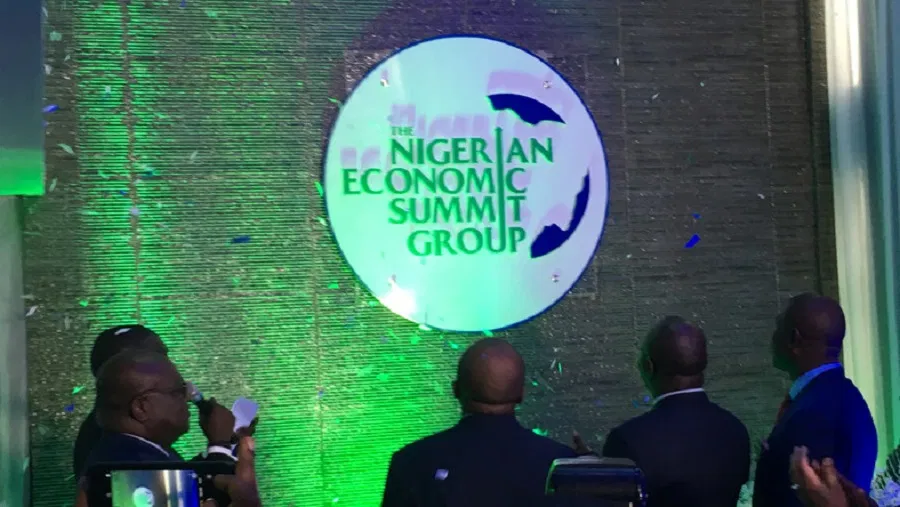

NESG Calls on Nigerian Govt. to Sustain Oil Production Amid Rising Crude Prices

0

The Nigeria Economic Summit Group (NESG) has urged the Federal Government to maintain crude oil production at 2.2 million barrels per day (bpd), emphasizing that this is crucial for ensuring the viability of the 2025 budget and stabilizing the country’s economy.

Dr. Tayo Aduloju, the Chief Executive Officer of NESG, made this recommendation during the group’s media briefing on its 2025 strategic vision and private sector macroeconomic outlook in Abuja. According to him, achieving this production level is not just a revenue target but a necessary condition for foreign exchange stability and overall economic growth.

Aduloju pointed out that Nigeria’s oil production has fluctuated significantly in recent years, ranging between 1.1 million bpd, 2.2 million bpd, and a peak of 2.8 million bpd. He stressed that despite these variations, the 2.2 million bpd target remains realistic, given the current administration’s commitment to increasing output.

“Hitting 2.2 million bpd crude production, regardless of the crude oil price, is necessary for the budget to be realistic,” Aduloju said. “The government has shown since it came into office that crude production moved from 1.1 million bpd to 2.2 million bpd, and even to 2.8 million bpd.”

His statement aligns with the NESG’s latest report, “The Arc of the Possible,” which outlines specific short- and medium-term strategies for Nigeria’s economic transformation. The report details how a stable and robust crude oil production strategy can provide the financial foundation necessary for critical policy implementation.

NESG’s Call Comes Amid Oil Price Rally Fueled by Geopolitical Tensions

The NESG’s demand for increased oil production comes at a time when global crude prices are on the rise, driven largely by geopolitical conflicts and shifting U.S. sanctions that have heightened concerns over supply disruptions.

As of 0949 GMT, Brent crude was trading at $74.11 per barrel, extending an eight-day winning streak—the longest since May 2022. Similarly, U.S. West Texas Intermediate (WTI) crude rose slightly to $69.97 per barrel. Both benchmarks have gained approximately 2.5% this week and are up 7% from multi-month lows recorded in early March.

Market analysts attribute this rally to increasing U.S. sanctions on Venezuela and Iran, two major oil-producing nations. The United States has imposed fresh restrictions on Venezuelan crude exports, making it more difficult for the South American country to sell its oil on the global market. Additionally, new sanctions on China’s crude imports from Iran have created uncertainty, further tightening the oil supply.

June Goh, a senior oil analyst at Sparta Commodities, explained that these developments have contributed to an apparent shortage of crude oil in the market.

“The potential loss of Venezuelan crude exports to the market due to secondary tariffs and the possibility of similar restrictions on Iranian barrels has created an apparent tightness in crude supply,” she told Reuters.

The United States has imposed a 25% tariff on potential buyers of Venezuelan crude, adding further restrictions to Venezuela’s ability to trade. At the same time, trade of Venezuelan oil to China, its largest buyer, has stalled, as reported by Reuters. India’s Reliance Industries, which operates the world’s largest refining complex, is now set to halt Venezuelan oil imports, according to sources familiar with the matter.

The combined effect of these sanctions has led to concerns over global supply constraints, pushing oil prices higher. While these rising prices benefit oil-producing nations like Nigeria, they also present challenges, particularly in terms of domestic inflation and fuel pricing.

Nigeria’s Economic Prospects Under Higher Oil Prices

For Nigeria, a sustained oil price rally could provide much-needed revenue, particularly as crude oil earnings remain a key component of the country’s budget framework. In February 2025, President Bola Tinubu signed the N54.99 trillion 2025 appropriation bill into law. This represents a 99.96% increase from the N27.5 trillion budget of 2024 and was passed by the National Assembly on February 13 after undergoing several revisions.

The government has set a $75 per barrel benchmark price for crude oil in the 2025 budget. With Brent crude currently trading at around $74.11 per barrel, the price is nearing Nigeria’s official projection. If the upward trend continues, Nigeria’s revenue targets could be met or even exceeded.

However, Aduloju warned that reaching the 2.2 million bpd production target will require political stability and security in oil-producing regions. He pointed to recent political tensions in Rivers State, a major oil-producing area, as a potential risk factor that could disrupt production.

NESG Report Projects Stronger Economic Growth in 2025

The NESG’s macroeconomic outlook report, “Stabilization in Transition: Rethinking Reform Strategies for 2025 and Beyond,” presents a positive economic forecast if Nigeria implements the right policies. It projects that effective economic reforms could push Nigeria’s GDP growth to 5.5% in 2025, with inflation declining to 24.7% under optimal conditions.

Several factors are expected to drive this growth, including improvements in power supply and fuel availability, which will reduce operational costs for businesses, particularly Nano, Micro, Small, and Medium Enterprises (NMSMEs). Increased foreign exchange liquidity is also expected to provide relief for manufacturers who rely on imported raw materials.

The report further highlights agricultural sector reforms as a critical growth driver, addressing issues related to financing, storage, and logistics. Additionally, it emphasizes the need for enhanced security in farming regions, which would lead to increased food production and ease inflationary pressures.

Aduloju stressed that achieving these targets will require strong coordination between fiscal and monetary authorities, urging the government to align its economic policies to ensure smooth implementation.

Oil Market Uncertainty and Its Implications for Nigeria

While the rise in crude prices presents an opportunity for increased revenue, it also introduces economic risks. Higher oil prices tend to push up fuel costs, and in Nigeria, changes in domestic pump prices have historically been linked to fluctuations in global crude markets.

U.S. crude inventory data released by the Energy Information Administration (EIA) showed that U.S. crude stockpiles fell by 3.3 million barrels last week, far exceeding analysts’ expectations of a 956,000-barrel decline. This reduction in U.S. supply has provided further support for global crude prices.

However, the long-term sustainability of current price levels remains uncertain, given ongoing geopolitical tensions, trade conflicts, and global economic instability. Analysts at BMI maintain their 2025 forecast for Brent crude at $76 per barrel, down from an average of $80 per barrel in 2024, citing uncertainties in the oil market.

BlockDAG’s Keynote 3 Drops a Banger: Shows Why Its DAG + PoW Tech Leaves Bitcoin Cash & Hyperliquid in the Dust!

0

Blockchain technology’s main struggle has been scalability. Bitcoin Cash tried to address this by enlarging block sizes, while Hyperliquid focused on enhancing speed and its DeFi features. However, both approaches still face old limitations.

BlockDAG (BDAG) chooses a novel path with a structural focus, merging DAG with Proof-of-Work to create a robust base that moves past the sequential bottlenecks of traditional chains. With the rise in crypto usage, sacrificing decentralization for throughput is no longer viable.

Bitcoin Cash: A Journey Through Changes and Achievements

Bitcoin Cash was born on August 1, 2017, as a direct split from Bitcoin, created by developers and miners to quicken transactions and cut costs by increasing the block size to 8 MB. This change enabled more transactions per block, tackling Bitcoin’s original scalability issues.

At launch, Bitcoin Cash traded at about $240 and soared to a peak of $4,355.62 on December 20, 2017. By August 23, 2018, it fell to around $519.12, showing the high volatility of the crypto market. As of March 24, 2025, its price stands at $332.19, much lower than its highest value.

With a market cap of around $6.6 billion and a circulating supply of 19,847,375 coins from a total of 21 million, Bitcoin Cash remains a significant crypto entity but struggles to keep its value and market standing.

Hyperliquid’s Swift Climb in the DeFi Arena

Hyperliquid introduced its token, HYPE, on November 29, 2024, by airdropping 31% of its 1 billion total supply to early users, without initial fundraising. Since its introduction, the platform quickly processed over 10,000 trades daily and grew to over 90,000 active users. Daily trade volumes hit $470 million, with total volumes nearing $1 trillion.

Despite its initial success, HYPE’s value has been volatile, peaking at $35 in December 2024 and dropping to $14 by March 2025. This drop in market cap from over $9 billion to $4.7 billion is tied to the broader crypto market’s downturn and concerns over token dilution from ongoing unlocks.

To enhance risk management, Hyperliquid raised margin requirements to 20% after a $4 million loss in its liquidity pool due to major liquidations. Still, the platform’s user base is nearing 400,000, showcasing its endurance and increasing importance in the DeFi space.

How BlockDAG Rethinks Blockchain Consensus

Traditional blockchain designs, groundbreaking at their start, are held back by their sequential process, funneling all transactions into a single line. This leads to slower transaction speeds, increased fees, and a bottleneck that curtails scalability. The sequential verification found in Proof-of-Work systems, like those of Bitcoin and the original Ethereum, causes inherent inefficiencies..

BlockDAG, however, transforms this framework by integrating a Directed Acyclic Graph (DAG) with Proof-of-Work, allowing for the simultaneous confirmation of multiple blocks. Transactions are processed concurrently along various paths, eliminating the queue entirely. This innovation not only boosts transaction capacity (achieving 2,000 transactions per second on the mainnet with a goal of 15,000 TPS) but also upholds decentralization and the proven security of Proof-of-Work.

CTO Jeremy Harkness explains, “Our hybrid consensus model merges the security and proven stability of Proof-of-Work with the agility and rapidity of a Directed Acyclic Graph.”

This method enhances the foundational principles of decentralization, designing an architecture ideal for expansive, trustless networks that need to scale without becoming centralized.

Moreover, the success of this approach is evidenced by significant numbers: $208 million raised in the presale without venture capital, over 19 billion coins distributed, and a ROI of 2,380% up to the latest batch priced at $0.0248 per coin. BlockDAG isn’t merely updating old systems—it’s pioneering a new benchmark in blockchain technology.

The Evolutionary Leap of BlockDAG in Blockchain Tech

While Bitcoin Cash enlarged block sizes to enhance scale and Hyperliquid sought to accelerate through financial tools, both remain tethered to traditional, linear structures. In stark contrast, BlockDAG shatters this old paradigm by combining Proof-of-Work with a Directed Acyclic Graph, heralding not just a technological advancement but a radical structural change. This dual approach enables efficient parallel processing, reduced fees, and robust decentralization.

As the demand on blockchains to accommodate real-world demands and complexity increases, the underlying architecture becomes crucial. BlockDAG doesn’t just refine existing models—it crafts the future. For those observing the evolution of Layer 1 protocols, the difference lies not merely in improved performance but in modern design.


Website: https://blockdag.network

Presale: https://purchase.blockdag.network

Telegram: https://t.me/blockDAGnetworkOfficial

Discord: https://discord.gg/Q7BxghMVyu

Next Tekedia Investment Cycle Begins Apr 7 with 17 Companies; Taxo Raises $5m

0

Hello,

Greetings! Just a reminder that the next investment cycle is scheduled as follows:

  • Duration: April 7 – May 15, 2025
  • Startups Unveiling in Portal: April 7
  • Demo Day: April 26, 2025

We’re bringing 17 companies from across the globe. To join or renew your membership, go here and pay.

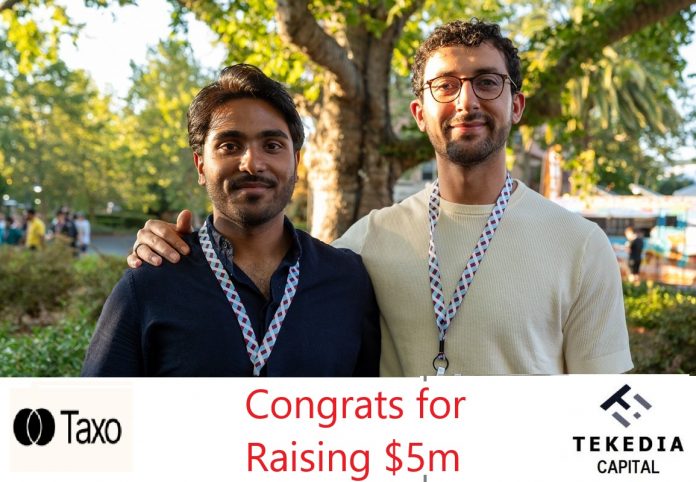
Meanwhile, we report that many of our companies have been raising funds. Taxo reported this week of raising $5m.

Tekedia Capital congratulates our portfolio company  Taxo (taxo.ai), a healthtech startup, for raising $5m. Taxo integrates with electronic health records (EHRs) to automate medical billing and coding. Its AI-powered solution reduces the time and cost of claims processing by over 90%, enabling providers to focus on patient care rather than administrative tasks.

The business of medicine is fascinating. Doctors, nurses and broad healthcare professionals are scientific miracle makers. Yet, they do suffer from a poor marginal cost regime, as it is one doctor per one patient, at a time, irrespective of the number of patients. Simply, if there are 30 people waiting for a doctor, a doctor has to deal with each one at a time. In business, that model is not easy to scale efficiently since you cannot easily scale supply to meet expanding demand.

So, how can we help doctors, nurses, etc to serve more and improve broad quality? Use technologies to handle the administrative tasks like billing, claim management , etc, so that those professionals can focus on their core missions.

On that premise, Tekedia Capital invested in Taxo to fix this friction as its technologies, used in Stanford Medicine, Boston Children’s Hospital and other key healthcare centers, accelerate productivity and evidential positive patient health outcome. To learn more about Tekedia Capital and join our next cycle, go here https://capital.tekedia.com/course/fee/

Regards,

Tekedia Capital Team

With $209M Raised & Mainnet Incoming, BlockDAG’s Keynote 3 Steals the Spotlight

0

BlockDAG isn’t flying under the radar anymore—it’s front and center. After the release of Keynote 3, the project is entering a new chapter with serious momentum. With $209 million raised through its presale and over 800,000 miners onboarded, BlockDAG isn’t just moving forward—it’s accelerating fast. The keynote didn’t just share progress—it created a real sense of urgency. With the mainnet launch coming up, exchange listings in the works, and a working ecosystem already in place, BlockDAG is shaping up to be one of the most talked-about crypto projects of 2025.

Early adopters are grabbing tokens at presale rates before the coin goes public—and based on what we heard in Keynote 3, those waiting too long could be left behind.

Keynote 3 Hit the Right Notes for Serious Crypto Buyers

BlockDAG’s third keynote wasn’t just a progress update—it was a signal that the project is actually doing what it said it would. The presentation made one thing clear: this isn’t a project stuck in planning—it’s executing, and fast. Some of the most notable highlights?

  • $209 million raised in under 10 months—with no help from venture capital or artificial hype.
  • Beta Testnet V1 now live, already processing over 1.2 million transactions across 100+ active community nodes.
  • Upcoming deliveries of X30 and X100 mining devices—proof the project supports decentralized mining beyond just talk.
  • Big-name partnerships with Inter Milan and UFC are expanding BlockDAG’s reach beyond Web3 circles.

There was also confirmation of EVM compatibility, resistance to MEV, support for WASM, and a DeFi suite that’ll be part of the mainnet. So, this isn’t about building later—it’s already happening.

Real Adoption Is Fueling Real Growth

What makes BlockDAG different is that its success isn’t just tied to the token price. The team has built real products that people are actually using. The X1 Miner App already has over 750,000 users mining BDAG right from their phones. It’s one of the few mining apps that’s truly beginner-friendly and focused on mainstream adoption.

The Tap Miner game on Telegram has also taken off, with more than 400,000 signups and 100,000+ daily active users. That’s a level of engagement most presale projects only dream of. And all of this is happening before mainnet has even gone live.

The team is just getting started. They’re planning support for more than 1,000 decentralized apps by 2026, growing developer incentives, and expanding global infrastructure. The roadmap isn’t vague—it’s detailed and already in motion.

Presale Buyers Are Lining Up Before Listings Go Live

BlockDAG is now in Batch 27, and the token price has climbed to $0.0248—thanks to strong demand in its worldwide presale. More than 19 billion coins have been sold already, and over 16,600 mining devices have been secured. It’s one of the most widespread hardware-supported rollouts crypto has seen recently.

But the real opportunity is what comes next.

The team has confirmed that BDAG will list on at least 10 major exchanges after mainnet launch. And history tells us that coins with strong presale momentum tend to soar once they hit those platforms. The current presale might be one of the last chances to buy before public trading begins.

Those who joined early have already seen gains—but the biggest jump is expected once liquidity improves, exchange listings go live, and the network starts scaling. If you’re thinking of buying in, the window may be closing fast.

And this isn’t just empty hype. BlockDAG has numbers to back it up—real product rollouts, a global user base, and consistent delivery. This isn’t a gamble on potential—it’s a calculated move ahead of a big moment.

BlockDAG Might Be Crypto’s Next Big Win

Crypto doesn’t usually give second chances. If you missed Bitcoin when it was $100 or Ethereum at $10, BlockDAG’s presale today could be one of those rare repeat opportunities. Everything points in the right direction: big fundraising, working products, exchange plans, and a scalable mainnet coming soon.

Keynote 3 didn’t just outline a plan—it kicked things into gear. The presale won’t stay open forever, and those who act now could be setting themselves up for serious upside.

BlockDAG isn’t just catching up. It’s leading.

And the real action is about to begin.

Website: https://blockdag.network

Presale: https://purchase.blockdag.network

Telegram: https://t.me/blockDAGnetworkOfficial

Discord: https://discord.gg/Q7BxghMVyu