DD
MM
YYYY

PAGES

DD
MM
YYYY

spot_img

PAGES

Home Blog Page 16

Gas-Led Recovery Lifts $17.98m Foreign Capital into Nigeria’s Hydrocarbon Sector, but Inflows Remain Far Below Potential

0

Nigeria’s oil and gas sector recorded a sharp rebound in foreign capital inflows in 2025, with fresh investments rising to $17.98 million from $5.12 million a year earlier, underscoring renewed interest in the country’s hydrocarbon industry as policymakers intensify their push for gas-led growth.

The latest figures from the National Bureau of Statistics (NBS) show that capital inflows into the sector more than tripled year-on-year, even as the broader Nigerian economy saw a strong recovery in foreign capital importation. Total capital inflows into the country climbed to $6.01 billion in the third quarter of 2025 alone, a 380.16 percent jump from the corresponding period of 2024.

The improvement in the oil and gas segment, though modest in absolute terms, points to a gradual restoration of investor confidence after years of policy uncertainty, foreign exchange constraints, and security concerns in producing regions.

This recovery has been largely buoyed by natural gas.

Gas export earnings rose 21 percent to $10.51 billion in 2025 from $8.66 billion in 2024, according to Central Bank of Nigeria data cited in the report, reinforcing the sector’s growing role as a critical source of foreign exchange. This comes as Nigeria increasingly positions gas as a transition fuel and a strategic economic asset amid the global energy transition.

The renewed investor appetite also coincides with a series of policy reforms aimed at improving the investment climate.

Most recently, the Central Bank of Nigeria eased foreign exchange rules for oil exporters, allowing international oil companies to retain and repatriate 100 percent of their export proceeds immediately, a move widely seen as designed to improve liquidity and restore confidence in the market. The policy shift forms part of broader reforms to deepen the FX market and attract investment.

For years, access to foreign exchange and restrictions on dollar repatriation have ranked among the biggest deterrents to large-scale upstream and midstream investments. By removing the previous cash-pooling rule, the CBN has effectively reduced one layer of risk for foreign operators and financiers.

The latest inflow numbers also align with the Federal Government’s long-running “Decade of Gas” strategy, which seeks to monetize Nigeria’s vast reserves and shift emphasis from crude dependence to gas-led industrialization.

Nigeria holds more than 200 trillion cubic feet of proven gas reserves, among the largest in Africa, yet a substantial portion remains commercially undeveloped. The Nigerian Upstream Petroleum Regulatory Commission’s recent Gas Development Roadmap, targeting the commercialization of over 55 trillion cubic feet of stranded reserves, is intended to unlock investment across exploration, processing, pipeline infrastructure, and export terminals.

The Nigerian National Petroleum Company Limited has set even more ambitious targets, saying it plans to expand reserves to 600 trillion cubic feet and attract as much as $60 billion in sectoral investment over time. Its Gas Master Plan 2026 aims for daily production of 10 billion cubic feet, with the objective of supporting domestic industrialization, power generation, and export earnings.

Still, the headline increase in inflows needs to be read with caution. While the jump from $5.12 million to $17.98 million is statistically significant, the absolute amount remains extremely small for a sector that historically accounts for the bulk of Nigeria’s export earnings and fiscal revenues.

By comparison, the country’s total capital importation runs into billions of dollars, with banking, financing, and portfolio flows continuing to dominate foreign investment receipts.

This suggests that the oil and gas sector’s recovery, while encouraging, remains in its early stages.

Analysts say the modest scale of inflows relative to Nigeria’s resource base highlights persistent structural issues, including pipeline vandalism, oil theft, delayed project closures, and investor caution toward long-cycle fossil fuel assets in an era of decarbonization.

That said, gas appears to be emerging as the more resilient story.

With Europe and parts of Asia still seeking diversified LNG supplies, Nigeria’s gas assets are increasingly viewed as commercially attractive, especially where projects are tied to export infrastructure and domestic industrial demand.

The sector’s improving numbers also come against a backdrop of a broader shift in Nigeria’s export composition. Non-oil exports reportedly rose to N12.36 trillion in 2025 from N9.09 trillion in 2024, driven by agriculture, manufacturing, and solid minerals, indicating that while hydrocarbons remain central, the economy is slowly broadening its external earnings base.

The rise in inflows signals that reforms may be beginning to gain traction, particularly in gas. But the figures also underscore how much ground remains to be covered if Nigeria is to unlock the scale of investment required to fully monetize its hydrocarbon assets and strengthen external reserves.

In short, investor interest is returning, but the sector is still operating well below its capacity. The real test, economists note, will be whether policy stability, FX liberalization, and gas infrastructure development can convert this early rebound into sustained multi-billion-dollar inflows over the coming years.

Anthropic’s Claude Mythos Details Leaked Via a Misconfigured Content Management System 

0

Anthropic’s Claude Mythos details leaked via a misconfigured content management system (CMS) data store, exposing draft blog posts and other internal assets. Security researchers discovered that nearly 3,000 unpublished files—including draft blog posts, PDFs, and memos were publicly accessible due to a configuration error.

One key draft described a new model called Claude Mythos, positioned as a major step change above Anthropic’s current Opus tier. It claimed the model is by far the most powerful AI model we’ve ever developed, with dramatically higher performance in coding, academic reasoning, and especially cybersecurity-related tasks.

Anthropic confirmed the leak to Fortune and others, acknowledging they have completed training on the model sometimes referred to interchangeably with “Capybara” in drafts and are testing it with select early-access customers. They described it as their most capable model to date but highlighted unprecedented cybersecurity risks: the model is far ahead of any other AI model in cyber capabilities” and could enable attacks that far outpace the efforts of defenders.”

The company reportedly plans restricted early access for cyber defense organizations to help bolster protections before broader release. Cybersecurity stocks dropped sharply on March 27, 2026, as investors interpreted the leak as signaling a coming wave of more sophisticated AI-powered attacks: CrowdStrike (CRWD): ~7% drop. Palo Alto Networks (PANW): ~6-7.5%. Zscaler (ZS), SentinelOne (S), Okta (OKTA), and others: 4-8% declines.

Broader sector ETFs also fell several percent, with reports of ~$14.5 billion in combined market value erased in one day. This isn’t the first time AI cyber capabilities have pressured the sector—similar dips occurred after prior Claude updates with vulnerability-scanning features.

Frontier models are advancing rapidly in agentic capabilities (autonomous task execution, chaining exploits, etc.). If Mythos excels at identifying and weaponizing vulnerabilities faster than humans or current tools, it could shift the offense-defense balance in cybersecurity—making large-scale, automated attacks more feasible for sophisticated actors while defenders scramble to keep up.

Anthropic’s own warning in the draft; flagging risks and limiting access amplified the fear. That said: No model weights leaked—only descriptive documents and drafts. The actual system isn’t public. AI can also aid defense with better anomaly detection, automated patching, red-teaming. Anthropic’s plan to share early access with defenders acknowledges this dual-use nature.

Stock reactions to AI news are often short-term and volatile; they reflect sentiment more than proven long-term disruption. This fits a pattern with frontier AI labs: leaks happen (misconfigurations are common in fast-moving companies), capabilities keep scaling, and safety/cyber risks get more explicit discussion.

Anthropic has long emphasized safety, so their internal caution here is noteworthy—but also expected for a model they call a step change. The incident underscores ongoing challenges around secure internal processes at AI companies and the difficulty of keeping cutting-edge work under wraps. It may accelerate conversations about responsible release practices, government coordination on cyber-AI risks, and investment in defensive AI tools.

In short, the leak revealed an impressive but risky next-gen model that Anthropic is handling cautiously. Markets overreacted on the offense gets stronger narrative, as they often do with AI hype/fear cycles. Expect more details and probably a formal launch soon, alongside continued debate on how to manage these capabilities responsibly.

Bitcoin Roughly 40-46% Down from its All-time High of $126,000

0

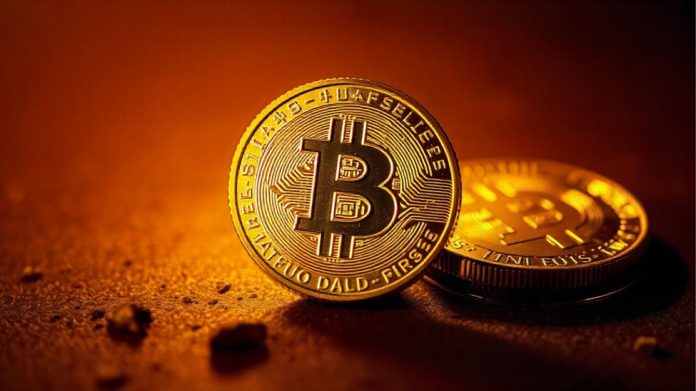
Bitcoin is currently trading around $67,000–$68,000 as of March 30, 2026, reflecting a roughly 40–46% drawdown from its all-time high of approximately $126,000–$126,300 reached on October 6, 2025.

This correction has been widely discussed in recent analyses, with headlines noting that the decline may not be done yet, driven by factors like ETF flows, macro pressures such as interest rates, geopolitical risks and lingering leveraged liquidations. Bitcoin has experienced numerous 40%+ drawdowns even within bull markets, not just bear markets.

In past cycles: Corrections of 40–50% during bull runs have typically recovered in 6–16 months or 9–14 months on average for similar-sized drops. Deeper 70–80%+ bear market crashes in 2018 or 2022 took 2–3+ years to fully recover from new highs. Bull market corrections average around -23% depth and last ~2.5 months, though outliers reach 30–50%.

The current drop aligns more with a mid-cycle reset than a full cycle top, as the decline from the October 2025 peak has been shallower and slower than the rapid 50–70% plunges seen in the first 90 days after prior cycle highs in 2013, 2017, 2021.

This suggests the ongoing weakness could represent a healthy shakeout of leverage and weak hands rather than the start of a multi-year bear market—especially with structural changes like spot Bitcoin ETFs which saw strong inflows in 2025, though recent weeks showed some outflows and growing institutional and corporate adoption providing a higher floor than in prior cycles.

Several on-chain and sentiment indicators point to extreme fear but also potential capitulation signals. Fear & Greed Index: Recently hit readings as low as 9–13, levels not seen in over a year and comparable to past local bottoms. Historically, such capitulation has preceded rebounds, as be greedy when others are fearful often applies.

Futures open interest has dropped significantly ~40% from peaks in some reports, suggesting deleveraging is advanced and reducing the risk of cascading crashes—but also making the market more sensitive to flows. Many analyses place potential support zones around $60,000–$70,000, with some models eyeing deeper tests near $50,000–$56,000 in a worst-case extension.

However, long-term holders have been accumulating or holding through the drawdown, and ETF and corporate buying has added structural demand. Mixed signals include potential Fed policy shifts, geopolitical tensions, and liquidity conditions. Bitcoin is behaving more like a macro asset correlated with equities and gold, which can amplify short-term volatility but doesn’t negate its long-term scarcity narrative.

Recent articles highlight four common reasons cited for possible further downside: Lingering ETF outflows or slowed inflows after the 2025 surge. High remaining bullish leverage in some segments. Macro headwinds. Technical consolidation with weak momentum.

That said, many on-chain analysts view this as a maturing correction within a broader uptrend, with volatility compressed compared to history and dominance staying elevated. Data supports the possibility of more downside or sideways action. A sweep toward $60,000 or lower wouldn’t be unprecedented in a bull cycle reset and could offer a classic buy the dip setup if sentiment bottoms.

Recovery from similar 40%+ drops has often been swift once capitulation clears. The structural case remains constructive. Post-halving supply dynamics, institutional infrastructure, and Bitcoin’s fixed 21 million supply continue to underpin demand growth. Forecasts for 2026 vary widely—some see retests of lower levels before new highs, while others eye $100,000–$150,000+ if liquidity improves and adoption accelerates.

A full bear market; 70%+ drop to ~$40,000 is possible but less probable given the matured market structure versus 2018/2022. Bottom line from the data: Corrections like this feel existential in real time, but they’ve been routine throughout Bitcoin’s history—resetting leverage, shaking weak hands, and laying groundwork for the next leg higher.

Extreme fear readings often mark opportunities rather than the end. Whether this one extends further depends heavily on macro flows and ETF behavior in the coming weeks. Bitcoin remains highly volatile; this isn’t financial advice—always do your own research and consider risk management. Past performance doesn’t guarantee future results, especially in crypto.

Die Linke States the Attacks on Iran are Not Justified as Self Defense Under Article 51 of the UN Charter 

0

A report from the Scientific Services of the German Bundestag concludes that the ongoing US-Israeli military campaign against Iran violates international law, specifically the prohibition on the use of force under Article 2(4) of the UN Charter.

The analysis, commissioned by lawmakers from the opposition party Die Linke, states that the attacks are neither justified as self-defense under Article 51 of the UN Charter nor authorized by the UN Security Council. It describes this as the prevailing opinion among international legal experts.

The 12-page opinion also examines potential German complicity. It notes that the use of US military bases in Germany such as Ramstein Air Base for operations against Iran cannot be ruled out as constituting prohibited assistance to a violation of international law, depending on the specific circumstances. This could expose Germany to legal responsibility.

The report was released or leaked in late March 2026, amid reports of US and Israeli strikes on Iranian targets; referred to in some coverage as operations like Epic Fury or Roaring Lion. It aligns with earlier comments by German President Frank-Walter Steinmeier, who called the war a disastrous mistake and a breach of international law, questioning the US justification of an imminent threat.

Chancellor Friedrich Merz has taken a more cautious or supportive stance toward US/Israeli goals, criticizing Iran’s leadership and avoiding a direct legal assessment in some parliamentary appearances, highlighting a rift within German politics. Under the UN Charter, the default rule is a strict prohibition on the threat or use of force against another state’s territorial integrity or political independence.

Exceptions are narrow: Individual or collective self-defense against an armed attack or, in contested interpretations, an imminent one under the Caroline doctrine criteria of necessity and proportionality. The Bundestag experts’ assessment hinges on whether the Iranian actions (or capabilities) met the threshold for lawful self-defense.

Critics of the strikes argue they resemble preventive or preemptive action, which most legal scholars view as unlawful absent an actual or genuinely imminent armed attack.

Proponents including US/Israeli officials typically invoke Iran’s nuclear program, proxy attacks, or long-term threats as creating an existential or imminent danger, plus broader arguments about state practice and the limits of the Charter in asymmetric or WMD contexts.

International law in this area is often debated and state-dependent; powerful actors have historically stretched interpretations; debates over the 2003 Iraq War, interventions against non-state actors, or responses to nuclear proliferation. The prevailing opinion cited is real among many academics and smaller states, but it is not universally binding—especially when major powers disagree and the Security Council is deadlocked.

Germany’s post-WWII legal culture emphasizes strict adherence to the UN Charter and multilateralism, which explains the sensitivity here and the focus on potential complicity via bases. However, this stance has been applied unevenly in practice across conflicts.

The report itself is advisory, not legally binding on the German government or courts. It reflects one institutional view commissioned by a specific political faction, though the underlying legal analysis draws on mainstream scholarship. Broader geopolitical realities— Iran’s nuclear ambitions, support for regional militias, and the failure of prior diplomatic efforts—drive the US/Israeli actions, even if they strain formal Charter rules.

This episode underscores ongoing tensions between strict textual interpretations of international law and the security imperatives cited by states facing perceived existential threats.

German Road Hauliers Warn about Rising Diesel Prices Straining Freight and Logistics Sector 

0

German road hauliers have warned that sharply rising diesel prices are straining the freight and logistics sector, with potential knock-on effects for consumer prices in the near term.

The alert comes primarily from the Bundesverband Güterkraftverkehr, Logistik und Entsorgung (BGL), Germany’s main road freight association. Its president, Dirk Engelhardt, highlighted the issue in recent statements. Since the start of the war in Iran escalating Middle East tensions, diesel prices in Germany have risen by around 40 cents per liter.

This exceeds what can be explained by crude oil prices alone and reflects a global diesel shortage, with Germany seeing some of the steepest increases in Europe. For a single truck driving 10,000 km per month at 30 liters/100 km consumption, extra costs amount to about €1,200 per month.

For a fleet of 50 vehicles, this adds up to more than €700,000 per year. Smaller companies often lack hedging tools like Dieselfloater; price adjustment clauses in contracts, so costs hit them immediately. Larger operators may pass some increases on with delays.

Diesel hedging tools are financial or contractual mechanisms that help road hauliers, logistics companies, and other diesel consumers manage the risk of volatile fuel prices. They aim to stabilize costs, protect margins, and reduce uncertainty in budgeting—especially important for transport firms where fuel can represent 30-40% of operating expenses.

In the context of German hauliers, larger operators often rely on contractual tools like the Dieselfloater, while sophisticated players may use financial derivatives. Smaller companies frequently lack access to these, leaving them more exposed to sudden spikes like the recent ~40-cent-per-liter rise tied to geopolitical events.

The Dieselfloater: This is the most common and accessible tool in the German/European logistics sector. It is not a pure financial hedge but a built-in contractual mechanism.How it works: A diesel floater is a clause negotiated into freight contracts. It allows the haulier to automatically add a variable surcharge to the base freight rate when diesel prices rise above a reference level.

The surcharge is calculated using an official index often the BGL’s diesel price data or the German Federal Statistical Office’s wholesale diesel index and is shown separately on invoices

The BGL, along with other associations for parcel/express, furniture moving, and in-house logistics, has called for swift, unbureaucratic government relief to protect liquidity and keep supply chains running.

Engelhardt noted: It stands to reason that this could have an impact on consumer prices sooner or later. Transport is a core part of the economy’s backbone, so higher freight costs tend to flow through to goods prices. This warning fits into a broader picture of energy price pressures: The Iran conflict has disrupted oil markets, pushing up diesel and related fuels.

Germany is particularly exposed due to its reliance on imports and high transport intensity. Separate surveys show German consumer confidence slumping in April 2026 forecasts, with fears of renewed inflation from higher oil, gas, and petrol prices. Many expect energy costs to stay elevated long-term. Germany has faced sluggish growth or recession risks in recent years.

Higher energy and transport costs threaten to delay any recovery by raising production and distribution expenses across industry. The government has been discussing measures like fuel price caps, windfall taxes on oil firms, or targeted relief, but hauliers argue action needs to be fast to avoid insolvencies or service disruptions.

Some costs may be absorbed or hedged, but sustained high diesel prices could lead to: Higher shipping and logistics surcharges. Gradual price increases for everyday goods. Pressure on margins in an already challenged sector. This is a classic cost-push dynamic: energy shocks in transport ripple outward because logistics underpin supply chains.

Whether it materially hits shoppers depends on how quickly prices stabilize, any government intervention, and whether companies can offset via efficiency or contracts. The situation remains fluid—Broader energy policy like diversification away from volatile fossil imports will influence longer-term resilience.