DD
MM
YYYY

PAGES

DD
MM
YYYY

spot_img

PAGES

Home Blog Page 16

Global Markets Appear to be Buying the Hope of De-escalation in the Middle East

0

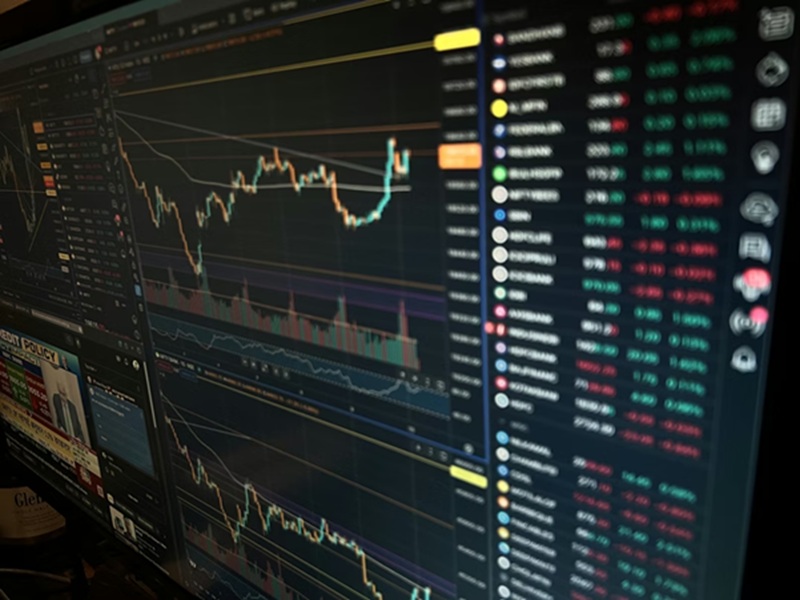
The S&P 500 surged and closed at a new all-time high of 7,022.95, breaking above the psychologically important 7,000 level for the first time. The Nasdaq also hit a record close, while the Dow was roughly flat. This marks a strong recovery in recent sessions, with the index climbing from levels around 6,700–6,800 earlier in April.

Key drivers included: Lower-than-expected wholesale inflation data. Renewed optimism around de-escalation in the Middle East.
Broader risk-on sentiment, with tech and growth stocks leading gains. Intraday, the S&P pushed even higher toward ~7,026 before settling. As of early April 16 trading, it has been hovering near or testing those highs again.

US-Iran Ceasefire

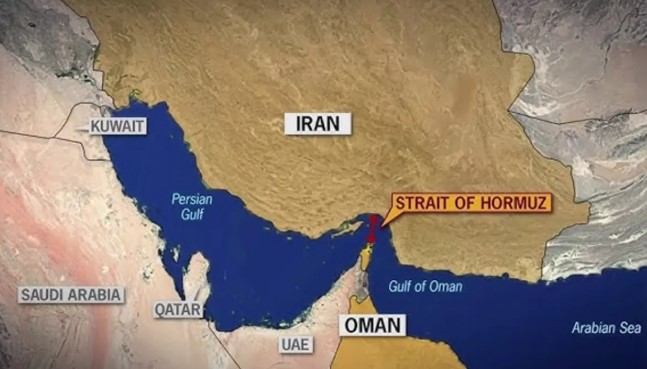
A fragile two-week ceasefire between the US and allies and Iran—stemming from recent conflict involving the Strait of Hormuz and broader regional tensions—is set to expire around April 22. Both sides, along with mediators including Pakistani officials in Tehran, are in indirect talks about potentially extending it by another two weeks.

The goal is to buy time for more substantive negotiations toward a longer-term peace deal.
bloomberg.com The White House has emphasized that talks are productive and ongoing but has pushed back on reports of a formal US request for an extension, calling some coverage inaccurate. Markets appear to be pricing in reduced geopolitical risk premium: Oil prices have eased, gold has been mixed-to-lower, and equities have rallied on hopes of de-escalation.

A full comprehensive agreement is seen as unlikely before the current truce ends, but a short extension or second round of talks could stabilize sentiment further. This combination—cooling inflation signals + hopes for Middle East calm—has helped fuel the bullish move, though the rally remains somewhat narrow in parts of the market.

S&P 500 and Nasdaq hit back-to-back record closes, erasing the ~9-10% correction triggered by the Iran conflict in late February/March. The rebound has been rapid (one of the fastest recoveries from a correction in decades).

Tech and growth stocks led gains; broader participation was mixed; about half the S&P components were flat or down on the record day. Sentiment driven by reduced geopolitical tail risk + solid corporate earnings expectations.

Oil prices eased, Brent near $98/barrel, WTI ~$89-90 after earlier spikes of 30-40% during the conflict. Hopes for de-escalation and resumed Strait of Hormuz flows reduced supply disruption fears, though prices remain elevated vs. pre-conflict levels. Gold mixed to slightly softer hovering near $4,800/oz as safe-haven demand cooled with ceasefire talks, but a geopolitical floor persists due to the fragile truce and ongoing blockade elements.

VIX trended down as investors priced in diplomacy over escalation. Reduced oil and geopolitical premium helps temper near-term inflation worries, supporting softer rate hike expectations. Generally supportive of risk assets; dollar mixed, yields eased modestly on lower risk premium. Asian and European stocks showed positive follow-through, though some caution remains ahead of the April 22 ceasefire deadline.

The combination of ceasefire extension talks and cooling macro pressures fueled a classic relief rally, pushing equities to fresh highs while pulling back some war-driven premiums in commodities. However, the truce is short-term and fragile—any breakdown in talks could quickly reverse sentiment, especially with oil still sensitive. Markets appear to be buying the hope of de-escalation while watching for concrete progress.

Overall, it’s a classic risk-on reaction: lower perceived tail risks from geopolitics tend to support equities, especially when macro data isn’t overly hot. Volatility (VIX) has also trended lower. Keep an eye on any official updates from mediators or the White House this week, as they could sway energy markets and broader sentiment quickly.
White House and Federal Agencies Accessing Anthropic’s Mythos Model Despite a Ban

0

The Trump administration has an ongoing ban and restriction on federal agencies fully working with Anthropic, partly stemming from the Pentagon labeling the company a supply-chain risk earlier. This appears tied to tensions over Anthropic’s policies such as reluctance to support certain military applications like mass surveillance or autonomous weapons and broader national security reviews.

Despite this, multiple federal agencies and congressional staff are quietly skirting or circumventing the restrictions to test and evaluate Claude Mythos. The Commerce Department’s Center for AI Standards and Innovation (CAISI) is actively testing the model’s advanced cybersecurity/hacking capabilities—specifically its prowess at identifying and exploiting (or patching) vulnerabilities in software and critical infrastructure.

Staff from at least three congressional committees have requested or held briefings focused on its cyber-scanning features. Agencies like those overseeing energy and treasury are interested in using it defensively to harden systems against sophisticated attacks.

Anthropic has briefed senior U.S. government officials including the White House on the model and is in ongoing conversations about it. Co-founder Jack Clark has publicly stated that the government has to know about this stuff due to its potential national security implications. Mythos is described as Anthropic’s most powerful model yet in certain domains—exceptionally capable at offensive and defensive cyber tasks, including chaining exploits and finding zero-days in major operating systems.

Anthropic itself has restricted public access to it, calling it too dangerous for broad release without stronger safeguards, and has only shared previews with a limited group of trusted partners; tech firms, cybersecurity companies, and now some government entities for vulnerability patching. This creates an ironic situation: one part of the government blacklist of Anthropic, while others seek access to its cutting-edge tech for defense.

A meeting between White House Chief of Staff Susie Wiles and Anthropic CEO Dario Amodei was reportedly scheduled for today amid these tensions. Anthropic launched Claude Opus 4.7 as its new most capable generally available model; available now on claude.ai, API, Amazon Bedrock, Google Vertex AI, Microsoft Foundry, etc.

Key improvements highlighted by Anthropic include; stronger performance in coding and software engineering i.e better at complex, multi-step tasks with less hand-holding. Enhanced vision and multimodal capabilities; sharper image analysis, reportedly significant gains like higher resolution.

Improved reliability: better instruction following, self-checking for logic errors, and consistency on long or difficult tasks. Hybrid reasoning for agentic work, with a large context window, up to 1M tokens in some configurations. Built-in safeguards, including automatic blocking of high-risk cybersecurity requests.

Anthropic openly concedes that Opus 4.7 does not surpass Mythos on evaluations—Mythos remains their frontier model in raw capability especially cyber but it’s held back for safety reasons. Opus 4.7 is positioned as a safer, more usable upgrade over Opus 4.6, retaking the lead among publicly available frontier models on many benchmarks (coding, agentic tasks, knowledge work). Pricing remains consistent with prior Opus tiers.

This release comes amid the Mythos buzz, reflecting Anthropic’s strategy of balancing rapid progress with responsibility: push the public frontier while gating the most potent and risky capabilities. These stories highlight ongoing tensions in AI development—Capability vs. Safety: Mythos exemplifies responsible withholding due to dual-use risks, it could massively accelerate both cyber defense and attacks.

With bans or blacklists, national security needs drive quiet collaboration—especially as AI becomes central to cybersecurity. Anthropic is shipping updates quickly while navigating scrutiny, positioning Claude as a reliable, safety-focused alternative.

Spartans Casino Rockets to 14th Globally While Stake Fatigues Players & Shuffle Pushes Volatile Tokens

0

The online casino industry in 2026 has hit a plateau of its own making. Legacy titans that once revolutionized the space are now coasting on brand awareness, relying on top-heavy VIP structures that actively ignore mid-tier players. Conversely, the aggressive new wave of Web3 disruptors has fallen into the trap of tokenization, forcing players to accept rewards in highly volatile native assets that can lose half their value before a withdrawal clears.

Players are exhausted by this dichotomy. They are tired of waiting for weekly reload bonuses wrapped in fine print, and they are rejecting ecosystems where their loyalty is paid out in depreciating platform tokens.

Into this exact operational gap, Spartans casino has engineered the most violent market ascent in recent industry history. Slated for its official global launch on August 1st, 2026, the platform has bypassed the traditional growth curve entirely. By stripping away friction, eliminating token risk, and offering unprecedented capital returns, Spartans has paved a completely new path in the crypto gambling world.

The Speed of Ascension

The data behind Spartans’ rise to the 14th largest crypto casino globally is staggering. In just two months, the platform acquired 27,000 first-time depositors. Before even exiting its beta phase, it secured over $100 million in deposits, processed more than $1 billion in wagers, and generated $40,000,000 in Gross Gaming Revenue (GGR).

You do not process a billion dollars in beta volume through standard marketing. That level of liquidity is driven by high-net-worth VIPs and syndicates who recognize a structural advantage when they see one. Spartans achieved this by treating capital efficiency as a feature, offering zero-delay on-chain withdrawals, zero hidden fees, and a seamless fiat-to-crypto bridge that welcomes traditional players who platforms like Gamdom actively lock out.

At the core of this mass migration is the Spartans CashRake system—a mechanic that has fundamentally altered player expectations. Most casinos gatekeep their best returns behind convoluted VIP tiers, forcing players to grind for months just to unlock a fractional percentage of their losses.

Spartans democratized the math. The platform offers a guaranteed 33% instant CashRake to all verified players. This breaks down into up to 3% cashback on every losing casino bet, plus up to 33% of the house edge returned directly to the player’s wallet on every single wager, win or lose.

What genuinely attracts players to this feature is the settlement mechanism. Rewards are calculated in real time and paid instantly in withdrawable cash. There is no native Spartans token. There are no play-through requirements. The moment a bet settles, the cash is available. For players who have been burned by the volatile token drops of Shuffle or the delayed weekly distributions of Roobet, the transparency of instant cash is a massive competitive moat.

The $7 Million Ultimatum and the Ecosystem

To cement its dominance, Spartans deployed the largest competitive prize pool in online gambling history: a $7,000,000 monthly leaderboard. Open to every verified player, every real-money bet across the casino and sportsbook dictates the rankings. The first-place winner alone walks away with $5 million in pure, withdrawable cash.

The platform backs this immense liquidity with a curated, high-end ecosystem. Spartans is currently hosting the MANSORY Jesko Spartans Edition giveaway, offering players the chance to win a custom, one-of-one hypercar worth millions.

Its partnership roster is equally deliberate, focusing on authentic engagement rather than the chaotic, influencer-driven PvP noise of platforms like Duel.com. World-class boxer Conor Benn anchors the sports vertical with exclusive boxing markets and branded game collections.

The SweetFlips streaming duo drives community-focused, high-stakes casino entertainment, while global pop icon Era Istrefi bridges the gap between digital gaming, cultural elegance, and immersive player experiences.

Why This Matters Now

Stake demands players grind through opaque VIP tiers. Shuffle expects you to hold volatile tokens. Duel.com relies on the chaotic noise of streamer-driven spectacles. All of them miss the fundamental truth of the 2026 market: serious bettors only care about the math.

Spartans.com recognized this shift and engineered a platform that removes friction and guarantees returns. By driving $1 billion in beta liquidity, launching an unprecedented $7 million monthly leaderboard, and deploying a mathematically superior 33% instant CashRake paid in pure cash, Spartans has rewritten the rules of engagement.

They are not competing for attention; they are competing on pure capital efficiency. For players who run the numbers, the choice is no longer a debate.

Find Out More About Spartans:

Website: https://spartans.com/

Instagram: https://www.instagram.com/spartans/

Twitter/X: https://x.com/SpartansBet

YouTube: https://www.youtube.com/@SpartansBet

Stocks Soar as Iran Reopens Strait of Hormuz, Easing Energy Fears and Fueling a Broad Relief Rally

0

U.S. stocks jumped Friday after Iran declared the Strait of Hormuz “completely open” to commercial shipping, removing one of the biggest overhangs that had weighed on markets for weeks.

The move, announced on X by Iranian Foreign Minister Seyed Abbas Araghchi, came hours after a fragile 10-day ceasefire between Israel and Lebanon took hold and amid fresh signals from President Donald Trump that the wider conflict with Iran could be winding down fast.

The Dow Jones Industrial Average surged 702 points, or 1.5 percent. The S&P 500 rose 0.8 percent, and the Nasdaq Composite climbed 1 percent. At the open, the gains were already solid, with the Dow ahead 515 points (1.1 percent), the S&P 500 up 0.6 percent, and the Nasdaq gaining 0.9 percent. For the full week, the major indexes posted their strongest showing in some time: the Dow added 1.4 percent, the S&P 500 climbed 3.3 percent, and the Nasdaq jumped 5.2 percent.

Smaller companies stole the show. The Russell 2000 punched through to a fresh all-time high early in the session, trading above 2,750 and eclipsing its previous record of 2,735 set back on January 22. The index has now roared back about 14 percent from its March 30 lows, outpacing the broader market and signaling that investors are suddenly far more willing to embrace riskier, domestically focused names now that the immediate threat of prolonged energy chaos has receded.

The diplomatic sequence that triggered the rally unfolded quickly. Trump announced Thursday that Israel and Lebanon had agreed to the ceasefire, effective at 5 p.m. Eastern. He followed up at an event in Las Vegas by saying the Iran conflict “should be ending pretty soon” and describing developments as “going along swimmingly.”

That echoed his earlier comments this week that the fighting was “very close to over” and that Tehran wanted to “make a deal very badly.”

Araghchi’s post on X made it official: “In line with the ceasefire in Lebanon, the passage for all commercial vessels through Strait of Hormuz is declared completely open for the remaining period of ceasefire, on the coordinated route as already announced by Ports and Maritime Organization of the Islamic Rep. of Iran.”

Oil prices reacted violently to the news. U.S. crude for May delivery plunged 9.8 percent to $85.37 a barrel. Brent for June fell 9.1 percent to $90.38. The drop was the clearest sign yet that investors had been pricing in the risk of a sustained blockade in the narrow waterway that normally carries roughly one-fifth of the world’s oil and natural gas.

With that threat lifted, at least temporarily, the market’s focus shifted back toward lower input costs across the economy.

The implications stretch well beyond energy. Airlines, trucking companies, chemical makers, and consumer-goods producers all stand to benefit from cheaper fuel. So do households, where lower gasoline prices could quickly translate into more disposable income. On the policy front, the Federal Reserve now has a little more breathing room; persistent high energy costs had been complicating the inflation picture and keeping rate-cut expectations in check. A sustained drop in oil could help tilt the balance toward easier monetary policy later this year.

The rally also highlights how quickly sentiment can flip in a geopolitically charged market. For weeks, the Middle East flare-up had kept a lid on risk appetite, pushing investors toward defensive sectors and safe-haven assets. Friday’s news flipped the script. Money flowed back into cyclicals, small-caps, and growth names that had lagged during the uncertainty. The fact that the Russell 2000 led the charge is telling: smaller companies tend to suffer most when energy prices spike and global trade routes seize up, so their outsized rebound shows just how much relief is now priced in.

Still, traders are under no illusion that the situation is resolved. The ceasefire is temporary, and the Hormuz opening is explicitly tied to its duration. Any spark, whether a breakdown in Lebanon talks or a new escalation involving Iran, could send oil and volatility right back up. Markets have seen these hopeful moments before, only for them to unravel.

For now, though, the dominant mood is one of cautious optimism. Investors are betting that diplomacy has momentum and that the worst of the supply shock is behind them.

The week’s gains leave the major indexes comfortably in positive territory and close to recent highs. After a period of whipsaw trading driven by Middle East headlines, Friday’s session felt like a release valve. For one day at least, Wall Street could celebrate the simple fact that one of the world’s most critical energy arteries is open again—and the economic clouds that had been gathering are starting to part.

Iran Declares Strait of Hormuz Open Under Ceasefire Terms as Oil Prices Slide and U.S. Pressure Persists

0

Iran on Friday declared the Strait of Hormuz fully open to commercial shipping, marking a significant de-escalation signal in a conflict that has rattled global energy markets and disrupted one of the world’s most critical transit corridors.

Foreign Minister Seyed Abbas Araghchi said the reopening would apply for the duration of the ongoing ceasefire linked to hostilities involving Israel and Lebanon. In a statement posted on social media, Araghchi noted that while traffic would resume, vessels must adhere to a “coordinated route” designated by Iranian maritime authorities, an indication that Tehran intends to retain operational control over movements through the channel.

“In line with the ceasefire in Lebanon, the passage for all commercial vessels through Strait of Hormuz is declared completely open for the remaining period of ceasefire,” Abbas Araghchi said.

The Strait of Hormuz handles roughly a fifth of global oil shipments, making even partial disruptions a trigger for volatility in energy markets. Its near-closure during recent tensions had reduced traffic to a trickle, with only a handful of commercial vessels transiting daily. The announcement of a full reopening immediately eased supply concerns, sending oil prices down by more than 11% in a sharp correction that reflects how tightly markets had priced in geopolitical risk.

The move follows a fragile ceasefire agreement between Israel and Lebanon that came into effect Thursday evening, aimed at halting Israel’s military campaign against Hezbollah, the Iran-aligned group at the center of the confrontation. That front has been a persistent obstacle in broader U.S.-Iran negotiations, with Tehran viewing continued Israeli operations as undermining diplomatic commitments.

In Washington, Donald Trump publicly welcomed Iran’s decision to reopen the strait, framing it as a positive step toward stabilizing global trade flows. At the same time, Trump made clear that U.S. pressure would not be eased, stating that the naval blockade of Iranian ports would remain in place until a broader agreement is reached with Tehran.

The dual-track posture underscores the current U.S. strategy: allowing limited de-escalation to protect global markets while maintaining leverage in negotiations over Iran’s broader conduct. It also reflects lingering distrust between the two sides, which has repeatedly derailed attempts at a durable settlement.

Earlier efforts to secure a more comprehensive arrangement have faltered. A two-week ceasefire brokered on April 7, which included a U.S. demand for full reopening of the strait, quickly became mired in disputes over compliance. Iran’s parliamentary speaker, Mohammad Bagher Ghalibaf, accused Washington of violating the terms by permitting Israel’s continued military operations in Lebanon, reinforcing Tehran’s reluctance to fully normalize maritime access without parallel concessions.

Diplomatic channels remain active but uncertain. Talks last weekend in Pakistan between JD Vance and Ghalibaf failed to produce a breakthrough, though Trump has indicated that a second round of negotiations could take place as early as this weekend. The choice of Pakistan as a venue underlines an effort to maintain neutral ground amid heightened tensions across the Middle East.

For global markets, the reopening of the Strait of Hormuz offers immediate relief but limited clarity. The requirement for coordinated transit routes suggests that Iran retains the capacity to reimpose restrictions quickly if negotiations deteriorate. Meanwhile, the continued U.S. naval presence signals that the broader conflict remains unresolved.

Energy analysts note that the sharp drop in oil prices may prove temporary if the ceasefire fails to hold or if disruptions resume. The underlying risk premium tied to the region has not disappeared; it has merely been recalibrated in response to a short-term easing of constraints.

The situation leaves shipping companies, insurers, and energy traders navigating a narrow window of reduced tension while preparing for the possibility of renewed disruption. In practical terms, the strait may be open, but it is not yet secure in a strategic sense.