

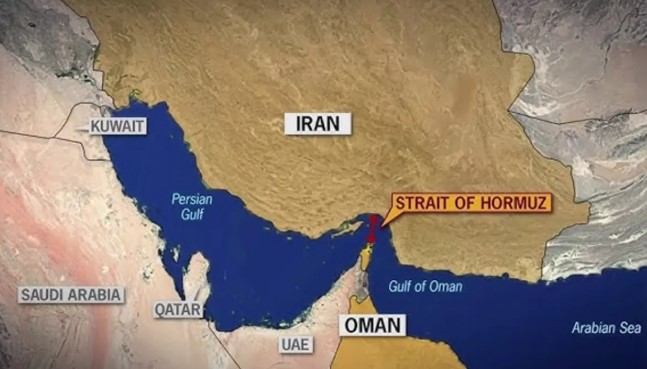
Iran on Friday declared the Strait of Hormuz fully open to commercial shipping, marking a significant de-escalation signal in a conflict that has rattled global energy markets and disrupted one of the world’s most critical transit corridors.
Foreign Minister Seyed Abbas Araghchi said the reopening would apply for the duration of the ongoing ceasefire linked to hostilities involving Israel and Lebanon. In a statement posted on social media, Araghchi noted that while traffic would resume, vessels must adhere to a “coordinated route” designated by Iranian maritime authorities, an indication that Tehran intends to retain operational control over movements through the channel.
“In line with the ceasefire in Lebanon, the passage for all commercial vessels through Strait of Hormuz is declared completely open for the remaining period of ceasefire,” Abbas Araghchi said.
Register for the next Tekedia Mini-MBA.
Register for Tekedia AI in Business Masterclass.
Join Tekedia Capital Syndicate and co-invest in great global startups.
The Strait of Hormuz handles roughly a fifth of global oil shipments, making even partial disruptions a trigger for volatility in energy markets. Its near-closure during recent tensions had reduced traffic to a trickle, with only a handful of commercial vessels transiting daily. The announcement of a full reopening immediately eased supply concerns, sending oil prices down by more than 11% in a sharp correction that reflects how tightly markets had priced in geopolitical risk.
The move follows a fragile ceasefire agreement between Israel and Lebanon that came into effect Thursday evening, aimed at halting Israel’s military campaign against Hezbollah, the Iran-aligned group at the center of the confrontation. That front has been a persistent obstacle in broader U.S.-Iran negotiations, with Tehran viewing continued Israeli operations as undermining diplomatic commitments.
In Washington, Donald Trump publicly welcomed Iran’s decision to reopen the strait, framing it as a positive step toward stabilizing global trade flows. At the same time, Trump made clear that U.S. pressure would not be eased, stating that the naval blockade of Iranian ports would remain in place until a broader agreement is reached with Tehran.

The dual-track posture underscores the current U.S. strategy: allowing limited de-escalation to protect global markets while maintaining leverage in negotiations over Iran’s broader conduct. It also reflects lingering distrust between the two sides, which has repeatedly derailed attempts at a durable settlement.
Earlier efforts to secure a more comprehensive arrangement have faltered. A two-week ceasefire brokered on April 7, which included a U.S. demand for full reopening of the strait, quickly became mired in disputes over compliance. Iran’s parliamentary speaker, Mohammad Bagher Ghalibaf, accused Washington of violating the terms by permitting Israel’s continued military operations in Lebanon, reinforcing Tehran’s reluctance to fully normalize maritime access without parallel concessions.
Diplomatic channels remain active but uncertain. Talks last weekend in Pakistan between JD Vance and Ghalibaf failed to produce a breakthrough, though Trump has indicated that a second round of negotiations could take place as early as this weekend. The choice of Pakistan as a venue underlines an effort to maintain neutral ground amid heightened tensions across the Middle East.

For global markets, the reopening of the Strait of Hormuz offers immediate relief but limited clarity. The requirement for coordinated transit routes suggests that Iran retains the capacity to reimpose restrictions quickly if negotiations deteriorate. Meanwhile, the continued U.S. naval presence signals that the broader conflict remains unresolved.
Energy analysts note that the sharp drop in oil prices may prove temporary if the ceasefire fails to hold or if disruptions resume. The underlying risk premium tied to the region has not disappeared; it has merely been recalibrated in response to a short-term easing of constraints.
The situation leaves shipping companies, insurers, and energy traders navigating a narrow window of reduced tension while preparing for the possibility of renewed disruption. In practical terms, the strait may be open, but it is not yet secure in a strategic sense.