
DD
MM
YYYY

PAGES

DD
MM
YYYY

spot_img

PAGES

Home Blog Page 1600

Flutterwave Strengthens Operations in Ghana With Inward Remittance Service Approval

0

Flutterwave, Africa’s leading payments technology company, has secured approval from the Bank of Ghana, to provide inward remittance services.

This milestone strengthens the company’s presence in Ghana’s rapidly evolving fintech landscape and reinforces its commitment to facilitating seamless cross-border transactions across Africa.

Commenting on the milestone, Olugbenga ‘GB’ Agboola, Founder and CEO of Flutterwave said,

“We are excited to receive the approval to provide inward remittance services in Ghana, which marks a significant step in our mission to simplify payments for endless possibilities. Remittances play a vital role in the Ghanaian economy, and our goal is to make the process as seamless as possible for Ghanaians in the diaspora looking to send money home. This approval is a testament to our ongoing commitment to supporting financial inclusion and economic growth in Africa.”

Also commenting, Oluwabankole Falade, Chief Regulatory and Government Affairs Officer at Flutterwave, added,

“This approval showcases our dedication to complying with regulatory standards and our readiness to provide reliable payment solutions that address the unique needs of the Ghanaian market. We are grateful to the Bank of Ghana for their support and look forward to expanding our services in the country.”

Ghana’s Burgeoning Fintech Landscape

Ghana’s fintech landscape has been coined one of the most active in sub-Saharan regions as it has one of the highest mobile adoption rates. Mobile money accounts for nearly 60% of foreign exchange transactions in the country, underscoring the importance of financial inclusion.

The country’s fintech space is expanding beyond mobile payments, with significant growth in InsurTech, LendTech, and Buy Now, Pay Later (BNPL) services. Notably, the Government of Ghana has introduced an array of digitization and innovation initiatives under the Digital Ghana Agenda in an effort to facilitate fintech growth, such as the regulatory and innovation Sandbox Pilot to promote growth in this sector.

Also, the Bank of Ghana has played a pivotal role in fostering this growth by implementing progressive regulatory policies under the Ghana Digital Agenda. These policies encourage innovation while ensuring consumer protection and financial stability. Flutterwave’s approval to offer inward remittance services aligns with these initiatives, providing Ghanaians with more secure and cost-effective options for receiving funds from abroad.

FlutterWave’s Inward Remittance Services Impact on Ghana’s Economy and Financial Inclusion

Remittances form a crucial part of Ghana’s economy, contributing significantly to household incomes and overall economic stability. By enabling efficient inward remittances, Flutterwave aims to bridge the financial gap for individuals and businesses, offering faster, more affordable transactions compared to traditional banking channels.

With this approval, Flutterwave is expected to enhance its suite of services for businesses and individuals in Ghana. The company’s existing payment infrastructure, which includes payment processing, mobile money integrations, and merchant services, will now be complemented by its inward remittance capabilities.

This move also positions Flutterwave as a key player in Ghana’s cross-border payments ecosystem, further strengthening its presence in the West African region. The expansion aligns with its broader strategy of deepening financial inclusion by making digital payments and remittances more accessible across Africa.

As Flutterwave scales its operations in Ghana, consumers and businesses can expect improved financial connectivity, fostering economic growth and greater integration with global financial systems.

Nigeria’s Crude Oil Production Declines By 5% in February, Falling Below OPEC Quota

0

Nigeria’s crude oil production suffered a setback in February 2025, as the country failed to sustain the momentum from its recent output increase. Data from the Nigeria Upstream Petroleum Regulatory Commission (NUPRC) shows that the country’s daily average crude oil production declined by about five percent compared to January, raising fresh concerns about the country’s ability to maintain its OPEC production target.

The latest figures indicate that Nigeria’s crude oil production for February stood at an average of 1,465,006 barrels per day (bpd), down from the 1,538,697 bpd recorded in January. Although the drop appears relatively small, it represents a significant reversal of the steady gains recorded in previous months, fueling worries about the country’s long-standing production challenges.

The February output fell short of Nigeria’s allocated OPEC quota of 1.5 million barrels per day, with the NUPRC report noting that the country only managed to achieve 98 percent of the required production. The inability to sustain that momentum suggests Nigeria remains vulnerable to operational and structural issues within its oil sector.

The data further revealed that despite the drop in average output, Nigeria recorded a peak production of 1.7 million barrels per day in February, while the lowest daily production was 1.6 million barrels per day. However, these figures include condensates, which are not considered part of Nigeria’s crude oil production by OPEC. When condensates are factored in, Nigeria’s total daily average production in February stood at 1,671,953 barrels per day, comprising 1,465,006 barrels per day of crude oil and 206,948 barrels per day of condensates.

The overall crude oil production for February amounted to 41,020,155 barrels, marking a decline from January’s total output of 47,699,593 barrels. The February production also included 1,599,693 barrels of blended condensates and 4,194,849 barrels of unblended condensates. These figures were lower than those recorded in January when Nigeria produced 1,910,213 barrels of blended condensates and 4,252,071 barrels of unblended condensates.

The drop in output was reflected across the country’s major oil terminals, further underscoring the challenges affecting Nigeria’s oil production capacity. Forcados Terminal, which had the highest production, recorded 7.75 million barrels in February, down from 8.86 million barrels in January. Bonny Terminal, another major production hub, saw its output decline to 6.3 million barrels in February from 8.1 million barrels the previous month. Qua Iboe Terminal’s production also dropped, with 4.28 million barrels produced in February compared to 4.6 million barrels in January. Escravos Terminal recorded a decline as well, producing 3.87 million barrels in February, down from 4.48 million barrels in the preceding month. Similarly, Odudu Terminal’s output dropped to 2 million barrels in February from 2.3 million barrels in January, while Tulja–Okwuibome Terminal produced 1.89 million barrels in February, a decrease from 2.26 million barrels in January. These figures include both crude oil and condensates.

The latest drop in production comes at a time when Nigeria had been striving to restore investor confidence in its oil sector and strengthen revenue generation through increased output. The country has battled persistent challenges such as crude oil theft, pipeline vandalism, regulatory uncertainties, and underinvestment in upstream projects. While recent efforts by the government and security agencies have helped to curb some of these issues, the February figures indicate that the industry has yet to achieve sustained production stability.

The decline in oil output raises questions about Nigeria’s ability to meet its budgetary and revenue targets, particularly as oil remains the country’s main source of foreign exchange earnings. The setback also affects Nigeria’s standing within OPEC, where member countries are expected to adhere to production quotas as part of broader efforts to stabilize global oil prices. Although a Reuters survey had suggested that Nigeria exceeded its OPEC quota in February, the NUPRC data contradicts that claim, indicating that the country is still struggling to maintain a consistent production level.

The oil industry will now be looking ahead to OPEC’s upcoming Monthly Oil Market Report for February, which will provide a broader perspective on Nigeria’s performance relative to other oil-producing nations. The volatility of the global oil market, influenced by factors such as geopolitical tensions and supply chain disruptions, means that any decline in production could impact Nigeria’s economy.

Energy experts have pointed out that for Nigeria to achieve sustained growth in crude oil output, the government must address critical bottlenecks in the sector. There is an urgent need for improved infrastructure, enhanced security around oil facilities, and a more investor-friendly regulatory framework to attract both international and indigenous oil producers. Without these measures, analysts believe Nigeria risks falling further behind its production targets, limiting its ability to capitalize on global oil market trends.

Ukraine Accepts U.S.-Proposed 30-Day Ceasefire, But Russia Remains Reluctant

0

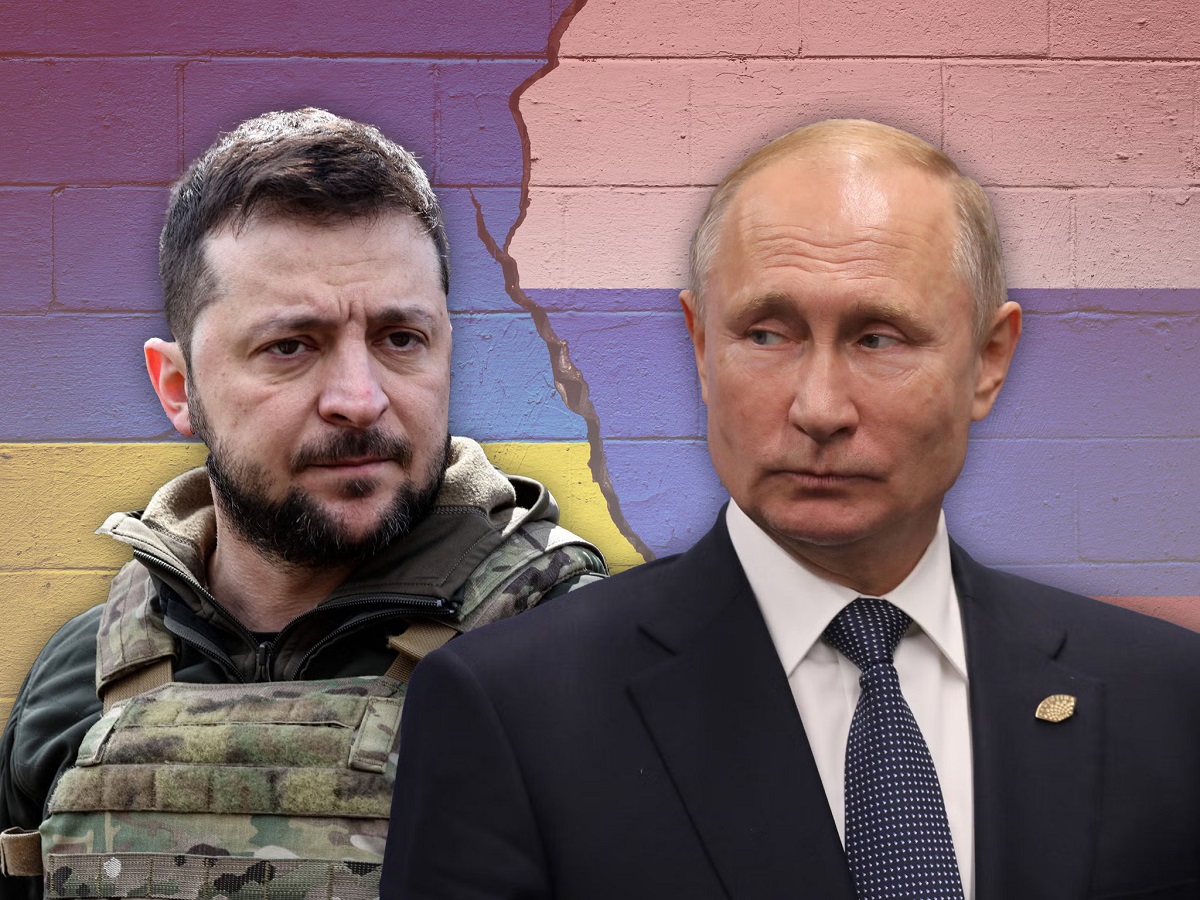
Ukrainian President Volodymyr Zelensky announced on Tuesday that Kyiv had accepted a U.S.-proposed 30-day ceasefire covering the entire frontline. The proposal put forward during high-stakes negotiations in Jeddah, Saudi Arabia, marks a significant shift in diplomatic efforts to pause hostilities.

However, its success hinges on Russia’s willingness to reciprocate—a move that remains uncertain as Moscow continues military advances.

Following an intense eight-hour discussion between U.S. and Ukrainian officials, Zelensky emphasized that the responsibility now lies with Washington to secure Moscow’s compliance.

“Ukraine accepts this proposal. We consider it positive, and we are ready to take such a step. The United States of America must convince Russia to do so,” Zelensky stated, adding that the ceasefire would be implemented the moment the Kremlin agrees.

U.S. Resumes Military Aid to Ukraine

In a joint statement released after the Jeddah meeting, the United States confirmed that it would immediately lift the pause on intelligence sharing and resume security assistance to Ukraine. The decision reverses an earlier stance taken by the Biden administration and later continued under President Donald Trump, which had temporarily halted aid as Washington pressured Kyiv to negotiate a peace deal.

U.S. Secretary of State Marco Rubio, who played a key role in the discussions, underscored that the onus was now on Russia to take concrete steps toward peace.

“We hope that they’ll say yes, that they’ll say yes to peace. The ball is now in their court,” Rubio stated.

A senior Ukrainian official confirmed on Tuesday that U.S. security assistance had already resumed, signaling Washington’s commitment to backing Kyiv despite its shift toward diplomacy.

Trump Welcomes Ceasefire, Plans Talks with Putin

Trump responded positively to the ceasefire acceptance, vowing to speak directly with Russian President Vladimir Putin in the coming days.

“Hopefully, President Putin will agree to that also, and we can get this show on the road,” Trump told reporters at the White House.

The announcement is a major diplomatic breakthrough, particularly in light of Trump’s recent public fallout with Zelensky. Just weeks earlier, tensions between Washington and Kyiv had escalated after Trump criticized Ukraine’s reluctance to engage in peace talks.

Trump acknowledged the shift in dynamics, referring to his past confrontation with Zelensky.

“I think it’s a very big, very big difference between the last visit you saw in the Oval Office. And that’s a total ceasefire,” he said.

Despite his optimism, Trump cautioned that if Russia refuses the deal, the war will persist.

“Ukraine has agreed to it, and hopefully, Russia will agree to it. We’re going to meet with them later today and tomorrow, and hopefully, we’ll be able to work out a deal,” he said. “But I think the ceasefire is very important. If we can get Russia to do it, that’ll be great. If we can’t, we just keep going on, and people are going to get killed.”

Key Elements of the Ceasefire Proposal

The U.S.-Ukraine joint statement emphasized that Kyiv had agreed to an immediate, interim 30-day ceasefire, which could be extended if mutually agreed upon by all parties.

The terms of the ceasefire include a complete halt to military operations across the entire frontline, ensuring that neither side engages in aerial bombardments or naval confrontations. It also includes the release of Ukrainian prisoners of war as a key trust-building measure and the return of Ukrainian children deported to Russia, addressing a major humanitarian concern.

Additionally, the two sides agreed to finalize a rare minerals trade deal aimed at boosting Ukraine’s economy and securing its long-term stability.

Russia’s Lukewarm Response

However, Russia has yet to formally respond to the proposal, with sources indicating that Putin remains hesitant to embrace the ceasefire without additional guarantees.

A senior Russian official, speaking anonymously to Reuters, expressed skepticism about the proposal’s viability, arguing that Moscow’s recent battlefield gains put it in a stronger negotiating position.

“It is difficult for Putin to agree to this in its current form,” the source said. “Putin has a strong position because Russia is advancing.”

Russian forces currently control nearly 20% of Ukraine’s territory, up from the 7% Moscow held before its full-scale invasion in February 2022. The Institute for the Study of War reports that Russia occupies almost the entire Luhansk region, a significant portion of Donetsk, and the majority of Zaporizhzhia and Kherson.

With Ukraine’s position weakening in some contested regions, Russia may view the ceasefire as a tactical setback rather than a diplomatic opportunity.

A second Russian source warned that accepting a ceasefire without guarantees could undermine Moscow’s strategic advantage.

“Without guarantees, Russia’s position could swiftly become weaker, and then Russia could be blamed by the West for failing to end the war,” the source stated.

A third source claimed that the U.S. ceasefire proposal was merely a pretext for resuming military aid to Ukraine while publicly framing it as a peace initiative.

Putin’s Stance: No Short-Term Truce, Only a Permanent Settlement

Putin himself has repeatedly ruled out temporary ceasefires, insisting that Russia seeks a lasting peace based on its own terms.

“We don’t need a truce; we need a long-term peace secured by guarantees for the Russian Federation and its citizens,” Putin said in December.

In January, he reinforced this position during a Security Council meeting.

“There should not be a short truce or some kind of respite for regrouping forces and rearmament with the aim of subsequently continuing the conflict, but a long-term peace,” he said.

Putin’s preconditions for peace, as outlined in June 2023, include Ukraine officially abandoning its NATO ambitions and withdrawing its troops from all occupied regions Moscow has claimed as part of Russia. With Russia controlling most of Luhansk, Donetsk, Zaporizhzhia, and Kherson, the Kremlin is unlikely to accept a deal that does not guarantee full control over these territories.

Europe Supports Ceasefire, But Doubts Persist

European leaders welcomed the ceasefire proposal, viewing it as a crucial step toward ending hostilities. The European Union called the development positive, while British Prime Minister Keir Starmer hailed it as a remarkable breakthrough. Estonian Foreign Minister Margus Tsahkna praised the initiative but reminded that the responsibility rests solely on Russia.

Meanwhile, Russia’s state media remains skeptical, with Rossiya 24 describing U.S. Secretary of State Rubio’s remarks as naive given Ukraine’s history with Moscow. Russian lawmaker Konstantin Kosachev went further, stating that any agreements must be on Russia’s terms, not America’s and that the real agreements are being written on the battlefield.

With Ukraine on board and the U.S. pressing for peace, all eyes are now on Russia’s next move. If Moscow rejects the ceasefire, Ukraine and its Western allies may double down on military assistance, prolonging the war. However, if Putin engages in negotiations, it could mark the first real step toward de-escalation in nearly two years.

Top Cryptos to Invest in for Short Term: Qubetics’ dVPN Rises as Monero Price Prediction Holds Strong And Kaspa Breaks Out

0

In today’s fast-paced digital world, privacy and speed aren’t just nice-to-haves—they’re essential. With data breaches on the rise and online surveillance becoming the norm, people are looking for new ways to protect their digital lives.

At the same time, the cryptocurrency market is booming, offering exciting opportunities for those looking to cash in quickly. But with thousands of projects popping up, figuring out which ones have the potential for short-term gains can feel like finding a needle in a haystack.

The truth is, not all crypto projects are created equal. Some focus on fancy tech with no real-world use, while others deliver practical solutions to everyday problems. The best bets for short-term gains often combine strong technology, growing demand, and clear market advantages—and a few projects are ticking all these boxes right now.

Let’s break down three standout contenders that are making waves: Qubetics, with its game-changing decentralized VPN (dVPN) that protects online privacy; Monero, a long-time leader in anonymous transactions; and Kaspa, known for blazing-fast transaction speeds. Each project brings something unique to the table, and all three are gaining momentum as the top cryptos to invest in for short term.

Qubetics ($TICS): Pioneering Online Privacy with Decentralized VPN

Imagine browsing the internet without worrying about prying eyes or data breaches. Traditional VPNs promise privacy but often fall short due to centralized control, making them susceptible to hacks and surveillance. Enter Qubetics, a blockchain-based platform revolutionizing online privacy with its decentralized VPN (dVPN).

What Makes Qubetics’ dVPN Stand Out?

Unlike regular VPNs that rely on centralized servers, Qubetics’ dVPN operates on a peer-to-peer network. This means your data isn’t stored in one vulnerable spot, reducing the risk of unauthorized access. For businesses, professionals, and individuals alike, this decentralized approach ensures a more secure and private browsing experience.

Why Should You Care About Qubetics Now?

Qubetics is currently in its 25th crypto presale stage, having sold over 499 million tokens to more than 22,900 holders, raising upwards of $14.9 million. At this stage, $TICS tokens are priced at $0.1074 each. Analysts are buzzing about its potential, with some predicting significant returns post-mainnet launch.

How Does Qubetics Solve Real-Life Problems?

In an era where data breaches and online surveillance are rampant, Qubetics offers a solution that traditional VPNs haven’t fully addressed. By decentralizing the VPN infrastructure, it eliminates single points of failure, ensuring that your online activities remain private and secure. This innovation is perfectly suited to meet the future needs of blockchain and digital finance, making it a compelling option among the top cryptos to invest in for short term gains.

Monero (XMR): Community Engagement and Price Outlook

The Monero community is gearing up for MoneroKon 2025, scheduled from June 20 to 22 in Prague, Czechia. Organizers are actively seeking presentation proposals, with the submission deadline set for March 15, 2025.

A Monero Technical Meeting was held to discuss ongoing development topics, including Seraphis/JAMTIS and other long-term projects. Additionally, the community participated in the Monero Ask Anything Monday (MAAM) session on March 10, 2025, fostering open dialogue and knowledge sharing.

Monero (XMR) is trading at $207.19, with a market capitalization of $3.82 billion. Technical analysis shows a bullish engulfing pattern, indicating strong buyer momentum. Market analysts predict that XMR will not fall below $198.59 in March 2025, with potential peaks at $218.03, and an average trading value around $208.31.

Kaspa (KAS): Price Recovery and Market Sentiment

Kaspa (KAS) has experienced a significant rebound, surging 15% from a two-year low. This recovery is attributed to rising market confidence and increased trading activity, with volumes reaching $189 million—a 95% increase—indicating strong investor interest.

Technical analysis suggests that KAS is attempting to break out of a downtrend that began in December 2024. A successful breakout could lead to a price target of $0.105, followed by a potential downward correction to the $0.0045-$0.0050 range. Additionally, KAS has been highlighted as a top cryptocurrency to watch in March 2025, with potential for substantial portfolio growth in the upcoming quarter.

Understanding Decentralized VPNs: The Future of Online Privacy

With increasing concerns about online surveillance and data breaches, decentralized VPNs (dVPNs) are emerging as a promising solution. Unlike traditional VPNs that route traffic through centralized servers, dVPNs distribute data across a network of nodes, enhancing privacy and security.

Why Are dVPNs Gaining Traction?

  • Enhanced Privacy: By eliminating central points of control, dVPNs reduce the risk of data interception.
  • Censorship Resistance: dVPNs make it harder for authorities to block or censor internet access.
  • Community-Driven: Users can contribute to the network by sharing bandwidth, promoting a more open internet.

How Does Qubetics Fit In?

Qubetics’ dVPN is at the forefront of this movement, offering a decentralized solution that addresses many shortcomings of traditional VPNs. Its innovative approach not only enhances user privacy but also aligns with the broader goals of blockchain technology.

Conclusion: Top Cryptos to Invest in for Short Term

In the crypto world staying informed and agile is key. Qubetics, with its groundbreaking dVPN, offers a unique opportunity to address pressing privacy concerns. Monero continues to champion financial confidentiality, while Kaspa pushes the envelope on transaction speed.

For those seeking top cryptos to invest in for short term gains, these projects present compelling cases. However, always conduct thorough research and consult with financial advisors before making investment decisions.

For More Information:

Qubetics: https://qubetics.com

Presale: https://buy.qubetics.com

Telegram: https://t.me/qubetics

Twitter: https://x.com/qubetics


FAQs

  1. What is Qubetics’ dVPN?
    Qubetics’ decentralized VPN is a blockchain-based service that enhances online privacy by eliminating centralized control, reducing risks associated with traditional VPNs.
  2. How can I participate in Qubetics’ presale?
    You can purchase $TICS tokens directly from Qubetics’ official website during their presale stages.
  3. Why is Monero popular among privacy advocates?
    Monero uses advanced cryptographic techniques to keep transaction details confidential, appealing to those who prioritize financial privacy.
  4. What makes Kaspa’s transaction speed noteworthy?
    Kaspa’s DAG architecture allows multiple blocks to be confirmed simultaneously, leading to faster transactions compared to traditional blockchains.
  5. Are decentralized VPNs better than traditional ones?
    dVPNs offer enhanced privacy and security by distributing data across a network of nodes, reducing vulnerabilities associated with centralized servers.

Exploring Trump’s Executive Order on Banks Reducing Crypto Regulations

0

President Donald Trump has indeed signed an executive order aimed at reducing cryptocurrency regulations, particularly those affecting banks, as part of his broader pro-crypto policy agenda. On January 23, 2025, Trump issued the executive order titled “Strengthening American Leadership in Digital Financial Technology,” which addresses several aspects of digital asset regulation, including banking services for crypto companies. This action fulfills campaign promises to create a more favorable regulatory environment for the cryptocurrency industry, which faced significant scrutiny and enforcement actions under the previous Biden administration.

A key component of the executive order is its directive to protect and promote “fair and open access to banking services” for law-abiding individuals and private entities in the crypto sector. This addresses long-standing industry complaints about “Operation Choke Point 2.0,” a term used by crypto advocates to describe what they perceive as a deliberate effort by regulators to pressure banks into denying services to crypto companies.

The order does not explicitly terminate this alleged policy but signals a shift toward ensuring that crypto firms can access banking services without undue restriction. This is particularly significant for banks, as it could encourage them to custody digital assets, offer crypto-related services, and integrate cryptocurrencies into their portfolios, activities that were previously constrained by regulatory guidance.
One specific regulatory rollback highlighted in the executive order’s implementation is the rescission of the Securities and Exchange Commission’s (SEC) Staff Accounting Bulletin 121 (SAB 121), announced on the same day the order was signed.

SAB 121, issued in 2022, required banks and other custodians to record digital assets held on behalf of clients as both assets and liabilities on their balance sheets, effectively making it prohibitively expensive for many institutions to engage in crypto custody services. The rollback of this guidance, as directed by Trump’s order, is expected to lower the cost of compliance for banks, thereby encouraging greater participation in the crypto market. Industry leaders, such as Circle CEO Jeremy Allaire, have publicly supported this repeal, arguing that it removes a significant barrier to banks holding digital assets.

The executive order also establishes the President’s Working Group on Digital Asset Markets, chaired by Trump’s appointed crypto and AI czar, David Sacks. This working group, comprising key agencies like the Department of the Treasury, the Department of Justice, and the SEC, is tasked with proposing a comprehensive federal regulatory framework for digital assets within 180 days. Within 30 days of the order, the group must identify existing regulations affecting the crypto sector, and within 60 days, it must recommend whether these should be rescinded, modified, or adopted.

This framework aims to provide regulatory clarity, particularly for banks, by establishing “well-defined jurisdictional regulatory boundaries” and ensuring “technology-neutral regulations.” Such clarity could further reduce barriers for banks, enabling them to offer crypto trading, custody, and investment services to clients, including wealthy individuals and institutional investors.
The potential impact on banks is significant.

Bank of America CEO Brian Moynihan, speaking at the World Economic Forum in Davos, indicated that if the new rules make crypto a viable business, banks would actively participate, particularly in transactional services, treating crypto as “just another form of payment.” This shift could widen crypto adoption, bringing more institutional players into the market and increasing liquidity. However, the executive order’s approach to reducing regulations raises concerns about investor protection and systemic risks.

Critics argue that easing banking restrictions without robust safeguards could expose the financial system to the volatility and fraud risks inherent in the crypto market, as evidenced by past scandals like FTX and Binance. The order’s focus on deregulation, combined with the Trump administration’s broader appointment of crypto-friendly regulators—such as Paul Atkins at the SEC, Travis Hill at the FDIC, and Scott Bessent at the Treasury—suggests a potential prioritization of industry growth over consumer safety.

While this ban supports private sector cryptocurrencies by eliminating potential competition, it could limit the U.S.’s ability to innovate in digital finance and maintain the dollar’s global dominance, especially if other nations adopt CBDCs for cross-border transactions. The order instead promotes dollar-backed stablecoins, which could benefit banks by providing a regulated avenue for crypto-related services, but this approach may not fully address the systemic risks associated with stablecoins, such as those seen in the collapse of TerraUSD.

Trump’s executive order reduces cryptocurrency regulations on banks by rescinding restrictive guidance like SAB 121, promoting banking access for crypto firms, and tasking a working group with creating a broader regulatory framework. While this could significantly boost crypto adoption and institutional participation, it also raises concerns about investor protection, financial stability, and potential conflicts of interest, particularly given the administration’s close ties to the crypto industry.