DD
MM
YYYY

PAGES

DD
MM
YYYY

spot_img

PAGES

Home Blog Page 1616

Why Some Agencies Struggle to Keep Up with Hiring Demand

0

Recruitment agencies are doing it right if they place efficient candidates quickly. However, spiking hiring demands put pressure on firms, and many of them struggle to keep up. Some get so overwhelmed that they lose track of candidates, while some fail to meet client expectations, resulting in massive losses.

Without the right systems and some smart work, it’ll be difficult to meet a high volume of client orders. This ultimately leads to missed opportunities and frustrated clients. This growth cap prevents hiring teams from scaling, and with trying so, the entire operations suffer.

The Bottlenecks Slowing Agencies Down

Hiring demand isn’t slowing down. Businesses need talent fast, and when they hire experts to recruit, they expect that these firms can deliver without delay. Behind the scenes, agencies can only do so much as they rely on outdated methods that no longer work and aren’t built for scaling.

Many recruitment agencies still do most of their operations manually. Manual processes are one of the biggest obstacles. Sorting piles of résumés and tracking interviews the old-fashioned way slows everything down. With more client orders stacking up, a disorganized structure gives birth to more chaos. Thus, issues with organization must be addressed early.

Poor communication between parties is another common issue. When talent acquisition teams don’t provide timely feedback, candidates gradually lose interest. In the case of top talents, they won’t hesitate to accept offers elsewhere if you make them feel undervalued.

Lack of candidate engagement also leads to more delays. Many agencies focus on sourcing, but they fail to make lasting connections with past applicants. Without enough reserve on their talent pool, recruiters start from scratch every time a new job order comes in.

Technology Makes Scaling Possible

Speed and organization separate high-performing agencies from those that struggle to keep up. Recruiters need a hiring system that can handle high volumes without losing quality.

With JS software for hiring, agencies can automate job postings, track candidates in real-time, and streamline communication. An applicant tracking system like JobAdder’s keeps everything in one place. With it, you won’t be losing candidate résumés or miss their follow-ups.

Technology empowers recruiters. They won’t be replaced. Instead, they’ll be given tools that will help streamline their operations. Ultimately, it leads to more saved time they can spend on relationship building. A strong ATS reduces operations cost, while keeping every talent and client happy.

How Agencies Can Keep Up with Hiring Demand

Scaling a recruitment agency isn’t just about adding more recruiters. The right processes keep hiring fast and efficient without sacrificing quality.

Streamline application tracking. A centralized system keeps candidate records organized and prevents duplicate work.

  • Improve hiring manager communication. Clear timelines and structured feedback loops keep decisions moving.
  • Automate where possible. Scheduling, résumé filtering, and email responses save time without losing personalization.
  • Keep candidates engaged. Regular check-ins with past applicants make it easier to fill roles quickly.
  • Measure and adjust. Tracking hiring metrics helps recruiters find weak spots and improve efficiency.

Agencies that stay organized, use the right tools and maintain strong candidate relationships are the ones that keep up with hiring demand. When the process runs smoothly, recruiters spend less time on admin work and more time making great placements.

Block Blast Game Strategy

0

Block Blast is an engaging and addictive puzzle game that challenges players to fit different-shaped blocks into a grid to clear rows and columns. Unlike traditional block puzzle games, Block Blast offers a unique twist by allowing players to strategically place blocks without a time limit, making it a game of both skill and patience.

For beginners, it may seem simple at first, but as the game progresses, the increasing difficulty requires a well-thought-out strategy to maximize scores and avoid running out of space. Whether you’re playing to beat your high score or competing with friends, understanding the best strategies can make a huge difference in your gameplay.

This guide will walk you through essential Block Blast strategies, tips for maximizing your score, common mistakes to avoid, and advanced techniques to help you become a master of the game.

Understanding the Basics

Before diving into strategies, it’s important to understand the core mechanics of Block Blast. The game provides different block shapes, similar to Tetris, which must be placed on the board. The goal is to complete rows and columns to clear them, making room for new blocks. Unlike other block games, there is no option to rotate pieces, which means you need to plan every move carefully.

Blocks come in various shapes and sizes, including small squares, long rectangles, and L-shaped figures. Each block placement determines the success of future moves, so maintaining an open board is key to survival. The game ends when there is no available space for the given blocks, making strategic placement crucial.

Best Strategies for Playing Block Blast

1. Prioritize Clearing Lines

One of the most effective ways to keep your board clear and maximize your score is to prioritize completing full rows or columns. This not only earns you points but also creates space for incoming blocks. It’s best to avoid placing blocks randomly, as this can lead to unnecessary clutter that limits your future moves.

A good approach is to work towards multiple line clears simultaneously. This means placing blocks in a way that sets up a chain reaction, allowing you to clear multiple lines in a single move. This strategy helps free up the board faster and maximizes your score.

2. Keep the Center of the Board Open

Many players make the mistake of stacking blocks toward the center too quickly. Keeping the center open provides more flexibility in placing larger pieces later on. Instead of placing blocks haphazardly, focus on clearing out one side first and then gradually expanding your strategy.

A useful technique is to build from the edges and leave the middle space as open as possible. This prevents you from running out of space when larger, more difficult blocks appear.

3. Plan Three Moves Ahead

Block Blast requires foresight and careful planning. Instead of making a move based on immediate convenience, think about how each block will affect the next few moves. Ask yourself whether a placement will restrict future options or create an opportunity to clear multiple lines.

If you notice that placing a block might trap an open space, reconsider your placement. Thinking ahead prevents you from reaching a dead end too early in the game.

4. Use Larger Blocks Wisely

Larger blocks can be difficult to place, especially if the board is already filling up. Instead of rushing to use them immediately, try to clear space before placing them. This will ensure that they don’t block potential line completions.

A common mistake is placing large blocks in a way that prevents further movement. If you find yourself with a large block that doesn’t seem to fit, consider placing smaller pieces first to create room.

5. Avoid Isolated Gaps

One of the biggest challenges in Block Blast is dealing with isolated spaces that are too small to fit any available blocks. These gaps form when pieces are placed without proper planning, eventually leading to a game over.

To avoid this, try to place blocks in a way that fills the grid evenly. Instead of leaving small gaps between blocks, aim to complete larger sections of the board.

6. Balance Your Block Placement

Placing too many blocks on one side of the board can quickly lead to a lack of space. Instead, distribute your blocks evenly and maintain balance across the entire grid. A well-balanced board makes it easier to fit incoming pieces and keeps your gameplay smooth.

Common Mistakes to Avoid

Focusing Too Much on High Scores Early On

Many players try to maximize their score from the beginning, but this can lead to poor block placement. Instead of chasing high scores too early, focus on keeping the board clear. The longer you survive, the more points you will naturally accumulate.

Ignoring Small Blocks

Small blocks are valuable tools that help clear isolated gaps. Some players overlook them in favor of larger pieces, but strategic use of small blocks can extend your game significantly.

Stacking Blocks Without a Clear Plan

Placing blocks randomly without considering future moves often leads to an early game over. Always think about how your current move will impact the next set of pieces.

Advanced Techniques for Higher Scores

1. Layered Stacking Strategy

Instead of stacking blocks randomly, use a layered approach where each layer sets up the next move. This technique minimizes isolated gaps and makes it easier to complete rows.

2. Strategic Sacrificing

Sometimes, you may need to sacrifice a potential high-scoring move to maintain board space. Instead of going for a quick score boost, think about whether the move will benefit your long-term survival.

3. Analyzing the Block Patterns

Block Blast often follows certain patterns with block distribution. By recognizing these patterns, you can predict which blocks are likely to appear next and plan accordingly.

FAQs

1. How do I improve my Block Blast strategy?

Improvement comes with practice and patience. Focus on planning, keeping the board balanced, and avoiding small gaps. The more you play, the better you will become at predicting moves.

2. What should I do when I get a large block that doesn’t fit?

If a large block doesn’t fit immediately, try placing smaller pieces to create the necessary space. If no options are available, consider sacrificing a less important area to make room.

3. Is there a way to undo moves in Block Blast?

No, Block Blast does not allow players to undo moves. This is why careful planning is essential to avoid mistakes.

4. How can I clear multiple lines at once?

The best way to clear multiple lines is to set up your board in a way that several rows or columns align. Placing pieces strategically in anticipation of larger clears will help achieve this.

5. Can I rotate blocks in Block Blast?

No, unlike Tetris, Block Blast does not allow rotation of pieces. This makes planning even more important, as you need to place blocks exactly as they appear.

Conclusion

Block Blast is more than just a simple puzzle game—it is a test of patience, planning, and adaptability. While the mechanics are easy to understand, mastering the game requires a strategic mindset and the ability to think several moves ahead. Players who take the time to refine their techniques will find themselves consistently improving their scores and extending their gameplay sessions.

One of the most critical aspects of excelling in Block Blast is maintaining board space. Every move should be made with a clear purpose, ensuring that blocks are placed in a way that avoids unnecessary gaps and maximizes line clears. Keeping the center of the board open, planning for future moves, and balancing the placement of large and small blocks are all key components of long-term success.

For beginners, it’s easy to fall into the trap of prioritizing quick points rather than sustainable gameplay. However, as you develop a more strategic approach, you will notice significant improvements in your ability to manage the board effectively. Instead of rushing to clear lines as quickly as possible, consider how each move affects the next series of placements. Strategic stacking, thoughtful sacrifices, and recognizing block patterns will give you a clear advantage over time.

Another important factor in mastering Block Blast is the ability to remain patient. Since there is no time limit in most versions of the game, taking the time to assess each move carefully can make all the difference between a high score and an early game over. Players who rush their placements often find themselves with a cluttered board, while those who take a moment to evaluate their options tend to achieve higher scores consistently.

As with any puzzle game, regular practice is the key to improvement. The more you play, the more familiar you become with block patterns and potential placements. Over time, you will naturally develop an instinct for where to place blocks to maximize space and clear lines efficiently. If you find yourself struggling, take a step back and analyze previous games to identify areas for improvement.

Whether you are playing for fun, aiming to beat your personal best, or competing with others, applying the right strategies will help you make the most of each session. Stay patient, stay focused, and most importantly, enjoy the process of mastering this addictive puzzle game. With dedication and a well-thought-out approach, you’ll find yourself improving with every round.

Nigeria Acknowledges 14% U.S. Tariff Hike, Vows to Soften Blow as Trade Tensions Rise

0

The Federal Government has formally acknowledged the recent 14% tariff imposed by the United States on Nigerian exports, describing the development as a challenge with serious implications for non-oil sectors, while also positioning it as a call to accelerate economic diversification and deepen trade resilience.

In a statement issued on Sunday and signed by the Honourable Minister of Industry, Trade and Investment, Dr. Jumoke Oduwole, the government said that although crude oil has historically dominated Nigeria’s exports to the U.S., the new tariffs could deal a significant blow to non-oil exports—many of which had enjoyed exemptions under the African Growth and Opportunity Act (AGOA).

The new U.S. tariff regime includes a 10% levy on key non-oil categories, a move the Nigerian government says could undermine the price competitiveness of its goods in the American market, particularly in the value-added and agro-processing sectors.

“For businesses in the non-oil sector, these measures present destabilizing challenges to price competitiveness and market access, especially in emerging and value-added sectors vital to our diversification agenda. SMEs building their business models around AGOA exemptions will face the pressures of rising costs and uncertain buyer commitments,” the statement read.

According to government figures, Nigeria’s total exports to the United States have averaged between $5 and $6 billion annually over the last two years, with over 90% of that made up by crude oil and other mineral fuels. Non-oil products such as fertilizers, urea, lead, and a limited range of agricultural goods—account for less than 5% of the total.

Although the current tariff structure spares oil exports from the full brunt of the hike, Nigeria’s heavy dependence on crude means the indirect effects could still have severe consequences, especially if prices falter amid global uncertainty. More immediately, sectors that had been carving out space in niche, value-driven markets in the U.S. now face setbacks that may be difficult to absorb.

For Nigerian exporters, especially small and medium-sized enterprises, the situation echoes the challenges echoed by businesses in other countries affected by the tariffs. Nigeria’s SME exporters, who’ve invested in meeting AGOA standards, now find themselves shut out of the benefits, facing the consequences of global decisions made without their input or negotiation.

Dr. Oduwole noted that the Tinubu administration is treating the development with pragmatism, not alarm. She said the government is focused on turning the disruption into an opportunity to rethink Nigeria’s place in global trade, strengthen its economic fundamentals, and expand market access beyond traditional Western partners.

She explained that the government is ramping up investments in policy frameworks, trade financing, and infrastructure support to help businesses adapt. Among the measures being intensified are efforts to identify and expand alternative export destinations outside the United States, improve quality control and traceability for Nigerian goods, and advance strategic trade diplomacy to secure more favorable terms in emerging markets.

The government emphasized that the United States remains a “valued trade and investment partner” and noted that Nigeria is already in consultations with U.S. trade representatives and the World Trade Organization (TO) to address the implications of the new tariffs. The statement referenced a March 26 meeting between the U.S. Ambassador and Minister Oduwole, during which both parties reaffirmed their commitment to a strong bilateral trade relationship.

Nigeria is also reemphasizing its commitment to regional trade initiatives, especially the African Continental Free Trade Area (AfCFTA), which it believes can offer a long-term buffer against volatility in Western markets. The government said it is pushing for accelerated implementation of the AfCFTA and leveraging platforms like the Pan-African Payment and Settlement System (PAPSS) to boost intra-African commerce.

While the immediate impact of the tariffs may not drastically reduce Nigeria’s trade volumes with the United States, especially in oil, the broader implications are hard to ignore. The concern is less about figures and more about positioning—how Nigeria and other African countries find themselves at the mercy of unilateral global economic decisions that can unravel years of policy planning and export strategy.

The current situation was triggered by a sweeping trade directive from U.S. President Donald Trump, who declared what he called a “Liberation Day” by slapping tariffs on all of America’s trading partners. The move, intended to correct what Trump called “chronic trade imbalances,” sent global markets into a panic. Investors pulled back amid fears of retaliatory measures, which came swiftly from countries like China, which responded with a 34% tariff on U.S. imports.

Nigeria’s 14% tariff—relatively modest compared to the potential 28% penalty calculated based on its trade surplus with the U.S.—was described by Trump as a “concessionary” gesture. But whether that gesture translates into any real cushion for Nigerian businesses remains to be seen.

For now, the federal government is choosing to focus on adaptation and reform. Dr. Oduwole said the administration’s response is rooted in long-term strategy, not short-term panic.

“We are approaching this moment with pragmatism and purpose—turning global trade challenges into opportunities to grow our non-oil export footprint and build a more resilient economy,” she said.

Still, for exporters, the road ahead will be anything but smooth. Many had tailored their operations to exploit AGOA’s preferential access to the U.S. market. Now, with that safety net suddenly weakened, they must either absorb the cost or pass it on to consumers—both unattractive options in a fiercely competitive environment.


British Jaguar Land Rover Halts U.S. Shipments Amid Trump’s Auto Tariffs, Other Automakers Brace for Fallout

0

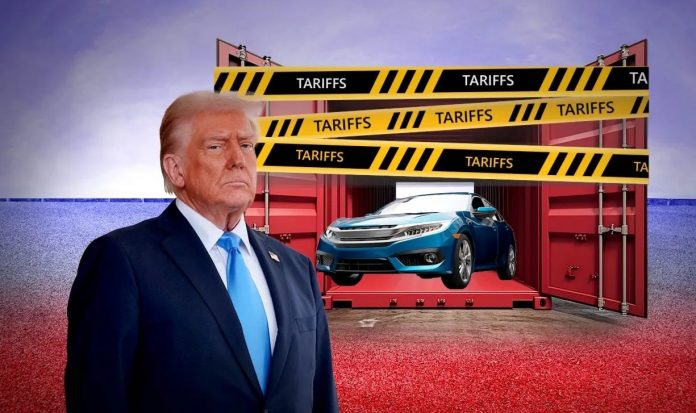
British carmaker Jaguar Land Rover has announced a pause in its vehicle shipments to the United States for the month of April, as it begins reassessing the impact of sweeping new tariffs imposed by U.S. President Donald Trump on imported cars.

The company, which described the U.S. as “an important market,” said the move is part of its short-term adjustment strategy as it determines how to navigate what it called the “new trading terms.” In an email to CNBC on Sunday, a Jaguar Land Rover spokesperson confirmed the suspension of shipments, saying, “As we work to address the new trading terms with our business partners, we are enacting our planned short-term actions including a shipment pause in April, as we develop our mid- to longer-term plans.”

The decision comes days after the Trump administration’s 25% tariff on all imported vehicles took effect, triggering a wave of uncertainty and backlash across the global auto industry. The tariffs are a centerpiece of what Trump believes is a protectionist economic strategy to reduce the United States’ trade deficit and encourage domestic manufacturing.

But the ripple effects have been felt across economies. While Jaguar Land Rover is the first high-profile automaker to halt shipments, several others are already weighing their options, signaling a broader shift in the industry’s approach to the American market.

Volkswagen Group, which owns brands like Audi, Porsche, and Bentley, has said it is “actively reviewing” its U.S. supply strategy and pricing models in light of the tariffs. The German automaker, which relies heavily on U.S. imports for luxury and performance models, has warned of potential cost increases and slower deliveries in the months ahead.

Toyota, which imports a wide range of models from Japan, is also assessing its supply chain exposure. While the company operates several plants in the U.S., a large share of its vehicles, including the Land Cruiser, Prius, and many Lexus models, are imported. A company executive told Nikkei Asia that the tariffs “will force a reassessment of pricing, production, and import volume.”

Hyundai and Kia, both of South Korea, have remained cautious but are understood to be reviewing U.S. market strategies. Hyundai in particular may lean more heavily on its Alabama plant for production, though key models like the Palisade and Genesis G80 are still imported and now subject to tariff costs.

BMW, which builds some of its SUVs in South Carolina, also imports several performance sedans and electric models from Germany. The company warned last week that it could be forced to raise prices or shift production if the trade war intensifies.

Tesla, while largely insulated due to its U.S.-based operations, may face cost increases for parts sourced from abroad. The company has said it is “monitoring the situation closely” but declined to comment on specific impacts.

The common thread among all these companies is hesitation — a careful weighing of the pros and cons before reacting. Most are still calculating how much of the tariff burden can be absorbed internally and how much will have to be passed on to consumers through higher prices.

Meanwhile, Trump has touted the tariffs as a bold step toward economic self-sufficiency. “President Trump refuses to let the United States be taken advantage of and believes that tariffs are necessary to ensure fair trade, protect American workers, and reduce the trade deficit—this is an emergency,” the White House said in a statement earlier this week.

However, his actions have sparked a backlash across the globe, including among longtime U.S. allies. British Prime Minister Keir Starmer said London would respond with “cool and calm heads,” but emphasized that the tariffs were a “disappointing escalation” at a time when the two nations were working toward a new bilateral trade agreement.

In Europe, the European Commission has threatened to retaliate with tariffs of its own if the U.S. does not back down. Germany’s Economic Affairs Minister Robert Habeck called Trump’s move “economically harmful and diplomatically irresponsible,” while France’s finance ministry said it would “not hesitate to act in the interest of European industries.”

Canada and Mexico, both significant players in the U.S. auto supply chain, have also expressed concern, with Canada’s Trade Minister Mary Ng warning that “the tariffs risk undermining the very economic integration that has benefited North American workers and consumers.”

The tension is already affecting financial markets. Shares of major automakers fell sharply in the wake of the tariff announcement, with investors fearing production slowdowns and declining U.S. sales. The S&P Global Auto Index dropped nearly 5% over the past week, while shares of Tata Motors, Jaguar Land Rover’s parent company, slipped over 6%.

Industry experts say Jaguar Land Rover’s decision to pause shipments may just be the beginning.

The 25% vehicle tariff is just one part of Trump’s broader protectionist push. Additional tariffs on auto parts are set to go into effect by May 3, which could further disrupt global supply chains and raise production costs for American-based automakers, many of whom depend on foreign parts.

The U.K. was also among the countries hit with a 10% baseline import duty on a wide range of goods, including aluminum and steel — materials that are critical to auto manufacturing. Jaguar Land Rover, with its heavy use of aluminum in vehicle frames, could be particularly exposed to these added costs.

While some companies may shift production to North America to mitigate tariff exposure, such moves require years of planning and billions in investment. In the short term, consumers are likely to bear the brunt, with vehicle prices expected to rise by thousands of dollars on average.

Stock Market Carnage Wipes Out $6 Trillion, With Apple, Tesla And Nvidia Taking The Biggest Hits

0

In early April 2025, the global stock market experienced a historic downturn, erasing approximately $6.6 trillion in market capitalization over two days.

This unprecedented sell-off was primarily triggered by the announcement of significant tariffs by U.S. President Donald Trump, leading to widespread investor panic and fears of a global recession.

The Dow Jones Industrial Average plunged 2,230 points, or 5.5%, marking a 14% drop from its December peak. The S&P 500’s total market capitalization fell to $45.1 trillion. Since its recent peak on February 19, the index has lost $9.5 trillion down 17.4% overall.

Technology stocks led the bleeding on Friday, as Apple, Tesla, and Nvidia took the biggest hits. Apple slumped 7%, bringing its loss for the week to 13%. Nvidia pulled back 7% during the session, while Tesla fell 10%. All three companies have large exposure to China and are among the hardest hit by Beijing’s retaliatory duties.

The implementation of international tariffs has also taken a heavy toll on Russia’s already weakened economy, which has been reeling from three years of conflict in Ukraine. During the week, Russia’s MOEX stock market suffered a sharp 8.09% drop in market capitalization, a plunge not seen since September 2022. Major Russian companies such as Gazprom and Sberbank also saw their shares tumble by 5%.

Economists’ estimates have been far grimmer, with most predicting that President Trump’s sweeping tariffs and likely retaliation will slow U.S. economic growth, push up costs for consumers, and make life difficult for businesses that depend on international supply chains.

Speaking on the bloodbath experienced in the stock market, Emily Bowersock Hill, CEO and founding partner at Bowersock Capital Partners said,

“The bull market is dead, and it was destroyed by ideologues and self-inflicted wounds. While the market may be close to the bottom in the short term, we are concerned about the impact of a global trade war on long-term economic growth”.

Jay Woods, Chief global strategist at Freedom Capital Markets said,

“The fear now as we go into the weekend is the trade war escapers, and the US doesn’t back down”.

Also commenting on Trump’s tariff, business magnate and co-founder of Virgin Group Richard Branson on his LinkedIn page, pleaded with President Trump to realize the mistake of his tariff chaos and correct it.

He wrote,

“Strong leadership means taking risks and trying things but when it doesn’t work, realizing your mistake and correcting it. Quickly. One of the most important lessons I’ve learned from 60 years of business is to accept when I’m wrong and change course. The US government’s sweeping tariffs are taking the world’s economy in a dangerous direction. They will make people everywhere worse off especially in America.

“It’s not just about the economy. Countries that trade fairly and healthily prosper and flourish. They reduce poverty, improve health and education, and decrease the likelihood of war.  Courage and self-awareness are cornerstones of true leadership. That includes quickly acknowledging errors and making corrections. With a swift reversal back to sensible economic policy, America and the rest of the world can still avoid the catastrophic fallout these tariffs will inflict.”

Amidst a backlash to his tariff implementation, Trump appears to the unshaken posting on his Truth Social that his “policies will never change”.

He said the tariffs would reverse decades of what he called unfair treatment by the rest of the world and result in factories and jobs moving back to the United States.

“The markets are going to boom” and “the country is going to boom,” he added.

In the wake of this, investors are reportedly upping their bets on an economic downturn, as JPMorgan boosts the odds of a global recession to 60%. Traders have now priced in four interest rate cuts for this year.

The tariff-fueled stock market selloff intensified on Friday, capping a tumultuous two-day rout that erased a record $6.4 trillion in value. Selling accelerated as China vowed to impose new tariffs on U.S. goods, overshadowing a stronger-than-expected jobs report. The Dow Jones Industrial Average plunged 2,230 points, or 5.5%, marking a 14% drop from its December peak. Friday’s 6% decline in the S&P 500 brings the index down by 10% in the past two days. The technology-focused Nasdaq tumbled 5.8%, entering what Wall Street calls a bear market.

  • Apple, Tesla and Nvidia were among the hardest hit, given their presence in China. Nike and Lululemon, which have manufacturing facilities in Vietnam, surged after President Trump said the country would remove its tariffs to prevent additional U.S. duties.

  • “The bull market is dead,” one analyst told CNBC. “We are concerned about the impact of a global trade war on long-term economic growth.”

  • Investors are upping their bets on an economic downturn, as JPMorgan boosts the odds of a global recession to 60%. Traders have now priced in four interest-rate cuts for this year, Bloomberg noted.