DD
MM
YYYY

PAGES

DD
MM
YYYY

spot_img

PAGES

Home Blog Page 1619

What Nigeria Can Do To Save Naira Right Now

0

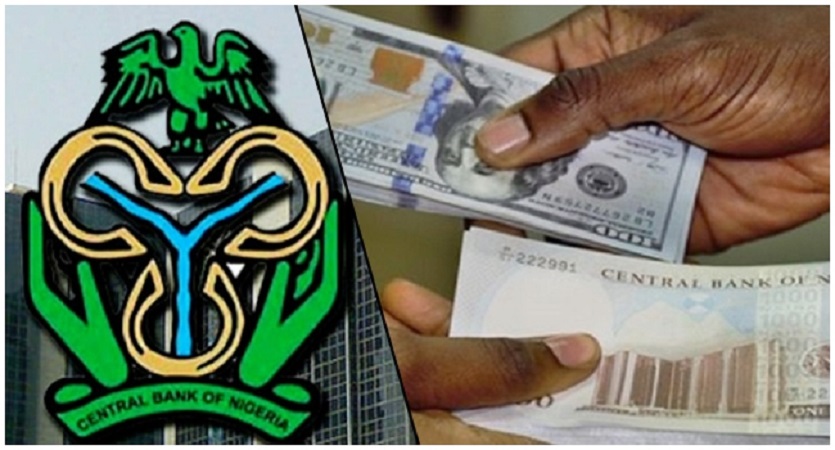
Nigerian Naira again: “The Central Bank of Nigeria (CBN) on Friday injected $197.71 million into the foreign exchange (FX) market in a bid to restore calm as the naira crashed to N1,600 per dollar—its weakest official exchange rate since December—under growing pressure from global economic shocks, including a 14% import tariff recently imposed on Nigeria by the United States.”

Ideally, Nigeria should not inject funds to stabilize Naira since it is floated. A floating regime will require the market forces to do the job.  That we are still injecting funds after two years does imply Naira cannot swim in a sea of global currencies when floated. Simply, Naira does not have the productive life jackets to float!

Mr. Governor, save Naira: peg it to N1,200/$ and allow it be. I have an Excel sheet where I’ve tracked the gains and losses as a result of the float. My data showed me that Naira is still being subsidized, not by the government, but by the private sector. That subsidization by the private sector is costing the government massive revenue. So, companies like MTN which used to send tons of money as tax have nothing to send.

My data shows that the opportunity cost (revenue, investment, asset value, etc) and the extra borrowing associated due to the loss of revenue from the private sector is close to the amount the government was originally spending on the Naira subsidy before the float. By the time I modeled asymmetric impacts like loss of venture funding for startups which was triggered by the floating, it becomes a negative policy on national economic competitiveness and growth.

I am an investor and I speak with dozens of global investors yearly. The #1 Naira problem is the volatility and not necessarily the exchange rate. But since we are still injecting funds to stabilize Naira because the US sneezed tariffs, why not just peg it? Mr. President is rational as an accountant, and will see this from the numbers. As always, my highest respect and I close from my June 2023 post: ‘Nigeria’s floating of its currency, while progressive, will cause severe perturbations in the economy – and a stable state may not come as most experts have predicted.” This injection of funds means the system is still unstable after 2 years.

CBN Injects $197.71m to Stabilize FX Market as Naira Falls to N1,600/$ Under Pressure From Trump’s 14% Tariff on Nigeria

Exploring the MGCS Tank Project Between Germany and France

0

German authorities have approved the German French Tank Project, specifically the Main Ground Combat System (MGCS). On April 4, 2025, Germany’s Federal Cartel Office, the country’s antitrust authority, gave the green light to a joint venture between defense companies KNDS Deutschland, KNDS France, Rheinmetall, and Thales to develop this next-generation battle tank. This approval marks a significant step forward for the project, which aims to replace Germany’s Leopard 2 and France’s Leclerc tanks by the 2040s.

The MGCS is a collaborative effort between France and Germany, initiated in 2017, to create a cutting-edge tank system incorporating advanced technologies like artificial intelligence, laser weapons, and modular designs. The project had faced delays due to disagreements over work distribution and industrial priorities, but a breakthrough was achieved in March 2024 when the two nations agreed to split tasks equally.

This was followed by a formal agreement signed on April 26, 2024, in Paris by German Defense Minister Boris Pistorius and French Armed Forces Minister Sebastien Lecornu, setting the stage for development to proceed under German leadership. The recent antitrust approval ensures that the joint venture can move forward without competition concerns, allowing the companies to begin negotiations and work toward a contract in 2025.

The MGCS will replace aging Leopard 2 and Leclerc tanks, providing NATO and European forces with a state-of-the-art platform by the 2040s. Its advanced features—AI, laser technology, and modular designs—could give European militaries a significant edge in future conflicts. As a joint Franco-German project, the MGCS will standardize equipment between two of Europe’s largest armies, improving coordination in joint operations and potentially setting a template for other European nations to adopt.

By developing its own advanced tank, Europe reduces reliance on U.S. or other foreign defense systems, bolstering its ability to act independently in global security matters, especially amid uncertainties like shifting U.S. foreign policy priorities. The project will generate high-skilled jobs in Germany and France, particularly in the defense sectors of companies like KNDS and Rheinmetall. This could stimulate local economies and reinforce. A successful MGCS could become a competitive export product, challenging tanks like Russia’s T-14 Armata or the U.S. Abrams.

The collaboration spreads the high development costs (estimated in the billions of euros) between France and Germany, making it more financially viable than if either nation pursued it alone. However, delays or mismanagement could still strain budgets. The MGCS reinforces the Franco-German axis as the backbone of European integration. Overcoming past disputes over workshare and leadership signals a commitment to deeper defense cooperation, potentially inspiring broader EU defense initiatives. The project could push the European Union toward a more unified defense strategy, though it also highlights tensions—other nations might feel sidelined unless invited to join later, as has been suggested.

Amid Russia’s ongoing aggression in Ukraine and rising global tensions, the MGCS sends a message of European resolve to deter threats and compete with military powers like China and Russia, who are also advancing their armored capabilities. The integration of AI, laser weapons, and lighter, modular designs positions Europe at the forefront of military technology. Success here could spill over into civilian sectors like robotics and energy systems. The project will drive research and development, fostering advancements in materials science (e.g., for lighter armor) and electronics, with potential dual-use applications beyond defense.

The MGCS will force competitors—such as the U.S. with its Abrams upgrades or Russia with the T-14—to accelerate their own innovations, intensifying the global arms race in armored warfare. Past hiccups in Franco-German cooperation (e.g., disagreements resolved only in 2024) suggest risks of further setbacks, which could inflate costs or push timelines beyond the 2040 target. Changes in government in either France or Germany could disrupt funding or priorities, as seen with other joint projects like the Future Combat Air System (FCAS).

Export success depends on how allies and neutral nations perceive the MGCS compared to cheaper or more established alternatives. The MGCS project promises to modernize European militaries, strengthen economic and political ties, and drive technological progress, but its success hinges on sustained cooperation and execution. It’s a bold step toward a more self-reliant and competitive Europe on the global stage. The MGCS is expected to feature a lighter, more advanced platform—potentially with a 130mm gun—and aims to enhance Europe’s defense autonomy while competing with global players like Russia, the U.S., India, and China.

CBN Injects $197.71m to Stabilize FX Market as Naira Falls to N1,600/$ Under Pressure From Trump’s 14% Tariff on Nigeria

0

The Central Bank of Nigeria (CBN) on Friday, injected $197.71 million into the foreign exchange (FX) market in a bid to restore calm as the naira crashed to N1,600 per dollar—its weakest official exchange rate since December—under growing pressure from global economic shocks, including a 14% import tariff recently imposed on Nigeria by the United States.

The intervention, confirmed in a statement released Saturday by Dr. Omolara Omotunde Duke, Director of the Financial Markets Department, marks one of the most direct responses by the apex bank to the turmoil triggered by the U.S. government’s sudden hike in tariffs on a wide range of imports, including goods originating from Nigeria.

“In line with its commitment to ensuring adequate liquidity and supporting orderly market functioning, the CBN facilitated market activity…with the provision of $197.71 million through sales to Authorized Dealers,” the statement read.

The Bank said the move aligns with its broader objective of fostering a stable, transparent, and efficient foreign exchange market and reiterated its resolve to maintain market integrity amid rising volatility.

Trump’s Tariff Hitting Nigeria?

But beyond the routine policy language lies a deeper concern: the naira’s sharp depreciation is being increasingly tied to Trump’s decision to impose new tariffs on several countries—including Nigeria—as part of a broader trade overhaul that is beginning to reverberate across global markets.

According to economists, the U.S. president’s announcement of a sweeping 10% baseline tariff on most imports, and a separate 14% tariff on certain products from Nigeria, has directly contributed to the decline of the naira. The impact has been swift. Nigeria, which depends heavily on oil exports and dollar remittances, now finds itself squeezed between falling crude prices and rising trade barriers.

Analysts say Nigeria is particularly vulnerable to external shocks due to its over-reliance on imports and its narrow export base. With U.S. tariffs raising costs for Nigerian goods abroad—and reducing Nigeria’s competitiveness—dollar inflows are expected to decline further. That, in turn, has made it harder for the CBN to defend the naira without depleting its already strained reserves.

Naira Drops to N1,600/$1—Worst Since December

Data from the CBN shows that the naira ended Friday at N1,600 per dollar, down 1.9% from N1,569 recorded the previous day. It marks the weakest official exchange rate since December 4, 2024, when the currency closed at N1,608.

Intra-day trades suggest even wider instability. The naira briefly touched a high of N1,625 before retreating, while some trades settled as low as N1,519—highlighting a broad range of uncertainty in dealer pricing. The Nigerian Foreign Exchange Market (NFEM) average rate, which smoothens out day-to-day spikes, closed at N1,567—the softest level so far in 2025.

In just the first four trading days of April, the naira has already lost 3.9% of its value, after closing March at N1,537.

The market’s volatility has renewed questions about the effectiveness of Nigeria’s FX reform strategy, which had aimed to allow the naira to float more freely in line with market demand and supply dynamics. Economists believe that without buffers, such a system leaves the currency dangerously exposed to external headwinds.

Economists Call for Urgent Action

The dramatic weakening of the naira has prompted fresh warnings from economists who say Nigeria must urgently revise its economic playbook in light of the new global realities. Several experts have urged the government to immediately set up a high-level response team focused on mitigating the effects of Trump’s trade policies on Nigeria’s already fragile economy.

There is growing support for a mix of policy responses. Economists have urged the federal government to fast-track export diversification, especially in non-oil sectors like agro-processing, solid minerals, and services. They are also advocating for Nigeria to begin exploring bilateral trade talks with the U.S. to negotiate relief or possible exemptions from the newly introduced tariffs.

In addition, some have suggested rebuilding foreign exchange buffers through diaspora bonds and concessional loans to strengthen Nigeria’s short-term liquidity. There are also calls for a reassessment of the 2025 budget assumptions, particularly around oil benchmarks and projected dollar inflows, which may no longer be realistic given recent developments.

Another line of thought is for the CBN to offer more structured FX support to key import-dependent sectors of the economy to avoid further supply chain disruptions that could fuel inflation. In parallel, there is also mounting pressure for the CBN to step up transparency around its FX intervention strategy, with clear and predictable signals to prevent panic in the financial markets.

While the CBN has not committed to a daily defense of the naira, the tone of its latest statement suggests it is prepared to act again should market conditions worsen. Dr. Duke noted that the Bank would continue to closely monitor both global and domestic financial conditions and stands ready to intervene further as necessary to maintain market order.

The CBN also called on all authorized dealers to uphold the Nigeria FX Market Code, urging strict compliance and high ethical standards in all transactions with clients and counterparties.

JPMorgan Predicts US Recession as Trump Doubles Down on Tariffs Despite Economic Fallout

0
JP Morgan Chase puts contents through its CEO account, it goes viral. But the same content via JPMC account, no one cares (WSJ)

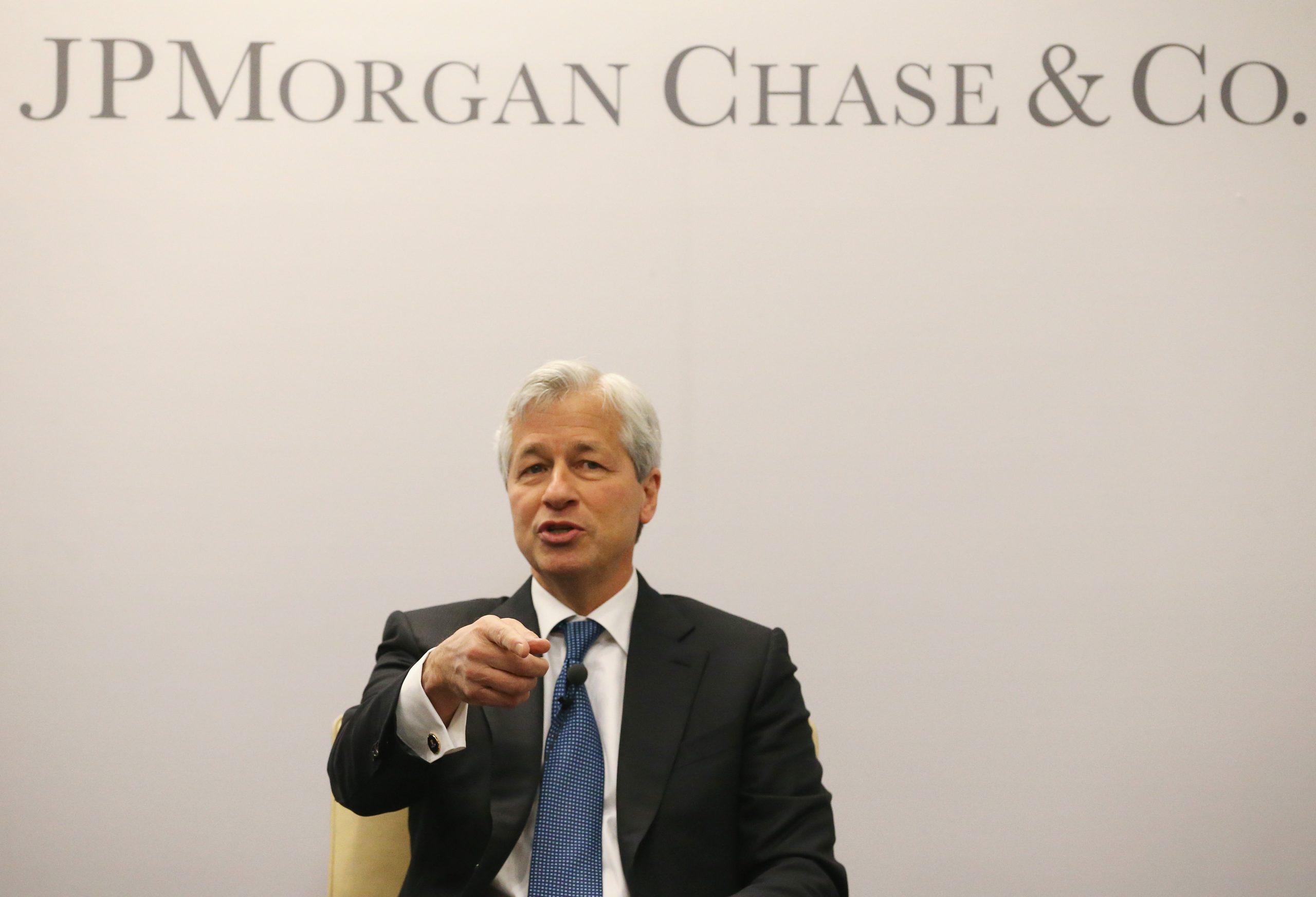
JPMorgan has become the first major Wall Street institution to formally project that the United States will fall into a recession in the latter half of 2025, citing the economic damage from sweeping tariffs imposed by President Donald Trump.

The bank’s chief US economist, Michael Feroli, warned in a note to clients that the cumulative weight of these tariffs — especially the 10% duties Trump has slapped on imports from most US trading partners — will begin to contract economic growth, pushing the country into what Feroli describes as a “stagflationary” scenario.

In his latest forecast, Feroli projects the US economy will shrink by 1% in the third quarter of 2025, followed by a further 0.5% contraction in the final quarter of the year. For the full year, GDP is expected to fall by 0.3%. The downturn, he said, would push the unemployment rate to 5.3%, up from the 4.2% recorded in March.

“We now expect real GDP to contract under the weight of the tariffs,” Feroli wrote Friday evening. “The pinch from higher prices that we expect in coming months may hit harder than in the post-pandemic inflation spike, as nominal income growth has been moderating recently, as opposed to accelerating in the earlier episode.”

The stark prediction is already being felt across financial markets. The Dow Jones Industrial Average plunged nearly 3,300 points over the week, an 8% decline that dragged the index into correction territory. The S&P 500 lost 9%, while the Nasdaq Composite fell 10%, pushing it officially into bear market territory — down more than 20% from its previous peak.

Feroli said the tariffs will increase consumer prices, depress household spending, and weigh heavily on business investment. While Trump insists the import taxes will help fund his planned extension of the 2017 tax cuts and bring back domestic manufacturing jobs, economists argue they’re already fueling inflation at a time when consumer spending is vulnerable.

“Consumers may be reluctant to dip too far into savings to finance spending growth,” Feroli warned, noting the fragile state of household balance sheets in a high-interest rate environment.

The White House, however, remains unshaken. Trump has continued to champion his economic strategy as a long-term fix to decades of trade imbalances, claiming that the pain Americans are experiencing now will eventually pay off. Speaking Thursday as markets were in freefall, Trump dismissed the economic concerns, saying the country would “boom.” The next day, he hit the golf course, as the Dow suffered its worst one-day drop since March 2020 — falling by 2,200 points.

Trump’s tariff plan is viewed by many Republicans as one of the boldest gambits of his presidency. After feeling constrained by advisers in his first term, Trump has now leaned fully into his long-held protectionist beliefs. The latest round of tariffs spares almost no major trade partner, including Canada, Mexico, the European Union, and China. That has prompted swift retaliation from Beijing and sharp criticism from European capitals, where leaders are preparing their own countermeasures.

Despite the financial turmoil, Trump has shown no signs of reversing course — at least for now. He has framed the tariffs as a patriotic obligation and a path to restoring American greatness.

“We have to endure a little pain to win back our economic independence,” he said in an address earlier this week.

That defiance, however, is beginning to stir unease — even among some of Trump’s supporters and Republican lawmakers.

Rep. French Hill, a Republican from Arkansas, voiced his reservations during a town hall Thursday night, particularly about the broad application of tariffs on neighbors like Canada and Mexico.

“I don’t support across-the-board tariffs as a general matter,” Hill said. “And I will be urging changes there because I don’t think they will end up raising a bunch of revenue that’s been asserted.”

But others remain supportive, even if uneasily so. Frank Amoroso, a 78-year-old retired engineer from Michigan who voted for Trump, told AP the tariffs are a step in the right direction — though he’s worried about short-term pain. “I think he’s doing things too fast,” he said. “But hopefully things will get done in a prudent way, and the economy will survive a little downfall.”

Doug Deason, a Republican donor based in Texas, echoed the sentiment. “It is hard to watch our portfolios deteriorate so much, but we get it. We hope he holds course,” he said, noting that Trump had always warned that economic disruptions would accompany his trade policies.

The broader economic implications are still unfolding, but JPMorgan’s projection has amplified fears that the president’s tariffs — far from being a tool of leverage — are pushing the US into the early stages of stagflation: a toxic mix of stagnant growth and rising prices. Feroli’s team expects the Fed’s preferred inflation measure — the core Personal Consumption Expenditures (PCE) index — to rise to 4.4% by the end of 2025, up from 2.8% in February.

That would complicate the Federal Reserve’s response. While investors had previously priced in four rate cuts by the Fed this year, Feroli now warns that the central bank may be paralyzed by the conflict between rising unemployment and stubborn inflation.

“If realized, our stagflationary forecast would present a dilemma to Fed policymakers,” he said.

Still, he believes the Fed will prioritize the labor market and begin cutting rates as early as June, reducing the benchmark rate by 25 basis points at each meeting until it hits 3% in January 2026.

The political fallout from the economic turmoil is also beginning to reshape the national mood. Democrats, still reeling from their 2024 defeat, are showing renewed momentum. They clinched a key state Supreme Court seat in Wisconsin and have begun organizing what is expected to be the largest round of protests since Trump’s return to office.

“The winds are changing,” said Rahna Epting of MoveOn, one of several advocacy groups planning nationwide demonstrations.

Progressive groups believe Trump’s economic gamble could hasten a political realignment.

“Raising prices across the board for your constituents is not popular,” said Ezra Levin, co-founder of Indivisible. “It’s the kind of thing that can lead to a 1932-style total generational wipeout of a party.”

For now, however, the recession JPMorgan predicts appears increasingly likely — not as a risk on the horizon, but as the logical outcome of policies that Trump has no intention of backing down from.

Real World Assets, American Dynamism and Maturation of Decentralized Finance

0

Real World Assets (RWAs) are tangible or traditional financial assets—like real estate, bonds, or commodities—tokenized on blockchain networks. They’re becoming a big deal in DeFi because they bring real-world value into a space that’s often been criticized for being speculative and detached from physical economies. By bridging traditional finance (TradFi) and DeFi, RWAs offer stability, liquidity, and a way to attract institutional players who’ve been hesitant to dive into crypto’s wilder side. American dynamism, point to the U.S.’s push to stay a leader in innovation and capital markets. Tokenizing RWAs fits right into that—it’s a chance for the U.S. to flex its financial muscle by blending its robust infrastructure with cutting-edge blockchain tech.

Think of it as a modern take on American ingenuity: solving big problems like illiquid markets or financial exclusion with bold, builder-driven solutions. It’s not just about keeping up; it’s about setting the pace. DeFi’s growing up means it’s moving beyond its early, chaotic days of yield farming and meme coins. RWAs are a sign of that maturity—shifting the focus from crypto-native speculation to practical, scalable applications. Protocols like Centrifuge or MakerDAO are already tokenizing assets like invoices or Treasuries, proving DeFi can handle real economic activity.

Tokenizing physical and financial assets on blockchains has some hefty implications: Illiquid assets like real estate or fine art become tradable 24/7 as tokens. A $300 trillion global asset pool suddenly gets more accessible, potentially unlocking billions for smaller investors who’ve been locked out of high-value markets. Middlemen—brokers, banks, escrow services—get sidelined. Transactions settle faster and cheaper on-chain, shaving off fees that eat into profits. Smart contract bugs or regulatory crackdowns could tank projects. If a tokenized apartment building’s contract gets hacked, you’re not just losing crypto—you’re losing a piece of the real world. Plus, unclear legal status in many countries could stall adoption.

Fractional ownership means more people can invest in, say, a Manhattan skyscraper or a government bond. But it’s not all rosy—without proper oversight, it could amplify scams or widen inequality if the tech-savvy hoard the gains. If the U.S. leans into this as a national strength, the impacts are big: Leading RWA tokenization could reinforce the dollar’s dominance in a digital era, keeping America at the center of global finance. It’s a way to outpace rivals like China, who are focused on centralized digital currencies. New industries—blockchain devs, compliance experts, asset managers—spring up. Places like Austin or Miami could become hubs, drawing talent and capital.

Exporting this tech strengthens soft power. If American platforms set the standard, other nations might have to play by the rules. Overreach or mismanagement (think heavy-handed SEC rules) could stifle innovation, pushing startups to friendlier shores like Singapore or Dubai. As DeFi matures with RWAs, the shift has broad consequences: Pegging value to real assets reduces the wild price swings of pure crypto. DeFi becomes less of a casino, more of a utility—think less Dogecoin, more digital Treasuries. Banks and institutions dip their toes in, bringing billions in capital. A Goldman Sachs tokenized bond isn’t sci-fi anymore—it’s happening. This could balloon DeFi’s total value locked from $100 billion to trillions.

Governments won’t sit idly by. Expect stricter KYC/AML rules, which could clash with DeFi’s ethos of decentralization. Some projects might buckle; others might thrive by adapting. Financial power moves from Wall Street to decentralized networks. That’s empowering for individuals, but it also risks chaos if governance fails—imagine a DAO mismanaging a tokenized power plant. When you mash these together, the synergy amplifies everything. RWAs powered by DeFi, with American leadership, could create a parallel financial system—faster, cheaper, and more inclusive than today’s. Cross-border payments in seconds, not days. Micro-investments for the masses.

Opportunity spreads, but so does risk. The digitally illiterate or under-resourced could get left behind, widening gaps even as new winners emerge. The U.S. driving this could spark a global tech arms race. Europe’s already experimenting with tokenized bonds; Asia’s not far behind. It’s a chance for breakthroughs—or a recipe for fragmentation if standards don’t align. Short-term, expect growing pains: legal battles, tech glitches, and market volatility. Long-term, it’s a shot at redefining how value moves around the world.

It’s less about gambling on volatility and more about building a system that works for businesses, investors, and everyday people. Together, these ideas suggest a future where DeFi doesn’t just disrupt finance—it redefines it. RWAs could unlock trillions in value, American dynamism could drive the charge, and DeFi could finally shed its rebellious teen phase for something more grounded and impactful.