DD
MM
YYYY

PAGES

DD
MM
YYYY

spot_img

PAGES

Home Blog Page 162

Nvidia Denies $1bn Investment Announcement After Nuevo León Governor Touts AI Project

0

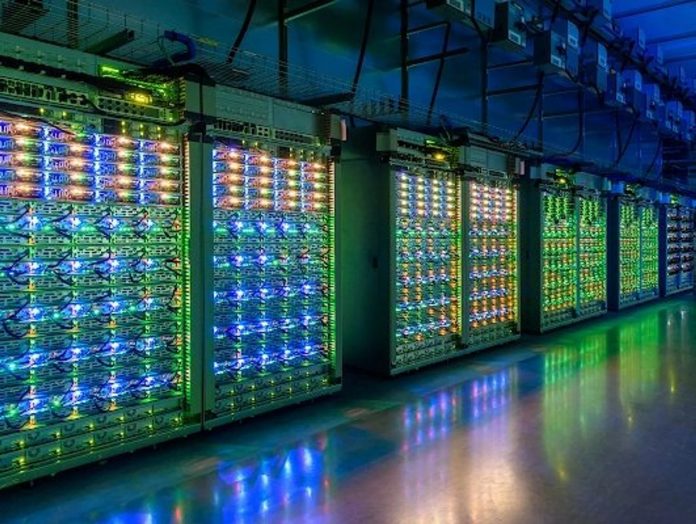
Nvidia has firmly denied claims that it planned to invest $1 billion in a new “green” artificial-intelligence data center in the northern Mexican state of Nuevo León, hours after Governor Samuel García publicly celebrated what he described as a landmark deal for the region.

The confusion began early Wednesday when García released a video message on social media announcing that Nvidia would build a data center focused on AI and powered by renewable energy. He appeared in the video flanked by people presented as Nvidia representatives, and he described the project as a major push that would place Nuevo León at the forefront of technological development in Latin America.

Within hours, Nvidia issued a statement to Reuters distancing itself entirely from the claim. The U.S. chipmaker said, “Nvidia does not have financial investment plans in Nuevo León.” The company added that its involvement in Latin America remains limited to collaboration projects, research, and talent-development programs — not capital investment.

The governor’s office then shifted its position. Local media reported that García later clarified the announcement, acknowledging that the planned investment would actually come from CIPRE Holding, a Mexican group, and not from Nvidia. The proposed data center, according to officials, would use Nvidia technology but would not be funded by the company.

Nuevo León’s Subsecretary of Investment, Emmanuel Loo, offered a more direct explanation, saying the misunderstanding arose from the nature of Nvidia’s business model. He explained that the company sells the chips and systems that power data centers, but does not typically finance or build such facilities. Loo said: Nvidia “sells technology” to companies that operate data centers and is not the investor in the project being promoted by the state government.

The investment, which García originally pitched as a pillar of Nuevo León’s ambition to establish itself as a regional AI hub, is now described as driven by CIPRE Holding and AI-GDC, entities that plan to incorporate Nvidia’s hardware and software into the facility. State documents outlining the project explained that it is designed as a “green” data center that would rely on sustainable energy sources and advanced cooling systems to minimize environmental impact. Construction, according to the governor’s early brief, is expected to begin in 2026 and proceed through multiple phases, ending around 2030.

The episode has drawn attention not only to the state government’s aggressive push to attract tech-focused investment but also to the risks of premature public declarations in a highly scrutinized industry. The appearance of individuals identified as Nvidia representatives standing with García in the announcement video added to the confusion for observers, since Nvidia later declined to say who those individuals were or why they did not challenge the governor’s claims during the broadcast.

For Nuevo León, the project would still represent a significant undertaking even without direct Nvidia investment. The state recently created a new Subsecretariat for Investment, Innovation, and Artificial Intelligence to position itself as a center for AI research and advanced digital infrastructure. Officials argue that a data center capable of handling large-scale AI workloads would attract technology firms, research institutions, and specialized talent.

What remains unclear is whether the data center’s business model, financing, and rollout will proceed smoothly after the public correction. Questions linger over the exact role of Nvidia’s technology, the scale of the procurement, and whether the project can maintain momentum now that the state’s original announcement has been contradicted by the company at the center of the story.

For now, the official position is that Nuevo León will host a $1 billion green AI data center — but the money is coming from Mexican investors, not Nvidia, and the project will rely on Nvidia chips rather than Nvidia capital. Officials in the state say more details about the structure of the investment and the timeline of the project will be released as planning progresses.


Total Crypto Market Capitalization Drops 7% and $1B+ in Liquidations

0

The crypto market is experiencing a sharp correction today, November 14, 2025. The total market capitalization has plummeted approximately 7% over the last 24 hours, erasing over $200 billion in value and bringing the overall cap to around $3.2–3.26 trillion—down from peaks near $3.5 trillion earlier this week.

This downturn has been exacerbated by cascading liquidations totaling over $1 billion in leveraged positions, primarily from long (bullish) bets that got wiped out as prices fell.

Over 300,000 traders have been liquidated, with longs accounting for ~90% of the $1B+ total. This creates a feedback loop—forced sales push prices lower, triggering more liquidations. Bitcoin and Ethereum bore the brunt, with BTC dipping below $96K and ETH testing $3,100 lows not seen since early October.

Broader market jitters are spilling over. U.S. ETF outflows hit $869 million for Bitcoin alone, signaling reduced institutional appetite amid rising recession fears, U.S.-China trade tensions, and disappointing corporate earnings.

The Crypto Fear & Greed Index has plunged to 22, down from greed levels last week. Whale activity is mixed—some large holders are accumulating at these dips (e.g., BTC whales buying ~10K coins), but overall exchange inflows suggest profit-taking and rotation into stables like USDT reserves up ~$1B.

Bitcoin dominance has slipped to 59%, hinting at altcoin weakness amplifying the cap drop. Traders are calling it a “weird day” with BTC dominance falling, speculating on a shift away from Bitcoin toward alts.

Alerts highlight the $869M ETF outflows and liquidity crunch pushing the market cap to $3.2T, with ETH mirroring BTC’s pain but showing whale support.

Weekly recaps note BTC’s 5.38% drop and rising liquidations in the $400–500M range per session, with funding rates turning negative—signaling a potential reset.

Broader chatter blames macro headwinds for dragging the market below $100K support, with calls for buyers to step in at current levels. This looks like a healthy deleveraging after the post-halving rally pushed BTC to $110K+ highs earlier in Q4. Support levels to watch.

BTC at $95K could trigger another $500M wave if broken and ETH at $3,000. Upside catalysts include potential Fed rate cut signals next week or renewed ETF inflows. If you’re holding, this dip has historically been a buy signal—20 of the last 25 extreme fear readings led to 20%+ rebounds within a month.

But with leverage still elevated, volatility could persist. If this is your portfolio taking a hit, hang tight; crypto’s “Cambrian explosion” means survivors thrive post-shakeout.

Extreme Fear (0-24) often signals panic selling, undervaluation, and capitulation—classic contrarian buy zones, as popularized by Warren Buffett’s “be fearful when others are greedy” mantra. Historically, these lows have preceded sharp rebounds, with data showing that markets frequently recover as fear dissipates and buyers return.

Based on aggregated historical analysis, out of ~25 instances of Extreme Fear since the index’s inception in 2018, 20 (80%) led to Bitcoin price gains of 20%+ within one month, and 16 (64%) saw 50%+ rallies within three months.

Average rebounds: +15% in 1 week, +35% in 1 month, and +65% in 3 months post-low. These patterns hold across bull and bear cycles, though deeper macro downturns (e.g., 2022) can delay full recovery.

The index itself typically rebounds to Neutral (25-49) within 7-14 days and Greed (50+) within 1-2 months. Not every low leads to immediate gains—e.g., 2022’s June event extended the bear market—but 80%+ do rebound positively within 1 month.

With the index at 22—its lowest since April 2025—this setup mirrors past winners like March 2020 or August 2024. Watch for catalysts like Fed signals or ETF reversals to ignite the rebound. If history rhymes, expect volatility but a likely +30-50% BTC lift by year-end.

Entrepreneurship education in the Global South is undergoing a significant shift

0
The AABS 2025 African Deans and Directors Forum has wrapped up but with lasting impact on business education in the Global South.

The AABS African Deans and Directors Forum is a prestigious event designed to bring together decision-makers from business schools and related entities across Africa and globally. The primary objective of this forum is to foster collaboration and innovation among leaders in the academic and business sectors. Attendees participate in a masterclass where they engage in meaningful discussions about future impactful initiatives and effective problem-solving strategies. This forum not only provides a platform for insightful dialogue but also facilitates the creation of a robust network among participants. As part of the AABS membership, this event offers invaluable opportunities for professional growth and the development of new ventures in the African market.

The Hosts for AABS 2025 are Woxsen University, a private university located in Hyderabad, Telangana, established in 2014 as a School of Business and granted university status in 2020 and two partners: GRLI — Globally Responsible Leadership Initiative Impact Partner [Impact Partner], and CLADEA — The Latin American Council of Management Schools [Regional Partner]. Here are my curated reflections on how the meeting wrapped up today, Friday, 14 November 2025.

As Anne Wilson of SABSA -South African Business Schools Association posted on LinkedIn, “Entrepreneurship education in the Global South is undergoing a significant shift, and today’s panel at the AABS conference in India highlighted this evolution.”

The discussion explored how business schools can prepare innovators who are locally rooted, globally capable and socially responsible-while building ecosystems that enable meaningful impact.

The panel featured the likes of Prof Bernard Obeng, Dean of GIMPA Business School (Accra, Ghana), and Jordi Rey, Director of International Partnerships at Geneva Business School (Switzerland), and member of the CLADEA Steering Committee. A few powerful themes emerged:

  • Partnerships as catalysts: Cross-border collaboration, regional networks and industry linkages expand access, accelerate innovation and strengthen inclusion.
  • Mindset over content: Modern entrepreneurship education must prioritise problem-solving, adaptability, ethical reasoning and experiential learning-not only theory.
  • Global perspective, local relevance: Global insights gain real power when applied to local socio-economic challenges in Africa, India, Latin America and beyond.
  • Human-centred innovation: As AI and technology advance, emotional intelligence, ethics, values and sustainability must remain at the core of entrepreneurial practice.
  • Preparing graduates for life: Entrepreneurial thinking and responsible leadership equip students to create value wherever they choose to work or build ventures. The conversation reinforced how partnerships, purpose and values-based innovation can shape a more inclusive and impactful future for the Global South.

In a related development “Deep Dive | The Future of Research and Knowledge Creation in the Global South” the AABS reported:

A forward-looking deep dive into how Global South institutions can lead in generating knowledge that shapes global relevance.

Nicolas ARNAUD, Dean of UIR Rabat Business School, and Manuel Ortiz de Zevallos, Executive Director of CLADEA?—?Consejo Latinoamericano de Escuelas de Administración, discussed collaborative research networks, elevating local impact internationally, and rebalancing global knowledge flows.

The session […] emphasized the opportunity for Global South scholarship to reshape management thinking worldwide. For example, the Association of African Business Schools (AABS) and CLADEA — Consejo Latinoamericano de Escuelas de Administración signed a landmark cooperation agreement to strengthen collaboration between Africa and Latin America in advancing business education.

Press enter or click to view image in full size

This partnership establishes a shared framework for joint initiatives, academic exchange, and capacity building, reflecting a commitment to developmentsustainability, and ethics in business education. The agreement reinforces that both associations will collaborate in harmony with their social environments while advancing mutual objectives.

A decisive step toward expanding global collaboration and amplifying new voices shaping the future of business education.

And finally…

The Association of African Business Schools, CLADEA — Consejo Latinoamericano de Escuelas de Administración, and AMDISA — Association of Management Development Institutions in South Asia have signed a collaborative agreement to strengthen cooperation across Africa, Latin America, and South Asia.

Press enter or click to view image in full size

The parties will identify opportunities of common interest, including academic information exchange, joint events, and communication of relevant activities through their respective platforms. Collaborative actions, such as conferences, research projects, or training programs, will be developed and approved collectively, with no membership fees or financial commitments implied. Each association will assume its own costs for jointly agreed initiatives.

A strategic partnership expanding academic exchange and building bridges across three dynamic regions shaping the future of global business education.


Originally published at https://www.linkedin.com.

Google’s AI Shopping Tools Set to Redefine Online Commerce, Challenge Influencers and Traditional E-Commerce

0

Google is taking a bold step to reshape online shopping in the US, unveiling a suite of AI-powered tools designed to guide consumers from product discovery to purchase, effectively functioning as a built-in personal shopper.

Launching just ahead of the holiday season, these features integrate conversational search, agentic AI calling, and automated checkout, signaling a profound shift in how consumers interact with e-commerce platforms.

Conversational AI: A Smarter Way to Search

At the heart of Google’s new shopping experience is conversational AI within Search’s AI Mode. Users can now refine their searches with natural language instead of navigating cumbersome filters or manually entering keywords. For example, a shopper looking for “women’s sweaters that can be worn with pants or dresses” can follow up with “more options in gray colors,” and the AI adjusts recommendations accordingly.

Google’s system draws from a vast database of 50 billion product listings, presenting results as side-by-side comparison charts for specific queries or streams of product images for broader exploration. Beyond recommendations, AI Mode allows users to track historical pricing, monitor price changes, and access sponsored listings, all within Google’s ecosystem. The features are also integrated into the Gemini app, further extending accessibility.

By consolidating search, comparison, and price tracking, Google is positioning AI Mode as a one-stop shopping hub, reducing the need for consumers to hop between marketplaces, review sites, or influencer channels.

Agentic AI: Automating the Mundane

Google is also rolling out an agentic AI feature called “Let Google Call,” which can contact local stores on a shopper’s behalf to check product availability, confirm stock, and inquire about promotions. Importantly, the AI identifies itself to the merchant, and stores can opt out if they prefer not to receive AI inquiries. The results of the call are delivered to users via text or email.

Initially, this functionality will cover categories such as toys, health and beauty, and electronics, automating tasks that were previously time-consuming and often repetitive for consumers. Google is thus removing friction from offline-to-online shopping transitions, bridging the gap between digital research and real-world retail availability.

AI Checkout: Automating Purchases with User Control

Perhaps the most transformative feature is AI-assisted purchasing. Shoppers can set item specifications, color or size preferences, and a target price. If an item falls below that price, the AI alerts the user, confirms intent, and completes the purchase using Google Pay. Early partners include Wayfair, Chewy, Quince, and select Shopify merchants, demonstrating Google’s ability to integrate with both major and niche retailers.

This feature brings a new level of automation to online shopping while maintaining user oversight on pricing and specifications. It represents a shift from passive browsing to dynamic, AI-managed transactions, which could fundamentally alter consumer behavior.

Broader Implications for E-Commerce and Influencers

The implications of Google’s AI shopping ecosystem are said to be far-reaching. By centralizing discovery, comparison, and purchase, Google is expected to disrupt existing channels, including review sites, social media recommendations, and influencer-driven commerce. For instance, a search for “moisturizers for dry winter skin” that previously relied on TikTok influencers or review platforms can now yield AI-curated suggestions with integrated price tracking and purchase options, all within Google.

Influencers and content creators may face increased competition, as their curated recommendations could be incorporated into AI-generated results, potentially diluting direct consumer influence. Consumers, meanwhile, gain efficiency, as AI tools can synthesize large amounts of information quickly, reducing the need for prolonged research or manual comparison.

Google frames these features as enhancements to convenience, but they could also reshape the fundamental habits of online shoppers. The ability to automate calls, track prices, and initiate purchases through AI may reduce reliance on browsing platforms or social recommendations, while increasing trust in AI-driven decision-making.

Ultimately, Google is not just offering tools for shopping—it is reengineering the consumer journey, from awareness to acquisition, within a single, AI-optimized ecosystem.

Cursor Raises $2.3bn at $29bn Valuation: Inside the Bet Reshaping AI Coding Tools

0

Cursor, the fast-growing AI coding platform developed by Anysphere, just pulled off one of the most astonishing fundraising leaps in the tech industry this year.

The company has raised $2.3 billion, catapulting its valuation to $29.3 billion, according to the Wall Street Journal. The figure marks a near-tripling from its $9.9 billion valuation in June, underscoring the swelling investor appetite for AI-powered developer tools and the belief that software engineering, one of the most expensive functions in tech, is primed for sweeping transformation.

The round was co-led by Accel and Coatue, both of which have backed high-growth early-stage companies before, with strategic capital also flowing in from Nvidia and Google. Nvidia is one of Cursor’s corporate customers. Google supplies AI models that power parts of the product. Cursor now joins the small circle of AI startups attracting multi-billion-dollar checks within months of each other.

Reuters reported that the company has crossed the $1 billion annualized revenue threshold in 2025, driven by what its founders describe as explosive expansion across enterprise clients and professional developers. The company also told the news agency that its year-to-date sales have grown roughly one hundredfold since early 2025. Investors are responding to that growth pattern with the type of urgency usually reserved for a once-in-a-decade market shift.

Cursor operates as an AI-driven code editor that enables developers to write and manage code using natural-language instructions, high-accuracy suggestions, and automated completion features. Its appeal comes from the way it blends the workflow of a traditional integrated development environment with the intelligence of top-tier AI models. The tool currently relies on large language models built by OpenAI, Anthropic, and Google, though Anysphere is building its own model called Composer, which launched in October. Composer is intended to reduce the company’s reliance on third-party models and cut costs associated with licensing and computing.

The competitive landscape is tightening quickly. TechCrunch noted that major AI companies, including OpenAI and Anthropic, are sharpening their offerings for the developer market. That includes more sophisticated coding assistants and agent-style tools that can write, review, and deploy code in complex environments. The rush into this market means Cursor will have to defend its early lead from much bigger players with deeper compute resources and global customer pipelines.

The valuation jump has drawn attention, particularly because it arrived at a moment when analysts are debating whether AI valuations are beginning to stretch ahead of fundamentals. Reuters reported that investors remain enthusiastic but are increasingly watchful about companies whose valuations scale faster than their core economics. Cursor’s dramatic rise, while anchored in strong revenue growth, still places pressure on the company to deliver sustained performance.

Cursor’s long-term strategy hinges on two big goals: maintaining the adoption momentum that has carried it through 2025 and proving that Composer can give the company meaningful autonomy over its AI stack. If the new model delivers cost and performance advantages, it could become the engine that allows Cursor to scale profitably. But building proprietary models at the level needed to compete with the likes of OpenAI and Google is a capital-heavy undertaking, and execution risk remains high.

The broader industry implications are substantial. Cursor’s raise is a signal that investors now see developer-facing AI as one of the most commercially viable parts of the AI ecosystem. A shift is underway from foundational model hype to application-layer tools that directly influence how human work gets done. Software engineering is one of the clearest candidates for that shift, and Cursor’s rise shows how quickly the market is reorganizing.

It is believed that the next phase will depend on whether AI coding tools can consistently boost productivity at scale. If they do, software teams may evolve into smaller, more design-focused units that rely on AI tools for the heavy lifting. That outcome would ripple across hiring, training, salary structures, and enterprise tech budgets.

Cursor’s momentum places it squarely in the center of that conversation. With billions in fresh capital, a soaring revenue curve, and two of the world’s most powerful tech companies plugged into its ecosystem, the company now carries expectations that reach far beyond coding suggestions. Its next moves will help determine whether the current frenzy around AI developer tools marks a lasting shift or just the exuberant peak of a fast-moving cycle.