DD
MM
YYYY

PAGES

DD
MM
YYYY

spot_img

PAGES

Home Blog Page 1671

Tekedia Weekend Blockchain and Crypto Roundup

0

Fidelity Investments officially registered the “Fidelity Solana Fund” as a statutory trust in Delaware on March 20, 2025. This move has sparked speculation about a potential spot Solana exchange-traded fund (ETF), though Fidelity has not confirmed an imminent ETF launch. The registration, filed under Delaware filing #10138042 by CSC Delaware Trust Company (a subsidiary of CSC, a business formation specialist), aligns with steps Fidelity took before launching its successful Fidelity Wise Origin Bitcoin Fund (FBTC), which now manages over $16.5 billion in assets. The filing signals Fidelity’s intent to expand its cryptocurrency offerings beyond Bitcoin and Ethereum, targeting Solana—a blockchain known for its high transaction speeds and growing ecosystem. While a Fidelity spokesperson confirmed the registration’s authenticity, they declined to elaborate on whether it’s a definitive precursor to an ETF proposal.

Fidelity also filed with the Securities and Exchange Commission (SEC) to register a tokenized version of its Fidelity Treasury Digital Fund (FYHXX), dubbed the “OnChain” share class. This fund, which primarily holds U.S. Treasury securities and cash, will leverage the Ethereum blockchain for enhanced onchain transparency and transaction tracking. The filing indicates that, pending regulatory approval, the product is expected to become effective on May 30, 2025. This move aligns Fidelity, managing approximately $5.8 trillion in assets, with other financial giants like BlackRock and Franklin Templeton, who are also exploring blockchain tokenization for traditional financial instruments. The OnChain class aims to provide verifiable tracking of share transactions, though Fidelity will maintain traditional book-entry records as the official ownership ledger.

MegaETH’s public testnet officially went live on March 6, 2025, marking a significant step forward for this high-performance Ethereum Layer 2 scaling solution. The rollout has been phased: from March 6 to March 10, the focus was on onboarding applications and infrastructure teams, allowing developers to integrate and adapt to MegaETH’s architecture. Starting March 10, broader user onboarding began, giving the public access to test the network’s capabilities. As of the latest updates, MegaETH’s testnet is delivering impressive performance—20,000 transactions per second (TPS) with 10-millisecond block times and up to 1.7 gigagas per second of single-threaded compute power.

Binance suspended an employee for misconduct involving insider trading related to a Token Generation Event (TGE). According to Binance’s statement, the employee, who previously worked at BNB Chain, allegedly used non-public information to purchase tokens before their public announcement and sold them for a profit afterward. The exact token involved, and the profit amount were not specified in the statement, so it’s unclear if this incident directly involves BNB tokens. Decrypt, confirm Binance’s investigation and suspension of the employee, but they do not provide details on the profit scale or confirm it was specifically BNB tokens traded.

The crypto market is experiencing a dynamic period shaped by macroeconomic shifts, regulatory developments, and industry consolidation including Circle/USDC approval in Japan and Coinbase’s potential acquisition of Deribit, Bitcoin (BTC) is trading around $85,201, 21.2% far from its all-time high of $108,786 set in January 2025. Analysts attribute this to a post-halving rally (April 2024) and renewed institutional interest, with over $4 billion flowing into BTC spot ETFs in the U.S. in Q1 2025 alone. Ethereum (ETH) hovers near $1907, 60.7% far from its all-time high of $4878 set in November 2021, bolstered by staking demand and DeFi growth, while Solana (SOL) and newer tokens like SUI and APT see gains from ecosystem expansions. The total crypto market cap sits at approximately $2.8 trillion, down 15% since January. Daily price swings have increased, with BTC’s 30-day volatility index hitting 60%, driven by leveraged trading in derivatives markets.

BlackRock has launched its first Bitcoin Exchange-Traded Product (ETP) in Europe. The iShares Bitcoin ETP is now trading on major European exchanges, including Xetra in Germany, Euronext Paris in France, and Euronext Amsterdam in the Netherlands. It is listed under the ticker IB1T on Xetra and Euronext Paris, and BTCN on Euronext Amsterdam. This move follows the success of BlackRock’s U.S.-based iShares Bitcoin Trust (IBIT), which has amassed over $50 billion in assets since its launch in January 2024. The European ETP is domiciled in Switzerland and is physically backed by Bitcoin, with Coinbase serving as the custodian and Bank of New York Mellon as the administrator. It offers a temporary fee waiver of 10 basis points, reducing the expense ratio to 0.15% until December 31, 2025, after which it will rise to 0.25%. This launch taps into growing demand for cryptocurrency exposure in Europe, where the ETP market, though established, remains smaller than the U.S., with total assets around $13.6 billion compared to over $116 billion in U.S. Bitcoin ETFs.

Worldcoin (now often referred to as World Network) is reportedly in discussions with Visa to integrate card features into its self-custody crypto wallet, rather than fully “bringing credit card payments to crypto wallets” in the traditional sense. These talks aim to enhance the World Wallet by enabling functionalities such as stablecoin-based payments, fiat on-and-off ramps, and access to Visa’s extensive global merchant network. This would allow users to spend stablecoins at merchants that accept Visa, effectively bridging cryptocurrency with traditional payment systems. The partnership, still in negotiation as of March 25, 2025, is not finalized, and no official confirmation has been announced by either party. The goal appears to be transforming the World Wallet into a versatile financial tool—described as a “mini bank account”—that supports crypto transactions, foreign exchange, and fiat integration, leveraging Visa’s infrastructure.

Custodia Bank and Vantage Bank have launched what they claim to be the first bank-issued stablecoin in the United States, named “Avit.” This milestone was announced on March 25, 2025. The stablecoin will be issued on the Ethereum blockchain using the ERC-20 token standard, marking a significant integration of traditional banking with blockchain technology. The Avit stablecoin is backed by tokenized U.S. dollar demand deposits—funds that customers can withdraw on demand, such as those in checking accounts—held by the banks. This distinguishes it from many existing stablecoins, which are typically issued by non-bank entities and backed by cash equivalents like government debt. The process involved a series of test transactions, including minting, transferring, and redeeming Avit tokens for a bank customer, all conducted in compliance with U.S. banking regulations such as BSA (Bank Secrecy Act), AML (Anti-Money Laundering), and OFAC (Office of Foreign Assets Control) requirements.
BlockDAG Keynote 3 Goes Viral in Academic and Crypto Circles—Here’s Why It Matters

0

From university forums to crypto Telegram groups, everyone’s talking about one thing—BlockDAG’s Keynote 3. And the buzz isn’t just hype. With a live beta testnet, full explorer features, growing dApp support, and one of the most robust Layer 1 security architectures to date, BlockDAG is winning attention where it matters most: among developers, researchers, and serious buyers.

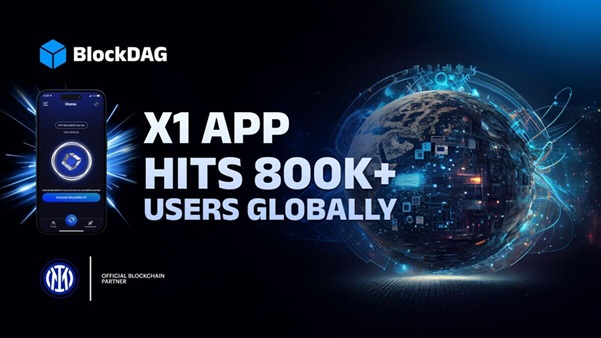
The keynote marks a major moment in the project’s journey—unveiling real functionality while putting forward a bold, technically sound vision. With more than $208 million raised, over 19 billion BDAG coins sold, and 800,000+ X1 App users onboarded, the numbers show that this isn’t just a speculative wave—it’s an ecosystem being built with precision.

From Lecture Halls to Layer 1 Labs: Why Academics Are Paying Attention

Much of the buzz in academic circles is thanks to Dr. Maurice Herlihy, a world-renowned computer scientist and BlockDAG’s blockchain advisor. In Keynote 3, Herlihy broke down the core insight behind BlockDAG’s architecture: the move away from linear chains to a Directed Acyclic Graph (DAG) system supported by Proof-of-Work.

“The key insight behind BlockDAG’s design is this: instead of treating forking like sand in the stopwatch, why not embrace it?”

This quote struck a chord with researchers across distributed systems communities. DAGs offer scalability through parallel block creation, and when combined with the security of PoW, they address a long-standing issue in blockchain design: how to scale without losing trust.

BlockDAG’s decision to adopt the GhostDAG protocol, optimized for EVM compatibility, allows developers to build scalable decentralized applications while maintaining the safety guarantees researchers care about.

A Live Beta Testnet, Functional Explorer, and Early dApps

Keynote 3 also delivered more than theory. BlockDAG officially launched its Beta Testnet V1, which has already processed over 1.2 million transactions through more than 100 active community nodes.

This version isn’t just a speed test—it includes:

  • A revamped blockchain explorer with deep functionality
  • A Token and NFT creation wizard

  • Early support for WASM-based smart contracts

  • Simple interfaces for building and deploying dApps
  • Testnet BDAG distributions for holders, creating early engagement

“With this beta version, you can expect so much more,” said Turner. “A vastly improved explorer, token tools, and various dApps for you to engage with.”

That level of clarity and product delivery is what’s catching attention in dev circles and tech meetups. It’s a rare thing in a space flooded by announcements with no actual substance.

Security Architecture That’s More Than Just a Buzzword

BlockDAG is also setting itself apart in the most critical way—security. In Keynote 3, Dr. Youssef Khaoulaj, Chief Security Officer, gave a clear breakdown of how BlockDAG is built to withstand modern attacks:

“A blockchain is only as strong as the security protecting it. That’s why we’ve engineered BlockDAG with robust cryptographic protections and a decentralized consensus mechanism designed to eliminate vulnerabilities.”

The network integrates MPC-secured treasury operations, audits by firms like Certik and Halborn, and geographically distributed infrastructure for fault tolerance. These decisions reflect best practices found in academic papers—but rarely implemented this well in actual projects.

More importantly, the DAG design itself improves resilience. By allowing multiple miners to validate in parallel, BlockDAG naturally avoids some of the congestion and attack surfaces of traditional linear chains.

Why This Keynote Feels Like a Tipping Point

Keynote 3 didn’t rely on drama. It relied on data. With more than 170,000 holders, over 16,600 miners sold, and two live products—the X1 App and Tap Miner game—BlockDAG is no longer theoretical. It’s live, growing, and set to launch mainnet with a complete stack: staking, token creation, NFTs, cross-chain support, and DeFi tools baked in from day one.

“Let’s make history, one block at a time,” said CEO Antony Turner at the close of Keynote 3.

For crypto enthusiasts, that’s a rallying cry. For developers and academics? It’s a call to build.

As this hybrid protocol gains visibility, the possibility of BlockDAG becoming the backbone of scalable Web3 infrastructure feels less like a question—and more like an unfolding reality.


Website: https://blockdag.network

Presale: https://purchase.blockdag.network

Telegram: https://t.me/blockDAGnetworkOfficial

Discord: https://discord.gg/Q7BxghMVyu

Implications of BlackRock’s iShares Bitcoin ETP in Europe

0

BlackRock, the world’s largest asset manager, has launched its first Bitcoin Exchange-Traded Product (ETP) in Europe on March 25, 2025. The iShares Bitcoin ETP is now trading on major European exchanges, including Xetra in Germany, Euronext Paris in France, and Euronext Amsterdam in the Netherlands. It is listed under the ticker IB1T on Xetra and Euronext Paris, and BTCN on Euronext Amsterdam. This move follows the success of BlackRock’s U.S.-based iShares Bitcoin Trust (IBIT), which has amassed over $50 billion in assets since its launch in January 2024.

The European ETP is domiciled in Switzerland and is physically backed by Bitcoin, with Coinbase serving as the custodian and Bank of New York Mellon as the administrator. It offers a temporary fee waiver of 10 basis points, reducing the expense ratio to 0.15% until December 31, 2025, after which it will rise to 0.25%. This launch taps into growing demand for cryptocurrency exposure in Europe, where the ETP market, though established, remains smaller than the U.S., with total assets around $13.6 billion compared to over $116 billion in U.S. Bitcoin ETFs.

BlackRock’s entry into the European crypto market builds on its earlier success in North America and reflects a broader trend of institutional adoption of Bitcoin, especially following the U.S. Securities and Exchange Commission’s approval of spot Bitcoin ETFs last year. The firm’s expansion comes amid record financial performance, with its assets under management reaching $11.6 trillion in Q4 2024.  BlackRock’s entry further validates Bitcoin as a credible asset class. As the world’s largest asset manager, its involvement signals to traditional investors—pensions, endowments, and retail clients—that cryptocurrencies are becoming a staple in diversified portfolios. The ETP structure allows European investors to gain Bitcoin exposure through regulated exchanges without needing to manage private keys or navigate crypto exchanges, lowering the barrier to entry and potentially accelerating retail and institutional adoption.

The iShares Bitcoin ETP could increase Bitcoin’s liquidity in Europe, where crypto ETPs have lagged behind the U.S. With BlackRock’s scale and marketing power, this product might attract significant inflows, mirroring the $50 billion success of its U.S. counterpart, IBIT. Increased demand via the ETP could exert upward pressure on Bitcoin’s price, especially if it draws in new capital from conservative investors. However, this depends on market sentiment and broader economic conditions, such as interest rates or inflation trends.

This move intensifies competition with existing European providers like 21Shares and CoinShares, whose ETPs hold a combined $13.6 billion in assets. BlackRock’s lower fees (0.15% initially) could spark a fee war, benefiting investors but squeezing smaller players. BlackRock’s involvement might push European regulators to clarify or harmonize crypto rules, especially in the EU where the Markets in Crypto-Assets (MiCA) framework is still rolling out. Switzerland’s role as the ETP’s domicile highlights its crypto-friendly stance, potentially influencing other jurisdictions.

The success of U.S. spot Bitcoin ETFs, followed by BlackRock’s European expansion, could encourage regulators elsewhere (e.g., UK, Asia) to greenlight similar products, creating a global ripple effect. With inflation concerns lingering and traditional assets like bonds underperforming in some markets, Bitcoin’s appeal as a “digital gold” could grow. BlackRock’s timing suggests it’s positioning to capture this shift in investor preference. For European investors, a Bitcoin ETP offers another way to diversify away from euro-denominated assets, especially as geopolitical tensions and energy crises continue to challenge the region’s economy. Bitcoin’s notorious price swings could deter conservative investors or lead to outflows during downturns, testing BlackRock’s ability to manage expectations.

While Switzerland is crypto-friendly, cross-border sales in the EU might face hurdles if regulators view the ETP as a test case for MiCA compliance. Relying on Coinbase as custodian introduces counterparty risk, especially given past crypto exchange failures like FTX. Any security breach could undermine trust in the iShares Bitcoin ETP product. BlackRock’s Bitcoin ETP launch in Europe is a pivotal step toward integrating crypto into traditional finance, likely boosting adoption and liquidity while challenging regulators and competitors. However, its success hinges on market conditions, investor appetite, and BlackRock’s ability to navigate crypto’s inherent risks.

BlockDAG’s X1 App Shocks Crypto World at Keynote 3—Making Litecoin and MANTRA Look Outdated

0

Mining no longer starts with a rig—it starts with a phone. As the crypto world grows more inclusive, projects like Litecoin and MANTRA show how early vision and focused utility can lead to long-term presence and returns. Litecoin, with over a decade behind it, has leaned on speed and simplicity. MANTRA, in contrast, taps into DeFi and real-world asset tokenization to drive its climb.

But BlockDAG’s recent surge, fueled by its X1 mobile miner and hybrid DAG + PoW model, reflects a deeper shift. It isn’t just adding users—it’s redefining crypto accessibility through phone mining at scale.

Litecoin: A Decade of Growth and Innovation

Launched on October 7, 2011, by former Google engineer Charlie Lee, Litecoin (LTC) was designed as a “lite” version of Bitcoin, aiming to offer faster transaction times and a more abundant supply. Specifically, its first block was mined on October 13, 2011. Since then, Litecoin has consistently ranked among the top cryptocurrencies by market capitalization.

For example, in November 2013, Litecoin’s value experienced a significant surge, doubling within 24 hours. Later, by early 2020, its market capitalization exceeded $10 billion, reflecting a 100% increase since August 2020. As of March 24, 2025, Litecoin’s price stood at $93.67, with a market cap of approximately $7.14 billion.

On the technical front, Litecoin has implemented features like Segregated Witness (SegWit) and the Lightning Network ahead of Bitcoin, serving as a testing ground for such upgrades. As a result, these advancements have contributed to its sustained relevance and growth in the cryptocurrency market.

MANTRA: Rapid Ascent in DeFi

MANTRA (OM) was conceptualized in late 2019 and officially launched in early 2021 by co-founders John Patrick Mullin, Will Corkin, and Rodrigo Quan Miranda. In terms of focus, the platform centers on staking, lending, and governance within the decentralized finance (DeFi) sector. Its native token, OM, has a total supply of 888,888,888 tokens.

Initially, OM traded at approximately $0.3820 in August 2020, though its price experienced fluctuations, reaching a low of $0.0175 in October 2023. However, by February 2025, the token achieved an all-time high of $8.53, marking an extraordinary return of over 15,000% over the past year. Currently, as of March 26, 2025, OM is trading at $6.53, with a market capitalization of approximately $6.44 billion.

Importantly, MANTRA’s growth is attributed to its focus on real-world asset tokenization and high staking rewards, bridging traditional assets like real estate and green energy with blockchain technology. Furthermore, the launch of its mainnet and strategic partnerships have further boosted its adoption and investor confidence.

BlockDAG’s X1 App Brought Crypto to the Masses

BlockDAG’s X1 Miner App has redefined what it means to participate in crypto. By design, it turns everyday smartphones into mining tools, eliminating the steep learning curve and expensive hardware that kept millions on the sidelines. To date, with over 750,000 users already mining through the app, the X1 has transformed passive users into active contributors of a decentralized network.

At the core of this shift is accessibility. The X1 app doesn’t ask users to understand code or invest in costly equipment—it simply offers a clean interface, quick setup, and real mining rewards. Consequently, what was once the domain of tech-savvy miners has now been opened up to anyone with a phone and a few minutes to spare.

Simultaneously, this mass adoption is fueling the momentum of BlockDAG’s presale, which has now raised a staggering $208 million. Currently, in batch 27, the token price sits at $0.0248, up 2,380% from batch 1. Over 18.9 billion coins have already been sold, underscoring the scale of belief in the project’s direction—and the community building behind it.

By combining mobile mining with a hybrid DAG + PoW consensus model, BlockDAG has created a system where participation is not only possible—it’s encouraged. Ultimately, the X1 app isn’t just onboarding users; it’s helping redefine what network contribution looks like in Web3. And it’s working.

From Legacy to Accessibility: Where Crypto Is Headed

Litecoin laid the groundwork, MANTRA expanded the possibilities, but BlockDAG is shifting how people interact with crypto altogether. While the first two found their place through strong fundamentals and steady community growth, BlockDAG is opening the door to everyday users—no technical knowledge required.

Its X1 app turns phones into entry points and contributors to a high-throughput, secure network, showing that accessibility isn’t just an option—it’s a strategy. As crypto moves forward, the projects that lower barriers without sacrificing performance may not just thrive—they may define what comes next.


Website: https://blockdag.network

Presale: https://purchase.blockdag.network

Telegram: https://t.me/blockDAGnetworkOfficial

Discord: https://discord.gg/Q7BxghMVyu

Nigeria’s Social Media Regulation Bill: A Case of Overreach or Digital Sovereignty?

0

Nigeria’s Social Media Regulation Bill: A Case of Overreach or Digital Sovereignty?

Nigeria’s Senate is currently considering a bill that seeks to amend the Nigeria Data Protection Act, 2023, by mandating that social media platforms and data processors establish physical offices within the country. Sponsored by Senator Ned Nwoko, the proposed amendment aims to address enforcement gaps, boost job creation, and promote Nigeria’s digital sovereignty. However, while the bill’s objectives may seem laudable, its practicality and alignment with global regulatory frameworks raise significant concerns.

The Proposed Amendment: What’s at Stake?

The bill, titled “An Act to Alter the Nigeria Data Protection Act, 2023, LFN, to Mandate the Establishment of Physical Offices within the Territorial Boundaries of the Federal Republic of Nigeria by Social Media Platforms, and for Related Matters, 2024”, seeks to correct what its sponsor calls a “glaring omission” in how multinational social media companies engage with Nigeria. The law would require companies such as Meta, X (formerly Twitter), TikTok, and YouTube to set up local offices, purportedly to enhance compliance with Nigerian regulations, foster job creation, and enable better enforcement of digital policies.

However, this approach raises questions about feasibility, enforcement, and Nigeria’s position in the global digital economy.

How Does This Compare to Global Best Practices?

Nigeria’s move to impose a physical presence mandate on digital platforms deviates significantly from the approaches taken by other jurisdictions. Countries with advanced digital economies have opted for more practical solutions to regulatory oversight and compliance.

  1. The EU’s Digital Services Act (DSA) & GDPR Compliance
    • The EU mandates that companies processing EU citizens’ data must appoint local representatives (Article 27 GDPR), but does not require them to establish physical offices in every member state.
    • The Digital Services Act (DSA) focuses on risk-based obligations, transparency, and compliance mechanisms tailored to platform size and influence, rather than mandating physical presence. Instead, it establishes a tiered system where large platforms have more obligations, including content moderation policies and algorithmic transparency, while SMEs and startups have fewer burdens.
  2. The UK’s Online Safety Act
    • The UK imposes strict obligations on online platforms to protect users, enforced through Ofcom, but does not require social media platforms to have offices in the country.
    • The law focuses on platform accountability for harmful content, rather than dictating physical presence. Platforms face financial penalties and potential service restrictions if they fail to comply with safety regulations.
  3. The US Approach – Federal and State-Level Regulations
    • US social media regulation largely revolves around liability protections under Section 230 of the Communications Decency Act, which shields platforms from being legally responsible for user-generated content.
    • While states enforce consumer protection laws, there is no federal requirement for social media companies to establish local offices in every jurisdiction. Instead, compliance is ensured through legal accountability, penalties, and federal oversight by agencies such as the FTC.

Why Nigeria’s Approach May Be Unrealistic

  • Tech Companies Rarely Set Up Offices in Every Market: Even in highly regulated economies, companies are not required to establish physical offices in every country where they operate. Instead, compliance is ensured through regulatory fines, legal representatives, and cooperative agreements.
  • Economic and Practical Challenges: The bill assumes that office mandates will automatically create jobs and drive economic benefits. However, social media platforms operate in a decentralized manner, with many critical functions such as content moderation and customer support being outsourced or handled remotely.
  • Potential Regulatory Overreach: This move mirrors past regulatory missteps, such as Nigeria’s controversial Twitter ban in 2021, which discouraged foreign investment and restricted digital free expression. If enforced, this bill could create an environment where tech giants reconsider their presence in Nigeria rather than comply with a costly and unnecessary requirement.

A Smarter Approach to Digital Regulation

Rather than enforcing a rigid physical office requirement, Nigeria could adopt alternative regulatory strategies that align with international best practices:

A Legal Representative Model: Similar to the EU’s GDPR, requiring social media platforms to appoint local representatives for compliance purposes.

Targeted Enforcement Mechanisms: The Nigeria Data Protection Commission (NDPC) could impose fines and conduct compliance audits rather than enforcing a one-size-fits-all office mandate.

Incentivizing Local Investment: Instead of coercion, Nigeria should create an attractive regulatory environment that encourages digital platforms to invest in local tech ecosystems through partnerships and innovation hubs.

Final Thoughts

Regulating digital platforms is crucial, but it must be done in a way that balances national interests with economic realities. Forcing tech giants to establish physical offices in Nigeria may seem like a way to enhance regulatory compliance, but it risks alienating global investors and stifling digital innovation. A more nuanced and strategic regulatory framework would serve Nigeria’s digital economy far better than a rigid office mandate.

As the bill progresses through the Senate, the big question remains: will Nigeria embrace a modern, practical approach to tech regulation, or will it take a path that risks isolation in the global digital economy?