DD
MM
YYYY

PAGES

DD
MM
YYYY

spot_img

PAGES

Home Blog Page 17

X Launches Smart Cashtags: Introduces Real-Time Stock And Crypto Data Directly on The App

0

X (formerly Twitter), has officially rolled out its highly anticipated Smart Cashtags feature, bringing live financial data straight into users’ timelines.

Announced on April 14, 2026, the update is now live for iPhone users in the United States and Canada.

The new feature transforms simple $TICKER mentions such as $BTC, $ETH, $TSLA, or $NVDA into interactive elements, allowing users to access real-time financial data.

Tapping any cashtag opens users to a dedicated view displaying, real-time price, market cap, percentage change, interactive price charts, related posts and discussions about that asset.

Users can now stay informed about market movements without leaving the X app, making conversations about finance more dynamic and data-rich.

According to X’s Head of Product, Nikita Bier, Smart Cashtags are only the beginning. He described the feature as “just the first step” toward making X the best destination for finance and crypto communities. 

How It Works

When posting or searching on the platform, X now intelligently suggests the correct asset when users type a ticker symbol or even paste a crypto smart contract address.

This ensures precision, for example, distinguishing between different tokens or stocks with similar symbols.

Users can test it with popular assets like BTC (Bitcoin), ETH (Ethereum),XRP, SOL, DOGE, TSLA (Tesla), AAPL (Apple), NVDA (NVIDIA) and many more.

A Step Toward the Everything App

When Elon Musk acquired X, (formerly Twitter) in 2022, it was never just about owning a social media platform. From the outset, Musk made it clear that the purchase was a stepping stone toward a much bigger ambition, transforming the platform into a global “everything app.

At its core, Musk’s “everything app” concept was about consolidation, by bringing multiple digital services into one platform.

Instead of switching between apps for messaging, payments, entertainment, and business, users would be able to do everything within X.

The recent launch of marks a significant milestone in Elon Musk’s vision of turning X into an all-in-one “everything app” that combines social media, payments, and finance.

In Canada, the feature goes even further, tapping certain cashtags can route users directly to Wealthsimple, a leading online brokerage, enabling seamless stock and crypto trading from within conversations.

Notably, the rollout aligns closely with other recent financial initiatives on the platform, including:

•The launch of X Money for payments

•Planned integration of investment and trading services

•Expansion into fintech and digital commerce

Together, these features are transforming X from a social platform into a hybrid of social media, financial terminal, and trading interface.

Community reactions have been enthusiastic, with many users calling it a “game-changer for traders” and predicting that X could evolve into a full financial super app. Some have joked about future possibilities like “Xchange” for in-app trading.

Future Outlook

Analysts see this as the first concrete step toward deeper financial integration on X, potentially including more advanced trading tools in the future.

If successfully scaled, this feature could redefine how millions of users engage with the financial markets, bringing the world closer to Musk’s ultimate goal of a fully integrated, all-in-one digital ecosystem.

Wall Street Surges Toward Record Territory as Middle East Peace Hopes, Cooling Inflation, and Bank Earnings Fuel Risk Rally

0

U.S. equities rallied sharply as investors piled back into risk assets on growing optimism that diplomatic channels in the Middle East may yet produce an off-ramp to the Iran conflict, while softer-than-expected inflation data and a strong start to the earnings season added fresh momentum to the advance.

The move pushed the Nasdaq nearly 2% higher and left the S&P 500 within touching distance of its all-time closing high, underscoring how quickly sentiment has shifted from war-driven panic to renewed risk appetite.

The rebound reflects a market increasingly willing to look beyond immediate geopolitical turbulence and price in a less severe macro outcome. After several weeks in which every headline from the Gulf sent stocks and oil sharply in opposite directions, investors are now seizing on even tentative diplomatic signals as justification to buy the dip.

That shift was evident across the major benchmarks.

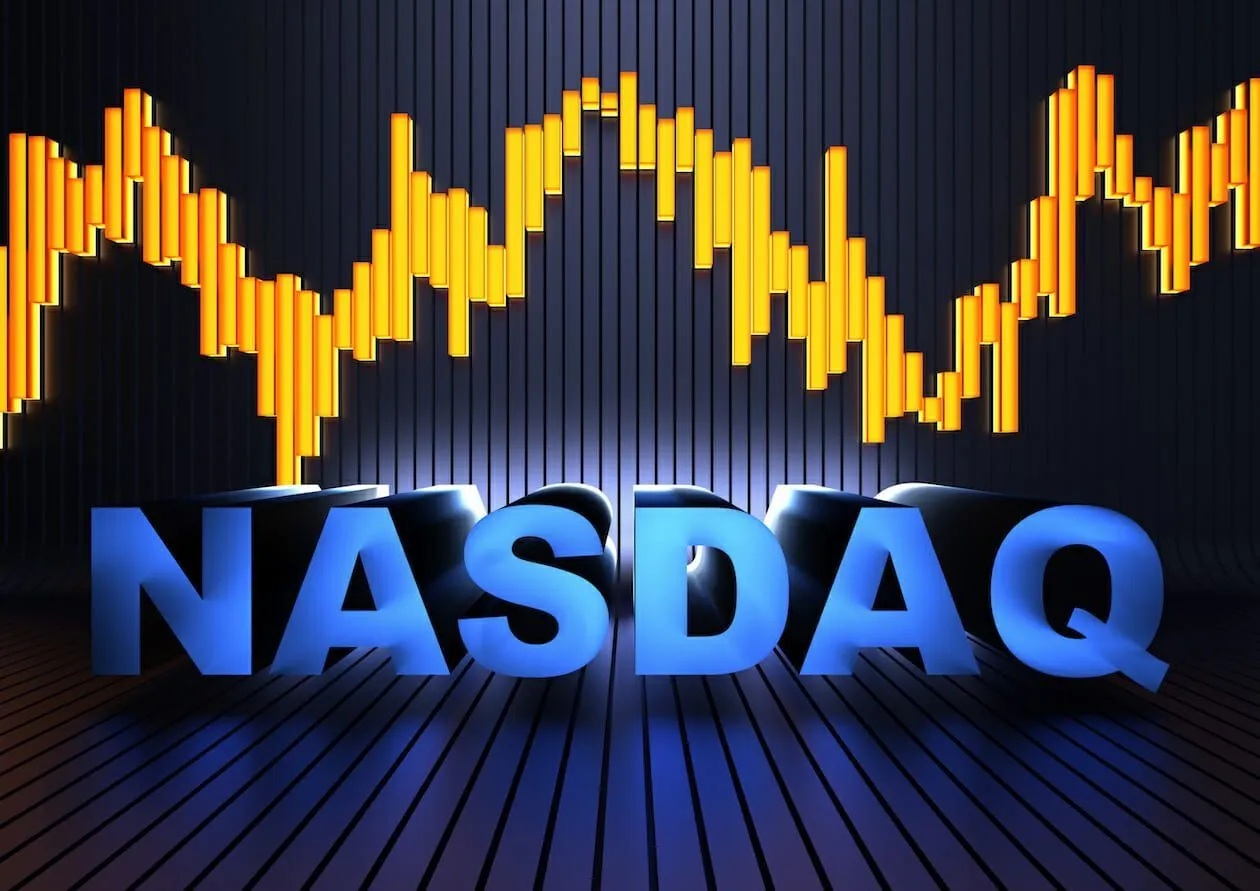
The Nasdaq Composite climbed 1.96% to 23,639.08, marking its tenth consecutive daily gain, one of its strongest winning streaks in recent years. The S&P 500 advanced 1.18% to 6,967.38, ending just a few points below its January record close of 6,978.60, while the Dow Jones Industrial Average rose 0.66% to 48,535.99, its highest finish since early March.

The market’s rebound is being driven primarily by expectations that diplomacy may resume. Talks aimed at ending the Iran war could restart in Pakistan within days, according to comments attributed to President Donald Trump, after the collapse of weekend negotiations led Washington to impose a blockade on Iranian ports. At the same time, the U.S. State Department said Israel and Lebanon had agreed to begin direct negotiations at a mutually agreed time and place, offering another sign that the region may be moving, however cautiously, toward de-escalation.

This is of huge interest to investors because oil has been the key transmission channel between the war and broader financial markets. Volatile crude prices have dramatically altered inflation expectations in recent weeks, forcing markets to rapidly reprice the outlook for Federal Reserve policy and global growth. As fears of a prolonged supply shock eased, oil prices retreated sharply, dragging energy stocks lower but providing relief for the broader market.

The S&P’s energy sector fell 2.2%, the weakest among the major industry groups, as crude prices declined on optimism around diplomacy. That decline in oil helped reinforce another positive catalyst: inflation.

Tuesday’s producer price data came in softer than expected, with U.S. producer prices rising less than forecast in March as service costs were unchanged. The reading eased concerns that the conflict’s impact on energy prices would quickly spill over into broader inflation, giving investors greater confidence that the Federal Reserve may not need to maintain a tighter stance for longer.

Anthony Saglimbene, chief market strategist at Ameriprise, captured the mood well.

“The market is kind of moving past this concept of peak uncertainty. There’s been a lot of uncertainty in the market, whether that’s coming from the Iran conflict, AI disruption fears, inflation concerns or Federal Reserve policy concerns,” he said.

“Markets are starting to kind of walk away from some of the worst-case scenarios for these events and because valuations have improved over the last couple of weeks and months, investors are buying the dip right now.”

That point is central to the current rally because this is seen as not merely a headline-driven bounce. The recent war-driven selloff had compressed multiples across key growth sectors, particularly technology and semiconductors, leaving many investors convinced that prices no longer reflected underlying earnings resilience.

That view was reinforced by earnings. The first major batch of bank results provided fresh evidence that the U.S. economy remains sturdier than feared. BlackRock rose 3% after posting higher first-quarter profit, supported by strong ETF inflows and performance fees, while Citigroup gained 2.6% after beating profit estimates and reaching its highest level since 2008.

Even where the reaction was mixed, the broader read-through remained constructive. JPMorgan’s results received a more muted response, and Wells Fargo declined after missing expectations on net interest income. Still, investors largely interpreted the earnings season’s opening phase as confirmation that the economy has not materially weakened despite geopolitical stress.

As Burns McKinney of NFJ Investment Group put it, “We don’t have a resolution yet but investors don’t want to miss the rebound.”

However, technology once again led the rally. Software stocks gained 1.6% for a second straight session, while the Philadelphia Semiconductor Index rose 2% for its fifth consecutive record close, a remarkable signal that AI-linked optimism remains intact despite recent volatility.

This is particularly important because tech has become the market’s preferred expression of dip-buying sentiment. As concerns around AI monetization, war risk, and inflation begin to ease simultaneously, capital is rotating back into the highest-beta growth names.

Breadth also confirmed the strength of the rally. Advancing stocks outnumbered decliners by more than 2.6 to 1 on the NYSE and 2.2 to 1 on the Nasdaq, while the S&P 500 posted 20 new 52-week highs against just one new low.

The broader takeaway is that Wall Street is increasingly pricing a scenario in which the Middle East conflict does not spiral into a prolonged economic shock. With inflation showing signs of moderation, corporate earnings holding firm, and technology stocks regaining leadership, investors are positioning for the possibility that the worst-case macro scenarios are beginning to recede.

If diplomatic momentum continues, industry experts say the next milestone may not simply be recovery, but a push to fresh record highs.

Circle Exploring Native Token for its Arc Network with Potential Shift to Proof-of-Stake

0

Circle’s CEO Jeremy Allaire recently confirmed that the company is exploring a native token for its Arc Network; a stablecoin-focused Layer-1 blockchain along with a potential gradual transition to Proof-of-Stake (PoS).

Allaire described Arc as an economic OS designed for stablecoins like USDC as a native gas token, tokenized assets, onchain markets, and economic contracts, with sub-second finality and low fees. The token would support governance, incentives for participants including developers and potentially AI agents, and economic alignment across the ecosystem.

It could also reward validators and contributors who help secure the network. Circle is considering a shift from the current consensus model to Proof-of-Stake over time. This would allow staking for network security and further decentralization. Details remain exploratory, with more information expected soon.

Arc is in public testnet launched October 2025, with participation from institutions like BlackRock and Visa. A mainnet beta is targeted for sometime in 2026. USDC and other stablecoins are positioned as day-one native assets for instant delivery-versus-payment (DvP) and collateral use.

Circle first introduced Arc in August 2025 as an open L1 purpose-built for stablecoin finance, aiming to address limitations in general-purpose blockchains for payments and tokenized real-world assets. The token exploration builds on earlier hints from Circle’s 2025 earnings calls.

This move could help Arc evolve from a more centralized and permissioned setup toward greater community-driven decentralization, while aligning incentives for long-term growth. No firm token launch date, tokenomics, or airdrop details have been shared yet—Allaire emphasized it’s still in the exploration phase.

Market reaction included a roughly 10% rise in Circle’s stock price following the comments, reflecting investor interest in the expansion beyond USDC issuance. This fits broader trends where stablecoin issuers enhance their infrastructure with native tokens for better governance and security.

Moving toward PoS would allow token holders to stake for network validation, reducing reliance on centralized or permissioned setups and improving long-term security and resilience in line with industry standards. The token would enable community-driven decision-making (e.g., upgrades, parameters) and reward validators, developers, participants, and potentially AI agents—aligning economic interests across the ecosystem.

As an economic OS optimized for USDC as native gas, tokenized assets, instant DvP settlements, and onchain markets, the token could accelerate adoption by institutions, banks, payments firms, and DeFi builders on a high-performance L1.

This positions Arc as more than a stablecoin settlement layer, potentially boosting Circle’s valuation (stock rose post-announcement) and reinforcing USDC’s dominance in institutional crypto finance. It signals a shift from testnet live now toward mainnet beta in 2026. Tokenomics, launch timing, distribution, and exact PoS transition details remain undisclosed.

Arc launches with a Proof-of-Authority consensus using a small, vetted group of known institutions selected by Circle. This creates a highly controlled environment for sub-second deterministic finality via Malachite BFT engine but introduces single points of failure, potential censorship risks, and reliance on corporate reputations rather than broad, permissionless participation. Critics argue it functions more like a consortium or private ledger than a truly decentralized blockchain.

As the builder and initial controller, Circle and its partners holds significant sway over validator selection, upgrades, governance, and operations. Features like reversible transactions or compliance tools could concentrate arbitration power in Circle’s hands, raising fears of external pressure affecting network integrity. This contrasts sharply with permissionless networks like Ethereum.

Using a fiat-backed stablecoin controlled by Circle for fees ties the network’s economics directly to one issuer. This could enable freezing or restrictions on gas payments and heightens dependency on Circle’s regulatory compliance and redemption processes.


Regulatory scrutiny around governance tokens could apply, though Circle emphasizes a measured rollout. Overall, this could strengthen Arc’s competitiveness against general-purpose L1s for real-world financial use cases while enhancing decentralization without compromising its stablecoin-first design. More details expected in the not too distant future, per CEO Jeremy Allaire.

Coinbase in Talks with Anthropic for Access to Claude Mythos Preview

0

Coinbase is reportedly in talks with Anthropic to gain access to Claude Mythos Preview often called Mythos, Anthropic’s highly restricted frontier AI model with exceptional cybersecurity capabilities.

This development, first highlighted by The Information and echoed across multiple outlets, stems from crypto firms’ efforts to strengthen defenses against increasingly sophisticated AI-powered threats. Other players like Binance and Fireblocks have also explored or used earlier Anthropic models such as Claude Opus for vulnerability testing and pentesting.

Mythos is Anthropic’s most capable unreleased model to date, showing a major leap in coding, reasoning, and agentic abilities. It excels at autonomously discovering and exploiting software vulnerabilities—including zero-days in major operating systems, web browsers, and other critical software that had evaded human reviewers and automated tools for years or decades in some cases.

Anthropic has chosen not to release it publicly due to dual-use risks: the same strengths that make it a powerful defensive tool (finding flaws at scale) could enable offensive cyberattacks if misused. Instead, they’ve launched Project Glasswing, a defensive cybersecurity initiative.

This provides limited, vetted access to Mythos Preview for select partners—focusing on securing critical software and open-source infrastructure—along with up to $100M in usage credits and $4M in donations. Coinbase’s Chief Security Officer, Philip Martin, has noted that models like Mythos will accelerate digital threats as well as digital defense, emphasizing the need for proactive, scalable testing of systems.

Why Coinbase and crypto firms are interested

Crypto exchanges and custodians handle massive value in digital assets and face persistent threats: hacks, phishing, smart contract exploits, and now AI-augmented attacks that can chain vulnerabilities rapidly. Mythos could help by: Performing deep, automated pentesting on infrastructure. Identifying subtle weaknesses in code, wallets, or custody systems that human teams might miss.

Enabling faster response to emerging AI-driven threats. This fits broader industry moves—Binance and Fireblocks have already used prior Anthropic models to uncover issues missed by traditional testing. Coinbase has a history of security incidents including data exposures, so bolstering defenses with frontier AI makes strategic sense.

Access remains tightly controlled under Project Glasswing, with mitigations like monitoring to prevent misuse. Anthropic prioritizes defensive applications while acknowledging the model’s potency. This reflects a growing realization in tech and finance: as AI coding and reasoning capabilities advance rapidly, the offense-defense balance in cybersecurity is shifting.

Governments and institutions have expressed concerns about Mythos-level models enabling autonomous attacks on defended systems, though real-world tests on hardened targets are limited. For Coinbase, securing access could enhance operational resilience amid rising AI threats. Negotiations appear ongoing, with potential integration into their security stack if approved.

Mythos can autonomously discover thousands of zero-day vulnerabilities including in major OSes, browsers, and long-ignored flaws that traditional tools miss. This allows Coinbase to pentest its infrastructure, wallets, smart contracts, and custody systems at unprecedented scale and speed, potentially reducing the risk of hacks or exploits.

AI like Mythos boosts both offense and defense. While it helps defenders like Coinbase stay ahead, it also signals that AI-powered attacks could become faster, more sophisticated, and accessible to non-state actors—raising the overall threat level for crypto exchanges handling billions in assets.

Under Project Glasswing, access remains tightly controlled with monitoring and mitigations to prevent misuse. Coinbase and peers like Binance and Fireblocks gain a defensive edge without broad public release of the high-risk model. Success could pressure other crypto firms and financial institutions to adopt similar AI tools.

It may influence regulatory conversations around AI in critical infrastructure, while highlighting how frontier models are reshaping security priorities beyond traditional methods. In short, it’s a pragmatic move in an arms race where AI is both the biggest new risk and the best new shield for critical infrastructure like crypto platforms. Details on any final agreement are still emerging.

Visa Officially Launches Validator Node on the Tempo Blockchain

0

Visa has officially launched a validator node on the Tempo blockchain and is serving as one of its first anchor validators. Visa configured and runs the validator node entirely in-house, after about six months of collaboration with Tempo’s engineering team.

It joins Stripe and Zodia Custody; majority-owned by Standard Chartered as the initial external anchor validators. These anchors help ensure the network’s reliability, resilience, and performance in its early phase, particularly for high-volume payment use cases.

Tempo is a purpose-built Layer 1 blockchain focused on payments at scale, especially stablecoin transactions and emerging machine-to-machine (agentic) payments. It’s EVM-compatible, designed for fast finality and high throughput, and was incubated by Stripe and Paradigm. The goal is to create efficient onchain infrastructure for real-world payments, addressing limitations in general-purpose blockchains for stablecoin settlement and fintech applications.

Visa’s deeper blockchain commitment — Instead of just partnering or experimenting, Visa is now directly securing a blockchain by running critical infrastructure. This follows Visa’s other blockchain initiatives like  stablecoin settlements, Canton Network involvement and signals traditional finance’s growing role in operating crypto rails.

Having Visa, Stripe, and a major bank-backed custodian as early validators lends significant institutional weight to a payments-focused chain. It supports the shift toward onchain stablecoin payments, which could enable faster, cheaper, 24/7 settlement—especially useful for AI-driven or automated agentic payments.

Big players in payments are moving from using blockchain to actively running and shaping it. Visa has noted this helps accelerate development of onchain payment infrastructure. The move is still in the early and mainnet phase for Tempo, with more validators expected to join later.

Daily testnet volumes have been modest so far, but the participation of these heavyweights is seen as a strong signal for institutional adoption of stablecoin-focused blockchains. This is another step in the convergence of traditional payments giants with blockchain infrastructure, with a clear focus on making stablecoins practical for large-scale, real-time payments.

Deeper institutional integration into blockchain infrastructure: Visa shifts from experimenting with or partnering on blockchain to actively running critical network operations. This embeds traditional finance expertise directly into onchain security and validation. Boost for Tempo’s credibility and reliability: Early participation by heavyweights like Visa, Stripe, and a Standard Chartered-backed custodian signals strong institutional backing for a payments-focused L1.

It helps ensure high performance, resilience, and trust in the early mainnet phase, tailored for stablecoin and machine-to-machine payments. Acceleration of stablecoin and real-time payments adoption: Tempo is purpose-built for fast, scalable stablecoin transactions with dedicated payment lanes.

Visa’s involvement strengthens the infrastructure for 24/7, efficient onchain settlement—potentially benefiting fintech, AI-driven commerce, and cross-border flows. Visa positions itself at the core of future payment rails: By operating the node internally after 6 months of engineering work, Visa gains hands-on control and influence over transaction validation.

It can apply its reliability standards directly, while earning stablecoin rewards as a lead validator. This is more strategic than economic at this stage. Signals payments giants moving beyond interfaces to actively shaping and securing blockchain networks. It could encourage more institutions to participate as validators, speeding mainstream onchain payment infrastructure while addressing regulatory and performance expectations.

Overall, this is a low-risk, high-signal step that reinforces stablecoins as practical infrastructure for high-volume payments, with Visa helping set the bar for enterprise-grade blockchain operations. More validators are expected as the network matures.