DD
MM
YYYY

PAGES

DD
MM
YYYY

spot_img

PAGES

Home Blog Page 17

Citi Unveils AI Wealth Advisor ‘Citi Sky,’ Signaling a Shift From Relationship Banking to Scaled Intelligence

0

Citigroup is moving artificial intelligence from the back office to the front line of client engagement, introducing an AI-generated wealth advisor that could begin to redraw the contours of private banking.

The tool, branded “Citi Sky,” is being positioned not as a novelty, but as an early expression of a different operating model—one built on continuous interaction, data depth, and scalable advice.

Set for a phased rollout this summer, Citi Sky will allow clients to query markets, portfolios, and financial scenarios through a human-like digital interface. Andy Sieg framed the initiative in expansive terms, saying it will “change the model of wealth management.” That assertion underlines a deeper shift underway: advice is gradually being unbundled from the individual advisor and embedded into systems that can operate around the clock.

The economic logic is difficult to ignore. Traditional wealth management is constrained by time and headcount, with advisors typically managing a finite number of relationships. AI introduces a multiplier effect. By automating research, drafting recommendations, and maintaining client engagement between meetings, firms can expand coverage without proportionally increasing costs. This has direct implications for margins in an industry where profitability is closely tied to assets under management and advisor productivity.

However, Dipendra Malhotra pointed to a core technical constraint that continues to limit the deployment of AI in high-stakes advisory roles: memory.

“One is short-term memory: how long can you have this conversation before you start hallucinations?” he said, highlighting the instability that can emerge in extended interactions.

In a financial context, even minor inconsistencies can erode trust.

The more consequential challenge lies in persistence. “The second is the ability to have long-term memory, and that’s pretty much all conversations: all the clicks, all the things which we know about our clients, transactions,” Malhotra said.

Wealth management is cumulative by nature. Advisors build a layered understanding of clients over the years, incorporating behavioral patterns, risk tolerance, life events, and shifting priorities. Replicating that continuity in AI systems requires not just data storage but context-aware retrieval and interpretation.

Malhotra described the objective succinctly, saying: “That’s the Nirvana.” Systems capable of sustained, context-rich engagement would allow advisors to oversee larger books of business while maintaining a semblance of personalization.

The emphasis, he added, is on “productivity and scale,” a formulation that captures the industry’s direction of travel.

Citi’s decision to maintain hiring plans for human advisors suggests the bank is proceeding cautiously. Rather than displacing relationship managers, the technology is intended to augment them—handling routine queries, surfacing insights, and preparing analysis, while leaving judgment and client trust anchored with humans. This hybrid model may prove durable, particularly as regulators scrutinize the use of AI in fiduciary roles.

The infrastructure underpinning Citi Sky points to the scale of investment required to compete in this space. The system is being developed in partnership with Google Cloud and Google DeepMind, indicating reliance on advanced large-model architectures and high-performance computing. More broadly, Citi is accelerating its technology spend. Chief executive Jane Fraser said earlier this year that generative AI tools have already saved developers 100,000 hours per week through automated code reviews, while the bank committed $2.3 billion to technology and communications in the first quarter of 2026.

Across the industry, similar deployments are taking shape. Bank of America has introduced AI systems that assist advisors before, during, and after client meetings, while other institutions are embedding generative models into research, compliance, and portfolio construction workflows. The common thread is a reallocation of human effort away from repetitive tasks toward higher-value advisory functions.

Still, the risks are material. AI-generated outputs introduce questions around accountability, particularly if recommendations influence investment decisions. Data governance is another pressure point, as these systems rely on extensive client information to function effectively. In cross-border contexts, regulatory regimes differ sharply, complicating deployment at scale.

There is also a competitive recalibration underway. As AI lowers the cost of delivering personalized financial insight, the traditional advantages of large institutions, distribution, brand, and balance sheet, may be challenged by more agile, technology-native entrants. At the same time, incumbents like Citi retain an edge in trust, regulatory experience, and access to proprietary client data.

Citi Sky sits at the intersection of these forces. It is both a tool and a test case: a measure of how far AI can be pushed into client-facing roles without undermining the foundations of wealth management.

Bitcoin Faces Critical Test, Trades Below $76,000, as Bearish Signals Clash With Bullish Bet

0

Bitcoin has come under renewed pressure this week, triggering a wave of bearish sentiment among traders and investors as the leading cryptocurrency slipped below key support levels.

The crypto asset fell below the $76,000 mark for the first time in a week, briefly touching $75,666 before staging a modest rebound. At the time of writing this report, Bitcoin is trading at $77,101.

Despite the bounce, Bitcoin continues to trade within a relatively tight range of $74,000 to $80,000, following a breakout from a three-month consolidation earlier this month.

Market uncertainty has intensified after a widely followed analyst, MerlijnTrader, in a post onX, projected a potential drop toward $30,000 before the end of the year.

He wrote,

“THREE WORDS. THREE CYCLES. ZERO EXCEPTIONS. Sell in May. But only in mid-term election years. 2014: -61%. 2018: -65%. 2022: -66%.

“2026: mid-term year. -60.73% is pointing to $30K. May is approaching. The chart doesn’t lie. The calendar doesn’t either.”

The forecast is based on a recurring historical pattern tied to U.S. midterm election cycles, during which Bitcoin has previously recorded drawdowns exceeding 60% including declines in 2014, 2018, and 2022.

Applying a similar trajectory to current price levels suggests a possible 60.73% correction from around $77,000.

This outlook has added weight to skepticism surrounding bullish predictions that Bitcoin could reach $250,000 in 2026.

Prominent figures such as Tim Draper and Tom Lee have maintained their aggressive price targets despite the recent downturn, which has already seen Bitcoin fall roughly 40% from its October 2025 peak of about $126,000.

Veteran trader Peter Brandt has taken a more cautious stance, dismissing such projections and warning that Bitcoin may still be in a downtrend.

He pointed to a developing bear flag pattern on the daily chart, suggesting that the current price action reflects continuation rather than a reversal.

Adding to the complexity, institutional activity continues to play a major role in Bitcoin’s price movements. According to Matt Hougan, corporate accumulation particularly by Strategy (formerly MicroStrategy), has been the single largest driver behind Bitcoin’s recent 20% rebound from its February lows.

Over an eight-week period, Strategy reportedly acquired $7.2 billion worth of Bitcoin, pushing its total holdings to 818,334 BTC and surpassing BlackRock in total exposure.

The company’s aggressive buying strategy is largely funded through its perpetual preferred stock offering, STRC, which provides a steady stream of capital for continued Bitcoin purchases. Analysts expect this accumulation trend to persist in the near term.

Meanwhile, technical analysts warn that Bitcoin is approaching a decisive moment. Analyst Sjuul noted that the cryptocurrency is currently testing a critical resistance level around $80,000.

This zone represents both the upper boundary of a rising channel and a historically significant support level dating back to the fourth quarter of 2024.

Outlook

Bitcoin now stands at a pivotal crossroads, with both bullish and bearish forces shaping its near-term trajectory.

A decisive break above the $80,000 resistance could revive momentum and strengthen the case for a broader recovery.

However, failure to reclaim this level may reinforce bearish patterns and increase the likelihood of deeper corrections, potentially aligning with historical midterm cycle drawdowns.

While institutional demand led by Strategy and ETF inflows continues to provide underlying support, macroeconomic uncertainty and technical resistance remain significant hurdles. 

Elon Musk Warns Unchecked AI Could Be Catastrophic to Human Existence, in OpenAI lawsuit

0

Tech billionaire Elon Musk has once again raised alarm over the future of artificial intelligence, warning that unchecked advancements in the technology could pose a serious threat to human existence.

Speaking during proceedings in his high-profile OpenAI lawsuit, Musk argued that the rapid evolution of AI if left without proper oversight could lead to outcomes as dangerous as they are unpredictable.

“I have extreme concerns over AI,” Musk said on the stand in an Oakland, California courtroom. “AI can make everyone prosperous but could also lead to dire consequences for humanity, which motivated me to start a non-profit devoted to safe and open AI systems. We don’t want to have a ‘Terminator’ outcome”.

Musk recent testimony, delivered as part of an ongoing lawsuit against OpenAI, the AI firm he co-founded, highlights his long-standing concerns about the existential risks posed by advanced AI systems.

Drawing a vivid comparison, Musk warned that the future of AI could resemble the dystopian world of Terminator rather than the optimistic, human-benefiting vision portrayed in Star Trek.

Recall that in 2023, Musk stated that AI safety needs to be regulated because he feels it poses a bigger risk to society than cars, planes or medicine. In his words, “regulation may show but I think that might also be a good thing”.

He considers AI as the scariest problem, and had regularly cautioned that AI will rapidly become as clever as humans and once it does, humankind’s existence will be at stake.

A Clash Over OpenAI Original Mission

At the center of the case is Musk’s claim that OpenAI has strayed from its founding principles. According to Musk, the organization was originally established in 2015 as a nonprofit dedicated to ensuring that powerful AI technologies would serve humanity not corporate profit.

Musk recounted early discussions with Larry Page, where disagreements over AI safety revealed a deeper philosophical divide.

He claimed Page dismissed concerns about AI’s potential to harm humanity, even calling Musk a “speciesist” for prioritizing human survival.

These early tensions, Musk suggested, reinforced his belief that AI development needed strict oversight and a mission rooted in public good.

His lawsuit alleges that following the success of tools like ChatGPT, OpenAI transitioned into a profit-driven entity, abandoning its original nonprofit mission.

Musk argues that this shift has allowed financial incentives to take precedence over safety and ethical considerations.

He is reportedly seeking damages of up to $150 billion, claiming that the company’s transformation represents a breach of trust and a deviation from its foundational purpose.

OpenAI, however, strongly disputes these claims. The company maintains that evolving into a for-profit structure was necessary to secure funding, attract top talent, and remain competitive in the rapidly advancing AI landscape.

OpenAI’s lead attorney Bill Savitt on Tuesday, said in his opening statement tha Musk only filed a lawsuit because he is now a competitor.

“We’re here now because Mr. Musk now competes with OpenAI,” OpenAI’s lead attorney Bill Savitt said. “Because he’s a competitor, Mr. Musk will do anything he can do to attack OpenAI.”

It is worth noting that Musk in 2023, launch his artificial intelligence company called xAI, with the primary objective to understand the true nature of the universe.

A Defining Moment for AI Governance

Beyond the financial stakes, the case is shaping up to be a pivotal moment in the global conversation around artificial intelligence.

It raises critical questions about who should control powerful AI systems, how they should be governed, and whether profit motives can coexist with public safety.

Musk’s warning underscores a broader concern shared by many experts that without proper safeguards, AI could pose risks far beyond economic disruption.

As cross-examinations continue, the outcome of the case could have far-reaching implications not just for OpenAI, but for the future of AI development worldwide.

European Stocks Slip as AI Doubts, Fed Decision, and Oil Surge Cloud Market Direction

0

European equities edged lower in early trade on Wednesday, with investors recalibrating risk exposure ahead of a dense cluster of U.S. technology earnings and a Federal Reserve decision that could reshape expectations for interest rates in a war-distorted inflation environment.

The pan-European STOXX 600 slipped 0.3%, while the FTSE 100 fell 0.6%, extending a cautious tone that has begun to define global markets. The weakness follows a pullback in U.S. technology stocks after reports that OpenAI missed internal targets, a development that has prompted a more fundamental question in markets: whether the artificial intelligence investment cycle is entering a phase of diminishing marginal returns.

That concern is no longer abstract. The current valuation framework for global equities, particularly in developed markets, is heavily anchored on the assumption that hyperscalers will sustain elevated capital expenditure on AI infrastructure for several years. Any signal of moderation, either due to weaker-than-expected monetization or internal performance constraints, has the potential to trigger a broader repricing across sectors linked to the AI supply chain.

Earnings due later in the session from Microsoft, Alphabet, Amazon, and Meta Platforms are therefore being treated less as routine quarterly updates and more as forward guidance on the durability of AI-driven demand. These companies collectively dictate not only the pace of cloud expansion but also capital flows into semiconductors, energy infrastructure, and data center construction globally.

Shaniel Ramjee of Pictet Asset Management captured that shift in focus, noting that markets are now interrogating the sustainability of spending rather than its scale.

“What we saw yesterday, with OpenAI, was some questions regarding the targets, and potentially does that impact some of the spend,” he said. “The market will be very carefully looking today at what the hyperscalers say about not only how much they want to spend, but where that money is coming from, how durable is that.”

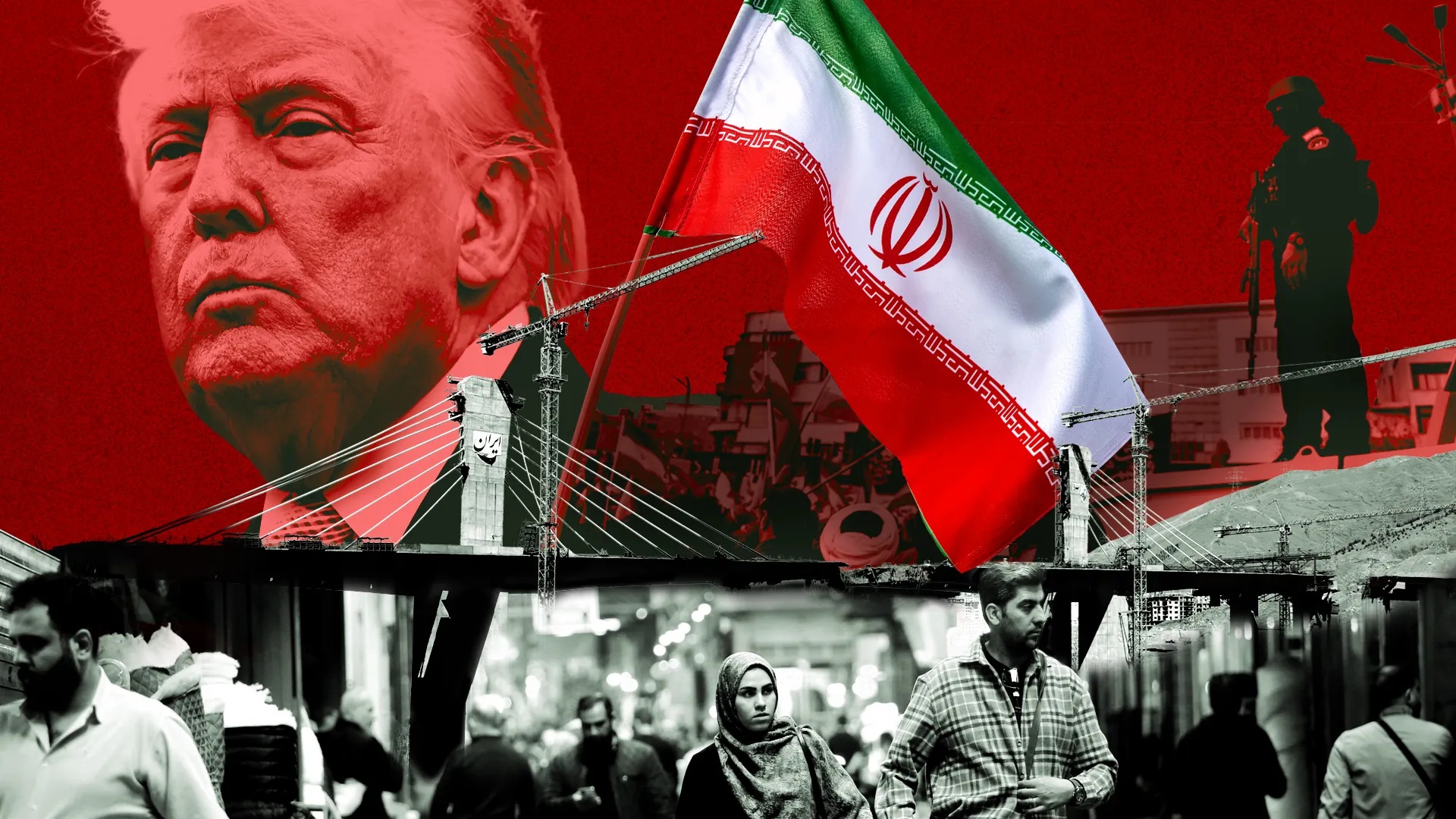
This scrutiny comes at a time when the macro backdrop is becoming more hostile. The ongoing conflict involving the United States, Israel, and Iran has tightened global energy markets, injecting a renewed inflation impulse into an already fragile disinflation trend. U.S. President Donald Trump has signaled dissatisfaction with Iran’s latest proposal, while reports of a potential extension of the U.S. blockade on Iranian ports point to a protracted disruption.

Oil markets are reflecting that reality. Brent crude has climbed above $114 per barrel, marking an eighth consecutive session of gains, while U.S. West Texas Intermediate has moved past $103. The move is not simply a reaction to supply constraints; it denotes a structural repricing of geopolitical risk, particularly as flows through the Strait of Hormuz, through which roughly a fifth of global oil supply transits, remain under threat.

The implications for Europe are acute. The region’s energy import dependence leaves it more exposed to oil and gas price shocks than the United States, amplifying inflationary pressures and squeezing corporate margins. This dynamic is already visible in bond markets, where euro zone yields have risen to multi-week highs as investors factor in the possibility of stickier inflation.

Currency markets are also adjusting. The dollar has regained some ground as a safe-haven asset, supported by geopolitical uncertainty and relative yield stability, while the euro has edged lower. At the same time, gold has retreated despite the risk backdrop, indicating that investors are not yet positioning for a full-scale flight to safety but are instead reallocating within risk assets.

The Federal Reserve now sits at the center of this recalibration. While policymakers are widely expected to hold rates steady, the tone of their communication will be closely parsed for clues on how they interpret the energy-driven inflation shock. The key issue is whether the Fed continues to treat higher oil prices as a transient factor or begins to signal concern about second-round effects on wages and core inflation.

Ramjee noted that this distinction is critical. “Inflation is going to be under scrutiny with it having this impact and to what extent the Fed wants to look through that energy price increase,” he said.

What is emerging is a more complex market regime. For much of the past year, equity gains have been underpinned by a combination of falling inflation expectations and aggressive AI-driven investment narratives. That alignment is now breaking down. Inflation risks are re-emerging via energy markets, while the AI story is shifting from unchecked optimism to a more measured assessment of execution risk and capital efficiency.

European equities, lacking the same concentration of AI-linked mega-cap firms as the United States, are particularly sensitive to these external forces. The region’s indices are increasingly being driven by global liquidity conditions, commodity price swings, and U.S. corporate performance rather than domestic fundamentals.

Practically, this leaves markets without a clear directional catalyst. Strong earnings from U.S. technology firms could stabilize sentiment, but any disappointment, particularly on AI spending or margins, would likely reinforce the current pullback. Similarly, a dovish signal from the Federal Reserve could offset some of the pressure from rising oil prices, while a more hawkish tone would tighten financial conditions further.

For now, investors appear to be in a holding pattern, with positioning constrained by the convergence of three powerful forces: an evolving AI investment cycle, a persistent geopolitical shock in energy markets, and an uncertain monetary policy trajectory. The result is a market that remains near record levels on the surface but is increasingly fragile beneath, with volatility likely to intensify as these crosscurrents play out.

China’s “Teapot” Refineries Keep Iranian Oil Flowing as U.S. Blockade Tests Supply Chains and Margins

0

China’s independent refiners are continuing to absorb the bulk of Iran’s oil exports, sustaining a shadow trade that has so far proved resilient to fresh U.S. pressure, even as deteriorating refining economics begin to slow the pace of purchases.

The so-called teapot refiners, concentrated in Shandong province, account for roughly 90% of Iran’s crude shipments. Imports surged to a record 1.8 million barrels per day in March, according to Vortexa Analytics, underscoring Beijing’s reliance on discounted—and often rebranded—barrels to feed its sprawling refining system.

Yet beneath the headline volumes, cracks are emerging. Domestic processing margins have collapsed to around minus 530 yuan ($77.50) per metric ton, a one-year low, as state-controlled fuel prices lag the sharp rise in crude costs triggered by the ongoing conflict involving the United States, Israel, and Iran. The squeeze is forcing refiners to reassess buying appetite, even as supply channels remain open.

“The sanctions will complicate refinery operations and may prompt caution among Asian petrochemical buyers, tightening regional supply, but they will not materially shift Chinese refinery buying patterns as long as Iranian supply remains available,” consultancy Energy Aspects said in a note.

That assessment underlines a structural reality: China’s refiners are operating within a policy framework that prioritizes energy security over geopolitical alignment. Earlier this month, Beijing instructed independent refiners to maintain output levels or face penalties, while issuing an additional batch of import quotas. Traders say the move effectively encourages continued purchases of Iranian and Russian crude, both of which are typically priced outside Western benchmark systems.

The more immediate threat to that flow is logistical rather than regulatory. The U.S. blockade on Iranian shipping, which began on April 13, is expected to tighten supply in the coming months if sustained. While current deliveries continue to arrive, often via complex routing and ship-to-ship transfers, the lag effect of disrupted loading and transit could begin to constrain availability by mid-year.

Recent tanker activity highlights the persistence of these supply chains. Aframax tanker Tianma discharged cargo at Dongying over the weekend, while VLCC GRACEP delivered crude to Qingdao. Data from Kpler shows the VLCC Hauncayo arriving in Yantai carrying 2 million barrels of Iranian oil, after multiple transfers designed to obscure origin. Several additional cargoes are scheduled to reach Shandong in the coming days.

This system, often described as a “shadow fleet” network, has grown more sophisticated. Tankers routinely operate under false identities, cargoes are relabelled as Malaysian or Indonesian crude, and transactions are settled in yuan through layers of intermediaries. The result is a parallel oil market that functions largely outside the reach of conventional sanctions enforcement.

But pricing dynamics are shifting. Iranian Light crude, once sold at a discount, is now trading at parity or even a slight premium to ICE Brent on an ex-storage basis. That reversal points to tighter supply conditions and rising geopolitical risk, but it also erodes one of the key incentives for Chinese refiners: cost advantage.

At the same time, the global oil market is undergoing a broader realignment. The war has pushed Brent crude above $110 per barrel, as disruptions in the Strait of Hormuz, through which roughly 20% of global oil flows, force traders to reprice supply risk. The United States’ blockade of Iranian ports and Iran’s countermeasures have effectively tightened available supply, even as demand faces pressure from slowing global growth.

For China, this creates a dual challenge. The Asian giant must secure sufficient crude to sustain industrial output and economic recovery. This, amid rising input costs, is compressing refining margins and threatening profitability across the downstream sector.

Inventories may offer a temporary buffer. Kpler estimates that around 155 million barrels of Iranian oil are currently in transit outside the U.S. blockade zone, while Vortexa puts the figure at no less than 140 million barrels—enough to cover more than two months of Chinese demand at current import rates. But this cushion is finite, and its depletion would expose refiners more directly to supply disruptions.

Washington’s strategy, meanwhile, appears to be shifting toward targeted enforcement. The recent sanctioning of Hengli Petrochemical, one of China’s largest independent refiners, signals a willingness to escalate pressure on key nodes within the supply chain. Hengli has denied purchasing Iranian crude, but the move introduces additional compliance risk for other buyers.

Still, Beijing has maintained a consistent stance, defending its trade with Iran as legitimate and opposing what it describes as unilateral sanctions. In practice, that position reflects a broader geopolitical calculus: securing energy flows while resisting external constraints on its import strategy.

The result is a fragile equilibrium. Chinese refiners continue to draw heavily on Iranian crude, sustaining Tehran’s export lifeline, even as margins deteriorate and logistical risks mount. The longer the blockade persists, the more likely it is that physical constraints, not policy decisions, will dictate the next phase of trade.

Currently, the market remains in a holding pattern. Supply continues to move, albeit through increasingly opaque channels. Demand remains structurally intact, but economically strained.