
DD
MM
YYYY

PAGES

DD
MM
YYYY

spot_img

PAGES

Home Blog Page 17

10-Year Treasury Yield Climbs Above 4.80% as Bond Market Anxiety Deepens

0

The U.S. Treasury market is sending a warning that investors can no longer afford to ignore.

The benchmark 10-year Treasury yield has climbed back above 4.80%, reaching its highest level since early 2025 and moving toward a threshold that could reshape expectations across global financial markets.

The move is part of a broader selloff in government bonds, driven by renewed inflation fears, rising energy prices, expectations for tighter monetary policy and growing concerns about government debt.

The significance of the 10-year Treasury yield extends far beyond the bond market. Treasuries are widely treated as the foundation of global borrowing costs, meaning a sustained rise in yields can influence mortgages, corporate financing, government debt, equity valuations and even emerging-market currencies.

As yields rise, investors demand greater compensation for lending money over a longer period, reflecting increased uncertainty about inflation, interest rates and fiscal stability.

A major catalyst behind the latest move has been the resurgence in oil prices. Renewed U.S.-Iran hostilities have pushed Brent crude above $95 a barrel, intensifying fears that higher energy costs could feed into consumer prices.

That creates an uncomfortable dilemma for the Federal Reserve: an economy facing weaker growth could normally justify lower rates, but an inflation shock could require policymakers to keep rates elevated—or even raise them.

Markets have therefore begun reassessing expectations for monetary policy. The two-year Treasury yield, which is more sensitive to expectations for Federal Reserve policy, has also risen sharply.

Investors are increasingly pricing the possibility of a September rate increase, reversing expectations that had previously leaned toward monetary easing. But inflation is only one part of the story.

The United States is carrying more than $40 trillion in federal debt, creating an enormous supply of Treasury securities that must be absorbed by investors. Major technology companies are issuing substantial amounts of corporate debt to finance artificial-intelligence infrastructure.

The result is greater competition for capital and upward pressure on borrowing costs.  The consequences are particularly important for equities. Higher Treasury yields raise the discount rate used to value future corporate earnings.

Which can weigh heavily on technology and other growth stocks whose valuations depend on profits expected many years into the future. The recent bond-market turbulence has already contributed to pressure on major U.S. equity indexes.

For households, the effects are equally tangible. Mortgage rates have moved higher as Treasury yields climbed, reducing housing affordability. Businesses face more expensive financing, while governments must devote more resources to servicing existing debt and refinancing obligations.

The psychological importance of 4.80% should not be underestimated either. With the 10-year yield approaching 5%, investors are confronting a market environment dramatically different from the ultra-low-rate era of the previous decade.

Bonds are becoming increasingly competitive with stocks, while risk assets must justify valuations against a substantially higher risk-free return.

The Treasury market is reflecting a collision of forces: geopolitical instability, expensive energy, persistent inflation, heavy government borrowing and uncertainty over the Federal Reserve’s next move.

Whether yields continue toward 5% or retreat will depend heavily on incoming inflation and employment data. The message from the bond market is clear: the era of effortlessly cheap money is becoming increasingly difficult to revive.
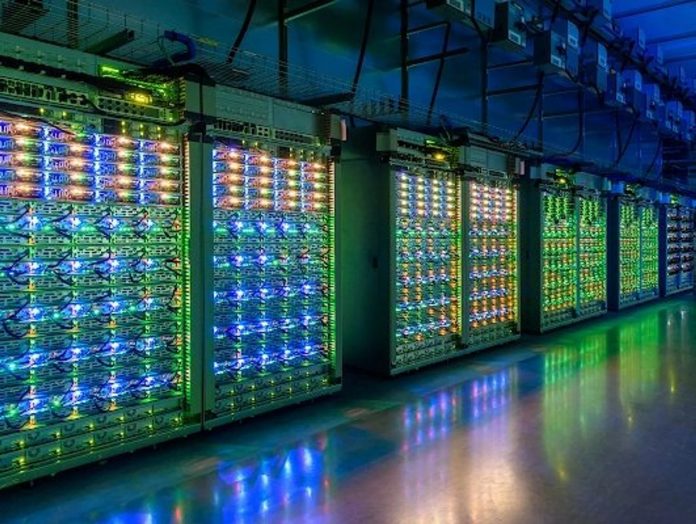

How AI Data Centers Are Making Everything More Expensive

0

The artificial intelligence boom is transforming the global economy, but its costs are increasingly extending far beyond the technology industry.

Behind every AI chatbot, image generator and automated agent sits a rapidly expanding network of data centers packed with powerful chips.

These facilities require enormous amounts of electricity, water, land and construction materials, creating a new source of economic pressure that consumers are beginning to feel.

The biggest pressure point is electricity. AI data centers consume vastly more power than conventional computing facilities because advanced AI models require thousands of graphics processors and specialized accelerators operating around the clock.

As technology companies race to build larger facilities, demand for electricity is growing faster in some regions than utilities and grids can comfortably accommodate. That can push utilities to invest billions in new generation, transmission lines and substations.

Ultimately, those costs can find their way into electricity bills. The problem is particularly significant because AI companies are competing for the same limited power resources as households, manufacturers and other businesses.

In areas experiencing rapid data-center expansion, utilities may need to build infrastructure specifically to support large computing campuses. Even when technology companies contribute to those projects, some costs can be distributed across the wider electricity system.

Then there is the physical construction boom. Modern AI data centers are enormous industrial projects requiring concrete, steel, copper, electrical equipment, cooling systems and backup generators.

A surge in demand for these materials can increase prices, especially when supply chains are already constrained. Copper is particularly important because data centers require extensive electrical infrastructure.

While transformers and other specialized equipment can have lengthy manufacturing lead times.

Land is another increasingly valuable resource. Technology companies are seeking large parcels close to power generation and major transmission networks.

As competition intensifies, land values can rise, particularly around communities that become attractive destinations for data-center development. Housing costs can also come under pressure if thousands of construction workers, engineers and other employees move into smaller communities.

Water presents another concern. Many data centers require sophisticated cooling systems to prevent computing equipment from overheating. In water-stressed regions, competition between data centers, agriculture, households and other industries could become increasingly contentious.

Even when companies use more efficient cooling technologies, the scale of new facilities means their aggregate resource consumption can still be significant.

There is also a financial cost. AI infrastructure requires extraordinary amounts of capital, and companies are borrowing, raising money and entering massive infrastructure agreements to finance the buildout.

Investors may eventually demand higher returns to compensate for the enormous spending and operational risks. Those costs can influence the prices businesses charge for AI services. Yet the story is not entirely negative.

AI data centers can generate construction jobs, attract investment, strengthen local infrastructure and stimulate demand for new energy projects. The technologies developed to power them could accelerate renewable energy deployment, battery storage and grid modernization.

The central question is therefore not whether AI should expand, but who should pay for its expansion. If the benefits of artificial intelligence are captured mainly by technology companies while electricity, water, infrastructure and housing costs are distributed among ordinary consumers, the economic bargain becomes harder to justify.

AI may make businesses more productive and services cheaper. But during the infrastructure race required to build it, the opposite can happen. The hidden price of artificial intelligence is increasingly appearing in the cost of power, materials, land and public infrastructure.

The AI revolution may promise a cheaper future, but getting there could make the present considerably more expensive.

AI Moves From Commands to Continuous Interaction

0

Artificial intelligence is entering a new phase in which the defining feature is no longer simply how intelligently a model can answer a question, but how effectively it can operate inside an ongoing workflow.

Two recent developments capture this transition: Nous Research has brought its Hermes Agent into an official desktop application, while Visko has demonstrated Orbis 1.0, a live video model designed to generate and modify virtual worlds in real time.

Nous Research’s Hermes Desktop gives its open-source Hermes Agent a native graphical interface for macOS, Windows and Linux. Previously, Hermes was primarily experienced through command-line tools and messaging interfaces.

The desktop application lowers that barrier by allowing users to interact with the agent through a conventional interface while retaining capabilities such as streaming tool output, file browsing, previews, voice interaction and persistent agent memory.

The significance of Hermes Desktop extends beyond convenience. Hermes is designed as a persistent, self-hosted agent rather than merely a chatbot.

Its architecture allows skills, memory, sessions and configurations to carry across interfaces. That means the desktop application can become an operating environment for an agent that performs tasks rather than simply responding to isolated prompts.

This reflects a broader industry movement toward agentic computing. Instead of asking an AI to generate an answer and then manually executing the result, users increasingly expect software to research information, manipulate files, use tools and maintain context across multiple interactions.

Hermes Desktop makes that model accessible without requiring users to live inside a terminal. At the same time, Visko is pushing the frontier from static video generation toward continuously evolving visual environments.

Its Orbis 1.0 model is described as a “Live Model” capable of generating interactive long-form video while allowing users to change prompts during generation. The system supports text-to-video, image-to-video and video continuation, while maintaining visual consistency across extended sequences.

The technical claims are particularly ambitious. Visko says Orbis can generate 4K video at 24 frames per second in real time and sustain hour-scale generation without obvious visual or color drift.

Its architecture combines a streaming generator, video upscaler and bounded multi-scale memory designed to preserve subjects, scenes and styles as the world continues evolving.

The most important distinction is interactivity. Traditional video models generally operate as a request-and-response system: enter a prompt, wait for a clip, then start again. Orbis instead treats generation as an ongoing process.

Users can alter the narrative while the video is running, effectively steering the world rather than repeatedly regenerating disconnected clips. Visko’s demonstration includes live prompt changes and voice-driven interaction.

Hermes Desktop and Orbis 1.0 point toward a common direction for AI: continuous computing. Hermes keeps an agent active across tasks and sessions; Orbis keeps a generated world active across time. One turns software into an ongoing collaborator, while the other turns video generation into an ongoing environment.

The implications could extend across entertainment, gaming, simulation, education, robotics, research and digital production. If these systems mature, interacting with AI may become less like querying a database and more like entering a persistent digital space where agents remember, act and adapt.

The next major AI competition may therefore not be about who produces the best single response. It may be about who can build the most capable systems that keep going after the prompt ends.

Chinese Bots and the Growing US Data-Center Backlash

0

The debate over artificial intelligence infrastructure is taking an unexpected turn: the fight over data centers is no longer confined to electricity grids, water consumption, land use, and local politics. It is increasingly becoming a battle over information itself.

A recent investigation has raised questions about claims that Chinese-linked bots on X were amplifying anti-data-center narratives in the United States. According to a researcher examining the accounts identified by X.

Many appeared to have virtually no audience or meaningful engagement. Some reportedly had no followers at all, making their ability to influence public opinion difficult to establish.

That distinction matters. A social-media account can publish hundreds of posts, but if nobody sees, shares, replies to, or interacts with them, its practical influence may be negligible.

The existence of automated or coordinated accounts does not automatically prove that they successfully shaped public sentiment.

The controversy comes at a sensitive moment. Data centers have become one of the most politically contentious parts of America’s AI boom. Companies developing artificial intelligence are spending billions of dollars on computing infrastructure.

While communities are increasingly questioning who pays for the electricity, water, roads, and other infrastructure required to support massive facilities. Opposition has emerged from both sides of the political spectrum.

Residents have complained about noise, land use, energy demand and environmental consequences. Utilities are also facing difficult questions about how quickly electricity generation and transmission capacity can expand to meet surging demand from AI companies.

That genuine grassroots opposition creates an important backdrop for the bot controversy. Even if foreign actors attempted to amplify criticism, it would not necessarily mean that the underlying concerns were manufactured.

This is where social-media attribution becomes complicated. Researchers and platforms can identify suspicious accounts using signals such as coordinated posting patterns, account creation dates, language behavior and network relationships.

But determining whether those accounts actually changed people’s opinions is a much harder task. An account with zero followers can still contribute to a coordinated influence operation if its content is later amplified by larger accounts.

Conversely, a large collection of seemingly suspicious accounts may have almost no measurable impact if their posts remain isolated. The episode therefore highlights a broader problem confronting X and other social platforms: distinguishing between inauthentic activity and actual influence.

Platforms have strong incentives to expose foreign influence campaigns, particularly when they involve geopolitical rivals such as China. But credibility depends on providing enough evidence to demonstrate not only that suspicious accounts existed.

But also how they operated and what impact they had. For policymakers, the distinction is equally important. If legitimate opposition to data centers is dismissed as foreign propaganda, communities with genuine concerns may feel ignored.

At the same time, policymakers cannot afford to overlook coordinated foreign attempts to manipulate political debates surrounding strategically important technologies.

The AI infrastructure race is already producing enormous economic and geopolitical consequences. Data centers are becoming critical national infrastructure, while access to advanced computing is increasingly viewed as an element of national power.

That makes the information war surrounding them inevitable. But the lesson from the latest bot investigation should be caution rather than panic. Suspicious accounts are evidence of suspicious activity—not automatically evidence of successful influence.

The real question is whether those accounts reached real audiences, changed perceptions, and materially affected the political debate. As America’s data-center expansion accelerates, separating authentic public opposition from artificial amplification will become increasingly important.

The future of AI infrastructure may depend not only on who builds the biggest computers, but also on who controls the narrative surrounding them.