DD
MM
YYYY

PAGES

DD
MM
YYYY

spot_img

PAGES

Home Blog Page 17

OpenAI Unveils GPT-5.2 After Issuing ‘Code Red’ in Response to Google’s Gemini 3 Breakthrough

0

OpenAI on Thursday introduced GPT-5.2, calling it its most capable model to date and the version it expects professionals to lean on for daily work across writing, coding, data tasks, and visual analysis.

The release lands at a moment of rising competition, arriving inside ChatGPT and the OpenAI API only weeks after the company pushed out GPT-5.1.

The rollout comes on the heels of Google’s launch of Gemini 3, a model that forced an unusually urgent reaction inside OpenAI. According to people familiar with the timeline and executives who spoke publicly, Google’s release marked one of the most serious competitive challenges the company had faced since 2022. Gemini 3 scored strong gains in long-context reasoning, agentic workflows, and advanced code-generation, areas considered central to the next stage of AI adoption.

The model’s performance, combined with Google’s ecosystem advantages—its massive distribution through Search, Android, Workspace, and YouTube—created a genuine threat to OpenAI’s dominance.

Internally, the Gemini 3 launch prompted OpenAI to issue a “code red.” Chief executive Sam Altman and senior staff reorganized priorities around a single mission: strengthening ChatGPT as quickly as possible. Non-urgent projects were slowed or paused, and engineering teams were reassigned to model improvement and product refinement.

In interviews on Thursday, Altman said the company had feared an immediate hit to usage metrics once Google’s newest model landed, but the impact turned out to be smaller than expected. He said he expects OpenAI to exit code red by January.

“I believe that when a competitive threat happens, you want to focus on it, deal with it quickly,” he said.

Fidji Simo, the company’s head of applications, said the internal alert was meant to sharpen focus.

“We announced this code red to really signal to the company that we want to martial resources in one particular area,” she said.

She explained that the increased attention on ChatGPT supported the rollout of GPT-5.2, but was not the reason the model arrived this week. She added that GPT-5.2 had been under construction for many months.

GPT-5.2 arrives in three editions. Instant targets users who want speed for writing and information retrieval. Thinking is optimized for structured tasks such as planning and coding, and Pro aims for the deepest accuracy on difficult problems.

OpenAI said the model leads industry benchmarks, including SWE-Bench Pro, which measures agentic coding; GPQA Diamond, which tests advanced scientific reasoning; and GDPval, the company’s own evaluation framework. On GDPval, GPT-5.2 equaled or surpassed top human professionals on 70.9% of well-specified tasks.

However, the competitive landscape remains fluid. Anthropic’s new Opus 4.5 performs strongly on SWE-Bench Verified, another coding test set. OpenAI countered that Verified is less rigorous, less diverse, and less resistant to contamination than SWE-Bench Pro, emphasizing that its chosen benchmark better mirrors real-world industrial coding problems.

GPT-5.2 is launching into an environment where expectations for large models are rising quickly. OpenAI is under pressure to justify its $500 billion valuation and more than $1.4 trillion in planned long-term spending, all while trying to keep pace with rivals that now release breakthroughs at monthly cycles. Google is leaning heavily on Gemini 3 as the foundation for its next generation of consumer and enterprise products. Anthropic continues to draw interest from corporations that prefer a safety-first AI strategy. Meta, through Llama, is pushing open-weight models that have spread across the developer ecosystem.

OpenAI, founded ten years ago as a research lab, has transformed into a global technology company at commercial scale since ChatGPT’s 2022 debut. The chatbot now draws more than 800 million weekly users, a figure that underscores how quickly the service has moved from viral curiosity to workplace staple.

GPT-5.2, arriving under competitive fire, marks OpenAI’s attempt to stay ahead by releasing a model designed to serve as the daily engine for professional work. With the code red still in place and rivals accelerating, the company is betting that its newest release will keep developers, enterprises, and consumers anchored to its platform as the AI race enters its next phase.

A Look At Sport.Fun ($FUN) ICO Announcement on Legion Platform

0

Sport.Fun, a blockchain-based platform revolutionizing sports engagement through fantasy competitions, prediction markets, and on-chain trading, has officially announced its $FUN token initial coin offering (ICO) on the Legion launchpad, in partnership with Kraken.

This marks a significant expansion for the project, which originated as Football.Fun and has rapidly grown to include basketball and American football, aiming to create a unified “financialized fandom” ecosystem.

Legion and Kraken, $FUN will power the Sport.Fun ecosystem, enabling buybacks, player rewards, airdrops, and staking for enhanced user engagement across multiple sports. Supported by 6th Man Ventures, The Operating Group, and Zee Prime Capital.

Combines skill-based fantasy sports with real-time speculation and true crypto ownership, built on Base for potential $BASE airdrop farming. Token sale excludes U.K. persons; geographic restrictions apply. Participation requires signing up on Legion and completing profile verification to build a merit-based score for allocations.

This ICO builds on Sport.Fun’s momentum, following a $90M trading volume milestone on Base. Early adopters are already farming $FUN exposure through platform activity, with new asset packs and presales rolling out.

Legion is a merit-based, on-chain fundraising platform designed to revive ICOs with enhanced compliance, transparency, and anti-scam measures.

Launched in 2025 after raising $5M in seed funding led by VanEck and Brevan Howard Digital, with participation from Kraken Ventures, Coinbase Ventures, and Crypto.com Ventures, it uses reputation scoring based on on-chain/off-chain activity to allocate tokens fairly, avoiding VC dominance and “rug pulls” from the 2017-2018 ICO era.

Legion complies with frameworks like EU’s MiCA and U.S. Regulations, positioning it as a “CoinList killer” for responsible public token sales. Positive buzz on X highlights the project’s quick pivot from soccer-focused Football.Fun to a multi-sport powerhouse, with users excited about $FUN’s utility and Base ecosystem ties.

Analysts see potential for long-term growth in play-to-earn sports networks, with $FUN uniting platforms for better liquidity and rewards.

The Legion Score also referred to as the merit score is a proprietary reputation metric on the Legion platform, ranging from 0 to 1,000. It acts as a “digital resume” evaluating your value as an investor or contributor in the crypto ecosystem, based on non-financial factors like engagement, expertise, and accountability.

Unlike traditional ICO access, which often favors wealth or connections, the Legion Score prioritizes merit to reduce bots, Sybil attacks, and short-term flippers. It’s calculated as an average of five sub-scores— Clout, Dev, Chain, Interaction, and Endorsement, using principles from the EigenTrust algorithm for abuse resistance.

The exact formula is private to prevent gaming, but scores evolve dynamically based on your ongoing behavior—positive actions boost it, while non-performance can lower it. Higher scores unlock better allocations in ICOs and token sales, up to 20% of supply reserved for top scorers in some rounds, customized perks like discounts, and priority access.

It’s especially relevant for upcoming sales like Sport.Fun’s $FUN ICO on December 16, 2025, where merit determines eligibility. Verify your email and connect a compatible wallet like EVM or SVM chains like Ethereum, Solana, Base, or Arbitrum. This starts your profile and enables KYC for uniqueness.

Fill out your profile: Include qualitative details like your role (e.g., builder, trader), expertise (e.g., tokenomics, marketing), investment strategy, and achievements (e.g., blogs, past contributions). Be truthful and detailed—this directly influences sub-scores and helps projects assess fit.

Link X, Farcaster, or other handles to demonstrate influence. Focus on organic engagement—post quality content about crypto projects, share insights, and build mindshare. Avoid spam; the system filters bots. Share your Legion scorecard publicly on X or Farcaster to gain visibility and potential endorsements.

Connect your GitHub profile to showcase open-source contributions, commits, and stars. If you’re a developer, contribute to relevant repos to raise this—it’s weighted heavily for tech-focused ICOs. These connections generate your initial score automatically. Reconnect periodically if activity updates.

Perform transactions across supported chains like staking, trading, or interacting with dApps without relying on volume—it’s wealth-agnostic and detects bot patterns. Interact with projects by applying to sales, providing feedback, or participating in community tasks. Consistent, positive involvement raises your Interaction Score.

Farm exposure in Base ecosystem activities if targeting projects like Sport.Fun, as on-chain history ties into broader merit. Seek recommendations from project founders, core teams, or community managers for past contributions via cover letters in applications.

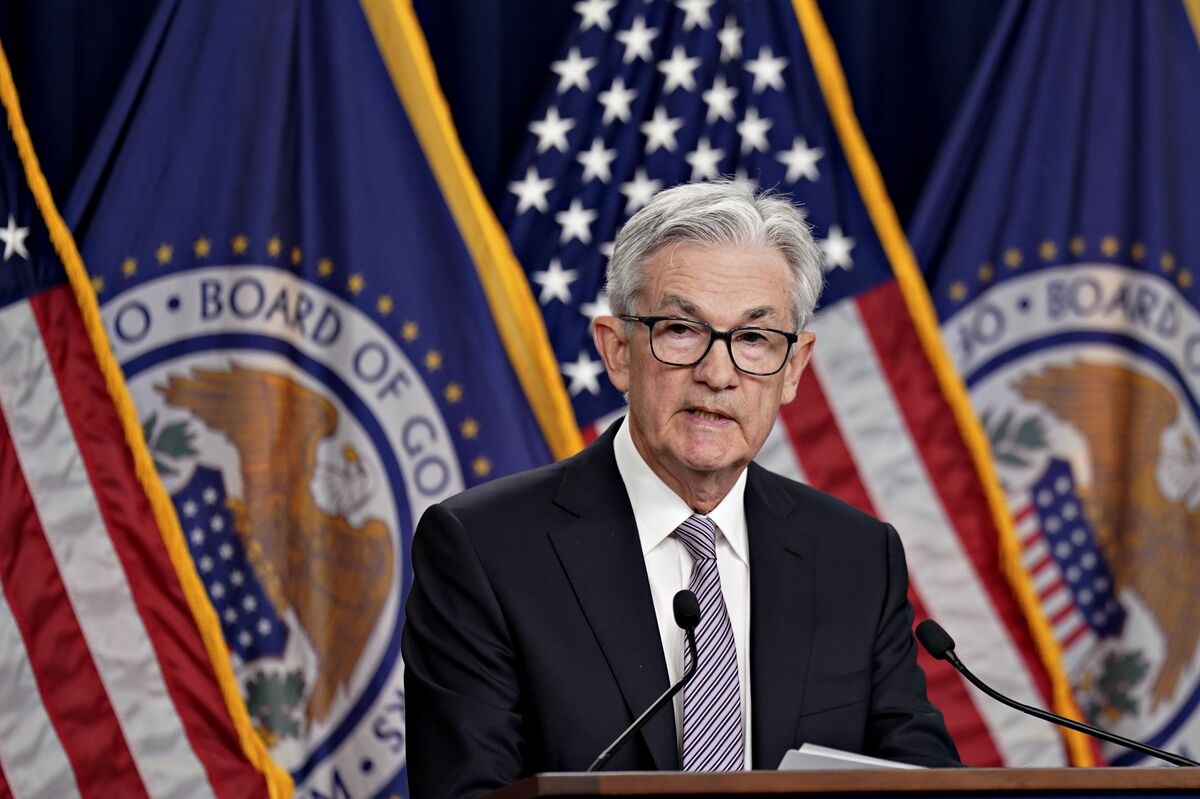
A Foray Into Federal Reserve’s December 2025 Policy Update

0

Federal Reserve’s Federal Open Market Committee (FOMC) concluded its final meeting of 2025 on December 10 with two key actions: a 25 basis point (bps) cut to the federal funds rate and the initiation of targeted Treasury securities purchases totaling approximately $40 billion in the coming month.

These moves reflect a cautious effort to support a softening labor market amid persistent inflation pressures and broader economic uncertainty, including potential impacts from tariff policies and fiscal shifts.

The FOMC voted 9-3 to lower the target range for the federal funds rate by 25 bps to 3.50%–3.75%. This marks the third consecutive rate reduction in 2025 totaling 75 bps since September, bringing the cumulative cuts since mid-2024 to a more accommodative stance.

Fed Chair Jerome Powell emphasized protecting against further labor market weakness, with unemployment projections holding steady at around 4.2%–4.5% through 2026. However, core PCE inflation remains elevated at 2.6% for 2025 down slightly from prior forecasts but above the 2% target, leading to internal divisions—three dissenters favored pausing cuts due to inflation risks.

The “dot plot”— policymakers’ rate projections signals just one additional 25 bps cut in 2026 (median target: 3.25%–3.50%), unchanged from September, with another possible in 2027. Powell noted no decision has been made on January 2026, stressing data-dependence amid “high uncertainty.”

This aligns with softer economic data like the revised 2025 GDP growth up to 2.1%–2.3% and dovish signals from officials like John Williams and Christopher Waller. Markets had priced in an 85%+ probability for this cut via CME FedWatch.

The Fed directed the New York Fed’s Open Market Trading Desk to conduct Reserve Management Purchases (RMPs) of approximately $40 billion in Treasury bills over the next 30 days, starting December 12, 2025. These are secondary-market buys focused on short-term securities to maintain “ample” bank reserves.

A tentative schedule will be released today (December 11), with monthly announcements ongoing. Purchases will be weighted by sector (e.g., bills outstanding as of September 2025) and could extend to other short-dated Treasuries if needed.

This isn’t full-blown quantitative easing (QE) but a technical liquidity tool to stabilize short-term funding markets after the Fed ended its balance sheet runoff on December 1. Reserves have declined amid Treasury issuance and bank deleveraging, prompting this “stealth” injection to avoid volatility without signaling distress.

Powell described it as temporary: elevated for “a few months” before tapering significantly. It’s paired with reinvesting all principal from agency securities into T-bills. Unlike 2020–2022’s open-ended asset buys, this is capped, targeted, and explicitly for reserve management—not broad stimulus.

Risks, tilted toward downside for employment; upside for inflation due to potential supply shocks. The S&P 500 and Nasdaq eked out modest gains +0.5%–1% post-announcement, but momentum faded into today’s session amid tech earnings misses like Oracle down 11% on AI capex concerns.

The Dow rose 1.2% (500 points) yesterday, reflecting relief on the cut but caution on the hawkish 2026 outlook. 10-year Treasury yields dipped to ~4.1% initially but rebounded slightly today as the buybacks were seen as non-inflationary.

Bitcoin ($BTC) briefly touched $94K post-cut but rejected sharply, trading at ~$90K (-2%–3%) on low volume; Ethereum ($ETH) at ~$3,200 (-3.6%). Altcoins (e.g., Solana -4.6%) followed suit, with total market cap down ~$160B. Sentiment is “risk-off” short-term, but the liquidity boost could support a rebound if $90K holds as support.

BlackRock’s IBIT ETF saw $192M inflows yesterday, a record. X discussions highlight “stealth liquidity” and potential “super cycle” for risk assets, with some viewing the eSLR easing as a bank-lending catalyst. Odds of $BTC hitting $100K by year-end fell to 30% on Polymarket.

The cut provides a tailwind for borrowing costs like mortgages, credit cards, but the divided FOMC and static dots temper aggressive easing bets. Buybacks should ease funding strains, potentially lowering volatility in money markets.

If labor data weakens further, expect the January cut odds to rise currently ~68% for 2+ cuts in 2026. Refinance opportunities may improve, but Powell noted a 25 bps drop won’t fix housing affordability. Crypto traders should watch $89K–$90K support; a break could test $87K.

Analysts like those at Bank of America see room for 2 cuts in 2026 if dots shift; others warn of tariff-induced inflation risks. This package underscores the Fed’s “wait-and-see” pivot: easing now, but bracing for a bumpier 2026.

Coinbase’s Big Move on Solana Native DEX Trading Goes Live

0

Coinbase just dropped a game-changer at Solana’s Breakpoint 2025 event in Abu Dhabi: in-app DEX trading for all Solana tokens. No more waiting for official listings—users can now swap any SPL token directly on-chain via decentralized liquidity pools, settling in USDC or even fiat (bank transfers, debit cards).

Early access kicks off next week, opening the floodgates for millions of new assets to Coinbase’s 100M+ user base. This builds on their recent Base-to-Solana bridge launched Dec 4 via Chainlink’s CCIP and the pending acquisition of Vector, a Solana-native trading platform that spots fresh tokens the moment they launch.

It’s a clear play to fuse CeFi ease with DeFi speed: think centralized UI for discovering and funding trades, but decentralized execution for self-custody. Solana’s DEX volume has already topped $1T this year, and this could supercharge it further by pulling in retail liquidity without the usual gatekeeping.

Cointelegraph highlight how this convergence could make Solana the go-to for token launches, with filters for new drops and portfolio views blending BTC, ETH, and SOL assets seamlessly.

Coinbase’s Solana product lead, Andrew Allen, nailed it: “The goal is to make the millions of new assets created on-chain immediately accessible to all users.” For builders, it’s instant global reach if your token has liquidity. COIN stock dipped 2% pre-market, but retail sentiment on Stocktwits is still bullish.

More drops expected at Coinbase’s Dec 17 showcase. Meanwhile, the broader market’s nursing a hangover. After a brief relief rally (BTC reclaimed $93K on Fed cut hopes), after-hours trading flipped red: BTC slipped below $91K (-1.4%), ETH under $3.2K (-2%), and sectors like DePIN (Filecoin -7.5%, Render -5.5%) and Layer 1s (-2.5%) took the brunt.

Total market cap shed ~1-2% in the last 24 hours, with $600M+ in liquidations per Coinglass. Blame the usual suspects: fading Fed cut euphoria now ~50/50 odds for December, macro jitters from a potential government shutdown draining liquidity, and profit-taking after October’s $125K BTC peak.

Broader risk-off vibes spilled from equities—Nasdaq flat, but crypto’s correlation is amplifying the pain. Altcoins got hammered harder: Zcash -10%, and a MarketVector index of smaller caps is down 70% YTD.

Sentiment’s in “Extreme Fear” per the Crypto Fear & Greed Index (23/100), with open interest dropping as leverage unwinds. Glassnode calls this a “mid-cycle reset,” not a full winter—spot liquidity’s absorbing the selloff, and BTC’s still 15% off lows near $76K. But with $787B in perp futures leverage vs. $135B in ETFs, more fireworks if it tests $86K support.

Polymarket Pessimism: BTC $100K Odds Slide to 30%

Prediction markets are the ultimate vibe check, and Polymarket’s turning bearish. Odds of Bitcoin hitting $100K by Dec 31? Down to 30% from 50%+ last week, with $95K at just 59%. That’s a sharp pivot from October’s 56% shot at $130K now near 0%.

Bettors are piling into downside: 40% chance BTC dips to $80K by year-end, and 61% see a max of $95K. Kalshi’s a tad more optimistic at 42-51% for $100K, but the delta screams caution—traders smell more chop ahead of the Fed.

BecauseBitcoin summed it up: “Odds BTC Reaches $100K Drop to 30% and $95K to 59% For This Year.” Polymarket now pegs BTC’s chance of $100K by year?end under 30% after the Fed made markets do the cha?cha slide. Arbitrage plays are popping too: Pair the $100K yes/no with $80K downside bets for low-risk edges, per Cvrsxd.

If macro stabilizes via ETF inflows keep surprising at $416 BTC added yesterday, that 30% could look undervalued. But with sentiment this fearful, $90K might be the floor before any Santa rally. Crypto’s wild—Solana’s innovating while BTC consolidates.

Ghana’s Economy Expands 5.5% in Q3 2025 as Agriculture and Services Drive Recovery

0
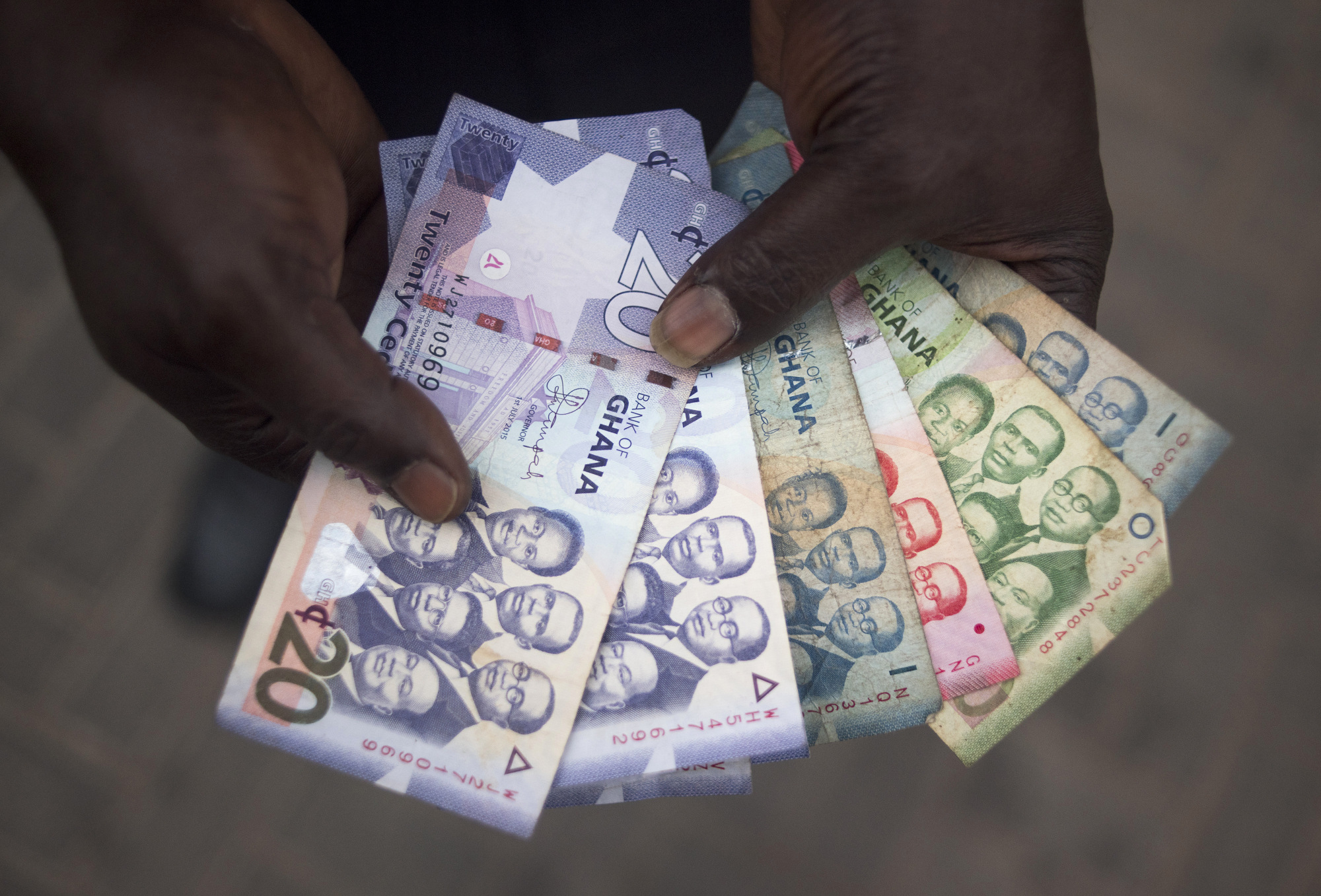
A man holds Ghanian currency in his hands on September 20, 2016 in Accra, Ghana. Ty Wright/Bloomberg News

Ghana’s economy grew by 5.5% year-on-year in the third quarter of 2025, underpinned by strong performances in agriculture and services, the Ghana Statistical Service reported on Wednesday.

The growth, while positive, slowed from a revised 7.0% recorded in the same period last year, largely due to weak industrial sector performance, which expanded by just 0.8%, government statistician Alhassan Iddrisu told reporters.

Agriculture emerged as a key driver, with fishing and crop production pushing sector growth to 8.6%. The services sector, covering finance, insurance, trade, and education, also contributed significantly with a 7.6% expansion.

“Agriculture’s contribution to growth was outsized, showing a sector that is recovering quickly and adding real weight to the national output,” Iddrisu said.

Non-oil GDP rose by 6.8%, slightly below last year’s 7.8%, reflecting continued challenges outside Ghana’s resource sectors. The country, a major producer of gold, oil, and cocoa, is gradually emerging from its most severe economic crisis in decades.

Macroeconomic stability appears to be improving. Annual inflation fell for the 11th consecutive month in November to 6.3%, the lowest level since a 2021 rebasing exercise. In response, Ghana’s central bank has reduced its main interest rate by a cumulative 1,000 basis points this year, citing both the improved economic outlook and expectations for continued declines in inflation.

Analysts note that the recovery is heavily reliant on agriculture and services, while industrial stagnation poses a risk to sustaining higher overall growth. Policy measures, including supportive fiscal and monetary policies, are likely to remain critical to strengthen manufacturing and industrial activity, diversify the growth base, and ensure that the recent decline in inflation translates into broader economic gains for households and businesses.

Comparative Analysis: Ghana’s 2025 Economic Performance in West Africa and Sub-Saharan Africa

This growth, while moderate in absolute terms, situates Ghana above the average expansion expected across Sub?Saharan Africa in 2025, where growth forecasts cluster broadly around the lower to mid?4?percent range according to the latest outlooks from multilateral institutions. In the West African sub?region, Ghana’s performance also compares favorably with regional peers, reflecting relative resilience even as the country works to diversify its economic base.

Ghana’s economic figures signal a rebound in parts of the economy that have been under pressure in recent years. By contrast, industrial output was sluggish, growing by only 0.8?percent, which underscores persistent weakness in manufacturing and construction activity.

Comparatively, some regional peers such as Senegal and Côte d’Ivoire are expected to record higher growth rates in 2025, benefiting from robust energy investment and sustained private investment. Senegal, for example, is forecast to grow at close to 8½?percent, and Côte d’Ivoire has been projected in some assessments to expand at roughly 6?percent, supported by infrastructure spending and diversified services.

Across Sub?Saharan Africa, growth remains uneven. Nigeria’s expansion is expected to be more modest, constrained by structural bottlenecks that have limited non?oil activity. South Africa — the continent’s largest economy — is forecast to post relatively low growth, weighed down by subdued investment and long?standing structural challenges.

In this wider context, Ghana’s around?5½?percent rate places it above many of its peers and signals a stronger recovery trajectory, particularly when coupled with improving macroeconomic conditions.

However, Ghana’s recovery is not without vulnerabilities. The industrial sector’s weak performance remains a concern because manufacturing and construction are key conduits for job creation and broader value addition. Dependence on primary commodity exports — gold, cocoa, and oil — leaves the economy exposed to global price volatility and external demand shifts, a weakness shared by many Sub?Saharan economies that have yet to achieve deep export diversification.

Inflation, while slowing, could remain sensitive to external shocks, and fiscal pressures observed across several African countries may constrain the scope for public investment unless revenue mobilization improves.

Looking ahead to 2026, forecasts generally indicate that Ghana will continue to register moderate growth, with projections pointing to rates in the high?4?percent range. This suggests a gradual continuation of the recovery, supported by stable prices, expansion in agriculture and services, and policy measures that sustain confidence among investors.

Across Sub?Saharan Africa, growth is expected to strengthen modestly in 2026, but the picture will remain heterogeneous with divergence across countries. Some West African economies with robust energy sectors and investment inflows are expected to outperform, while others grappling with weaker commodity revenues or structural constraints may lag.