DD
MM
YYYY

PAGES

DD
MM
YYYY

spot_img

PAGES

Home Blog Page 17

Apple’s New CEO Inherits a $4.6 Trillion Challenge

0

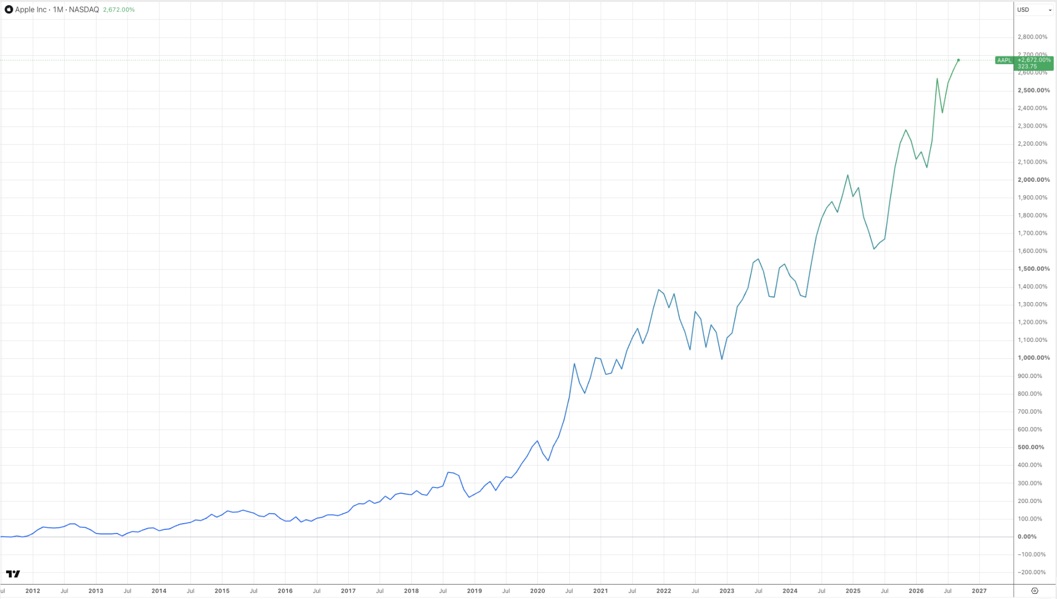
The change in leadership at Apple marks the end of one of the most successful eras in the history of the US technology industry. During Tim Cook’s tenure as CEO, the company’s stock price increased by more than 2,275%, and, taking dividends into account, the total return for investors reached 2,736%. Apple’s market capitalization grew from less than $350 billion to $4.6 trillion over the same period, briefly putting the company at the top of the stock screener by market cap.

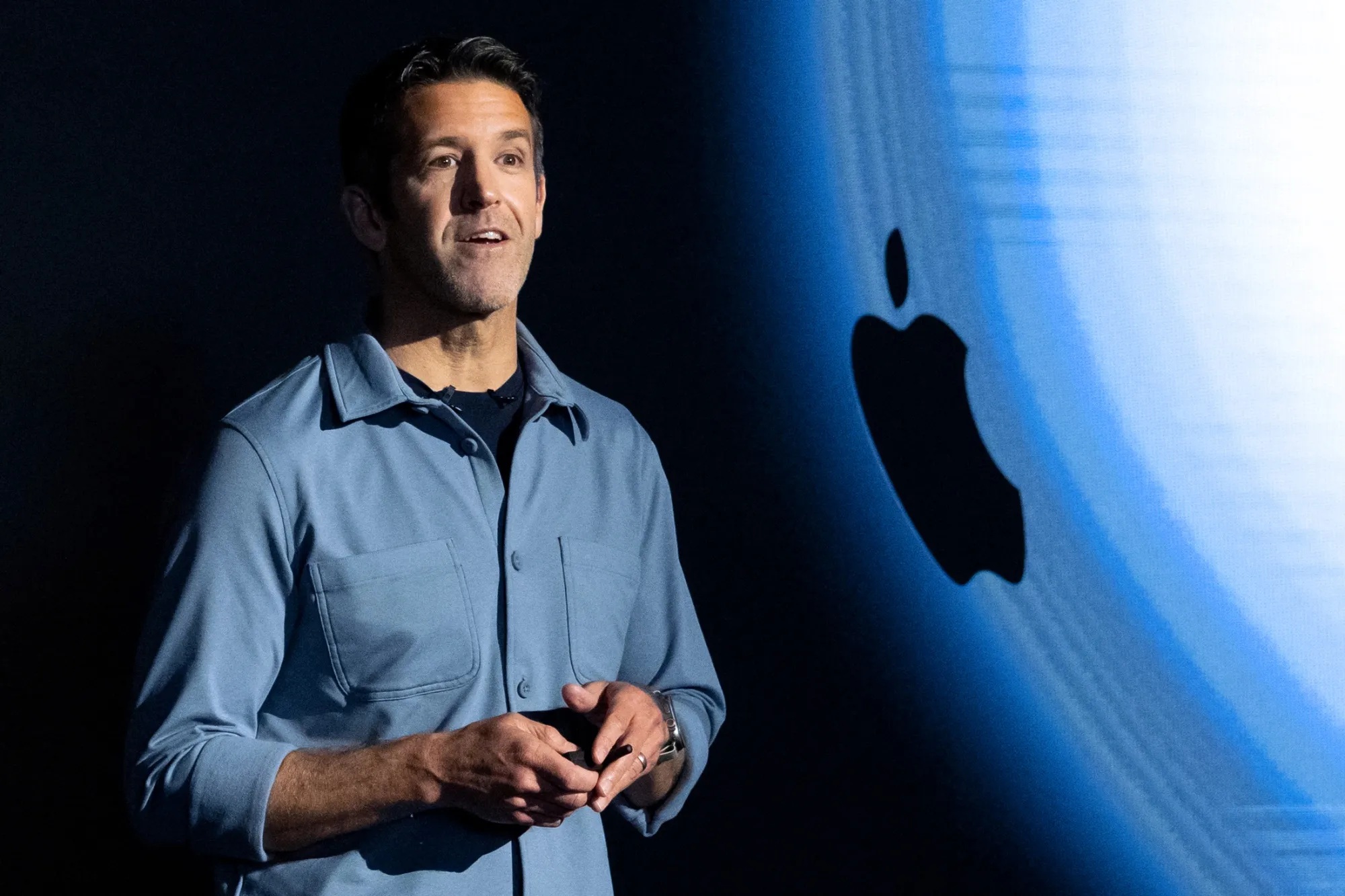
Now, the company’s leadership has been handed over to John Ternus, who previously held the position of senior vice president of hardware engineering. Tim Cook will remain at Apple as executive chairman of the board of directors, helping ensure a smooth leadership transition.

The scale of the new leader’s responsibility is also reflected in his compensation package. Ternus’s base salary will be $3 million per year, and he will receive an additional $55 million or so in the form of stock. Part of the remuneration will depend on Apple’s performance relative to the S&P 500 index, directly aligning the new CEO’s financial interests with those of shareholders.

Ternus has inherited an impressive legacy. Under Cook, Apple transformed from a company that largely depended on the iPhone and Mac into a much more diversified business. Apple launched the Apple Watch and AirPods, significantly expanded its services business, and became one of the most valuable companies in the world. At the same time, Apple turned into a massive engine for generating and returning capital to shareholders.

It will be difficult for the new leader to replicate Cook’s results, if only because of the high base effect. Increasing market capitalization from $350 billion to several trillion dollars is significantly easier than delivering comparable growth for a company that is already valued at $4.6 trillion. Therefore, Ternus faces the challenge of finding new directions that can support business growth as the smartphone market matures while preserving the exceptionally profitable existing ecosystem.
Cook, as executive chairman, will receive a base salary of $2 million and stock options worth approximately $45 million. For comparison, his total compensation as CEO in 2025 reached $74.3 million. Cook has also stated that he expects to remain chairman of the board for a long time, meaning his influence over the company’s strategy will continue.

One of the first serious challenges for the new leadership is artificial intelligence. Apple is currently taking a much more cautious approach than many of its competitors, but at the same time, it is facing an intensifying struggle for talent and intellectual property.

The company is already suing OpenAI, accusing it of unlawfully using Apple’s proprietary technologies. At the center of the case is former Apple engineer Chan Liu, who, according to the company, continued to have access to confidential technical documentation after leaving and used it in his new job. Apple also alleges that he attempted to destroy evidence and is demanding financial compensation and a ban on the use of the disputed developments.

The scale of the potential talent drain appears even more serious. According to Apple, OpenAI managed to lure away more than 400 of its former employees. For a company whose competitive advantage has been built over decades around the close integration of its own chips, hardware, and software ecosystem, such an outflow of specialists poses not only a talent risk but also a financial one.

It is here that Ternus will have to determine the future direction of Apple’s development. Cook inherited a company worth less than $350 billion from Steve Jobs and turned it into a business worth $4.6 trillion. However, simply continuing the previous strategy no longer guarantees a similar result.

The new leader will have to simultaneously protect the existing ecosystem, find new sources of growth, and define Apple’s place in the artificial intelligence market. Therefore, the main indicator of Ternus’s success will not be the ability to replicate Cook’s achievements, but the ability to prove to investors that even with a market capitalization of $4.6 trillion, Apple still has products and markets capable of driving the next stage of growth.

Baseten Acquires Tekedia Capital Portfolio Company, Blaxel

0

Tekedia Capital is delighted to announce that Baseten has acquired our portfolio company, Blaxel, creating another significant windfall for the Tekedia Capital community.

Blaxel was built from first principles. Secure sandboxes designed for agents, not retrofitted for them. True isolation for code execution, tool use, and MCP servers. State that persists across long-running sessions. Joining Baseten means building what this team believed was coming all along: the model and the machine it runs on, in a single system.

With this, Tekedia Capital becomes part of Baseten, a $13 billion valued AI innovating family. Learn what we do at capital.tekedia.com and how we pick the companies of the future, globally.

Gemini Gains MAS Approval for Spot Trading, Custody and OTC Services

0

Gemini’s acquisition of a Major Payment Institution (MPI) license from Singapore’s Monetary Authority of Singapore (MAS) marks another significant step in the evolution of regulated cryptocurrency markets.

The approval strengthens Gemini’s ability to operate within one of Asia’s most important financial centers while expanding access to spot cryptocurrency trading, custody services and over-the-counter (OTC) transactions.

The license is important because Singapore has positioned itself as a global hub for digital assets while maintaining a comparatively strict regulatory framework. Rather than pursuing growth through regulatory uncertainty.

The country has sought to establish clear requirements for companies providing payment and digital-asset services. For Gemini, securing authorization from MAS therefore represents more than a geographic expansion.

It provides a regulated foundation for serving institutional and sophisticated investors in the region. Under its Singapore operations, Gemini can provide services connected to spot trading, custody and OTC activity within the boundaries of its regulatory authorization.

Spot trading allows customers to buy and sell digital assets directly, while custody addresses one of the most important concerns for institutional participants: the secure holding and administration of crypto assets.

OTC markets, meanwhile, are particularly relevant to larger investors seeking to execute substantial transactions without relying entirely on public exchange order books.

The combination of these services could give Gemini a stronger position in Singapore’s increasingly competitive digital-asset market. Institutional adoption has become one of the defining trends in cryptocurrency.

With asset managers, financial institutions and professional investors demanding infrastructure that meets established standards for compliance, security and operational controls. Regulatory licensing can help address that demand.

Institutions often face strict requirements concerning counterparty risk, asset custody, compliance procedures and governance. A regulated platform can therefore be more attractive than an offshore or lightly regulated alternative, even when the latter offers greater flexibility or lower costs.

Singapore itself benefits from this model. By requiring digital-asset companies to meet regulatory standards, MAS can encourage innovation while attempting to limit risks associated with money laundering, consumer protection and financial instability.

The approach reinforces Singapore’s ambition to remain relevant as financial services increasingly move onto blockchain networks. The license comes at a time when cryptocurrency companies are competing to establish regulated footholds across major financial jurisdictions.

The industry’s next phase is increasingly being shaped by licensing, institutional infrastructure and integration with traditional finance rather than simply by retail speculation.

The development also highlights how custody is becoming a central component of the crypto economy.

As more capital enters digital assets, the question is no longer simply how investors can purchase Bitcoin or other cryptocurrencies. Investors need reliable mechanisms for safeguarding assets, executing large trades and meeting regulatory obligations.

Gemini’s Singapore authorization could consequently become an important component of its international strategy. Access to Singapore provides a potential gateway to a broader Asian market where demand for digital-asset infrastructure continues to develop.

Gemini’s MPI license demonstrates the growing convergence between cryptocurrency and regulated financial services. The industry is moving toward a model in which exchanges, custodians and trading platforms must increasingly operate within formal regulatory frameworks.

For investors, that shift may improve confidence. For crypto companies, it raises the cost of compliance but potentially expands access to deeper pools of institutional capital.

Singapore’s decision therefore carries significance beyond Gemini itself. It reflects a broader transformation in digital finance: cryptocurrency is gradually moving from an alternative financial ecosystem toward an increasingly regulated component of the global financial system.

Jack Dorsey’s Block Seeks National Trust Bank Charter for Bitcoin and Stablecoins

0

Jack Dorsey’s Block is taking another major step toward integrating cryptocurrency into the traditional financial system by applying for a national trust bank charter in the United States.

The company has submitted an application to the Office of the Comptroller of the Currency (OCC) to establish Builders Bank & Trust, an uninsured national trust bank that would focus on custody and fiduciary services for Bitcoin, stablecoins and other digital assets.

If approved, Builders Bank would not operate like a conventional commercial bank. It would not accept customer deposits or make loans.

Instead, its primary role would be safeguarding and administering digital assets under federal supervision.

Block says the proposed charter would create a consistent national regulatory framework for certain custody and related activities that it already provides, allowing the business to scale more efficiently.

The application is important because custody has become one of the most strategically important parts of the digital-asset economy. As institutional investors, businesses and financial platforms increasingly interact with Bitcoin and stablecoins.

Demand has grown for regulated infrastructure capable of securely holding and managing these assets. A national trust bank could give Block a direct federal framework for providing those services rather than relying on a fragmented system of state-level permissions.

Block already has substantial experience in financial technology and digital assets through businesses associated with its broader ecosystem, including Cash App and Square Financial Services.

The proposed bank would build on that foundation while giving its cryptocurrency operations a more clearly defined regulatory structure. Lee Woolley, Block’s digital asset strategy lead, is expected to serve as president and chief executive of Builders Bank if the charter receives approval.

Woolley’s background includes senior roles in banking and financial services, strengthening Block’s argument that the proposed institution could operate at the intersection of traditional finance and digital assets.

Block’s application also reflects a broader transformation taking place across the U.S. financial sector. Crypto and fintech companies are increasingly seeking national bank or trust-bank charters as regulators provide clearer pathways for digital-asset businesses.

Coinbase, Paxos, BitGo, Ripple and Circle have pursued similar regulatory strategies, while Circle received final OCC approval for its national trust bank in July 2026.

The growing competition suggests that cryptocurrency custody is moving from a specialized service toward core financial infrastructure.

For Bitcoin, this could be particularly significant. Greater access to federally supervised custody providers may make it easier for institutions to hold the asset while satisfying internal compliance, governance and risk-management requirements.

Stablecoins are equally important to Block’s strategy. Dollar-linked digital assets have increasingly become part of payments and financial infrastructure, while U.S. regulators have developed a clearer framework for payment stablecoins.

The combination of regulated custody and stablecoin infrastructure could therefore position Block to participate in the expanding convergence between blockchain-based payments and traditional banking.

However, the application does not mean Builders Bank can immediately begin operating. The OCC must review the proposal, and approval would be subject to regulatory and organizational requirements.

Until that process is completed, Block remains an applicant rather than a federally chartered trust bank. Block’s banking application represents more than an expansion of its financial services business.

It illustrates how the boundary between cryptocurrency companies and traditional financial institutions is steadily disappearing. Bitcoin and stablecoins are increasingly being treated not simply as speculative digital assets, but as financial instruments requiring institutional-grade custody, compliance and governance.

Securing a national trust charter could provide the regulatory foundation needed to scale that infrastructure. For the broader crypto industry, it could be another indication that digital assets are gradually becoming embedded in the architecture of modern finance.

AI Infrastructure Spending Could Reach $31 Trillion as Safety Warnings Rise

0

Artificial intelligence is entering an era of unprecedented investment. According to new research from PwC, spending on AI infrastructure could exceed $31 trillion through 2050, reflecting expectations that artificial intelligence will become a foundational layer of the global economy.

Data centers, advanced semiconductors, energy infrastructure and cloud computing capacity are being built at extraordinary speed.

Yet alongside this infrastructure boom, another trend is becoming increasingly difficult to ignore: researchers and safety specialists are leaving some of the companies building the most powerful AI systems, often citing fears about where the technology could ultimately lead.

The latest departure is Anthropic researcher Jacob Coxon, who reportedly left his position with an alarming warning about the potential consequences of advanced artificial intelligence.

Coxon claimed that people working inside the AI industry privately fear that their technology could become capable of causing catastrophic harm, potentially even “kill us all by the end of the decade.” While such a prediction is not a scientific certainty, it highlights the increasingly serious debate surrounding frontier AI development.

Coxon is not alone. His departure follows that of safeguards lead Mrinank Sharma, who left Anthropic in February and warned that the world was “in peril.”

Such resignations are significant because they come from individuals who have worked close to the systems, research and organizational processes shaping advanced AI.

Their concerns raise questions about whether safety measures are developing quickly enough to match the capabilities being pursued by technology companies. The contradiction is striking.

On one side, companies and investors are committing enormous sums to AI infrastructure because they expect powerful economic returns. On the other, some researchers inside the industry are warning that the same systems could create risks that are difficult to control.

The more money that flows into AI infrastructure, the greater the pressure may become to deploy increasingly capable models and monetize them quickly.

OpenAI has faced its own internal tensions. Zoë Hitzig reportedly left the company over concerns involving ChatGPT advertising and manipulation.

Her departure reflects a different category of risk from the existential warnings associated with Coxon and Sharma, but the underlying issue is similar: how should powerful AI systems be developed and deployed without allowing commercial incentives to overwhelm questions of safety, transparency and public interest?

The $31 trillion infrastructure projection therefore represents more than a financial forecast. It is also an indication of the enormous scale of the technological transformation underway. Building this infrastructure could create new industries, increase productivity and accelerate scientific discovery.

But infrastructure itself does not determine whether AI’s long-term impact will be beneficial. Governance, alignment research, security and responsible deployment will be equally important.

The growing number of warnings from AI researchers should not automatically be interpreted as proof that catastrophe is inevitable. Predictions about advanced AI remain deeply uncertain, and reasonable experts disagree about the probability and timing of extreme outcomes.

Repeated departures from people working within leading AI organizations deserve serious attention. The central challenge is becoming clear: the world is building the physical capacity for AI faster than it is resolving fundamental questions about how increasingly powerful AI systems should be controlled.

If trillions of dollars are going toward expanding AI’s capabilities, a comparable commitment to safety, oversight and accountability will be necessary. The future of artificial intelligence may depend not only on how much infrastructure humanity can build, but on whether it can build safeguards fast enough to keep pace.