


DD
MM
YYYY

PAGES

DD
MM
YYYY

spot_img

PAGES

Home Blog Page 175

Lenskart Shares Make Weak Market Debut Despite Oversubscribed $828 Million IPO

0

Shares of SoftBank-backed eyewear retailer Lenskart Solutions Ltd opened to a lackluster debut on India’s stock exchanges Monday, falling as much as 11 percent below their issue price before managing a mild recovery in early trade.

By midday, the stock was trading at $4.53, barely above its ?402 issue price, reflecting investor hesitation after one of the country’s most anticipated listings of 2025.

The tepid debut stood in sharp contrast to Urban Company’s September listing, which surged more than 60 percent on its first trading day, underscoring how fickle investor sentiment has become toward India’s tech-driven IPOs.

Lenskart’s $828 million IPO — the largest consumer internet listing of the year — was oversubscribed 28 times, drawing strong bids from institutional and high-net-worth investors. Retail participation, however, was notably softer, as smaller investors appeared to focus on short-term gains rather than long-term holdings.

Many smaller investors have been jumping from one IPO to another, booking early profits and moving on, Bhavesh Shah, head of investment banking at Equirus Capital, told CNBC.

This churn is believed to be creating heavy selling pressure on listing day.

A recent study by the Securities and Exchange Board of India (SEBI) revealed that 54 percent of IPO shares allotted to investors — excluding anchor investors — are sold within a week of listing. Between April 2021 and December 2024, retail investors offloaded 50 percent of the shares by value within a week of listing and 70 percent within a year, reflecting a pattern of speculative trading in the IPO market.

Valuation Debate

Lenskart’s debut has reignited debate over whether India’s startup IPOs are being priced too aggressively. The eyewear retailer, which counts SoftBank, Temasek, and Kedaara Capital among its backers, was valued at more than $11 billion at listing — placing it among India’s most richly valued consumer tech firms.

Some analysts have warned that the issue price implied a price-to-earnings (P/E) ratio of over 200, an unusually high multiple given the company’s relatively modest profitability.

“The IPO price valued Lenskart at over 200 times earnings, and most of its FY25 profits are expected to come from non-core business operations,” said Devina Mehra, founder of investment firm First Global.

Others, however, remain bullish about the company’s long-term prospects. Founded in 2010 by Peyush Bansal, Lenskart has built one of India’s largest optical retail networks, with over 2,500 stores across the country and growing international operations in the Middle East and Southeast Asia.

It is believed that Lenskart’s fundamentals remain solid, and its leadership in the optical retail segment gives it a strong runway for growth.

Institutional Support

The company’s investor roster reflects deep global interest. Top institutional buyers included the Government of Singapore (2.97 percent), BlackRock, and Fidelity, which acquired stakes through multiple funds.

Despite this backing, analysts believe Lenskart’s performance in the coming quarters will depend on whether it can justify its lofty valuation with sustainable revenue growth and margin expansion.

The company reported consolidated revenue of $427 million in FY24, up 38 percent year-on-year, but net profit margins remain tight due to high marketing and expansion costs.

Lenskart has also been diversifying through acquisitions, including a controlling stake in Japanese eyewear brand Owndays, as it aims to establish itself as a global optical retail powerhouse.

Still, the muted market response suggests that investors remain cautious about high-growth startups listing at premium valuations. While strong institutional interest offers credibility, analysts warn that post-listing performance will depend heavily on how the company converts its brand strength into sustained profitability.

Permira Clinches £2.3 Billion Buyout of JTC After Intense Private Equity Bidding War

0

British private equity firm Permira has successfully secured the acquisition of London-listed financial services company JTC Group in a deal valued at £2.3 billion ($3.09 billion), ending months of competitive bidding and negotiations that drew interest from some of the world’s largest private equity firms.

Under the terms of the agreement announced on Monday, JTC shareholders will receive 1,340 pence per share in cash, representing a 49.8% premium to the stock’s closing price on August 13, the day before Permira made its first approach. The deal marks the fourth proposal from Permira, which JTC’s board has now accepted after rejecting multiple earlier offers, as well as rival bids from Warburg Pincus and exploratory talks with Advent International.

Jersey-based JTC, which provides fund administration, corporate, and private client services across 30 jurisdictions, has become the latest in a wave of UK-listed firms targeted by deep-pocketed private equity investors. Many overseas investors have been drawn to London’s equity market, where share valuations remain significantly discounted compared to U.S. and European peers.

Analysts say that these takeovers reflect the ongoing trend of foreign buyouts of undervalued British assets, following a string of similar moves in 2024 and 2025. The combination of a weaker pound, subdued investor sentiment, and lingering post-Brexit market uncertainty has made UK-listed companies prime acquisition targets.

JTC’s shares have soared by nearly 39% since the company first disclosed takeover talks with Permira on August 29. The firm’s confirmation that it had entered discussions with the private equity group helped boost investor optimism, as market watchers speculated that a bidding war could further lift valuations.

The Financial Times was the first to report details of the Permira deal on Sunday, a day before the official announcement. According to people familiar with the matter, the final price was the result of weeks of back-and-forth negotiations, during which JTC’s board sought to maximize shareholder value amid multiple competing offers.

Before agreeing to Permira’s latest offer, JTC had rejected two proposals from Warburg Pincus in early September and three earlier ones from Permira in August, without giving specific reasons for its refusals. At the time, the company said it was “carefully evaluating” each approach to ensure it aligned with its long-term strategic priorities and stakeholder interests.

Permira, which manages more than €80 billion ($87 billion) in assets, has built a track record of investing in high-growth companies in the financial services, technology, and consumer sectors. The private equity firm’s portfolio includes stakes in Klarna, Hugo Boss, and Genesys, and it has recently intensified its push into business services and professional administration firms.

A source close to the deal said the JTC acquisition fits Permira’s focus on “high-quality, cash-generative businesses with scalable global operations.” For JTC, private ownership under Permira is expected to accelerate its international expansion and technology investment, particularly in fund administration software and digital corporate services.

Meanwhile, Advent International, which had been exploring its own possible bid for JTC, reportedly suspended its due diligence efforts in September, allowing Permira to consolidate its position as the lead contender.

The deal adds to the growing list of UK companies taken private by global investors, underscoring concerns among policymakers and analysts that London’s capital markets are losing competitiveness. In recent years, firms such as Darktrace, Dechra Pharmaceuticals, and John Wood Group have also been acquired by private equity groups, often after long negotiations over valuation.

Completion of the transaction remains subject to shareholder approval and regulatory clearance, though given the offer premium and the company’s rising share price, analysts expect little resistance from investors.

If finalized, the acquisition will mark one of the largest UK financial services takeovers of 2025 — and another sign of how foreign private equity capital continues to reshape the British corporate landscape, one undervalued stock at a time.

U.S. Senate Reaches Breakthrough Vote to End Longest Government Shutdown as Economy Feels Deep Strain

0

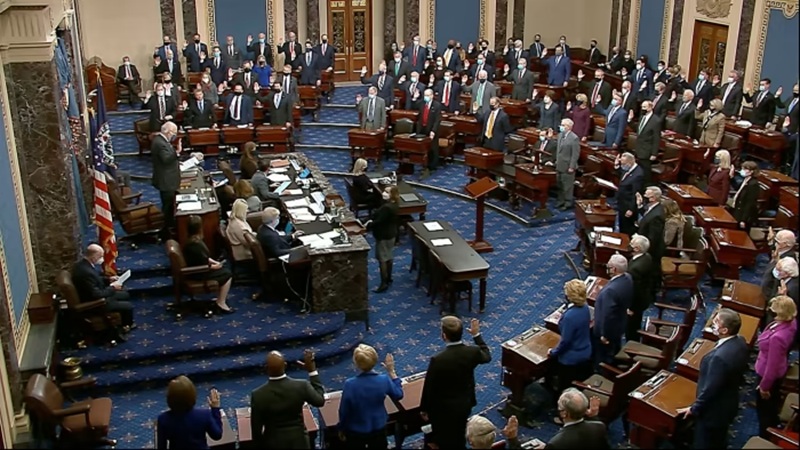
After 40 days of political paralysis that brought much of Washington and key U.S. agencies to a standstill, the Senate on Sunday night voted 60–40 to advance legislation that could end the longest government shutdown in American history later this week.

The bipartisan agreement offers the first sign of relief for hundreds of thousands of federal workers and a nation increasingly burdened by the economic fallout of the funding lapse.

The deal, forged after weeks of tense negotiations among Senate leaders and the Trump administration, funds several key agencies—including Agriculture, Veterans Affairs, and the Food and Drug Administration—through the end of the current fiscal year, and temporarily funds all remaining agencies through January 30, 2026. The Trump administration also agreed to rehire all federal employees laid off during the shutdown and to hold a Senate vote in December on extending Obamacare tax credits set to expire at year’s end.

“After 40 long days, I’m hopeful we can bring this shutdown to an end,” Senate Majority Leader John Thune said before the vote.

Negotiations were led by Thune, Senate Appropriations Chair Susan Collins, and a coalition of Democrats, including Angus King, Jeanne Shaheen, and Maggie Hassan. President Donald Trump, who personally intervened in the final days of talks, pushed for the deal to include measures easing permitting for new power generation projects to accelerate infrastructure expansion.

The measure now heads for full debate in the Senate before moving to the House for final passage. Once approved, it would trigger immediate reinstatement of furloughed federal workers, back pay for missed wages, and a temporary freeze on additional layoffs until January 30.

While the political breakthrough signals the beginning of the end of the shutdown, the economic consequences are already significant and still unfolding. The Congressional Budget Office estimates that the government stoppage has shaved several billion dollars off U.S. GDP, while disrupting multiple sectors — from transportation to agriculture — that rely heavily on federal oversight and staffing.

One of the hardest-hit sectors has been aviation. U.S. airlines canceled more than 2,700 flights on Sunday as Transportation Secretary Sean Duffy warned that air traffic across the country could “slow to a trickle” if the shutdown extended into the busy Thanksgiving travel period. The slowdown at 40 of the nation’s busiest airports has already created ripple effects nationwide, with airlines reporting escalating delays and staffing shortages.

According to FlightAware, a flight-tracking website, nearly 10,000 flight delays were recorded on Sunday alone. More than 1,000 flights were canceled on Friday and another 1,500 on Saturday. The Federal Aviation Administration last week ordered flight reductions at major airports after unpaid air traffic controllers began calling in sick in growing numbers.

The FAA cuts, which began Friday at 4 percent, were set to increase to 10 percent by November 14. They are in effect daily from 6 a.m. to 10 p.m. local time, impacting all commercial carriers. Duffy said the reductions were necessary to ensure safety amid staffing shortages, warning that delays could worsen without an immediate resolution.

The impact has spread beyond aviation. Millions of low-income Americans faced food insecurity as the Supplemental Nutrition Assistance Program (SNAP) ran low on funds. Mortgage approvals slowed as the IRS and FHA remained short-staffed. National parks, long symbols of American resilience, became littered with trash and closed facilities as rangers went unpaid. The White House itself has faced mounting criticism for the shutdown’s breadth, which economists warn could dampen consumer confidence heading into the year’s final quarter.

Under the Senate deal, federal workers will receive full back pay and reinstatement letters confirming withdrawal of termination notices. Agencies will also be barred from issuing new layoff orders before the temporary funding window expires.

Sen. Tim Kaine (D-Va.), representing one of the largest federal workforces in the country, supported the compromise after securing language protecting affected employees.

“I have long said that to earn my vote, we need to be on a path toward fixing Republicans’ health care mess and to protect the federal workforce,” Kaine said.

Still, some Democrats argued the compromise gave up too much leverage. Sen. Elizabeth Warren (D-Mass.) said she opposed ending the shutdown without first securing an extension of Affordable Care Act tax credits, calling the move “a mistake” that weakens Democratic negotiating power.

Sen. Jeanne Shaheen countered that Democrats won meaningful concessions, including a guaranteed vote on health care before year-end.

“We have a guaranteed vote by a guaranteed date on a bill that we will write,” she told reporters after the vote.

Independent Sen. Angus King added that the agreement was “the best chance we have to fix this without further hurting the economy.”

Conservative senators, meanwhile, are seeking changes before final passage. Sen. Rand Paul (R-Ky.) has threatened to delay the process unless a vote is held on removing hemp-related spending. Sens. Mike Lee, Ron Johnson, and Rick Scott also voiced concerns about the bill’s size and the potential for runaway spending once agencies reopen.

The House is expected to take up the bill later this week. Trump, speaking to reporters after attending a football game Sunday night, said he believed the end of the shutdown was near.

“It looks like we’re getting very close to the shutdown ending,” he said.

For millions of Americans—from stranded travelers to unpaid federal workers—the vote represents a long-awaited sign of relief. But economists warn that the damage to productivity, consumer sentiment, and public trust will take longer to undo. Even as lawmakers celebrate a breakthrough, the shutdown has shown that the cost of political brinkmanship now stretches far beyond Washington’s walls.

Rumble Acquires Germany’s Northern Data in $767m All-Stock Deal, Expanding into AI Cloud Infrastructure

0

Rumble, the video platform best known for hosting U.S. President Donald Trump’s Truth Social, announced on Monday that it has reached an agreement to acquire German artificial intelligence cloud firm Northern Data in an all-stock deal valued at roughly $767 million.

The acquisition marks a major strategic shift for Rumble as it moves beyond its origins as a video-sharing and free-speech platform into the fast-growing field of AI cloud computing and data infrastructure.

Under the terms of the agreement, Northern Data shareholders will receive 2.0281 newly issued Class A Rumble shares for each Northern Data share they hold — representing a 12.99% discount to the German company’s closing price on Friday. Once completed, Northern Data shareholders will own about 30.4% of the combined entity. The deal is expected to close in the second quarter of 2026, after which Northern Data plans to delist from the Frankfurt Stock Exchange.

The announcement triggered a strong market response, with Rumble shares surging more than 25% in premarket trading. The deal gives Rumble immediate access to Northern Data’s high-performance computing infrastructure, including its subsidiaries Taiga and Ardent, which specialize in large-scale GPU-based AI cloud services. These units are critical to supporting generative AI applications, machine learning models, and advanced data analytics — areas that have seen explosive demand globally.

Rumble’s entry into the AI infrastructure business comes as the company seeks to expand its revenue base and technological capacity. The firm’s partnership with Northern Data is also reinforced by the involvement of Tether, the world’s largest stablecoin issuer, which already owns 48% of Rumble, according to data compiled by LSEG.

As part of the agreement, Rumble secured a $150 million GPU-leasing deal with Tether, ensuring consistent demand for computing power while deepening its ties to the cryptocurrency sector. Tether will also serve as an anchor customer for the merged company, providing additional revenue stability.

Rumble has committed $200 million in tax liability support to Northern Data as part of the merger’s financial structure. The acquisition will also see Rumble gain control of approximately 22,400 Nvidia graphics processing units (GPUs) upon closing — a move that significantly boosts its AI processing capabilities. With Nvidia chips being the backbone of AI computation, the acquisition positions Rumble among a small group of companies with access to large-scale GPU infrastructure at a time when global demand for AI chips far exceeds supply.

This isn’t Rumble’s first attempt at acquiring Northern Data. In August, the company had proposed an initial offer of 2.319 shares for each Northern Data share, seeking control over its Taiga and Ardent divisions. However, that proposal was revised as the two sides renegotiated terms in response to shifting market valuations and Northern Data’s internal review of its business segments.

Northern Data, headquartered in Frankfurt, had withdrawn its annual forecast in October amid uncertainty in the GPU pricing market and rising operational costs. The company said it was exploring “strategic alternatives” at the time, including potential mergers or divestitures. It also confirmed that it would pay its shareholders $200 million in cash if it successfully completes the sale of its Corpus Christi data center before the Rumble transaction closes.

The acquisition marks an evolution from Rumble’s identity as a politically charged video platform to a diversified tech company with ambitions in artificial intelligence, cloud infrastructure, and distributed computing. The deal comes at a time when AI-driven platforms are seeking to secure independent GPU resources rather than rely on U.S.-based hyperscalers such as Amazon Web Services (AWS), Google Cloud, or Microsoft Azure — all of which dominate the global AI hosting market.

Some analysts view the acquisition as a bold but risky bet. By tying its future to AI cloud infrastructure, Rumble is seen as positioning itself to capitalize on one of the fastest-growing sectors in technology. However, integration challenges, capital intensity, and competition from established players are expected to test the platform’s long-term viability.

Still, the acquisition underlines the convergence of three powerful industries: social media, cryptocurrency, and artificial intelligence. With backing from Tether, access to Nvidia hardware, and control of Northern Data’s data centers, Rumble’s new venture could serve as a foundation for an alternative ecosystem — one that blends AI computation, blockchain support, and decentralized media infrastructure under a single technology brand.

South Africa’s Start-up Ecosystem Quietly Leads Africa in Equity Funding

0

South Africa has long been a steady force in Africa’s start-up landscape, and the funding numbers continue to back that up.

Since 2019, the country has consistently ranked among Africa’s “Big Four” start-up markets, standing out as one of the continent’s top destinations for venture funding.

In 2019, South African start-ups secured around $80 million across various funding types (excluding exits). Funding surged to $869 million in 2021, at the height of Africa’s tech funding boom, and has since stabilized at approximately $400 million annually. As of the end of October 2025, South African start-ups had already raised $484 million.

Despite the ecosystem’s maturity and vibrancy, the country has never claimed the number one spot in total funding volume, generally ranking third or fourth, except for a brief rise to second place in 2021. This ranking, however, obscures an important underlying reality. The majority of funding in South Africa, much like in Nigeria, comes from equity rather than debt.

From fintech to clean energy and deep tech, South African founders are securing a significant share of the continent’s equity funding, supported by a relatively mature investment environment, strong corporate participation, and a growing pipeline of globally competitive ventures.

According to a report by Africa: The Big Deal, since 2019, equity has accounted for 90% of the total funding raised in South Africa. For the third year in a row, the country is topping the charts for start-up equity funding on the continent.

By comparison, equity represents a smaller share of total funding in Egypt (76%) and Kenya (just 55%). This imbalance has become even more apparent since early 2024, when equity represented 92% of funding raised in South Africa and 86% in Nigeria, compared to two-thirds in Egypt and only a quarter in Kenya.

When focusing strictly on equity investment, South Africa’s position changes significantly. The country has been Africa’s leading market for equity funding since 2023. By the end of October 2025, South African start-ups accounted for 30% of all equity raised on the continent, despite representing only 2% of all debt financing.

With $449 million in equity secured so far this year, the market has already surpassed its totals from 2023 and 2024 and is on track to exceed 2022 levels as well. This figure is equal to the combined equity funding raised by Nigeria and Kenya or by Egypt and Kenya. Major equity rounds in 2025 have included those by hearX, Stitch, Naked, Wetility, Enko Education, Ctrack, and Paymenow, each securing more than $20 million.

South Africa is also the continent’s most active market for exits. Since 2019, it has recorded 56 exits, ahead of Egypt (48), Nigeria (34), and Kenya (24). Recent notable deals include Nedbank’s acquisition of iKhokha for approximately $93 million in August and Lesaka’s agreement to acquire Bank Zero for around $61 million in July.

Sector analysis further highlights South Africa’s strengths. The country leads the continent in funding within Healthcare, Telecom, Media & Entertainment, and Deeptech. It ranks second in Fintech, having raised $1.9 billion since 2019, compared to Nigeria’s $2.8 billion. In two of the continent’s other major sectors, Energy and Logistics & Transportation, South Africa ranks third and fourth, respectively.

Overall, while South Africa may not consistently top total funding charts, the data shows that it is a powerhouse of equity investment, exits, and sector leadership. The country’s ecosystem depth and maturity continue to position it as a central force driving Africa’s innovation economy.
