DD
MM
YYYY

PAGES

DD
MM
YYYY

spot_img

PAGES

Home Blog Page 18

Pump.fun’s $1B Milestone Exemplifies how Speculative Apps can Supercharge a Chain’s Metrics 

0

Pump.fun, the popular Solana-based memecoin launchpad, has become the first platform on the Solana blockchain to surpass $1 billion in lifetime revenue. This milestone was reported across multiple crypto news sources and on-chain analytics.

According to data from Dune Analytics dashboards tracking Pump.fun’s fees: Cumulative revenue reached approximately $1.003 billion with some reports citing figures like $1,003,944,721 or slightly higher at ~$1.004 billion. The platform achieved this since its launch in January 2024, driven primarily by fees from its bonding curve mechanism typically a 1% swap fee on transactions for memecoin launches and trades.

Pump.fun has facilitated the creation of around 12 million tokens, with lifetime unique users exceeding 22 million. It has dominated Solana’s memecoin ecosystem, at times accounting for a majority of daily transactions and outpacing established DeFi protocols like Jupiter ($401 million lifetime) and Raydium ($127 million).

Daily revenue often hovers around $1 million or more, with examples like $863,908 on March 10, 2026. A significant portion of revenue has funded PUMP token buybacks over $323 million worth in SOL used for repurchases to date. This makes Pump.fun not just Solana’s top revenue generator but one of the most profitable apps in crypto overall.

Highlighting the massive scale of memecoin activity despite high failure rates ~98.5% of launched tokens fail to complete their bonding curve. The platform shows signs of evolution beyond Solana, with reports of subdomain registrations and potential expansions to chains like Ethereum, Base, BSC, and Monad—positioning it as a multi-chain memecoin and trading hub.

This achievement underscores Solana’s strength in high-volume, speculative applications, even as the broader memecoin market remains volatile. Pump.fun’s achievement of surpassing $1 billion in lifetime revenue on Solana has had a profound impact on both liquidity and broader ecosystem growth within the Solana network, while also signaling potential for multi-chain expansion.

Pump.fun operates primarily through its bonding curve mechanism for memecoin launches, where trades incur a ~1% fee that directly contributes to platform revenue. This model bootstraps liquidity without requiring traditional initial pools unlike many DEX launches, as the curve gradually builds price and liquidity as buys occur.

Successful tokens “graduate” to DEXs like Raydium or Meteora, often with locked liquidity post-graduation to prevent rugs.The platform’s massive fee generation often $1M+ daily has funded aggressive PUMP token buybacks, with cumulative repurchases exceeding $320-323 million in SOL.

These buybacks reduce circulating supply, stabilize PUMP’s price, and indirectly support ecosystem liquidity by recycling capital. Initiatives like the Glass Full Foundation (GFF) inject liquidity into promising memecoins, reducing volatility for select projects and encouraging more launches. Pump.fun’s integrated PumpSwap DEX has recorded peak weekly volumes like $6.6 billion, often outpacing other Solana DEXs.

It aggregates liquidity from sources like Raydium and Meteora, while adding support for assets like wrapped BTC (wBTC), broadening tradable liquidity pools. Spillover effects boost Solana-wide liquidity: High memecoin activity drives DEX volumes on Jupiter, Raydium, etc., increases active addresses, and contributes to TVL growth in DeFi protocols.

However, liquidity remains fragmented and volatile—~98.5% of launched tokens fail, concentrating real depth in winners. Recent expansions enhance accessibility but risk diluting Solana-specific liquidity if multi-chain shifts accelerate. Pump.fun has become a core engine for Solana’s growth, particularly in the memecoin/speculative sector, which dominates retail activity.

It facilitates ~12 million tokens created and 22+ million unique users, dominating 75-91% of Solana memecoin launches at peaks. This drives network usage: At times, it accounted for 62% of daily Solana transactions. Revenue flywheel supports ecosystem health—fees fund buybacks, creator payouts via programs like Project Ascend, and liquidity injections, creating a virtuous cycle that attracts creators and traders.

Broader Solana benefits include revived sentiment, higher TVL in ancillary DeFi, and alignment with network upgrades like Firedancer for scalability. The platform is evolving beyond pure memecoins: Pivots toward multi-asset trading, venture funds, livestreaming, and “infrastructuralization” aim to diversify and sustain growth amid cyclical memecoin hype.

Pump.fun exemplifies how speculative apps can supercharge a chain’s metrics—driving fees, users, and liquidity far beyond traditional DeFi—while highlighting risks like volatility and high failure rates. Its $1B milestone cements Solana’s edge in high-volume retail crypto, with ongoing expansions likely fueling further growth in 2026.

India Reaches Out to Iran As Energy Shock Following Hormuz Closure Disrupts Supplies, Fuels Inflation Fears

0

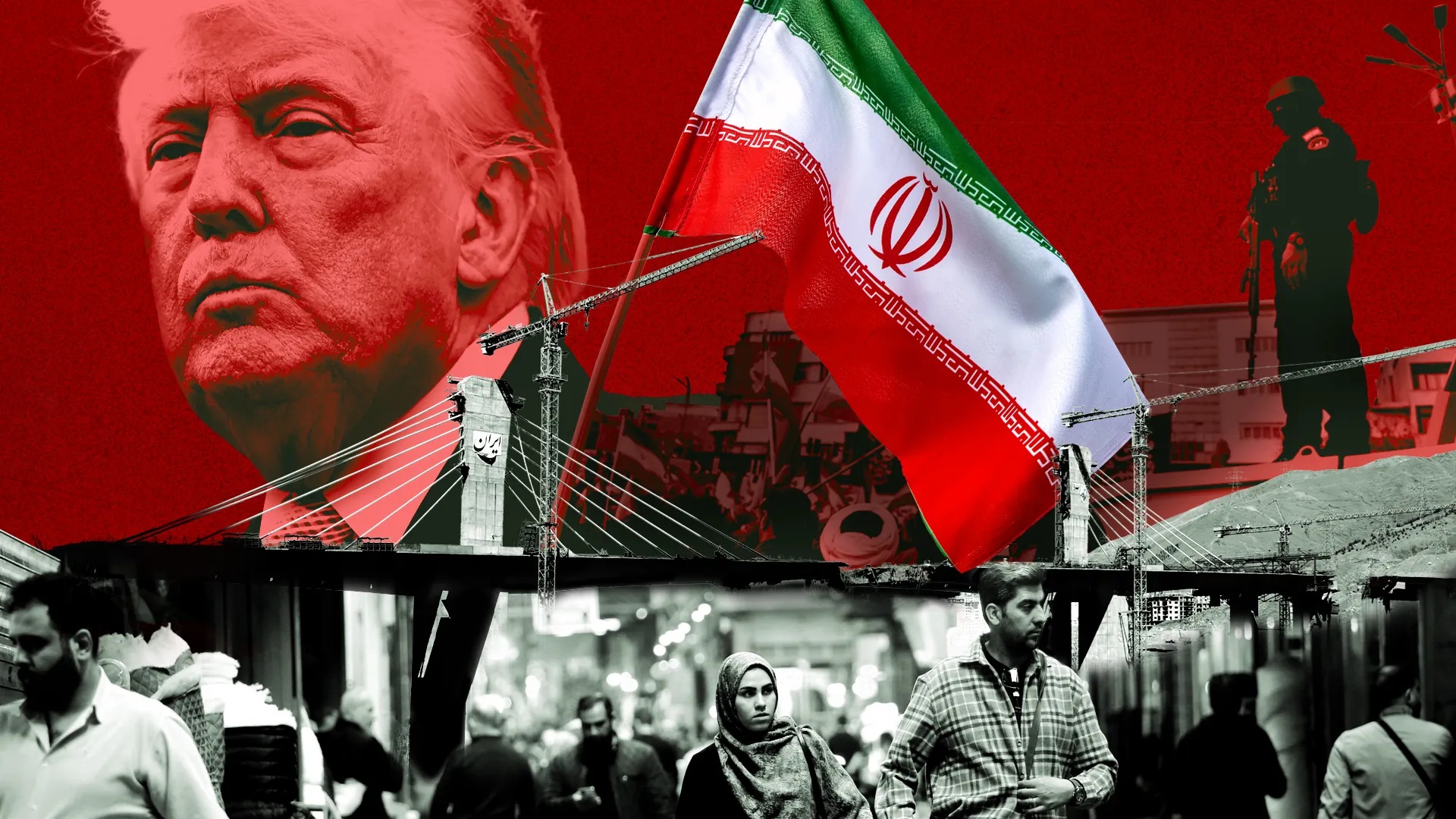
India is scrambling to safeguard its energy security after Iran’s leadership vowed to keep the Strait of Hormuz closed, a move that threatens the flow of oil and gas through one of the world’s most critical shipping corridors and exposes the vulnerabilities of the world’s third-largest crude importer.

Prime Minister Narendra Modi held urgent talks with Iranian President Masoud Pezeshkian within hours of the declaration, underscoring New Delhi’s growing alarm over supply disruptions and rising energy costs that are already triggering panic-buying in parts of the country.

The call marked Modi’s first direct contact with Iran since the war began and highlighted the diplomatic pressure building on major Asian economies that rely heavily on energy shipments through the narrow waterway linking the Persian Gulf to global markets.

“The safety and security of Indian nationals, along with the need for unhindered transit of goods and energy, remain India’s top priorities,” Modi said in a message posted on X after the conversation.

A Chokepoint For India’s Energy Lifeline

The Strait of Hormuz, like many others, is strategically important to India’s economy. According to estimates from Citigroup, about half of India’s crude oil imports move through the strait, while the majority of its liquefied petroleum gas (LPG) — the primary cooking fuel used by households and businesses — also transits the route.

The closure, therefore, threatens not only oil supply but also the availability of cooking fuel used by nearly 330 million households and more than 3 million businesses. For India, where energy demand has surged alongside rapid economic growth and urbanization, such a disruption poses immediate economic risks.

Analysts say the country’s reliance on imported fuel makes it particularly exposed to geopolitical shocks in the Middle East.

“India needs more oil and gas,” said Nikhil Bhandari of Goldman Sachs, noting that the country has a significantly smaller inventory buffer than many East Asian economies and is therefore more vulnerable to supply disruptions.

The supply risks are already rippling through India’s domestic energy market. Government officials say petrol stations still have adequate fuel supplies, but panic buying of LPG cylinders has begun to strain the system.

The shortage is particularly acute for commercial users such as restaurants and hotels, which rely on larger LPG cylinders.

The National Restaurant Association of India said some restaurants have begun closing temporarily or reducing menus as commercial LPG cylinders become harder to obtain. In response, authorities have instructed pollution control boards to allow restaurants to temporarily switch to alternative fuels such as kerosene, biomass, or coal.

While the measure is intended to conserve LPG for households, it also illustrates how quickly energy shortages can disrupt sectors ranging from hospitality to food services.

The government has also tightened distribution rules, extending the waiting period between LPG cylinder bookings to 25 days in urban areas and up to 45 days in rural regions.

Inflation Pressures Mounting

Economists warn that the disruption is likely to feed into inflation across the broader economy. Citigroup estimates that sustained oil prices between $90 and $100 per barrel could push retail fuel prices up by between 5 and 10 rupees per liter.

That increase alone could add up to 50 basis points to India’s consumer inflation rate, posing a challenge for policymakers seeking to maintain price stability. The bank now sees a 50- to 75-basis-point upside risk to its forecast of 4% inflation for the financial year ending March 2027.

Meanwhile, analysts at Nomura have raised their forecast for India’s consumer inflation to 4.5% from 3.8%, citing higher cooking fuel costs and rising prices in restaurants and food services, according to Reuters.

India has already raised the price of LPG cylinders by about 60 rupees, or roughly 6.5%, though economists say political considerations may limit further increases as several states head into election campaigns.

Currency And Trade Risks

The energy shock is also putting pressure on India’s external accounts. The Indian rupee has weakened sharply in recent sessions, trading near record lows of around 92.48 to the dollar as markets factor in the prospect of higher oil import bills.

Economists warn that sustained oil prices near $100 per barrel could widen India’s current account deficit and intensify downward pressure on the currency. Radhika Rao, senior economist at DBS Bank, estimates that oil prices averaging $100 per barrel could widen India’s current account deficit by around 70 basis points.

India’s current account deficit stood at about 1.3% of GDP at the end of December 2025. A sustained widening of the deficit would increase the country’s reliance on foreign capital flows and potentially weaken the rupee further.

Supply disruptions are already evident in shipping data. Energy intelligence firm Kpler estimates that around 130 million barrels of crude oil remain stranded in the Middle East Gulf because vessels cannot safely transit the Strait of Hormuz.

India Is Among The Countries Affected.

Officials say at least 28 Indian vessels carrying nearly 800 seafarers remain stuck in the strait. Foreign Minister Subrahmanyam Jaishankar has held multiple discussions with Iranian Foreign Minister Seyed Abbas Araghchi in recent days, focusing on the safety of shipping routes and energy supplies.

A spokesperson for India’s foreign ministry said the talks addressed “the safety of shipping and India’s energy security,” but declined to provide further details.

In the meantime, India has stepped up efforts to diversify its oil supply. The country now imports crude from more than 40 nations, with shipments from Russia increasing significantly.

Data from Kpler shows India purchased about 1.46 million barrels per day of Russian crude in March, up from around 1 million barrels per day in February.

Market chatter indicates that Indian refiners recently bought Russian Urals crude at a premium of about $5 per barrel above Brent for deliveries in March and April — a sign that tight supply is pushing up prices even for discounted barrels.

Yet analysts say shifting supply chains is easier said than done.

“If Hormuz remains closed beyond the near term, India will be forced into a structural reconfiguration it was never fully prepared for, at a cost premium it may not be able to afford,” said Reema Bhattacharya of Verisk Maplecroft.

Energy experts note that rerouting supplies from other producers often requires longer shipping routes, higher freight costs, and competition with other major importers. That means the current crisis could mark more than a temporary disruption. If the closure persists, it could reshape the country’s energy trade patterns and push fuel costs higher for an extended period — reinforcing concerns that the surge in global energy prices may not ease anytime soon.

Review of Crash Games on 1Win

0

In this review, we take a detailed look at how crash games work at 1Win Casino, how Aviator differs from JetX, Lucky Jet and other similar games, what features the operator offers and what players from Canada need to consider when choosing such games.

Aviator: The Flagship of the Crash Genre at 1Win

One of the most popular games on 1Win is Aviator, developed by Spribe. It is a minimalistic but well-thought-out game in which the multiplier is represented as the trajectory of an aeroplane. The higher it flies, the higher the coefficient becomes, but no one knows when it will disappear from the screen.

The user can make two parallel bets and control each one independently of the other. For example, one can be taken early, while the other can be held longer. This provides more flexibility, especially with well-thought-out strategies.

Additional Aviator features on 1Win:

  • Round history — allows you to see previous odds and analyse risks;
  • Chat with other players — you can see who is betting at what odds and even chat in real time;
  • Automatic bets and auto-withdrawal — useful for those who don’t want to click manually every round.

It is worth noting that Aviator has passed an integrity audit by independent organisations: rounds are based on a “provably fair” algorithm with result hashing, which excludes platform interference in the game process.

Other Crash Games on 1Win: What Else Besides Aviator

Although Aviator is considered the most recognisable crash game on the 1Win platform, it is far from the only representative of the genre. Users also have access to other projects with the same basic mechanics but different visual designs, themes and gameplay features. This gives players a choice: some prefer conciseness and simplicity, while others prefer dynamics, special effects and additional features. We will tell you what alternatives are available on 1Win and why they might be interesting.

JetX

The game JetX is often mentioned in reviews as one of Aviator’s main competitors. Developed by SmartSoft Gaming, it offers a slightly more aggressive multiplier growth model and visually resembles a retro-style arcade game. Instead of an aeroplane, the player watches a jet ship fly across the screen as the multiplier increases.

Unlike Aviator, where long take-offs above x100 are less common, JetX can throw out x300 and even x500. This creates excitement and makes the game attractive to those who like to catch a big multiplier. However, such spikes are rare, and most rounds end at much more modest values.

JetX supports automatic bets and auto-withdrawals, and also keeps statistics on past rounds. The interface is intuitive, although it may seem a little more aggressive than Aviator in terms of visual effects. Beginners are advised to try the game in demo mode first to get used to its pace.

Lucky Jet

The game Lucky Jet, created by Gaming Corps, is a bright and stylised version of the crash format with elements of humour. Instead of an aeroplane or rocket, there is a character with a jetpack taking off against the backdrop of a city or the sky.

Unlike Aviator, where the interface is strictly minimalistic, Lucky Jet actively uses visual effects and sound accompaniment. This makes the gameplay a little more like a casual mobile game. Some players even note that the game resembles a mini-scenario with development: each flight looks a little different, there is a feeling of dynamics and surprise.

For the Canadian audience, Lucky Jet may be interesting as a “light” alternative: technical strategies are not as important here, but there is more emotional involvement. Nevertheless, the odds grow just as aggressively, and the chance of losing your bet due to delay remains the same.

Space XY

Another worthy representative of the genre on 1Win is Space XY from BGaming. This is a crash game with a maximally simplified design. On the screen, a rocket flies into space, and the odds increase as it flies. As soon as the rocket disappears, the round ends.

Visually, the game looks almost abstract: there are no overloaded graphics, just a black background and a bright line showing the odds increase. This may seem boring, but in fact, this approach helps you focus on the game itself. Many advanced players appreciate this, as there are no distractions.

Space XY is especially convenient on mobile devices, where the interface is easy to control with one hand. Auto-betting, round history, bet adjustment — everything is available in one click. Thanks to its simplicity and speed, Space XY is well suited for those who want to play in short sessions.

How the Interface and Controls Work in Games

The interface of all crash games on 1Win is built on the same principle: maximum focus on the odds and bet management. Usually, the player sees:

  • A central field with animation — an aeroplane, hero, vehicle, etc.;
  • A dynamic multiplier that increases in real time;
  • A field for entering the amount and the “Bet” and “Cash out” buttons;
  • A table of previous rounds and other players’ results.

Despite its simplicity, it is important to be able to quickly navigate the game, especially if you are playing with two bets at once. The visual effects do not overload the screen, and even on mobile devices, the controls are intuitive.

Strategies and Approaches: How to Play Crash

Although crash games are based on chance, players actively use different betting styles. They do not guarantee success, but they help to manage risks.

Here are some popular approaches:

  • Conservative style. The player always exits at a low odds (x1.2–1.5) to collect frequent, albeit small, winnings.
  • Aggressive style. The bet is held up to 5× and above, but such odds are less common, and losses can alternate in series;
  • Mixed approach. Two bets — one safe, the other risky — to balance the result.
  • Fixed auto-withdrawal. Setting automatic withdrawal at the same mark (for example, x1.85) throughout the session.

Whichever strategy you choose, it is important to control your bankroll and understand that you cannot beat the system, only adapt to it and manage your decisions wisely.

Live Betting: Common Mistakes and How to Avoid Them – Tips from 1xBet

0

Live betting differs from pre-match betting in that the odds change every few seconds depending on events on the field. 1xBet APP updates odds in real time for the NHL, NBA, NFL and other leagues popular in Canada. This dynamic creates additional opportunities, but also increases the number of mistakes that even experienced players make. We analyse the five main mistakes in live betting and give specific recommendations on how to prevent them.

Betting Under the Influence of Emotions

The first and most common mistake is making decisions based on emotions while watching a match. When your favourite team concedes a goal or makes an unexpected breakthrough, you feel the urge to place a bet immediately without analysing the situation.

An example from the NHL: the Toronto Maple Leafs are losing 0:2 after the first period. The odds on them winning rise from 2.10 to 4.50. It seems like a good time to bet, but statistics show that the team has only won 18% of matches when trailing by this margin this season.

1xBet provides real-time match statistics: puck possession, shots on goal, blocks. If a team is losing but dominating the statistics (60%+ possession, twice as many shots), the situation is different from a rout.

Make it a rule to wait at least 2-3 minutes after an emotional moment before placing a bet. During this time, evaluate the statistics and compare the current odds with the pre-match odds.

Chasing Losses

The second mistake is trying to win back after a series of unsuccessful bets by increasing the size of the next one. This is especially dangerous in live betting because events develop quickly and the temptation to bet more arises every few minutes.

At 1xBet, you can set betting limits in your account settings, which physically blocks the ability to bet more than planned.

Determine a fixed bet size before the start of the gaming session. For example, 2% of your bankroll. If your bankroll is £2,500, the size of a single bet is £50, regardless of previous results. After three consecutive losses, take a break for at least 30 minutes.

Ignoring the Context of the Match

The third mistake is betting only on the basis of the current score without considering the context. Live odds reflect not only the score, but also many other factors that many players overlook.

Factors affecting live odds in hockey:

  • Penalties — a team that is short-handed for 2 minutes has an 80% chance of conceding a goal when playing against a strong majority.
  • Injuries to key players — replacing the goalkeeper in the middle of the match changes the dynamics;
  • Fatigue — teams in back-to-back games (two matches in two days) perform 15% worse in the third period;
  • Motivation — games at the end of the season when one team is fighting for the playoffs and the other has already been eliminated.

Create a 5-point checklist before each live bet. Check the current score, match statistics, penalties, injuries, and the team’s schedule for the last week. If at least two points indicate against your bet, skip it.

Betting on Every Match

The fourth mistake is the desire to bet on every live event that is broadcast. 1xBet shows hundreds of matches every day from different leagues around the world. This creates the illusion that you need to take advantage of every opportunity.

Statistics show the opposite: players who place 10+ bets per day have a 40% lower ROI than those who place 2-3 selective bets. The reason is simple — it is impossible to thoroughly analyse ten different matches at the same time.

Canadian players should focus on the NHL, NBA, NFL, and CFL — leagues for which it is easier to find information in English. Statistical websites such as NHL.com provide detailed data on each team free of charge.

Choose a maximum of two sports leagues that you know best. Only place bets on matches in these leagues. Set a daily limit — no more than 3 live bets per day.

Not Understanding the Impact of the Wager on Live Bets

The fifth mistake concerns players who are playing through their welcome bonus. At 1xBet, the wagering requirements include accumulators with a minimum of 3 events and odds of 1.40. Many try to use live bets to fulfil the wager without understanding the complexity.

Live odds change quickly. An event with odds of 1.45 can drop to 1.30 in a minute if the team scores a goal. Putting together an accumulator of three live events with odds above 1.40 is more difficult than it seems.

Recommendations from 1xBet in the bonus rules: combine pre-match and live bets. Pre-match odds are stable and easier to analyse. Use live events as a supplement when you see an obvious advantage.

If you are wagering a bonus, place a maximum of 30% of your bets on live events. The remaining 70% should be pre-match accumulators, where you can calmly analyse all events an hour or two before the start. This reduces the number of impulsive decisions.

Typical Situations for Mistakes

Certain moments in matches provoke more mistakes than others:

  • The last 5 minutes of a hockey period — teams often score at the end, and the odds fluctuate sharply;
  • Overtime in basketball — every point critically changes the odds, players bet under time pressure;
  • Penalties in football — before and after penalties, the odds jump sharply, and many bet without waiting for the penalty to be taken;
  • The fourth quarter of the NBA with a difference of <5 points — the outcome is unpredictable, the odds are deceptively attractive;
  • Power play in the NHL — most last 2 minutes, bets on this period are often unprofitable.

Conclusion

Live bets require more discipline than pre-match bets. Avoid emotional decisions by waiting 2-3 minutes before placing a bet. Do not try to win back your losses by increasing the size of your bet — limit yourself to 2% of your bankroll per bet. Check the context of the match using a 5-point checklist. Limit the number of bets to 3 per day on familiar leagues. When wagering a bonus, use live betting in a maximum of 30% of cases. These rules are based on statistics of common mistakes and help to preserve your bankroll.

South Korea Approves State Investment Vehicle to Channel $350bn Into U.S. Projects Amid Tariff Pressures

0

South Korea’s parliament has passed a special bill establishing a state-run investment corporation to oversee Seoul’s planned $350 billion investment in the United States, creating the legal framework needed to implement a key economic commitment made to Washington during recent trade negotiations.

The legislation, approved on Thursday, will create a government-financed entity tasked with managing and deploying the investment package, according to reports from Yonhap News Agency.

The corporation will be responsible for executing projects linked to the large-scale investment program pledged as part of Seoul’s effort to secure more favorable “reciprocal” tariff rates from the administration of Donald Trump.

The investment plan allocates $150 billion to shipbuilding and another $200 billion to projects across strategic sectors, with annual spending capped at about $20 billion.

Tariff Tensions Shaping Investment Strategy

The move comes amid trade tensions between Washington and Seoul, which have increasingly shaped industrial and investment policy in Asia’s fourth-largest economy. In January, Trump threatened to raise tariffs on South Korean goods to 25%, up from the 15% rate agreed under a bilateral trade arrangement signed in July 2025.

“South Korea’s Legislature is not living up to its Deal with the United States,” Trump wrote at the time on Truth Social, signaling frustration in Washington over delays in implementing elements of the agreement.

South Korea’s government moved to accelerate legislative approval for the investment vehicle after the warning, reflecting concerns that renewed tariffs could hit exports to one of its most important markets. Trade with the United States remains central to South Korea’s manufacturing economy, which is heavily reliant on exports ranging from semiconductors and automobiles to ships and industrial machinery.

The investment plan has unfolded against a shifting legal backdrop in the United States. Last month, the U.S. Supreme Court struck down a large portion of Trump’s tariff measures, forcing the administration to rework its trade enforcement strategy. In response, the White House imposed new duties of 10% under Section 122 of U.S. trade law, a provision that allows temporary tariffs to address trade imbalances.

South Korean officials say the ruling added uncertainty for exporters, but have indicated that the broader trade framework with Washington remains intact.

“Although the ruling increased uncertainties surrounding exports to the US, the overall export conditions secured through the Korea-US tariff agreement will largely remain intact,” Industry Minister Kim Jung-kwan said in February.

The investment program is also designed to deepen South Korea’s industrial presence in the United States, particularly in sectors considered strategically important.

Shipbuilding, which will receive $150 billion under the plan, has become a focal point as Washington seeks to rebuild maritime industrial capacity and reduce reliance on foreign shipyards.

South Korea already ranks among the world’s leading shipbuilding powers, with companies such as Hyundai Heavy Industries, Samsung Heavy Industries, and Hanwha Ocean dominating global orders for complex vessels, including LNG carriers. Expanding investment in U.S. shipyards could help bridge American capacity gaps while securing long-term commercial opportunities for South Korean industrial groups.

The remaining $200 billion earmarked for strategic sectors is expected to span advanced manufacturing, energy infrastructure, and emerging technologies, areas where Washington has been encouraging foreign investment to strengthen domestic supply chains.

Rising Trade Scrutiny

The legislation also arrives as Washington intensifies scrutiny of major trading partners. The U.S. recently launched investigations under Section 301 of the Trade Act targeting 16 economies, including South Korea. The probe could open the door to new tariffs if the United States determines that those countries have engaged in unfair trade practices.

Section 301 gives the U.S. government authority to impose duties or other trade restrictions on imports from nations judged to have violated international trade norms.

For South Korea, the new state-run investment vehicle is expected to serve both economic and diplomatic objectives: channeling large-scale capital into the U.S. economy while helping stabilize trade relations with a critical export market. Economists say the initiative reflects a broader shift in global trade dynamics, where strategic investment and industrial cooperation increasingly serve as tools to ease tariff tensions and secure market access.

The $350 billion program, if successfully delivered, would rank among the largest overseas investment commitments ever made by the South Korean government.