

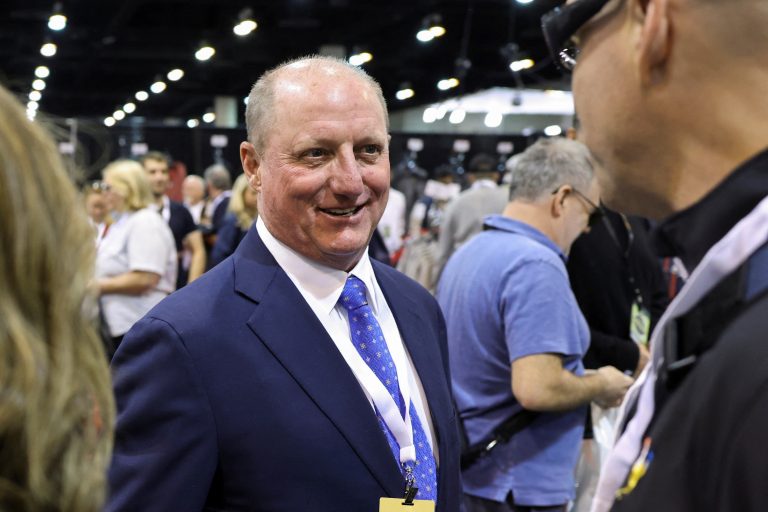
At a moment of leadership transition and elevated market uncertainty, Berkshire Hathaway’s enormous liquidity is emerging as both a safeguard and a point of strategic tension. With Greg Abel now responsible for overseeing roughly $373 billion in cash and short-term investments, investors are beginning to reassess whether the conglomerate’s long-standing patience can be sustained without Warren Buffett at the helm.
Veteran investor Tom Russo argues that the debate itself is misplaced. The persistent question from shareholders, he noted — “Why can’t we get rid of that damn money?” — overlooks a core principle of Berkshire’s operating model.
“They need to remember that Berkshire’s cash and Treasury bills are assets, not liabilities,” Russo said, stressing that “the value of that money actually isn’t fixed. It goes up when market mayhem drives prices down.”
Register for the next Tekedia Mini-MBA.
Register for Tekedia AI in Business Masterclass.
Join Tekedia Capital Syndicate and co-invest in great global startups.
Berkshire’s most profitable deals have historically been executed during periods of financial distress, when liquidity dries up, and counterparties accept punitive terms, alluding to the observation. In effect, the company functions as a lender and acquirer of last resort when traditional capital retreats. Russo expects that dynamic to re-emerge in any future downturn, noting that in a crisis there would again be “only one place to go, and the terms will be rather demanding.”
What has changed is the backdrop. Unlike the post-2008 period, today’s environment is shaped by structurally higher interest rates, persistent geopolitical risks, and a surge in capital chasing large-scale assets. Private equity firms, sovereign wealth funds, and even tech giants now compete aggressively for deals that once fell squarely within Berkshire’s domain. This competition has inflated valuations and narrowed the margin of safety that Buffett treated as non-negotiable.
As a result, Berkshire’s growing cash pile may reflect discipline rather than inactivity. Yet the scale of that reserve also creates pressure. Idle capital, even when parked in Treasurys, raises questions about opportunity cost, particularly when equity markets continue to deliver returns. The tension is likely to define Abel’s early tenure: whether to wait for dislocations or deploy capital in a market that rarely offers clear bargains.

Complicating that calculus is a shift in leadership style. Abel is widely seen as more operationally engaged than Buffett, whose management philosophy, developed alongside Charlie Munger, emphasized decentralization and minimal interference. Buffett’s approach allowed subsidiary leaders broad autonomy, stepping in only when necessary and using a disciplined, question-driven method to guide decisions.
Russo described that dynamic in practical terms. “You have the world’s greatest consulting firm, which is Warren’s brain, available to you,” he said.
When issues arose, Buffett would intervene selectively, often flying executives to Omaha aboard “The Indefensible,” his private jet. Through a series of probing questions, managers would arrive at their own conclusions. The outcome, Russo noted, was that “the manager would know the right answer ‘by the end of the second question’,” and crucially, would take ownership of that decision.

This system was backed by carefully designed incentive structures that aligned subsidiary performance with long-term value creation. It also freed Buffett to concentrate on capital allocation, the area where Berkshire has historically generated its outsized returns.
Abel’s challenge is to preserve those institutional advantages while navigating a more complex economic landscape. A more hands-on approach could improve coordination across Berkshire’s diverse businesses, particularly as industries face disruption from artificial intelligence, energy transitions, and shifting supply chains. However, it also risks diluting the autonomy that has been central to the company’s culture.
The stakes are especially high in acquisitions. Berkshire’s appeal to founders has long rested on its reputation as a permanent owner that avoids heavy-handed oversight. Russo warned that early missteps could undermine that perception. Abel should be “very careful” to ensure that future deals “do not implicate or in any way disrupt the virtues that have long guided Berkshire,” he said, calling the transition “a balancing act.”
There is also a structural constraint that cannot be ignored: Berkshire’s sheer size. Deploying tens of billions of dollars in a single transaction requires opportunities of exceptional scale, which are increasingly scarce. This reality may push the company toward alternative uses of capital, including share buybacks or incremental investments, though both options carry their own trade-offs.
Currently, the market appears willing to give Abel time. Berkshire’s fortress balance sheet remains a differentiating asset in an era of rising leverage and financial fragility. But patience, once seen as a defining strength, could come under scrutiny if compelling opportunities fail to materialize.
The upcoming shareholder meeting in Omaha will offer the clearest signal yet of how Abel intends to navigate these crosscurrents. Investors will be listening not just for reassurance, but for evidence that Berkshire’s core philosophy, disciplined capital allocation, operational autonomy, and opportunistic deployment, can endure beyond Buffett.