
DD
MM
YYYY

PAGES

DD
MM
YYYY

spot_img

PAGES

Home Blog Page 18

Solana Tokenized Assets Hit Record $5.8 Billion in Q2 Amid 114% Growth Surge

0

Tokenized assets on the Solana blockchain reached a record-breaking $5.8 billion in the second quarter of the year, representing an impressive 114% quarter-over-quarter increase and marking the sixth consecutive quarter of all-time highs.

The milestone highlights the rapid evolution of real-world asset (RWA) tokenization and reinforces Solana’s growing role as a leading infrastructure layer for the next generation of digital finance.

The tokenization of real-world assets refers to the process of representing traditional financial instruments such as government bonds, stocks, real estate, private credit, and commodities on blockchain networks.

By transforming these assets into digital tokens, institutions can benefit from greater transparency, faster settlement times, lower costs, and increased accessibility for global investors.

The latest surge on Solana demonstrates that this concept is moving beyond experimentation and entering a phase of meaningful adoption. Several factors have contributed to Solana’s remarkable growth in tokenized assets.

The network’s high throughput and low transaction costs make it an attractive destination for institutions seeking scalable blockchain solutions.

Unlike some competing networks that can experience congestion and higher fees during periods of heavy activity, Solana’s architecture enables fast and cost-efficient transactions, which is essential for financial applications that require frequent settlement and large transaction volumes.

Increasing institutional interest in blockchain technology has accelerated the migration of traditional assets onto public networks. Asset managers, fintech companies, and financial institutions are increasingly exploring tokenization as a way to modernize financial infrastructure.

As regulatory clarity gradually improves in several jurisdictions, confidence among institutional participants has also strengthened, encouraging greater experimentation and deployment of tokenized products.

The rapid growth of tokenized treasuries and money market products has been one of the primary drivers behind this expansion. Investors are increasingly seeking blockchain-based financial instruments that offer stable yields while maintaining the benefits of on-chain liquidity and transparency.

Solana has emerged as a favorable platform for these products due to its efficient infrastructure and growing ecosystem of decentralized finance applications.

The milestone is particularly significant because it represents the sixth consecutive quarter of record highs.

Sustained growth over multiple quarters suggests that tokenization is not merely a temporary trend but rather an emerging structural shift in global finance. Each new quarterly record demonstrates increasing confidence among both institutional and retail participants in blockchain-based financial products.

The rise of tokenized assets on Solana could have broader implications for the cryptocurrency industry. Real-world asset tokenization is increasingly viewed as one of the most promising use cases for blockchain technology because it directly connects digital networks with traditional financial markets.

By bringing trillions of dollars worth of assets on-chain over time, tokenization could significantly expand blockchain adoption and create new sources of liquidity across decentralized ecosystems.

Competition among blockchain networks in the tokenization sector is also intensifying. Ethereum has historically dominated the space, but Solana’s recent performance indicates that alternative networks are becoming increasingly competitive.

The network’s ability to attract large-scale tokenized asset issuance may encourage further innovation and investment, potentially reshaping the balance of power within the broader digital asset industry.

As tokenized assets on Solana surpass $5.8 billion, the achievement stands as a powerful indicator of the growing convergence between traditional finance and blockchain technology.

If current trends continue, tokenization could become one of the defining narratives of the next decade, with Solana positioned as a major beneficiary of this transformation and a critical component of the future financial system.
AMD Takes Direct Aim At Nvidia With Helios AI System As Microsoft Joins Growing Customer Roster

0

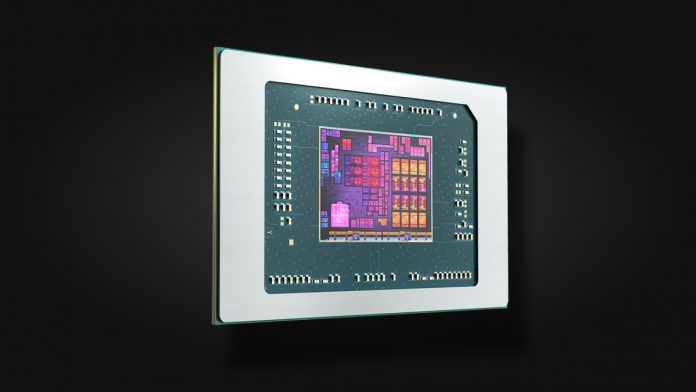
Advanced Micro Devices (AMD) is preparing to launch its first rack-scale artificial intelligence computing system, marking the company’s most significant challenge yet to Nvidia’s dominance of the AI infrastructure market.

Microsoft announced it will deploy AMD’s Helios AI system in its Azure data centers, joining Meta, OpenAI, Oracle, Tata Consultancy Services and other major technology companies that have committed to the platform. AMD said Helios will begin shipping later this year, although neither the financial terms nor the scale of the deployments were disclosed.

The announcement underpins an important milestone for AMD, given that the company’s ambitions extend far beyond selling individual AI chips. Like Nvidia’s Grace Blackwell and next-generation Vera Rubin platforms, Helios is a complete rack-scale computing system integrating processors, graphics chips, networking and software into a single AI infrastructure platform designed for training and inference.

For Microsoft, the agreement reveals its growing need for AI computing capacity as it expands its own foundation model development while supporting Azure customers running increasingly sophisticated AI workloads.

“We are expanding the Azure infrastructure portfolio with AMD Helios to give customers the performance, scale and choice they need to build and run the next generation of AI applications,” Microsoft Chief Executive Satya Nadella said.

Helios will support Microsoft’s frontier AI model inference, Azure AI services and customer workloads. Microsoft will also introduce two new Azure computing instances powered by AMD’s latest Venice EPYC processors, targeting agentic AI, data engineering workloads and semiconductor design.

The partnership builds on a long-standing relationship between the companies. AMD processors have powered Microsoft’s Surface computers and Xbox gaming consoles for years, while Microsoft became one of the earliest cloud providers to adopt AMD’s MI300X AI GPU in 2023. Microsoft also continues developing its own Maia AI accelerators, highlighting the diversified approach major cloud providers are taking toward AI infrastructure.

Helios arrives at a time when the AI infrastructure market is undergoing rapid expansion.

Demand for AI compute has surged as companies race to build increasingly powerful generative AI models, prompting cloud providers to secure as much processing capacity as possible. That demand has fueled Nvidia’s extraordinary rise, with the company controlling more than 95% of the data-center GPU market, according to Futurum Group estimates.

AMD currently holds only about 4.5% of the market, but analysts believe Helios could significantly expand that share.

“I think there’s a serious case in which AMD does great and can get to 20% and 25%. And by the way, this is hundreds of billions of dollars of revenue,” said Daniel Newman, CEO of Futurum Group.

AMD says eight of the world’s ten largest AI companies already run workloads on its Instinct GPUs, including OpenAI, Cohere and Elon Musk’s SpaceXAI.

Meta has committed to deploying as much as 6 gigawatts of AMD GPU capacity over time, beginning with 1 gigawatt of Helios systems later this year. OpenAI and Oracle have also announced significant Helios deployments, reinforcing growing customer willingness to diversify away from Nvidia’s ecosystem.

The push comes as cloud providers pursue multi-vendor strategies rather than relying exclusively on Nvidia for AI infrastructure. Doing so could improve pricing leverage, reduce supply-chain risks and provide greater flexibility as AI workloads continue expanding.

AMD executives argue Helios delivers lower operating costs for AI inference.

“We’re very focused on providing the best total cost of ownership, the lowest cost per token, all in,” said Forrest Norrod, AMD’s Executive Vice President overseeing the data center business. “And our customers are telling us that we’re achieving that.”

Earlier this year, AMD Chief Executive Lisa Su highlighted Helios’ advantages in AI inference, memory bandwidth and memory capacity compared with Nvidia’s rack-scale offerings.

Although AMD declined to discuss pricing, Futurum estimates Helios systems will cost between $5 million and $5.5 million each, compared with an estimated $3.5 million to $4 million for Nvidia’s upcoming Vera Rubin platform.

Helios is also physically larger, weighing as much as 7,000 pounds, making it heavier and wider than Nvidia’s competing system.

Beyond hardware, however, software remains Nvidia’s strongest competitive advantage. While AMD’s GPUs are increasingly viewed as technically competitive, Nvidia’s proprietary CUDA software ecosystem remains deeply entrenched across AI development, making it easier for developers to optimize applications on Nvidia hardware.

Counterpoint Research analyst Neil Shah said AMD’s processors are “on par” with Nvidia’s hardware, but noted that “the secret sauce is in the software and optimization.”

“With CUDA, I think Nvidia has a bigger ecosystem, and it’s quite ahead versus AMD,” Shah said.

AMD has attempted to narrow that gap through substantial acquisitions and software investments. The company has built its ROCm open-source AI software platform as an alternative to CUDA while acquiring networking specialist Pensando, programmable chipmaker Xilinx for nearly $50 billion, and server manufacturer ZT Systems for roughly $5 billion to strengthen its end-to-end AI infrastructure capabilities.

Helios Marks AMD’s Transformation from Turnaround Story to AI Challenger

Helios also represents the culmination of AMD’s decade-long turnaround under Lisa Su. After briefly capturing nearly one-quarter of the server processor market in the early 2000s, AMD lost ground following years of execution problems, product delays, and financial struggles.

The company began rebuilding its competitive position with the introduction of EPYC server processors in 2017, which steadily gained market share from Intel by consistently delivering on ambitious product roadmaps.

“Under Lisa’s leadership for the last 12 years, it’s been a very different AMD,” Norrod said.

Today, EPYC processors form the backbone of Helios. Each compute tray combines a single EPYC processor with four Instinct GPUs and as many as twelve Pensando networking chips, creating an integrated AI system optimized for hyperscale deployments.

The transformation has already reshaped AMD’s business.

During the first quarter of 2026, data-center products generated the majority of AMD’s revenue, with the segment growing 57% year over year. The company expects AI infrastructure to become its primary growth engine, projecting tens of billions of dollars in annual AI data-center revenue beginning in 2027, with Helios accounting for the bulk of that business.

The broader AI infrastructure market remains enormous.

Global cloud providers continue committing hundreds of billions of dollars toward AI data centers, ensuring strong demand for advanced computing systems regardless of whether Nvidia maintains its dominant market position. For AMD, the immediate opportunity may lie not only in technological competitiveness but also in helping satisfy demand that exceeds Nvidia’s manufacturing capacity.

As Newman noted, the key question for investors is whether AMD wins because its technology proves superior, or simply because the AI infrastructure boom has created enough demand that customers are eager to buy any high-performance alternative capable of delivering AI compute at scale.

Either outcome would represent AMD’s strongest competitive position against Nvidia since the AI revolution began.

Moonshot Pauses New Kimi K3 Subscriptions As Surging Demand Exposes AI Compute Bottleneck Ahead Of IPO

0

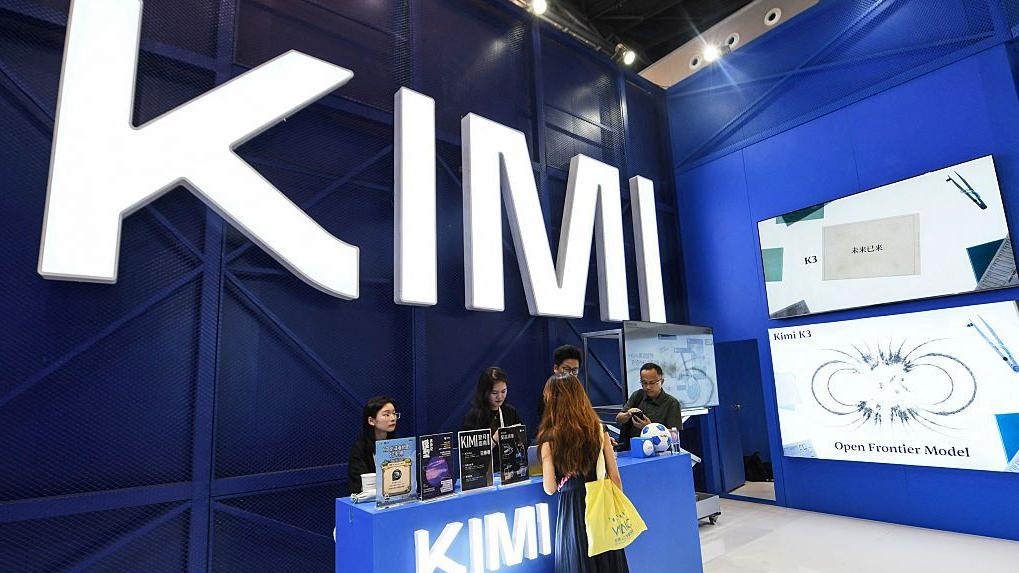
Chinese artificial intelligence startup Moonshot AI has temporarily suspended new subscriptions to its flagship Kimi K3 model after demand overwhelmed its computing infrastructure, highlighting one of the industry’s biggest challenges as developers race to build ever more powerful AI systems.

The capacity crunch comes at a pivotal moment for the company, which is seeking up to $2 billion in fresh funding and preparing for a potential Hong Kong initial public offering (IPO) that could value the startup at around $30 billion.

According to sources cited by Reuters, Moonshot is restructuring its corporate organization by unwinding its offshore holding structure ahead of the planned listing, while holding discussions with investment banks including Goldman Sachs and China International Capital Corp (CICC) about a Hong Kong IPO.

Although preparations are underway, the listing timetable remains flexible, underpinning uncertain market conditions and the company’s rapidly evolving capital needs.

Moonshot said demand for Kimi K3, unveiled on Friday as what it describes as the world’s largest open-weight AI model with 2.8 trillion parameters, has significantly exceeded expectations. The company said user requests during the first 48 hours after launch approached the limits of its existing computing clusters, creating what it described as “unprecedented compute challenges.”

As a result, Moonshot immediately suspended new consumer subscriptions while preserving service quality for existing paying customers. Current subscribers will continue to receive uninterrupted access, while new memberships will be reopened gradually as additional computing capacity becomes available.

The company also announced that future subscription offerings will be divided into separate plans, including one specifically designed for coding workloads, allowing computing resources to be allocated more efficiently according to different user requirements.

In a post on X, Moonshot acknowledged the unexpectedly strong response.

“Kimi K3 has received far more love than we expected, and our GPUs are feeling it,” the company said.

The episode has revealed a common problem facing AI developers: success itself is becoming expensive.

AI Demand Is Shifting From Training to Inference

While companies initially focused their spending on training frontier AI models, the rapid growth in commercial usage has shifted attention toward inference computing—the processing power required every time users interact with AI systems.

Models such as Kimi K3 are particularly compute-intensive because they specialize in coding, reasoning, and AI agent workflows. Unlike simple chatbot interactions, these tasks often involve multiple rounds of model execution, longer context windows and repeated reasoning steps, significantly increasing GPU usage for each user session.

Although Kimi K3 is released as an open-weight model, allowing developers to download and modify it, analysts note that very few organizations can realistically operate a 2.8 trillion-parameter model independently because of the enormous hardware requirements.

Consequently, most users continue relying on cloud-hosted services, placing substantial pressure on providers’ data center infrastructure.

The computing bottleneck comes as Moonshot aggressively expands its capital base.

Founded in 2023 by Yang Zhilin, a former Carnegie Mellon University doctoral researcher, Moonshot has rapidly emerged as one of China’s leading AI startups. According to fundraising materials reviewed by Reuters, the company raised more than $2 billion in May from investors including Meituan, China Mobile and CPE, bringing its cumulative fundraising to more than $5.5 billion.

It has since begun seeking an additional $2 billion, with investor interest reportedly valuing the company at approximately $30 billion. The funding is seen as an indication of growing investor confidence that China’s leading AI companies are narrowing the performance gap with major U.S. developers while benefiting from lower operating costs and increasingly competitive open-weight models.

Moonshot’s experience also highlights the industry’s most significant operational challenge. Chinese AI companies have accelerated model development over the past year, with firms including Moonshot, DeepSeek, MiniMax, Z.ai and Alibaba releasing increasingly capable systems at a rapid pace.

However, access to computing infrastructure has emerged as the principal bottleneck.

U.S. export restrictions on advanced Nvidia AI processors have limited Chinese companies’ access to the world’s most powerful GPUs, forcing them to maximize available domestic computing resources while increasingly relying on Chinese alternatives such as Huawei’s Ascend AI chips.

Several leading startups, including DeepSeek, have reportedly sought additional funding specifically to expand computing capacity rather than model development alone. The shortage suggests that competitive advantage in AI is increasingly determined not only by algorithm quality but also by ownership of large-scale computing infrastructure.

IPO Reflects Broader AI Investment Boom

Moonshot’s planned Hong Kong listing would add to a growing pipeline of Chinese AI companies seeking public market capital.

Unlike earlier generations of Chinese technology listings centered on internet platforms and e-commerce, the new wave is driven primarily by demand for funding expensive AI infrastructure, including GPU clusters, networking equipment and data centers.

Investors have shown increasing willingness to finance these capital-intensive businesses as frontier AI models become central to software development, enterprise automation and digital services.

Moonshot’s rapid fundraising mirrors similar investment activity across the sector, where companies are raising billions of dollars not simply to build more advanced models but also to finance the computing capacity needed to serve rapidly expanding user bases.

However, the company’s infrastructure challenges come amid an increasingly competitive Chinese AI industry. Only days before Moonshot launched Kimi K3, rival developers including Z.ai and MiniMax introduced new large language models aimed at closing the remaining performance gap with leading U.S. systems.

Meanwhile, Alibaba, which is also a strategic investor in Moonshot, announced on Sunday that its Qwen3.8-Max-Preview, a 2.4 trillion-parameter model, had become available on its AI platforms ahead of a planned open-weight release.

‘Magnificent Seven Is Dead’: Citi Says AI Rally Has Broadened and Investors Should Rotate Into Wider Group Of Growth Stocks

0

The era of treating the “Magnificent Seven” as the dominant force driving U.S. equity markets has come to an end, according to Citi, which argues that investors should instead focus on a much broader group of growth companies benefiting from the artificial intelligence boom.

In a recent note to clients, the Wall Street bank said the once-dominant basket of mega-cap technology stocks is no longer an effective way to assess large-cap growth, as AI-driven earnings growth has spread well beyond the industry’s biggest names.

“The Mag 7 is dead as a construct for assessing large-cap growth dynamics, and it has been for some time,” Citi strategists wrote.

The bank’s view marks a notable shift in how Wall Street is assessing the AI trade, suggesting the market is moving into a second phase where gains are being driven by a wider range of companies rather than being concentrated in a handful of technology giants.

The Magnificent Seven, comprising Apple, Microsoft, Nvidia, Alphabet, Amazon, Meta Platforms and Tesla, dominated global equity markets after the generative AI boom began in late 2022. Their rapid earnings growth, dominant market positions and massive investments in artificial intelligence propelled the group to unprecedented valuations and helped lift the broader S&P 500 to successive record highs.

However, that leadership has weakened considerably this year.

The Roundhill Magnificent Seven ETF has gained just 1% in 2026, significantly underperforming the S&P 500, which has advanced about 9%.

The divergence indicates that investors have been increasingly cautious toward some of the market’s largest technology companies, amid concerns over lofty valuations, rising AI-related capital expenditure, slowing returns on investment, and uncertainty surrounding the long-term monetization of artificial intelligence.

Microsoft, the weakest performer among the seven this year, has fallen 17%, with recent losses driven largely by investor concerns over the company’s aggressive spending on AI infrastructure. Analysts say investors are increasingly scrutinizing whether the billions of dollars being invested in AI data centers, chips and cloud infrastructure will translate into sustainable earnings growth.

Citi Shifts Focus to A Broader “Growth Cluster”

Rather than expanding the Magnificent Seven into a larger technology index, Citi has shifted its attention to what it calls a “growth cluster.” The group, first introduced several years ago and recently refined by the bank, includes companies across six different industries that have contributed the most to S&P 500 earnings growth.

Collectively, these companies account for roughly half of the benchmark index’s total market capitalization.

According to Citi, the broader growth cluster has significantly outperformed both the Magnificent Seven and the overall market. The basket gained 25% during the second quarter and is up 12% for the year, compared with quarterly and year-to-date gains of 15% and 10%, respectively, for the S&P 500. It also outperformed Citi’s cyclical and defensive stock groupings, highlighting the continued strength of growth-oriented businesses even as market leadership broadens.

One of Citi’s central arguments is that artificial intelligence is no longer benefiting only the largest technology companies. Instead, earnings growth is increasingly being generated across semiconductor manufacturers, hardware suppliers, enterprise technology firms and industrial companies exposed to AI infrastructure spending.

The bank noted that if investors had instead owned an index consisting of the 25 companies contributing the most to S&P 500 earnings growth this year, they would have generated a 7% return, compared with just 2% from the Magnificent Seven.

That illustrates how leadership within the market has broadened beyond the familiar mega-cap technology names. Citi highlighted companies such as Intel, Applied Materials and Lam Research as examples of businesses making important contributions to corporate earnings growth, driven largely by strong demand for semiconductor manufacturing equipment and AI-related hardware.

However, the broader trend points to the evolution of the AI investment cycle. The first phase largely rewarded companies building foundational AI models and cloud infrastructure.

The next phase is benefiting suppliers of semiconductor equipment, networking hardware, enterprise software and specialized manufacturing technologies that support AI deployment across the economy.

Citi also pointed to consistently strong corporate earnings as a major reason for the growth cluster’s outperformance. Companies within the group have repeatedly exceeded analysts’ earnings expectations, allowing share prices to continue rising even as investors become more selective.

The bank estimates that the growth cluster now accounts for approximately 48% of the S&P 500’s expected earnings over the next 12 months. That concentration highlights how heavily overall market profits remain tied to companies benefiting directly or indirectly from AI-related investment.

Valuations Becoming More Attractive

Another reason Citi favors the broader growth cluster is valuation. After years of exceptional gains, several Magnificent Seven companies now trade at elevated earnings multiples, leading investors to seek cheaper opportunities elsewhere.

According to Citi, valuation metrics for the broader growth cluster are considerably more attractive. The bank said the group’s price-to-earnings-growth (PEG) ratio, which adjusts valuation relative to expected earnings growth, is currently near its lowest level in roughly 15 years.

That suggests many growth companies are offering stronger earnings prospects without commanding the premium valuations associated with the largest technology stocks.

Citi believes the market is still underestimating the long-term structural growth opportunity created by continued AI investment, particularly in semiconductors and hardware. The bank said forward growth expectations continue to be supported by sustained spending on AI infrastructure and ongoing supply constraints affecting parts of the semiconductor industry.

“As a result,” Citi said, “the stocks do not appear to be fully discounting a secular growth opportunity.”

The shift in market leadership comes amid increasing volatility across AI-related sectors.

Semiconductor and memory stocks, which had been among the strongest performers during the AI rally, have recently experienced sharp declines as investors rotated into other parts of the market. Over the past month, the iShares Semiconductor ETF has fallen about 18%, while the Roundhill Memory ETF has declined roughly 32%.

The pullback reflects profit-taking after an extended rally, as well as concerns over the pace of AI-related capital expenditure and whether demand can continue to justify current production expansion.

Nevertheless, Citi notes that artificial intelligence remains the dominant investment theme underpinning U.S. equity markets.

Rather than fading, the AI trade is becoming more diversified.

“We don’t think there is any one right way to perfectly describe how much of the S&P 500 reflects the AI trade,” the bank said.

“We believe our cluster approach to assessing the S&P 500 makes intuitive sense and gets us close.”

Using that framework, Citi estimates that roughly 55% of the S&P 500 is directly influenced by AI-related tailwinds or headwinds, while nearly half of the index’s expected earnings are generated by companies within its broader growth cluster.

The implication for investors is that the AI investment story is far from over. However, the next stage of the rally is likely to be driven by a broader ecosystem of companies rather than the handful of mega-cap technology stocks that defined the market’s first AI boom.

Crypto Expert Michael Van Poppe Forecasts Bitcoin Breakout to $85K in Coming Months

1

Bitcoin could be on track for another major rally, according to cryptocurrency expert Michael van de Poppe, who believes the world’s largest digital asset is setting up for a significant breakout in the coming months.

In a post on X, Poppe shared a bullish outlook for Bitcoin, suggesting the leading cryptocurrency could rally toward the $80,000 to $85,000 range in the coming weeks.

According to his analysis, this move would represent the first significant post-bear market advance and align closely with a key technical level.

The prediction centers on Bitcoin’s interaction with its 50-week moving average. Poppe notes that this indicator has historically served as notable resistance during the initial recovery phase after prolonged downturns.

Van de Poppe’s chart review highlights Bitcoin’s long-term price action, complete with overlaid moving averages that underscore potential resistance areas.

The timeframe for this anticipated rally is set at 2-3 months, positioning it as a near-term development rather than a distant event. Market participants often watch the 50-week MA because it smooths out short-term volatility and reflects broader trend momentum.

His analysis comes as Bitcoin plunges 50% despite crypto policy push and institutional adoption. BTC has reportedly lost roughly half its value since reaching a record above $126,000 in October, falling to levels last seen in September 2024 despite improving expectations around cryptocurrency regulation.

Despite Bitcoin’s growing integration into traditional finance, the crypto asset has struggled to perform like the digital gold promoted by supporters during the inflationary price shock linked to the Iran war, while higher market interest rates reduced the appeal of an asset that pays no income.

Naeem Aslam of Zaye Capital Markets, in a note, attributed Bitcoin’s price decline to limited liquidity and broader risk-off positioning.

Meanwhile, while the world’s largest cryptocurrency has slowed after its recent surge, fresh on-chain data shows that long-term holders (LTHs) continue accumulating Bitcoin rather than distributing it into market strength.

On-chain data shows Bitcoin’s 30-day EMA Long-Term Holder Supply Inflow remains firmly positive at approximately 347,700 BTC. The metric tracks Bitcoin moving into wallets historically associated with long-term investors.

As long as inflows remain positive, it indicates that experienced holders continue absorbing supply instead of selling into rallies. With Bitcoin currently trading near $65,000, reaching the $80K-$85K zone would mark a substantial gain of roughly 25-30% from present levels.

Beyond technicals and on-chain metrics, institutional confidence in Bitcoin remains largely unchanged. Blockstream CEO Adam Back recently reiterated his long-term view that Bitcoin could eventually reach $1 million, arguing that even a 2% allocation from Wall Street portfolios would fundamentally reshape demand dynamics and significantly reduce available supply.

While no forecast is guaranteed in the volatile crypto space, this technical perspective offers a clear framework for the current market structure. Investors may consider monitoring volume, overall risk sentiment, and macroeconomic factors as Bitcoin approaches these higher targets.

Outlook

Bitcoin’s trajectory is likely to be shaped by a combination of technical momentum, macroeconomic developments, and institutional demand.

A sustained move above key resistance levels particularly the 50-week moving average could strengthen the bullish case outlined by Michael van de Poppe and pave the way for a test of the $80,000–$85,000 range.

However, the outlook remains dependent on broader market conditions. Any deterioration in global risk sentiment, tighter monetary policy, or unexpected regulatory developments could delay or invalidate the projected breakout.

Conversely, continued accumulation by long-term holders, increasing institutional participation, and supportive crypto policies could provide the catalysts needed for the next leg higher.