DD
MM
YYYY

PAGES

DD
MM
YYYY

spot_img

PAGES

Home Blog Page 18

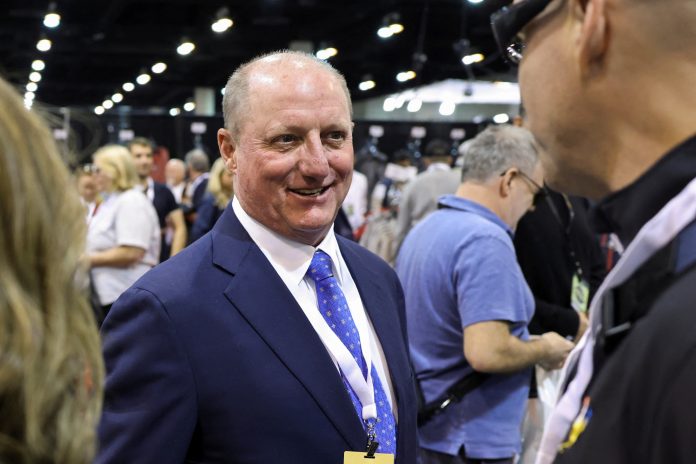
Berkshire’s Cash Pile Faces Its First Real Test Under Greg Abel: Longtime Investor Tom Russo Says It’s a Weapon, Not a Burden

0

At a moment of leadership transition and elevated market uncertainty, Berkshire Hathaway’s enormous liquidity is emerging as both a safeguard and a point of strategic tension. With Greg Abel now responsible for overseeing roughly $373 billion in cash and short-term investments, investors are beginning to reassess whether the conglomerate’s long-standing patience can be sustained without Warren Buffett at the helm.

Veteran investor Tom Russo argues that the debate itself is misplaced. The persistent question from shareholders, he noted — “Why can’t we get rid of that damn money?” — overlooks a core principle of Berkshire’s operating model.

“They need to remember that Berkshire’s cash and Treasury bills are assets, not liabilities,” Russo said, stressing that “the value of that money actually isn’t fixed. It goes up when market mayhem drives prices down.”

Berkshire’s most profitable deals have historically been executed during periods of financial distress, when liquidity dries up, and counterparties accept punitive terms, alluding to the observation. In effect, the company functions as a lender and acquirer of last resort when traditional capital retreats. Russo expects that dynamic to re-emerge in any future downturn, noting that in a crisis there would again be “only one place to go, and the terms will be rather demanding.”

What has changed is the backdrop. Unlike the post-2008 period, today’s environment is shaped by structurally higher interest rates, persistent geopolitical risks, and a surge in capital chasing large-scale assets. Private equity firms, sovereign wealth funds, and even tech giants now compete aggressively for deals that once fell squarely within Berkshire’s domain. This competition has inflated valuations and narrowed the margin of safety that Buffett treated as non-negotiable.

As a result, Berkshire’s growing cash pile may reflect discipline rather than inactivity. Yet the scale of that reserve also creates pressure. Idle capital, even when parked in Treasurys, raises questions about opportunity cost, particularly when equity markets continue to deliver returns. The tension is likely to define Abel’s early tenure: whether to wait for dislocations or deploy capital in a market that rarely offers clear bargains.

Complicating that calculus is a shift in leadership style. Abel is widely seen as more operationally engaged than Buffett, whose management philosophy, developed alongside Charlie Munger, emphasized decentralization and minimal interference. Buffett’s approach allowed subsidiary leaders broad autonomy, stepping in only when necessary and using a disciplined, question-driven method to guide decisions.

Russo described that dynamic in practical terms. “You have the world’s greatest consulting firm, which is Warren’s brain, available to you,” he said.

When issues arose, Buffett would intervene selectively, often flying executives to Omaha aboard “The Indefensible,” his private jet. Through a series of probing questions, managers would arrive at their own conclusions. The outcome, Russo noted, was that “the manager would know the right answer ‘by the end of the second question’,” and crucially, would take ownership of that decision.

This system was backed by carefully designed incentive structures that aligned subsidiary performance with long-term value creation. It also freed Buffett to concentrate on capital allocation, the area where Berkshire has historically generated its outsized returns.

Abel’s challenge is to preserve those institutional advantages while navigating a more complex economic landscape. A more hands-on approach could improve coordination across Berkshire’s diverse businesses, particularly as industries face disruption from artificial intelligence, energy transitions, and shifting supply chains. However, it also risks diluting the autonomy that has been central to the company’s culture.

The stakes are especially high in acquisitions. Berkshire’s appeal to founders has long rested on its reputation as a permanent owner that avoids heavy-handed oversight. Russo warned that early missteps could undermine that perception. Abel should be “very careful” to ensure that future deals “do not implicate or in any way disrupt the virtues that have long guided Berkshire,” he said, calling the transition “a balancing act.”

There is also a structural constraint that cannot be ignored: Berkshire’s sheer size. Deploying tens of billions of dollars in a single transaction requires opportunities of exceptional scale, which are increasingly scarce. This reality may push the company toward alternative uses of capital, including share buybacks or incremental investments, though both options carry their own trade-offs.

Currently, the market appears willing to give Abel time. Berkshire’s fortress balance sheet remains a differentiating asset in an era of rising leverage and financial fragility. But patience, once seen as a defining strength, could come under scrutiny if compelling opportunities fail to materialize.

The upcoming shareholder meeting in Omaha will offer the clearest signal yet of how Abel intends to navigate these crosscurrents. Investors will be listening not just for reassurance, but for evidence that Berkshire’s core philosophy, disciplined capital allocation, operational autonomy, and opportunistic deployment, can endure beyond Buffett.

Goldman Restricts Anthropic’s Claude in Hong Kong, Underscoring Rising fault lines in AI access and Financial Risk Controls

0

A quiet policy shift inside Goldman Sachs is drawing attention to a broader recalibration underway across global finance, where the rapid adoption of artificial intelligence is colliding with tightening data controls and geopolitical friction.

The decision marks a deeper shift in how global banks are approaching artificial intelligence, treating it less as a productivity tool and more as regulated infrastructure shaped by jurisdictional risk, contractual boundaries, and geopolitical pressure.

According to a source familiar with the matter, cited by Reuters, Goldman employees in Hong Kong previously accessed Claude via an internal AI platform but have been cut off in recent weeks. Other models, including ChatGPT from OpenAI and Gemini from Google, remain available, indicating the move is targeted rather than a broader pullback from AI adoption.

The immediate rationale appears rooted in compliance interpretation. Anthropic does not officially support Hong Kong as a market for its API or direct product access, and a spokesperson has said Claude models were never formally “supported” in the territory. Goldman’s restriction suggests the bank has opted for a stricter reading of usage rights, likely after internal or external review, rather than risking exposure in a legally ambiguous environment.

That caution is increasingly typical across the financial sector. AI systems process sensitive internal data, client information, and market insights, making questions around data residency, cross-border transfer, and third-party access central to deployment decisions. In jurisdictions like Hong Kong, where regulatory oversight intersects with both Western and Chinese frameworks, those questions carry additional weight.

It is particularly noteworthy as it comes when tensions between the United States and China over artificial intelligence have intensified, with Washington raising concerns about intellectual property risks and tightening controls on advanced technology flows. These issues are expected to feature prominently in discussions between Donald Trump and Xi Jinping at an upcoming summit in Beijing. Within that context, corporate decisions on AI access are increasingly being shaped by geopolitical considerations rather than purely commercial ones.

For banks, the implications are operational as well as strategic. Hong Kong has historically served as a critical hub for Asia-Pacific operations, offering access to global markets alongside proximity to mainland China. However, as AI models become more tightly controlled by their developers, the city is emerging as a grey zone where access cannot be assumed. Goldman’s move signals that institutions may begin to segment their AI capabilities by region, creating uneven deployment across global teams.

Regulatory scrutiny is adding another layer. The Hong Kong Monetary Authority said it has contacted major banks to assess developments around Anthropic’s newer models, including Mythos, and to ensure risk frameworks are updated. This reflects growing concern that advanced AI, particularly systems capable of autonomous or semi-autonomous decision-making, could introduce systemic risks if not properly governed.

Those concerns extend beyond data security as AI models embedded in banking workflows could influence trading strategies, compliance checks, or client advisory processes. Any lack of transparency in how those models operate, or uncertainty about where data is processed, raises the risk of regulatory breaches and reputational damage. For institutions like Goldman, the cost of misalignment can far outweigh the productivity gains from broader access.

At the same time, the selective nature of the restriction points to a more nuanced trend. Banks are not retreating from AI; they are diversifying and hedging. By maintaining access to multiple providers, Goldman reduces dependency on any single model while preserving flexibility to adapt as regulatory conditions evolve. This multi-model approach is becoming standard among large enterprises navigating a fragmented AI landscape.

The development, however, tells a story of a constraint that extends beyond technology for Anthropic. While the company has gained traction with its emphasis on safety and enterprise use, limited geographic availability could slow adoption among multinational clients that require consistent global access. In contrast, competitors with broader deployment frameworks may gain an advantage, even if their models are not uniformly superior.

The broader takeaway is that AI adoption in finance is entering a more disciplined phase. Early experimentation is giving way to structured integration, governed by the same risk frameworks that apply to capital allocation, cybersecurity, and cross-border operations. Decisions like Goldman’s are less about stepping back from innovation and more about aligning it with regulatory reality.

In that sense, the removal of Claude in Hong Kong is a localized action with wider implications. It is seen as an indication that the global rollout of AI will not be seamless, but shaped by a patchwork of legal, political, and institutional constraints.

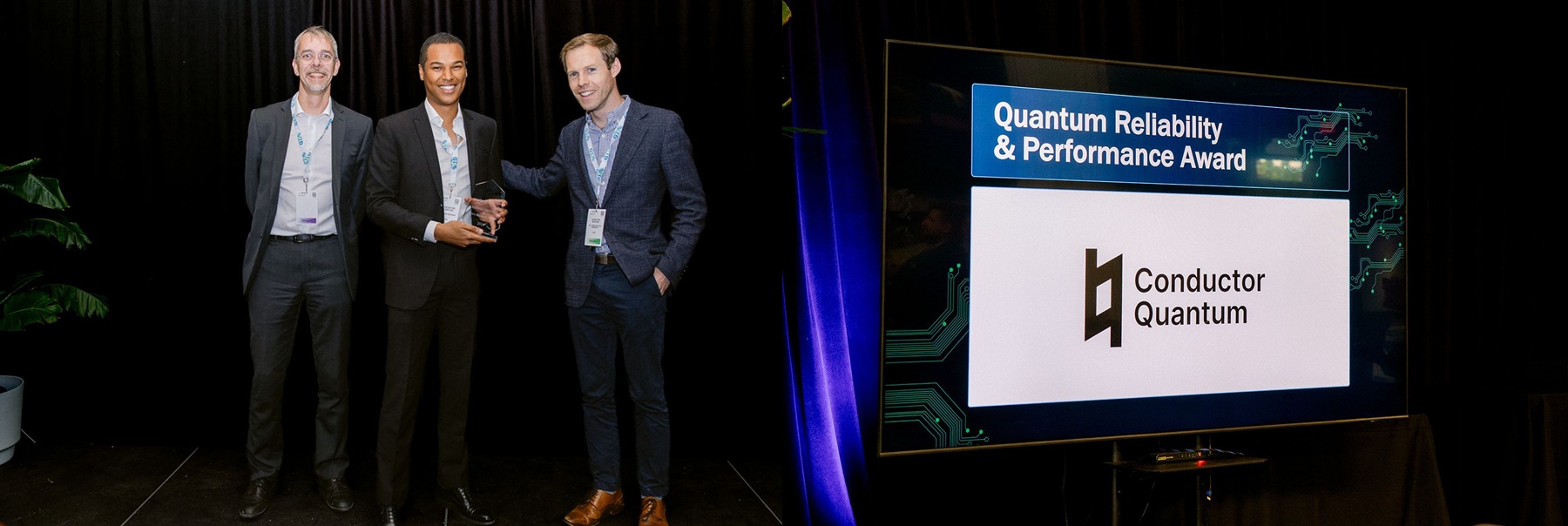
Tekedia Capital Congratulates Conductor Quantum for Quantum Reliability and Performance Award

0

Tekedia Capital is delighted to congratulate Conductor Quantum, one of our portfolio companies, on winning the Quantum Reliability and Performance Award at the Quantum Summit hosted by the International Semiconductor Industry Group.

In recent months, Conductor Quantum has been at the forefront of innovation, collaborating with NVIDIA and other leading technology companies to develop next-generation approaches for building and optimizing qubits, the fundamental units of quantum computing.

This recognition underscores the company’s growing leadership in shaping the future of quantum systems. Congrats Team CQ.

Register for Tekedia Nigerian Capital Market Masterclass with Internship Opportunities

0

Tekedia Nigerian Capital Market Masterclass is a practitioner-led, intensive program designed to deepen the human capabilities needed to power Nigeria’s modern capital market. The Masterclass blends applied knowledge, real-market processes, regulatory frameworks, technology infrastructure, and hands-on case studies covering the entire capital market value chain.

The program will run for 8 weeks, with assignments, simulations, and industry projects. Some participants who complete the program successfully will be provided internship opportunities within capital-market institutions in Nigeria. Our goal is for any person irrespective of location to understand how the capital market works.

Minimum entry requirement: Secondary school education.

Program Date: June 15- Aug 8, 2026

Location and Mode of Delivery: program is completely online, no physical component. It includes 8 weekends of LIVE Zoom sessions by experienced faculty on 8 Saturdays lasting two hours each. The program ssyllabus is below:

Module 1: Introduction to Nigeria’s Capital Market – Foundations & Architecture

Module 2: SEC Nigeria – Registration, Regulations & Market Oversight


Module 3: Market Operators – Roles, Responsibilities & Interdependencies

Module 4: Capital-Raising Instruments – IPOs, Bonds, Commercial Papers & Private Markets


Module 5: Listing Processes, Documentation & Regulatory Compliance

Module 6: Capital-Market Operations – Trading, Settlement & Surveillance


Project 1: A project with relevance in the Nigerian capital market will be assigned for the week.


Module 7: Derivatives, Structured Products & Hedging Instruments

Module 8: Technology & Financial Market Infrastructure (FMI)


Module 9: Digital Assets, Tokenization & ISA 2025 Framework

Module 10: Compliance, Risk Management & Ethics in Capital Markets


Module 11: Careers, Business Opportunities & Promising Regulated Sole Proprietorships

Module 12: Business Development, Market Strategy & Capital-Market Innovation

Project 2: Program Capstone

Contisx Securities Exchange Plc, an upcoming securities exchange in Nigeria, is partnering on this program, and will provide remote internship opportunities.

To learn more, visit Tekedia Institute and register 

AI Rally Wobbles as OpenAI’s Missed Growth Expectation Exposes Fault lines in $700bn Spending Surge

0

A broad selloff across artificial intelligence-linked stocks on Tuesday has exposed a growing unease in markets that the pace of investment underpinning the AI boom may be running ahead of near-term demand.

The pullback followed a WSJ report that OpenAI has missed internal expectations for user growth and revenue, raising concerns about its ability to sustain the enormous financial commitments required to build and secure computing infrastructure. The reaction was swift and global, cutting across chipmakers, cloud providers, and investment vehicles tied to the AI supply chain.

Oracle, which has pledged up to $300 billion over five years to supply compute capacity to OpenAI, dropped 4%, underscoring how dependent parts of the ecosystem have become on a handful of large customers. Semiconductor firms Broadcom and Advanced Micro Devices fell 4% and 3%, while Nvidia eased more than 1%, a modest decline but notable given its central role in powering AI workloads.

Elsewhere, CoreWeave, a leveraged cloud provider built around AI demand, slid more than 5%, reflecting heightened sensitivity among firms whose business models rely on sustained utilization of high-cost infrastructure. In Asia, SoftBank Group fell about 10%, highlighting the extent to which investor sentiment around OpenAI now reverberates across global capital markets. Qualcomm closed slightly lower after earlier gains tied to reports of collaboration with OpenAI on smartphone chips.

The market’s concern is being buoyed by a structural tension that has been building for months. The current AI cycle is defined by unprecedented upfront capital expenditure, with technology companies collectively expected to commit hundreds of billions of dollars annually to data centers, specialized chips, and energy infrastructure. Unlike previous software cycles, where marginal costs declined as products scaled, generative AI imposes recurring, high operating costs tied directly to usage.

According to the report, OpenAI’s finance chief, Sarah Friar, warned internally that if revenue growth does not accelerate, the company could face difficulty funding future compute agreements. That possibility introduces risk not just for OpenAI but for the broader network of suppliers that have expanded capacity on the assumption of continued exponential demand.

OpenAI rejected the report, stating: “This is ridiculous. We are totally aligned on buying as much compute as we can and working hard on it together every day.”

Oracle also sought to reassure investors, saying: “We’re incredibly excited about our partnership with OpenAI and remain focused on building and delivering the capacity they need to support rapidly growing demand. OpenAI’s new 5.5 model is a significant step forward, and we expect continued momentum as access to their technology expands across cloud providers.”

Even so, the episode has revived a question that has periodically surfaced during the rally: whether demand visibility justifies the scale and speed of investment. OpenAI’s recent $122 billion funding round, which valued the company at $852 billion, suggests that investors remain willing to underwrite that expansion. Yet the same scale amplifies scrutiny. When a company at the center of the ecosystem shows signs of uneven growth, the implications extend far beyond its own balance sheet.

Some analysts argue the market reaction may be overstated. Jordan Klein of Mizuho wrote: “You would assume any slowing was known by the investors, right? If not, shame on OpenAI. How new could update be as the round closed end March when the quarter would have ended. And it’s not even May 1. I highly doubt OpenAI fundamentals slowed that fast in under 30 days.”

His point indicates that a broader view is that the current volatility may reflect sentiment shifts rather than a fundamental break in demand.

Others see the development as part of a more gradual rebalancing. John Belton of Gabelli Funds said: “OpenAI’s growth seems to have slowed in late-2025 into early-2026 as the business ceded some share to Anthropic and Gemini. There is nothing here that suggests this is an issue for the pace of spending across the sector as a whole.”

The rise of Anthropic and the growing adoption of models from Google indicate that enterprise customers are increasingly pursuing multi-vendor strategies, diluting the dominance of any single provider while sustaining aggregate demand.

Still, the fragmentation of the market complicates forecasting. Companies building infrastructure must commit capital years in advance, often without precise visibility into how demand will be distributed among competing platforms. That uncertainty increases the risk of both overcapacity and underutilization, particularly if growth proves uneven across providers.

Luke Rahbari, CEO of Equity Armor Investments, cautioned against overinterpreting near-term metrics.

“OpenAI missing its revenue targets is, in the grand scheme, a distraction. In the current AI landscape, these projections are largely arbitrary. No major player in this race can accurately forecast their revenue or capital expenditure within a 25% to 50% margin of error,” he said.

His assessment captures a defining feature of the current cycle: scale is being built ahead of clarity.

The selloff, then, appears less like a reversal of the AI trade and more like a repricing of risk. Investors are beginning to distinguish between companies with demonstrable demand and those whose valuations rely heavily on projected growth curves. The underlying thesis of the AI boom, rising demand for compute, data, and automation, remains intact. What is shifting is the market’s tolerance for uncertainty in how, and how quickly, that demand translates into revenue.