DD
MM
YYYY

PAGES

DD
MM
YYYY

spot_img

PAGES

Home Blog Page 19

Implications of Amazon’s $35 Billion Investment Commitment in India

0

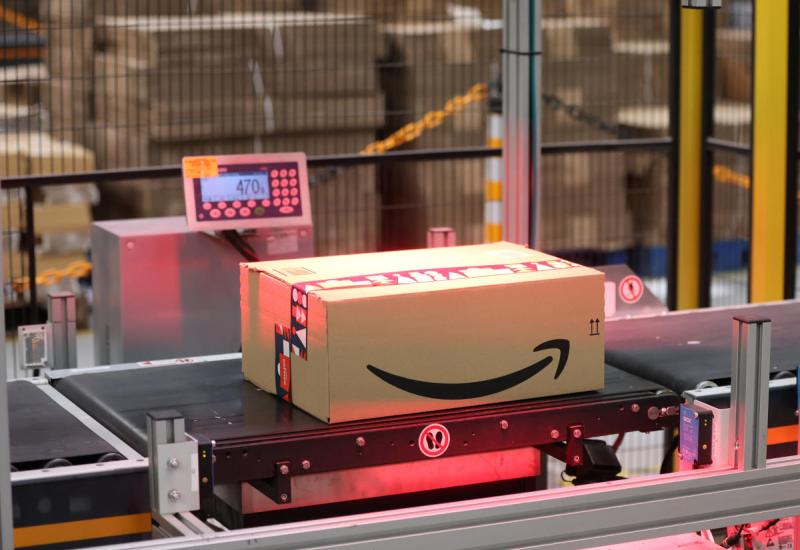
Amazon ($AMZN) has officially announced plans to invest more than $35 billion across its businesses in India through 2030. This commitment was revealed on December 10, 2025, at the sixth edition of the Amazon Smbhav Summit in New Delhi.

The investment builds on the company’s existing nearly $40 billion poured into the country since 2010, positioning Amazon as India’s largest foreign direct investor in e-commerce and a major job creator.

The funds will prioritize three strategic pillars aligned with India’s national priorities. Expanding AI capabilities, including cloud infrastructure via AWS, to benefit 15 million small businesses and hundreds of millions of consumers. This includes democratizing AI access and providing AI literacy programs for 4 million government school students by 2030.

Quadrupling cumulative e-commerce exports enabled by Amazon from $20 billion as of 2024 to $80 billion by 2030, supporting “Made-in-India” products going global. Generating an additional 1 million direct, indirect, induced, and seasonal jobs by 2030.

This builds on Amazon’s current support for about 2.8 million jobs in 2024 across technology, operations, logistics, retail, and creative services. According to an Economic Impact Report by Keystone Strategy, released at the summit, the investments will enhance logistics infrastructure, digitize over 12 million small businesses, and accelerate India’s digital transformation toward an “Atmanirbhar” and “Viksit” economy.

Amit Agarwal, Amazon’s Senior Vice President for Emerging Markets, emphasized the company’s long-term vision: “We have invested at scale in growing the physical and digital infrastructure for small businesses in India, creating millions of jobs, and taking Made-in-India global.

Looking ahead, we’re excited to continue being a catalyst for India’s growth, as we democratize access to AI for millions of Indians, create 1 million job opportunities, and quadruple cumulative ecommerce exports enabled to $80 billion by 2030.”

This pledge comes amid a wave of tech investments in India, including Microsoft’s $17.5 billion commitment for AI and cloud infrastructure announced December 9, 2025 and Google’s $15 billion for AI data centers over five years.

It underscores Amazon’s bet on India’s booming digital economy, which is projected to be one of the fastest-growing AI markets globally. As of December 10, 2025, $AMZN shares showed modest gains in pre-market trading, up about 0.5-1% following the announcement, reflecting investor optimism about emerging market expansion amid U.S. slowdown concerns.

This could diversify Amazon’s revenue streams, with India contributing significantly to AWS growth already a key driver. Analysts view it as a positive signal for sustained international revenue, potentially boosting EPS through cost efficiencies in logistics and AI scaling.

Amazon aims to democratize AI access for millions, including tools for 15 million small businesses, enhanced shopping experiences for hundreds of millions of customers, and education programs reaching 4 million government school students through curriculum support, teacher training, and hands-on learning.

The company plans to quadruple cumulative e-commerce exports enabled from India to $80 billion by 2030, up from $20 billion to date, via a new “Accelerate Exports” program. This will support an additional 1 million direct, indirect, induced, and seasonal jobs by 2030, bringing the total to 3.8 million, building on 2.8 million jobs supported in 2024.

Infrastructure investments will include expansions in fulfillment centers, transportation networks, data centers particularly for Amazon Web Services, and digital payments, with a heavy emphasis on cloud and AI capabilities.

This pledge surpasses recent commitments from competitors like Microsoft’s $17.5 billion for AI and cloud infrastructure by 2029 and Google’s $15 billion for AI data centers over five years. It also exceeds Amazon’s own 2023 announcement of $26 billion by 2030, reflecting accelerated growth in India’s digital economy—now boasting over a billion internet users and rapid e-commerce expansion.

Amazon’s efforts have already digitized 12 million small businesses in India. However, execution risks include regulatory hurdles in India’s e-commerce sector and competition from local players like Flipkart. If you’re considering investing based on this, note that past performance isn’t indicative of future results—consult a financial advisor.


China’s Anti-Stealth Radar Capabilities is a Growing Challenge to U.S. Air Superiority

0

China has made significant strides in radar technology designed to counter the stealth features of U.S. fifth-generation fighters like the F-22 Raptor and F-35 Lightning II.

These aircraft rely on radar-absorbent materials, angular shaping, and internal weapon bays to minimize their radar cross-section (RCS), often reducing it to the size of a golf ball or smaller against high-frequency (e.g., X-band) radars.

However, emerging Chinese systems—particularly quantum-based radars and long-wave VHF/UHF radars—exploit different physical principles to potentially detect and track these low-observable targets.

While Chinese state media and defense firms tout these as operational breakthroughs, Western analysts emphasize that real-world effectiveness remains unproven, with challenges in accuracy, range, and integration into combat networks.

Quantum radar represents a theoretical leap from classical systems, using entangled photons pairs of light particles linked by quantum mechanics instead of radio waves. When one photon interacts with a target, it disrupts the entanglement, allowing the receiver to detect the disturbance—even from faint reflections off stealth coatings.

This could theoretically bypass traditional stealth designs optimized for microwave frequencies. In October 2025, China announced mass production of a “photon catcher”—a four-channel single-photon detector developed by the Quantum Information Engineering Technology Research Centre in Anhui province.

This ultra-low-noise device detects individual photons with 35% efficiency up from 25% in prior models and operates at temperatures as low as -120°C, enabling multi-wavelength scanning for improved imaging. Chinese state media claims this enables quantum radars to track F-22 and F-35 signatures at ranges exceeding 100 km, rendering their RCS “obsolete” by analyzing quantum noise that classical radars ignore.

Unlike radio-wave radars, quantum systems are harder to jam or spoof, as stealth aircraft can’t mimic entangled photon signatures. Prototypes reportedly succeeded in simulated tests against stealth targets.

Integration into the People’s Liberation Army (PLA) Air Force’s early-warning networks is underway, potentially neutralizing U.S. advantages in scenarios like a Taiwan Strait conflict. Experts like MIT’s Jeffrey Shapiro argue quantum radar faces insurmountable hurdles, including atmospheric interference, low signal-to-noise ratios, and scalability issues—making it more “speculative” than deployable.

U.S. countermeasures, such as infrared search-and-track (IRST) systems on F-22s, could mitigate this without relying on radar. No independent verification exists, and claims echo unfulfilled 2016-2021 prototypes.

Stealth works best against shorter-wavelength radars like X-band, 3 cm, but VHF 30-300 MHz, 1-10 m wavelengths and UHF 300-3,000 MHz, 0.1-1 m systems use longer waves that interact differently with aircraft geometry, potentially yielding detectable returns despite absorbent materials.

JY-27V unveiled at the 2025 World Radar Expo, this truck-mounted VHF radar from China Electronics Technology Group Corporation (CETC) uses active electronically scanned array (AESA) antennas for 3D tracking. It claims detection of F-22/F-35 at up to 500 km, with high-power apertures and AI-driven signal processing to filter clutter.

An upgrade from the 2016 JY-27A, it’s designed for early warning in contested airspace. YLC-8E: A UHF counterpart, also mobile and fully digital, marketed as an “anti-stealth” system. It pairs with JY-27V for layered coverage, detecting RCS as low as a “metal marble” and guiding precision strikes.

Venezuela reportedly used a similar CETC system (JY-27) to track U.S. F-35s near its borders in 2025. These radars provide broad-area surveillance, cueing higher-frequency systems for fire control. China’s networked approach integrates them with S-400-like missiles and J-20 fighters.

Reports from 2024-2025 suggest PLA radars have tracked F-22s during U.S.-South Korea exercises. Low resolution hampers precise targeting—VHF detections yield “blobs,” not locks for missiles. Stealth still reduces effective range, and jamming or low-altitude flight evades them. Russian analogs like Nebo-M face similar issues.

These advancements signal China’s $10B+ investment in quantum and anti-stealth tech, aiming to erode U.S. air dominance in the Indo-Pacific. If integrated, they could force F-22/F-35 pilots to rely more on standoff weapons or electronic warfare.

However, as one X post notes, quantum claims may be “90% propaganda,” with VHF/UHF better suited for cueing than solo kills. The U.S. is responding with next-gen jammers, hypersonics, and allied networks like AUKUS.

China’s radars can detect stealth aircraft under ideal conditions, but turning detection into a decisive edge requires overcoming technical and tactical hurdles. This arms race underscores that no technology is invincible—stealth’s era may evolve, not end.

Polymarket Surpasses FanDuel and DraftKings in November 2025 Site Visits

0

Polymarket has overtaken both FanDuel and DraftKings in terms of website traffic for November 2025.

According to SimilarWeb analytics a leading web traffic measurement firm, Polymarket recorded approximately 22.4 million visits during the month, edging out FanDuel’s 21.8 million and DraftKings’ 19.6 million.

This marks a significant milestone for the crypto-based prediction market platform, which has been rapidly expanding into sports and event-based betting despite regulatory hurdles in the U.S.

Polymarket’s surge aligns with its aggressive push into U.S.-accessible markets post-2024 election hype. The platform, valued at over $9 billion, saw explosive interest during the 2024 U.S. presidential race with $3.6 billion in wagers and has since pivoted to sports futures, NFL contracts, and partnerships like the UFC and PrizePicks.

This has driven consistent traffic gains—earlier in May 2025, it already hit 15.9 million visits, surpassing the sportsbooks at that time. Traditional sportsbooks like DraftKings and FanDuel owned by Flutter Entertainment are responding to the threat.

Both companies announced plans to launch their own prediction market products in late 2025, with DraftKings acquiring Railbird Technologies for federally regulated event contracts and FanDuel partnering with CME Group for financial prediction tools.

This comes amid stock dips—DraftKings shares fell ~29% in the prior month due to competitive fears—and high-profile exits from the American Gaming Association over disagreements on prediction market regulation.

Prediction platforms like Polymarket operate on a peer-to-peer model with lower fees often 0% vs. 4-5% house edges on sportsbooks, enabling broader event coverage like politics, entertainment without state-by-state licensing.

This has disrupted the U.S. betting landscape, where legal sports wagering hit $150 billion in 2024 but now faces “backdoor” competition from CFTC-regulated markets. Polymarket’s CEO, Shayne Coplan, has publicly called the FanDuel-DraftKings “duopoly” a “scam” for high consumer costs and lack of innovation.

This isn’t isolated—Polymarket also briefly topped the U.S. Apple App Store’s free sports category in early December, outranking FanDuel and DraftKings there too. Earlier in May 2025, it already hit 15.9 million monthly visits, surpassing the pair in traffic for the first time.

DraftKings and FanDuel are countering with their own prediction market launches (e.g., DraftKings Predictions and FanDuel Predicts) set for late 2025, while exiting industry groups like the American Gaming Association amid the rivalry.

Platforms like Polymarket and Kalshi are eroding traditional sportsbooks’ dominance by offering “event contracts”—binary outcomes on sports, politics, or economics—bypassing state gambling regs via CFTC oversight.

Their low fees near-zero vs. 5-10% vig on FanDuel/DraftKings and real-time probabilities appeal to savvy users seeking alpha over entertainment. Weekly volumes across these platforms hit $2 billion in late 2025, with sports now comprising 33% of Polymarket’s activity up from negligible pre-2025.

DraftKings and FanDuel, facing stock dips like DKNG -18% post-Polymarket funding news, are rushing counter-launches. FanDuel’s “Predicts” app rolls out this month via a CME Group partnership, while DraftKings acquired Railbird Technologies and uses Polymarket as a clearinghouse—ironically partnering with the disruptor.

Analysts project a $5 billion U.S. prediction market opportunity, split ~$4.4 billion sports-focused, but warn incumbents may lose 20-30% share to first-movers like Polymarket due to delayed entry.

New entrants like Robinhood, Coinbase, Underdog, Fanatics join the fray, creating a “Magnificent 13″ of platforms. There’s room for many winners if they ship hard,” with prediction markets exploding via UFC/NFL integrations.

This traffic win underscores Polymarket’s momentum as it eyes a full U.S. relaunch, potentially intensifying the rivalry. If you’re betting on the next big shift—sportsbooks adapting or prediction markets dominating—Polymarket’s even offering contracts on it.

Tempo Blockchain Launches Public Testnet, as Beeple’s “Regular Animals” Takes Over Art Basel Miami Beach

0

Tempo, a Layer 1 blockchain optimized for payments and incubated by Stripe and Paradigm, officially launched its public testnet on December 9, 2025.

This marks a pivotal step toward its mainnet rollout planned for 2026, enabling developers, businesses, and users to test high-throughput, low-cost stablecoin transactions in a real-world environment.

The network addresses key pain points in existing blockchains, such as network congestion and volatile fees, by offering instant deterministic settlement, predictably low costs, and native stablecoin support.

Dedicated payment lanes: Reserved blockspace for payments to ensure consistent performance. Stablecoin-native gas: Fees payable in USD-pegged tokens, avoiding volatility from native tokens. Integrated DEX for stable assets: Optimized for tokenized deposits and swaps.

Fast finality and metadata: Instant transaction confirmation with rich payment details. Modern wallet tools: Support for passkey authentication, batch transactions, and scheduled payments.

Tempo has secured partnerships with major players like OpenAI, Shopify, Visa, Deutsche Bank, Mastercard, UBS, Anthropic, and Klarna—the latter of which launched its USD-pegged stablecoin (KlarnaUSD) on the network last month to enable cheaper cross-border payments for its 114 million users.

The project raised $500 million in a Series A round in October 2025 at a $5 billion valuation, led by Thrive Capital and Greenoaks, with participation from Sequoia, Ribbit Capital, and SV Angel. Currently, validators are team-operated, but the network plans to onboard independent ones from partners ahead of full permissionless operation.

This launch positions Tempo in a competitive payments blockchain landscape alongside networks like Solana, Tron, and Circle’s Arc which also focuses on stablecoins and has backing from Visa and BlackRock. Analysts see it as a potential disruptor for high-throughput payment rails, though liquidity and user adoption will be key challenges.

Bitwise’s 10 Crypto Index Fund (BITW) Begins Trading on NYSE Arca

Bitwise Asset Management’s flagship Bitwise 10 Crypto Index Fund (ticker: BITW) received U.S. SEC approval and began trading as an exchange-traded product (ETP) on NYSE Arca, transitioning from its prior over-the-counter (OTC) status as a closed-end trust.

With $1.25 billion in assets under management (AUM) and an eight-year track record since its 2017 inception, BITW becomes the second U.S.-listed crypto index ETP following Grayscale’s multi-asset product, offering diversified, market-cap-weighted exposure to the top 10 cryptocurrencies via a single ticker accessible through traditional brokerage accounts.

The fund tracks the Bitwise 10 Large Cap Crypto Index, which includes only the largest and most fundamentally sound digital assets, rebalanced monthly. Unlike pure market-cap indexes, BITW excludes assets failing qualitative screens (e.g., it avoided Terra’s LUNA in 2022 despite its top-10 ranking due to stability concerns).

This approach lets investors bet on crypto’s growth without picking individual winners, with BTC and ETH as the only consistent holdings since inception. The ETP structure improves liquidity and NAV tracking via in-kind redemptions, though shares trade at market prices and are subject to management fees that gradually reduce crypto holdings over time.

BITW is not registered under the Investment Company Act of 1940, so it lacks some traditional fund protections. Bitwise CEO Hunter Horsley called it a “watershed moment” for crypto, while CIO Matt Hougan emphasized its role in simplifying exposure to “the largest, most successful assets.”

This uplisting follows Bitwise’s successful spot Bitcoin ETF (BITB), which hit $1 billion AUM in under two months in 2024, and aligns with broader institutional crypto adoption amid a maturing market. These developments underscore accelerating mainstream integration of blockchain tech and crypto investments, with Tempo targeting payment infrastructure and BITW broadening accessible diversified exposure.

Beeple’s “Regular Animals” Takes Over Art Basel Miami Beach

Beeple’s latest installation, Regular Animals (2025), has exploded into the cultural zeitgeist during Art Basel Miami Beach (December 3–7, 2025), blending satire, robotics, AI, and NFTs in a way that’s equal parts absurd and incisive.

The exhibit, housed in the fair’s new Zero10 digital art section, features a pack of Boston Dynamics-inspired robot dogs outfitted with hyper-realistic silicone heads modeled after tech titans like Elon Musk, Mark Zuckerberg, and Jeff Bezos, alongside art icons such as Pablo Picasso, Andy Warhol, and Beeple himself (Mike Winkelmann).

These mechanical “animals” roam a pen-like enclosure, snapping photos of visitors with onboard cameras, processing the images via AI to reinterpret them in the style of their head’s persona, a Picasso-filtered crowd shot from the Picasso-bot, and then “pooping” out the results as physical prints—complete with QR codes for claiming linked NFTs.

It’s a literal manifestation of how algorithms “digest” and regurgitate our reality, critiquing the unchecked influence of Big Tech on perception and culture. Beeple described it to The Art Newspaper as a warning: “We are not ready for the future.”

The Viral Mainstream Media Storm

What started as a VIP preview buzz on December 3 quickly snowballed into a full-blown media frenzy. By the fair’s public opening, crowds were nonstop, with visitors filming the dogs’ antics—roaming, lounging, and “defecating” art—leading to viral videos that racked up millions of views across platforms.

Mainstream outlets piled on, framing it as a cyberpunk fever dream that captures 2025’s AI anxieties: Fox Business highlighted the “poop photos” of billionaire heads, noting the installation’s sold-out status and tying it to Beeple’s NFT legacy.

CNN ran an exclusive interview with Beeple, emphasizing the exhibit’s dystopian edge and how the dogs’ three-year photo-logging lifespan stored on blockchain adds a finite, almost poignant obsolescence.

The Art Newspaper and ARTnews called it a “stir” and “satire-dystopia-slapstick hybrid,” drawing huge lines and positioning Beeple as the fair’s pulse amid broader fears of automation.

Decrypt dubbed it “mega-viral,” with social clips exploding and coverage from tech, art, and culture pubs making it Basel’s top draw— “Few works have sparked wonder like Regular Animals.”

PetaPixel and USA Today focused on the bizarre mechanics: dogs ranking “interesting” shots and AI-stylizing them before output, with over 1,000 prints distributed many as free souvenirs.

Even international wires like AFP captured the flock of visitors gawking at the Musk-Zuck-Bezos bots, amplifying the global reach. Beeple fans and crypto communities hailed it as a “brilliant concept” blending physical and digital, with 176 free pieces now trading at ~$39k equivalent.

This isn’t Beeple’s first rodeo with disruption—his 2021 Everydays: The First 5000 Days NFT sold for $69.3M at Christie’s, igniting the boom—but Regular Animals feels like a post-crash evolution. The robots themselves? Editioned at $100k each and sold out in the first hour, per Art Basel reps.

The NFT Collection

256 Supply at 10.9 ETH FloorTying the physical spectacle to the blockchain, Regular Animals minted a limited-edition NFT series: 256 generative tokens, each redeemable via those QR-coded prints not all prints qualify—it’s a “lucky finder” mechanic.

These NFTs capture the dogs’ “memories”—blockchain-logged photo archives and AI outputs—turning audience interactions into ownable, evolving art. Post-fair, the secondary market ignited: Floor price: 10.9 ETH ~$34,300 at current ETH pricing around $3,150, settling after an opening-weekend surge.

One claimed NFT flipped for 10 ETH ($30,300) within hours, per X chatter and reports. Volume is still ramping, but the collection’s already outpacing many blue-chips in hype, with 80 more drops teased.

This floor reflects renewed NFT vigor—sales volumes up 78% YTD per some analytics, driven by accessible entry points—while nodding to Beeple’s enduring pull. It’s not just collectibles; they’re dynamic proofs of the exhibit’s chaos, where viewers unwittingly co-create.

In a year of AI ethics debates and tech overlord scrutiny, Regular Animals lands like a gut-punch punchline: Algorithms as pets that shit culture back at us, owned by the same moguls who code them. Beeple told Art Plugged it’s about power imbalances—”Zuck and Musk tweak reality without a vote.”

Proof that digital-physical hybrids can bridge galleries and memes, potentially reigniting 2021’s mania without the hangover. As one X post put it: “Beeple won Art Basel.” If you’re hunting those NFTs, check OpenSea or Foundation—floors can shift fast.

US House Urges Senate to Pass Crypto Market Structure Bill by End of December 2025

0

The US House of Representatives issued a formal call for the Senate to expedite and pass comprehensive crypto market structure legislation before the month concludes.

This push underscores mounting pressure to deliver regulatory clarity for digital assets amid a rapidly evolving industry and bipartisan momentum in Congress.

The move aligns with ongoing negotiations and builds on earlier House actions, signaling that the window for action in the current session is narrowing. The core bill in question is the Digital Asset Market Clarity Act of 2025 (CLARITY Act), a 236-page framework that passed the House in July 2025 with strong bipartisan support (294-134 vote).

It aims to delineate regulatory jurisdiction between the Securities and Exchange Commission (SEC) and the Commodity Futures Trading Commission (CFTC): For “digital commodities”— Bitcoin-like assets in spot markets, emphasizing anti-manipulation rules and exchange standards to curb scams like “rug pulls.”

SEC role, retained for securities-like tokens, with provisions for dual registration for platforms handling both. Key protections includes investor safeguards, custody requirements, and exemptions for certain decentralized finance (DeFi) elements, while addressing illicit finance and state-level preemption.

This follows the successful passage of the Guiding and Establishing National Innovation for U.S. Stablecoins (GENIUS) Act in July 2025, which established rules for stablecoin issuers like reserve backing and anti-money laundering compliance and has already been signed into law.

The CLARITY Act represents the next pillar in a “trilogy” of crypto reforms, with the third focusing on anti-CBDC measures.The Senate has been working on its version since November 2025, with the Banking and Agriculture Committees releasing discussion drafts.

These emphasize CFTC primacy for non-security tokens, DeFi guidelines though still underdeveloped, and anti-manipulation standards for exchanges. Senate Banking Chair Tim Scott (R-SC) has targeted a December markup, with hopes for early 2026 passage to President Trump’s desk, who has positioned the US as the “crypto capital of the world.”

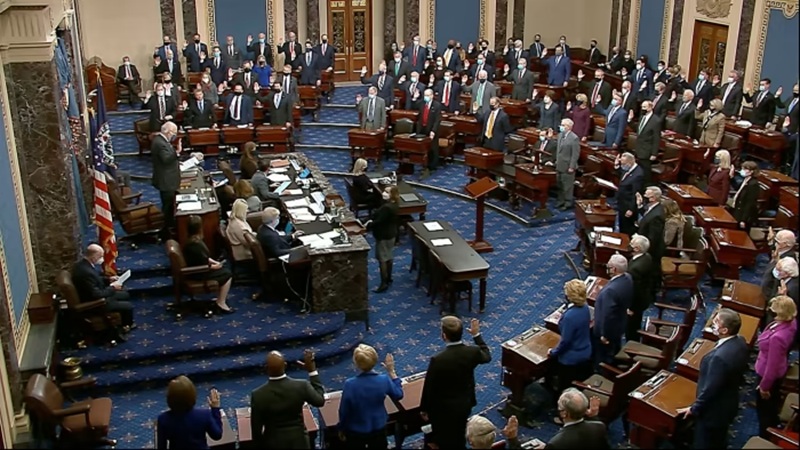
Congress adjourns for the holidays soon after December 31, risking a stall into the next session where priorities could shift. Crypto executives, including Coinbase CEO Brian Armstrong, have lobbied intensely, warning that delays hinder US innovation.

The sector has poured hundreds of millions into campaigns, viewing clarity as essential for growth. Talks stalled in October over DeFi rules and Democratic concerns about President Trump’s family crypto ties (e.g., potential conflicts). Recent CEO meetings with senators like Cynthia Lummis (R-WY) and Mark Warner (D-VA) aim to restart negotiations.

Without passage, ongoing SEC-CFTC turf wars persist, stifling institutional adoption. Proponents argue it could “unlock US crypto growth” by reducing regulatory arbitrage. Some Senate Democrats, led by Elizabeth Warren, criticize the bills for weak consumer protections and Trump’s conflicts, pushing for stricter DeFi oversight.

Unlike the House’s version, the Senate may expand exemptions and refine jurisdictional lines, requiring House reconciliation. High for markup, but full passage by month-end is uncertain—experts peg it at 60-70% if bipartisan tweaks land.

White House Crypto Czar David Sacks has echoed the September call now exbtended, urging swift action. If passed, it would mark a historic shift, potentially catalyzing a surge in crypto adoption and valuations. Watch for Senate updates in the coming weeks—failure to act could delay reforms until mid-2026.