DD
MM
YYYY

PAGES

DD
MM
YYYY

spot_img

PAGES

Home Blog Page 19

China Blocks Meta’s Manus Deal, Escalating Control Over AI Talent and Cross-Border Tech Flows

0

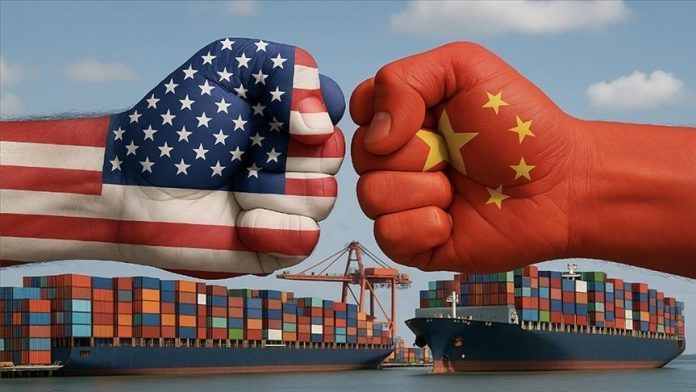
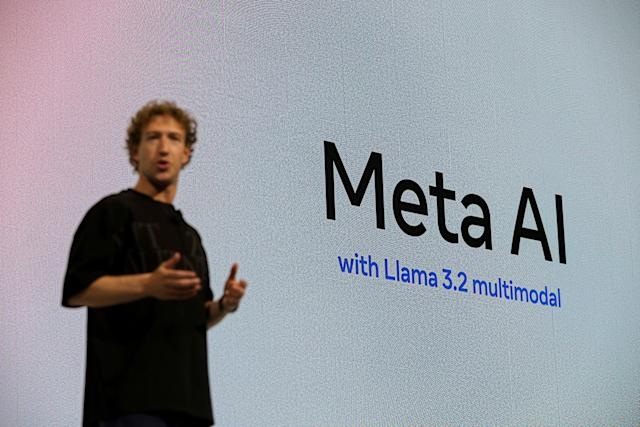
China’s top economic planner has ordered the reversal of a high-profile cross-border acquisition involving Meta and Singapore-based startup Manus, in a move that further marks Beijing’s expanding oversight of outbound technology transfers and foreign participation in sensitive sectors.

The directive from the National Development and Reform Commission (NDRC) requires both parties to unwind the transaction entirely, despite significant progress already made in integrating operations.

“The National Development and Reform Commission (NDRC) has made a decision to prohibit foreign investment in the Manus project in accordance with laws and regulations, and has required the parties involved to withdraw the acquisition transaction,” the agency said, offering no further explanation.

The absence of detailed reasoning has left analysts to interpret the decision within the broader context of China’s tightening regulatory posture. In recent years, authorities have moved to assert greater control over companies with domestic roots, particularly where intellectual property, engineering talent, and data capabilities are seen as strategically important.

The Manus deal appears to fall squarely within that framework. Although the company relocated its headquarters to Singapore in 2025, its origins in Beijing and the profile of its founding team have kept it within the orbit of Chinese regulatory scrutiny.

Founded in 2022 by Xiao Hong, Yichao Ji, and Tao Zhang, Manus quickly drew attention for its technical capabilities, prompting Meta to agree to an acquisition valued at between $2 billion and $3 billion late last year. The transaction was structured to facilitate a full exit from Chinese ownership, a model increasingly adopted by startups seeking to attract Western capital.

Yet the NDRC’s intervention suggests that such restructuring may no longer be sufficient. Authorities appear willing to look beyond corporate domicile and focus instead on origin, talent, and the potential strategic value of underlying technologies.

For Meta, the ruling complicates an acquisition that had already advanced operationally. Around 100 Manus employees had relocated to Singapore and were working from Meta’s offices, while founder Xiao Hong had taken on a senior role reporting to chief operating officer Javier Olivan. At the same time, reports indicate that Hong and chief scientist Yichao Ji are subject to restrictions preventing them from leaving mainland China, raising questions about the practical unwinding of the deal.

“The transaction complied fully with applicable law. We anticipate an appropriate resolution to the inquiry,” a Meta spokesperson said, signaling that the company may seek to contest or negotiate aspects of the decision.

The case is seen as another example of a shift in how cross-border transactions are being assessed. Deals that once hinged on legal structure and jurisdiction are now increasingly subject to geopolitical considerations, with governments asserting authority over assets they consider nationally significant.

This dynamic is not confined to China. In the United States, lawmakers have intensified scrutiny of investments involving firms with Chinese links. Senator John Cornyn has raised concerns about funding connected to Manus, questioning whether American capital should support companies with ties to China, even after relocation.

The result is a narrowing pathway for international transactions. Companies attempting to bridge markets through relocation or restructuring are finding themselves caught between competing regulatory regimes, each imposing its own conditions and red lines.

Beyond the immediate impact on Meta and Manus, the decision carries wider implications for the technology sector. It signals that Beijing is prepared to intervene directly to prevent the transfer of expertise and intellectual property, even when companies have formally shifted their base of operations abroad.

Analysts warn that such interventions may also have a chilling effect on venture capital flows. This is because investors typically rely on predictable regulatory environments when backing cross-border deals. Increased uncertainty over approvals and the potential for retrospective intervention could lead to more cautious deployment of capital, particularly in sectors deemed sensitive.

At an operational level, the unwinding of the Manus acquisition presents a complex challenge. Questions remain over the status of employees already integrated into Meta’s workforce, the ownership and control of intellectual property, and the legal mechanisms required to reverse contractual arrangements spanning multiple jurisdictions.

For global technology companies, the episode lends credence to the fundamental reality that the landscape for international expansion is becoming more fragmented. Regulatory risk is no longer peripheral but central to deal-making, influencing not just where companies invest, but how they structure operations and manage talent.

In that environment, transactions of this nature are likely to face closer scrutiny, longer timelines, and a higher probability of disruption. The Manus case suggests that, increasingly, national considerations can override commercial agreements—reshaping the calculus for companies operating across borders.

OpenAI Reportedly Plots a Bold Hardware Leap with Qualcomm: An AI-First Smartphone Built to Shatter App Store Limits

0

OpenAI is moving beyond software and chat windows into the physical world, quietly laying the groundwork for its own smartphone designed from the ground up around AI agents rather than the familiar grid of downloadable apps, according to a detailed new analysis by veteran supply-chain forecaster Ming-Chi Kuo.

The project, still in early stages, would see OpenAI partner with MediaTek and Qualcomm to co-develop custom smartphone processors optimized for on-device AI inference. Luxshare Precision, one of Apple’s most trusted manufacturing hands, would handle co-design and volume production.

Kuo expects the full component list and specifications to be finalized by late 2026 or the first quarter of 2027, with mass production kicking off in 2028 — an aggressive but plausible timeline for a company that has never shipped a consumer device before.

OpenAI aims to sidestep the restrictions that have long frustrated AI developers by owning the hardware stack. Apple and Google tightly control which apps can access system-level data, sensors, and background processes. An OpenAI phone would change that equation entirely. AI agents could operate with unrestricted context, pulling from location, microphone, calendar, messages, and usage patterns in real time, to complete complex tasks proactively instead of waiting for users to open separate apps.

Kuo describes the device as a “continuous context engine,” blending small, efficient on-device models for quick, private responses with heavier cloud-based models for deeper reasoning. That hybrid approach mirrors how OpenAI already runs its most advanced systems and could give the phone an always-available intelligence that feels less like a gadget and more like a digital assistant that actually anticipates needs.

The move comes at a time when ChatGPT is on the verge of hitting a billion weekly users, giving OpenAI a massive installed base to convert into hardware customers. A daily-carry device would deepen engagement far beyond occasional queries on a laptop or phone screen, creating new revenue streams through premium hardware, subscriptions, and potentially even carrier partnerships.

This isn’t a solo crusade. At SXSW this year, Nothing CEO Carl Pei openly declared that “apps are going to disappear,” arguing the decade-old app-store model is outdated for an era of intelligent agents that can act across domains.

Similar thinking has surfaced among other AI-native startups, but OpenAI’s scale and cash reserves put it in a rare position to actually try building the hardware that proves the thesis.

The smartphone plan sits alongside an earlier hardware push. Earlier this year, Chief Global Affairs Officer Chris Lehane confirmed OpenAI remains on track to unveil its first physical product in the second half of 2026. Multiple reports have pointed to distinctive AI-powered earbuds, possibly developed with input from Jony Ive’s design team, as the likely debut device. Those wearables could serve as a lower-risk entry point, testing voice-first, always-listening AI before the heavier lift of a full phone.

Wall Street reacted immediately to Kuo’s note. Qualcomm shares jumped in premarket trading as investors bet the chipmaker could land meaningful new socket wins for its AI-optimized modems and processors. MediaTek and Luxshare stand to gain as well if the project scales, though both are accustomed to working with far more experienced handset makers.

Plenty of skepticism is warranted. History is littered with big-tech outsiders who stumbled into smartphones, just ask Amazon with its Fire Phone, or the countless failed attempts to crack Apple and Samsung’s duopoly. To succeed, OpenAI will have to master carrier certifications, global distribution, after-sales service, and the brutal economics of hardware margins while simultaneously navigating privacy regulations that will scrutinize constant context awareness.

Data collection on this scale could invite intense regulatory and consumer backlash, especially given OpenAI’s already high profile.

Yet the upside is tantalizing. In a world where AI capabilities are advancing faster than the platforms built to contain them, controlling the device could become OpenAI’s ultimate moat. It would turn the phone from a neutral carrier of other companies’ apps into a seamless extension of its intelligence layer — feeding richer training data back into future models while locking users into an ecosystem where ChatGPT, agents, and voice interfaces feel native rather than bolted on.

However, the company is currently still several years from putting metal and glass in consumers’ hands. But Kuo’s note adds real credibility to the idea that OpenAI is no longer satisfied playing inside someone else’s operating system. It wants to build the operating system and the phone that finally lets AI breathe freely. If it pulls it off, the ripple effects across the entire mobile industry could be profound.

President Trump Declares Obligation to Ensure The Crypto Industry Thrives

0

United States President Donald Trump recently disclosed that he has an obligation to ensure the cryptocurrency industry thrives, describing it as a major, mainstream sector vital to U.S. global competitiveness.

Speaking to reporters on the tarmac at Palm Beach International Airport before boarding Air Force One, Trump said,

“As a president, I have to be able to make sure that all of our industries do well. Crypto is a big industry; it’s actually become somewhat mainstream.”

Trump’s remarks came shortly after he hosted the winners of his second annual meme coin contest at his Mar-a-Lago club. A central theme of the event was the mainstream acceptance and institutional integration of crypto.

Trump used the event to strongly defend pro-crypto policies, emphasizing that:

•Cryptocurrency is becoming mainstream financial infrastructure, not just speculative assets.

•Traditional banks should embrace and support crypto, rather than resist it.

•His administration would continue pushing crypto-friendly regulation to encourage innovation.

This message reinforced his broader positioning as a “crypto president,” aligning political leadership with the rapid growth of digital assets.

Trump also used the occasion to defend pending crypto legislation, urging banks not to obstruct the Digital Asset Market Clarity Act, emphasizing America’s need to lead in both crypto and artificial intelligence to stay ahead of global rivals like China.

His recent comment about showing support for the crypto industry sparked immediate discussion online. Several users on X praised the shift from “regulation by enforcement” to proactive backing of innovation.

However, many in the crypto community expressed frustration, noting that Bitcoin and major altcoins have faced volatility and declines since the election, with some holders reporting significant losses.

Critics highlighted the $TRUMP memecoin, which has reportedly dropped over 95% from its peak, while questioning potential conflicts of interest tied to the Trump family’s crypto ventures.

Trump’s Support For The Crypto Industry

President Trump’s speech has marked a notable evolution from his earlier skepticism toward Bitcoin and crypto. Recall that during his first term and 2024 campaign, Trump had criticized digital assets, but his second administration adopted a markedly pro-crypto stance.

During his presidential campaign, he framed cryptocurrency as a tool for economic freedom, innovation, and global competitiveness. He further argued that the United States risked falling behind countries like China if it failed to embrace digital assets and blockchain infrastructure.

Trump didn’t just speak about his support for crypto; he actively engaged with the community. His campaign accepted cryptocurrency donations, signaling a practical commitment to the ecosystem. He also appeared at crypto-related events and aligned himself with influential figures in the industry.

This strategy helped him tap into a growing voter base that sees digital assets not just as investments, but as part of a broader technological and financial movement. Notably, Trump framed crypto support as a national duty, stating the U.S. must dominate the sector to maintain technological and economic leadership.

Outlook

Trump’s statement reinforces his administration’s view of crypto as a strategic industry rather than a fringe asset class. By tying its success to U.S. leadership alongside AI, the president positioned digital assets as central to future economic competition.

As the crypto market continues to mature, stakeholders will watch whether his expressed obligation translates into concrete legislative wins, clearer regulations, or further integration of digital assets into traditional finance.

Join Tekedia Capital Syndicate and Co-invest in 18 Global Startups

0

Tekedia Capital offers a specialty investment vehicle (or investment syndicate) which makes it possible for citizens, groups and organizations to co-invest in innovative startups and young companies in global markets [we invest in global startups, not just in African startups]. Capital from these investing entities is pooled together and then invested in a specific company or companies. We invest in promising global companies irrespective of their locations.

We are in an active cycle at the moment. You can join here and co-invest with us.

Duration: April 6 – May 11, 2026
Startups Unveiled on Portal: April 6

1win Kenya: review of betting shops and casinos in 2026

0

1win bookmaker has been operating in the African market for several years and during this time has managed to attract the attention of both sports betting enthusiasts and casino fans. In 2026, the platform was nominated for the SiGMA Awards Africa in two categories at once – “Best Casino Operator” and “Best Bookmaker”, which confirms its growing influence in the region.

This 1win review has been prepared based on an analysis of available information and real user reviews. We will analyze the key areas of the platform: sports betting, casino, bonus program and general advantages of the service.

1Win Casino

1win Casino offers its users an impressive collection of games that can satisfy even the most demanding players. The platform features thousands of titles from the world’s leading providers – Pragmatic Play, NetEnt, Microgaming, Hacksaw, and many others. This variety allows everyone to find entertainment to their liking, regardless of preferences and level of experience.

Slot machines occupy the main part of the catalog. Here you can find both classic “fruit” slots with simple rules and modern video slots with complex storylines, bonus rounds and progressive jackpots. Filtering by providers, popularity, and new products helps you quickly navigate through a huge assortment. For those who want to test the game without risk, a demo mode is available that does not require the deposit of real funds.

The live casino section deserves special attention. This is a solution for those who miss the atmosphere of a real gambling establishment. Live dealer games are broadcast in high quality, professional croupiers conduct the process in English or other languages, and chat allows you to communicate with participants. Different variations of roulette, blackjack, baccarat and poker are available. The tables are designed for different budgets, from minimal bets for beginners to high limits for high rollers.

Crash games like Aviator, JetX and Lucky Jet have become a real hit in recent years. Their mechanics are simple to the point of genius: the multiplier increases, you need to be able to collect the winnings before the game crashes . Fast rounds, clear rules and an element of adrenaline attract a huge audience. In 1win online, these games are fully adapted to mobile devices and work without delay.

The platform regularly updates the range, adding new products from leading developers. This allows you to keep the interest of regular players and attract new users looking for fresh experiences. All games are tested by random number generators, which guarantees the integrity of the results.

Sports Betting 1Win

The sports betting section is one of the key components of the platform. 1win Bet offers a line covering more than 40 sports, from popular football, tennis and basketball to niche disciplines and esports. It is especially important for Kenya to have local tournaments – Kenyan Premier League matches, cricket competitions and other regional events are regularly featured in the line.

The odds are at a competitive level, and the bookmaker’s margin does not exceed market standards. A deep painting is available in the pre-match, which includes many outcomes: totals, handicaps, individual player indicators, and statistical accumulations. In live, the coefficients are updated promptly, which allows you to respond to changes during the match.

The live streaming feature is available for many events, which allows you to follow the progress of the game directly on the platform. This is especially useful when betting during a match – you see what is happening on the field and can make more informed decisions.

The quality of the broadcasts meets modern standards, and delays are minimal.

Esports is represented by a separate section. Dota 2, League of Legends, CS, Valorant and other popular disciplines are available for betting on both major tournaments and regional competitions. Given the growing popularity of esports in Africa, this is an important advantage of the platform.

The section’s interface is designed for easy navigation. Events can be filtered by sports, tournaments, and start time. The betting coupon is always at hand, adding outcomes happens in one touch. The betting history and statistics are available for registered users.

Advantages of 1Win

Summarizing information from various sources and user reviews, we can highlight the key advantages of the platform that make it attractive to Kenyan players.

  • License and security. The platform operates under a Curacao license, which confirms its legality and compliance with international standards. SSL encryption is used to protect the data, which excludes the interception of information by third parties. Players’ funds are stored in secure accounts, and withdrawals are made only after verification of identity when requesting large amounts;
  • Convenience of payments. The support of local payment systems is critically important for Kenya. The platform accepts M-Pesa, Airtel Money, bank cards and cryptocurrencies. The minimum deposit is 100 KES, which makes the entry threshold available to any player. Withdrawals usually take from a few minutes to several hours, depending on the chosen method;
  • A mobile application. Realizing that most Kenyan players use smartphones, the company has developed a high-quality mobile application for Android and a web application for iOS. The application is not inferior in functionality to the main version of the site, it supports push notifications, fingerprint login and one-click quick bets;
  • Support service. Round-the-clock online chat allows you to resolve any issues that arise at any time of the day. The operators communicate in English and Swahili, and the average response time is several minutes. Email support is available for complex issues;
  • Recognition in the industry. The nominations for SiGMA Awards Africa 2026 in the categories of best casino and best bookmaker confirm that the platform is moving in the right direction and investing in the development of the African market. This is not a short-term project, but a serious player with long-term plans.

Conclusions

1win Kenya is a balanced platform that is equally well suited for both sports betting enthusiasts and casino fans. A wide line, competitive odds, generous bonus program, and convenient payment tools create a comfortable gaming environment.