DD
MM
YYYY

PAGES

DD
MM
YYYY

spot_img

PAGES

Home Blog Page 19

South Korea’s Exports Seen Rising for 16th Month as AI Chip Boom Drives Record Trade Surplus

0

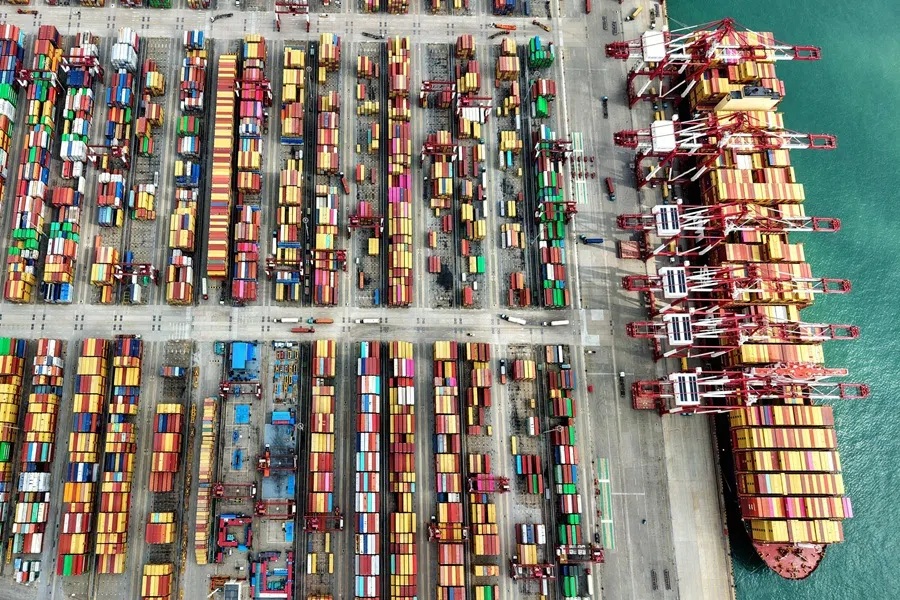
South Korea’s exports are expected to extend their record run of growth into a 16th consecutive month in September, powered by relentless demand for semiconductors used in artificial intelligence infrastructure, even as fewer working days are likely to make the headline growth rate appear weaker.

Exports from Asia’s fourth-largest economy were forecast to rise 62.0% from a year earlier, according to a Reuters poll of 18 economists. That would mark a slowdown from the 68.7% increase recorded in August and the weakest growth in four months.

The moderation, however, is largely a calendar effect rather than a clear indication that external demand is losing momentum.

September has 21.5 working days this year, compared with 24 days in September last year, because the Chuseok holiday fell in September this year but in October last year.

The underlying export figures remain considerably stronger.

During the first 20 days of September, before the Chuseok holidays, exports jumped 78.3% from a year earlier to a record level. Semiconductor exports surged 259.4%, while exports measured on a working-day basis increased 89.8%.

“The boom in semiconductor exports will persist as increasing trends in AI hyper-scaler investments continue,” said An Ki-tae, an economist at NH Investment Securities.

That makes South Korea one of the clearest real-world indicators of the enormous capital spending cycle surrounding AI. The country is a major supplier of memory chips and other components required by data centers, and the acceleration in semiconductor exports suggests that spending by major technology companies remains a powerful source of industrial demand.

South Korea’s export performance has become increasingly tied to the global AI investment cycle. Exports have risen every month since June 2025 and have recorded double-digit annual growth since December. Growth reached 70.4% in June, the strongest pace in almost half a century.

The scale of the semiconductor increase is particularly notable. A 259.4% annual increase in chip exports during the first 20 days of September indicates that AI infrastructure spending is creating an unusually strong demand cycle for Korean technology suppliers.

The data also shows why monthly headline figures need to be interpreted alongside working-day adjustments. A 62% increase for the full month would represent a sharp deceleration from August, but the first 20 days suggest that the underlying momentum remained considerably stronger.

The concentration of export growth in semiconductors also carries a risk for the broader Korean economy. A large portion of the current expansion is being driven by a single sector benefiting from the AI investment boom, while the durability of that spending cycle remains an important question for manufacturers and investors.

There are already growing debates within the technology industry about the pace and sustainability of AI investment. Some industry leaders have called for a slower development of increasingly powerful AI systems because of safety concerns. For Korean chip manufacturers, however, the immediate demand signal remains strong.

The current cycle is also different from a traditional consumer electronics boom. Much of the demand is being generated by hyperscalers and data-center operators investing heavily in computing infrastructure. That means semiconductor demand is increasingly linked to capital expenditure decisions by a relatively concentrated group of global technology companies.

Imports were expected to rise 21.5% in September, slightly slower than the 22.4% increase recorded in August.

The much faster growth in exports is expected to produce a record monthly trade surplus of $38.15 billion, according to the Reuters poll, compared with $34.79 billion in August. That would provide another indication of how dramatically South Korea’s external trade position has improved alongside the semiconductor recovery.

The figures also reinforce the importance of chips to South Korea’s broader economic outlook. When semiconductor prices and shipments weaken, the country’s trade balance and industrial activity can deteriorate rapidly. When AI-driven demand strengthens, the impact can spread through exports, corporate earnings, investment and the currency.

The September numbers therefore offer more than another strong monthly export reading. They provide a real-time measure of whether the global AI infrastructure boom is still translating into physical demand for computing hardware.

The answer from the preliminary data is strongly positive.

The key question for the months ahead is whether that momentum can broaden beyond semiconductors and remain strong enough to support the wider Korean economy if AI-related capital spending eventually moderates.

South Korea is scheduled to release its official September trade figures on Thursday, October 1, at 9 a.m. local time (0000 GMT).

Shell-Led Consortium Approves LNG Canada Expansion, Boosting Ottawa’s Energy Ambitions

0
FILE PHOTO: A Shell logo is seen at a gas station in Buenos Aires, Argentina, March 12, 2018. REUTERS/Marcos Brindicci

A consortium led by Shell has approved a major expansion of Canada’s LNG Canada project, clearing the way for the country to double its liquefied natural gas production capacity and strengthening Prime Minister Mark Carney’s push to position Canada as a major global energy supplier.

Shell said Tuesday that the consortium had reached a final investment decision to proceed with the second phase of LNG Canada in Kitimat, British Columbia. The expansion will increase the project’s production capacity to about 28 million metric tons per annum from 14 million.

The decision is one of the largest commitments yet to Canada’s LNG sector and gives Ottawa a significant project with which to pursue its goal of expanding energy exports beyond its traditional dependence on the U.S. market.

Shell holds a 40% stake in LNG Canada and leads the consortium, which also includes Malaysia’s Petronas, China’s PetroChina, Japan’s Mitsubishi Corp and South Korea’s state-owned Korea Gas Corp.

The project’s location on Canada’s Pacific coast gives it direct access to Asian markets, where LNG demand remains significant, and buyers have increasingly sought to diversify supplies. Commercial operations from the expansion are expected to begin in the early 2030s.

“LNG Canada is a core part of our Integrated Gas portfolio, helping to supply LNG to customers in Asia at a time when diversity of energy supplies and energy security are increasingly important,” said Cederic Cremers, Shell’s integrated gas president.

“Phase 2 supports Shell’s strategic objective to be the world’s leading integrated gas and LNG business by connecting Canadian resources with Shell’s global LNG portfolio, trading capability and customer reach,” he added.

The timing gives the investment a broader geopolitical significance. Global energy markets have been disrupted by the U.S.-Iran war, while European countries and other nations aligned with Ukraine continue to seek alternatives to Russian gas.

That environment has strengthened the argument for additional LNG capacity in countries viewed as politically stable and capable of supplying major consuming markets. Canada is now positioned to use its Pacific coastline and large natural gas resources to compete for a greater share of that trade.

LNG Canada described the expansion as a “nation-building investment” that will “further strengthen Canada’s role as a trusted energy partner.”

A Major Test of Carney’s Energy Strategy

The investment also gives Carney’s government a concrete project with which to advance its ambition of turning Canada into an “energy superpower.”

Carney campaigned in 2025 on expanding Canada’s role as a global energy supplier. His government has also sought to present Canada as a stable alternative for countries looking to diversify energy supplies.

That objective has become more important as Ottawa manages an increasingly difficult economic relationship with Washington. Canada remains deeply integrated with the U.S. economy, while the trade dispute with the Trump administration has increased the political pressure on Ottawa to develop alternative export markets.

LNG provides one potential route.

Rather than sending additional gas south through an already deeply integrated North American market, LNG Canada allows Canadian producers to access customers across the Pacific. That potentially gives the country greater exposure to Asian demand and reduces the extent to which its energy exports are tied to a single market.

The expansion is also expected to generate substantial economic activity. The Canadian government has previously estimated that LNG Canada will create thousands of jobs and attract C$33 billion ($23.2 billion) in private-sector capital.

The second phase therefore extends beyond Shell’s portfolio considerations. It represents an attempt to build more export infrastructure around Canada’s natural gas resources and establish a larger role for the country in international LNG markets.

But the project will take years to deliver. Commercial operations from the expanded facility are not expected until the early 2030s, meaning the economics will ultimately depend on LNG demand, gas prices, competing supply projects and the cost of constructing and operating the additional capacity.

The timing also places Canada in competition with established LNG exporters in the United States, Qatar and Australia, as well as emerging suppliers seeking to bring new projects online.

For Shell, the investment fits its broader effort to expand its LNG business while maintaining a large position in global natural gas trading. The company is using its stake in LNG Canada to connect Canadian production with its international customer base and trading network.

The consortium’s decision consequently gives both Shell and Canada a larger stake in the future of the global LNG market.

Shell shares listed in London fell nearly 1% on Tuesday, although the stock remains up more than 32% this year.

Meta Launches Muse for Small Business as Zuckerberg Expands AI Push Beyond Social Media

0

Meta is taking its newly launched Muse AI agent into the business market, extending the service beyond its fast-growing consumer app and into the software that small companies use to manage operations, marketing and customer relationships.

The company on Tuesday unveiled Muse for Small Business, a version of its AI agent that can connect with widely used business applications including Asana, Zoom, Intuit, Box, Canva and Salesforce’s Slack. The service can also connect to Meta advertising accounts and professional Instagram and Facebook profiles.

Meta did not disclose pricing for the small-business offering. At the bottom of its announcement, however, the company referred users to the existing Muse app, which is available free with usage limits and through a subscription for users who need greater access.

The launch comes a day after Meta announced a new enterprise platform and recruited MongoDB CEO Chirantan “CJ” Desai to lead the initiative. That platform will include a Muse agent, a business agent and a coding tool, signaling that Meta is moving to build a broader commercial AI ecosystem rather than treating Muse primarily as a consumer assistant.

“Give Muse a goal — like running your business or finding new customers — and it gets it done,” Meta said in Tuesday’s announcement.

The shift marks a significant expansion of Meta’s AI ambitions. The company has historically generated almost all of its revenue from digital advertising, but CEO Mark Zuckerberg has increasingly positioned AI as a new business opportunity capable of extending Meta’s reach into areas beyond advertising and social networking.

From Consumer AI to Business Automation

Muse has quickly become the centerpiece of that effort.

Since its September 8 rollout, the AI application has climbed to the top of Apple’s App Store rankings, overtaking OpenAI’s ChatGPT. Evercore analyst Mark Mahaney told CNBC that he expects Muse to reach 100 million users within six to 12 months.

Meta’s market performance has also benefited from the enthusiasm surrounding its AI strategy. Its shares gained about 25% in September, although the stock has pulled back over the past two trading sessions. The small-business launch now puts that consumer momentum against a more demanding test: can Meta turn an AI assistant into a useful business application that companies will rely on for real work?

The question matters because a consumer AI assistant can succeed by answering questions, generating content, or helping users complete individual tasks. A business agent needs to interact reliably with multiple systems, maintain permissions, handle company data, and execute actions without creating costly errors.

Meta is addressing that requirement by connecting Muse to applications that businesses already use.

A small business could potentially use the agent across project management, video meetings, accounting, file storage, design, messaging, advertising, and social-media accounts rather than requiring employees to move between individual applications. That interoperability is potentially more important to Meta’s enterprise ambitions than the chatbot interface itself. The value of an agent increasingly depends on what it can actually access and execute, rather than simply how convincingly it can generate text.

Meta Targets a Market It Already Knows

Meta is entering the small-business market with an advantage that enterprise-focused AI rivals cannot easily replicate: an enormous existing relationship with business owners through Facebook and Instagram.

The company says 200 million small businesses have a presence on Facebook.

“Small businesses have been growing on our apps for nearly two decades,” Meta said. “They told us they’re short on hours, not ideas. So we built Muse for Small Business to help get work done with the tools they already use.”

That installed base gives Meta a natural distribution channel.

A business already using Meta to advertise products or communicate with customers does not need to discover an entirely new technology ecosystem before experimenting with Muse. The agent can potentially sit between the company’s social-media presence and the other software it already uses.

That could allow Meta to turn its advertising relationship with small businesses into a broader software relationship. For example, connecting Muse to Meta’s advertising accounts and professional social profiles gives the company a direct route into marketing workflows. Connecting the agent to accounting, project-management, design and communication applications extends its reach into the operational side of a business.

The commercial opportunity is therefore larger than simply charging for access to an AI assistant. Meta could eventually use Muse to deepen engagement with business customers, generate additional software revenue and make its advertising ecosystem more deeply embedded in day-to-day business operations.

A More Direct Challenge to OpenAI And Anthropic

The timing also places Meta in more direct competition with the leading enterprise AI providers.

OpenAI is holding its developer day as Meta launches Muse for Small Business, while Anthropic has increasingly positioned Claude as a platform for corporate users and AI agents. Meta’s response is built around a different combination of assets: a huge consumer and small-business user base, its advertising infrastructure, open AI-model development and an increasingly broad portfolio of AI agents.

Zuckerberg has made the shift explicit. At Meta Connect last week, he described Muse as the “centerpiece” of the company’s AI strategy.

The company’s spending also shows how seriously it is taking the opportunity. Meta spent billions of dollars last year recruiting top AI talent, including Scale AI founder Alexandr Wang, who is leading the company’s AI efforts. Wang’s group began releasing new models under the Muse Spark family in April.

The recruitment of MongoDB’s Desai adds another piece to that strategy. His background in enterprise software gives Meta an executive focused specifically on turning its AI technology into products that companies can deploy.

The challenge now is execution.

The small-business market is fragmented, price-sensitive, and highly dependent on software reliability. An agent that can connect to many applications is potentially powerful, but every additional integration also introduces questions around data access, permissions, security, and the consequences of an AI system taking an incorrect action.

Meta’s ability to persuade businesses to let Muse move from generating recommendations to actually executing tasks will therefore be a critical test. The company’s broader AI strategy is increasingly moving in that direction. Rather than competing only to produce a more capable model, Meta is attempting to control the layer where AI meets users, software, and business workflows.

For Zuckerberg, that could provide a route to turn Meta’s enormous consumer and advertising footprint into a much broader AI business. Muse for Small Business is an early test of whether that ambition can extend from the social-media feed into the operating systems of millions of companies.

Smart-ring Maker Oura Delays Nasdaq IPO Despite Strong Demand as Volatile Market Tests New Listings

0

Oura has postponed its planned Nasdaq initial public offering, citing uncertainty in the IPO market just days after formally launching the deal, highlighting the fragile conditions facing companies seeking to tap U.S. public markets.

The smart-ring maker said Tuesday that it was delaying the listing despite what it described as “strong demand” from investors and continued improvement in its business since the IPO process began.

Oura formally launched its IPO plans on September 21, seeking to raise as much as $2.2 billion through the sale of 50 million shares. The company did not provide a new timetable for the offering.

“Our mission is to empower people to live healthier, longer, and an IPO is just one step in our journey,” CEO Tom Hale said.

“We aim to deliver an extraordinary IPO for our employees and investors and we have the luxury of choosing our moment. In the meantime, we will execute against the opportunities ahead,” he added.

The decision underlines the difference between company-specific performance and the broader conditions required for a successful public offering. Oura said demand for its shares remained strong and that its business had strengthened, but it has nevertheless opted to wait for more favorable market conditions.

Growth Is Strong, But Timing Matters

Oura said it is profitable and expects revenue to increase 90% year over year in fiscal 2026.

That growth rate is significant for a consumer technology company preparing to enter public markets, particularly because Oura has expanded its product beyond its original focus on sleep tracking.

Since launching in 2015, the company’s smart ring has developed into a broader health and wellness platform. Oura has added capabilities around health monitoring, analytics, and AI as it attempts to position the wearable as a tool for preventative health rather than simply a sleep-tracking device.

That evolution is central to the company’s investment case.

The wearable market has traditionally been dominated by larger technology companies offering smartwatches and other multifunctional devices. Oura has instead concentrated on a smaller form factor and health-focused functionality, giving it a distinct position in the market.

Its challenge as a public company would be demonstrating that rapid revenue growth can be sustained as the business becomes larger and competition in health-focused wearables intensifies. The company’s decision to delay the IPO means investors will have to wait longer to assess Oura’s financial performance through public-market disclosures.

However, postponing the offering also allows Oura’s management to continue building the business without immediately accepting a valuation determined by unsettled equity markets.

A Warning Sign for The IPO Market

Oura is the latest U.S. company seeking to go public to postpone or withdraw an offering.

Holtec Nuclear withdrew its IPO earlier this month, citing adverse market sentiment in equity markets. The company pointed to a combination of uncertainty around data development, rising energy costs, elevated global trade tensions, military conflicts, and inflation concerns.

The two companies operate in very different industries, but their decisions point to the same problem facing prospective IPO candidates: strong company fundamentals do not necessarily translate into favorable conditions for going public.

An IPO requires investors to price not only the company’s future earnings but also the broader risk environment. When uncertainty increases, investors can demand lower valuations or become more selective about new offerings.

That can create a difficult calculation for companies such as Oura.

A successful IPO can provide liquidity for existing shareholders, establish a public valuation and give the company access to capital markets. But going public during a period of heightened volatility can also result in a valuation below management expectations and expose the stock to sharp trading swings immediately after the listing.

Oura’s decision to wait therefore preserves flexibility.

The company is not abandoning its IPO ambitions. Instead, it is effectively treating the timing of the offering as another variable in its strategy.

Oura’s Next Test Is Sustaining Growth

The company’s financial trajectory gives it a stronger position to wait than a business that needs an IPO to finance immediate operations.

Oura said it is profitable, and its planned offering was not presented as a rescue financing. That distinction matters because the company can continue investing in its products and expanding its customer base while waiting for conditions to improve.

Its 90% expected revenue growth also gives management a potentially important window to demonstrate that the business can sustain rapid expansion.

However, high growth creates expectations. Investors will eventually want to see evidence that Oura can convert its expanding health and wellness ecosystem into recurring revenue and durable margins.

The company’s increasing use of AI and analytics could help broaden its value proposition, but it also raises questions about how much differentiation can be maintained as larger technology companies add increasingly sophisticated health-monitoring features to their own devices.

The IPO will therefore eventually become a test of more than investor appetite for Oura’s ring. It will test whether public-market investors are willing to assign a premium valuation to a profitable consumer technology company whose growth is increasingly tied to health data, software and AI.

For now, Oura has chosen not to make that test under uncertain market conditions. Hale’s statement that the company has the “luxury of choosing our moment” captures the significance of the decision. Oura can continue growing privately while waiting for a market environment in which its operating performance and the public-market valuation it seeks are more closely aligned.

The postponement also offers a broader signal for other companies preparing to list. The IPO window may remain open, but companies are increasingly treating access to it as conditional on investor confidence, market stability, and the ability to secure a valuation that justifies becoming public.

Elon Musk, Jeff Yass and Other Major Donors Enter the Midterm Race

0

The 2026 U.S. midterm elections are still weeks away, but the financial contest surrounding them is already operating on a scale normally associated with the final stages of a presidential campaign.

A review of federal campaign-finance data found that roughly $849 million has already been donated by a group of 25 extremely wealthy individuals and families, underscoring the growing role of personal fortunes in American electoral politics.

At the top of the list are George Soros and his family, whose political giving connected to the midterms has reached more than $103 million. Other major contributors include technology billionaire Elon Musk, hedge-fund investor Jeff Yass, Walmart heir Jim Walton, casino heiress Miriam Adelson and the Uihlein family.

Their contributions flow through campaigns, political action committees and organizations designed to support particular candidates, parties or policy priorities.

The figures illustrate how modern American elections have become increasingly intertwined with wealthy individual donors and political committees. Musk, for example, has personally contributed more than $90 million toward the 2026 midterms, with much of his money going to America PAC.

The super PAC has begun spending in congressional contests, including Senate races, after playing a major role in the 2024 election cycle. Jeff Yass has also emerged as a major donor, with roughly $92.6 million in contributions reported in the analysis.

His money has supported conservative political organizations and candidates, while the Uihleins have contributed more than $70 million. Miriam Adelson has given approximately $67.6 million, while Chris Larsen, Lyna Lam and Ripple-linked political giving collectively account for roughly $65.7 million in the cited analysis.

Artificial intelligence and cryptocurrency have also become important themes in this year’s political-finance landscape. OpenAI President Greg Brockman and his wife, Anna, have donated about $50 million, with money directed toward both an AI-focused super PAC and MAGA Inc.

Venture capitalist Ben Horowitz and his wife, Felicia, have contributed more than $45 million, including substantial funding for groups focused on technology and cryptocurrency policy.  That development reflects a broader transformation in political spending.

Reuters reported in August that cryptocurrency, artificial intelligence and online betting had become major sources of corporate and billionaire spending in the 2026 congressional races. The sectors are seeking influence over issues ranging from regulation and taxation to technological development and market structure.

Yet the approximately $849 million figure should not be interpreted as the complete cost of the election. The analysis is based on federal campaign donations reported to the Federal Election Commission through September 24.

It excludes many state-level contributions and does not fully capture so-called dark-money organizations, which generally do not have to publicly identify their donors.  Other analyses show the broader scale of the money already entering the 2026 cycle.

The Washington Post reported that the 50 largest individual donors had collectively contributed more than $1.7 billion by September 22. The significance of these numbers is therefore less about any single billionaire than about the structure of modern campaign finance.

Wealthy individuals can deploy enormous resources through multiple political vehicles, while campaigns compete for attention in an increasingly expensive media environment.

As November approaches, the spending is likely to remain a central feature of the midterms. The money will not determine every political outcome, but it will help shape which candidates receive advertising, organizing resources and sustained public exposure.

The expanding financial footprint provides another lens through which to understand the forces competing for influence in the 2026 elections.