DD
MM
YYYY

PAGES

DD
MM
YYYY

spot_img

PAGES

Home Blog Page 19

Neko Health Comes to New York With a $499 Preventive Health Scan

0

For years, preventive healthcare has operated on a simple rhythm: wait for a problem, visit a doctor, run a few tests and hope nothing serious appears. Neko Health is proposing a different model.

Scan first, understand the data quickly and potentially identify warning signs before they become obvious. Its arrival in New York puts that idea directly in front of American consumers for $499.

The Swedish health-tech company, co-founded by Spotify creator Daniel Ek, opened its first U.S. clinic in Manhattan’s SoHo neighborhood this week. The company had already accumulated a waitlist of roughly 25,000 New Yorkers, illustrating the appetite for consumer-focused preventive medicine.

Neko previously operated in Sweden and the United Kingdom, where more than 100,000 Europeans have reportedly used its services. The centerpiece is a full-body scan that uses cameras and other sensors to examine the skin and collect information about body composition.

Rather than simply taking a photograph, the system is designed to document thousands of images and track marks on the body that could warrant further investigation. That feature may be particularly relevant for people concerned about melanoma and other skin cancers.

But Neko’s examination goes beyond skin. Patients undergo blood-pressure measurements on all four limbs, blood tests covering markers such as cholesterol and blood sugar, an electrocardiogram, grip-strength testing and an eye-pressure examination.

The visit is designed to take roughly an hour, with results discussed with a clinician during the same appointment. That speed is arguably one of Neko’s biggest selling points. Traditional healthcare can involve separate appointments, laboratory visits, waiting periods and follow-ups.

Neko packages several measurements into one consumer-oriented experience and attempts to make the resulting data understandable rather than leaving patients to interpret a collection of numbers. There is also evidence that the technology can generate useful follow-up.

In a recent test of the New York service, a reviewer was contacted after the appointment because a mole on the torso was considered worthy of additional dermatological investigation. Neko says fewer than one in 10 customers are referred externally for follow-up.

Yet the $499 price raises an important question: how much of this is genuinely new medicine, and how much is better packaging? Several components of the examination are already available through conventional primary care.

Preventive examinations and many basic measurements can be covered by insurance for eligible patients, while dedicated skin-cancer screening may cost considerably less than $499. Neko therefore is not necessarily selling access to tests that cannot be obtained elsewhere.

It is selling convenience, speed, integration and a highly designed healthcare experience. That distinction matters because more data does not automatically mean better healthcare. A scan can identify something worth investigating.

But follow-up with specialists remains essential. Neko itself says its service is not intended to replace traditional hospital care. Its screening should therefore be viewed as an additional layer of preventive monitoring, rather than a universal substitute for established diagnostic medicine.

For $499, Neko is essentially betting that consumers will pay for a frictionless health checkup. For some people, especially those who value rapid information and structured monitoring, that convenience may have significant value.

For others, the same money could be directed toward conventional preventive care, exercise, specialist consultations or other established health services. The larger significance of Neko may therefore extend beyond the scanner itself.

Healthcare is increasingly becoming a consumer technology market, where speed, data visualization and user experience compete alongside clinical capability. Whether $499 represents good value depends less on how futuristic the machine looks and more on whether the information it produces leads to meaningful medical action.

Starbucks’ 250-Store Closure Signals a More Selective Turnaround

0

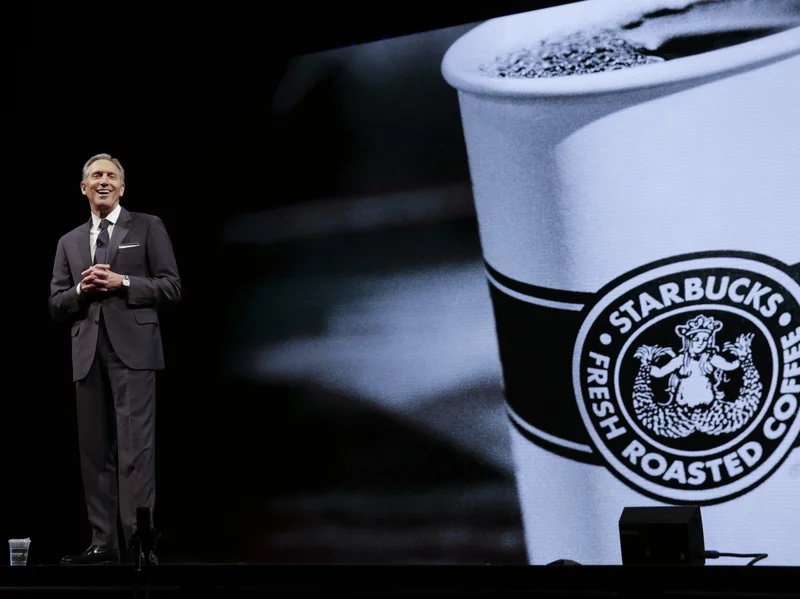
Starbucks is closing approximately 250 coffeehouses across North America, a move that shows how aggressively the company is reshaping its physical footprint while pursuing its broader “Back to Starbucks” turnaround strategy.

The closures represent roughly 1% of the company’s more than 18,000 North American coffeehouses, according to a September 24 memo from Chief Operating Officer Mike Grams.

The decision followed a review of Starbucks’ coffeehouse portfolio. According to Grams, the company identified locations where it could not consistently deliver the customer and employee experience it wanted or where there was no clear path to acceptable financial performance.

The closures therefore reflect not simply a reduction in stores, but an effort to concentrate resources on locations that management believes can better support the company’s strategy.

For employees, the corporate logic does not remove the immediate consequences. Starbucks said it is speaking directly with workers at affected locations and will seek transfer opportunities wherever possible.

Employees who cannot be placed in another coffeehouse will receive severance support, according to the memo. The timing is significant because Starbucks is simultaneously arguing that its North American business is improving.

Grams said customers are experiencing faster service, greater consistency and more welcoming coffeehouses. The company is also accelerating its program of coffeehouse uplifts, with more than 1,000 locations already redesigned across the United States and Canada since late 2025.

That creates an important distinction: Starbucks is not presenting the 250 closures as a retreat from North America. Instead, management describes them as part of portfolio management while maintaining a pipeline for new coffeehouses.

The company has repeatedly said that it expects long-term growth in the region. This approach fits the philosophy behind CEO Brian Niccol’s “Back to Starbucks” initiative.

The strategy is designed to return the company to a more traditional coffeehouse experience, emphasizing warmer stores, better service, operational simplicity and stronger connections between baristas and customers.

Two years into the strategy, Starbucks says it has made substantial progress in improving the customer experience while continuing to invest in its stores. The closures nevertheless highlight the difficult economics of operating a large retail network.

A recognizable brand can generate enormous value from scale, but scale also creates exposure to locations with different levels of traffic, rent, labor costs and local demand. A store that once made sense can become difficult to justify when customer behavior changes or operating expenses rise.

For Starbucks, the challenge is therefore to determine where physical presence strengthens the brand and where it becomes a drag on performance. Closing a location can reduce costs, but it can also disrupt employees, customers and communities that have built routines around a neighborhood coffeehouse.

The company’s next phase will reveal whether resources freed from weaker locations can translate into stronger stores, better service and sustainable growth. Starbucks says the objective is straightforward: every coffeehouse should be a place customers want to visit and employees are proud to work.

The 250 closures are consequently less about abandoning the coffeehouse model than redefining where that model should operate. Starbucks is shrinking selectively while simultaneously investing elsewhere. Its turnaround now depends on whether that sharper portfolio can deliver the consistency and financial performance management is seeking.

Why Investors Should Buckle Up for More Pain From the Bond Market Sell-Off

0

The bond market is sending a message that investors can no longer afford to ignore: borrowing costs may remain elevated for longer than markets had hoped. In September, the U.S. 10-year Treasury yield moved above 5%.

While the 30-year yield climbed as high as 5.39%, its highest level since 2004. That move matters because Treasury bonds sit at the foundation of global financial markets. When their yields rise sharply, the consequences extend far beyond government debt.

Mortgages become more expensive, corporate financing costs increase, equity valuations come under pressure and investors begin reassessing the premium they are willing to pay for riskier assets. The recent sell-off has several forces behind it.

Inflation remains a concern, particularly as energy prices have been pushed higher by geopolitical tensions. U.S. economic activity has shown surprising resilience. Stronger growth can keep inflation pressures alive and reduce expectations for aggressive monetary easing.

Recent business surveys reinforced that concern, helping push the 10-year yield to 5.10%. There is a much larger fiscal question hanging over the market. The U.S. government continues to carry an enormous debt burden.

Requiring substantial Treasury issuance to finance deficits and refinance maturing obligations. Globally, rising government debt has become an important factor behind higher long-term borrowing costs, according to Reuters. This creates a difficult feedback loop.

Higher yields increase the government’s interest expense, potentially requiring more borrowing. More borrowing can increase the supply of bonds investors must absorb. If investors demand greater compensation for holding that debt, yields can rise further.

The bond market’s pain can also migrate into stocks. A Treasury yielding around 5% provides investors with a significantly higher risk-free return than during the era of near-zero interest rates. That changes the mathematics behind equity valuations.

Particularly for technology and other growth companies whose expected profits lie far in the future. Reuters has noted that rising Treasury yields can pressure stocks through both higher borrowing costs and competition from fixed-income investments.

The effects are equally tangible. Treasury yields influence mortgages and other long-term borrowing costs. Recent data showed U.S. mortgage rates moving higher alongside Treasury yields, making financing more expensive even without a corresponding surge in house prices.

The crucial question is not simply whether yields have reached 5%. It is whether 5% becomes a new floor. Reuters recently reported that investors are beginning to consider whether 6% could become the next threshold if inflation, fiscal concerns and term premiums remain elevated.

That does not guarantee another disorderly sell-off. Bond yields can fall quickly if inflation weakens, economic growth slows or geopolitical risks ease. Indeed, the 10-year yield briefly declined below 5% as oil prices fell earlier this month.

But the broader lesson is clear: the bond market is no longer operating in the easy-money world investors became accustomed to. Fidelity describes the current environment as a shift toward a higher cost of capital.

Driven by inflation uncertainty, government borrowing, economic strength and other structural forces.  For investors, that means volatility may remain part of the landscape. The bond sell-off is not merely about falling bond prices.

It is a repricing of money itself—and that repricing can reach almost every corner of the financial system.

Anthropic Moves Toward Public Markets With Founder Control

0

Anthropic is preparing for one of the most closely watched technology listings in years, but before its shares reach public markets, the artificial-intelligence company is asking shareholders to approve a corporate structure that would give its founders extraordinary voting control.

According to Reuters, citing a report from The Information, CEO Dario Amodei and Anthropic’s six other co-founders would collectively receive 50.1% of the company’s voting power under the proposed arrangement.

The structure would use a special class of shares and would allow the founders to retain control over most corporate matters even after the company becomes publicly traded.

The proposal reflects a broader shift in Silicon Valley toward dual-class and founder-controlled ownership structures. Under such arrangements, economic ownership and voting power can become significantly different.

Investors may own a substantial portion of the company while possessing comparatively limited influence over strategic decisions.

The structure is particularly notable because the company is entering public markets at a moment when questions about AI governance, safety and corporate accountability are becoming increasingly important.

Anthropic has positioned itself not merely as an AI software company but as an organization focused on developing advanced systems while emphasizing safety. Its governance framework already includes the Long-Term Benefit Trust.

An unusual mechanism intended to preserve the company’s long-term mission. The proposed founder voting arrangement therefore adds another layer to the governance equation.

According to the reported plan, the special voting rights would remain in place as long as at least three of the seven founders maintain a specified minimum shareholding.

The timing is also significant. Anthropic is moving toward an IPO after a period of extraordinary commercial expansion. Bloomberg reported that the company was preparing for a possible listing as soon as October.

While later reports indicated that its annualized revenue could exceed $100 billion in 2026.  The company has also been strengthening its financial position ahead of the listing.

Bloomberg reported earlier this month that Anthropic was finalizing an expansion of its revolving credit facility to $15 billion, with Morgan Stanley, Goldman Sachs, JPMorgan and Citigroup involved in the financing process.

For prospective public-market investors, the central issue will not simply be Anthropic’s growth. It will also be the relationship between ownership, voting rights and accountability.

A founder-controlled structure can provide management with insulation from short-term shareholder pressure, potentially allowing executives to pursue long-term investments in infrastructure, research and product development.

Concentrated voting power means ordinary shareholders have fewer mechanisms to influence corporate decisions. That tension becomes particularly important for an AI company whose capital requirements are enormous and whose strategic decisions can involve billions of dollars in computing infrastructure, talent and research.

Public investors will therefore have to evaluate both the company’s commercial trajectory and the governance framework attached to their shares. Anthropic’s proposal also demonstrates how the AI boom is changing the traditional IPO model.

As private technology companies reach valuations once associated with established public corporations, founders and early investors are seeking ways to enter public markets without surrendering strategic control.

The shareholder vote will consequently be an important step in Anthropic’s transition from private AI laboratory to publicly traded technology company. The eventual IPO will give investors access to one of the industry’s most closely followed businesses.

While the proposed 50.1% founder voting structure will determine how much influence those investors actually possess once they become shareholders.

U.S And China Agree to $30 Billion Reciprocal Tariff Cuts And New AI Dialogue

0

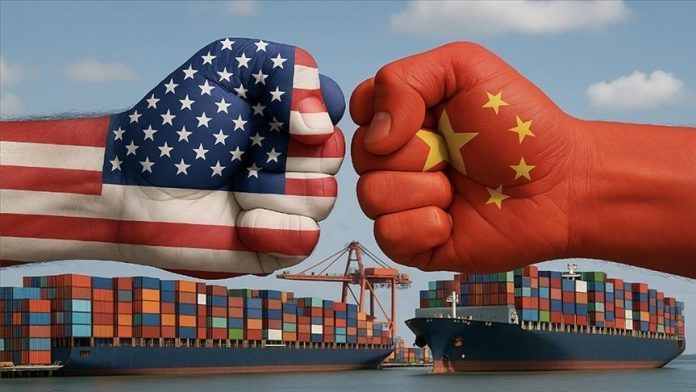
China and the United States have agreed to a reciprocal tariff-reduction arrangement covering $30 billion worth of goods and to launch a formal dialogue on artificial intelligence, according to a statement from Beijing on Saturday.

The measures form part of an eight-point consensus reached during Chinese President Xi Jinping’s three-day state visit to Washington, which ended on Friday.

The Chinese Foreign Ministry said the two sides endorsed the work of their economic and trade teams, including the establishment of a trade council and the extension of outcomes from earlier talks in Kuala Lumpur.

Speaking at the meeting, President Trump said,

“President Xi and I both understand that we represent different systems, but the ties between our people endure, and we’ve never gotten along better. Together we can continue to build a relationship that promotes prosperity and security for future generations. May all of our people know a future of harmony, peace, and success.”

From his remarks at the ceremony, Chinese President Xi Jinping said,

“Mr. President, during your visit to China this year, we agreed to build a constructive China-U.S. relationship of strategic stability. I am ready to work with you to steer the giant ship of China-U.S. relationship on a steady course toward the future.

“Both China and the United States are leading nations in artificial intelligence. We have both the capability and responsibility to develop and manage AI for good, and ensure that the development of AI is always under human control and serves the well-being of the people.”

Under the tariff arrangement, both countries will reduce duties on an equivalent volume of non-sensitive or noncritical goods.

The agreement follows an earlier decision to extend a broader trade truce by two months beyond its previous November 10 expiration, providing additional time to pursue a potentially larger deal.

On artificial intelligence, the two governments agreed to establish a China-U.S. AI Dialogue to exchange views on the technology’s risks and benefits. The next round of discussions is scheduled for November.

They also committed to creating a bilateral communication channel specifically for AI-related incidents. The White House described a similar “US-China Super Intelligence Dialogue” and bilateral channel for incidents, reflecting language used by U.S. officials during the talks.

The significance of the initiative is closely tied to the position of the United States and China in the global AI race. Both countries are developing advanced AI models, computing infrastructure and AI applications at a scale that gives their decisions consequences beyond their own borders.

Analysts at the Carnegie Endowment describe them as the two countries building the world’s most advanced AI systems while simultaneously competing for technological supremacy.

That creates an unusual situation: the same countries competing to build increasingly capable AI systems are also among the countries with the greatest ability to influence how those systems are governed.

The dialogue therefore does not necessarily represent the end of the U.S.-China AI competition. Instead, it creates a mechanism through which competition can coexist with communication on issues where the two countries have shared interests

Xi’s visit, his first state visit to the United States in more than a decade, centered on personal diplomacy between the two leaders rather than major public breakthroughs.

Chinese Foreign Minister Wang Yi described the trip as enriching a constructive and stable bilateral relationship with far-reaching implications for global peace and development. The leaders also reaffirmed support for each other in hosting upcoming APEC and G20 summits and addressed other issues including counternarcotics cooperation.

The tariff and AI steps build on earlier discussions, including meetings in Busan last year and Beijing earlier this year. While the $30 billion figure represents a limited share of overall bilateral trade, officials on both sides presented the outcomes as practical measures to stabilize economic ties and manage emerging technological risks. Xi has returned to Beijing, Chinese state media reported.

Outlook

The latest U.S.-China agreement could mark a shift toward managed competition, particularly as economic and technological tensions between the two countries continue.

The reciprocal tariff reductions may provide businesses with greater certainty and create additional room for Washington and Beijing to negotiate a broader trade agreement, although the limited scope of the $30 billion arrangement means significant trade barriers remain.

The AI dialogue could prove even more consequential over the longer term. As both countries continue developing increasingly capable AI models, the November discussions could provide an early test of whether Washington and Beijing can establish practical safeguards around the technology despite their wider strategic rivalry.