

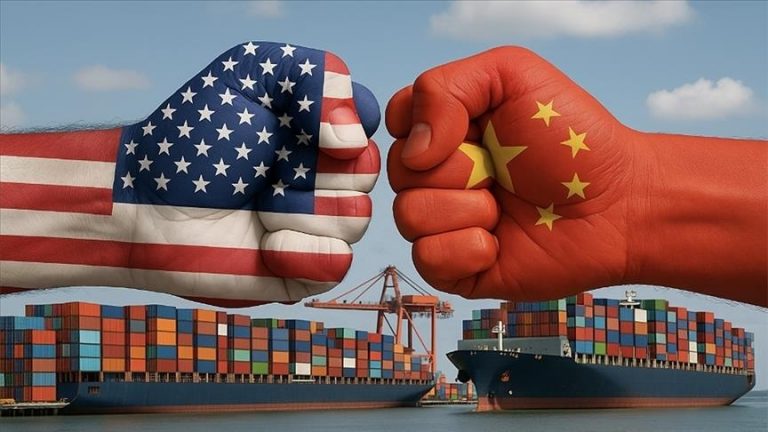
China and the United States have agreed to a reciprocal tariff-reduction arrangement covering $30 billion worth of goods and to launch a formal dialogue on artificial intelligence, according to a statement from Beijing on Saturday.
The measures form part of an eight-point consensus reached during Chinese President Xi Jinping’s three-day state visit to Washington, which ended on Friday.
The Chinese Foreign Ministry said the two sides endorsed the work of their economic and trade teams, including the establishment of a trade council and the extension of outcomes from earlier talks in Kuala Lumpur.
Register for the next Tekedia Mini-MBA.
Register for Tekedia AI in Business Masterclass.
Join Tekedia Capital Syndicate and co-invest in great global startups.
Speaking at the meeting, President Trump said,
“President Xi and I both understand that we represent different systems, but the ties between our people endure, and we’ve never gotten along better. Together we can continue to build a relationship that promotes prosperity and security for future generations. May all of our people know a future of harmony, peace, and success.”
From his remarks at the ceremony, Chinese President Xi Jinping said,

“Mr. President, during your visit to China this year, we agreed to build a constructive China-U.S. relationship of strategic stability. I am ready to work with you to steer the giant ship of China-U.S. relationship on a steady course toward the future.
“Both China and the United States are leading nations in artificial intelligence. We have both the capability and responsibility to develop and manage AI for good, and ensure that the development of AI is always under human control and serves the well-being of the people.”
Under the tariff arrangement, both countries will reduce duties on an equivalent volume of non-sensitive or noncritical goods.

The agreement follows an earlier decision to extend a broader trade truce by two months beyond its previous November 10 expiration, providing additional time to pursue a potentially larger deal.
On artificial intelligence, the two governments agreed to establish a China-U.S. AI Dialogue to exchange views on the technology’s risks and benefits. The next round of discussions is scheduled for November.
They also committed to creating a bilateral communication channel specifically for AI-related incidents. The White House described a similar “US-China Super Intelligence Dialogue” and bilateral channel for incidents, reflecting language used by U.S. officials during the talks.
The significance of the initiative is closely tied to the position of the United States and China in the global AI race. Both countries are developing advanced AI models, computing infrastructure and AI applications at a scale that gives their decisions consequences beyond their own borders.
Analysts at the Carnegie Endowment describe them as the two countries building the world’s most advanced AI systems while simultaneously competing for technological supremacy.
That creates an unusual situation: the same countries competing to build increasingly capable AI systems are also among the countries with the greatest ability to influence how those systems are governed.
The dialogue therefore does not necessarily represent the end of the U.S.-China AI competition. Instead, it creates a mechanism through which competition can coexist with communication on issues where the two countries have shared interests
Xi’s visit, his first state visit to the United States in more than a decade, centered on personal diplomacy between the two leaders rather than major public breakthroughs.
Chinese Foreign Minister Wang Yi described the trip as enriching a constructive and stable bilateral relationship with far-reaching implications for global peace and development. The leaders also reaffirmed support for each other in hosting upcoming APEC and G20 summits and addressed other issues including counternarcotics cooperation.
The tariff and AI steps build on earlier discussions, including meetings in Busan last year and Beijing earlier this year. While the $30 billion figure represents a limited share of overall bilateral trade, officials on both sides presented the outcomes as practical measures to stabilize economic ties and manage emerging technological risks. Xi has returned to Beijing, Chinese state media reported.
Outlook
The latest U.S.-China agreement could mark a shift toward managed competition, particularly as economic and technological tensions between the two countries continue.
The reciprocal tariff reductions may provide businesses with greater certainty and create additional room for Washington and Beijing to negotiate a broader trade agreement, although the limited scope of the $30 billion arrangement means significant trade barriers remain.
The AI dialogue could prove even more consequential over the longer term. As both countries continue developing increasingly capable AI models, the November discussions could provide an early test of whether Washington and Beijing can establish practical safeguards around the technology despite their wider strategic rivalry.