DD
MM
YYYY

PAGES

DD
MM
YYYY

spot_img

PAGES

Home Blog Page 2

Elon Musk Says SpaceX Must “Win on AI” as Artificial Intelligence Becomes Central to Its Future

0

Elon Musk is positioning artificial intelligence as the next major frontier for SpaceX, arguing that the company’s future success will depend heavily on its ability to lead in AI and robotics.

In a recent internal address, Musk told employees that SpaceX must “win on AI,” as he expects AI to eventually surpass the company’s traditional businesses, including rockets, spacecraft and Starlink, in both revenue and value.

The remarks came in a roughly 29-minute internal all-hands address that SpaceX posted on its X account this week.

Musk stated that AI revenue will exceed every other SpaceX business line, including rockets, spacecraft, and Starlink, “probably in September, like next month,” and will significantly outpace the rest of the company in the fourth quarter of 2026.

He said,

“Probably in four or five years, AI will be 99% of the value of SpaceX. I can say for sure that in five years, AI will definitely make up 99% of SpaceX’s value, and SpaceX’s value will be an astronomical figure. We must win on AI, because the future is overwhelmingly AI and robots.”

He described AI as an extremely important part of SpaceX’s future and projected that within four or five years it could account for 99 percent of the company’s total value, which he said would become “astronomical.”

Musk further framed AI success as vital to funding Starship, Mars efforts, and broader multiplanetary goals, and noted plans to train Grok on SpaceX’s internal knowledge including employees’ contributions, describing staff in effect as “parents” of that AI.

SpaceX currently operates 1.4 gigawatts of AI compute capacity, primarily at its Memphis and Southaven facilities, already among the most powerful training clusters in the world.

Musk set a target of reaching 10 gigawatts by the end of 2027. At an estimated value of $30 to $50 per watt, that scale could generate $300 billion to $500 billion in annual revenue. He emphasized the need for the company’s best engineers to focus on the AI effort to meet the ambitious timeline.

The AI push is framed as essential to funding SpaceX’s long-standing multiplanetary goals. Revenue from AI compute is expected to help accelerate Starship development and the broader Mars program.

Training of advanced models, including Grok, will incorporate the full body of SpaceX knowledge so that the resulting systems inherit the company’s values and focus on humanity’s expansion beyond Earth.

While large-scale training is expected to remain on the ground for now, everyday inference is planned to move into space through orbital compute systems.

Elon Musk’s view that artificial intelligence and robotics will be central to SpaceX’s future reflects a broader shift taking place across the global corporate landscape.

AI is increasingly moving beyond an experimental technology or standalone tool and becoming embedded in how companies develop products, manage operations, serve customers and make strategic decisions.

Across industries, businesses are integrating AI into areas ranging from software development and customer service to finance, supply chains, research and manufacturing.

Microsoft, for example, reported in July that companies across industries were moving from AI experimentation toward deploying the technology for real-world business outcomes, with some organizations embedding AI into their core operating models.

The scale of adoption is also becoming clearer. A 2026 Publicis Sapient survey found that 73% of enterprise decision-makers said AI was being used regularly or across most business processes, although only 10% considered it core to their operations.

This highlights the transition underway: companies are no longer asking whether AI has a place in the business, but how deeply it should be integrated.

Outlook

The growing integration of AI into businesses globally suggests that the technology is moving toward becoming a core component of corporate strategy rather than simply an additional digital tool.

As companies become more comfortable deploying AI across multiple functions, the focus is expected to shift from experimentation to scale, with greater emphasis on autonomous systems, AI agents, robotics and infrastructure capable of supporting increasingly complex workloads.

For SpaceX, this transition could be particularly significant. Musk’s ambition to make AI a dominant contributor to the company’s revenue and valuation represents a much broader bet on the convergence of software, computing and physical infrastructure.


Chinese AI Chip Designer Kiwimoore Targets $2bn Hong Kong IPO as Beijing Pushes Chip Self-Sufficiency

0

Chinese chip designer Kiwimoore has confidentially filed for a Hong Kong initial public offering that could value the company at about $2 billion, as the young semiconductor firm seeks to capitalize on China’s drive to build a domestic AI computing supply chain amid continuing U.S. technology restrictions.

The Shanghai-based company plans to list in Hong Kong in the first half of 2027, according to two people familiar with the matter. Kiwimoore has hired CITIC Securities and ABC International to lead the offering, the sources said.

The planned listing would give public-market investors exposure to a less visible but increasingly important segment of China’s AI infrastructure: the networking technology that connects AI accelerators inside large computing clusters.

Founded in early 2021, Kiwimoore develops networking technology that connects AI accelerators within computing clusters, according to the company’s website.

The technology is important because AI systems rely on large numbers of processors working together. As models become larger and AI workloads more computationally intensive, the ability to move data rapidly between accelerators becomes a critical part of overall system performance.

That puts companies such as Kiwimoore in a strategically important position within China’s effort to develop an indigenous AI computing ecosystem.

China’s access to advanced foreign semiconductors has been constrained by U.S. export controls, forcing Chinese technology companies and chip designers to find domestic alternatives across the AI hardware stack. The restrictions have affected not only processors but also the broader ecosystem required to deploy large-scale AI systems.

Kiwimoore raised about 700 million yuan ($103.79 million) in a funding round in July, one of the sources said.

The financing valued the company at about 8 billion yuan, or roughly $1.1 billion, according to the source.

A proposed IPO valuation of around $2 billion would therefore represent a substantial increase from the company’s latest private-market valuation. The gap highlights investor expectations that demand for domestic AI infrastructure will continue to expand as Chinese companies invest in computing capacity that is less dependent on U.S. technology.

The confidential filing also gives Kiwimoore additional time to prepare for changing market conditions before determining the final size and pricing of the offering.

Kiwimoore’s planned listing adds to a broader stream of Chinese technology and semiconductor companies seeking access to Hong Kong’s capital markets.

For companies operating in strategically important sectors such as AI and semiconductors, a Hong Kong listing can provide access to international and mainland Chinese investors while avoiding some of the challenges associated with overseas listings.

China’s semiconductor industry has received increased policy support as Beijing seeks greater technological independence and domestic alternatives to U.S.-controlled components.

The IPO is expected to provide Kiwimoore with capital to expand research and development, increase production and compete for a larger share of China’s rapidly developing AI infrastructure market.

The company’s business model is seen as another indication that U.S. export restrictions are influencing the structure of China’s AI industry.

Washington has imposed restrictions on China’s access to advanced AI chips and semiconductor technology, increasing pressure on Chinese companies to develop domestic alternatives. That has created opportunities not only for companies designing AI processors but also for firms developing networking, memory, packaging and other technologies needed to connect and operate those processors at scale.

Kiwimoore is targeting one of those supporting layers.

But analysts say that the long-term opportunity will depend on whether Chinese AI chipmakers can build sufficiently competitive systems around domestically developed processors. Networking technology becomes increasingly important as computing clusters expand because performance can be constrained by how quickly processors communicate with one another, rather than by processing power alone.

Kiwimoore’s proposed IPO therefore represents more than a conventional technology listing. It is part of a broader investment cycle around China’s attempt to build an AI computing stack that can operate with reduced reliance on U.S. technology.

If the listing proceeds as planned, Kiwimoore would enter Hong Kong’s market at a time when investors are increasingly looking for companies positioned to benefit from China’s AI expansion and semiconductor localization drive.

Lakers $12 billion acquisition as Neurosurgery Resident Uses ChatGPT to Work on Crouzeix’s Conjecture

0

The Los Angeles Lakers and the growing influence of artificial intelligence have emerged as two very different stories that illustrate the extraordinary scale of change taking place across sports, business and technology.

Reports that the Lakers franchise has been purchased for $12 billion by Jared Kushner and Bob Iger represent a landmark moment for professional sports.

While the story of a neurosurgery resident using ChatGPT to tackle Crouzeix’s conjecture highlights the expanding role of AI in advanced mathematical reasoning.

The reported $12 billion Lakers transaction would rank among the most significant valuations ever attached to a sports franchise. The Lakers are not simply a basketball team; they are a globally recognized entertainment brand with decades of championship history, iconic players and enormous commercial reach.

A purchase at such a valuation reflects the increasing realization that premier sports franchises can function as powerful global media and cultural assets. The reported involvement of Jared Kushner and Bob Iger creates an intriguing combination of investment, media and entertainment expertise.

Iger’s extensive experience at the Walt Disney Company gives him a deep understanding of global media, intellectual property and sports broadcasting, while Kushner brings experience across investment and business ventures.

The reported acquisition would potentially create a new ownership model centered not only on basketball but also on media, technology and global audience growth. The Lakers’ value has been driven by more than ticket sales.

Television rights, sponsorships, merchandise, digital platforms and international audiences have transformed elite sports into increasingly sophisticated entertainment businesses.

As media consumption shifts toward streaming and digital platforms, ownership of a franchise with the Lakers’ brand recognition could provide opportunities far beyond the traditional economics of professional basketball.

At the same time, another remarkable story is unfolding in academia and artificial intelligence. A neurosurgery resident reportedly used ChatGPT while working on Crouzeix’s conjecture, a longstanding problem in linear algebra and operator theory.

The episode demonstrates how AI systems are increasingly being used by people outside traditional mathematics research to engage with difficult theoretical problems. Crouzeix’s conjecture concerns the numerical range of matrices and operators and has challenged mathematicians for decades.

Its technical nature makes the reported use of ChatGPT particularly interesting because it shows AI being applied not merely to routine calculations, but to sophisticated mathematical reasoning.

However, such examples should not be interpreted as evidence that AI has replaced mathematicians. Large language models can generate useful approaches, manipulate mathematical expressions and suggest connections, but their output still requires rigorous verification.

In advanced mathematics, a plausible-looking argument can contain a subtle but fatal error. The two stories point toward a broader transformation. The Lakers acquisition illustrates how valuable intellectual property, entertainment and global attention have become.

While the Crouzeix’s conjecture story illustrates how computational intelligence is becoming accessible to professionals far outside computer science. From billion-dollar sports franchises to difficult mathematical conjectures.

Technology is changing who can participate in complex fields and how valuable ideas are developed. The next phase may depend less on whether humans or machines win, and more on how effectively they work together.

Cerebras Shares Sink 14% Despite Raised Forecast as AI Chipmaker Bets on Fast Inference

0

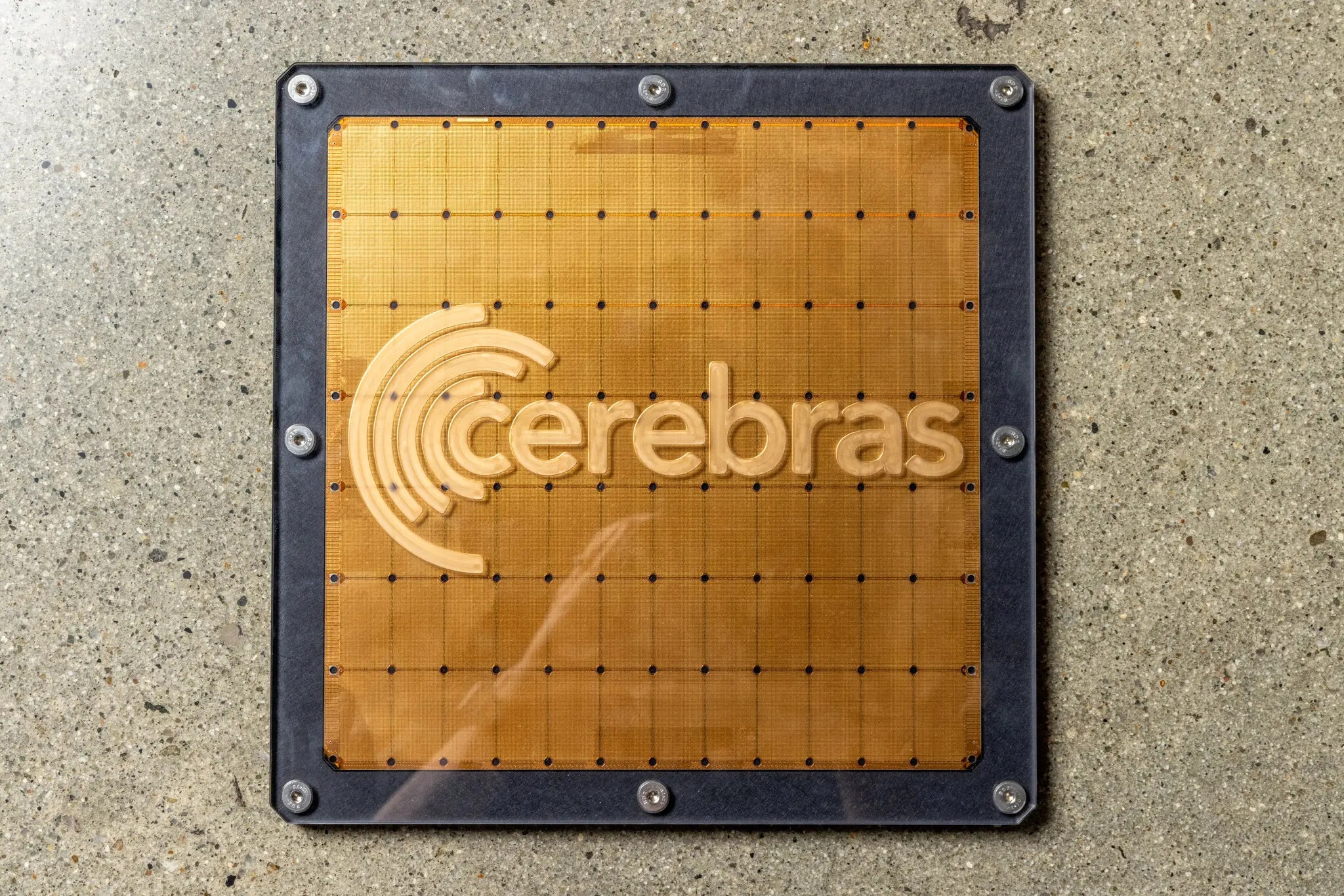
Cerebras Systems raised its full-year revenue forecast and posted a smaller-than-expected adjusted loss in its second earnings report as a public company, but shares fell sharply in extended trading after quarterly sales came in below Wall Street expectations.

The AI chipmaker’s stock dropped about 14% after the company reported second-quarter core revenue of $180 million, compared with the $194 million expected by analysts polled by LSEG. Adjusted loss was 5 cents per share, significantly narrower than the 17-cent loss analysts had anticipated.

The reaction reveals the high expectations surrounding AI semiconductor companies, where strong demand and expanding backlogs are increasingly being weighed against questions over valuation, margins and the ability to convert future orders into near-term revenue.

Cerebras, which went public on the Nasdaq in May, nevertheless raised its full-year core revenue forecast to between $880 million and $890 million, from its previous estimate of $855 million to $865 million. It expects core revenue of $214 million to $216 million in the current quarter.

The company also expects core gross margin to rise to between 38% and 40% in the current quarter, an important development as investors assess whether Cerebras can build a profitable business around its specialized AI accelerators.

AI Demand Remains Strong

CEO Andrew Feldman said demand for Cerebras’ technology remains exceptionally strong, particularly for applications requiring rapid AI responses.

“AI demand is through the roof,” Feldman said in an interview, adding that customers are willing to pay a premium for Cerebras’ inference technology.

Cerebras is positioning its chips as an alternative to Nvidia’s dominant AI accelerators for workloads where low latency is particularly important. The company refers to this market as “fast inference,” targeting applications that require AI models to generate responses quickly enough for interactive services.

Feldman said the premium pricing of fast inference is helping Cerebras improve its margins.

“Gross margins are in a good spot, and growing, because fast inference is priced at a premium,” he said.

The strategy is viable because the AI semiconductor market is gradually shifting from the initial training of large models toward inference, where those models are deployed repeatedly to serve users. That transition could create opportunities for specialized chipmakers if they can demonstrate lower latency or better economics than general-purpose accelerators.

Cerebras ended the quarter with $25.4 billion in remaining performance obligations, which the company described as evidence of “extraordinary future demand.” The figure represents contracted business that has yet to be recognized as revenue, giving investors visibility into future sales. The challenge is converting that backlog into revenue at a pace that justifies the company’s elevated market expectations.

Cerebras said it expects revenue to triple in the next fiscal year. Feldman argued that greater scale should also improve the company’s economics by allowing it to manufacture more efficiently, negotiate better component prices, and spread fixed manufacturing costs across a larger number of units.

The company reported total revenue of $210 million for the quarter, compared with $180 million in core revenue. The difference consists of “pass-through revenue,” which is excluded from the company’s core revenue measure.

Huge Accounting Loss Masks Underlying Performance

Cerebras reported a net loss of $450.5 million, compared with a profit of $309.5 million a year earlier.

However, the headline loss was heavily affected by stock-based compensation. Cerebras recorded $386.6 million in stock-compensation costs during the quarter, meaning the reported net loss does not provide a straightforward picture of the company’s underlying operating performance.

The much smaller adjusted loss of 5 cents per share was therefore more closely watched by investors.

Still, the size of the stock-based compensation expense is relevant for shareholders because such awards can dilute existing ownership over time, even though they do not represent an immediate cash expense.

Cerebras is also expanding beyond direct hardware sales through its cloud platform, which allows customers to access its AI chips without purchasing and operating the underlying infrastructure themselves. The cloud business generated $126 million in revenue during the June quarter, giving Cerebras another avenue to monetize its technology as demand for AI computing expands.

The company has also been broadening its ecosystem. It recently announced a partnership with Advanced Micro Devices (AMD), with products expected to enter production later this year. It also said OpenAI can use Cerebras chips to serve its latest GPT-5.6-Sol model.

Those relationships could help Cerebras establish itself as a credible second-source provider in an AI computing market still dominated by Nvidia.

Cerebras priced its Nasdaq offering at $185 per share and raised $6.4 billion in the IPO, benefiting from strong investor demand for companies exposed to the rapidly expanding AI infrastructure market. The stock closed Wednesday at $262.06, leaving it about 42% above its IPO price even after the post-market decline. Shares had reached a peak in May before retreating.

The sharp reaction to a revenue miss, even alongside higher full-year guidance and strong future obligations, shows how demanding expectations have become for AI infrastructure companies.

Shein Loses London Copyright Case Against Rival Temu as Legal Battle Escalates

0

Fast-fashion giant Shein lost a London lawsuit against rival Temu on Thursday after a British court dismissed its copyright infringement claims over the use of photographs of Shein products, delivering a setback to the company as it prepares for a potential Hong Kong stock listing.

The ruling marks the first major judgment in the London legal battle between the two fast-growing online retailers and comes as Shein targets a valuation of between $30 billion and $40 billion for its planned Hong Kong initial public offering.

The court dismissed Shein’s claims that Temu infringed its copyrights and upheld a counterclaim brought by Temu seeking damages related to product listings that were removed after Shein secured an injunction.

Shein said it was surprised by the decision and disputed the court’s conclusion.

“We do not believe that is the right outcome for brands and rights holders seeking to protect their copyright online,” a Shein spokesperson said.

The dispute centers on how the two companies use product imagery and compete for customers in the highly competitive global fast-fashion market.

Shein accused Temu at the beginning of the trial in May of breaching its copyrights “on an industrial scale.” It alleged that Temu used photographs of Shein products to promote copies of Shein’s own-brand clothing, allowing the rival platform to “piggy-back” on Shein’s established customer base and brand presence.

Temu denied the allegations, arguing that Shein was using the courts as a means of restricting competition.

The ruling does not end the wider legal conflict between the two companies in Britain. Temu has brought a separate counterclaim accusing Shein of violating competition law by requiring fast-fashion suppliers to enter exclusive arrangements. That case is scheduled to go to trial next year.

The competition-law dispute could have broader implications for the two companies’ business models because both rely heavily on large networks of manufacturers and suppliers to maintain extensive product ranges while keeping prices low.

Shein and Temu have built their international businesses around low-cost products and highly aggressive online marketing, rapidly expanding beyond their original markets into the United States, Europe and other regions.

Their competition extends beyond clothing. Both platforms sell a wide range of consumer goods, including accessories, household products and gadgets, and have increasingly competed for the same price-sensitive online shoppers.

The companies have also pursued litigation against each other in the United States, making the London proceedings part of a broader international legal confrontation.

Thursday’s ruling arrives at a sensitive point in Shein’s corporate development. The company is seeking a Hong Kong listing that could value it at between $30 billion and $40 billion, meaning legal disputes involving intellectual property and competition could attract greater scrutiny from investors and regulators.

The decision also highlights the challenges of online retailing, especially in protecting intellectual property in a business environment where product images, designs and listings can move rapidly across competing platforms.

The copyright case was aimed at protecting the value of Shein’s product imagery and brand assets. But as it turned out, Temu, by successfully defending the claim, now strengthens its position against one of its most direct competitors.

The next major stage of the London dispute will be Temu’s competition case against Shein. The outcome could determine whether Shein’s arrangements with suppliers comply with competition law and could add another layer of regulatory pressure to a sector already facing scrutiny over pricing, supply chains, intellectual property and the treatment of online sellers.

The ruling therefore provides Temu with an important legal victory, but the wider battle between the two platforms remains unresolved. With both companies continuing to expand internationally and challenge each other through courts in multiple jurisdictions, legal disputes are expected to remain part of their expansion in global low-cost e-commerce.