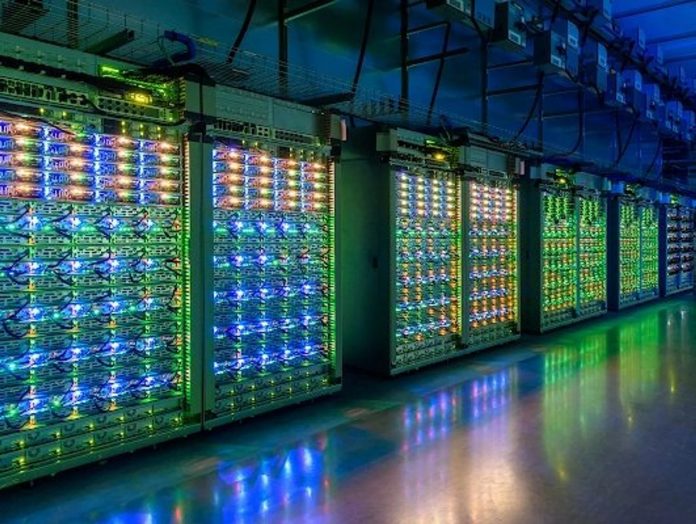
Nvidia is reportedly in discussions to help secure $250 billion in financing for OpenAI’s proposed 10-gigawatt (GW) artificial intelligence data center in Ohio.
While also exploring an additional $350 billion financing arrangement that would allow OpenAI to purchase Nvidia’s AI chips for the project.
If completed, the combined $600 billion initiative would represent one of the largest infrastructure financing efforts ever associated with the AI industry, underscoring the scale of investment required to power the next generation of artificial intelligence.
The proposed Ohio facility would dwarf most existing AI data centers. A 10GW campus would consume an extraordinary amount of electricity, comparable to the power demand of several million homes.
Such a project reflects how the AI race has evolved beyond software and algorithms into a competition centered on computing infrastructure, energy availability, semiconductor supply, and long-term financing.
For Nvidia, the discussions represent more than a hardware sales opportunity. The company has become the dominant supplier of graphics processing units (GPUs) used to train and deploy advanced AI models.
By helping facilitate financing, Nvidia could strengthen its position as a strategic infrastructure partner rather than merely a semiconductor vendor. The proposed $350 billion financing package aimed at enabling OpenAI to purchase Nvidia chips would ensure sustained demand for its products while accelerating the deployment of one of the world’s largest AI computing clusters.
OpenAI, meanwhile, faces unprecedented capital requirements as it seeks to build increasingly powerful AI systems.
Training frontier AI models requires vast numbers of advanced processors operating continuously across massive data centers. The cost extends far beyond chips, encompassing land acquisition, electricity infrastructure, cooling systems, networking equipment, storage, and specialized engineering.
Financing on this scale illustrates that the future of AI development will depend as much on access to capital markets as on technological innovation. The project also highlights the growing importance of energy infrastructure in the AI economy.
Data centers of this magnitude require stable, affordable, and reliable electricity supplies. Utilities, transmission operators, and state governments are increasingly competing to attract AI investments by expanding power generation capacity and modernizing electrical grids.
Ohio’s industrial base, transportation infrastructure, and available land make it an attractive destination for hyperscale computing facilities, although significant upgrades to energy infrastructure would likely be necessary.
From an economic perspective, the investment could generate thousands of construction jobs, long-term technical employment, and increased demand across industries including engineering, manufacturing, telecommunications, and energy.
Local communities could benefit from tax revenues and infrastructure improvements, although concerns about electricity consumption, environmental impact, and water usage are likely to become important aspects of public debate.
The financing discussions also signal a broader transformation in how AI infrastructure is funded.
Instead of relying solely on corporate balance sheets, technology companies are increasingly exploring complex financing structures involving banks, institutional investors, infrastructure funds, and strategic partners.
Similar financing models have historically been used for airports, energy projects, and telecommunications networks, suggesting that AI infrastructure is becoming an asset class in its own right.
The reported negotiations between Nvidia and OpenAI demonstrate that artificial intelligence has entered an era defined by industrial-scale investment. Success will depend not only on breakthroughs in machine learning but also on securing access to capital, energy, and advanced semiconductor manufacturing.
If the Ohio project moves forward, it could become a defining milestone in the global AI race, illustrating how the future of artificial intelligence will be built as much through financial engineering and infrastructure development as through advances in software itself.