DD
MM
YYYY

PAGES

DD
MM
YYYY

spot_img

PAGES

Home Blog Page 2

The Relationship Dynamics Between AI’s Power Players Are Just Like a Movie

0

The artificial intelligence industry increasingly resembles a Hollywood blockbuster, complete with rival factions, strategic alliances, betrayals, and unexpected plot twists.

What began as a collaborative scientific movement aimed at advancing machine intelligence has evolved into a high-stakes geopolitical and corporate drama involving some of the world’s most influential figures and companies.

At the center of this unfolding story are companies such as OpenAI, Google, Meta, Anthropic, Microsoft, Amazon, and Nvidia. Their relationships are neither entirely cooperative nor wholly competitive.

Instead, they exist in a complex web of partnerships and rivalries that resembles the shifting alliances often seen in epic films like Game of Thrones or The Godfather.

Microsoft and OpenAI represent one of the most fascinating relationships in the AI landscape. Microsoft invested billions of dollars into OpenAI, helping transform it from a research organization into a global AI powerhouse.

In return, Microsoft integrated OpenAI’s technologies into its products, from Azure cloud services to Office applications. Yet, as OpenAI grows more independent and develops its own consumer ecosystem, questions emerge regarding how long this alliance will remain harmonious. It is a classic mentor-partner relationship that may eventually evolve into direct competition.

Meanwhile, Google finds itself in the role of the established empire defending its throne. For years, Google dominated internet search and AI research, producing breakthroughs that laid the foundation for today’s generative AI revolution.

The rapid rise of ChatGPT disrupted Google’s position, forcing the company into an accelerated race to release Gemini and other AI initiatives. Like a powerful kingdom challenged by a rising force, Google now balances innovation with the need to protect its lucrative search business.

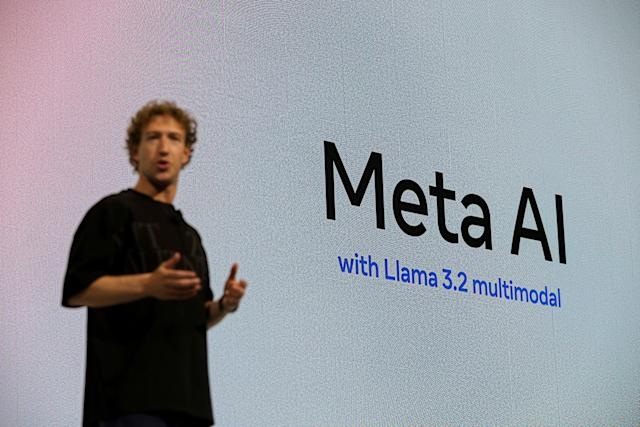
Meta, under the leadership of Mark Zuckerberg, plays the role of the unconventional disruptor. By open-sourcing many of its Llama models, Meta has positioned itself differently from competitors that rely heavily on closed ecosystems.

This strategy has earned the company significant goodwill among developers while simultaneously increasing pressure on rivals. Yet Meta’s approach also introduces tension, as open-source AI may reduce barriers to entry and redistribute power across the industry.

Then there is Anthropic, founded by former OpenAI employees. Its story mirrors the classic movie trope of former allies establishing a new faction based on different principles. Backed by both Amazon and Google, Anthropic has become one of the most important AI firms focused on safety and alignment.

The fact that two competitors are simultaneously supporting Anthropic illustrates the unusual and often contradictory nature of AI alliances. No movie would be complete without the indispensable supplier, and in the AI story, that role belongs to Nvidia.

Every major AI company depends heavily on Nvidia’s chips to train and deploy advanced models. In many ways, Nvidia is the arms dealer of the AI era, benefiting regardless of which company gains the upper hand. Its strategic position has transformed it into one of the world’s most valuable companies.

Beyond corporate rivalries, governments are increasingly becoming major characters in this narrative. The United States, China, and the European Union are all pursuing policies designed to secure technological leadership and digital sovereignty. AI is no longer merely a commercial competition; it has become a matter of economic influence, national security, and geopolitical power.

The dynamics between AI’s power players resemble a cinematic saga because the stakes are immense and the alliances are constantly changing. Today’s partner may become tomorrow’s competitor, while today’s rival may become tomorrow’s strategic ally.

As the AI revolution continues, the world is witnessing not just a technological transformation but an unfolding drama that could shape the future of global power for decades to come.


IBM’s Reinvention Journey and the Power of Strategic Patience

0

Every great company eventually faces a defining crisis. For IBM, one of those moments came when the technology giant suffered one of the worst days in its corporate history, losing billions in market value as investors questioned its future in an era rapidly shifting toward cloud computing and artificial intelligence.

Yet amid the market turmoil, an important leadership lesson emerged from IBM’s CEO: leaders must remain focused on long-term transformation even when short-term pain is unavoidable. The technology industry is notorious for punishing companies that fail to adapt.

IBM, once synonymous with computing dominance, has experienced several waves of disruption—from personal computers to the internet and now artificial intelligence. During periods of declining revenues and investor skepticism, the pressure on leadership can become immense.

Shareholders demand immediate results, employees worry about job security, and competitors exploit perceived weakness.

What distinguished IBM’s leadership response was the refusal to react emotionally to short-term market sentiment. Instead, the company’s leadership emphasized a fundamental principle: transformation requires patience, discipline, and a willingness to endure criticism.

A leader’s job is not simply to preserve the status quo. It is to position an organization for future relevance. This often means making difficult decisions that may initially appear unpopular. Investments in emerging technologies, restructuring legacy operations, and reallocating resources toward future growth areas can temporarily hurt financial performance.

However, avoiding these decisions usually creates even greater problems in the long run. IBM’s journey illustrates the dangers of focusing solely on quarterly results. Markets frequently reward immediate gains, but enduring companies are built through strategic decisions that may take years to bear fruit.

The shift toward hybrid cloud services, enterprise AI solutions, and consulting capabilities did not happen overnight. It required significant investments, organizational changes, and a clear vision of where the technology industry was heading.

Another critical leadership lesson from IBM’s difficult period is the importance of maintaining confidence during adversity. Employees often look to executives for reassurance during uncertain times. If leaders panic, uncertainty spreads throughout the organization. Calm and transparent leadership can help maintain morale and keep teams aligned around long-term objectives.

This does not mean ignoring problems or pretending challenges do not exist. Effective leaders acknowledge setbacks openly while communicating a credible path forward.

They understand that trust is built through honesty and consistency rather than unrealistic optimism. Furthermore, IBM’s experience highlights the necessity of continuous reinvention. No company, regardless of its historical success, is immune to disruption. Past achievements can become liabilities if they create complacency.

Leaders must constantly question existing business models and remain willing to disrupt their own organizations before competitors do. In today’s rapidly evolving technological landscape, this lesson is more relevant than ever.

Artificial intelligence, automation, and digital transformation are reshaping industries at unprecedented speed. Companies that hesitate to adapt risk becoming obsolete, while those willing to endure short-term discomfort may secure long-term leadership.

The leadership lesson from IBM’s worst day is simple but powerful: true leadership is measured not during periods of success, but during moments of crisis. The ability to remain committed to a long-term vision, communicate with transparency, and make difficult decisions despite criticism separates transformational leaders from merely competent managers.

Markets may judge companies day by day, but history often rewards those leaders who possess the courage to think in decades rather than quarters.

Tokenization of Stocks Could Unlock Trillions in Global Equity Markets

0

Tokenized stocks are experiencing a defining moment in global finance. What was once considered a niche experiment at the intersection of blockchain and capital markets is rapidly evolving into one of the most significant trends in modern investing.

The latest data underscores this shift: transfers of tokenized equities have doubled to $8.4 billion in a single month, signaling growing investor appetite for bringing traditional financial assets onto blockchain rails.

At the center of this transformation is a simple but powerful idea. Tokenized stocks represent ownership of real-world equities through digital tokens issued on a blockchain.

Instead of relying solely on conventional brokerage infrastructure, these assets can be traded, transferred, and settled through decentralized networks, potentially offering faster transactions, lower costs, and broader accessibility.

The recent milestone achieved by Securitize illustrates just how quickly this market is maturing.

By becoming the first company to debut on the New York Stock Exchange while simultaneously placing the same shares onchain on day one, Securitize has created a blueprint that many market participants are now watching closely.

The move demonstrates that traditional exchanges and blockchain infrastructure no longer have to exist as competing systems. Instead, they can operate in parallel, offering investors multiple avenues to access the same underlying assets.

This development arrives at a time when financial institutions are increasingly embracing tokenization. Major asset managers, banks, and fintech firms have spent the last two years experimenting with tokenized bonds, money market funds, and private credit products.

Tokenized stocks represent the next logical step. Equities remain one of the world’s largest asset classes, and bringing even a small percentage of this market onchain could unlock trillions of dollars in value.

The advantages are difficult to ignore. Blockchain-based settlement can significantly reduce the delays associated with traditional stock trading, where transactions often require multiple intermediaries and settlement periods of up to two days.

Tokenized equities could eventually enable near-instant settlement, reducing counterparty risk and freeing up capital that would otherwise remain locked during the settlement process.

Tokenized stocks could democratize access to investment opportunities. Fractional ownership allows investors to purchase small portions of high-value shares, lowering barriers to entry for retail participants worldwide.

Combined with the global nature of blockchain networks, tokenized equities may eventually facilitate around-the-clock trading across jurisdictions, creating a more inclusive and efficient financial system.

Regulatory frameworks for tokenized securities are still developing, and questions surrounding investor protection, custody arrangements, and compliance continue to shape the industry’s trajectory. Regulators must strike a delicate balance between encouraging innovation and ensuring market stability.

The success of tokenized stocks will depend heavily on clear legal standards and interoperability between traditional financial institutions and blockchain platforms. Despite these obstacles, momentum appears to be building rapidly.

The doubling of transfers to $8.4 billion indicates that market participants are increasingly comfortable with blockchain-based financial products. Securitize’s dual listing model may prove to be a watershed moment, encouraging other issuers to explore similar strategies.

The broader implication is that capital markets are entering a new era. Tokenization is no longer merely a futuristic concept discussed in industry conferences; it is becoming an operational reality.

As more companies consider placing their shares onchain from the moment of issuance, the boundaries between traditional finance and decentralized finance continue to blur.

If current trends persist, the coming years may witness a profound restructuring of how equities are issued, traded, and owned. Tokenized stocks are not simply another digital asset trend—they could become the foundation of a more efficient, transparent, and globally accessible financial ecosystem.

Europe’s Race Against the US and China in Emerging Technologies

0

Germany and France have once again positioned themselves at the center of Europe’s strategic ambitions by agreeing to expand cooperation in critical technologies such as artificial intelligence (AI), space exploration, nuclear fusion, and quantum technology.

The agreement reflects growing concerns within Europe that the continent risks falling behind global powers such as the United States and China in the race for technological dominance. It underscores a broader vision of achieving European technological sovereignty in an increasingly fragmented and competitive world.

The partnership comes at a time when advanced technologies are becoming decisive instruments of economic strength, military capability, and geopolitical influence.

Artificial intelligence, for example, is rapidly transforming industries ranging from healthcare and finance to defense and manufacturing. While American firms such as OpenAI, Google, and Microsoft currently dominate the AI landscape, and China continues to invest heavily in state-backed AI initiatives.

European leaders are seeking to ensure that the continent remains a meaningful participant rather than merely a consumer of foreign technologies. Germany and France recognize that fragmented national approaches are insufficient to compete with global technology giants.

By pooling resources, research capabilities, and industrial expertise, both nations hope to create a stronger European innovation ecosystem. Joint investments in AI research could lead to the development of sovereign.

European models, data infrastructure, and regulatory frameworks that align with European values concerning privacy, ethics, and transparency.

Space exploration also forms a crucial part of the agreement. Space technologies have become increasingly important for communication networks, navigation systems, climate monitoring, and national security.

Europe has traditionally maintained a strong presence through institutions such as the European Space Agency, yet recent advancements by American companies like SpaceX and emerging Chinese programs have intensified competition.

Enhanced Franco-German cooperation could accelerate the development of independent launch capabilities, satellite systems, and next-generation space technologies that reduce dependence on external actors.

Another significant pillar of the agreement is nuclear fusion. Fusion energy is often described as the holy grail of clean energy because it promises virtually limitless power generation with minimal environmental impact.

Although commercial fusion remains years away, countries worldwide are investing billions into research and development. Germany and France possess extensive scientific expertise and industrial capabilities that could contribute significantly to future breakthroughs.

Successful advancements in fusion technology could provide Europe with a sustainable energy source while reducing reliance on imported fossil fuels and enhancing energy security.

Quantum technology is equally transformative. Quantum computing has the potential to revolutionize computing power, optimize complex industrial processes, and dramatically improve scientific research.

It’s poses challenges to existing cybersecurity systems by potentially rendering current encryption methods obsolete. Recognizing these opportunities and risks, Germany and France aim to develop indigenous quantum capabilities that can support both economic competitiveness and strategic autonomy.

Underlying all these initiatives is the concept of technological sovereignty. European leaders increasingly believe that dependence on foreign technologies creates vulnerabilities, particularly amid rising geopolitical tensions and global supply chain disruptions.

The COVID-19 pandemic, semiconductor shortages, and intensifying technological competition between Washington and Beijing have all demonstrated the risks associated with excessive reliance on external providers.

The Franco-German agreement therefore represents more than a bilateral partnership; it is a strategic blueprint for Europe’s future. By investing jointly in emerging technologies, both countries seek to strengthen Europe’s capacity to innovate, protect its economic interests, and maintain its geopolitical relevance.

Success will depend on sustained funding, regulatory coordination, and broader participation from other European nations. In an era where technological leadership increasingly determines global influence, Germany and France are signaling that Europe intends to remain a significant force in shaping the next generation of innovation.

Meta’s AI Advertising Push Raises Concerns Over Accuracy and Accountability

0

Meta has aggressively positioned artificial intelligence at the center of its advertising business. The company envisions a future where brands can generate images, videos, copy, audience targeting, and campaign optimization with minimal human intervention.

With billions of users across Facebook, Instagram, and WhatsApp, Meta believes AI-driven advertising can dramatically reduce the cost and complexity of digital marketing. However, many advertisers are finding that the reality falls short of the promise.

A growing number of brands and advertising executives argue that Meta’s AI tools remain unreliable, frequently generating inaccurate, distorted, or even absurd outputs. According to several industry insiders, problems such as altered product appearances, misshapen images, incorrect branding elements, and misleading promotional content have become increasingly common.

Rather than simplifying advertising operations, these issues often create additional layers of review, correction, and risk management.

For many businesses, brand consistency is one of the most valuable assets they possess. Consumers expect products to appear exactly as they are in reality. Yet advertisers report instances where Meta’s AI-generated creatives significantly changed product designs, colors, packaging, or key features.

In some cases, the AI created unrealistic visuals that bore little resemblance to the original product being marketed. Such inaccuracies can have serious consequences. Misrepresented advertisements may confuse customers, damage brand credibility, and potentially expose companies to regulatory concerns related to false advertising.

In industries such as healthcare, finance, food, and consumer goods, even minor inaccuracies can create legal and reputational risks. What has particularly frustrated advertisers is Meta’s reported stance regarding responsibility. Several executives claim that when issues arise.

Meta often places the burden on brands themselves, arguing that advertisers are responsible for reviewing and approving AI-generated materials before publication.

While this position may be legally defensible, many marketers believe it undermines Meta’s marketing narrative that its AI tools are mature enough to automate significant portions of the creative process.

This tension highlights a broader issue facing the technology industry: the gap between AI ambition and practical implementation. Generative AI systems are powerful, but they still struggle with contextual understanding, brand nuance, and visual accuracy.

AI models can produce impressive results in controlled environments while simultaneously generating outputs that appear strange, inconsistent, or entirely fabricated. Despite these challenges, advertisers continue using Meta’s AI tools because of the company’s immense market power.

Meta remains one of the world’s largest digital advertising platforms, controlling access to billions of consumers and a vast amount of behavioral data. Many brands feel compelled to experiment with the company’s AI offerings in order to remain competitive, even if the tools require substantial human oversight.

The situation also raises important questions about accountability in the age of AI-generated content. If an automated system produces misleading advertisements, who should bear responsibility—the technology provider or the advertiser using the system? The answer remains legally and ethically uncertain.

As AI becomes increasingly integrated into marketing workflows, trust will become as important as innovation. Advertisers are not merely seeking automation; they require reliability, transparency, and safeguards against errors that could damage their brands.

Meta’s experience demonstrates that while AI may eventually transform digital advertising, the technology still has significant limitations.

For now, many advertisers appear to be adopting a cautious approach: embracing AI’s efficiency gains while maintaining substantial human supervision.

Until generative systems can consistently deliver accurate and brand-safe outputs, human judgment will remain indispensable in the advertising industry.