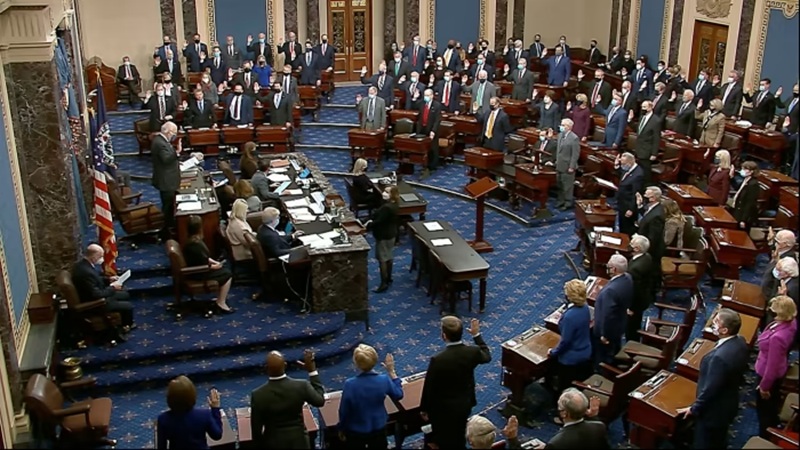
The CLARITY Act formally the Digital Asset Market Clarity Act of 2025, H.R. 3633 is a major piece of U.S. crypto legislation aimed at providing long-sought regulatory clarity for digital assets. It passed the House of Representatives in July 2025 with strong bipartisan support (294-134 vote).
The bill primarily shifts oversight of digital commodities; assets whose value ties intrinsically to blockchain use, excluding securities, derivatives, and stablecoins to the CFTC, while the SEC retains authority over certain primary market activities with new exemptions for fundraising.
As of mid-April 2026, the bill remains stalled in the Senate. It has not yet received a markup in the Senate Banking Committee, though discussions continue on compromises like stablecoin language and SEC-CFTC jurisdiction splits. Proponents target a potential committee markup in the second half of April, with hopes of advancing it before summer recesses or the November 2026 midterms.
No firm vote date exists yet, and full Senate passage let alone reconciliation with the House version is not imminent. Senator Cynthia Lummis (R-WY), a prominent crypto advocate and chair of the Senate Subcommittee on Digital Assets, has been vocal in pushing urgency.
In recent statements on X and elsewhere, she has framed the moment as critical: This is our last chance to pass the Clarity Act until at least 2030. We can’t afford to surrender America’s financial future. It’s now or never… The last administration drove away the digital asset industry. It’s time to welcome them home with clear rules of the road. Pass the Clarity Act.
She warns that failing to act before the 2026 midterms risks a multi-year legislative freeze potentially 4+ years, as election cycles often shift priorities and slow momentum on complex financial bills. Treasury Secretary Scott Bessent has echoed the need for swift action in hearings and op-eds. Optimism stems from real momentum:
House passage, bipartisan elements, alignment with pro-innovation voices in the current administration, and broad industry support including from figures like Coinbase’s Brian Armstrong and others urging progress. Clear rules could reduce enforcement uncertainty, curb offshore migration of projects, and unlock institutional growth in DeFi, token issuance, and more.
Nervousness comes from timing risks. Midterms loom, Senate procedures move slowly, and lingering disagreements like bank involvement, consumer protections, or stablecoin provisions could derail it. If it slips, crypto regulation might remain patchwork—relying on SEC enforcement actions, court rulings, and state-level experiments—for years, potentially stifling U.S. competitiveness.
In short, Lummis is correct that this congressional session represents a rare window; post-midterms dynamics could reset the clock significantly. The industry is watching Senate Banking Committee activity closely in the coming weeks. Progress here would be one of the most consequential U.S. policy wins for crypto since spot Bitcoin ETFs, but delays remain a real possibility.
Exchanges, platforms, and projects face new registration, disclosure, and operational requirements as Digital Commodity Exchanges under CFTC. Smaller entities could struggle with the burden. Some critics worry provisions especially around stablecoins or bank involvement could favor large incumbents, limit decentralized yields, or integrate crypto too closely with traditional banking rails.
Even if passed, agencies would need time to write rules, and lingering disputes on stablecoin yields or exact definitions could create short-term friction. If i fails — continued patchwork regulation, ongoing SEC actions, and potential multi-year delay as Lummis warns, possibly until 2030 post-midterms, leading to more outflows and lost momentum.
Proponents see passage as a major catalyst for legitimacy, inflows, and long-term growth — similar in spirit to the impact of spot Bitcoin ETFs but broader. Delays or failure would prolong uncertainty, potentially costing the U.S. its competitive edge. The bill remains in the Senate with no confirmed markup date yet, despite Lummis’s urgency. Progress in the coming weeks could shift sentiment quickly