DD
MM
YYYY

PAGES

DD
MM
YYYY

spot_img

PAGES

Home Blog Page 2

Nomba Acquires Canadian Payments Firm to Power Cross-Border Trade for African Businesses

0

Nigerian fintech company Nomba has acquired a licensed Canadian payment service provider and money services business as part of its strategy to build robust cross-border payment infrastructure for African businesses engaged in global trade.

The acquisition gives Nomba regulatory coverage in Canada, allowing it to move money locally within the country and connect Canadian dollar (CAD) payment flows directly to African markets. By owning a licensed entity, the fintech can now offer African businesses local CAD accounts held in Canada, direct settlement from CAD into naira and other African currencies, near-real-time settlement for cross-border transactions, and reduced reliance on intermediary banks.

Nomba has reportedly injected approximately $2 million in capital into the acquired entity to strengthen its infrastructure and support scaling efforts.

“Cross-border trade payments for African businesses are still built on infrastructure that was never designed for speed or transparency,” Yinka Adewale, CEO of Nomba, said. “Owning regulated infrastructure allows us to remove layers of complexity and give businesses predictable, reliable rails they can build on.”

Adewale noted that Nomba’s focus on businesses is not intended to exclude individuals but reflects where the company believes the biggest unmet need lies. While fintech innovation has significantly improved consumer remittances, he argues that cross-border payments for businesses remain a persistent challenge.

“Solving this requires different infrastructure: strong regulatory compliance, direct relationships with global correspondent banks, and deep liquidity pools. That’s what Nomba has built, and that’s where we can create the most value. We’re serving the segment where the problem is unsolved and where we have unique capabilities to fix it.”

The acquisition of a licensed Canadian payment service provider and money services follows Nomba’s expansion into the Democratic Republic of Congo (DRC) in November 2025, where it launched a remittance-first business model. In the DRC, the fintech entered a competitive market dominated by players such as Vodacom, Orange, Airtel, and Africell. Despite this competition, Nomba views the remittance space in the country as a relatively underserved opportunity and plans to differentiate through improved product offerings.

Founded in 2016 as Kudi by Yinka Adewale and Pelumi Aboluwarin, the company rebranded to Nomba in 2022 as it transitioned into an omni-channel payment platform. The startup initially launched as a chatbot for payments before pivoting into agency banking and point-of-sale (PoS) services.

Today, Nomba enables merchants across Nigeria to accept multiple forms of payment and manage their finances more efficiently, with a strong focus on small and medium-sized enterprises (SMEs). Its core offerings include affordable and reliable PoS terminals, digital payment services, and essential banking features designed to help small businesses process card payments, track sales, and access modern financial tools without relying on traditional bank branches.

Nomba differentiates itself by tailoring its services to the needs of Nigerian SMEs through easy-to-use PoS devices, seamless onboarding, fast settlement of funds, and integrated banking services such as transfers, bill payments, and business insights. These solutions support entrepreneurs, shop owners, and service providers operating in Nigeria’s rapidly evolving digital economy.

Nomba describes the Canada corridor as the first of several international markets where it aims to establish regulated infrastructure to support African trade. With its Canadian presence secured, the fintech plans to expand into additional international markets.

Notably, in the UAE, the company intends to pursue direct licensing, while in Singapore it will work through bank sponsorship agreements to unlock access not only to the local market but also to the broader Asia–Africa trade corridor.
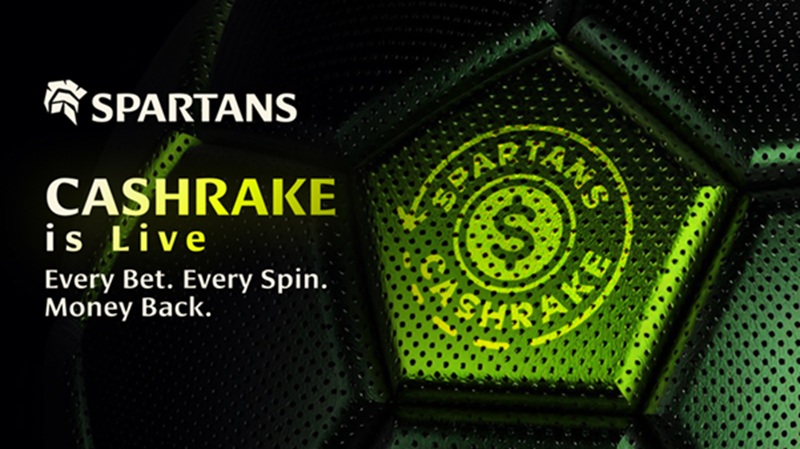

Every Bet Counts: Spartans Delivers 33% CashRake Rewards, as BeatRivers.net and 7Bit Stay Standard

0

Online betting platforms are no longer just about games; they’re about how play, rewards, and technology come together. BeatRivers.net offers a dependable mix of casino titles and sports markets, delivering a familiar experience for players who value simplicity. 7Bit adds flexibility with crypto and fiat support, alongside a wide array of slots and table games for variety seekers.

Spartans takes a different approach: instead of simply hosting games, it integrates a system where every wager contributes to ongoing rewards, creating a sense of flow and engagement that changes how sessions feel. Comparing these platforms highlights how some sites focus on basics, while others are quietly redefining what it means to play at the best online casino.

BeatRivers.net: Balances Casino Play With Sports Options

BeatRivers.net offers a traditional online casino experience combined with sports betting, featuring a variety of slot and table games alongside live dealer options. The platform promotes a welcome bonus code for new users, which provides initial deposit incentives, though bonus terms include standard wagering requirements.

Payment methods primarily include fiat currencies, with typical deposit and withdrawal processing times. User experience is straightforward, with a web interface designed for desktop and mobile browsers, though mobile performance may vary depending on the device. While the site offers a broad selection of popular games, its crypto integration is limited.

For players evaluating options, BeatRivers.net may appeal to those seeking a conventional casino with sportsbook access, but for those comparing speed, crypto support, and integrated rewards, it may not align with platforms often rated as the best online casino by modern standards.

7Bit: Combines Crypto Access With Extensive Games

7Bit Casino is a crypto-friendly platform that supports both cryptocurrency and fiat deposits. Launched in 2014 under a Curacao license, it offers games, including slots, table games, and live casino options. Registration is simple, though KYC verification is required for withdrawals to meet regulatory standards.

Bonuses include a welcome package spread across multiple deposits, and a multi-tiered VIP program offers progressive rewards, cashback, and personalized services. The site’s design is arcade-inspired, with a dark theme and neon accents, and it is optimized for mobile browsers despite lacking a dedicated app.

While 7Bit provides a broad selection of games and robust VIP incentives, withdrawal limits for non-VIP users and high wagering requirements on bonuses may influence user experience, particularly when compared to newer platforms with instant crypto payouts and integrated rewards systems.

Spartans: CashRake Turns Ordinary Bets Into Continuous Rewards

In a landscape where online casinos can feel predictable, Spartans flips the script by making every wager count. At the heart of this revolution is CashRake, a system designed to reward players continuously. Players receive up to 3% back on losing bets, with a CashRake limit calculated as 33% of their total deposits.

For example, depositing $100 gives a $33 limit, and depositing another $100 raises the limit to $66. This ensures that the more you deposit, the higher your potential rewards. All payouts are credited instantly to crypto wallets, automatically and without bonus codes, making every spin, hand, or sports bet feel valuable. Slots, live casino, crash games, and sports all feed into this system, turning ordinary play into an ongoing stream of rewards.

Adding another layer of excitement, Spartans runs legendary giveaways that reward its most engaged players. The 1-of-1 Mansory Koenigsegg Jesko Spartans Edition giveaway is a perfect example, extraordinary prizes that elevate the platform beyond standard betting, complementing CashRake to create a multi-dimensional rewards ecosystem.

Spartans pairs this with a massive library of 5,900+ games from 43+ providers, alongside a sportsbook covering football, basketball, tennis, UFC, and esports. Fully crypto-based payments: BTC, ETH, USDT, USDC, AVAX, and more, ensure near-instant deposits and withdrawals, letting players focus entirely on strategy, thrill, and rewards.

By embedding CashRake into every interaction and amplifying it with high-profile giveaways, Spartans transforms standard wagering into a next-generation experience, positioning itself as a standout option when considering the best online casino.

The Bottomline

BeatRivers.net delivers a straightforward casino and sportsbook experience, with familiar games and betting options that cater to traditional players. 7Bit expands on that with a larger selection of slots and table games, supporting both crypto and fiat transactions for added flexibility. Spartans, however, approach online gaming differently.

With CashRake, every wager contributes automatically to rewards, creating a dynamic rhythm where play itself generates value. Combined with over 5,900 games, instant crypto payments, and integrated mobile tracking, the platform turns ordinary sessions into something engaging and continuous.

For those seeking the best online casino, the contrast is clear: while conventional sites cover the basics, Spartans integrates variety, speed, and built-in rewards, offering an experience that feels more immersive and rewarding.


Find Out More About Spartans:

Website: https://spartans.com/

Instagram: https://www.instagram.com/spartans/

Twitter/X: https://x.com/SpartansBet

YouTube: https://www.youtube.com/@SpartansBet

Trump Downplays Concerns about WLFI Investment with Abu Dhabi-linked Entity 

0

President Donald Trump has publicly claimed he was unaware of a reported $500 million investment from an Abu Dhabi-linked entity into World Liberty Financial (WLFI), the cryptocurrency venture associated with his family.

The claim stems from recent reports, primarily a Wall Street Journal investigation, which revealed that an investment firm called Aryam Investment 1—backed by Sheikh Tahnoon bin Zayed Al Nahyan (a senior UAE royal, national security adviser, and brother of the UAE president)—acquired a 49% stake in WLFI for $500 million.

The deal was reportedly signed by Eric Trump just days before Trump’s January 2025 inauguration, with half the funds paid upfront. This made the Emirati-backed firm the largest shareholder, and it raised significant concerns about potential conflicts of interest, foreign influence on U.S. policy (including subsequent approvals for UAE access to advanced American AI chips), and emoluments clause issues.

In response, during a press conference or statements around early February 2026, Trump denied knowledge of the specifics: He reportedly said variations like: “I don’t know about it,” “My sons are handling that, I guess they get investments from people,” and “I don’t know exactly other than I’m a big crypto person.”

He emphasized his general support for cryptocurrency but distanced himself from the transaction details. The White House and WLFI spokespeople have echoed this, stating that Trump has no involvement in running the business which he turned over to his children upon taking office, and that neither he nor envoy Steve Witkoff (a co-founder emeritus) participated in the deal.

A WLFI spokesperson confirmed the investment existed but insisted it was unrelated to administration actions.This has sparked criticism from Democrats and ethics watchdogs, who describe it as “corruption, plain and simple” or a form of foreign influence via family business ties.

Some reports note the deal’s financial structure appeared unusually favorable to the Trump side like the family retained significant revenue shares despite reduced ownership, while questioning the Emiratis’ strategic return.

The controversy ties into broader debates about presidential family ventures in crypto during Trump’s second term, with WLFI being a DeFi platform promoted by Trump family members since its 2024 launch.

The Trump administration approved UAE access to advanced U.S. AI chips in 2025, reversing stricter restrictions from the Biden era amid national security concerns over potential diversion to China.

Shortly after Trump’s inauguration, the U.S. agreed to a path allowing the UAE to purchase hundreds of thousands of advanced Nvidia AI chips annually. This was described as up to 500,000 chips per year in some early reports, enabling massive data center builds equivalent to significant power demands, like multiple Hoover Dams.

A portion (e.g., 20%) was allocated to Sheikh Tahnoon bin Zayed Al Nahyan’s AI firm G42. This deal followed meetings involving Trump, Sheikh Tahnoon, and U.S. envoy Steve Witkoff. The U.S. Department of Commerce authorized exports of advanced semiconductors to UAE-based G42 and Saudi Arabia’s Humain.

This included the equivalent of up to 35,000 Nvidia Blackwell chips (GB300s) per company, valued at around $1 billion combined. Approvals required “rigorous security and reporting requirements” to mitigate risks. These built on earlier licenses and aligned with Trump’s July 2025 AI Action Plan to promote U.S. AI dominance globally.

The approvals supported UAE projects like the Stargate UAE AI campus (a 5-gigawatt hub involving Nvidia, Oracle, Cisco, SoftBank, and others) and positioned the UAE as a major AI player. This has sparked controversy due to timing with the reported $500 million investment by a Tahnoon-backed firm (Aryam Investment 1) into World Liberty Financial (WLFI), acquiring a 49% stake just before Trump’s January 2025 inauguration.

Critics like Sen. Elizabeth Warren, ethics groups call it a potential conflict of interest or “corruption,” suggesting the chip access may link to family business gains, though the White House, WLFI, and administration officials deny any connection, stating Trump had no involvement in the crypto deal and chip decisions were policy-driven.

The UAE welcomed the moves as strengthening U.S. partnership in AI, energy, and tech, with no evidence of improper quid pro quo in official statements.

Chinese Solar Stocks Soar on Musk Supplier Visit Rumors, Fueling Speculation of AI Energy Demand Boost

0

Shares of Chinese solar panel manufacturers surged sharply on Wednesday, after local media reported that a team linked to Elon Musk had recently visited several photovoltaic suppliers in China, igniting speculation that the Tesla and SpaceX chief could become a high-profile customer for advanced solar technologies.

The reports, which emerged amid Musk’s public emphasis on expanding U.S. solar cell production, triggered a wave of momentum trading and short-covering in a sector long battered by oversupply and margin compression. JinkoSolar, one of the world’s largest solar module producers, rocketed as much as 20% in early trade, hitting its daily limit according to LSEG data.

Jolywood Suzhou Sunwatt, a specialist in photovoltaic auxiliary materials, also climbed the 20% daily cap. Trina Solar and Shenzhen Topraysolar gained 8.9% and 10%, respectively, while the CSI All Share Solar Power Equipment Sub-Industry Index jumped 6.8%.

Local outlets Cailianshe and 21st Century Business Herald reported that Musk-affiliated visitors—allegedly from SpaceX and Tesla—had toured multiple Chinese photovoltaic companies, with particular interest in suppliers developing heterojunction (HJT) and perovskite technologies. These next-generation approaches promise higher cell efficiencies and potentially lower costs if manufacturing hurdles are overcome.

JinkoSolar reportedly confirmed a visit from a Musk-linked team but provided no details on potential business discussions. Other firms visited included GCL Group, TCL Zhonghuan, and Jingsheng Electromechanical, with briefings on granular silicon technology, perovskite operations in the U.S., equipment manufacturing, silicon wafers, and battery modules.

Neither SpaceX, Tesla, nor the visited companies immediately responded to requests for comment, and CNBC could not independently verify the reports. The rally was driven less by changes in fundamentals and more by narrative momentum, according to market participants. Ke Zong, a portfolio manager at a Shanghai-based quantitative fund, told Reuters the surge reflected perceptions that “energy remains the key bottleneck for AI, rather than any shift in the companies’ order books.”

Musk’s comments during Tesla’s latest earnings call last week—that he plans to build 100 gigawatts of solar cell capacity in the United States and that “the solar opportunity is underestimated”—amplified the narrative that tech giants are moving upstream into power generation to support data center expansion.

This speculation ties into exploding energy demands from AI infrastructure. Global data center electricity consumption is projected to double to around 945 terawatt-hours (TWh) by 2030, representing nearly 3% of worldwide usage, according to the International Energy Agency (IEA).

In the U.S., data centers could consume 325-580 TWh by 2028—6.7-12% of total electricity—up from 176 TWh (4.4%) in 2023. AI-specific demand is forecast to surge 31-fold to 14-18.7 gigawatts by 2028, up from 4.5 gigawatts in 2023, accounting for up to 20% of data center power.

This growth strains grids, with U.S. interconnection queues exceeding 1 terawatt (mostly renewables and storage), and average wait times for connections surpassing four years. Tech giants are turning to solar to meet these needs, with hyperscalers signing dozens of deals for over 100 megawatts each since early 2026.

Google, for instance, invested in a Texas solar facility and plans $16 billion in clean energy procurement through 2040. Amazon partnered with Entergy on a $10 billion Mississippi project, adding 650 MW of solar.

Co-located clean energy campuses, like those developed by Google with Intersect Power and TPG Rise Climate, aim to be operational by 2026-2027, reducing power costs by up to 40% via private wires.

Musk’s interest in Chinese solar tech—particularly HJT and perovskites—aligns with these trends. Perovskites could lower costs if scaled, while HJT offers superior efficiency. His January 2026 visit to Taiwanese suppliers and warnings of “massive” memory needs highlight energy as AI’s key constraint.

On X, Musk has praised China’s solar prowess, stating in a January 7 post: “It seems like China listens to everything I say… they’re making vast amounts of solar.”

China dominates global solar manufacturing with over 80% capacity, but oversupply has depressed prices, prompting overseas expansion amid tariffs. JinkoSolar targets 12 GW in Southeast Asia by 2030 and operates a 1.2 million-panel Florida factory.

Despite the enthusiasm, analysts like Morningstar’s Cheng Wang warn stocks are now “fully valued or overvalued,” with space-based solar remaining economically marginal. The rally’s sustainability is believed to hinge on whether Musk-related deals materialize, potentially easing oversupply but likely marginal relative to sector scale.

Tom Lee’s BitMine Extends Losses to $7B Amid Arbitrum DAO’s X Account Compromise

0

BitMine Immersion Technologies (BMNR), chaired by Fundstrat’s Tom Lee, is facing massive unrealized (paper) losses on its Ethereum treasury holdings amid the ongoing crypto market downturn.

The company holds around 4.24–4.285 million ETH roughly 3.5% of circulating supply, with an average acquisition cost of about $3,825–$3,883 per ETH. At current ETH prices around $2,200–$2,350 recently, these holdings are valued at approximately $9.6–$9.9 billion, resulting in unrealized losses reported between $6 billion and approaching or exceeding $7 billion in some estimates—making it one of the largest such paper losses in trading history for a public entity.

BitMine has continued aggressively buying the dip adding 41,000–41,788 ETH in the past week and stakes a large portion (2.9 million ETH, generating $164 million in annual staking yield or ~$1 million daily cash flow). The firm remains debt-free, with significant cash reserves ($586 million) and other assets.

Tom Lee has defended the strategy, calling the losses “a feature, not a bug” of its Ethereum treasury approach—designed to track and outperform ETH over full market cycles, similar to an index ETF enduring drawdowns. He views short-term declines as expected, not a flaw, and maintains strong long-term conviction in ETH as “the future of finance.”

Critics have raised concerns about potential future selling pressure, but Lee argues this misunderstands the low-leverage, high-staking, spot-holding model. The news has contributed to pressure on BMNR stock down significantly in recent sessions and broader ETH sentiment, though the company keeps accumulating.

Arbitrum DAO’s X Account Gets Compromised

The official governance X account for Arbitrum DAO was compromised. Hackers used it to post unauthorized content, including promotions for a fake airdrop, “snapshot confirmation” claims, and phishing links to third-party sites—pinned and reshared for visibility to trick users.

Arbitrum’s main account (@arbitrum) quickly issued a security alert: SECURITY ALERT The @arbitrumdao_gov account has been compromised. Do not click any links or interact with posts from that account until further notice. We are working to recover access. Updates to follow.

The team emphasized that the breach was limited to the social media account—no impact on the Arbitrum protocol, governance systems, or user funds occurred. Control was regained shortly after (by February 4), with promises to review and strengthen security protocols for communication channels.

This caused a brief dip in the $ARB token price due to the scare, but it stabilized quickly. The incident highlights ongoing risks with social media accounts in crypto often targeted via phishing, but the core Layer-2 network remains secure. Users were urged to verify info through official channels and avoid suspicious links.

These events reflect broader market volatility (ETH/BTC drawdowns) and persistent security challenges in the space. ETH has faced significant pressure in the ongoing crypto downturn, trading in the $2,200–$2,400 range recently down sharply from peaks above $3,000–$5,000 in prior periods.

This has led to massive unrealized (paper) losses on BitMine’s holdings: Average acquisition cost: Roughly $3,800–$4,000 per ETH from aggressive buys in higher-price environments. Around $9.6–$9.9 billion, resulting in unrealized losses estimated at $6–$6.9 billion some reports approached or exceeded $7 billion depending on exact timing and price.

Tom Lee has directly addressed criticism (e.g., claims of being “exit liquidity” for early ETH holders or that future sales could cap ETH prices): He calls the drawdowns “a feature, not a bug” — just like index ETFs or trackers experience losses in bear markets without it being a flaw.

The strategy is built for full cycles: Accumulate through downturns, earn staking yield, and benefit from eventual recoveries. Lee maintains strong conviction: Ethereum is “the future of finance”, with strengthening fundamentals not matching the price weakness, which he attributes more to non-fundamental factors like broader deleveraging or gold/silver rallies pulling risk appetite.