DD
MM
YYYY

PAGES

DD
MM
YYYY

spot_img

PAGES

Home Blog Page 2

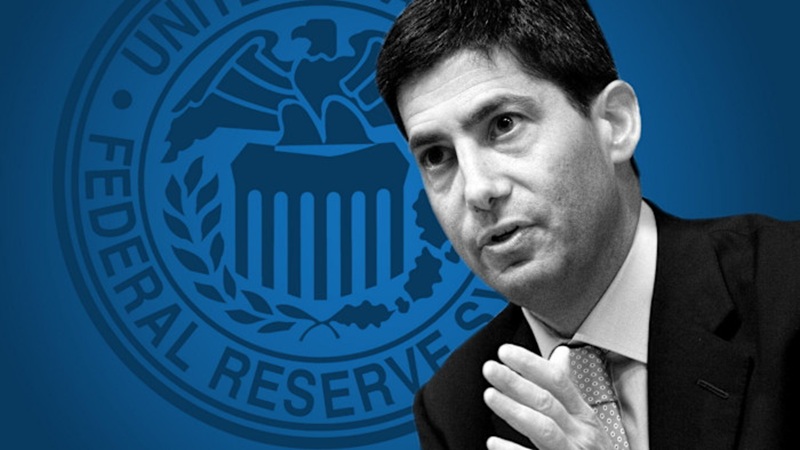
Why Bank of America Expects the Fed to Raise Interest Rates Again

0

While traders interpreted July’s inflation report as a reassuring sign that the Federal Reserve can ease its monetary policy, Bank of America strategist Aditya Bhave sees a very different picture.

For Bhave, the latest data does not signal that the inflation battle is over. Instead, it reinforces the argument that the Federal Reserve may need to keep monetary policy restrictive and deliver three additional interest-rate hikes this year.

July’s Consumer Price Index came in at 3.4%, broadly matching expectations and initially calming financial markets. Investors had been watching inflation closely for evidence that price pressures were continuing to moderate after the volatility seen earlier in the year.

The in-line reading therefore provided some relief, particularly for traders hoping that the Fed could avoid further tightening.

Bhave, remains skeptical. His central argument is that the Federal Reserve moved too aggressively toward supporting the economy last year, cutting interest rates because policymakers were concerned about weakening labor-market conditions.

Those fears, in his assessment, failed to materialize to the extent expected. With employment proving more resilient than anticipated, Bhave believes policymakers now face the difficult task of reversing part of that earlier easing.

His forecast amounts to another 75 basis points of tightening, potentially spread across three rate increases. Such a path would represent a significant shift from the expectations of investors who have increasingly positioned for monetary policy to become less restrictive.

It would put renewed pressure on borrowing costs across the economy, from mortgages and corporate loans to consumer credit. One of the biggest disagreements between Bhave and the market centers on the labor market.

A recent shock jobs report raised concerns that economic momentum could be deteriorating rapidly. Bhave has dismissed that report as largely a one-off event rather than evidence of a sustained collapse in employment. If the labor market remains fundamentally resilient, the Fed would have greater room to prioritize inflation over growth.

The more persistent threat, according to Bhave, is services inflation. Unlike goods prices, which can fall relatively quickly as supply chains normalize and commodity costs decline, services inflation can remain stubborn because it is closely connected to wages, rents, insurance, healthcare, and other domestic costs.

Sticky services prices could therefore prevent inflation from returning to the Federal Reserve’s desired level even if headline CPI continues to moderate.

That creates a complicated policy environment for Fed officials. Cutting rates too soon could allow inflationary pressures to regain momentum, while maintaining or increasing rates risks slowing economic activity and weakening employment.

The challenge is particularly important because monetary policy operates with a lag, meaning decisions made today can affect economic conditions months later. Bhave’s forecast represents a sharp warning against complacency. A 3.4% CPI reading may look manageable, but the underlying composition of inflation matters just as much as the headline number.

If services prices remain elevated and employment stays stronger than expected, investors may have to reconsider assumptions about rapid monetary easing. The debate is no longer simply about whether inflation is falling.

It is about whether inflation is falling quickly enough for the Federal Reserve to relax. Bhave’s position is clear: the process is unfinished, and policymakers may still have considerable work ahead before they can confidently declare victory.

My Question to Governors Soludo and Lawal During NiDEC 2026

0

During the NiDEC 2026 fireside conversation with Governor Chukwuma Charles Soludo of Anambra State and Governor Dauda Lawal of Zamfara State, I raised a simple but consequential question: Can Nigerian states create large, professionally managed investment vehicles that allow ordinary Nigerians in the diaspora to participate in building their economies?

I asked Governor Soludo whether we could expect something comparable to a Transcorp Plc at the state level in Anambra, a commercially driven investment vehicle capable of mobilizing capital and undertaking large industrial projects. Governor Soludo indicated that such a vehicle is being contemplated and that the components would be unveiled in due course, with opportunities for Nigerians in the diaspora to participate as investors. The idea is powerful: instead of expecting every diaspora investor to establish a factory or business independently, create an institutional vehicle through which thousands of people can pool capital to finance transformational projects. During lunch, Governor promised to launch this in the coming months.

I posed a similar question to Governor Lawal. Zamfara is richly endowed with minerals, but much of the activity involves artisanal mining. I asked whether the state would support the establishment of a fully private-sector-managed company focused on processing minerals produced by artisanal miners, with Nigerians in the diaspora able to invest in the enterprise. Governor Lawal was receptive to the concept. During lunch, he went deeper into the potential playbook: mobilize Nigerian capital, establish processing infrastructure within Nigeria, add value to the minerals locally, and ensure that Nigerians can participate in the ownership of those assets.

That was really the foundation of my questions to both governors. Not every Nigerian in the diaspora has millions of dollars to return home and build a factory from scratch. But someone may have $10,000, another $25,000, another $100,000, while institutional investors can provide much more. If states can facilitate credible investment vehicles that are professionally and independently managed by the private sector, with strong governance, transparency and accountability, those vehicles can be connected to the capital market so that diaspora investors can participate at different levels.

That is one of the great powers of the capital market: you do not need to be wealthy enough to build the whole factory; you only need enough capital to own a piece of it. Pool thousands of those pieces together, and factories, processing plants, infrastructure and great companies can emerge.

The opportunity is to move diaspora engagement from simply sending money home to owning productive assets at home. From $10,000 to whatever anyone can afford, aggregated capital can do big things. That is how Money becomes Capital, and when capital is pooled around credible visions, nations build.

After the conversation, Rt. Hon. Femi Gbajabiamila, Chief of Staff to the President of the Federal Republic of Nigeria, joined us on stage for a group photograph.

Hyperliquid Open Interest Hits New ATH as Bitcoin ETFs See Outflows and Gemini Reports Q2 Loss

0

The cryptocurrency market is sending mixed signals as traders increase their exposure to derivatives while institutional demand for Bitcoin through exchange-traded funds weakens.

Hyperliquid has reached a new all-time high in open interest, Bitcoin ETFs recorded $131 million in net outflows, and Gemini reported a $107 million loss for the second quarter.

The developments highlight a market caught between aggressive trading activity and cautious institutional positioning.

Hyperliquid’s latest open-interest milestone is particularly significant because open interest measures the value of outstanding derivative contracts that remain active. Rising OI generally indicates that more capital and leverage are entering the derivatives market, although it does not automatically mean traders are bullish.

Both long and short positions contribute to open interest. Hyperliquid has already established itself as one of the largest venues for perpetual futures, competing increasingly with centralized exchanges.

The growth also reflects Hyperliquid’s expanding product ecosystem. Its HIP-3 infrastructure allows permissionless markets for assets beyond traditional crypto, including stocks, commodities and other financial instruments.

CoinGecko reported that HIP-3 open interest reached $2.3 billion in April, demonstrating how quickly the platform has expanded beyond its original crypto-perpetuals focus.

Record open interest comes with a warning. Higher leverage can amplify both gains and losses. If Bitcoin or other major assets make a sharp move against heavily positioned traders, liquidations can accelerate volatility.

Hyperliquid’s history demonstrates this risk, with previous market disruptions showing how concentrated leverage can produce rapid changes in open interest and trading conditions. At the same time, Bitcoin’s institutional market is showing signs of hesitation.

U.S. spot Bitcoin ETFs recorded approximately $131 million in net outflows in the latest session, with ARKB reportedly accounting for the largest individual outflow at roughly $58.82 million.

ETF flows matter because these products have become an important bridge between traditional finance and Bitcoin. Persistent outflows can indicate profit-taking, reduced risk appetite or investors moving capital toward other opportunities.

Still, a single day of withdrawals should not be interpreted as a definitive change in the long-term institutional Bitcoin thesis. Gemini’s $107 million second-quarter loss adds another layer to the picture.

The result underscores the difficult operating environment facing crypto companies, where revenue remains highly sensitive to trading volumes, asset prices, competition and regulatory costs. A major exchange or financial platform can experience significant swings in profitability when market activity changes.

The contrast is striking. Hyperliquid is benefiting from intense derivatives activity, while Bitcoin ETFs are experiencing withdrawals and a major crypto platform is reporting substantial losses. This suggests that capital has not necessarily left the digital-asset ecosystem.

Instead, it may be moving between products, strategies and venues. For Bitcoin, the key question is whether ETF outflows persist or quickly reverse. For Hyperliquid, traders will watch whether record open interest is supported by sustainable volume and liquidity rather than excessive leverage.

And for Gemini, the challenge will be converting future market activity into consistent profitability. These three developments capture the evolving structure of the crypto market: speculative capital remains highly active, institutional flows are becoming more selective, and crypto businesses continue to face intense financial pressure.

The next phase will depend on whether rising derivatives participation can coexist with renewed spot-market demand.

Bitcoin Falls Below $63,000, Triggering $48 Million in Liquidations

2

The price of Bitcoin dropped back below $63,000 on Thursday, sparking a wave of liquidations across the cryptocurrency market.

According to data cited by Cointelegraph, the move wiped out approximately $48 million in positions over the span of one hour, with long positions accounting for $45.7 million of the total.

The sharp dip forced leveraged traders who had bet on further upside to automatically close their positions. Bitcoin made up the largest share of the liquidations at around $23.7 million, followed by Ethereum at roughly $14.4 million. Smaller amounts came from Solana and other altcoins.

Short-term holders (STHs), those holding BTC acquired within the past six months are currently around 7.2% underwater on their investment in aggregate.

On August 13, 2026, Bitcoin was trading in the mid $63,000 range, showing signs of recovery after the brief break below the psychological $63,000 support. The crypto asset traded as high as $63,487 igniting bullish optimism.

Traders continue to monitor open interest and funding rates for signs of further volatility. Bitcoin short-term holders are reportedly keen to sell into range highs as they seek to break even on their investment.

Crypto analyst Benjamin Cowen said Bitcoin’s next 60 days could determine how the current bear market ultimately plays out. He highlighted August and September as historically difficult months, particularly during U.S. midterm election years.

Cowen noted that across midterm years, Bitcoin has historically declined roughly 10%-11% on average in August and about 8% in September.

A similar decline from current levels could initially push Bitcoin toward $56,000, with additional weakness potentially taking it into the low-$50,000 range. However, Cowen stressed that seasonality is not guaranteed and estimated such patterns work roughly 70% of the time.

Analyst Rekt Capital additionally warned that $63,000 was weakening as local support, with price gaining progressively less ground with each rebound from that level.

Bitfinex Alpha, the research arm of crypto exchange Bitfinex, noted that a significant portion of the BTC supply has moved on-chain during the range-bound period.

“The reason the boundaries are so stubborn is due to ownership. The $62,000-$65,000 band holds 1,794,308 BTC at this cost basis, 8.93% of circulating supply per the UTXO Realised Price Distribution (URPD), with the largest holdings at $63,800,” it reported.

Meanwhile, Bitwise Chief Investment Officer Matt Hougan said Bitcoin refusing to react to bad news, including BTC sales by Strategy and CLARITY Act delays, is one of the clearest signs the cryptocurrency winter is ending.

Amidst price predictions, Polymarket currently assigns only a 9% chance of Bitcoin hitting $100,000 and beyond this year, down from a high of 91% in January.

Outlook

Bitcoin’s near-term outlook remains highly uncertain, with the $62,000–$65,000 range emerging as a critical battleground.

A sustained break below $63,000 could expose BTC to deeper losses toward $56,000, while a loss of the broader $62,000 support zone could increase the risk of a move into the low-$50,000 range.

However, the outlook is not entirely bearish. Bitcoin’s resilience despite negative catalysts, including Strategy’s BTC sales and delays surrounding the CLARITY Act, suggests that underlying demand may be stronger than the recent price action indicates.

Bitwise CIO Matt Hougan views this resilience as a potential sign that the current crypto winter may be coming to an end

South Korea’s Kospi Reenters Bull Market After 40% Rout as AI Chip Stocks Rebound

0

South Korean stocks have rebounded into a technical bull market just two weeks after a severe selloff, as renewed optimism over artificial intelligence-driven demand for memory chips lifted Samsung Electronics and SK Hynix and helped the benchmark Kospi recover sharply from its July low.

The Kospi closed 4% higher on Thursday at 6,813.34, putting the index 22% above its July 30 closing low and meeting the widely used threshold for a technical bull market, generally defined as a gain of at least 20% from a recent trough.

The rebound marks a dramatic reversal from the market’s steepest recent decline. The Kospi plunged about 40% between its June 22 peak and July 30 low, with losses concentrated in the index’s largest technology companies.

Samsung Electronics and SK Hynix, the two dominant components of the Korean stock market, were at the center of both the selloff and the recovery. Their shares gained 5% and 6%, respectively, on Thursday as investors returned to semiconductor stocks on expectations that demand for memory used in AI systems will remain exceptionally strong.

The speed of the turnaround suggests that July’s collapse may have been driven more by positioning and capital flows than by a fundamental deterioration in South Korea’s technology sector.

Analysts at Macquarie Capital said the sharp decline, during which the Kospi lost 22% in July alone, appeared to have been driven primarily by investor positioning and fund flows. Foreign and institutional selling has stabilized since late July, while margin financing remains at reasonable levels, the analysts said in a note.

“The volatility is over,” Macquarie said.

The stabilization of fund flows has provided room for investors to reassess the outlook for the country’s semiconductor industry, particularly as demand for memory chips used in AI infrastructure continues to accelerate.

Samsung and SK Hynix accounted for 71% of the Kospi’s losses during July, according to Macquarie. Their shares fell 48% collectively during the rout, compared with a 26% decline across the remainder of the market. That concentration has also amplified the subsequent recovery. As investors returned to the two companies, their large weightings in the index helped propel the broader Kospi higher.

Macquarie expects the two chipmakers to remain at the forefront of the rebound, supported by what it describes as an increasingly severe imbalance between AI-related memory demand and available supply.

“We are facing the worst memory crunch in history and see no signs of supply constraints easing within the next three years,” the bank said.

The investment bank said demand generated by AI inference, the process of running trained AI models to produce responses and perform tasks, is “off the charts.” Unlike traditional computing workloads, large-scale AI systems require substantial amounts of high-bandwidth memory and other advanced memory products, putting additional pressure on manufacturers.

The supply response is also constrained by the complexity and cost of expanding semiconductor production. Memory manufacturers cannot rapidly increase output simply in response to a sudden increase in demand, making supply shortages potentially persistent if AI infrastructure investment continues to accelerate.

That dynamic has strengthened the investment case for South Korea’s semiconductor industry even as the market remains highly volatile.

The Kospi’s recovery, however, does not guarantee that the broader rally will continue. A technical bull market describes the magnitude of a rebound from a low rather than the durability of the underlying trend.

The index is up 3.3% so far in August, suggesting trading conditions have become calmer following July’s severe losses. The stabilization of foreign and institutional flows could provide further support, although the market remains highly sensitive to movements in major semiconductor stocks.

Macquarie has set a year-end target of 8,000 for the Kospi, implying about 17% upside from Thursday’s closing level of 6,813.34.

The forecast rests heavily on continued strength in AI-related semiconductor demand. If memory demand remains strong and supply remains constrained, Samsung and SK Hynix could continue to drive earnings growth and support higher valuations.

For investors, the rapid shift from a 40% market decline to a technical bull market in just two weeks shows that sentiment can quickly change in a market dominated by semiconductor companies.

South Korea’s latest rally is therefore both a recovery story and an AI infrastructure story. The same concentration in chip stocks that intensified the July selloff is now accelerating the rebound, leaving the Kospi’s next phase closely tied to the outlook for memory prices, AI investment, and the earnings trajectory of Samsung and SK Hynix.