DD
MM
YYYY

PAGES

DD
MM
YYYY

spot_img

PAGES

Home Blog Page 2

NASDAQ Filing for Rule Change on Trading Time Adjustment Benefits Asian Investors

0
NASDAQ

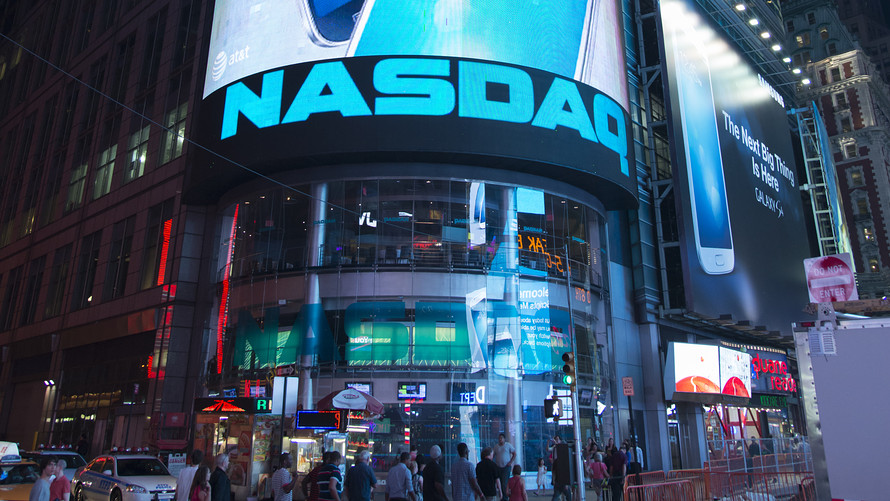
Nasdaq filed a proposed rule change with the U.S. Securities and Exchange Commission (SEC) to extend trading hours for U.S. equities and exchange-traded products (ETPs) to 23 hours per day, five days a week.

Approximately 16 hours total across pre-market (4:00 a.m. – 9:30 a.m. ET), regular (9:30 a.m. – 4:00 p.m. ET), and post-market (4:00 p.m. – 8:00 p.m. ET). Proposed structure: Shift to two sessions: Day Session: 4:00 a.m. to 8:00 p.m. ET including existing pre-, regular, and post-market. Night Session: 9:00 p.m. to 4:00 a.m. ET with a 1-hour break from 8:00 p.m. to 9:00 p.m. for maintenance, testing, and clearing.

Trades in the Night Session from 9:00 p.m. to midnight would count toward the following calendar day. The trading week would effectively run from Sunday 9:00 p.m. ET to Friday 8:00 p.m. ET.

Expected launch is around second half of 2026, pending SEC approval and necessary infrastructure upgrades to the Securities Information Processor and clearing systems like DTCC.

Reasons Cited by Nasdaq

The move responds to surging global demand for U.S. stocks, especially from international investors in non-overlapping time zones like Asia.

Foreign holdings of U.S. equities reached about $17 trillion last year. It also aims to compete with 24/7 alternative trading systems (ATS) like Blue Ocean and platforms for digital assets/cryptocurrencies, while positioning Nasdaq for future tokenized securities trading.

This follows similar efforts by competitors, such as NYSE’s approved 22-hour plan and proposals from others like 24X National Exchange for 23-hour trading. The filing (SR-NASDAQ-2025-106) is publicly available on Nasdaq’s site and will go through the standard SEC review process, including public comments.

Positive Impacts on Asian Investors

Nasdaq’s proposal to extend trading to 23 hours per day on weekdays with a Night Session from 9:00 p.m. to 4:00 a.m. ET is explicitly designed to benefit international investors, particularly those in Asia, where time zones create significant misalignment with traditional U.S. market hours.

The Night Session (9:00 p.m. ET Sunday to Friday) corresponds to daytime hours in Asia. For example:9:00 p.m. ET is 9:00–10:00 a.m. the next day in Tokyo/Seoul/Hong Kong depending on daylight savings. This allows Asian investors to trade U.S. equities and ETPs during their normal business hours, rather than late at night or early morning.

Nasdaq highlighted surging overnight demand, “particularly among investors located in Asia” whose business hours do not overlap with U.S. regular trading. Asian investors can respond in real-time to macroeconomic headlines, geopolitical developments, earnings releases, or central bank announcements from Asia/Europe without waiting for the U.S. open.

This reduces “gap risk” — sudden price jumps at the U.S. open due to overnight news. Currently, many Asian traders use off-exchange alternative trading systems (ATS) like Blue Ocean for overnight access, which offer lower transparency and potentially worse pricing.

An official exchange session promises better liquidity, tighter spreads, fairer price discovery, and higher trust/regulatory protections. Expected to attract more global order flow, improving overall overnight liquidity.

Analysts from Pepperstone in Australia note it “brings US stocks into our local trading hours,” enabling real-time reactions and boosting participation. Foreign holdings of U.S. equities hit ~$17 trillion, with growing demand from Asia-Pacific regions like Japan, China, Korea, Singapore, India.

Competitors like NYSE (22-hour plan) and others are moving similarly, signaling a shift toward global 24/5 markets, influenced by always-on crypto trading. Overnight sessions historically have lower liquidity and higher volatility, leading to wider spreads and sharper price swings — risks that may persist initially.

Some industry voices express caution about market stability in thin-volume hours, though Nasdaq plans safeguards like circuit breakers. Overall, the proposal is widely viewed as a major win for Asian investors, addressing long-standing barriers and aligning U.S. markets more closely with global trading patterns.

Implementation is targeted for the second half of 2026, pending SEC approval.
PayPal Seeks Regulatory Approval to Launch PayPal Bank, Targeting Small Businesses

0

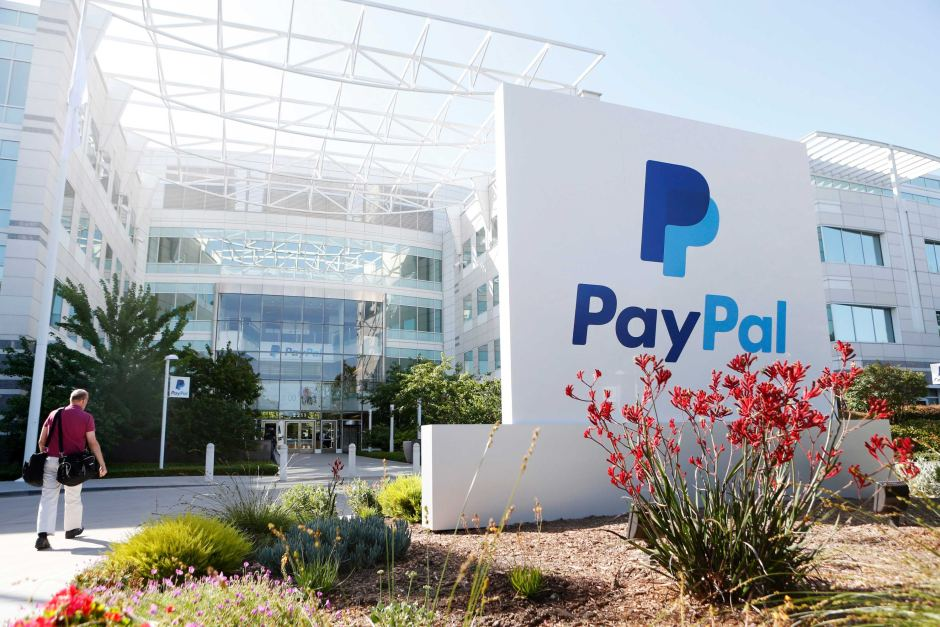
PayPal, an online payment platform that allows users to send and receive money, has applied for regulatory approval to establish a PayPal bank.

According to the payment giant, this move would enable it offer loans directly to small businesses in the United States.

Speaking on this, PayPal CEO Alex Chriss said,

“Establishing PayPal Bank will strengthen our business and improve our efficiency, enabling us to better support small business growth and economic opportunities across the U.S.,”

The proposed bank will be reviewed by the U.S. Federal Deposit Insurance Corporation (FDIC) in collaboration with Utah’s Department of Financial Institutions. PayPal noted that, if approved, the new entity would also enable the company to offer interest-bearing savings accounts to customers.

PayPal, which owns the popular peer-to-peer payment platform Venmo, already provides credit lines to consumers. The move to form a regulated bank aligns with the company’s broader strategy to expand its suite of banking-like services as it competes with a growing number of fintech firms seeking to capture market share from traditional brick-and-mortar banks.

Since 2013, PayPal has originated over $30 billion in loans and working capital to more than 420,000 businesses globally. However, reliance on third-party banks has limited margins and introduced dependencies. A charter would reduce these costs, enable direct access to payment networks, and potentially fund lending with cheaper customer deposits.

The announcement to launch a bank by PayPal has stirred reactions with netizens arguing that companies like PayPal have been role-playing as revolutionary disruptors leveraging technology for sleek user interfaces and lighter regulation, without fully committing to the core infrastructure of banking.

PayPal becoming a bank isn’t innovation it’s Big Tech finally admitting fintech cosplay has limits”, a user wrote on X.

In their view, pure fintech models hit a wall when scaling advanced services like deposit-taking and low-cost lending. Most noted that to compete at scale, fintechs must eventually adopt the licenses, capital requirements, and oversight of traditional banks effectively becoming the incumbents they once sought to replace.

PayPal’s announcement comes amid a more favorable regulatory environment under the Trump administration, which has seen a surge in bank charter applications from fintech and even crypto firms. Other companies, such as SoFi (which acquired a national bank charter in 2022) and Block (formerly Square, which secured a Utah ILC in 2020), have pursued similar paths to deepen vertical integration.

Notably, the move to launch a bank comes as PayPal recently announced plans to expand its presence in Africa through the launch of a new cross border digital wallet platform, scheduled for 2026.

The initiative forms part of PayPal World, a global payments system designed to enable interoperability between local digital wallets and international merchants. The company is currently in discussions with multiple African fintech firms as it seeks to access this market.

Senior Vice President, Head of Product, Partnerships and Digital Solutions for the CEMEA region, Otto Williams, said the platform would launch in Africa in 2026. “We’re looking to enable as many markets as possible on the continent through partnerships wallet partners on the continent,” he said, adding that the company was in conversations with stakeholders and ecosystem partners and players.

Outlook

If approved, PayPal Bank could mark a pivotal shift in PayPal’s evolution from a payments-focused fintech into a fully integrated financial services provider. Direct access to deposits and lending infrastructure would likely improve margins, reduce reliance on partner banks, and give PayPal greater control over its balance sheet.

Over time, this could allow the company to price loans more competitively for small businesses while expanding recurring revenue streams through savings and other deposit-based products.

Visa Launches USDC Stablecoin Settlement for U.S. Banks Using Solana

0

Visa announced the launch of stablecoin settlement capabilities in the United States, allowing U.S. issuers, acquirers, banks, and fintechs to settle obligations on the Visa network using Circle’s USDC stablecoin.

This marks the domestic expansion of a program that has already processed a $3.5 billion annualized run rate in stablecoin settlements as of November 2025.

The initial rollout leverages the Solana blockchain for its high speed, low costs, and scalability, enabling near-instant, 24/7 settlements. Cross River Bank and Lead Bank backed by a16z are the first to go live, already settling transactions with Visa in USDC over Solana.

Provides seven-day settlement windows including weekends, improved liquidity management, faster treasury operations, and greater automation—without impacting the end-consumer card experience. Broader U.S. availability throughout 2026.

Visa is also a design partner for Circle’s upcoming Arc Layer 1 blockchain and plans to use it for USDC settlements while running a validator node. This builds on Visa’s earlier experiments and international pilots, where it first integrated Solana for USDC in 2023.

The move reflects growing institutional demand for programmable, blockchain-based settlement tools that integrate with traditional finance. Visa’s Rubail Birwadker: “Financial institutions are looking for faster, programmable settlement options… This improves treasury efficiency while maintaining security and compliance.”

Circle’s Nikhil Chandhok: “A milestone for internet-native money moving at the speed of software.” This development bridges traditional payments with blockchain rails, highlighting Solana’s role in institutional finance alongside networks like Ethereum.

This move expands Visa’s stablecoin pilots—already processing a $3.5B annualized run rate globally—into the U.S. market, starting with banks like Cross River and Lead Bank settling in USDC over Solana.

Visa, a cornerstone of global payments, is integrating public blockchain rails directly into its settlement infrastructure. Enables 24/7, near-instant settlements vs. traditional banking hours, improved liquidity management, automated treasury operations, and weekend/holiday resilience—without changing the consumer card experience.

Signals institutional confidence in blockchain for production-scale finance, accelerating the convergence of TradFi and DeFi. Visa explicitly chose Solana for the initial U.S. rollout due to its high throughput, low costs, and scalability—outperforming alternatives like Ethereum in this use case.

Reinforces Solana’s position as a preferred chain for institutional payments building on prior pilots since 2023. Highlights Solana’s growing role in real-world finance alongside tokenized assets like JPMorgan, BlackRock experiments on Solana.

Community reaction on X is overwhelmingly bullish, with posts calling it a “game-changer” and proof Solana is becoming a global settlement layer. Validates USDC as the go-to compliant stablecoin for regulated institutions fully reserved, dollar-backed.

Positions Circle as a key bridge between crypto and TradFi; Visa is also a design partner for Circle’s upcoming Arc L1 blockchain with plans to run a validator node. Likely increases USDC demand and circulation as more banks/fintechs adopt it for settlements.

Could reduce cross-border payment costs/friction, enable new use cases like real-time payroll, micro-payments. Encourages competitors and other networks to accelerate blockchain integrations. Demonstrates stablecoins’ maturity: From experimental to bank-ready tools modernizing trillion-dollar payment flows.

SOL price: ~$127–$128 USD, down ~2–4% in the last 24 hours—likely influenced by overall market conditions rather than an immediate pump. Similar 2023 Visa-Solana news caused short-term SOL spikes but long-term impact was more sustained adoption.

Overall, this is a milestone for mainstream blockchain adoption. It substantiates programmable, high-speed rails like Solana in core financial systems, potentially unlocking trillions in efficiency gains while maintaining compliance. Long-term bullish for Solana ecosystem growth and stablecoin utility.

Bitcoin Slips Below $88,000 as Macro Jitters And Year-End Liquidity Weigh on Markets

0

Bitcoin failed to build enough momentum to break above the $90,000 and $90,500 resistance levels, triggering a fresh decline that pushed the price below the $88,500 support zone.

Selling pressure intensified briefly, with BTC dipping under $87,000. The crypto asset has recorded a slight retracement, as it trades at $87,091, at the time of this report. The price is currently holding below the 23.6% Fibonacci retracement level of the downward move from the $93,560 swing high to the $85,151 low.

At the time of observation, Bitcoin remains below $88,000 and under the 100-hourly simple moving average, signaling continued near-term weakness.

Rick Maeda, research associate at Presto Research, explained that there was no clear crypto-specific catalyst behind the sell-off. Instead, the move largely coincided with the opening of U.S. equity markets, where stocks opened lower and dragged risk assets down with them. Maeda added that thinning liquidity toward year-end tends to exaggerate price movements, particularly during U.S. trading hours.

Despite the slight pullback, bullish participants remain active. If buyers regain control, Bitcoin could attempt another upward move. Immediate resistance is seen near $87,150, with the first key resistance level around $87,500.

Vincent Liu, Chief Investment Officer at Kronos Research, noted that a rapid return of “risk-off” sentiment, combined with thin liquidity, turned modest dips into a broader decline. According to Liu, traders rotated into safer assets as macroeconomic concerns resurfaced. He added that the Federal Reserve’s recent rate cut had limited impact, as leverage unwound and year-end liquidity constraints amplified selling pressure.

Last week, the U.S. Federal Reserve announced a 25 basis point interest rate cut, marking its third reduction this year. The decision prompted analysts to reassess its broader implications for risk assets, including cryptocurrencies.

On-chain dynamics also point to distribution pressure. Whales holding more than 10,000 BTC have emerged as major drivers of selling over the past two months, with buying activity from smaller large holders proving insufficient to offset the supply.

Charles Edwards, founder of Capriole Investments, noted that while institutional buying on Coinbase has reached historically high levels, it is being absorbed by long-term holders and early investors selling at rates not seen in years. He suggested that Bitcoin’s price appreciation could remain capped until this heavy distribution eases.

Meanwhile, longtime Bitcoin critic and gold advocate Peter Schiff criticized financial media coverage, arguing that outlets have focused heavily on Bitcoin despite its decline to around $86,000, while overlooking strong gains in precious metals.

Schiff pointed out that gold rose more than $40 to over $4,300 per ounce, while silver climbed nearly $2 to around $63.90 per ounce, yet received little attention. He attributed this imbalance to limited understanding of precious metals and the influence of cryptocurrency advertisers.

In a follow-up comment, Schiff reiterated his bullish stance on gold and silver, citing continued after-hours gains, while urging investors to sell Bitcoin in favor of precious metals.

From a technical perspective, with BTC currently trading above the $87,000 zone, immediate support lies near $85,500, with a key support level at $85,000. A break below this area could open the door to $83,500 and potentially $82,500. The major support level remains at $80,000, and a decisive move below it could accelerate losses in the near term.

Stripe Launches Agentic Commerce Suite to Power AI-Driven Buying

0
Beautiful young asian woman holding a credit card and shopping online with using laptop computer at cafe on blue tone, girl payment on internet, business ecommerce icon concept.

Stripe, a financial infrastructure platform for businesses, has announced the launch of its Agentic Commerce Suite, a new solution designed to help businesses become “agent-ready” as AI agents increasingly mediate online purchasing.

The suite enables companies to sell through AI agents more easily by improving product discoverability, simplifying checkout, and supporting agentic payments through a single integration.

To get started, businesses connect their product catalog to Stripe and select, via the Stripe Dashboard, which AI agents they want to sell through. Stripe then manages discovery, checkout, payments, and fraud detection, while sending order events back to merchants so they can continue using their existing commerce and fulfillment systems. Each component of the Agentic Commerce Suite is modular, allowing businesses to adopt only the features that best fit their needs.

Several leading brands have already begun onboarding to the suite, including URBN (Anthropologie, Free People, and Urban Outfitters), Etsy, Ashley Furniture, Coach, Kate Spade, Nectar, Revolve, Halara, and Abt Electronics.

As agentic channels emerge, businesses are seeking new ways to be discovered without having to build and maintain custom integrations for every AI agent, manage multiple catalogs and APIs, or constantly adapt to evolving standards. Stripe addresses this challenge by providing a dedicated hosted ACP endpoint that shares near real-time product, pricing, and availability data with AI agents, requiring minimal changes to existing systems.

Merchants can upload their product catalogs directly to Stripe or connect existing catalogs from leading product syndicators. Stripe then syndicates this information to supported AI agents, enabling businesses to start accepting payments across agentic platforms with a single click.

Beyond discovery, the suite helps ensure that existing commerce stacks can support taxes, shipping calculations, order management, and fulfillment for agent-driven transactions. Powered by Stripe’s Checkout Sessions API, the Agentic Commerce Suite handles key checkout elements such as shipping and taxes. Businesses can choose to rely on Stripe’s built-in products, including Stripe Tax, or integrate their own systems to manage tax codes, inventory checks, and dynamic shipping rates.

Post-purchase, merchants continue to use their existing order and fulfillment workflows. As the merchant of record, they retain full control over customer relationships, including refunds and dispute management.

Notably, the rise of agentic commerce also introduces new fraud challenges. Traditional fraud detection systems, optimized for human behavior, may misclassify AI agent activity as fraudulent, while new attack vectors may emerge as bad actors attempt to manipulate agents. To address this, the Agentic Commerce Suite introduces Shared Payment Tokens (SPTs), a new payment primitive built for agentic commerce.

SPTs allow AI agents to initiate payments using a buyer’s saved payment method without exposing sensitive payment credentials. Each token is scoped to a specific seller, limited by time and amount, and observable throughout its lifecycle to reduce unauthorized activity and disputes.

When used with Stripe, SPTs can also leverage Stripe Radar, which provides advanced risk signals such as the likelihood of fraudulent disputes, card testing, or issuer declines to distinguish trusted AI agents from low-trust automated bots.

With the Agentic Commerce Suite, Stripe aims to help businesses safely and efficiently participate in the next evolution of digital commerce, where AI agents play an increasingly central role in how customers discover and purchase products.