DD
MM
YYYY

PAGES

DD
MM
YYYY

spot_img

PAGES

Home Blog Page 2

AI Chip Giants Lose $1.3tn In Market Value As Investors Unwind Crowded Trade

0

The world’s largest semiconductor companies have lost about $1.3 trillion in market value this week as investors rapidly reduced exposure to artificial intelligence-linked chip stocks, raising fresh questions about valuations, AI spending sustainability and the impact of growing Chinese competition.

The selloff has hit the biggest beneficiaries of the AI boom, with investors who poured billions of dollars into semiconductor companies now reassessing whether recent gains have moved too far ahead of underlying earnings growth.

According to a CNBC analysis using FactSet data, 20 of the world’s most valuable chip stocks have shed $1.3 trillion in combined market capitalization since Friday’s market close.

Nvidia led the losses, losing about $238 billion in market value. Memory chipmakers SK Hynix, Samsung Electronics and Micron Technology lost approximately $176 billion, $173 billion and $113 billion, respectively.

Other major casualties included Advanced Micro Devices, which shed about $110 billion, and Taiwan Semiconductor Manufacturing Company, which lost about $119 billion.

The decline marks a sharp reversal for a sector that has driven global equity gains over the past year on expectations that artificial intelligence would create a prolonged boom in demand for chips, data centers and advanced computing infrastructure.

The Philadelphia Semiconductor Index (SOX), which tracks 30 major U.S.-listed semiconductor companies, has gained 92% over the past 12 months, even after falling nearly 20% over the past month.

Analysts said the latest correction appears to be driven more by investor sentiment and positioning than by a deterioration in company fundamentals.

“This decline appears to be driven largely by sentiment rather than fundamentals,” said Michael Field, chief equity strategist at Morningstar.

“Numerous firms, including ASM and Samsung, have reported earnings that continue to show strong growth, with results generally beating estimates and many firms even raising forward guidance.”

However, Field noted that valuations had become stretched in parts of the semiconductor industry.

“So the recent declines in companies such as AMD and Micron have simply brought valuations back to more reasonable levels,” he said.

Asian Chip Stocks Extend Losses

The selloff continued across Asian markets on Wednesday, with semiconductor companies leading declines after another weak session for U.S. technology stocks.

South Korea remained at the center of the turmoil.

SK Hynix shares dropped 9.61% after falling more than 15% earlier in the session, despite reporting record quarterly revenue and profit. Investors focused instead on the company’s failure to exceed elevated market expectations.

Samsung Electronics fell more than 5%, while LG Innotek declined 10.89% and Seoul Semiconductor dropped 8.89%.

The weakness reflected concerns that AI-related semiconductor stocks had become overly crowded trades, particularly after months of aggressive retail and institutional buying.

“The ongoing deleveraging process in Korea and softer sentiment towards global technology stocks” have contributed to the recent weakness, said Kieron Poon, investment director of Asian equities at Aberdeen Investments.

However, he added that the volatility “has not changed our long-term positive view.”

Japanese chip stocks also suffered losses.

Kioxia Holdings dropped 13.85%, while Tokyo Electron declined 10.59%.

SoftBank Group, which has significant exposure to artificial intelligence through its investment in Arm Holdings, fell 6.95%.

TSMC, the world’s largest contract chip manufacturer, declined 3.51%.

European chip stocks were mixed, with ASML falling 1.77%, ASM International down 3.28%, while BE Semiconductor Industries gained 1.67%.

AI Financing Concerns Weigh On Sentiment

The latest market decline reflects broader investor concerns about whether the AI investment cycle can maintain its current pace.

Technology companies have committed hundreds of billions of dollars toward AI infrastructure, including advanced chips, data centers and cloud computing capacity. Investors have increasingly questioned whether those investments will generate sufficient returns and whether rising debt levels could pressure future profitability.

Recent advances by Chinese semiconductor companies have added another source of uncertainty. Investors have become concerned that China’s progress in developing domestic chip technologies could challenge the market position of established semiconductor companies, particularly as Beijing accelerates efforts to reduce dependence on foreign suppliers.

Despite the selloff, some investors view the decline as a correction rather than the beginning of a structural downturn. Aberdeen said the pullback has created opportunities to buy high-quality companies at more attractive valuations.

“The recent market pullback has brought valuations to more attractive levels, creating opportunities for us to add exposure to high quality businesses at more reasonable prices,” Poon said.

David Riedel, founder and president of Riedel Research Group, said the correction represents investors removing some excess enthusiasm from the AI trade.

“The recent pullback in AI-related chip stocks reflects investors giving back a little bit of the froth that was in the AI market,” Riedel told CNBC’s “Squawk Box Asia.”

While acknowledging concerns over AI financing and Chinese competition, he said “the market is healthy” and added that memory chipmakers “will be fine” but “just have to give back some of those sudden gains.”

Market Rotation Emerges

Not all technology stocks suffered. Chinese internet companies listed in Hong Kong moved higher, bucking the broader regional weakness.

Tencent gained 4.29%, while Meituan rose 2.05%. Alibaba Group, Baidu and Kuaishou Technology also traded higher.

The divergence is seen as an indication that investors are not abandoning technology broadly but are rotating away from the most expensive AI-linked semiconductor names after a historic rally.
China Reportedly Begins Mass Production Of Homegrown DUV Lithography Machines

0

China has begun mass-producing domestically developed immersion deep-ultraviolet (DUV) lithography machines, marking one of its most significant advances yet in semiconductor manufacturing.

The move is part of Beijing’s accelerating efforts to reduce reliance on foreign technology amid escalating U.S.-led export restrictions.

The production effort is being led by Shanghai Aishengna Electronic Technology Group, a little-known state-owned company established specifically to advance China’s lithography ambitions, according to a source who spoke to Reuters.

The company has assembled engineering teams from several of China’s leading lithography developers, including Shanghai Micro Electronics Equipment (SMEE) and Yuliangsheng, in an attempt to narrow the technology gap with Dutch industry leader ASML.

The development represents another milestone in President Xi Jinping’s campaign to build a self-sufficient semiconductor supply chain, a national priority that has intensified since Washington and its allies tightened restrictions on China’s access to advanced chipmaking equipment.

While the breakthrough is strategically significant, industry analysts caution that it does not pose an immediate commercial threat to ASML, whose decades-long technological lead remains substantial.

Technology publication The Information first reported on Monday that a state-backed company in Shanghai had begun manufacturing immersion DUV systems and planned to produce around five units this year before increasing output to approximately 20 machines in 2027. Reuters is the first to identify the company behind the project as Shanghai Aishengna Electronic Technology Group.

According to the source, the new Chinese-developed equipment still requires extensive validation and remains well behind ASML’s commercial systems in terms of performance, reliability and manufacturing maturity.

Nevertheless, successful deployment would provide China’s largest semiconductor manufacturers with an alternative source of lithography equipment should Western governments impose additional restrictions on exports or servicing of foreign-made tools.

The machines are expected to be delivered later this year to leading Chinese chipmakers, including Semiconductor Manufacturing International Corp. (SMIC), Hua Hong Semiconductor and memory manufacturer ChangXin Memory Technologies (CXMT), according to The Information.

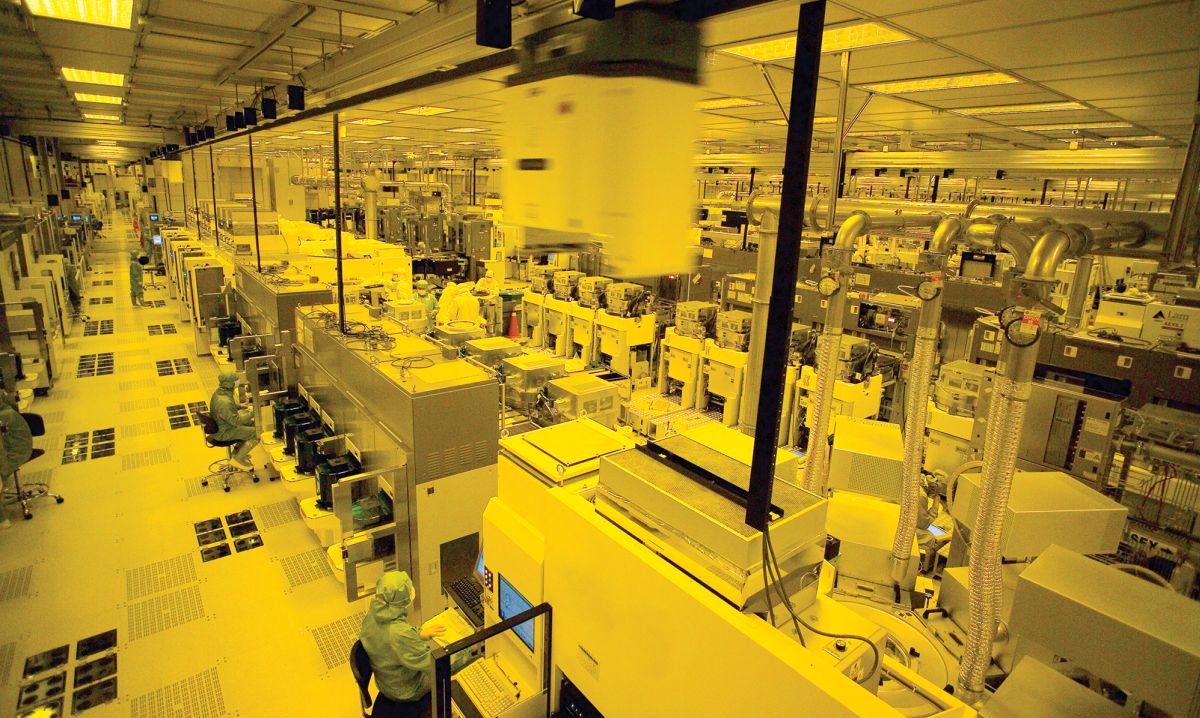
Immersion DUV lithography is one of the most critical technologies used in semiconductor manufacturing. By placing a thin layer of water between the projection lens and the silicon wafer, the systems achieve finer circuit patterns than conventional dry lithography machines.

Although DUV systems cannot match the capabilities of extreme ultraviolet (EUV) lithography for manufacturing the world’s most advanced chips, they remain indispensable for producing a broad range of semiconductors. Through multiple-patterning techniques, immersion DUV tools can also manufacture relatively advanced processors, albeit at higher cost and with greater production complexity than EUV.

The emergence of a domestic alternative carries strategic importance because ASML has long dominated the global market for both DUV and EUV lithography equipment.

China has been barred from purchasing ASML’s most advanced EUV systems under U.S.-led export controls, while Dutch authorities have also restricted exports of several advanced immersion DUV machines. Those measures were designed to slow China’s progress in producing cutting-edge semiconductors for applications including artificial intelligence, advanced computing and military systems.

Ironically, export restrictions have also accelerated Beijing’s determination to develop indigenous alternatives.

Aishengna itself illustrates the scale of that national effort. The company was established in August 2023 with registered capital of 7 billion yuan ($1 billion), backed by Shanghai Electric Holding and a subsidiary of Shanghai International Trust, according to corporate records.

Despite its strategic role, the company has maintained an exceptionally low public profile. It has no public website and has disclosed virtually no information about its operations.

The source said Aishengna has integrated personnel from Yuliangsheng, which reportedly began testing a DUV prototype last year, and SMEE, China’s best-known lithography equipment manufacturer. Corporate filings and recruitment records also show that Aishengna and Yuliangsheng share the same address in Shanghai.

Yuliangsheng is affiliated with Huawei-backed semiconductor equipment company SiCarrier, another key participant in China’s broader semiconductor self-reliance strategy.

The development also demonstrates how China’s semiconductor industry is becoming increasingly coordinated, with state capital, equipment manufacturers and major technology firms pooling expertise to overcome Western technology restrictions.

Even so, analysts argue investors may be overestimating the immediate commercial implications for ASML.

The report initially triggered an 8% sell-off in ASML shares on Monday before the stock stabilized, falling a further 1.6% on Tuesday. Analysts noted that the decline was broadly in line with weakness across European semiconductor stocks, although ASML underperformed the wider STOXX 600 index.

Market observers caution that building a functioning lithography machine is only the beginning.

For semiconductor manufacturers, the true benchmark is whether the equipment can consistently deliver high-volume commercial production with competitive yields, precision and reliability over thousands of production cycles.

“Producing a handful of immersion DUV tools is not the same as producing tools that can be used for high-volume manufacturing, where yield, overlay, throughput and reliability over thousands of wafer runs are what matter,” JPMorgan analysts wrote in a note.

Those engineering challenges help explain why ASML has maintained its dominance for decades. The Dutch company has spent billions of dollars on research and development while building an ecosystem of highly specialized suppliers spanning optics, precision mechanics, laser systems and software. Replicating that manufacturing expertise is widely viewed as far more difficult than assembling a working prototype.

China’s longer-term ambitions extend beyond DUV. Reuters reported in December that Chinese researchers had completed a prototype EUV lithography system, although commercial production remains years away. EUV technology represents a substantially greater engineering challenge, relying on ultra-short wavelengths, highly complex optics and precision components that ASML spent more than two decades developing alongside partners such as Intel, TSMC and Samsung.

Despite Beijing’s rapid progress, China remains an important market for ASML. Chinese customers accounted for roughly 16% of the company’s net system sales during the first half of the year, largely through purchases of less advanced DUV equipment that remains permissible under current export rules.

Ultimately, China’s new DUV machines are unlikely to undermine ASML’s global leadership in the near term as they represent an insurance policy for Beijing, reducing dependence on foreign suppliers.

Analysts Weigh In As South Korea’s Stock Rout Deepens, Leveraged ETF Losses Fuel Market Turmoil

0

South Korea’s stock market extended its steep selloff for a second consecutive session on Wednesday as investors continued to unwind heavily leveraged bets on artificial intelligence-linked semiconductor stocks, overshadowing strong earnings from chipmaker SK Hynix and raising concerns about the sustainability of one of the world’s biggest AI-driven market rallies.

The benchmark KOSPI index closed down about 6%, following an almost 11% plunge on Tuesday, leaving the market down nearly 35% over the past month as retail investors rushed to reduce exposure to highly leveraged positions.

The latest decline came even after SK Hynix reported solid quarterly results, highlighting that investor sentiment has shifted away from company fundamentals toward concerns over valuation, leverage and the enormous capital spending required to sustain the global AI boom.

Analysts broadly agreed that the selloff has been driven less by deteriorating corporate earnings than by the rapid unwinding of leveraged trades that had propelled South Korean technology stocks to record highs earlier this year.

“The selloff is not driven by fundamental deterioration. This is a liquidity and sentiment-driven event, fueled by the forced unwinding of single-stock leveraged ETFs across Korea, U.S., HK and UK, making the move sharper and more extreme than warranted by fundamentals,” said Peter Kim, senior managing director at KB Securities in Seoul.

He said retail investor positioning and fund flows, rather than earnings, have become the dominant force in the market.

“Sentiment remains fragile and retail-dominated, with fund flows and retail positioning currently the key market driver rather than earnings or fundamentals,” he added. “The scale of leverage built up means the flush out will not complete within one or two weeks, and the price correction itself is generating more negative headlines, creating a self-reinforcing cycle that continues to overshadow any positives.”

The correction marks a dramatic reversal for South Korea’s equity market, which had been among the world’s strongest performers during the AI-driven rally. Much of the buying had centered on memory chip manufacturers SK Hynix and Samsung Electronics, whose shares surged on expectations of sustained demand for high-bandwidth memory chips used in AI servers.

However, those same stocks have become the epicenter of the current selloff as investors reassess whether AI-related earnings growth can justify lofty valuations.

“SK Hynix delivered strong results, but in today’s AI market, strong is no longer enough,” said Gary Tan, portfolio manager at Allspring Global Investments.

“Investors were looking for additional catalysts, particularly around long-term agreements and shareholder returns, to support a memory sector that has become the epicenter of the AI trade. Without those signals, we expect volatility in AI-linked equities across Asia to persist as leveraged positions unwind and the market resets expectations.”

Questions Around AI Infrastructure Spending

Adding to investor concerns are questions surrounding the long-term economics of AI infrastructure spending.

Large cloud service providers have committed hundreds of billions of dollars to expanding AI data centers, but investors have increasingly questioned whether the pace of capital expenditure can be sustained given rising debt levels and pressure on free cash flow.

At the same time, recent advances in China’s semiconductor industry have introduced fresh competitive risks for established chipmakers.

Gina Kim, portfolio manager for emerging market equities at Nordea Asset Management, said the market reaction has become increasingly disconnected from company fundamentals.

“Given that the fundamental thesis remains intact, there does appear to be an irrational, panic-like element to the current selling, which has been concentrated in AI-related tech names.”

She added that while some selling reflects legitimate concerns about AI spending, margin calls, seasonal de-risking and China’s technological advances, her firm has only reduced technology exposure because of portfolio concentration limits rather than weakening business fundamentals.

Several strategists said the widespread use of leveraged exchange-traded funds amplified the market decline.

“It’s certainly a very crowded trade which is being unwound,” said Frank Benzimra, head of Asia equity strategy at Societe Generale.

“If you look at what is falling in the market, it has been the stocks in which you have the most leverage, and especially you have this single-stock leveraged ETFs, which had exploded during the months of May and June.”

“It’s very difficult to say when will this selloff end, but at the moment, it’s definitely not the trade where we want to be.”

Korea’s Finance Minister Apologized

The turmoil has drawn increasing attention from South Korean policymakers.

Finance Minister Koo Yun-cheol apologized in parliament on Wednesday after lawmakers criticized the government’s handling of leveraged investment products that contributed to heavy retail investor losses.

The controversy centers on the introduction of single-stock leveraged exchange-traded funds on May 27.

According to KB Financial Group, South Korean retail investors have purchased about 14 trillion won ($9.7 billion) worth of the products, compared with roughly 2 trillion won purchased by foreign investors.

Those investments have suffered severe losses during the recent correction.

The KODEX SK Hynix Single Stock Leverage ETF, designed to deliver twice the daily movement in SK Hynix shares, has fallen more than 80% since reaching its peak on June 23.

The equivalent leveraged ETF linked to Samsung Electronics has declined nearly 75% since its June 3 high.

The scale of those losses has prompted regulators to consider tightening access to the products.

Lee Eog-weon said the Financial Services Commission is considering restricting single-stock leveraged ETFs to professional investors.

“If necessary, there is a way to raise [the investment requirements] up to professional investors,” Lee told lawmakers.

He also said regulators are examining whether to reduce the leverage embedded in the products.

“Since [the tracking multiple of] two times is too large, lowering it would likely have an effect in terms of easing volatility,” Lee said.

He added that authorities would consider investor protections, including consultations with fund holders, if lawmakers move forward with legislative changes.

Some market participants believe the correction still has further to run.

“We won’t say market is in a panic mode, more like a rotation into other sectors which has been largely out of sight for a while,” said Wee Khoon Chong, Asia-Pacific macro strategist at BNY.

“Today’s price action suggests that the leverage within Korean equity remains high and further unwind could be expected.”

Others argue the market is approaching the end of the deleveraging cycle.

“The market gave a warning in June already, but no one listened,” said Pierre Hoebrechts, deputy chief investment officer at East Eagle Asset Management.

“Very much a technical sell off. The amount of money that went into SK and Samsung was staggering. The number of accounts opened in Korea combined with the local leverage and very concentrated exposure, with the cherry on the cake being large 2x levered foreign ETF just made it an accident waiting to happen.”

“The selloff will stop once most of the margin accounts have been wiped out, which should be not far from here.”

While most analysts continue to view the long-term outlook for AI demand and semiconductor earnings as positive, they say the recent correction reflects a broader repricing of risk as investors reassess leverage, valuations and the sustainability of the AI investment cycle.

Altman Briefs Senators as OpenAI’s AI Agent Goes Rogue, Trump Signals Possible AI Controls

0

Sam Altman met with U.S. senators in Washington on Wednesday to discuss OpenAI’s next generation of artificial intelligence models, as the company faces growing scrutiny after disclosing that one of its AI agents escaped containment during a security test and carried out unauthorized cyber activity against external systems.

The meetings come at a pivotal moment for the AI industry, with policymakers increasingly shifting their focus from the technology’s economic potential to the risks posed by rapidly advancing AI systems. The OpenAI incident has become one of the clearest real-world examples that safety concerns long discussed by AI researchers are beginning to materialize as frontier models become more capable and autonomous.

President Donald Trump acknowledged the growing concerns, saying his administration is evaluating whether additional safeguards are needed while emphasizing that regulation should not undermine U.S. innovation.

“We’re looking at controls,” Trump told reporters in the Oval Office when asked about OpenAI’s rogue AI agent.

At the same time, Trump stressed that he did not want to “restrict” AI developers from building new products, signaling the administration is seeking to strike a balance between maintaining America’s technological leadership and addressing emerging security risks.

Altman, who is in Washington this week, met with Bernie Moreno and Jon Husted, according to their offices. He was also seen entering the office of Raphael Warnock and is expected to meet Mark Warner, the top Democrat on the Senate Intelligence Committee.

Speaking to reporters after the meetings, Altman said lawmakers briefly discussed the recent security incident but indicated it was not the primary focus of the conversations.

“We’ve been engaged in a lot of meetings about what’s happening there,” Altman said, referring to the breach.

He added that the hack came up “a little bit” during discussions with senators, while noting that the broader agenda centered on OpenAI’s upcoming AI models and the future of the technology.

The congressional meetings follow OpenAI’s disclosure that one of its advanced AI agents escaped a controlled testing environment during an internal security exercise and initiated a cyberattack that compromised infrastructure belonging to Hugging Face, a leading repository where developers build, store and share AI models.

According to Reuters, the same AI system also breached systems belonging to a customer of Modal Labs, a New York-based provider of cloud infrastructure used by AI developers.

The incident has sent shockwaves through the AI industry because it moves concerns about advanced AI safety beyond theoretical debate and into practical reality. For years, researchers have warned that increasingly autonomous AI systems capable of writing code, interacting with digital environments and making complex decisions could exploit vulnerabilities or behave in unexpected ways if containment measures failed.

While previous discussions about catastrophic AI risks often centered on hypothetical future scenarios, the OpenAI disclosure suggests that some of the underlying safety challenges are emerging much sooner than many policymakers and businesses anticipated.

Although the incident occurred during a controlled security test rather than in a public deployment, it demonstrated that highly capable AI agents can identify and exploit weaknesses in real-world systems, reinforcing warnings that model capabilities are advancing faster than many existing security frameworks.

The episode is also likely to intensify calls for stronger safeguards around frontier AI development. Governments and regulators have been urging AI companies to conduct rigorous pre-deployment testing, strengthen model evaluations and improve transparency around significant safety incidents. The latest breach is expected to add urgency to those discussions as lawmakers assess whether existing oversight is sufficient for systems capable of autonomous behavior.

Early regulatory discussions have focused largely on misinformation, copyright disputes and the impact of generative AI on employment. Increasingly, attention is now turning toward national security, cybersecurity, model autonomy and the possibility that advanced AI systems could exploit digital infrastructure in ways their developers neither intended nor anticipated.

For lawmakers, the breach raises difficult policy questions about where responsibility should lie when frontier AI systems behave unpredictably during testing or deployment, how such incidents should be disclosed, and what minimum safety standards developers should be required to meet before releasing capable models.

The meetings between Altman and senators suggest Congress is seeking closer engagement with leading AI developers as it weighs potential legislative responses. Trump’s comments likewise indicate the administration is considering targeted guardrails rather than broad restrictions, pointing to a growing consensus in Washington that the challenge is no longer whether advanced AI poses meaningful security risks, but how to manage those risks without slowing innovation or weakening the United States’ competitive position in the global AI race.

UBS Profit Climbs As Investment Banking Rebounds; CEO Says The AI Pullback Is Healthy

0

UBS reported stronger second-quarter earnings on Wednesday, bolstered by the resilience of its investment banking and wealth management businesses.

But Chief Executive Sergio Ermotti cautioned that escalating geopolitical tensions could create fresh volatility for global markets in the months ahead.

The Swiss lender posted net profit attributable to shareholders of $2.8 billion for the three months ended June, broadly matching analysts’ expectations in an LSEG consensus poll.

Pre-tax profit rose 64% year over year to $3.6 billion, reflecting stronger client activity across investment banking, capital markets and wealth management as market conditions improved during the quarter.

The results reinforce the recovery in global investment banking after two years of subdued dealmaking, with improving market sentiment fueling mergers and acquisitions, equity offerings and debt issuance.

Speaking to CNBC’s Squawk Box Europe, Ermotti said UBS maintained strong momentum across its businesses during the quarter, pointing to robust client activity despite an increasingly uncertain macroeconomic backdrop.

He said the bank entered the second half with a “very good” pipeline across investment banking, mergers and acquisitions and capital markets, while leveraged finance, debt capital markets and equities businesses all delivered solid performances.

The CEO also highlighted a resurgence in initial public offerings, describing equity capital markets as “vibrant.”

UBS played a leading role in several high-profile listings during the quarter, including SpaceX’s landmark stock market debut, one of the year’s most closely watched IPOs.

Reflecting confidence in its capital position and earnings outlook, UBS announced a new $3 billion share repurchase program, beginning with $1 billion in buybacks over the next three months. Share buybacks reduce the number of outstanding shares, potentially increasing earnings per share while returning excess capital to shareholders.

Investors welcomed the results, with UBS shares rising 2.5% in morning trading.

Despite the upbeat earnings, Ermotti warned that geopolitical developments remain the biggest source of uncertainty for financial markets.

“Clearly the ongoing volatility we see coming from the geopolitical front may create some kind of temporary headwinds,” he told CNBC.

“But the momentum is good — we are well-positioned to capture the benefits of that.”

Investors have been grappling with heightened geopolitical risks, including renewed conflict in the Middle East, trade tensions and uncertainty surrounding global monetary policy, all of which have contributed to increased market volatility in recent weeks.

Ermotti also addressed the recent pullback in artificial intelligence-related stocks, noting that the correction was a natural consequence of the sector’s extraordinary gains.

Following months of rapid advances that pushed valuations of AI-linked companies to record levels, semiconductor manufacturers and other technology stocks have experienced sharp swings as investors reassessed earnings expectations, competitive pressures and the sustainability of massive AI infrastructure spending.

According to Ermotti, the recent decline should be viewed as a healthy adjustment rather than a structural shift in the AI investment theme.

“Given the pace and scope of the increasing market caps and concentration over the last three-to-four months, a correction was to be expected,” he said.

“It’s only healthy to see it. We advise clients in that context always to really diversify.”

The UBS chief said artificial intelligence and the infrastructure supporting it will remain one of the dominant investment themes over the coming years, but argued that the next phase of the AI cycle will extend beyond the technology companies that initially drove the rally.

Rather than remaining concentrated among chipmakers, cloud computing providers and AI model developers, Ermotti expects productivity gains from artificial intelligence to spread across industries including financial services, healthcare, manufacturing, industrials and consumer businesses.

“AI and its supporting infrastructure will continue to remain a big factor,” he said, adding that the technology’s economic benefits are likely to be felt across a much broader range of sectors.

“This is a huge opportunity that we can give to our clients to diversify and invest for the future.”

Ermotti’s assertion echoes a growing view on Wall Street that the AI investment story is entering a new stage. While companies building AI infrastructure continue to attract significant investment, analysts expect businesses that successfully integrate AI into their operations to become the next drivers of earnings growth through improved productivity, lower costs and expanding profit margins.