DD
MM
YYYY

PAGES

DD
MM
YYYY

spot_img

PAGES

Home Blog Page 2

U.S. Signals Possible Resumption of Venezuelan Oil Sales to India as New Delhi Cuts Russian Crude Imports

0

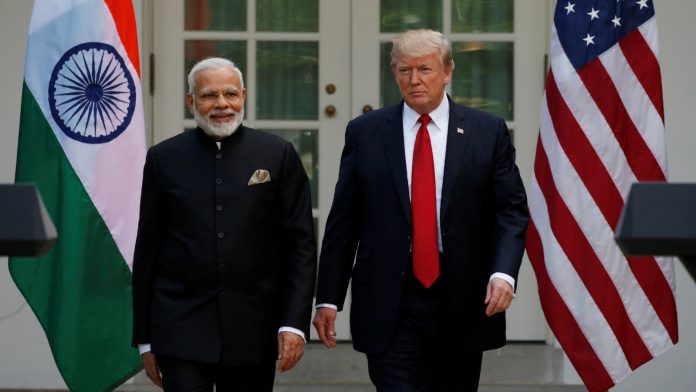
The United States has indicated to New Delhi that India may soon be permitted to resume purchases of Venezuelan crude oil — a marked change in policy that reflects evolving geopolitical priorities as the South Asian nation sharply reduces its reliance on Russian oil amid sustained U.S. tariff pressure.

The potential reopening of Venezuelan oil supplies to India comes after Washington imposed 25 percent tariffs on countries importing Venezuelan crude under former President Donald Trump’s administration in March 2025. That levy was aimed at deterring support for the Maduro government and reducing revenues that could be used to undermine Western policy objectives.

New sources familiar with the matter told Reuters that as India cuts its Russian oil imports — which stood at around 1.2 million barrels per day in January — Washington is offering Venezuelan supplies as an alternative to help fill the gap. India’s Russian crude imports are projected to drop to about 1 million bpd in February and 800,000 bpd by March, with expectations that they may eventually decline further to between 500,000 and 600,000 bpd.

The shift signals a pragmatic recalibration by U.S. policymakers. With Russian oil revenues seen as funding Moscow’s military operations, particularly in Ukraine, the Trump administration is encouraging partners like India to diversify away from Russian sources. Venezuela, which Washington now exerts de facto control over following the capture of its president, Nicolás Maduro, on January 3, is being positioned as a politically acceptable alternative despite longstanding sanctions.

Tariff Threats and Trade-offs

India’s move towards cutting Russian crude imports has been framed both in Washington and New Delhi as part of a larger strategic negotiation. Last year, the Trump administration first imposed a 25 percent tariff on Indian goods over its Russian oil purchases, part of a broader 50 percent tariff on Indian exports triggered by what U.S. officials called reciprocal trade practices. That punitive tariff regime significantly raised the cost of Indian products in U.S. markets and strained bilateral trade.

U.S. Treasury Secretary Scott Bessent has more recently hinted that the 25 percent tariff might be eased where India’s purchases from Russia have “collapsed,” suggesting a potential rollback if New Delhi continues to align its energy sourcing with U.S. expectations.

India’s Energy Diversification Strategy

India’s pivot away from Russian oil is not solely a response to tariff pressure. New Delhi has publicly noted that it is diversifying its crude sources to ensure energy security as global markets become more complex. Officials say that imports from the Middle East, Africa, and South America are filling the void left by declining Russian volumes.

State-owned refiners such as Hindustan Petroleum Corp Ltd (HPCL) and Mangalore Refinery and Petrochemicals Ltd (MRPL) have either halted or significantly reduced Russian oil purchases. Some of these refiners are exploring Venezuelan grades commercially, although pricing and logistics remain key considerations influencing procurement choices.

Meanwhile, private sector giant Reliance Industries has expressed interest in Venezuelan oil if it becomes available to non-U.S. buyers under compliant terms. The refiner paused Venezuelan imports after U.S. tariffs were applied, but remains open to reengaging if regulatory clarity emerges.

Implications for Global Energy and Trade Relations

If India is permitted to resume Venezuelan oil imports, the development is expected to reshape aspects of global crude markets and U.S.–India relations. It would help New Delhi manage its energy mix without absorbing the full impact of U.S. tariffs while aligning more closely with Western efforts to isolate Russian oil revenues. However, most Venezuelan crude currently being offered under U.S. arrangements has been prioritized for the U.S. market, with Indian refiners reporting limited access and unfavorable pricing relative to other sources.

Beyond direct energy policy, the episode highlights broader tensions in U.S.–India trade relations. Tariffs imposed on Russian oil purchases have affected Indian exports across multiple sectors, raising concerns among Indian industry groups about competitiveness and market access.

At the same time, New Delhi’s willingness to shift away from Russian oil — coupled with a US-facilitated alternative in Venezuelan crude — underscores the weight of Trump’s arm-twisting tactic, even on large economies caught in the Washington–Kremlin faceoff.

Trump Administration Eases Venezuela Oil Sanctions for U.S. Firms, Signaling Deeper Push to Control Crude Flows

0

The administration of U.S. President Donald Trump on Thursday lifted key restrictions on Venezuela’s oil trade, allowing U.S. companies to buy, sell, transport, and refine Venezuelan crude.

The move is part of Washington’s growing efforts to reshape the country’s energy sector while keeping tight control over production and revenues.

The decision, announced by the Treasury Department’s Office of Foreign Assets Control (OFAC), authorizes U.S. entities to engage in a wide range of commercial activities involving Venezuelan-origin oil. While the measure stops short of lifting sanctions on oil production itself, administration officials said it is designed to ease bottlenecks in the movement of existing supply and pave the way for broader sanctions relief.

A White House official said the authorization “would help flow existing product” and confirmed that additional easing of restrictions would be announced soon.

The move comes weeks after Trump said the United States intends to control Venezuela’s oil sales and revenues indefinitely following the January 3 U.S. military raid in Caracas that resulted in the seizure of President Nicolas Maduro. Trump has since outlined an ambitious vision for Venezuela’s oil sector, saying U.S. companies should eventually invest up to $100 billion to restore output to historic levels after years of underinvestment, operational decline, and mismanagement.

Already, Washington and Caracas have agreed to an initial sale of 50 million barrels of Venezuelan crude, with European trading houses Vitol and Trafigura handling the marketing of the supply. The new OFAC authorization, issued as a general license, expands access beyond those initial arrangements by opening the Venezuelan oil trade to additional U.S. companies.

Under the license, U.S. firms are permitted to engage in transactions involving the Venezuelan government and state oil company PDVSA related to the lifting, export, re-export, sale, storage, marketing, purchase, delivery, transportation, and refining of Venezuelan oil. The authorization is explicitly limited to established U.S. entities and excludes firms and individuals from countries Washington considers strategic rivals, including China, Russia, Iran, North Korea, and Cuba.

The license also maintains strict financial guardrails. It does not permit payment structures deemed commercially unreasonable, debt-for-oil swaps, payments in gold, or transactions denominated in digital currencies, reflecting continued U.S. concern about opaque financing mechanisms that have previously been used to circumvent sanctions.

The partial easing marks a notable shift from Trump’s first administration, when the Treasury Department in 2019 designated Venezuela’s entire energy industry under sweeping sanctions following Maduro’s disputed re-election, which Washington refused to recognize. Those measures effectively cut off Venezuela from most international oil markets and deepened the country’s economic crisis.

Several energy companies had been pressing the U.S. government for expanded licenses in recent weeks. Oil producers, including Chevron, Spain’s Repsol, and Italy’s ENI, along with refiner Reliance Industries and some U.S. oil service providers, have sought authorization to expand output or exports from the OPEC member. Any meaningful increase in production, however, would still require additional U.S. approvals.

Jeremy Paner, a lawyer at Hughes Hubbard & Reed and a former OFAC sanctions investigator, said the new authorization is broad operationally, covering refining, transportation, and the physical lifting of oil, but narrow in scope because it applies only to U.S. companies. Kevin Book, an analyst at ClearView Energy Partners, said the move provides regulatory clarity for U.S. firms while preserving the prior case-by-case review for non-U.S. entities.

“In short, it appears to offer ‘America First, Others Ask’ sanctions relief,” Reuters quoted Book as saying.

According to industry sources, a surge in individual license requests had slowed plans to expand exports and attract investment into Venezuela. The general license is expected to reduce that friction for U.S. companies and accelerate near-term oil flows, even as broader questions remain about long-term production growth.

The OFAC decision coincided with significant developments in Caracas. Venezuelan lawmakers on Thursday approved a revised reform of the country’s main hydrocarbons law, granting greater autonomy to private producers operating joint ventures or new contractual arrangements. The reform also formalizes an oil production-sharing model introduced by Maduro in recent years, aimed at attracting foreign capital despite sanctions.

Still, the exclusion of Chinese and Russian entities from the new U.S. authorization raises concerns about operational disruptions. Francisco Monaldi, director of the Latin American Energy Program at Rice University’s Baker Institute, noted that joint ventures involving companies from those countries account for roughly 22% of Venezuela’s oil output.

“If they cannot export the oil coming from these ventures, that’s a big problem,” Monaldi said, warning that PDVSA could face difficulties marketing crude tied to those projects.

However, the developments so far are pointing to one direction of a carefully calibrated strategy by the Trump administration: opening the door wider for U.S. companies to dominate Venezuelan oil trade, while keeping rival powers on the sidelines and maintaining leverage over how, and under what terms, the country’s vast energy resources return to global markets.

Implications of BlackRock’s iShares Bitcoin Premium Income ETF 

0

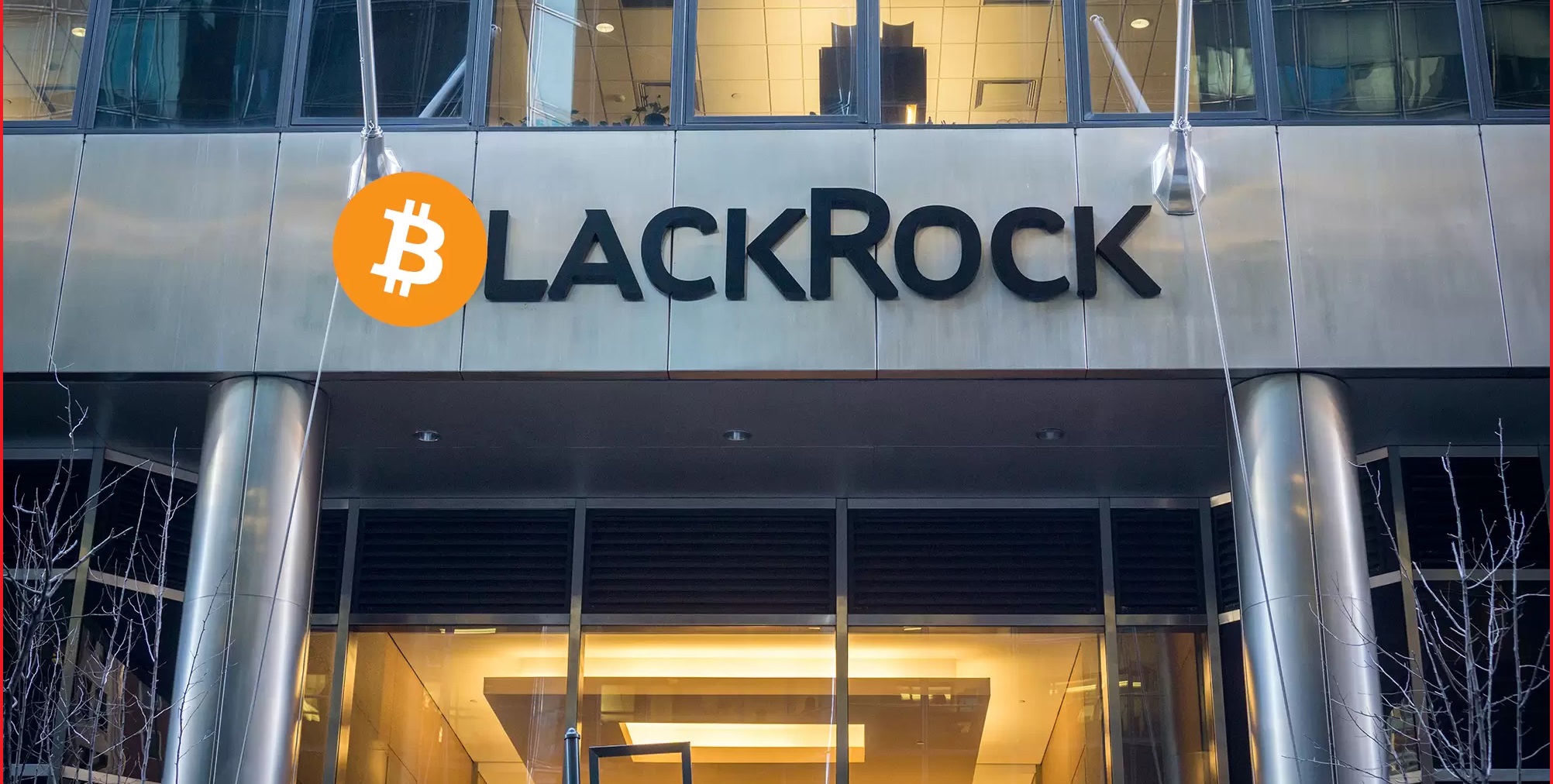
BlackRock has filed with the U.S. Securities and Exchange Commission (SEC) for the iShares Bitcoin Premium Income ETF. This filing occurred on January 23 or 24, 2026, as a Form S-1 registration statement.

It’s a new product building on BlackRock’s hugely successful iShares Bitcoin Trust (IBIT), which is a spot Bitcoin ETF with tens of billions in assets around $70 billion cited in recent reports. It aims to track Bitcoin’s price performance while generating additional premium income through an actively managed covered call approach.

This involves selling (writing) call options primarily on shares of IBIT and occasionally on indices tracking spot Bitcoin ETPs. The premiums collected from these options would be distributed to investors as income. Holdings: Primarily Bitcoin, shares of IBIT, cash, and option premiums.

This provides yield (monthly income potential) but caps some upside potential if Bitcoin surges sharply since sold calls could limit gains. The filing is the initial registration step. No ticker symbol, expense ratio, or launch date has been announced yet.

The SEC process includes review, potential comments, and possible approval/disapproval. (Nasdaq had earlier filed related rule changes, and proceedings were instituted.) Custodians: Coinbase for Bitcoin; BNY Mellon for cash and IBIT shares.

This isn’t BlackRock’s first crypto move—they launched the spot Bitcoin ETF (IBIT) in 2024, which has dominated inflows. This new one targets income-focused investors who want Bitcoin exposure but with added yield, similar to existing products like NEOS Bitcoin High Income ETF (BTCI, ~$1B AUM), Roundhill’s YBTC, or YieldMax’s YBIT—but BlackRock’s scale could make it a major player.

The filing reflects growing institutional interest in Bitcoin as a yield-generating asset beyond pure price appreciation. It’s part of broader crypto ETF evolution, though approval isn’t guaranteed and could take time. No major updates on approval since the filing.

This isn’t just another spot ETF—it’s an actively managed product that builds directly on BlackRock’s dominant iShares Bitcoin Trust (IBIT), which holds tens of billions in assets (around $70 billion cited recently). This ETF targets investors who want Bitcoin exposure but prefer steady yield over pure price speculation.

By selling covered calls primarily on IBIT shares, it collects option premiums distributed as monthly income. This could attract institutions, retirees, or yield-hungry allocators in a low-interest environment, treating Bitcoin more like a dividend-paying asset than a volatile growth play.

Trade-Offs in Returns

Upside is capped—if Bitcoin surges sharply, sold calls limit gains as buyers exercise options. However, premiums provide a buffer during flat or moderate declines, potentially offering positive returns even if Bitcoin’s price stagnates or dips modestly.

Some analyses note it could “pay investors even if Bitcoin crashes” via premiums, though principal remains exposed to BTC downside. As an actively managed covered-call strategy, expect higher expense ratios than plain spot ETFs like IBIT competitors like NEOS BTCI charge ~0.99%.

This suits income seekers but erodes net returns for pure growth chasers. Systematic call selling adds mechanical volatility suppression. Bitcoin’s implied volatility has already declined post-spot ETFs and options on IBIT. More large-scale sellers especially from a $14T giant like BlackRock could further compress option premiums, making the “income” aspect less attractive over time.

Analysts warn yields from similar strategies might decline steadily. BlackRock’s move signals Bitcoin shifting from “speculative bet” to “monetizable asset.” Spot ETFs were step one (access); this is step two (yield generation). It leverages IBIT’s massive liquidity, potentially drawing more traditional portfolios into crypto via familiar income wrappers.

It intensifies rivalry with existing products like NEOS BTCI (~$1B AUM), Roundhill YBTC, Amplify BAGY, and YieldMax YBIT. BlackRock’s scale, brand, and direct IBIT tie-in could dominate inflows, accelerating the segment’s growth.

Wall Street now views Bitcoin not just as holdable but as farmable for yield. This aligns with trends like tokenization (Larry Fink’s vision) and positions crypto as a legitimate asset class for income mandates. The filing is early-stage—SEC review, potential comments, and approval pending (no ticker, fee, or launch date yet).

It’s bullish for long-term legitimacy but doesn’t guarantee quick inflows. Bitcoin’s price around $88K-$89K in late January 2026 reports reacts more to macro factors than filings alone. Covered-call ETFs can dilute NAV over time via return-of-capital distributions.

Bitcoin’s volatility means premiums vary—high in turbulent markets, lower in calm ones. Approval isn’t assured, though BlackRock’s track record (IBIT’s rapid dominance) bodes well. This filing underscores Bitcoin’s rapid maturation: from fringe asset to one Wall Street can systematically extract income from.

It’s a vote of confidence in BTC’s staying power, expanding the investor base beyond pure speculators to those prioritizing yield and stability. Watch SEC updates for progress—approval could catalyze more structured products and solidify crypto’s role in diversified portfolios.

U.S Dollar Index Touched Levels Around 95.5-96.0 This Week

0

The US Dollar Index (DXY) has hit a 4-year low recently. The DXY is trading in the mid-96 range approximately 96.13 to 96.46, with some fluctuation and slight recovery from the session low. It touched levels around 95.5–96.0 earlier in the week, marking its weakest point since February 2022.

Trump downplayed concerns about the dollar’s fall, stating it was “great” and “not fallen too much,” while expressing indifference or even tacit approval. This reinforced market perceptions of a “sell America” trend and encouraged further selling.

Ongoing tariff threats against European allies, geopolitical moves like threats to take over Greenland, potential government shutdown risks, and rising US debt concerns have eroded investor confidence in US assets.

Shift to safe havens: Investors are fleeing to alternatives like gold which has surged dramatically, recently hitting highs amid the dollar weakness and the Swiss franc. Speculation about potential US-Japan currency intervention to support the yen, Federal Reserve expectations holding rates steady with possible future cuts, and broader economic policy unpredictability.

The index has dropped roughly 10% over the past year, with sharp recent moves—including one of the largest one-day drops in months.A weaker dollar can benefit US exporters by making goods cheaper abroad but raises import costs and contributes to inflation pressures. It also fuels rallies in commodities like gold.

Markets remain volatile, with some paring of losses after Treasury statements reaffirming commitment to a strong dollar policy no intervention. Watch upcoming Fed guidance and any policy developments for further direction.

US stocks have shown resilience and even strength amid the dollar weakness:Major indices like the S&P 500 and global stocks rose to or near record highs in recent sessions, driven by optimism around corporate earnings especially from “Magnificent Seven” tech names reporting soon and expectations that the Fed would hold rates steady without aggressive signals.

The dollar’s sharp drop one of the largest one-day declines in months coincided with gains in equities, as a weaker dollar typically benefits multinational companies by boosting the value of overseas earnings when converted back to USD.

However, there have been pockets of pressure:Some sessions saw pullbacks e.g., Dow and S&P dipping after early gains in early January, tied to broader policy uncertainty rather than the dollar alone. Sectors sensitive to imports (e.g., retailers or those facing higher costs) or inflation risks have faced headwinds, though this hasn’t dominated.

US goods become cheaper abroad, helping exporters and manufacturers aligning with Trump’s long-standing view that a weaker dollar is “great” for competitiveness and trade balance. Multinational earnings lift: Companies like those in the S&P 500 with significant international revenue see a tailwind from currency translation.

Dollar weakness often signals reduced “safe-haven” demand for USD, encouraging flows into equities, commodities (gold hitting records near $5,000+), and other risk assets. Inflation/commodity play: It can fuel rallies in gold, oil, and materials stocks, as seen recently.

Analysts note this as a “two-sided coin”: positive for multinationals and exporters, but it raises import costs and potential inflation, which could pressure bonds or prompt Fed caution. The dollar’s ~10% drop over the past year stems from Trump’s policy signals (tariff threats, indifference to weakness, geopolitical moves), Fed rate cut expectations likely 2 cuts in 2026, and “sell America” sentiment from uncertainty.

A weaker USD often boosts returns on non-US equities for USD-based investors, with forecasts suggesting international outperformance in 2026. US market outlook remains bullish overall: Wall Street targets for the S&P 500 in 2026 range from ~7,100 (conservative) to 8,000+ (optimistic), implying 3–17% gains from recent levels, fueled by AI, earnings growth, and potential Fed easing.

Dollar weakness is seen as a net supportive factor in many outlooks, though not the primary driver (earnings and policy matter more). Watch upcoming Fed guidance (post-January meeting), earnings from big tech, and any escalation in tariffs/geopolitics—these could amplify volatility.

If dollar weakness accelerates further (e.g., below key supports like 96), it might fuel more commodity/equity rallies but heighten inflation concerns. Overall, the dollar’s slide hasn’t derailed the bull market—it’s arguably contributed to the recent optimism in stocks.

A 2026 Anthropic IPO will Test Wall Street Resolve on AI Investments 

0

Recent reports indicate that Anthropic has effectively doubled or more its fundraising target in its latest funding round while securing a $350 billion valuation.

This nearly doubled its previous valuation of about $183 billion from a September 2025 Series F round where it raised $13 billion. By late January (around January 27–28), the round saw massive oversubscription due to strong investor demand.

Reports from the Financial Times, CNBC, Sherwood News, and others noted that Anthropic doubled its fundraising target to around $20 billion or closed above $10 billion, potentially $10–15 billion or higher, with room for more. The valuation remained at $350 billion.

This surge reflects intense investor enthusiasm for AI companies, driven by Anthropic’s strong enterprise adoption, tools like Claude Code, and rapid revenue growth projections aiming for significantly higher annualized run rates. The round is led by investors like Coatue Management and Singapore’s GIC sovereign wealth fund, with potential involvement from others like Microsoft and Nvidia (separate from their prior commitments).

For perspective, this positions Anthropic as one of the most valuable private companies globally, trailing rivals like OpenAI valued around $500 billion in recent rounds amid the ongoing AI investment boom—though some observers note bubble concerns given the pace of these valuations.

The company is also preparing for a potential IPO later in 2026. Note that details can evolve as deals finalize, but this matches the headline narrative of doubling the raise at that eye-popping $350B mark.

The Anthropic funding round at a $350 billion valuation with the raise effectively doubling or more from initial targets, closing above $10 billion and potentially reaching $15–20 billion or higher based on oversubscription reports from late January 2026 carries major implications across the AI ecosystem, markets, and broader economy.

The capital fuels aggressive expansion, including building out massive data centers like planned $50 billion+ investments in facilities in Texas, New York, and elsewhere and securing compute resources. This strengthens its ability to train and deploy next-gen models like advanced Claude versions, while deepening ties to partners like Microsoft (Azure compute) and Nvidia (chips/hardware).

Anthropic has been preparing for a potential public listing as early as late 2026. This round provides a strong private-market benchmark, potentially smoothing the transition to public markets by demonstrating huge investor appetite and revenue momentum (e.g., run-rate revenue already in the billions and projected sharp growth).

It narrows the gap with rivals like OpenAI valued ~$500 billion recently and positions Anthropic as a top-tier “frontier” AI lab with strong enterprise traction (Claude Code, developer tools, and business adoption).

Valuations are skyrocketing in months—Anthropic jumped from ~$183 billion in September 2025 to $350 billion here—driven by insatiable demand for AI compute, talent, and models. This pressures others to raise more aggressively or risk falling behind in model capabilities and infrastructure.

The speed of valuation doubling raises classic bubble concerns. Some observers note parallels to past tech manias, where private valuations far outpace fundamentals. If revenue growth (Anthropic targets massive increases) or breakthroughs slow, corrections could hit hard. However, strong enterprise adoption and real revenue run-rates provide more grounding than pure speculation.

Heavy involvement from sovereign funds (e.g., GIC), cross-investments (Sequoia in both OpenAI and Anthropic), and “circular” deals (Anthropic buying compute from Microsoft/Nvidia backers) consolidate influence among a few big players. This could limit true independence for labs while securing supply chains.

This mega-round (one of the largest ever for a private company) reflects trillions in projected AI spending on infrastructure. It boosts related sectors—semiconductors (Nvidia), cloud (Microsoft, Amazon), data centers, and even energy/utilities (to power AI facilities).

A 2026 Anthropic IPO at or near these levels would be a litmus test for whether Wall Street embraces frontier AI valuations. Success could open floodgates for other AI firms; failure or sharp post-IPO drop might trigger a sector-wide reassessment.

With sovereign wealth funds and big tech deeply involved, it highlights AI’s strategic importance. Governments may push harder on regulation, export controls, or antitrust scrutiny as these companies approach trillion-dollar scales.

Overall, this isn’t just another funding story—it’s a marker of how quickly AI is reshaping capital allocation, innovation pace, and economic power. While exciting for believers in transformative AI, it also amplifies risks of overinvestment and volatility if expectations aren’t met.