DD
MM
YYYY

PAGES

DD
MM
YYYY

spot_img

PAGES

Home Blog Page 20

Argentina’s Growth Slows Again as November Activity Signals Cooling Recovery

0
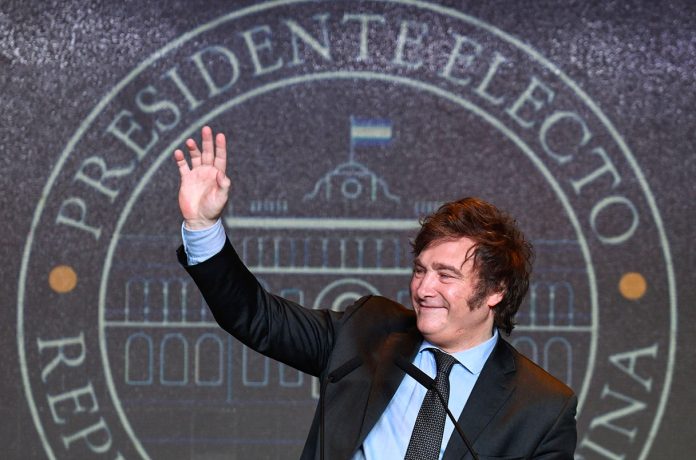
TOPSHOT - Argentine presidential candidate for the La Libertad Avanza alliance Javier Milei waves to supporters after winning the presidential election runoff at his party headquarters in Buenos Aires on November 19, 2023. Libertarian outsider Javier Milei pulled off a massive upset Sunday with a resounding win in Argentina's presidential election, a stinging rebuke of the traditional parties that have overseen decades of economic decline. (Photo by Luis ROBAYO / AFP) (Photo by LUIS ROBAYO/AFP via Getty Images)

Argentina’s economic activity likely expanded by 1.7% year-on-year in November, according to the median estimate from analysts surveyed by Reuters.

This points to a second consecutive month of decelerating growth and underscores signs that the country’s post-stabilization rebound is losing pace.

The forecast comes after a stronger performance earlier in the year, when economic activity rose 4.8% in September before easing to 3.2% in October. November’s projected outcome would mark the softest annual expansion in several months, reinforcing concerns that momentum is tapering as the economy adjusts to tighter financial conditions and weaker domestic demand.

Argentina, Latin America’s third-largest economy, has managed to avoid outright contraction throughout 2025, according to data from the National Institute of Statistics. That uninterrupted run of positive readings has been welcomed by policymakers and investors, particularly after years marked by high inflation, capital controls, and repeated downturns. Still, the latest estimates suggest the recovery is becoming narrower and more uneven across sectors.

The projections are based on estimates from 12 local and foreign analysts, who, on average, expect November’s Monthly Economic Activity Estimator (EMAE) to rise by 1.7%. Forecasts varied widely, ranging from flat growth at the low end to an increase of 3.1% at the high end, highlighting uncertainty over how sharply activity is slowing and where the pressure points lie.

The EMAE is closely watched as a leading indicator of gross domestic product, offering early signals on the direction of the broader economy. A cooling reading for November would suggest that the initial boost from macroeconomic stabilization and improved confidence earlier in the year is fading, leaving growth increasingly dependent on a pickup in investment, credit, and real household incomes.

Consulting firm Orlando Ferreres and Associates, which projected a 1.6% increase in November activity, pointed to notable weakness in industry and commerce. Those sectors have been weighed down by subdued consumption, high financing costs, and the lagged effects of fiscal tightening, all of which have constrained output and business turnover.

Even so, analysts remain broadly optimistic about the medium-term outlook. Orlando Ferreres said prospects for 2026 remain positive, citing a drop in country risk, rising investment flows, improved access to credit, and stronger household income dynamics, supported by what it described as a more organized macroeconomic and political environment. Lower country risk could ease borrowing costs, while improved credit conditions may help unlock postponed investment decisions and support a gradual recovery in consumption.

The November estimates also arrive at a moment when Argentina is seeking to consolidate gains from its economic reset. Policymakers face the challenge of sustaining growth while keeping inflation under control and maintaining fiscal discipline. With the pace of expansion easing, future growth is likely to hinge less on short-term stabilization effects and more on structural improvements that lift productivity and restore purchasing power.

Argentina’s statistics agency INDEC is scheduled to release the official November EMAE figures on Wednesday at 4 p.m. local time (1900 GMT). The data will offer a clearer view of whether the slowdown is concentrated in specific sectors or signals a broader cooling across the economy.

For now, November’s expected reading points to an economy that has stabilized but is still searching for a stronger and more durable growth engine as it heads into 2026.

Nvidia-backed AI Startup Humans& Raises Massive $480M Seed at $4.48B Valuation, Betting on Human-Centric AI

0

In a funding round that underscores the relentless investor fervor for artificial intelligence ventures, three-month-old startup Humans& has secured $480 million in seed capital, catapulting its valuation to $4.48 billion.

The deal, announced on January 20, 2026, positions the company as a “human-centric frontier AI lab” dedicated to reimagining AI as a tool that amplifies human relationships and collaboration, rather than supplanting them.

This massive infusion of cash, one of the largest seed rounds in tech history, reflects a broader trend of capital flooding into spinouts led by alumni from the sector’s heavyweight labs, even as debates swirl about inflated valuations in the AI space.

Humans&’s philosophy centers on developing AI that serves as “deeper connective tissue” for organizations and communities, emphasizing empowerment over automation.

The company aims to rethink large-scale model training and human-AI interactions, with key innovations targeted at long-horizon and multi-agent reinforcement learning, memory systems, and user understanding.

By tightly integrating scientific research with product development, Humans& seeks to create software that facilitates seamless collaboration—envisioned as an AI-enhanced instant messaging app or similar tools where chatbots can request information from users, store it persistently, and apply it contextually over time.

This approach contrasts sharply with more autonomous AI paradigms pursued by some competitors, as co-founder Andi Peng highlighted in explaining her departure from Anthropic: “Anthropic is training its model to work autonomously. It loved to highlight how its models churned for eight hours, 24 hours, 50 hours by itself to complete a task. That was never my motivation. I think of machines and humans as complementary.”

The founding team, comprising around 20 members with pedigrees from the AI elite, brings a wealth of expertise to this mission.

  • Core co-founders include: Andi Peng, a former Anthropic research scientist who advanced reinforcement learning and post-training for Claude models from 3.5 through 4.5.
  • Georges Harik, Google’s seventh employee, instrumental in building its foundational advertising systems like AdWords and AdSense.
  • Eric Zelikman and Yuchen He, ex-xAI researchers who contributed to the development of the Grok chatbot.
  • Noah Goodman, a Stanford professor specializing in psychology and computer science, is bridging cognitive science with AI.

The broader team expands this foundation, featuring talents such as Alexis Ross, Ani Nrusimha, Charlie George, Diyi Yang, Jeremy Berman, Niloofar Mireshghallah, Ray Ramadorai, Rob Li, Saurabh Shah, Taylor Sorensen, Varuna Jayasiri, Weisi Duan, and Ziang Li.

Their collective experience spans xAI, Anthropic, Google DeepMind, OpenAI, Meta, Reflection, the Allen Institute for AI (AI2), Stanford, and MIT, creating a powerhouse ensemble poised to challenge conventional AI trajectories.

The seed round was led by Ron Conway’s SV Angel and co-founder Georges Harik, drawing a star-studded roster of backers that blends corporate heavyweights with influential individuals.

Institutional investors include Nvidia, GV (Google Ventures), Emerson Collective (Laurene Powell Jobs’s firm), Forerunner, S32, DCVC, Human Capital, Liquid 2, Felicis, CRV, Exoscaleton (in partnership with Acrew), AME Cloud Ventures (founded by Jerry Yang), Palo Alto Growth Capital, Conviction, Bloomberg Beta, E14, A&E Investment, and Zeta Holdings.

High-profile individual participants feature Amazon founder Jeff Bezos, alongside Eric Zelikman, Anne Wojcicki (23andMe co-founder), Ralph Harik, Sarah Liang, Bill Maris (former GV CEO), Marissa Mayer (ex-Yahoo CEO), James Hong, Stephen Balaban, Ying Sheng, David Wallerstein, Thomas Wolf (Hugging Face co-founder), Mitesh Agrawal, Nikola Petrov Borisov, Yuhuai (Tony) Wu, Igor Babuschkin (ex-OpenAI), Itamar Arel, Sharon Zhou, Thomas Reardon, Zak Stone, and Logan Kilpatrick (ex-OpenAI).

This eclectic mix signals robust confidence in Humans&’s vision, particularly from those embedded in the AI ecosystem. The company’s sparse website offers a glimpse into its innovative ethos, featuring a simulation of cultural dissemination inspired by the Axelrod model, with parameters for interaction, social repulsion, and cultural noise.

This visualization hints at the lab’s interest in modeling complex human dynamics through AI. Humans& has also committed to contributing to open-source projects and academic research, while actively recruiting “world-class talent” to fuel its growth.

This funding arrives amid a surge in mega-rounds for AI breakaways, following similar hauls by ventures like Ilya Sutskever’s Safe Superintelligence (valued at $32 billion in 2025) and Mira Murati’s Thinking Machines Lab ($12 billion seed).

Yet, the eye-watering valuation has sparked skepticism, with observers on platforms like Hacker News labeling it a symptom of a “bubble in private valuations of AI startups.”

Industry analysts note that while the capital enables aggressive pursuit of compute-heavy research, the pressure to deliver breakthroughs in interactive, user-aware AI will be immense. Humans& plans to launch its first product early this year, though details remain under wraps.

Corporate America Navigates Uneasy Waters as Trump’s Second Term Intensifies Scrutiny on Free Enterprise

0

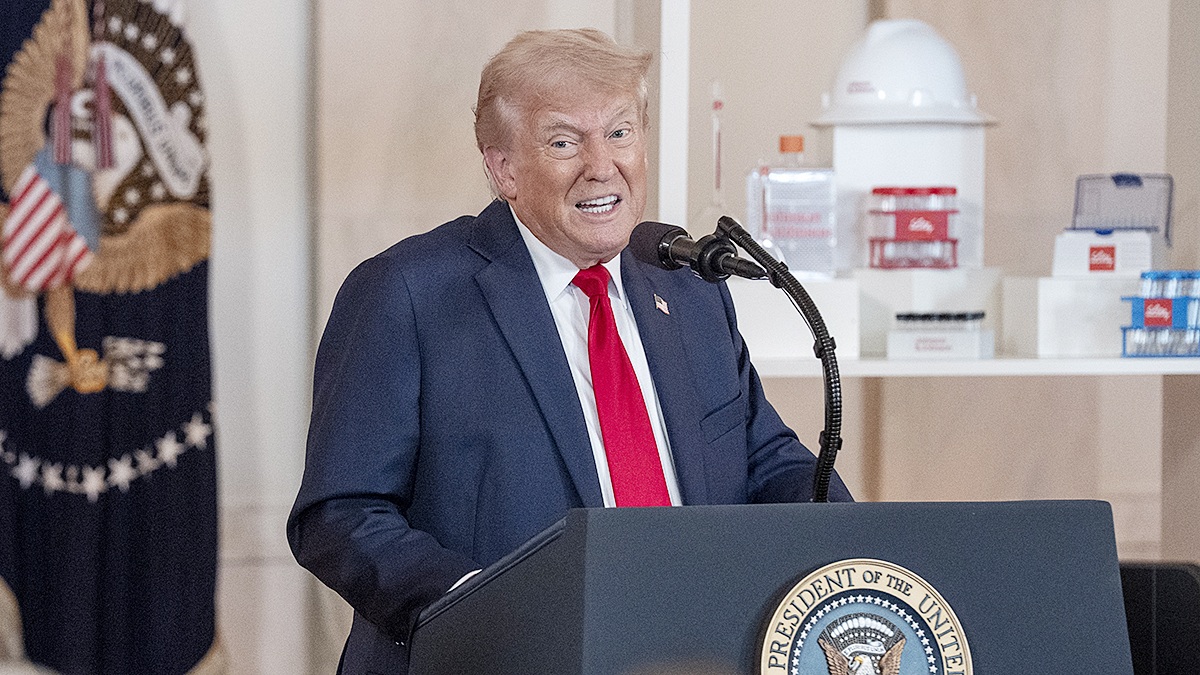
One year into President Donald Trump’s return to the White House, a palpable tension is building between the administration’s aggressive economic interventions and the traditional pillars of American business.

With tariffs expanding, government stakes in private sectors deepening, and immigration enforcement escalating, executives are increasingly voicing measured concerns, signaling a shift from the cautious optimism that marked the early months of his second term.

This dynamic was underscored last week by U.S. Chamber of Commerce President and CEO Suzanne Clark, whose annual State of American Business address served as a rallying cry for unfettered markets amid what she described as a national “hinge point.” In her January 15 keynote, delivered to an audience of business leaders, policymakers, and journalists at the Chamber’s headquarters, Clark declared the state of American business to be “growth-oriented, market-driven, future-focused—but above all, fearless.”

Framing 2026 as a critical juncture coinciding with the nation’s 250th anniversary, she urged a recommitment to free enterprise principles that have historically driven innovation and prosperity. Clark highlighted the lessons of history, pointing to post-World War II policy choices that ushered in eras of growth through low taxes, stable regulations, and robust trade.

She advocated for policies enabling sustained 3% GDP growth, including investments in education, research and development, and infrastructure, while warning against fear-based decisions that could lead to stagnation.

“These pro-growth policy choices begin to alleviate the pressures and frustrations people are feeling right now, today,” Clark said, emphasizing openness to global exchanges of talent, goods, ideas, and innovation.

While Clark avoided direct references to Trump or specific policies, her emphasis on resisting government control resonated as a subtle rebuke to the administration’s hands-on approach. Trump has directed federal involvement in tech companies, influenced corporate equity structures, imposed broad tariffs, and advanced strict immigration measures—actions the Chamber has historically opposed.

In a follow-up briefing with reporters on January 16, Clark reiterated the group’s stance, saying: “We are against government intervention in business, no matter which party is suggesting it.”

Neil Bradley, the Chamber’s chief policy officer, had earlier emphasized a nonpartisan approach to maintaining free-market support.

The address drew praise from industry figures, including Gary Shapiro, CEO of the Consumer Technology Association, who commended Clark for “championing a pro-business, growth economy future” in a powerful speech.

Yet, it also highlighted a broader reluctance among leaders to confront the White House head-on, a departure from Trump’s first term when executives more openly split over issues like the 2017 Charlottesville rally.

Corporate governance experts attribute this caution to fears of retaliation, as the administration has shown a willingness to punish dissent through investigations or exclusions from deals.

Recent examples illustrate this tempered pushback. On January 9, Exxon Mobil CEO Darren Woods labeled Venezuela “uninvestable” during White House discussions on oil infrastructure, directly countering administration optimism about the region’s potential.

While expressing confidence in Trump’s plans and mentioning a potential technical team deployment, Woods’ candor prompted a swift rebuke from the president, who suggested Exxon might be sidelined from future opportunities.

“I didn’t like their response. They’re playing too cute,” Trump told reporters.

Exxon declined to comment further. JPMorgan Chase CEO Jamie Dimon, on January 13, defended Federal Reserve Chair Jerome Powell’s independence amid a Justice Department criminal probe into Powell’s conduct, warning that meddling could reignite inflation.

Trump dismissed the remarks, stating, “I don’t care what he says.”

Dimon’s comments came as the administration proposed a 10% cap on credit card interest rates, prompting JPMorgan to declare “everything is on the table” in fighting the directive.

Pfizer CEO Albert Bourla, on January 12, voiced frustration over Health Secretary Robert F. Kennedy Jr.’s efforts to roll back childhood vaccine recommendations, deeming them without “scientific merit.”

These critiques, while pointed, remain sector-specific, aligning with experts’ observations that CEOs are taking “baby steps” only when policies directly impact their operations.

Broader critiques have emerged from figures like Sen. Elizabeth Warren, who noted on January 9 that Trump’s second year is starting with a weaker job market and higher prices, contrary to campaign promises.

Internationally, Canadian business sentiment has soured, with pessimism spiking as Trump enters 2026, citing uncertainty from tariffs and trade tensions.

Experts like Richard Painter, a University of Minnesota law professor and former ethics lawyer under President George W. Bush, called for a more aggressive Chamber stance, decrying Trump’s “authoritarian approach” in contrast to Bush’s free-market policies.

“A lot of executives may have voted for Trump, but they need to speak out against coercion,” Painter said.

New York City Comptroller Mark Levine criticized the limited scope of CEO responses, arguing that allowing autocratic tendencies undermines capitalism.

The Conference Board’s recent CEO survey identified uncertainty as the paramount risk for 2026, with chief economist Dana Peterson noting evolved lobbying dynamics under Trump.

Gary Clyde Hufbauer of the Peterson Institute for International Economics warned that calibrated criticisms might position companies for short-term gains but risk heavier post-Trump regulation, labeling state capitalism as “catnip” for both parties.

Economic indicators paint a mixed picture. Trump’s approval on the economy stands at 36%, below his overall 41% rating, per recent polls. Inflation has dipped to 2.6%, but job growth stagnates in a “low hire, low fire” market, with the federal deficit swelling by $6.2 billion daily to $30 trillion.

Despite Trump’s claims of exploding growth and defeated inflation, public pessimism persists over affordability. Supporters highlight tariff successes, with economist Mohamed El-Erian noting minimal consumer impact and boosted onshoring.

Trump’s first year has also raised alarms on press freedom, with actions like censoring government data, dismantling public broadcasters, and halting international media aid, according to Reporters Without Borders.

These moves, combined with mass deportations (over 622,000 reported) and federal workforce downsizing, reshape the business landscape. The Partnership for Public Service predicts increased political interference in the civil service this year, potentially hampering efficiency.

As midterms loom, analysts like conservative Yuval Levin question Trump’s legacy, suggesting his actions may not endure without institutional foundations. Atlantic Council’s Josh Lipsky anticipates more tariffs in 2026, despite potential Supreme Court setbacks.

Privately, executives admit limited appetite for compliance, adopting a strategy of grand promises followed by minimal action until Trump’s focus shifts.

Tekedia Expands Benefits for Mini-MBA, AI Lab, AI in Business; Adds Facyber Cybersecurity Certificates as Bonus

3

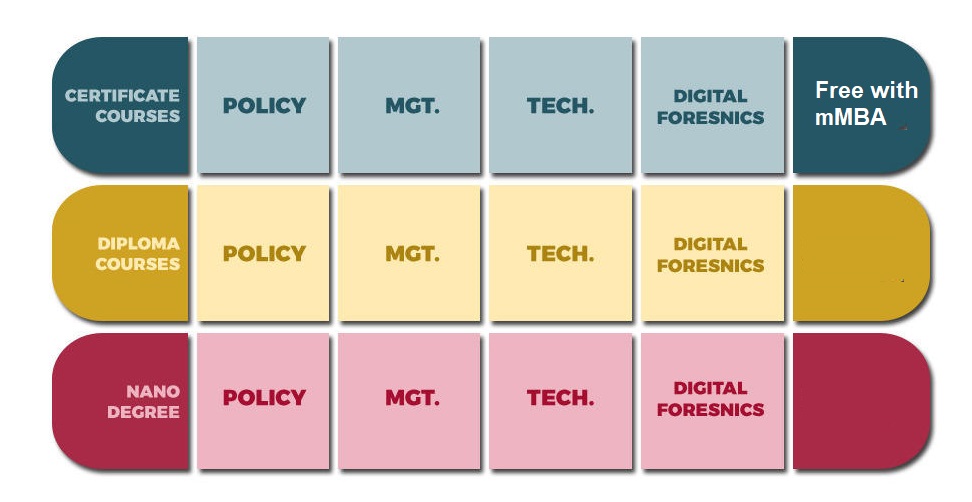
We are pleased to announce an expansion of Tekedia Institute’s bonus offerings. Effective immediately, when you register for any of the following programs – Tekedia Mini-MBA, Tekedia AI Lab, or Tekedia AI in Business Masterclass – you will receive complimentary access to a Certificate module at First Atlantic Cybersecurity Institute (Facyber).

There are four tracks in Facyber for you to select from, and each module takes 12 weeks. All programs are self-paced with a brilliant portal designed for geeks.  The course syllabus and Table of Content are provided on Facyber.com. Here are the tracks:

  • Certificate in Cybersecurity Policy (CCYP)
  • Certificate in Cybersecurity Technology (CCYT)
  • Certificate in Cybersecurity Management (CCYM)
  • Certificate in Cybersecurity Intelligence & Digital Forensics (CCDF)

What To Do After the Qualified Program Registration

  1. Visit Facyber and create your account (use the same email used for your qualified program)
  2. Activate the account in your email
  3. Email team with the certificate course of interest, and confirm that you have done #1 and #2 steps by writing “I have done steps #1 and #2”. Remember to let them know the track of interest.
  4. Admin will respond after setup & activation
  5. Login back to Facyber, you will see the course.

How to unlock AI’s full potential – Uber’s CEO, Dara Khosrowshahi

0

When Uber chief executive Dara Khosrowshahi spoke about artificial intelligence at the World Economic Forum in Davos, his message cut against the celebratory tone that often dominates conversations about corporate AI adoption. The real divide, he argued, is no longer between companies that use AI and those that do not, but between those willing to fundamentally rewire how they operate and those content to stage what he described as a “pretend transformation.”

Many companies, he said, have learned how to talk fluently about AI without allowing it to meaningfully reshape their businesses. Tools that summarize documents, generate presentations, or draft emails may save time, but they do not alter decision-making, incentives, or outcomes in a way that creates lasting advantage. These uses are visible and easy to deploy, which makes them attractive to executives eager to signal progress, yet they largely leave existing structures intact.

What differentiates serious adopters, in his view, is whether AI is embedded into the organization’s core processes rather than bolted on at the edges. That shift requires companies to confront an uncomfortable reality: most large organizations are not just collections of people and products, but dense webs of rules, policies, and exceptions built up over years. AI, Khosrowshahi suggested, exposes how brittle and outdated many of those frameworks have become.

Uber’s own journey with AI-powered customer service illustrates this tension. Early efforts focused on training AI systems to follow the same policy manuals used by human agents. While this approach delivered modest efficiency gains, it also reproduced the limitations of the old system. The breakthrough came only when Uber’s engineers scrapped the inherited rulebook and redesigned the system from first principles.

Instead of encoding thousands of if-then rules, developers defined a small set of underlying objectives. One of the most important, Khosrowshahi said, was ensuring that customers felt satisfied at the end of an interaction. From there, the AI was allowed to reason through how best to achieve that goal, rather than mechanically enforcing policies designed for a different era. Letting the system optimize for outcomes rather than compliance, he argued, proved far more powerful.

This approach has broader implications for how companies think about control and trust. Traditional corporate systems rely on rigid rules to manage risk and ensure consistency. AI systems that reason toward goals introduce flexibility, but also require leaders to accept less predictable paths to those outcomes.

For many organizations, that trade-off is deeply unsettling, which helps explain why genuine transformation has been slower than the pace of AI investment might suggest.

Khosrowshahi framed this challenge bluntly, describing companies themselves as “a bunch of policies.” To unlock AI’s full potential, those policies must be questioned, dismantled, and in many cases rewritten entirely. That process, he acknowledged, is rarely smooth. Internal resistance, missteps, and operational failures are part of the journey.

“You have to survive through a bunch of car crashes internally,” he said, capturing the trial-and-error reality behind glossy AI announcements.

Uber’s internal tooling reflects how deeply the company is pushing into this transition. Developers are using AI-assisted coding and reasoning tools such as Anysphere’s Cursor and Anthropic’s Claude, integrating them directly into software development workflows. This signals a move beyond experimentation toward treating AI as infrastructure rather than novelty.

Khosrowshahi’s remarks come amid rising corporate spending on AI, driven by expectations of productivity gains and competitive pressure. A recent RBC Capital poll found that 90% of IT professionals expect their organizations to increase AI spending this year. Yet alongside that surge is a growing unease that AI may not be delivering the transformative gains many executives promised shareholders and employees.

Concerns about skill erosion, over-automation, and the hollowing out of institutional knowledge are becoming harder to dismiss. Khosrowshahi did not deny these risks, but his comments implied that shallow adoption may be the greater danger. Companies that deploy AI superficially may bear the cultural disruption of change without reaping strategic rewards, leaving workers disillusioned and systems no more effective than before.

His argument ultimately reframes the AI debate away from tools and toward leadership choices. The question is not whether a company has an AI strategy, but whether it is prepared to rethink how decisions are made, how success is defined, and how much legacy structure it is willing to abandon. In that sense, separating the pretenders from the real deal in AI adoption is less about technology sophistication and more about organizational courage.

Khosrowshahi indicates that AI becomes a catalyst for redesigning how the business functions at its core for firms willing to do the hard work. For those that are not, it risks becoming another layer of automation draped over systems that were never built to learn, adapt, or reason in the first place.