DD
MM
YYYY

PAGES

DD
MM
YYYY

spot_img

PAGES

Home Blog Page 2029

Tariffs and the Global Information Hunt

0
USC experts talk about the importance of U.S.-China trade and how it affects the economy. (Illustration/iStock)

International trade has always been anchored on mutual benefits for two or more parties. However, when one party feels the need to amend the rules and conditions of engagement based on perceived greater benefits to itself, other parties often feel dissatisfied. This analogy has been echoed and discussed frequently by individuals and organizations around the world in recent days. It stems from the sweeping tariffs the United States government imposes on other countries in both the Global South and the Global North.

Several sources reveal that President Trump is imposing tariffs on other countries for the second time. Reports indicate that during his first term, similar tariffs, at varying percentages, were imposed on some nations. This second wave of tariffs, announced a few weeks ago, has sent ripples across the world. As the conversation on the tariff continues, our analyst examines a possible link between tariffs above 20% and increased public information-seeking from affected countries.

To gain deeper insights into the quantitative analysis of information-seeking patterns, views from Twitter (X) were also considered. Our analysis shows that the linkage between information-seeking behavior and tariff percentages offers a fascinating lens for understanding global digital curiosity. From countries with slightly above 20% to those with the highest percentages, the analysis reveals a snapshot of online engagement, indicating opportunities to understand how policy decisions may translate into increased online inquiries.
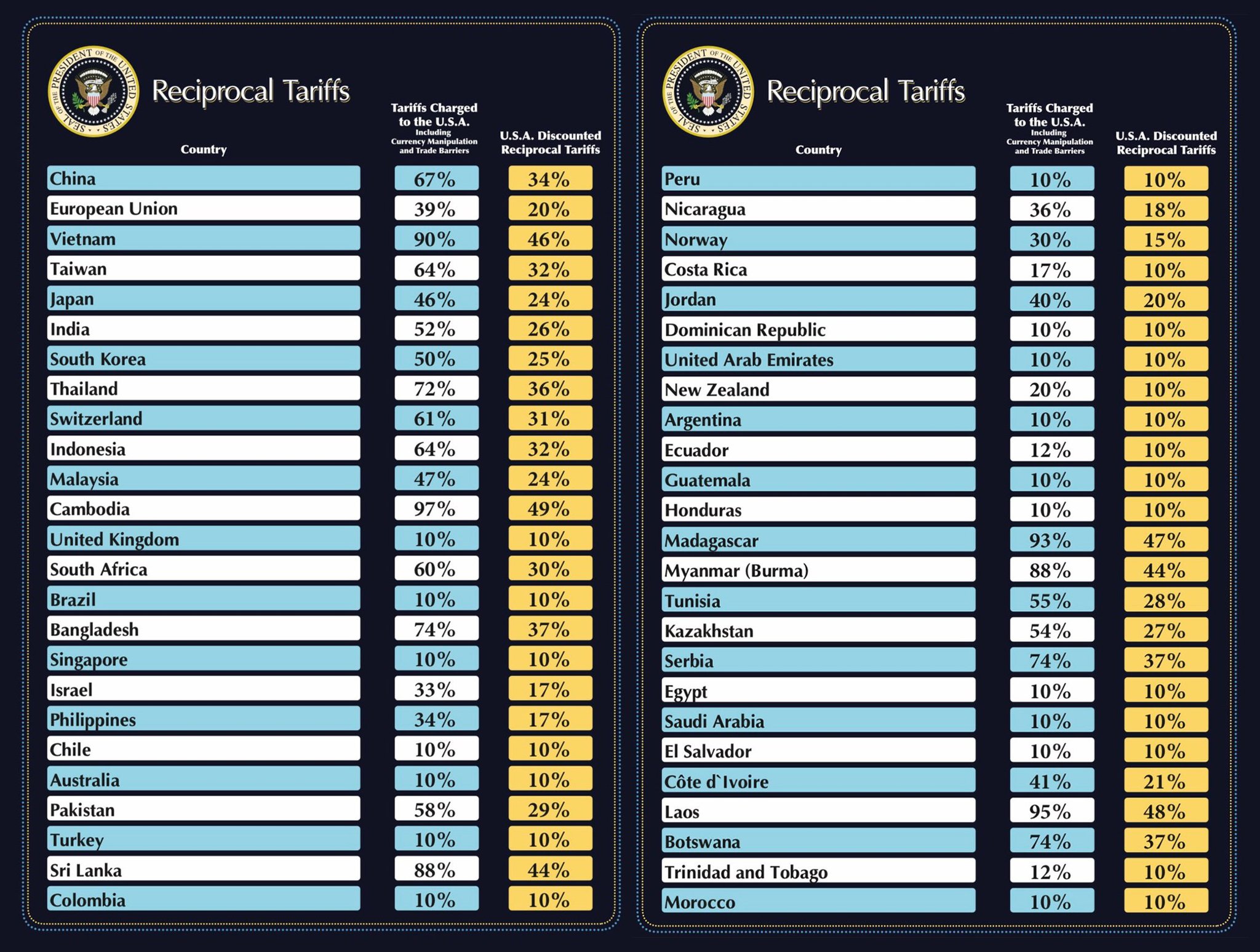
The most striking takeaway from our analysis is the sheer variability in search interest. While one might expect a direct correlation between tariff percentages and online inquiries, a higher tariff equating to greater concern and, thus, more searches, the reality is far more complex. Countries with steep tariffs often exhibit surprisingly low search volumes, and vice versa. This dissonance forces us to delve deeper to consider the factors that transcend mere percentages and truly drive information-seeking behavior.

One central factor is the perceived impact of the tariffs. It’s not the raw numbers that ignite digital curiosity, but the perceived threat to local economies, industries, and livelihoods. Consider Fiji, a clear outlier with exceptionally high search interest despite mid-range tariffs. This surge in digital inquiry likely stems from a heightened sense of vulnerability and the perception that the tariffs could significantly disrupt its economic landscape. In contrast, larger economies, while facing substantial tariffs, may exhibit lower search volumes due to perceived resilience or the breadth of their economic activities.

Source: White House / US Census Bureau, 2025; Infoprations Analysis, 2025

Media attention also plays a pivotal role. The degree to which local media outlets amplify and interpret the tariff announcements directly influences public awareness and, consequently, online search activity. Countries with robust and politically engaged media landscapes are more likely to see spikes in search interest, as citizens seek to understand the ramifications of these policies. Also, political awareness within a nation is a huge driver of searches. A population that actively follows and engages in political discourse is more likely to turn to online search engines for answers, even if the tariff is small.

From the X space, the views expressed by some individuals in these countries revealed varying levels of dissatisfaction. For example, an X user from India noted that the tariff would have a neutral effect on the textiles and jewelry sectors. This may be linked to the relatively moderate level of information-seeking observed in the country. The tweet reads: “From an Indian perspective, these #tariffs are neutral to positive, except for two sectors: textiles and jewelry.”

A mix of fear about price increases and optimism about domestic market opportunities in agriculture and industry was the focus of another user from the United States. This suggests a complex pattern of information-seeking, with people searching for both negative and positive impacts.
No Deposit Bonuses: Best Australian Online Casinos Offering Free Play

0

What Are No Deposit Bonuses?

No deposit bonuses are one of the most popular incentives offered by online casinos in Australia. These promotions allow players to try out real-money casino games without having to make an initial deposit. Whether it’s free spins or free credits, no deposit bonuses provide a risk-free way to explore various games and potentially win real money.

How Do No Deposit Bonuses Work?

Claiming a no deposit bonus is simple. After registering at an online casino Australia, players receive free credits or spins that can be used to play specific games. While winnings from these bonuses are often subject to wagering requirements, they provide a great opportunity to experience a casino before committing any funds.

Types of No Deposit Bonuses

  1. Free Spins – Players receive a set number of free spins for slot games.
  2. Free Credits – Casinos offer free credits that can be used on multiple games.
  3. Cashback Bonuses – Some casinos refund a percentage of losses as free credits.
  4. Bonus Cash – A small amount of bonus money is credited to a player’s account.

Best Australian Online Casinos Offering No Deposit Bonuses

To help you find the best offers, we have compiled a list of trusted Australian online casinos that provide generous no deposit bonuses:

1. Gluck33 Casino Australia

  • Bonus: No Deposit Sign-Up Bonus up to $50 AUD
  • Wagering Requirement: 35x
  • Games Available: Pokies, Table Games, Live Casino
  • Why Choose It? Gluck33 offers one of the biggest no deposit bonuses in Australia, along with exciting promotions and a seamless gaming experience.
  • More Promotions: Check out Gluck33’s Free $50 Pokies No Deposit Sign-Up Bonus.

How to Claim a No Deposit Bonus

  1. Choose a Casino – Select a reputable Australian online casino from our list.
  2. Sign Up – Complete the registration process.
  3. Enter a Bonus Code (if required) – Some casinos require a promo code.
  4. Claim the Bonus – The bonus should automatically be credited.
  5. Start Playing – Enjoy your free spins or credits.

Terms & Conditions to Consider

Before claiming any no deposit bonus, always check the following terms:

  • Wagering Requirements: The number of times you must play through winnings before withdrawal.
  • Game Restrictions: Some bonuses are only available for specific games.
  • Maximum Withdrawal Limits: Some casinos cap the amount you can cash out.
  • Expiration Date: No deposit bonuses usually have a time limit.

Why Choose No Deposit Bonuses?

  • Risk-Free Gaming: Play real-money games without depositing funds.
  • Try New Casinos: Explore new gaming platforms before committing.
  • Win Real Money: Some players have turned free bonuses into big wins.

Conclusion

If you’re looking for the best no deposit casino experience in Australia, Gluck33 Australia online casino is the perfect choice. With a no deposit sign-up bonus of up to $50 AUD, players can enjoy pokies online, table games, live casino games and sports betting without any initial investment. Plus, Gluck33 offers exciting ongoing promotions that give you even more chances to win big.

Sign up today at Gluck33 Casino and claim your free bonus now!

Nigeria’s Financial Markets Rattled as Trump Tariff Shock Spurs Global Selloff, Pressures Naira and Bonds

0

The global backlash triggered by U.S. President Donald Trump’s sweeping tariffs is hitting Nigerian financial markets harder than many anticipated, setting off fresh volatility in both the currency and debt markets while exposing the deep vulnerabilities in Nigeria’s export structure.

By Monday morning, as trading opened across the globe, the tremors were already visible in Nigeria. The naira came under renewed pressure, weakening sharply even as the Central Bank of Nigeria (CBN) tried to contain the situation with back-to-back dollar sales. In an early intervention that appeared coordinated and urgent, the CBN sold $124 million into the market at exchange rates ranging between N1,595 and N1,611 to the dollar. This followed a similar intervention of $197 million on Friday, taking the central bank’s total FX injection in just three trading sessions to a staggering $321 million.

However, the naira failed to hold its ground, a reflection of how thin liquidity and swelling demand are colliding with global uncertainty to overwhelm the central bank’s short-term defenses. Market participants reported heightened anxiety, with many buyers scrambling to cover obligations as rates rose further across multiple FX windows. The offshore market, which often signals broader investor sentiment, turned even more bearish, suggesting that local authorities may need more than cash to steady the tide.

While pressure on the naira has become a familiar storyline, the real shock came from the bond market. Prices of Nigeria’s Eurobonds plunged by as much as $5 on Monday, pushing yields as high as 12 percent.

Traders and analysts blamed the selloff not on any deterioration in Nigeria’s economic data, but on a sweeping wave of investor risk-aversion spurred by Trump’s revived trade-war rhetoric. The announcement of new U.S. tariffs, an across-the-board 10 percent levy on all imports, along with targeted hikes on Chinese and Mexican goods, sent global markets into freefall.

From Hong Kong to Frankfurt to Wall Street, investors dumped risk, triggering one of the worst global corrections since the early months of the COVID-19 pandemic. The Hang Seng in Hong Kong suffered a historic 13 percent plunge, the worst single-day loss this century. In Europe, the Stoxx 600 shed nearly 6 percent, while Germany’s DAX and the U.K.’s FTSE 100 were down 6.4 and 5.1 percent, respectively. In the U.S., futures tracking the S&P 500 and Nasdaq fell more than 3 percent each, pointing to a bruising open. For emerging markets like Nigeria, which are already contending with rising debt costs, currency instability, and weak investor confidence, the timing couldn’t be worse.

But beyond market gyrations, Nigeria is also coming to terms with the structural impact of the new tariffs on its trade relationship with the United States. In a statement released on Sunday, the Federal Government acknowledged the severity of the situation. Signed by the Honourable Minister of Industry, Trade and Investment, Dr. Jumoke Oduwole, the statement confirmed that the administration views the new tariff regime as a serious challenge, particularly for Nigeria’s nascent non-oil exports.

Dr. Oduwole pointed out that while crude oil continues to dominate Nigeria’s export profile to the U.S., making up more than 90 percent of the total trade value, the new tariff policy threatens to roll back gains made under the African Growth and Opportunity Act (AGOA), a U.S. trade preference program designed to support African countries by granting duty-free access for a wide range of goods.

Nigeria’s non-oil exports to the U.S., including fertilizers, urea, processed agricultural goods, and metals like lead, account for less than 5 percent of total trade, but have been crucial to the government’s diversification drive.

According to Dr. Oduwole, the Tinubu administration is treating the development with pragmatism rather than panic. She said government officials are exploring how to turn the disruption into an opportunity to rethink Nigeria’s place in global trade, expand partnerships beyond the West, and strengthen economic fundamentals to make exporters more competitive. The administration, she added, is “fully aware of the challenges but focused on long-term resilience rather than short-term fixes.”

However, economists say the pace and scale of the disruption far outstrip the government’s ability to respond in real-time. The immediate effects are already cascading through Nigeria’s trade corridors. For small and medium-sized enterprises (SMEs) that had tailored their production to meet AGOA standards, the new tariffs amount to a sudden shutout from a market they had worked hard to access.

The frustration among exporters is growing. Many feel blindsided by a global decision made in Washington, which they say leaves them without recourse.

Even more concerning is Nigeria’s continued reliance on crude oil. Although the product remains largely shielded from the new tariff structure, that protection is far from permanent. If global crude oil prices fall, something that is not inconceivable amid slowing global demand and jittery markets, Nigeria’s already precarious fiscal position could become untenable. Oil revenues remain the mainstay of both government financing and foreign exchange inflows. Any sustained dip in crude prices would make it harder for Nigeria to service its rising external debts or fund its ambitious infrastructure plans.

Already, Nigeria is battling with the consequences of an ambitious budget predicated on external borrowing. With Eurobond yields surging, the cost of raising funds from the international market could rise beyond what is economically feasible, forcing the government to either shelve key projects or turn to more expensive domestic borrowing. Neither option is attractive.

As the pressure builds, market analysts warn that a more comprehensive policy response will be needed. While the CBN’s dollar sales are buying time, they are no substitute for a coordinated trade, fiscal, and industrial strategy that positions Nigeria to weather global headwinds.

FTX KYC Resolution for Creditors Streamline Outcomes on Crypto Industry Practice

0

FTX disqualified approximately 392,000 customer claims, valued at around $2.5 billion, because those users failed to complete the required Know Your Customer (KYC) verification process by the specified deadline. This action was part of the bankruptcy proceedings following the exchange’s collapse, with the U.S. Bankruptcy Court confirming the cancellation of these claims on April 2, 2025. The deadline to at least begin the KYC process was March 3, 2025, and those who didn’t comply had their claims expunged.

This reduced the total liabilities, potentially increasing the payout for verified claimants, with repayments set to be based on asset values from November 2022, when FTX filed for bankruptcy. The estate has between $12.6 billion and $16.5 billion available for distribution, and the next repayment phase is scheduled to begin May 30, 2025, for eligible creditors who meet the ongoing requirements. The cancellation of 392,000 customer claims worth $2.5 billion due to incomplete KYC has several significant implications for FTX’s bankruptcy process, its creditors, and the broader crypto ecosystem.

To file an FTX claim, you’ll need to have followed these steps: Access the FTX Customer Claims Portal using your FTX account credentials and verified your email. Completed the Know Your Customer (KYC) process, which included submitting your name, birthdate, government identification, and address. Viewed your account balances and transaction history as of November 11, 2022. Agreed or disagreed with the displayed balance and filed a proof of claim where necessary. Claims must have been submitted by the specified deadline, which was September 29, 2023, for FTX Exchange customers and May 15, 2024, for FTX Digital Markets customers. Your claim will be verified through the KYC process and reviewed by the FTX claims administrators. If your claim is approved, you’ll be eligible for distribution of liquidation claim funds.

With $2.5 billion in claims removed from the pool, the remaining verified creditors—approximately 2 million with claims totaling $11 billion—are likely to see a higher recovery rate. The estate’s available funds ($12.6 billion to $16.5 billion) now cover a smaller liability base, potentially allowing payouts closer to 100% (or even exceeding it) of November 2022 asset values for those who completed KYC. Many of the disqualified claimants might have been smaller retail investors who either didn’t understand the KYC requirements, miss the deadline, or lack the resources to comply. This could disproportionately favor institutional or more proactive creditors, raising questions about fairness in the process.

The strict enforcement of KYC in this case sets a notable precedent for future crypto exchange failures. It underscores the importance of regulatory compliance even in insolvency scenarios, potentially pushing users and platforms to prioritize KYC adherence more rigorously moving forward. The exclusion of nearly 400,000 users could deepen distrust in centralized exchanges. Affected customers, left with no recourse, might amplify negative sentiment, driving more users toward decentralized platforms or self-custody solutions like hardware wallets.

The decision might spark legal challenges or public backlash, especially if some claimants argue they weren’t adequately notified or faced technical barriers to completing KYC. While the court approved the move, it could still fuel debates about the balance between regulatory requirements and user rights in bankruptcy cases. With repayments starting May 30, 2025, the influx of billions in crypto and cash could influence market dynamics, depending on how recipients choose to reinvest or liquidate. However, the disqualified claimants’ inability to participate might reduce overall market volatility compared to a full payout scenario.

Bill Ackman Warns of “Economic Nuclear Winter” as Trump’s Tariff Blitz Rattles Global Markets, Enrages Supporters

0

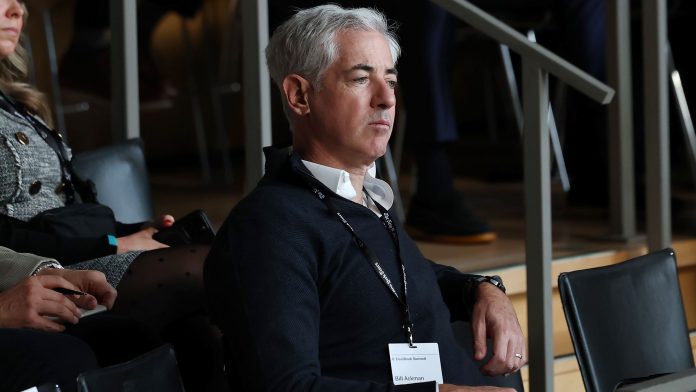
Billionaire investor Bill Ackman, who once backed U.S. President Donald Trump’s economic vision, has issued a scathing warning over the administration’s sweeping new tariff policy, calling it a “self-induced, economic nuclear winter” and accusing the president of destroying global confidence in the U.S. as a trading partner.

Trump’s latest executive order, signed Wednesday, slaps a flat 10 percent levy on all imports from over 180 countries, regardless of their economic standing or trade relationship with the United States. The blanket approach has jolted global financial markets, worsened recession fears, and sparked outrage not just from longtime critics, but from some of Trump’s most vocal supporters and economic allies.

Ackman took to social media platform X to express alarm, writing: “By placing massive and disproportionate tariffs on our friends and our enemies alike, and thereby launching a global economic war against the whole world at once, we are in the process of destroying confidence in our country as a trading partner.”

The hedge fund manager, who previously applauded Trump’s America-first rhetoric, said the decision will end up hurting the very voters who helped bring Trump to power.

“The consequences for our country and the millions of our citizens who have supported the president — in particular low-income consumers who are already under a huge amount of economic stress — are going to be severely negative. This is not what we voted for,” he said.

Ackman’s warning follows a brutal week for investors. The S&P 500 fell more than 9% last week, and J.P. Morgan hiked the probability of a U.S. and global recession to 60% by year-end, up from 40%.

“Business is a confidence game,” Ackman said. “The president is losing the confidence of business leaders around the globe.”

No Diligence, No Discretion

Beyond the global market reaction, economists say the rollout was haphazard and lacked critical due diligence. In one striking example, the Trump administration imposed a 50 percent tariff, one of the highest levies in the package, on imports from Lesotho, a small, landlocked African nation where the average citizen earns less than $5 a day.

Lesotho exports about $237 million in goods to the U.S. annually, primarily diamonds and textiles. Yet it imports very little from the U.S., meaning that its citizens, already among the world’s poorest, will see their key exports taxed heavily with no real retaliatory capacity.

Supporters Now Sound the Alarm

The discontent isn’t just coming from elite financiers. Shay Boloor, a conservative financial commentator and host of Boys Invest, posted an open letter addressed to Trump on Sunday, expressing deep frustration over what he called the president’s “scattershot retaliation” and lack of a coherent economic strategy.

“We couldn’t keep pretending that a consumption-led economy held together by zero-interest rates and global fragility was a long-term solution,” Boloor wrote. “I welcomed the idea of a harder, smarter America-first policy that pushed for fair treatment, reciprocal agreements, and a real industrial strategy rooted in technological superiority, national security, and capital formation.”

“But that’s not what this is,” he said. “What you’ve rolled out isn’t detox — it’s whiplash.”

Boloor criticized the administration’s failure to produce a roadmap or operational framework, saying the policy appears to be improvised and reactionary.

“You can’t replace a fragile supply chain with chaos and call it resilience. You talk about bringing jobs home, but the U.S. doesn’t have the labor force, permitting structure, or wage flexibility to stand up full-scale manufacturing at speed.”

He warned that investors and CEOs are now more likely to hold off on major projects. “Capital isn’t going to rush to fill that void just because you raised tariffs,” he said. “It’s going to sit on the sidelines and preserve optionality.”

Boloor concluded by accusing the administration of launching a campaign of brute-force disruption with no viable alternatives in place. “And in the absence of credible structure, capital is retreating — not realigning.”

Lutnick Not Spared By Ackman

Ackman also leveled criticism at Commerce Secretary Howard Lutnick, alleging a glaring conflict of interest.

“He profits when our economy implodes. It’s a bad idea to pick a Secretary of Commerce whose firm is levered long fixed income,” Ackman said, referencing Lutnick’s role at Cantor Fitzgerald. “It’s an irreconcilable conflict of interest.”

Lutnick, appearing on CBS’s Face the Nation, defended the administration’s approach, insisting that reciprocal tariffs were necessary to rebalance decades of trade imbalances.

“We’re not backing down,” he said.

Trump Not Backing Down

Despite the growing opposition, Trump has remained defiant. The president, sources say, believes that the early signs of foreign capitulation are vindication enough. Vietnam and Taiwan have both agreed to zero tariffs on U.S. imports following the new policy rollout. India, too, has signaled its intention to lower tariffs to zero on a range of American goods.

These developments appear to have emboldened the Trump administration, which now believes that other nations, including EU member states, will be forced to follow suit. However, critics believe that Trump’s administration is conflating short-term diplomatic concessions with long-term economic stability, and confusing coercion for negotiation.