DD
MM
YYYY

PAGES

DD
MM
YYYY

spot_img

PAGES

Home Blog Page 203

CZ All-In Podcast Doesn’t Address its Footprint on FTX Bankrun 

0

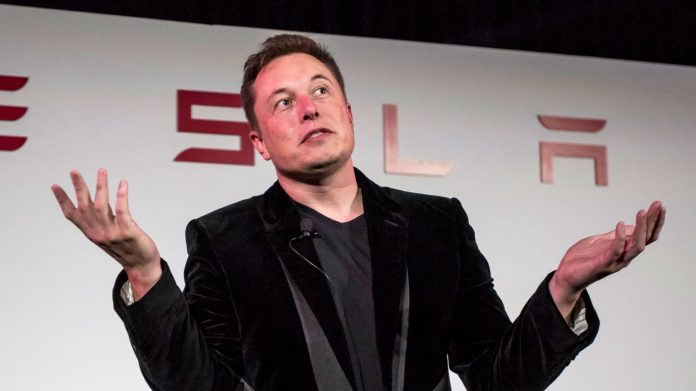
Changpeng Zhao (CZ), the co-founder and former CEO of Binance, recently provided his most detailed public account to date regarding Binance’s early investment in FTX.

This came during an appearance on the All-In Podcast. He traced the origins of the relationship back to January 2019, when he first met Sam Bankman-Fried (SBF). At that time, SBF was still primarily running Alameda Research and FTX had not yet launched—FTX was founded shortly afterward in early 2019 as an incubation project from Alameda.

CZ described Alameda as a major trading client on Binance at the time, with initially friendly relations. He met SBF at one of the Singapore conferences organized by Binance. Binance later made a strategic investment in FTX in late 2019, acquiring roughly 20% equity stake in the derivatives-focused exchange.

The investment involved an undisclosed amount (reports from the time and later suggest around $80-100 million equivalent), plus positions in FTX’s native token (FTT). CZ noted positive views on FTX’s team and growth potential initially.

However, Binance exited the investment about a year to 1.5 years later (completed in July 2021), selling the stake back to FTX for approximately $2.1-2.2 billion including premiums and extras demanded during negotiations, paid largely in FTT, BNB, and stablecoins like BUSD.

CZ emphasized that the exit was driven by growing discomfort with Alameda/SBF’s operations, including SBF’s public comments in Washington and other factors like high salary offers to poach talent. He highlighted that Binance initiated the exit process well before FTX’s 2022 collapse and denied having any inside knowledge of FTX’s issues.

Binance’s 2019 investment was framed as a partnership to grow the crypto derivatives market, but tensions grew, leading to the buyback. Later events like Binance’s 2022 liquidation of FTT holdings accelerated FTX’s downfall, though CZ has consistently positioned the early involvement and exit as unrelated to FTX’s eventual fraud revelations.

Note that FTX’s bankruptcy estate has pursued legal action against Binance and CZ; a 2024 lawsuit seeking to claw back ~$1.8 billion from the 2021 repurchase, alleging fraudulent transfer, but CZ has brushed off such concerns in the past, leaving them to legal teams.

CZ describes himself as strictly passive: “Because of the competitive nature in the businesses… I never really… ask them for financial statements… I’m a very passive investor.” CZ alleges SBF badmouthed Binance in Washington DC regulatory circles while FTX aggressively poached Binance staff—offering 5x salaries to VIP client managers, who then contacted Binance whales with better rates.

CZ says he confronted SBF directly: “Can’t you stop doing this? We’re your shareholders.”
Early 2021: FTX eyes massive funding round ~$32B valuation. Binance held veto rights over new financing but chose not to block it. Instead, CZ proposed: “Why don’t we exit, actually?” to enable full business competition.

CZ publicly announces Binance will liquidate remaining FTT holdings “due to recent revelations” the CoinDesk Alameda balance-sheet exposé. This contributed to the bank run, but CZ has long maintained it was market-driven risk management, not sabotage. FTX sought emergency liquidity from Binance.

He rejects narratives that Binance “caused” FTX’s fall. SBF was convicted in 2024 of fraud; investigations pinned collapse on internal issues at FTX/Alameda. Binance’s 2022 FTT sale accelerated liquidity crisis but followed public red flags. No public evidence has contradicted CZ’s unawareness claim.

FTX bankruptcy estate’s $1.76B clawback lawsuit (filed 2024, targeting the 2021 repurchase as alleged “fraudulent transfer” funded by insolvent Alameda) remains active. Binance/CZ call it “meritless” and filed a motion to dismiss in Aug 2025 (jurisdiction, improper service, and substantive grounds: relationship ended long before issues).

Podcast doesn’t address it directly, so no immediate shift. A resolution could be a catalyst for Binance but is dragging as a “constant drag on capital.” Strong “redemption arc” for CZ post-4-month prison term (2024) and Trump pardon. He humanizes himself (lives in a leaky second-hand house, no flashy spending habits, focuses on new ventures like education/AI).

Podcast frames him as survivor who learned from regulatory battles. Positive in pro-crypto circles; critics on X call it a “whitewash” or “paid narrative” that avoids deeper accountability. Chinese crypto media heavily shares positive summaries. Reinforces Binance as the “stable survivor” vs. FTX’s cautionary tale. Bolsters narrative that 2022 was FTX-specific fraud, not systemic to big CEXs.

CZ reiterates 2026 Bitcoin supercycle outlook, contributing to ongoing bull sentiment. No immediate price volatility tied to the podcast—crypto markets continued broader trends. Helps restore some post-FTX trust in centralized platforms. Skeptics recirculate 2022 “CZ triggered the bank run” memes. Polarized but not market-moving; podcast viewed as polished PR in some overseas circles.

CZ’s account doesn’t rewrite history but solidifies his side—that Binance was an arms-length investor who got out cleanly amid growing red flags, with FTX’s downfall purely self-inflicted. It aids his personal comeback story without resolving the lingering lawsuit or fully silencing critics.

In a maturing crypto industry, this helps narrative control for Binance amid renewed bull-market optimism. Ongoing legal outcomes will matter more for long-term impacts than any single podcast.

It’s Official – BlockDAG Begins Trading On March 4! Traders Pile Up $0.00016 BDAG Amidst DOGE & ADA’s Modest Predictions

0

February’s crypto market is currently navigating a period of extreme indecision, with the Fear & Greed Index hitting lows not seen in years. Veteran traders and newcomers are reassessing their portfolios as liquidity thins across the market.

The Dogecoin price today reflects this uncertainty, as its recent climb to $0.1195 faces immediate threats from a potential bearish reversal pattern. Simultaneously, the latest Cardano price prediction remains cautious, with ADA struggling to reclaim key moving averages despite the anticipation surrounding its new upgrades.

In contrast to these established assets, BlockDAG (BDAG) is generating massive hype, accelerating toward its high-stakes market debut on March 4. Having already secured a record $450M in funding and with only 125M tokens remaining in its final accumulation window, the project is rapidly becoming the primary focus for strategic early movers looking to front-run the upcoming live trading.

Dogecoin Price Today Hits $0.1195 Despite Reversal Fears

The Dogecoin price today has staged a notable recovery, climbing to $0.1195 as the broader crypto market cap surged to $2.42 trillion. This rally followed a decline in US inflation, which bolstered investor appetite for risky assets and pushed 24-hour trading volumes above $2.7 billion. While Bitcoin’s move over $70,000 provided a strong tailwind, the Dogecoin price today remains 63% below its September highs.

Technical indicators suggest this move might be a bull trap rather than a permanent trend shift. The Dogecoin price today currently faces stiff resistance at its 50-day Exponential Moving Average and remains confined within a descending channel. Experts anticipate a potential retracement toward the $0.10 support level.

Hedera Price Today Holds Near Key $0.10 level

Hedera price today is trading around $0.1006 after a 2.3% drop in the last 24 hours, with volume down roughly 27% and the Altcoin Season Index at 31, showing weaker risk appetite for altcoins. On the 4?hour chart, price recently bounced from the February low near $0.0715 and then stalled in the $0.105–$0.108 resistance zone, while local support is around $0.095, followed by $0.090 if that level breaks.

Momentum indicators show the rally cooling as RSI eases from recent highs and MACD flattens, which fits the current consolidation under resistance. If Hedera price today can hold above $0.095 and reclaim $0.104, a move back to $0.108 and possibly the low $0.11 region is possible, but a drop below $0.095 would quickly put $0.090 in play as the next downside target this week.

Traders Rush to Final 125M BlockDAG Before Private Access Ends Forever!

BlockDAG’s historic $450M+ presale has closed, and now the team is fully focused on its high-intensity market rollout ahead of the March 4 Genesis trading launch. Exchange listings are finalized, and RPC nodes are live across 15 major exchanges, meaning the core infrastructure is already in place. Right now, traders still have a final chance to secure BDAG at the fixed entry price of $0.00016 before open market pricing takes over.

To keep up with surging interest, the team injected an extra 100M BDAG into this last accumulation phase, with a total of only 125M BDAG available. Over 35,000 airdrop claims have already been processed, signaling accelerating demand as the supply pool rapidly shrinks. The BlockDAG ecosystem is backed by more than $450M in funding and over 312,000 holders, positioning it strongly ahead of spot trading on March 4 and a subsequent push into futures as liquidity deepens.

Once this remaining 125M BDAG allocation sells out, the “private” access window closes for good, and latecomers will be forced to battle market bots and high-frequency traders on the open market.

For anyone searching for the best crypto to buy right now, this phase offers fixed pricing, airdrop eligibility, and early positioning before market-driven re-ratings potentially reshape BDAG’s valuation. Secure your $0.00016 BDAG entry, claim your airdrop, and prepare for the March 4 Genesis event. When the market takes over, speed and early positioning will be the only metrics that matter.

Key Takeaways

The Dogecoin price today shows signs of a potential bull trap despite its recent $0.1195 recovery. Hedera price today remains under pressure, struggling to maintain its footing near the $0.10 level. Both tokens are currently testing trader patience as they face significant technical hurdles.

On the other hand, BlockDAG is cementing its status as the best crypto to buy right now, backed by over $450M in funding and a massive base of 312,000 holders. With only 125M tokens left before the March 4 Genesis launch, the window to secure the $0.00016 entry price is closing at an unprecedented pace.

This is the final moment to front-run the massive exchange rollout across 15 platforms before private access vanishes forever.

Private Sale: https://purchase.blockdag.network

Website: https://blockdag.network

Telegram: https://t.me/blockDAGnetworkOfficial

Discord: https://discord.gg/Q7BxghMVyu

Nigerian Banks Channel $16.8bn in Capital as Portfolio Flows Dominate Nigeria’s 2025 Inflows

0

Nigeria’s banks processed $16.78 billion in capital inflows in the first nine months of 2025 — a 131.8% jump year-on-year — with nearly all funds concentrated in short-term portfolio investments, according to the Q3 2025 Capital Importation report released by the National Bureau of Statistics.

The figure represents a 131.81% increase compared to the $7.236 billion recorded during the same period in 2024, underscoring a sharp rebound in foreign investor activity. However, the composition of the inflows shows that approximately 97% entered as foreign portfolio investments (FPIs), while only 3.3% qualified as foreign direct investment (FDI).

The data suggest that banks primarily acted as financial conduits for portfolio flows rather than as ultimate beneficiaries of long-term capital deployment.

Capital importation strengthened steadily across all three quarters of 2025.

In Q1, inflows reached $5.64 billion, up 67.12% from $3.38 billion in Q1 2024. The pace accelerated in Q2, with $5.12 billion recorded — a 96.60% increase from $2.60 billion a year earlier. By Q3, inflows climbed to $6.01 billion, representing a 380.16% surge compared to $1.252 billion in Q3 2024.

Together, these quarterly performances lifted year-to-date inflows to $16.774 billion, already surpassing the full-year 2024 total.

Of the total inflows in the nine-month period, about $13.6 billion was invested in bonds and money market instruments, while only $590 million went into equity investments. This distribution reinforces the dominance of fixed-income securities in attracting foreign capital.

In November 2025, Central Bank of Nigeria Governor Olayemi Cardoso said at the 60th Annual Bankers’ Dinner that Nigeria had recorded $20.98 billion in foreign capital inflows in the first ten months of 2025.

“Foreign capital inflows reached US$20.98 billion in the first ten months of 2025, a 70% increase over total inflows for 2024 and a 428% surge compared to the US$3.9 billion recorded in 2023, reflecting a clear resurgence in investor confidence,” Cardoso said.

Banks as Primary Gateways

The Q3 data show a concentration of inflows among a handful of international and tier-one banks.

Standard Chartered Bank Nigeria Limited recorded the highest share in Q3 with $2.115 billion, accounting for 35.17% of total inflows. Stanbic IBTC Bank Plc followed with $1.789 billion, representing 29.75%.

Citibank Nigeria Limited processed $561.40 million, while Access Bank Plc recorded $385.03 million. Rand Merchant Bank received $306.92 million, Ecobank Nigeria Plc $299.91 million, and First Bank of Nigeria Plc $254.29 million. Zenith Bank Plc, Guaranty Trust Bank Plc, and Fidelity Bank Plc recorded comparatively smaller shares.

The concentration pattern indicates that foreign investors continue to rely on globally connected institutions and top-tier domestic banks to intermediate capital flows into Nigeria’s financial markets.

In Q1 2025, Standard Chartered, Stanbic IBTC, and Citibank accounted for roughly 80% of total capital importation, highlighting their central role in facilitating cross-border portfolio transactions.

Sectoral data show that the banking sector attracted $3.142 billion in Q3 alone, equivalent to 52.25% of total capital imported during the quarter. The financing sector followed with $1.855 billion, or 30.85%.

Production and manufacturing received just $261.35 million, accounting for 4.35% of total inflows. The disparity underscores the limited penetration of foreign capital into sectors directly linked to industrial expansion and job creation.

In terms of source countries, the United Kingdom led with $2.935 billion, representing 48.80% of Q3 inflows. The United States contributed $950.47 million, while South Africa accounted for $773.95 million.

The geographic pattern reflects Nigeria’s continued integration with major global financial centers, though the data do not distinguish between FDI and portfolio components within each country’s contribution.

Sustainability Questions

The surge in capital importation signals renewed foreign investor appetite, driven largely by elevated domestic interest rates and attractive yields on treasury bills and bonds. Nigeria’s monetary tightening cycle has positioned its fixed-income market as a high-yield destination.

However, the overwhelming dominance of portfolio flows raises questions about durability. Portfolio capital is highly sensitive to global risk sentiment, exchange rate expectations, and interest rate differentials. A shift in global liquidity conditions or domestic policy direction could trigger reversals.

By contrast, FDI — which supports infrastructure development, factory construction, and long-term enterprise growth — remains marginal at just over 3% of total inflows.

The 2025 figures, therefore, present a dual narrative. On one hand, capital importation has rebounded strongly, surpassing 2024 levels within nine months. On the other hand, the structure of those inflows suggests that Nigeria’s financial system is serving primarily as a channel for short-term investments rather than as a magnet for long-term productive capital.

Nigeria’s FDI Stalls at $565m as Portfolio Flows Dominate $16.8bn Capital Surge

0

Foreign Direct Investment made up just 3.3% of Nigeria’s $16.78 billion capital inflows in the first nine months of 2025, underscoring the economy’s continued reliance on short-term portfolio funds.

Nigeria recorded $565.21 million in Foreign Direct Investment (FDI) between January and September 2025, even as total capital importation surged to $16.78 billion, according to the latest data from the National Bureau of Statistics.

The contrast between the strong headline inflows and the limited scale of long-term investment highlights a structural imbalance in the country’s capital profile. While Nigeria is attracting foreign money at levels that already exceed the $12.32 billion recorded in the whole of 2024, most of that capital remains short-term and yield-driven.

Quarterly capital importation remained robust throughout 2025. The first quarter delivered $5.64 billion, followed by $5.12 billion in the second quarter and a stronger $6.01 billion in the third quarter. The Q3 figure marked the highest quarterly inflow in three years.

Yet FDI — widely regarded as the most stable and development-oriented form of foreign capital — accounted for only a small fraction of that total. FDI rose gradually from $126.29 million in Q1 to $142.67 million in Q2 before increasing to $296.25 million in Q3. The third-quarter improvement signals some recovery, but the cumulative figure remains modest in absolute terms and small relative to total inflows.

Portfolio investment exceeded $14 billion during the same nine-month period, reinforcing the dominance of financial market-driven flows.

This imbalance matters because FDI typically supports factory construction, infrastructure projects, technology transfer, and employment generation. Portfolio inflows, by contrast, are primarily invested in treasury bills, bonds, and other financial instruments.

The Yield Effect and Monetary Policy Transmission

The surge in portfolio flows aligns with Nigeria’s elevated domestic interest rate environment. Tight monetary policy and high fixed-income yields have positioned Nigeria as an attractive destination for foreign investors seeking carry trade opportunities.

Higher returns on naira-denominated assets have pulled in foreign capital into banking and financing sectors, which continue to absorb the majority of inflows. In Q3 alone, banking attracted more than $3.14 billion, while the financing sector accounted for $1.86 billion. By comparison, manufacturing received just $261.35 million.

This pattern suggests that foreign capital is largely circulating within financial markets rather than being deployed into productive sectors such as industrial manufacturing, agriculture, energy, or infrastructure.

The concentration in finance improves liquidity conditions and supports foreign exchange stability in the short term. However, it does little to expand Nigeria’s productive base or diversify its export capacity.

Source Countries and Capital Composition

The United Kingdom led capital inflows in Q3 with $2.94 billion, followed by the United States at $950.47 million and South Africa at $773.95 million. The data do not disaggregate how much of these flows represent FDI versus portfolio investment, but given overall composition trends, the majority likely reflects financial investments rather than greenfield or strategic corporate commitments.

The absence of significant sectoral diversification further reinforces the view that Nigeria’s capital recovery is concentrated in financial instruments rather than long-term business expansion.

The composition of capital inflows has direct implications for economic growth. FDI tends to generate multiplier effects through supply chains, skills development, and employment. It also signals investor confidence in long-term policy stability and market fundamentals.

Portfolio flows, while beneficial for boosting reserves and stabilizing the currency, are highly sensitive to interest rate differentials and global risk sentiment. A shift in global liquidity conditions, a fall in domestic yields or renewed exchange rate volatility could trigger rapid outflows.

Nigeria experienced similar dynamics in previous tightening cycles, when strong inflows reversed following changes in global conditions.

The 2025 data, therefore, present a dual narrative. On the surface, capital importation has rebounded sharply, surpassing full-year 2024 levels within nine months. Beneath that strength lies a familiar vulnerability: limited long-term investment relative to short-term financial flows.

Economists note that for Nigeria to translate capital inflows into sustained structural transformation, the composition will need to shift toward sectors that expand productive capacity. They also warn that without stronger FDI growth, the current surge may support macroeconomic stability but fall short of driving durable employment, industrialization, and broad-based economic expansion.

Volkswagen Targets 20% Cost Reduction by 2028 Amid 35,000 Job Cuts Plan, China Market Slowdown and U.S. Tariffs

0

Volkswagen plans to cut costs by 20% across all brands by the end of 2028, according to Manager Magazin.

The move comes as Europe’s largest carmaker seeks to reinforce its balance sheet against rising expenses, intensifying competition in China, and U.S. tariff pressures.

Chief Executive Oliver Blume and finance chief Arno Antlitz presented what the publication described as a “massive” savings plan during a closed-door meeting with top executives in Berlin in mid-January.

A company spokesperson said Volkswagen began a group-wide cost programme three years ago and has already achieved savings in the double-digit billion-euro range, helping to offset geopolitical headwinds such as U.S. tariffs. Further details on where additional reductions will be implemented were not disclosed.

China, Tariffs, and Technology Costs

Volkswagen’s push comes amid mounting structural challenges across its core markets.

In China, once the company’s most profitable region, German automakers are contending with an aggressive price war led by domestic electric vehicle manufacturers. Local brands have combined competitive pricing with advanced software features and shorter development cycles, eroding the traditional advantages of European incumbents.

At the same time, the group faces elevated development costs tied to parallel investment in combustion engines and electric drivetrains. According to Manager Magazin, expenditures on software and dual powertrain development remain significant, straining margins during a period of slower global demand growth.

While Volkswagen operates production facilities in North America, transatlantic trade tensions and shifting industrial policy, marked by U.S. tariffs, continue to complicate supply chains and cost structures.

Speculation that plant closures could form part of the savings drive has drawn attention from labor representatives. Daniela Cavallo, head of Volkswagen’s works council, acknowledged the report but referenced an agreement reached with Volkswagen AG at the end of 2024.

“With this agreement, we have expressly ruled out plant closures and layoffs for operational reasons,” Cavallo said in a statement.

Volkswagen is already undertaking a major workforce restructuring. The company is cutting 35,000 jobs in Germany by 2030 as part of its competitiveness programme. In January, the core Volkswagen brand said it would reduce management positions and consolidate its production platform, targeting €1 billion in savings over the same period.

The balance Volkswagen must strike is delicate: delivering structural cost reductions while maintaining labor peace in Germany, where worker representation on supervisory boards carries significant influence.

Industry-Wide Cost Discipline

The tightening environment is not limited to Volkswagen. Mercedes-Benz said last week that profit margins at its automotive division could decline further this year and pledged “relentless cost discipline.”

Across Europe’s auto sector, manufacturers are grappling with:

  • Slowing electric vehicle demand growth in some markets.
  • High capital expenditure is tied to electrification and digitalization.
  • Competitive pricing pressure from Chinese entrants.
  • Regulatory requirements are pushing low-emission vehicle development.

Volkswagen, headquartered in Wolfsburg, said on Friday it remains committed to its long-term transition toward more efficient and low-emission vehicles, signaling that cost-cutting will not reverse its electrification trajectory.

Platform Consolidation and Brand Synergies

A 20% cost reduction across all brands implies deeper integration within Volkswagen Group’s multi-brand structure, which includes mass-market, premium, and performance marques. Analysts expect further consolidation of vehicle platforms, shared software architectures, and streamlined procurement to deliver scale efficiencies.

Improving inter-brand cooperation — long a challenge within the group’s decentralized structure — may become a key lever. Shared development of battery systems, software stacks, and manufacturing modules could reduce duplication and accelerate time-to-market.

The emphasis on software spending also reflects Volkswagen’s ongoing efforts to strengthen in-house digital capabilities after earlier setbacks in its software division. Containing those costs while remaining competitive in vehicle intelligence and connectivity will be central to margin stabilization.

Blume is expected to provide further details at Volkswagen’s annual results press conference on March 10.

The 20% target underscores the scale of the adjustment facing Europe’s automotive champions. With China no longer delivering easy growth, U.S. trade policy adding volatility, and technology investments compressing returns, German carmakers are entering a phase defined by capital discipline and structural reform.