DD
MM
YYYY

PAGES

DD
MM
YYYY

spot_img

PAGES

Home Blog Page 2043

EU’s $20bn AI Gigafactory Plan: A Bold Gamble to Catch Up in the Global AI Race

0

For years, the European Union has lagged far behind in the artificial intelligence race, watching from the sidelines as the United States and China pulled ahead with aggressive investments in computing infrastructure, AI models, and semiconductor technology.

While Silicon Valley tech giants like OpenAI, Google DeepMind, and Meta dominate AI research and commercial applications, China has built state-backed AI powerhouses that have fueled breakthroughs in machine learning and deep learning.

By comparison, Europe has struggled to establish itself as a major player in AI development, weighed down by bureaucratic inefficiencies, fragmented policies across member states, and a lack of homegrown tech giants capable of competing on a global scale. The bloc has historically been more focused on regulating the tech sector than fostering innovation, creating an environment where companies often face stringent compliance requirements rather than encouragement to experiment and expand.

Now, in an effort to reverse its dwindling influence in AI, the European Commission has unveiled a $20 billion plan to construct four “AI gigafactories”—large-scale public-access data centers designed to provide the computing power needed to train advanced AI models. European Commission President Ursula von der Leyen described the initiative, which has been compared to the U.S.’ Stargate, as a public-private partnership aimed at ensuring that Europe can develop the large-scale AI models necessary to become an AI powerhouse.

The gigafactory initiative is part of InvestAI, the EU’s €200 billion ($216.92 billion) strategy to close the AI gap with the United States and China. However, many industry experts remain skeptical about its feasibility. They warn that significant obstacles—including chip shortages, energy constraints, and the bloc’s heavy-handed regulatory approach—could ultimately hinder its success.

Unlike the United States, where AI development is largely driven by private-sector innovation and backed by massive capital investments from tech companies and venture capitalists, Europe’s AI strategy has been slower and more state-driven. This has been attributed to the EU’s long-prioritized tight regulation of the tech sector, which places a stronger emphasis on data privacy, ethics, and competition laws than on fueling rapid technological growth.

This regulatory-first approach has resulted in accusations that the bloc is stifling innovation, making it harder for European AI startups to compete with their American and Chinese counterparts. While the United States has adopted a laissez-faire approach, allowing companies like OpenAI, Microsoft, and Google to scale their AI operations with minimal government interference, Europe has spent years debating and drafting laws to regulate AI and Big Tech companies.

The bloc’s AI Act, expected to be the world’s first comprehensive AI law, is set to impose strict rules on AI development, banning certain high-risk AI applications and requiring companies to disclose how their AI models function. Many believe that these regulations, while well-intentioned, slow down European AI research and make it even less attractive for investment compared to the U.S. and China. Analysts believe that AI will not be spared from the EU’s restrictive regulatory approach, which has already impacted the growth of tech giants in the region.

Can the Gigafactory Change the Narrative?

With the AI gigafactory plan, the EU hopes to establish its own AI infrastructure, allowing European companies, researchers, and startups to train their own AI models without having to rely on U.S. or Chinese cloud providers like Amazon Web Services (AWS), Microsoft Azure, or Alibaba Cloud. However, some experts question whether Europe has the right ecosystem to make use of these facilities, arguing that building AI hardware alone is not enough to close the gap with the United States and China.

Bertin Martens, an economist at the Brussels-based think tank Bruegel, questioned the logic of the investment, arguing that it is unclear how the EU will effectively use these gigafactories once they are built.

“Even if we would build such a big computing factory in Europe, and even if we would train a model on that infrastructure, once it’s ready, what do we do with it?” Martens asked.

The gigafactories are expected to contain 100,000 cutting-edge AI chips each, making them four times larger than the Jupiter supercomputer, currently under construction in Germany. However, this still pales in comparison to AI projects in the U.S. Meta, for example, is building a 1.3 million GPU facility in Louisiana, powered by 1.5 gigawatts of electricity, dwarfing Europe’s planned investments in AI computing.

Challenges: Chip Shortages, Energy Constraints, and U.S. Export Restrictions

Beyond regulatory concerns, the EU also faces major logistical challenges in building these gigafactories.

Reuters reported that one of the biggest hurdles is securing enough high-performance AI chips, particularly Nvidia’s H100 GPUs, which are critical for training AI models. These chips are in short supply worldwide, and their price—currently around $40,000 each—makes mass procurement a daunting task.

To complicate matters, the United States has imposed export controls on advanced AI chips, restricting sales to China and certain European countries to prevent foreign AI competitors from gaining access to cutting-edge technology. While it remains uncertain whether the next U.S. administration will tighten or loosen these restrictions, current policies could make it harder for the EU to acquire the chips needed to build and operate its gigafactories.

Energy supply is another major concern. AI supercomputers consume massive amounts of electricity, and Europe—already struggling with high energy costs and power shortages—may face difficulties finding the infrastructure to support these massive AI factories.

Kevin Restivo, a data center expert at CBRE, warned that the gigafactories will face the same challenges as private AI data centers in Europe, including difficulty obtaining chips and securing enough electricity to power large-scale AI training.

“There’s nothing to say that the government can’t get its hands on those chips or that great projects can’t come from it, but it’s unlikely to happen in the short term,” Restivo said.

Can Europe Overcome Its AI Weaknesses?

The EU now seems committed to expanding its AI capabilities. In addition to the gigafactory plan, the European Commission is upgrading 12 scientific supercomputing centers to turn them into AI hubs. These supercomputers are already being used for AI and machine learning research, and their expansion could help drive AI innovation across Europe.

However, Europe’s previous attempts to establish itself as a technology leader have produced mixed results. The 2023 EU Chips Act, which aimed to increase Europe’s share of global semiconductor production to 20%, failed to meet its goals, leading instead to investments in specialized chips for the automotive sector rather than cutting-edge AI hardware.

Many fear that the AI gigafactory initiative could suffer a similar fate, with billions spent on infrastructure that fails to create a self-sustaining AI ecosystem.

For some, however, the initiative presents an opportunity for European AI startups and local semiconductor firms. Companies like France’s SiPearl and the Netherlands’ AxeleraAI, which develop AI chips, could benefit from increased funding and infrastructure for AI research.

Kimmo Koski, managing director of Finland’s LUMI supercomputer, believes that AI gigafactories could help drive industrial AI applications, which would be a major step forward for Europe.

“In my understanding, it relates to pushing industry use further,” Koski said. “That would be an innovation in Europe, a very welcome event of course.”

Only time will tell whether these investments will be enough to help Europe compete with the United States and China. However, one thing is clear: Europe is finally waking up to the AI race—for the first time, making a statement that is drawing attention.


London-based Digital Bank Revolut, Targets Africa’s Growing Fintech Market With South Africa Expansion

0

Revolut, a London-based Neobank is exploring opportunities in Africa, as it is reportedly setting sight in South Africa, with the application for a full banking license.

Revolut is targeting Africa’s fintech growing market, which has witnessed a remarkable transformation, driven by rapid innovation and expansion. To facilitate this potential expansion, it appointed Tom Morrison as Head of Strategy & Operations in South Africa three months ago. The Neobank’s expansion to South Africa will see it compete with local digital banks like TymeBank, Discovery Bank, And Bank Zero.

“South Africa is a market we are evaluating, and one we see as attractive, with the potential to offer a unique value proposition to customers in the future. However, we are quite early in the process”, a company spokesperson told TechCentral.

Revolut’s entry into the South African market, if it happens, could therefore lead to a big shift in the broader banking sector and perhaps even threaten the market shares of larger traditional banks. While Revolut operates in several countries across the globe, its services vary by market, and it remains unclear which features it will introduce in South Africa if it eventually launches.

Founded in July 2015 by British-Russian businessman Nikolay Storonsky and British-Ukrainian software engineer Vlad Yatsenko, the Neobank offers free and subscription-based digital banking services, primarily through a mobile app.

Features include domestic and international bank transfers, debit cards, credit cards, a stock and cryptocurrency exchange, as well as other features such as savings accounts and loans. As of August 2024, Revolut was valued at $45 billion, making it the most valuable private tech company in Europe.

Beyond South Africa, Revolut has expanded its Mobile Wallets feature, enabling faster money transfers from Europe to Africa. It has partnered with Airtel, Orange Money, and MTN to facilitate cross-border transactions, highlighting its commitment to serving the African market. The company’s global mission is for every person and business to do all things money spending, saving, investing, borrowing, managing, and more in just a few taps.

While Revolut does not yet have a significant footprint in Africa compared to other fintech players, its potential entry into South Africa could mark the beginning of broader expansion across the continent.

Revolut Entry to South Africa And Implications on Fintechs/Traditional Banks

Revolut’s potential entry into South Africa could intensify competition in the digital banking sector, offering consumers more choices and potentially driving further innovation in the market.

Its entry could have several implications for the country’s fintech landscape which include;

1. Increased Competition in Digital Banking

  • Revolut would compete with existing digital banks like TymeBank, Discovery Bank, and Bank Zero, pushing them to enhance their offerings. Traditional banks may also accelerate their digital transformation to keep up.

2. Expansion of Financial Services

  • Revolut’s diverse product suite including multi-currency accounts, crypto trading, and stock investments could introduce new financial services to South African consumers. This could drive financial inclusion by offering lower-cost, user-friendly banking options.

3. Increased Foreign Investment in Fintech

  • A successful Revolut launch could attract more Europe-based fintechs looking to enter the African market, strengthening the country’s position as a fintech hub.

Europe-based Fintech Cmpanies Are Increasingly Launching in Africa

While Revolut is reportedly targeting the South African Market, there is a growing trend of Europe-based fintechs launching operations in Africa, driven by the continent’s rapidly expanding digital economy, large unbanked population, and increasing demand for innovative financial solutions.

Africa’s fintech ecosystem has become a hotspot for investment and expansion due to its unique opportunities, such as high mobile penetration and a young, tech-savvy demographic, paired with challenges like limited traditional banking infrastructure.

Several factors make Africa an attractive market for Europe-based fintechs. The continent has seen a surge in mobile money adoption, exemplified by services like M-Pesa in Kenya which has laid the groundwork for digital financial services. Additionally, the African fintech sector has demonstrated resilience and growth potential, with startups raising significant venture capital despite global economic headwinds. This environment offers fertile ground for European companies with expertise in digital payments, lending, remittances, and banking-as-a-service to adapt their solutions to local needs.

For instance, Europe-based firms are capitalizing on their technological know-how and established regulatory experience to navigate Africa’s diverse and evolving financial landscape. They often enter through partnerships with local players or by tailoring their offerings to address specific regional challenges, such as financial inclusion for the unbanked or cross-border payment solutions for Africa’s diaspora communities.

Looking Ahead

Revolut’s entry into South Africa could reshape the financial sector by intensifying competition, driving innovation, and offering consumers more affordable and diverse options. However, its success will depend on navigating regulatory hurdles, tailoring its offerings to local needs, and outmaneuvering established players. If it succeeds, it could mark a turning point for digital banking in South Africa and beyond.

Tariff War: The Probability Of A U.S. Recession This Year Has Jumped To 35% – Pimco

0

The likelihood of the United States slipping into a recession in 2025 has surged as President Donald Trump intensifies his tariff war, using trade restrictions as a key bargaining tool in international negotiations.

According to Alec Kersman, managing director and head of Asia-Pacific at Pimco, the probability of a U.S. recession this year has jumped to 35%, up from just 15% in December 2024. Speaking at CNBC’s CONVERGE LIVE event in Singapore, Kersman attributed the heightened risk to the economic ripple effects of Trump’s tariff policies and the retaliatory measures taken by key U.S. trading partners.

Despite this, Trump remains adamant that tariffs are necessary to protect American industries, even as analysts warn that prolonged trade disputes could push the U.S. economy into a downturn.

Economic Growth Expected to Slow, but Not Collapse

While recession fears have intensified, Kersman emphasized that Pimco’s base case scenario still predicts U.S. economic growth of 1% to 1.5% in 2025. This marks a significant slowdown but stops short of a complete contraction.

“It’s quite a significant decrease,” Kersman noted, pointing to the impact of tariffs on global trade flows.

Some analysts, however, argue that domestic consumption could help offset some of the economic slowdown. Kamal Bhatia, president and CEO of Principal Asset Management, said that nationalistic spending patterns triggered by tariffs could encourage more Americans to buy domestically produced goods, boosting internal economic activity.

Tariffs Fuel Trade Retaliation, Raising Global Economic Uncertainty

Trump has increasingly weaponized tariffs as a central pillar of his economic strategy, believing that they give the U.S. leverage over trading partners. This approach has deepened trade tensions worldwide, with countries now prepared to retaliate rather than concede.

One of the latest escalations occurred Tuesday when Trump announced plans to double tariffs on Canadian steel and aluminum imports to 50%. The move was a direct response to Ontario Premier Doug Ford’s 25% surcharge on electricity exports to the U.S. Trump’s action sent ripples through the North American market, with Canadian officials threatening countermeasures if the tariff increase was implemented.

However, following last-minute negotiations, Ford suspended the surcharge after striking a deal with U.S. Commerce Secretary Howard Lutnick to restart trade discussions. In response, Trump temporarily withdrew his tariff hike plans—a sign that he is willing to adjust his tactics when faced with strong pushback.

Yet, the bigger picture suggests that the tariff war is far from over. Several other key U.S. trading partners, including China and the European Union, have shown their readiness to retaliate, signaling that Trump’s aggressive stance will continue to provoke further economic conflicts.

China, which remains a primary target of Trump’s trade policies, has slapped tariffs on American agricultural products and key manufacturing components in retaliation for U.S. restrictions. Despite multiple rounds of negotiations, the two countries remain locked in a prolonged economic standoff. The European Union has also warned of countermeasures if Trump proceeds with his planned tariffs on European cars and technology products. European leaders have stressed that the U.S. should not expect unilateral compliance, and the EU is prepared to respond with tariffs on American goods, including whiskey, motorcycles, and textiles.

Mexico, another major U.S. trade partner, has previously imposed retaliatory tariffs on American pork, cheese, and bourbon in response to Trump’s earlier steel and aluminum duties. Mexican officials have hinted that if new trade restrictions emerge, they will not hesitate to retaliate again.

The ongoing tariff battles have sparked uncertainty in global markets, with businesses scrambling to adjust supply chains and hedge against potential new trade restrictions. Many industries—particularly manufacturing, automotive, and agriculture—have already felt the impact of rising costs and disrupted trade flows.

Bhatia emphasized that tariffs are not just affecting direct trade but also reshaping geopolitical dynamics.

“We’ve had very muted geopolitics in investing for a long period of time, and clearly tariffs are changing that,” he noted.

Trump’s aggressive trade policies have also led to concerns over economic insularity, with some warning that the U.S. risks isolating itself from global markets. Bhatia pointed out that trade wars could encourage more localized economies, where countries focus on domestic production and reduce reliance on international trade.

“Spurts of patriotism translate into people spending more locally in their own nation,” he said.

Given that consumer spending accounts for around two-thirds of U.S. GDP, an increase in domestic expenditure resulting from trade restrictions could prop up economic growth—but only if inflation and cost increases do not outpace consumer purchasing power.

“There is a high probability that a tariff-induced increase in domestic expenditure will cause the country’s GDP to do better than you anticipate,” Bhatia added.

No End in Sight for the Tariff War

With Trump doubling down on tariffs as a bargaining tool, many experts believe that the global trade war is set to continue throughout 2025 and beyond. As more countries push back with retaliatory tariffs, the risk of economic fragmentation and slower global trade growth increases.

For now, analysts say that the most immediate risks include inflationary pressures, supply chain disruptions, and slowing economic activity—all of which could contribute to the growing possibility of a U.S. recession by 2025.

Flutterwave Strengthens Operations in Ghana With Inward Remittance Service Approval

0

Flutterwave, Africa’s leading payments technology company, has secured approval from the Bank of Ghana, to provide inward remittance services.

This milestone strengthens the company’s presence in Ghana’s rapidly evolving fintech landscape and reinforces its commitment to facilitating seamless cross-border transactions across Africa.

Commenting on the milestone, Olugbenga ‘GB’ Agboola, Founder and CEO of Flutterwave said,

“We are excited to receive the approval to provide inward remittance services in Ghana, which marks a significant step in our mission to simplify payments for endless possibilities. Remittances play a vital role in the Ghanaian economy, and our goal is to make the process as seamless as possible for Ghanaians in the diaspora looking to send money home. This approval is a testament to our ongoing commitment to supporting financial inclusion and economic growth in Africa.”

Also commenting, Oluwabankole Falade, Chief Regulatory and Government Affairs Officer at Flutterwave, added,

“This approval showcases our dedication to complying with regulatory standards and our readiness to provide reliable payment solutions that address the unique needs of the Ghanaian market. We are grateful to the Bank of Ghana for their support and look forward to expanding our services in the country.”

Ghana’s Burgeoning Fintech Landscape

Ghana’s fintech landscape has been coined one of the most active in sub-Saharan regions as it has one of the highest mobile adoption rates. Mobile money accounts for nearly 60% of foreign exchange transactions in the country, underscoring the importance of financial inclusion.

The country’s fintech space is expanding beyond mobile payments, with significant growth in InsurTech, LendTech, and Buy Now, Pay Later (BNPL) services. Notably, the Government of Ghana has introduced an array of digitization and innovation initiatives under the Digital Ghana Agenda in an effort to facilitate fintech growth, such as the regulatory and innovation Sandbox Pilot to promote growth in this sector.

Also, the Bank of Ghana has played a pivotal role in fostering this growth by implementing progressive regulatory policies under the Ghana Digital Agenda. These policies encourage innovation while ensuring consumer protection and financial stability. Flutterwave’s approval to offer inward remittance services aligns with these initiatives, providing Ghanaians with more secure and cost-effective options for receiving funds from abroad.

FlutterWave’s Inward Remittance Services Impact on Ghana’s Economy and Financial Inclusion

Remittances form a crucial part of Ghana’s economy, contributing significantly to household incomes and overall economic stability. By enabling efficient inward remittances, Flutterwave aims to bridge the financial gap for individuals and businesses, offering faster, more affordable transactions compared to traditional banking channels.

With this approval, Flutterwave is expected to enhance its suite of services for businesses and individuals in Ghana. The company’s existing payment infrastructure, which includes payment processing, mobile money integrations, and merchant services, will now be complemented by its inward remittance capabilities.

This move also positions Flutterwave as a key player in Ghana’s cross-border payments ecosystem, further strengthening its presence in the West African region. The expansion aligns with its broader strategy of deepening financial inclusion by making digital payments and remittances more accessible across Africa.

As Flutterwave scales its operations in Ghana, consumers and businesses can expect improved financial connectivity, fostering economic growth and greater integration with global financial systems.

Nigeria’s Crude Oil Production Declines By 5% in February, Falling Below OPEC Quota

0

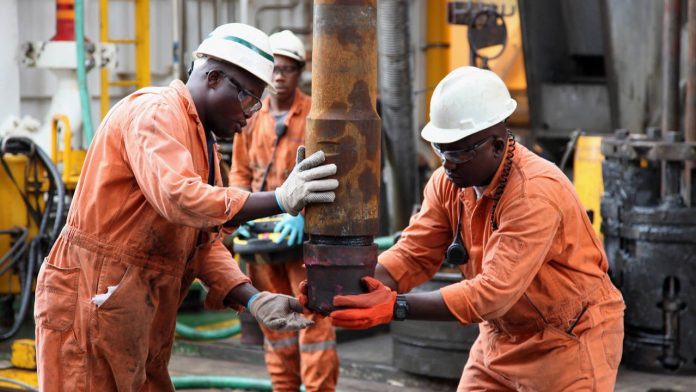
Nigeria’s crude oil production suffered a setback in February 2025, as the country failed to sustain the momentum from its recent output increase. Data from the Nigeria Upstream Petroleum Regulatory Commission (NUPRC) shows that the country’s daily average crude oil production declined by about five percent compared to January, raising fresh concerns about the country’s ability to maintain its OPEC production target.

The latest figures indicate that Nigeria’s crude oil production for February stood at an average of 1,465,006 barrels per day (bpd), down from the 1,538,697 bpd recorded in January. Although the drop appears relatively small, it represents a significant reversal of the steady gains recorded in previous months, fueling worries about the country’s long-standing production challenges.

The February output fell short of Nigeria’s allocated OPEC quota of 1.5 million barrels per day, with the NUPRC report noting that the country only managed to achieve 98 percent of the required production. The inability to sustain that momentum suggests Nigeria remains vulnerable to operational and structural issues within its oil sector.

The data further revealed that despite the drop in average output, Nigeria recorded a peak production of 1.7 million barrels per day in February, while the lowest daily production was 1.6 million barrels per day. However, these figures include condensates, which are not considered part of Nigeria’s crude oil production by OPEC. When condensates are factored in, Nigeria’s total daily average production in February stood at 1,671,953 barrels per day, comprising 1,465,006 barrels per day of crude oil and 206,948 barrels per day of condensates.

The overall crude oil production for February amounted to 41,020,155 barrels, marking a decline from January’s total output of 47,699,593 barrels. The February production also included 1,599,693 barrels of blended condensates and 4,194,849 barrels of unblended condensates. These figures were lower than those recorded in January when Nigeria produced 1,910,213 barrels of blended condensates and 4,252,071 barrels of unblended condensates.

The drop in output was reflected across the country’s major oil terminals, further underscoring the challenges affecting Nigeria’s oil production capacity. Forcados Terminal, which had the highest production, recorded 7.75 million barrels in February, down from 8.86 million barrels in January. Bonny Terminal, another major production hub, saw its output decline to 6.3 million barrels in February from 8.1 million barrels the previous month. Qua Iboe Terminal’s production also dropped, with 4.28 million barrels produced in February compared to 4.6 million barrels in January. Escravos Terminal recorded a decline as well, producing 3.87 million barrels in February, down from 4.48 million barrels in the preceding month. Similarly, Odudu Terminal’s output dropped to 2 million barrels in February from 2.3 million barrels in January, while Tulja–Okwuibome Terminal produced 1.89 million barrels in February, a decrease from 2.26 million barrels in January. These figures include both crude oil and condensates.

The latest drop in production comes at a time when Nigeria had been striving to restore investor confidence in its oil sector and strengthen revenue generation through increased output. The country has battled persistent challenges such as crude oil theft, pipeline vandalism, regulatory uncertainties, and underinvestment in upstream projects. While recent efforts by the government and security agencies have helped to curb some of these issues, the February figures indicate that the industry has yet to achieve sustained production stability.

The decline in oil output raises questions about Nigeria’s ability to meet its budgetary and revenue targets, particularly as oil remains the country’s main source of foreign exchange earnings. The setback also affects Nigeria’s standing within OPEC, where member countries are expected to adhere to production quotas as part of broader efforts to stabilize global oil prices. Although a Reuters survey had suggested that Nigeria exceeded its OPEC quota in February, the NUPRC data contradicts that claim, indicating that the country is still struggling to maintain a consistent production level.

The oil industry will now be looking ahead to OPEC’s upcoming Monthly Oil Market Report for February, which will provide a broader perspective on Nigeria’s performance relative to other oil-producing nations. The volatility of the global oil market, influenced by factors such as geopolitical tensions and supply chain disruptions, means that any decline in production could impact Nigeria’s economy.

Energy experts have pointed out that for Nigeria to achieve sustained growth in crude oil output, the government must address critical bottlenecks in the sector. There is an urgent need for improved infrastructure, enhanced security around oil facilities, and a more investor-friendly regulatory framework to attract both international and indigenous oil producers. Without these measures, analysts believe Nigeria risks falling further behind its production targets, limiting its ability to capitalize on global oil market trends.