Analysis: OpenAI’s Trillion-Dollar Data Center Ambition
OpenAI is embarking on an unprecedented technological build-out. Through extensive partnerships and deals with tech giants like Nvidia, Oracle, AMD, Broadcom, Amazon, and CoreWeave, the company is committing to a massive expansion of its data center and computing capacity. The estimated total investment for this infrastructure is projected to exceed $1 trillion. This staggering figure underscores the modern imperative for huge, foundational investments to drive future economic and technological dominance.
Commentary: The Folly of Austerity and the Power of Productive Spending
The idea that governments should prioritize austerity is a flawed and outdated governing philosophy. I am a firm believer in the Keynesian principle that governments must actively spend money to enable growth. When done correctly, with a focus on high-impact, productive investments, this approach yields tremendous societal benefits.
Historically, major world powers have embraced this model. The United States, for instance, chose a strategy of continuous borrowing and spending to build the world’s largest consumer market. This conscious decision to not prioritize a balanced budget but instead focus on being the central hub for global commerce has been fundamental to its enduring global influence. The strategy was simple: make the country the place where all nations must do business, and you control the world.
The Universal Recipe for Economic Growth
Across various political systems—from autocracy to democracy—the core ingredients for economic success remain remarkably consistent:
- Embrace Merit: Ensure that systems reward competence and talent.
- Be Pragmatic: Adopt processes that are practical and effective, not just ideological.
- Ensure Decent Leadership: Appoint/elect leaders who can execute a vision effectively.
When these three tenets are followed, and governments implement productive spending and subsidies (as seen in China, Russia, and the US), economic growth inevitably follows. The recent economic struggles in nations attempting severe austerity (like the initial model in Argentina) show the limitations of cutting expenditures to the bone; even if statistical improvements are claimed, human poverty can worsen, often requiring massive external aid to stabilize.
A Vision for Nigeria: Spending for Transformational Infrastructure
For a nation like Nigeria, this principle should be the blueprint for progress. Imagine the transformative impact of a targeted, large-scale investment plan:
- Infrastructure Spine: Building a deep seaport in Akwa Ibom and connecting it via a dedicated rail line to major commercial hubs like Aba, Onitsha, Maiduguri, etc, in the Nigerian eastern shore.
- Energy Security: Committing to connecting and providing every home and business in Nigeria with natural gas and electricity within a tight five-year deadline that works.
Even if this required borrowing from the IMF or other sources, the resulting economic activity, job creation, and productivity gains would quickly propel the nation forward. We need to move beyond small-scale budgets and embrace a transformative vision.
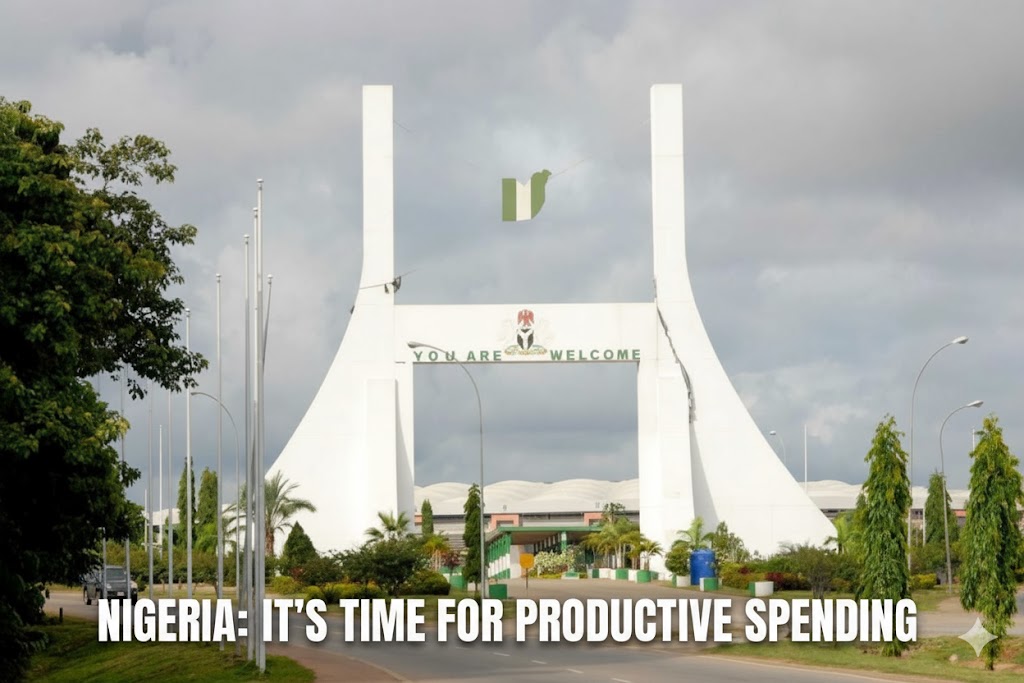
Good People, I would like to see a $100 billion Nigerian national budget engineered for PRODUCTIVE spending, from the paltry sub-$40b