DD
MM
YYYY

PAGES

DD
MM
YYYY

spot_img

PAGES

Home Blog Page 2127

With Ethereum’s Future Uncertain, Could FXGuys Offer More Security?

0

Ethereum has long been a dominant force in crypto, but uncertainty looms over its future. Rising gas fees, scalability concerns, and regulatory issues make investors wary. Meanwhile, FXGuys presents a stable and rewarding alternative. As a Top PropFi Project, it provides enhanced security and lucrative incentives, positioning itself as one of the high potential altcoins in the market.

>>>JOIN FXGUYS HERE<<<

Ethereum’s Challenges Raise Concerns

Ethereum’s top defi coins status is undeniable, but issues persist:

  • High transaction costs – Ethereum’s gas fees remain unpredictable and costly.
  • Regulatory scrutiny – Governments continue to tighten control over decentralized finance.
  • Scalability struggles – Despite upgrades, Ethereum still faces congestion issues.

These factors make traders and investors seek more secure alternatives like FXGuys.

FXGuys: A More Secure and Rewarding Alternative

FXGuys has gained traction as a smart prop trader ecosystem that offers multiple financial benefits. With a prop trading funding program, staking rewards, and no-tax trading, it provides a solid foundation for traders and investors. Some standout features include:

1. Staking Rewards and Profit Sharing

Holders of the $FXG token can stake their assets and earn a 20% profit and revenue share from broker trading volume. This passive income stream gives investors a financial advantage, unlike Ethereum, which lacks a similar system.

2. Trader Funding and Development

The FX Guys provides a prop trading funding program, allowing skilled traders to access capital of up to $500,000. Unlike Ethereum, which primarily functions as a blockchain, FXGuys actively nurtures trader success through evaluations and profit-sharing models. Traders keep 80% of profits, making it a compelling choice among the best proprietary trading firms.

3. No Buy or Sell Tax & Instant Withdrawals

Ethereum transactions can be costly due to gas fees, while FXGuys eliminates these barriers. With no buy or sell tax, traders can maximize their earnings. Additionally, same-day fiat and crypto withdrawals ensure quick and hassle-free transactions, a key advantage over Ethereum’s network delays.

A Broker-Backed Prop Firm with Advanced Trading Tools

Unlike Ethereum, which functions as a decentralized platform, The FX Guys operates as a broker-backed crypto prop firm. This ensures security, reliability, and access to superior trading tools. FXGuys Trader, along with MT5, Match-Trader, cTrader, and DXtrade, provides traders with diverse platform choices, accommodating their specific needs based on their location.

Trade2Earn: Revolutionizing Trading Incentives

Ethereum’s DeFi applications offer yield farming and liquidity pools, but FXGuys takes it a step further. Through its Trade2Earn program, every trade earns $FXG tokens, boosting engagement and trading volume. This initiative makes FXGuys a top defi coin, ensuring continuous market activity and increased investor rewards.

>>>JOIN FXGUYS HERE<<<

The Future: Ethereum or FXGuys?

While Ethereum faces uncertain regulatory and scalability challenges, FXGuys provides a secure, rewarding, and trader-focused ecosystem. With its staking rewards, prop trading funding program, and tax-free transactions, FXGuys is rapidly emerging as the preferred choice for traders seeking stability and growth.

Why FXGuys Stands Out:

? Staking $FXG token for 20% profit share
 ? Top PropFi Project offering instant funding prop firm solutions
? Trade2Earn program, rewarding traders with tokens
? No KYC decentralized trading & no buy/sell tax
 ? Same-day withdrawals in fiat & crypto

With FXGuys now in Stage 3 presale at $0.05, having raised over $4 million, this might be the best time to join this promising platform. Ethereum’s uncertainty makes diversification crucial—FXGuys offers security, stability, and lucrative opportunities. Will traders make the shift?


To find out more about FXGuys follow the links below:

Presale | Website | Whitepaper | Socials | Audit
Nigeria Asks Manufacturers to Reduce Cement Price to N7,000, Citing “Improved Economic Conditions”

0

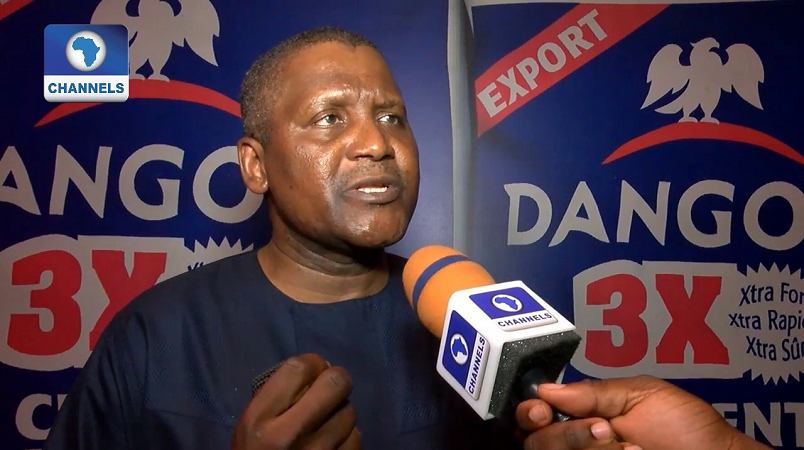
The Federal Government of Nigeria has called on cement manufacturers to reduce prices to N7,000 per bag, citing improved economic conditions that should justify the price drop.

The Minister of Works, Sen. Engr. Nweze David Umahi, issued this demand during a meeting at the ministry’s headquarters in Abuja on February 26, 2025, as reported in an official statement on the ministry’s website. Umahi insisted that with the naira stabilizing at N1,400 per dollar and petrol prices falling, cement manufacturers have no reason to keep prices at N9,500 per bag, an increase that was implemented when the naira was nearing N2,000 per dollar.

Umahi criticized manufacturers for failing to adjust cement prices despite the naira’s recent gains, questioning why they were quick to raise prices during the currency’s depreciation but have been slow to reverse them as it rebounds.

“Today, a dollar is about N1,400. And let me use the opportunity to express dissatisfaction with the cost of cement.

“We are using this medium to tell the cement manufacturers that at the time the dollar was almost N2,000, they increased cement from N7,500. Why should today, when the President has brought the dollar to stability to about N1,400 and is still going down, cement be selling for N9,500? We are requesting cement manufacturers to bring down the cost of cement to N7,000.”

The Works Minister emphasized that affordable cement is crucial for national infrastructure development, particularly the government’s transition to Continuously Reinforced Concrete Pavements (CRCP) for road construction, which he described as more durable and cost-effective compared to asphalt.

He also revealed that the high cost of cement is forcing many contractors to reconsider the government’s plan to switch to concrete roads, with some preferring asphalt due to its relatively lower upfront costs.

If this trend continues, it could derail the federal government’s infrastructure strategy, which prioritizes concrete roads for their durability and long-term cost-effectiveness.

Manufacturers and Consumers Dispute Government’s Claims

However, this assertion has sparked debate and skepticism as both cement producers and consumers argue that the claimed economic improvements are not reflected in real market conditions.

Industry leaders in the cement sector note that the cost of production remains high, even with the naira’s partial recovery. They cite rising energy costs, particularly the price of diesel and gas, which remain significantly elevated.

Additionally, they highlight:

  • Persistent high transportation costs due to poor infrastructure.
  • Increased raw material costs, many of which are still subject to import price fluctuations.
  • High interest rates on loans used to finance cement production.

Manufacturers insist that until these fundamental cost pressures ease, cement prices cannot be reduced significantly.

Consumers’ Perspective

On the consumer side, ordinary Nigerians say that the supposed economic improvements the government is touting have not translated into lower costs of living. While government reports indicate that inflation is slowing down and GDP is growing, these figures are not yet reflected in the prices of essential goods and services.

Umahi’s Ultimatum: Price Must Drop in One Week

The minister issued a one-week ultimatum for cement manufacturers to lower their prices, warning that failure to do so would force him to escalate the matter to President Bola Tinubu for further action.

However, this is not the first time a government official under Tinubu’s administration has criticized cement manufacturers for price hikes.

In February 2024, Musa Dangiwa, the Minister of Housing and Urban Development, condemned the excessive increase in cement prices, accusing manufacturers of using foreign exchange fluctuations as an excuse to inflate costs and worsen Nigeria’s economic crisis.

Dangiwa pointed out that cement prices had surged from N5,500 to over N10,000 per bag, a more than 100% increase in just months. He urged manufacturers to seek innovative solutions instead of passing on every cost to consumers.

He also warned that rising cement prices posed a serious threat to the government’s housing projects, especially for low-income earners and vulnerable Nigerians.

While government agencies continue to publish data suggesting an economic recovery, the stark reality remains that essential commodities, including cement, food, and transportation, have not seen any meaningful price reductions. This contradiction has led many Nigerians to question the accuracy of official economic reports and whether theimproved conditionscited by the government truly exist.

The Nigerians’ MultiChoice Problem

1

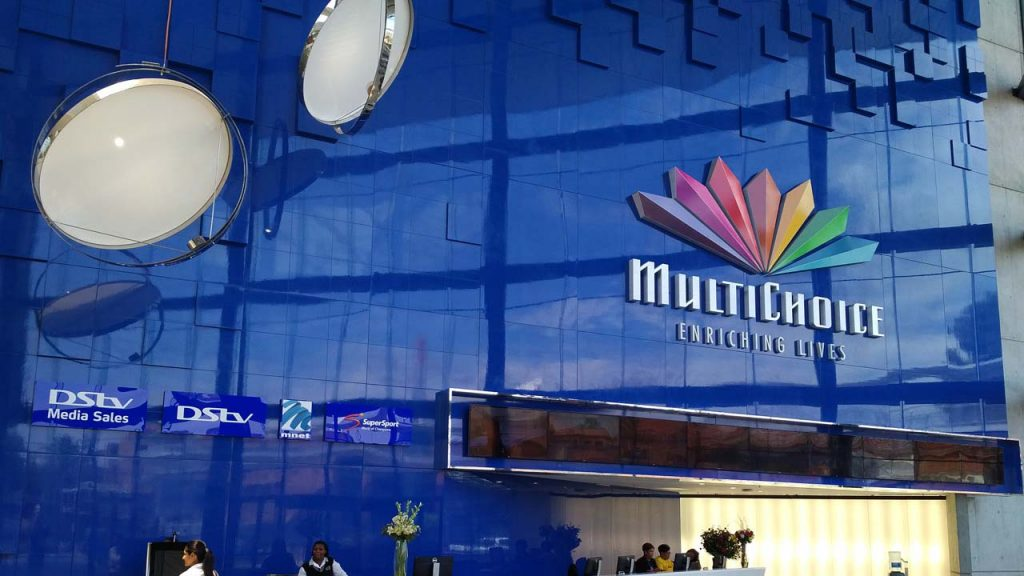
Nigerians are exercising their rights to sue a private company in order to compel it to change its business model. Yes, MultiChoice must offer pay per view even if it does not make sense for it. That mindset is why they have already sued the owner of DStv and GOtv in the court after a price increase, and to make the agitation strong, they added the attorney general of Nigeria.

The AGF’s lawyer also confirmed filing a motion to strike out the case, prompting the judge to ask the claimant if he had received all responses and if he had filed a reply.

“Yes, my Lord, I have responded,” the claimant said but added that further affidavits needed to be exchanged between him and the legal teams of the AGF and NBC.

In response, Justice Ekwo stated: “I am going to give you a date for the hearing, believing that by then, parties should have filed and exchanged whatever necessary processes.”

The judge subsequently fixed the hearing for May 6, 2025.

The AGP rightfully wants the office off the mess: “The Office of the Attorney-General of the Federation (AGF) and Minister of Justice has urged the Federal High Court in Abuja to remove his office from a lawsuit seeking to compel MultiChoice Nigeria to introduce a pay-per-view model for its DStv and GOtv services.”

Good People, right now, in the banking system, a big bank cannot credit your account for days after a deposit, and as that is happening, the consumer protection watchdog and the activist citizens have not said a single word. Yet, they all have time to protect Nigerians who want to watch millionaires kick round leather in Europe when their citizens cannot have access to their bank accounts, over another bank software upgrade.

Our priorities are intriguing in all ways! Is watching TV shows now human rights?

Nigeria’s Attorney General Asks Court to Remove His Office From A Lawsuit Seeking Pay-Per-View Model for DStv and GOtv

Nigeria’s Attorney General Asks Court to Remove His Office From A Lawsuit Seeking Pay-Per-View Model for DStv and GOtv

0

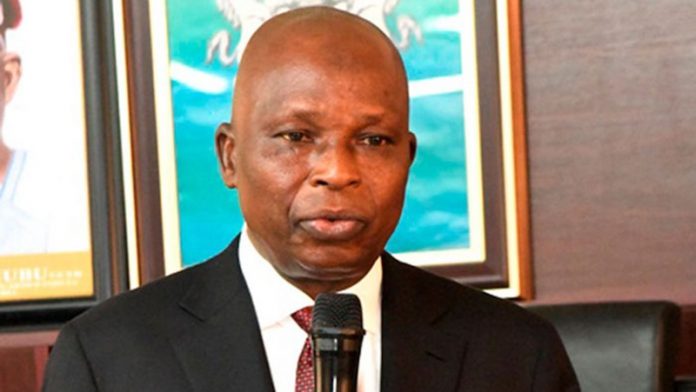
The Office of the Attorney-General of the Federation (AGF) and Minister of Justice has urged the Federal High Court in Abuja to remove his office from a lawsuit seeking to compel MultiChoice Nigeria to introduce a pay-per-view model for its DStv and GOtv services.

The AGF, who is named as the fourth defendant in the case, insists that the lawsuit is an abuse of the court process and lacks any legal basis, arguing that it should be struck out immediately.

The lawsuit, filed on April 29, 2024, by Maduabuchi O. Idam Esq. (Suit No. FHC/ABJ/CS/563/2024), demands that MultiChoice introduce a pay-per-view billing system that would charge Nigerian customers based only on the time they actively watch content. The suit also seeks an order to compel the company to roll over unused subscriptions upon expiration, ensuring that customers fully benefit from their payments.

This legal battle comes at a time when MultiChoice has announced another price hike for its DStv and GOtv packages, which is set to take effect on March 1, 2025. The price increase follows a series of similar hikes in recent years, which the company has justified by citing exchange rate volatility, rising content costs, and increased electricity tariffs.

What Transpired in Court

At the court session on February 19, 2025, presided over by Justice Inyang Ekwo, MultiChoice’s lawyer, Moyosore J. Onigbanjo (SAN), made it clear that the pay-TV provider was opposing the lawsuit.

Justice Ekwo then inquired whether the Federal Competition and Consumer Protection Commission (FCCPC) and the National Broadcasting Commission (NBC) had filed their responses to the lawsuit. The legal representatives of both agencies confirmed that they had submitted counter-affidavits opposing the claimant’s suit.

The AGF’s lawyer also confirmed filing a motion to strike out the case, prompting the judge to ask the claimant if he had received all responses and if he had filed a reply.

“Yes, my Lord, I have responded,” the claimant said but added that further affidavits needed to be exchanged between him and the legal teams of the AGF and NBC.

In response, Justice Ekwo stated: “I am going to give you a date for the hearing, believing that by then, parties should have filed and exchanged whatever necessary processes.”

The judge subsequently fixed the hearing for May 6, 2025.

AGF’s Motion to Strike Out the Suit

In its motion dated October 25, 2024, the AGF formally requested the court to strike out or dismiss the lawsuit on the grounds that the claimant failed to establish any cause of action against the AGF. The AGF’s legal team, led by Maimuna Lami Shiru, argued that the lawsuit had no connection to the office of the Attorney-General, making it inappropriate for the AGF to be named as a defendant.

Shiru further argued that: “The AGF is not a regulatory body in respect of the subject matter of the claim and has no business in the suit.

“The AGF is not a proper or necessary party to the suit.

“The originating process is premature and defective as it relates to the AGF.”

The AGF’s office emphasized that it does not regulate MultiChoice or any other TV provider in Nigeria, accusing the claimant of failing to seek the court’s permission before filing the case. The AGF’s lawyer labeled the lawsuit as frivolous, urging the court to strike it out immediately.

Push for Pay-Per-View Has Been Ongoing for Years

For years, Nigerian consumers have demanded that MultiChoice introduce a pay-per-view model, believing it would offer a fairer pricing system by allowing them to pay only for the content they consume. The issue has sparked legislative and regulatory interventions, but MultiChoice has consistently rejected the proposal, arguing that such a model is not technically or financially viable in Nigeria.

Chief Executive Officer of MultiChoice Nigeria, John Ugbe, told a Senate committee in 2022: “Whilst it may appear to be a noble intent for this Committee to be concerned over the rising cost of subscription services; however, the Pay-Per-View (PPV) model being canvassed by this Committee will not work either to the benefit of the consumer or the industry.

“It would appear that this problem is because of some confusion in understanding the basic definitions and distinctions between some of the existing operational business models in telecommunications and pay-tv broadcasting.”

Industry experts and pay-TV analysts have also warned that a pay-per-view system would be highly expensive and unaffordable for most Nigerian subscribers. Unlike cable providers in the United States, where pay-per-view is used for one-off events like boxing matches and concerts, implementing such a model for daily television programming would require a completely different pricing structure that could result in higher costs for consumers.

Since 2016, the Nigerian National Assembly has been investigating MultiChoice over its pricing model, with lawmakers at one point, urging the company to introduce pay-per-view billing. However, after a review of the pay-TV business model, and following a series of interventions, the National Broadcasting Commission (NBC) said it has no enabling law to either regulate or control the prices being charged by cable television operators.

MultiChoice has been at the center of numerous legal disputes over its pricing structure. In 2024, a Nigerian tribunal fined MultiChoice N150 million and ordered the company to provide a one-month free subscription to customers after it was found to have violated an interim court order. However, MultiChoice challenged the ruling, and the case was eventually struck out after a public interest lawyer withdrew the suit.

Despite these legal battles, MultiChoice has continued to raise its subscription fees, citing economic pressures. Its latest price increase, set to take effect on March 1, 2025, comes after the company suffered a significant loss of subscribers in 2024 due to repeated price hikes, inflation, and the difficult economic environment.

FTX’s $1 Billion Bankruptcy Fallout!  DexBoss Stands Out Among Popular Crypto Coins With Strong Fundamentals

0

Are you looking for top cryptocurrencies with solid foundations? FTX’s bankruptcy has incurred nearly $1 billion in costs, making it one of the most expensive Chapter 11 cases. Court records reveal that $948 million has been paid to legal and financial firms, with over $952 million in fees approved. This situation underscores the importance of choosing investments with a solid foundation and backing to mitigate such risks. As such, we recommend DexBoss (DEBO) and Aureal One (DLUME), along with three other popular crypto coins, poised to bring high ROI in the near future. Keep reading to find out how these projects’ future prospects place them as the top altcoins for 2025.

Top 5 Popular Crypto Coins: An Exciting Dive into the Future of Altcoins

It may seem that the most popular and valuable cryptocurrency is the only solution the world has for financial transactions. This is different from the fact that cryptocurrency has become a new way of managing money and the majority of people have joined the bandwagon. Every day, new cryptos are launched which are offerings quickly snatched up by the hopeful capitalists. However, the evolution and the new era of cryptocurrency that we are in has given an opportunity for early adopters.

As we move from 2025, we see that several upcoming altcoins that are doing great have come into the scene. Some of these are DexBoss and Aureal One that seem to have made notable contributions in the fields of decentralized finance and gaming. Altcoins such as these are likely to enjoy significant growth of over a hundred percent, as they are bound to take off in the coming years.

1. DexBoss ($DEBO): A Game-Changer in DeFi

DeFi is an abbreviation for decentralized finance which is dramatically reshaping how people manage their savings and money transfers. It is a world scenario in a way that someone who possesses little or no knowledge about a particular area is SOLD on something that he knows little or nothing about just because it is introduced as the latest technology. It has also become possible to buy and sell derivatives such as futures contracts, options, and swaps without the need for a middleman. All action plans are configurable, at the same time, they can be programmed, they could be accepted, rejected, and have additions or depletions. It happens to be that, DeFi applications are developing at a very fast pace; they enable operations with more financial products such as borrowing, saving, and transporto without the presence of intermediaries.

Click here to know more about DexBoss

DexBoss is engaging the DeFi industry where it is positioning itself as a top possibility with its innovative trading platform that makes the most complex financial tools very easy. DexBoss is not only a coin but a total solution. Of these funds, around seven million tokens are available for the pre-sale event which is still ongoing. The community-owned part of the initiative ensures that the token retains fair and steady pricing, determining the easily just influx of the new funds in the ecostructure.

The current phase of the pre-launch of the $DEBO token had its structure made in 17 rounds. The coins start from the initial price of $0.01 and end at the $0.0458 by the last round. The amount that investors can gain will go up to 405% at the very time of the official listing which is set to the price of $0.0505. Buyers that buy it soon will gain some benefit from the big price rise of the DEBO token which will be 405% before it is launched. Thus, the presale will take the buyers to the point of taking advantage of $0.0505,

2. Aureal One (DLUME): Transforming Gaming and the Metaverse

Aureal One has been causing a stir in the sandbox digital world scene through the introduction of a blockchain network fine-tuned to metaverse applications. The main advantage of it is swift transaction with no fees, which is driving every gamer and developer towards it.

Aureal One, which is currently in its presale, is doing its fundraising through 21 rounds with a starting price of $0.0005 per DLUME token. It is planned to be the number one choice to invest in the project worth $50 million dollars. The solution empowers staking as the token supply decreases round after round, which pushes early investment. The participants of the network can not only earn more from staking but also, they can engage in governance. Aureal One, with new technologies like Zero-Knowledge Rollups, outperforms the blockchain game industry in 2025.

3. Cardano (ADA): A Pioneer in Smart Contracts

Cardano is still operating as a major player in the crypto space by its continuous efforts on scalability and sustainability. Proof of Stake, a protocol that guarantees both high security and energy efficiency, is called Ouroboros.

Cardano is traded at around $0.43 by the end of 2023, making it still the most popular platform for DApps and the execution of smart contracts. While ETH’s monopoly is threatened by new L2 solutions, Cardano can provide a genuine alternative. ADA’s presence is going to be felt in 2025 because of its partnerships with global especial and its ambitious goals.

4. Solana (SOL): High-Speed Transactions and Scalability

Solana is celebrated for its lightening speed and capability of transacting thousands of transactions on the go. Presently, the Solana – $20 is the only known coin that features scalability without the centralization distortion.

Furthermore, the efficiency of truly makes EVM together with Solana a greatly esteemed preference for DeFi applications and also the NFT projects. Still, under the condition of renewed development of strategic partnerships, Solana imparts potential and the cryptosphere offers cottages with vernacular to families before 2025.

5. Avalanche (AVAX): The Future of Layer-1 Solutions

By the way, Avalanche blockchain structure was planned to bring this blockchain to 4500 tps (transactions per second) keeping it lag-free. Currently at an AVAX value of $14, due to the network capacity being reserved, developers can tailor blockchains and dApps with flawless efficiency.

The distinguishing characteristic is that the platform is endowed with a multi-chain system and therefore provides flexibility and scalability. With a view to interoperability, AVAX is on the quest of DeFi as clients and enterprises to share the emerging platforms announced, it is still one of the top altcoin for 2025.

Conclusion

Moving forward, Altcoins like DexBoss and Aureal One have become increasingly significant to the industry amid the wave of cryptocurrencies. DexBoss is not only a promising investment in the DeFi sector giving the users an easy-to-use atmosphere and improved trading tools, but it is also one of the first projects within the D. A. C. Apart from a blockchain being used in the project but the blockchain is what powers the ecosystem.

Besides the mentioned nascent applications, the most popular altcoins like Cardano, Solana, and Avalanche are constantly developing technology of blockchain. Crypto enthusiasts who want to profit from the prosperous crypto world 2025 has in store should follow these same projects closely. Staying up-to-date and conducting the necessary research will be extremely important for success in the world of cryptocurrency.